








About this worksheet
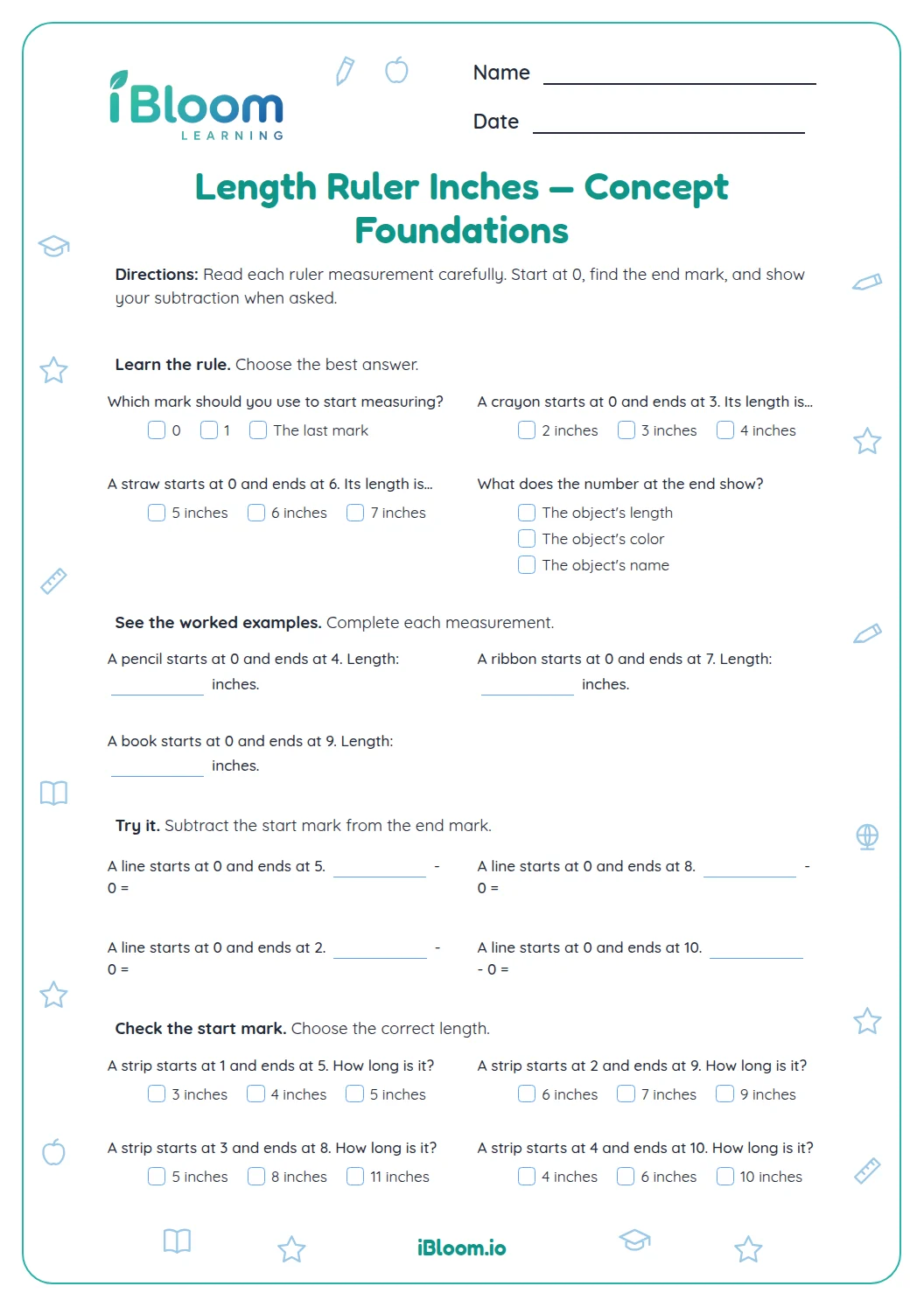
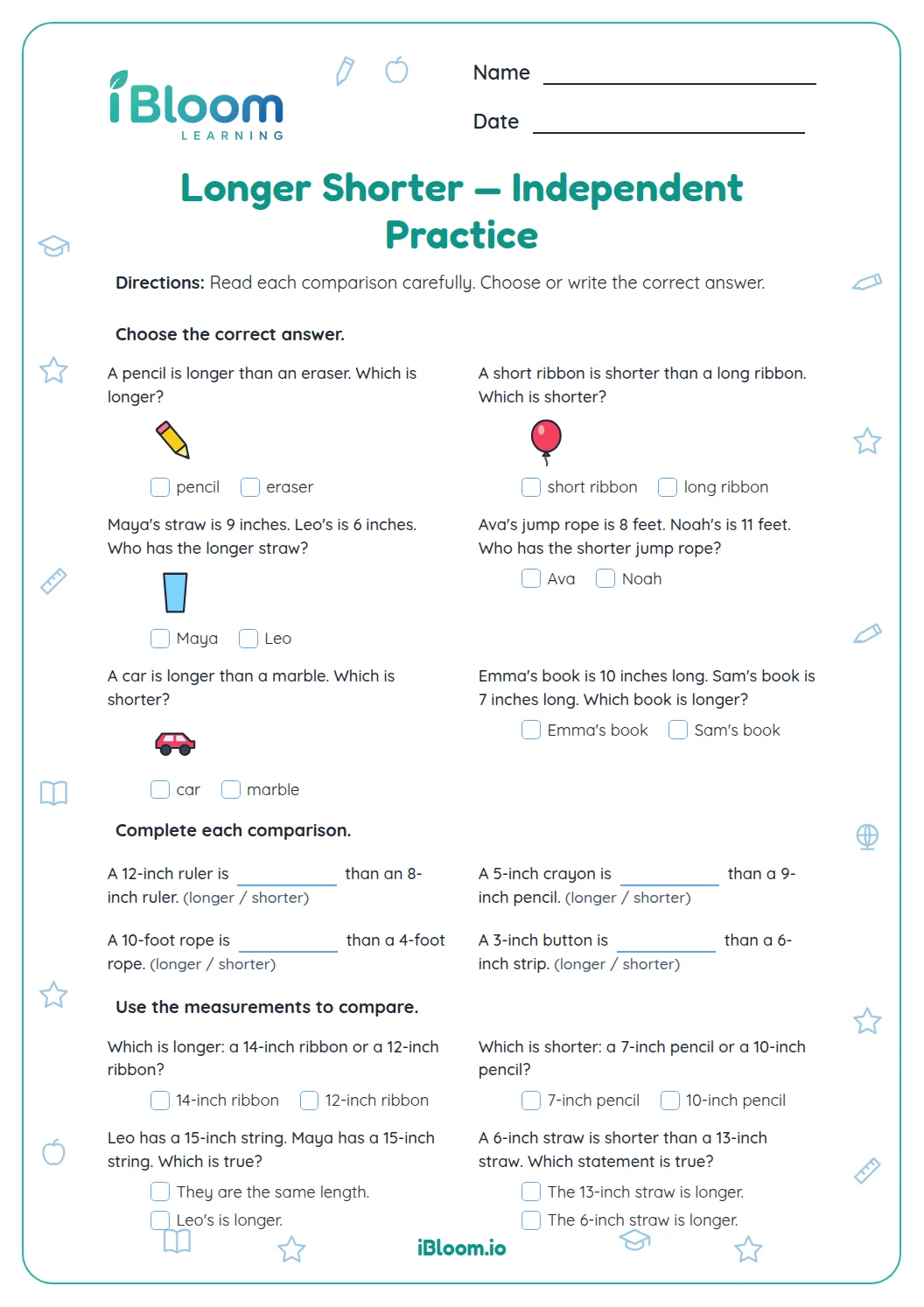
This Grade 1 measurement worksheet builds practice reading whole lengths on inch rulers. Each ruler drawing begins at zero and ends on a whole-inch mark, so children connect equal inch units to an object’s endpoint. The illustrated items practice CCSS 1.MD.A.2 by expressing length as a whole number of units. The key lists every length.
Aligned to 1.MD.A.2
How do you read a ruler in inches?
Line up the object’s start with zero. Find the inch mark at its other end; that number is the length. The ruler pictures use whole-inch endpoints.
- 1If a pencil begins at 0 and ends at 3, it is 3 inches long.
How can you compare measured lengths?
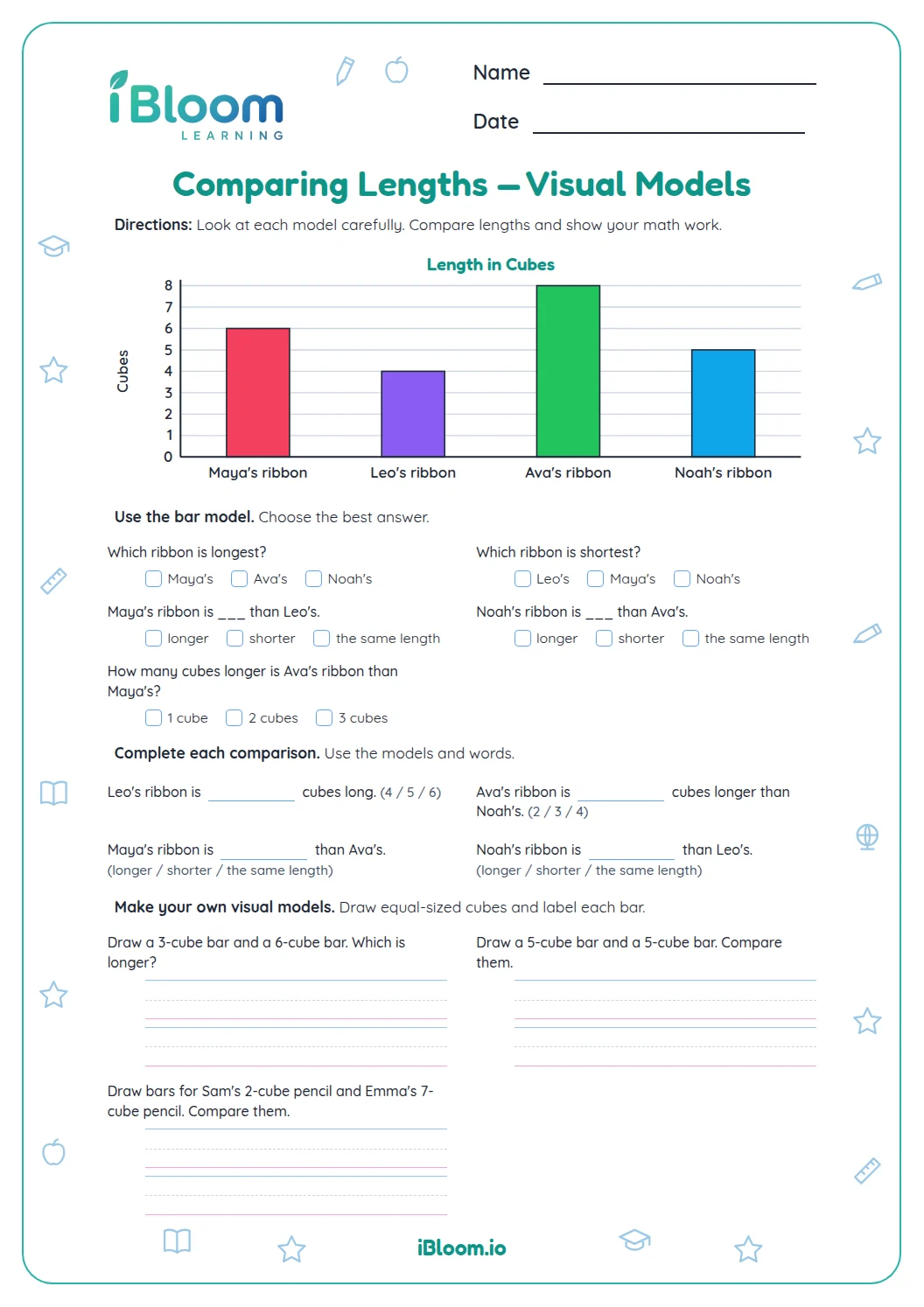
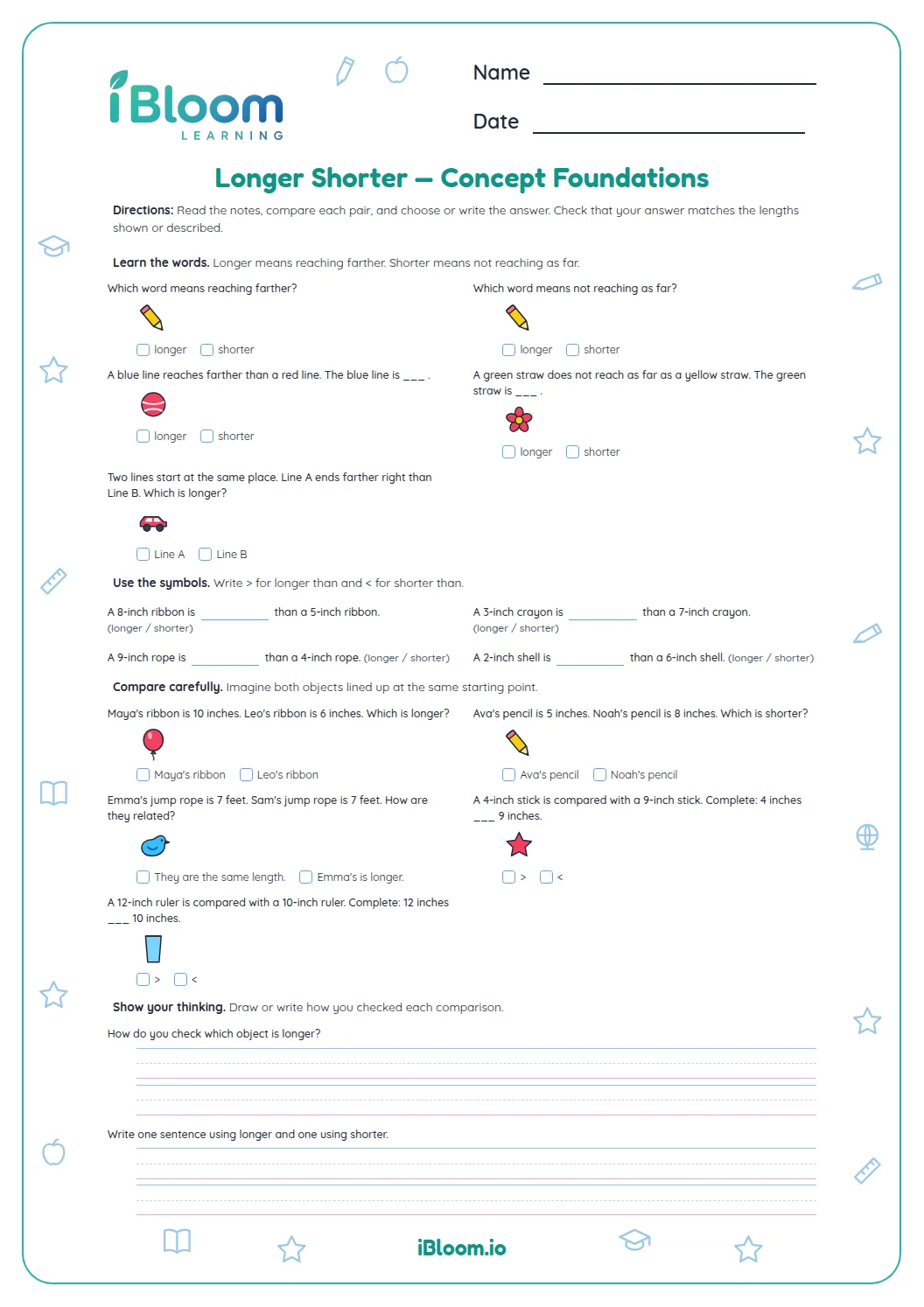
Read both lengths in the same unit, then compare the numbers. A larger number of inches means a longer object.
What should you check before recording a length?
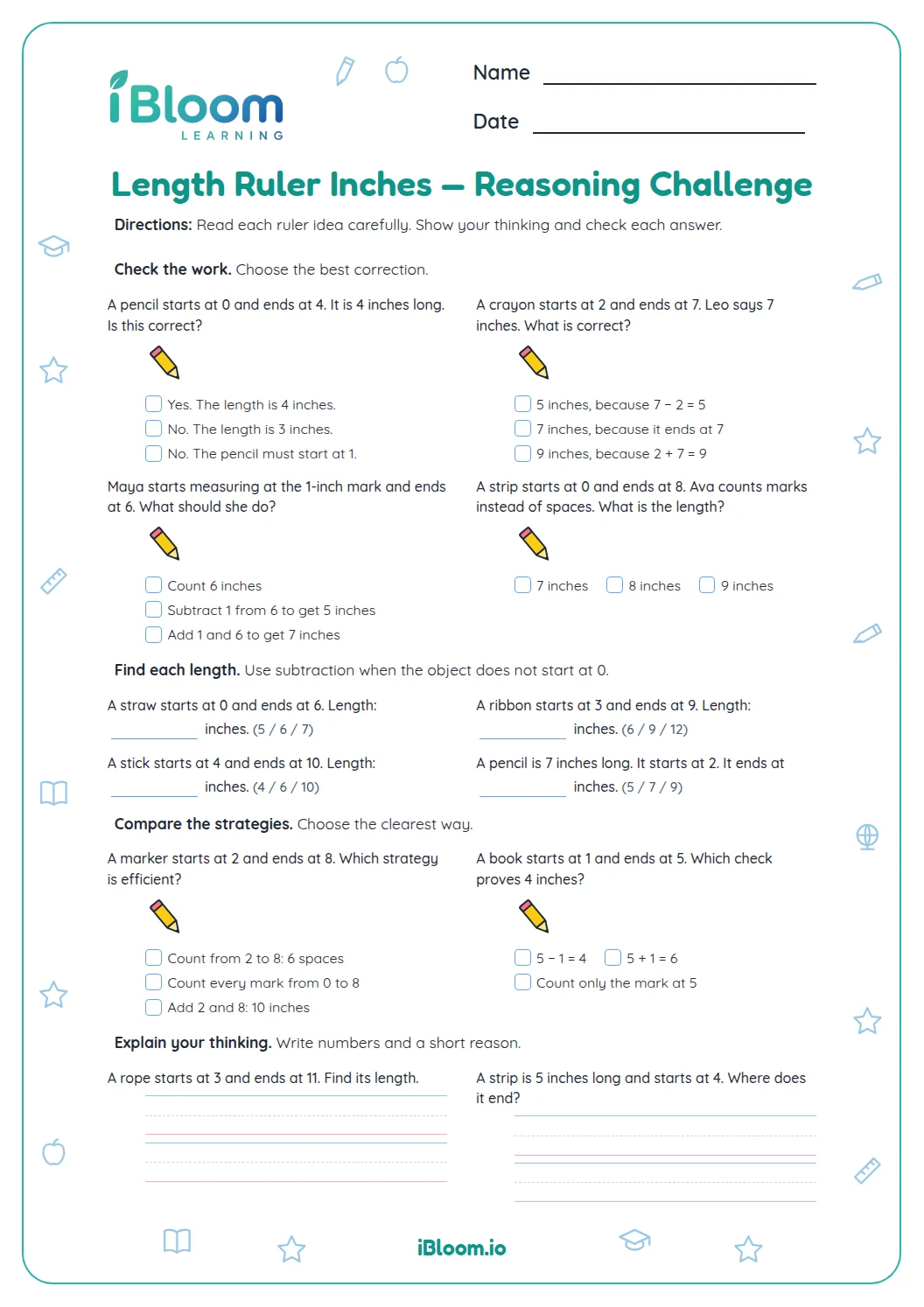
Make sure the object starts at zero rather than at the ruler’s edge. Read the endpoint mark, not the number of spaces or marks the object covers.
A ruler-reading routine
- 1Find the zero mark.
- 2Check that the object starts at zero.
- 3Follow the object to its endpoint.
- 4Read the number at that endpoint and include inches.
- 5Compare lengths only after reading both rulers.
Common measurement mistakes
The mistake
Counting the zero mark as the first inch.
The fix
Measure the distance from zero to the endpoint; a 3-inch object spans three intervals.
The mistake
Starting at the ruler’s edge instead of zero.
The fix
Use the printed zero mark as the beginning of the measurement.
The mistake
Writing the endpoint without its unit.
The fix
Include “in” or “inches” so the measurement is clear.
Common Core alignment
This worksheet practices the listed Common Core skill through its questions and written responses.
Read whole-inch lengths by tracking equal units from zero to the endpoint.
On this sheet: Each illustrated ruler shows whole-inch units from zero to the measured endpoint.
Show the official wordingHide the official wording
Express the length of an object as a whole number of length units, by laying multiple copies of a shorter object (the length unit) end to end; understand that the length measurement of an object is the number of same-size length units that span it with no gaps or overlaps. Limit to contexts where the object being measured is spanned by a whole number of length units with no gaps or overlaps.
What to practice next
Make more practice
Further reading
Questions parents and teachers ask
Where should an object begin on a ruler?
Begin at zero. The object’s endpoint then shows how many inches long it is. Ask the child to point to zero first, then trace along the object to its endpoint before recording the measurement. Then ask the child to name the unit used in the picture.
What unit does this worksheet use?
Every pictured ruler is labeled in inches. Students record the reading in inches and compare objects measured in that same unit. Ask the child to point to zero first, then trace along the object to its endpoint before recording the measurement.
Why does measurement start at zero?
Length measures the distance from the starting point to the endpoint. Starting at zero makes the endpoint number match the number of inches. Ask the child to point to zero first, then trace along the object to its endpoint before recording the measurement.
How can I help if a child counts tick marks?
Have the child count the spaces from zero to the endpoint. Each full space is one inch; the zero mark is the starting point. Ask the child to point to zero first, then trace along the object to its endpoint before recording the measurement.
What if an object starts at a different mark?
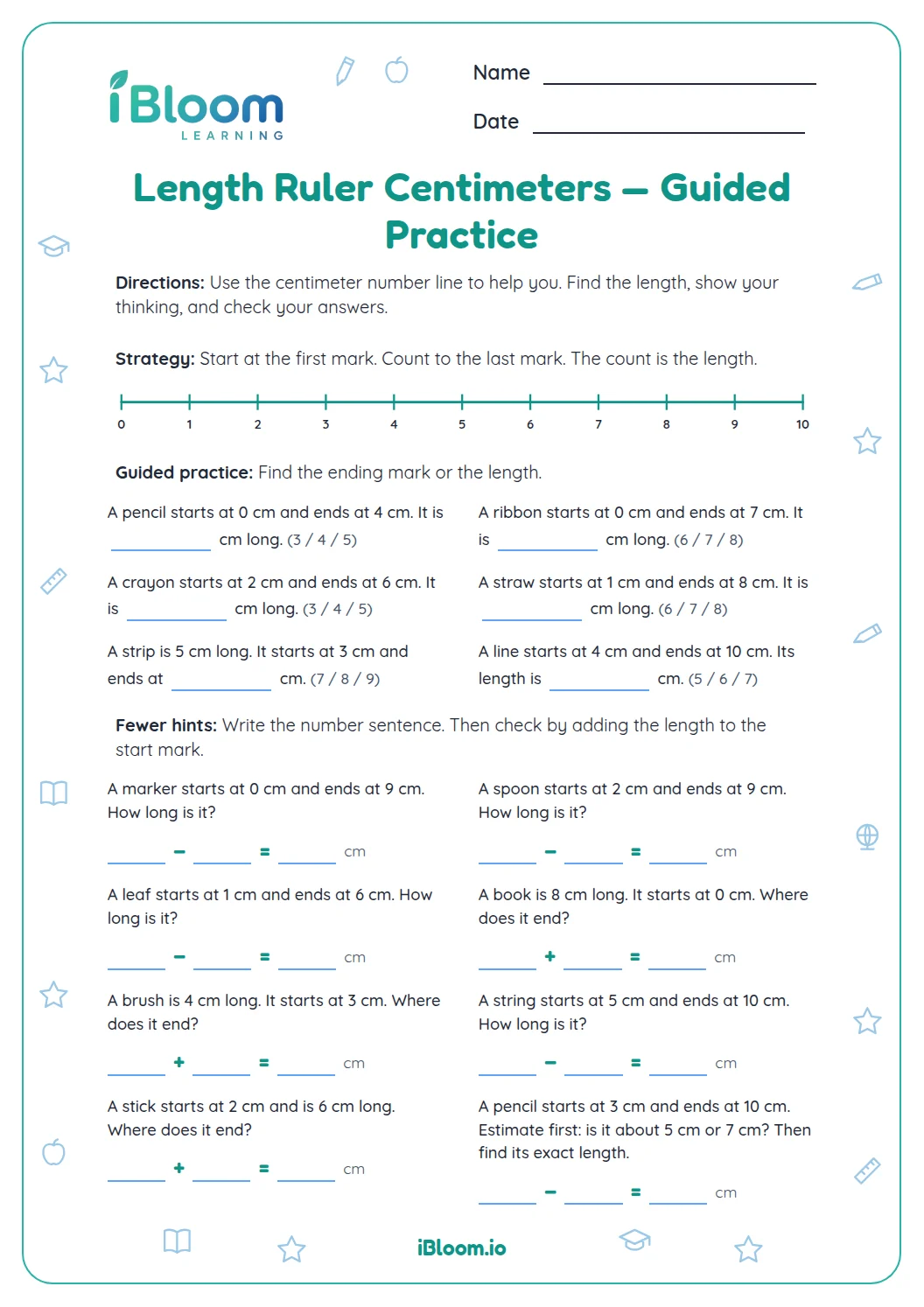
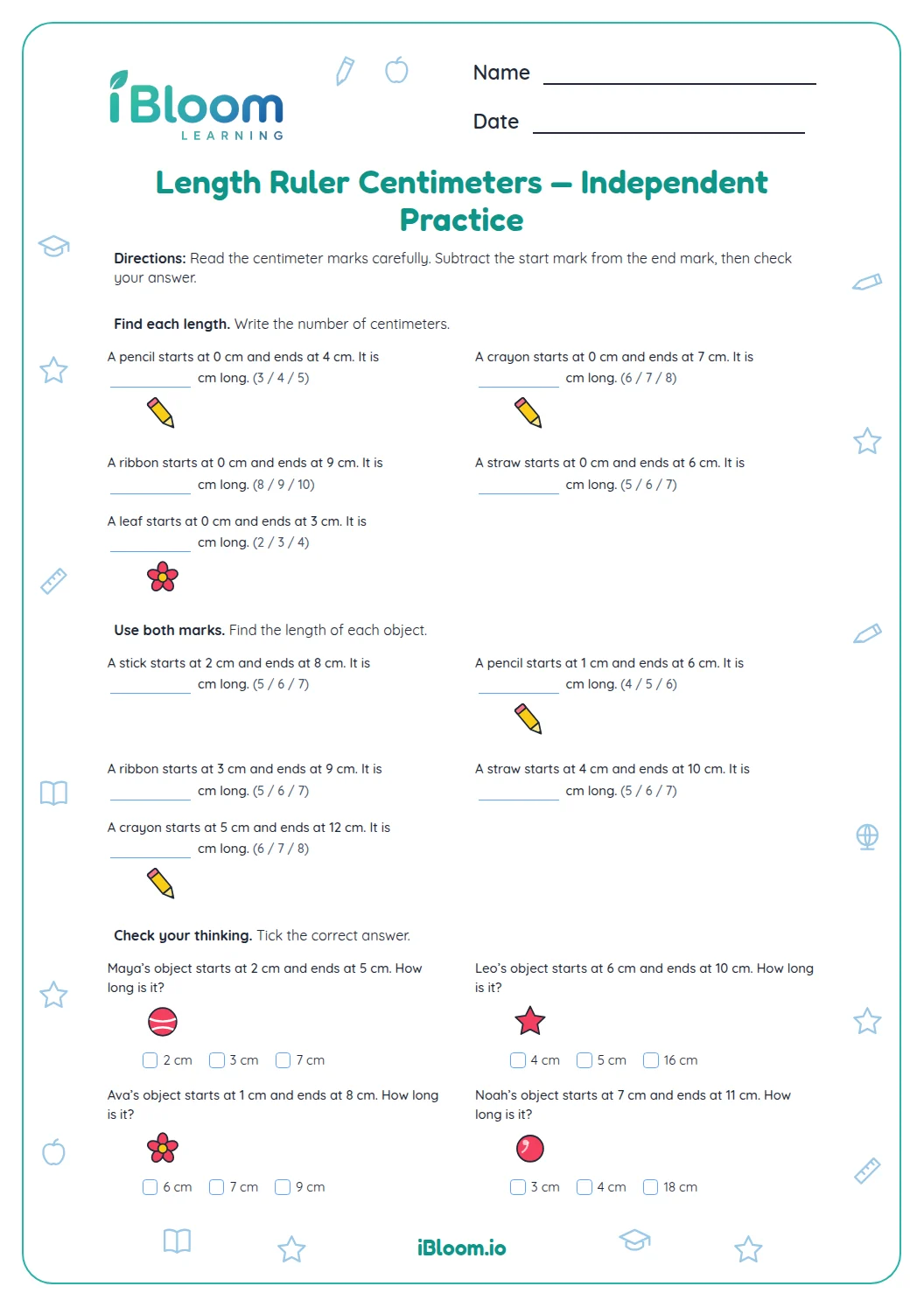
Subtract the starting mark from the ending mark to find its length. This page keeps the drawn objects at zero so beginners can focus on endpoint reading. Ask the child to point to zero first, then trace along the object to its endpoint before recording the measurement.