





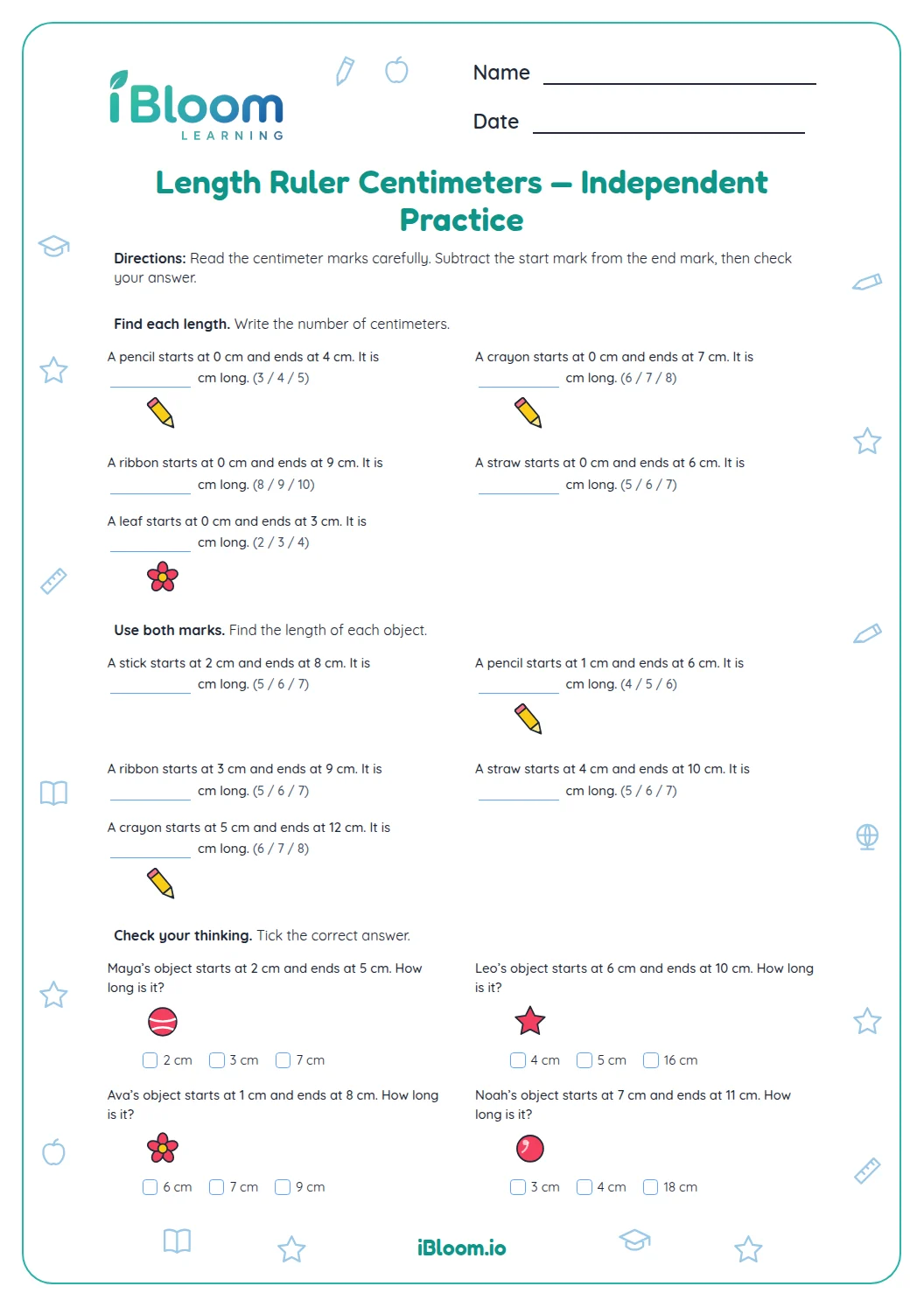


About this worksheet
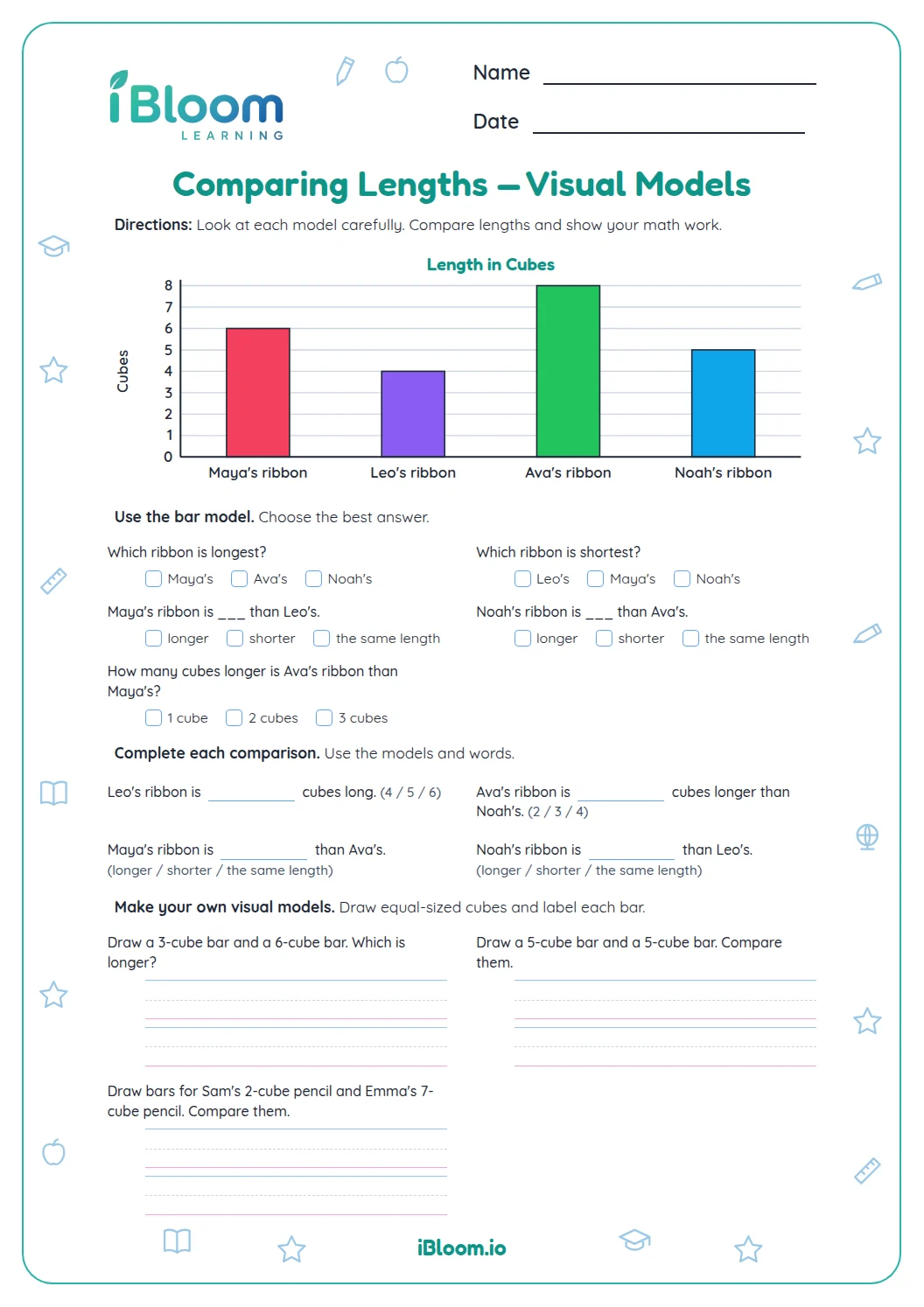
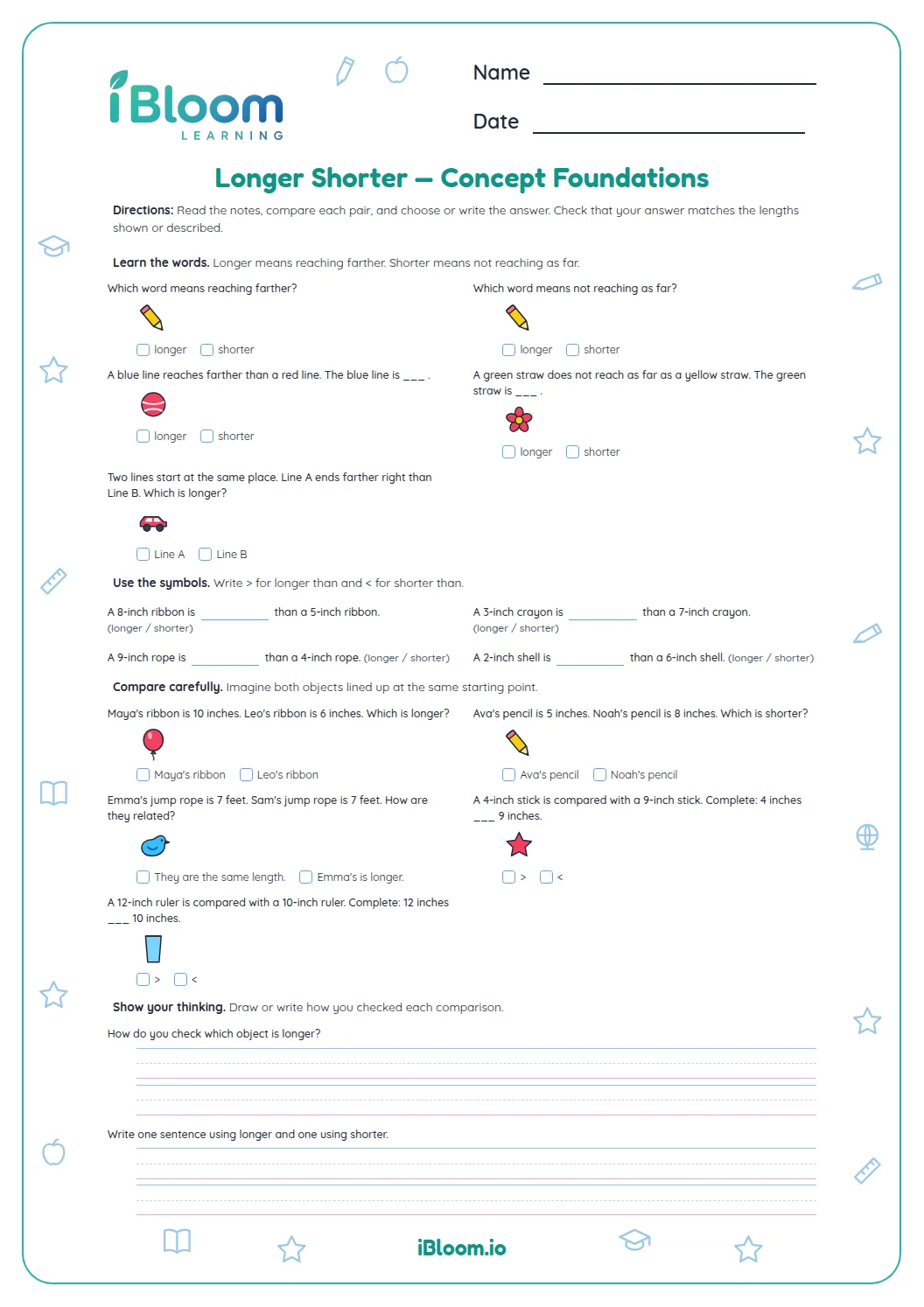
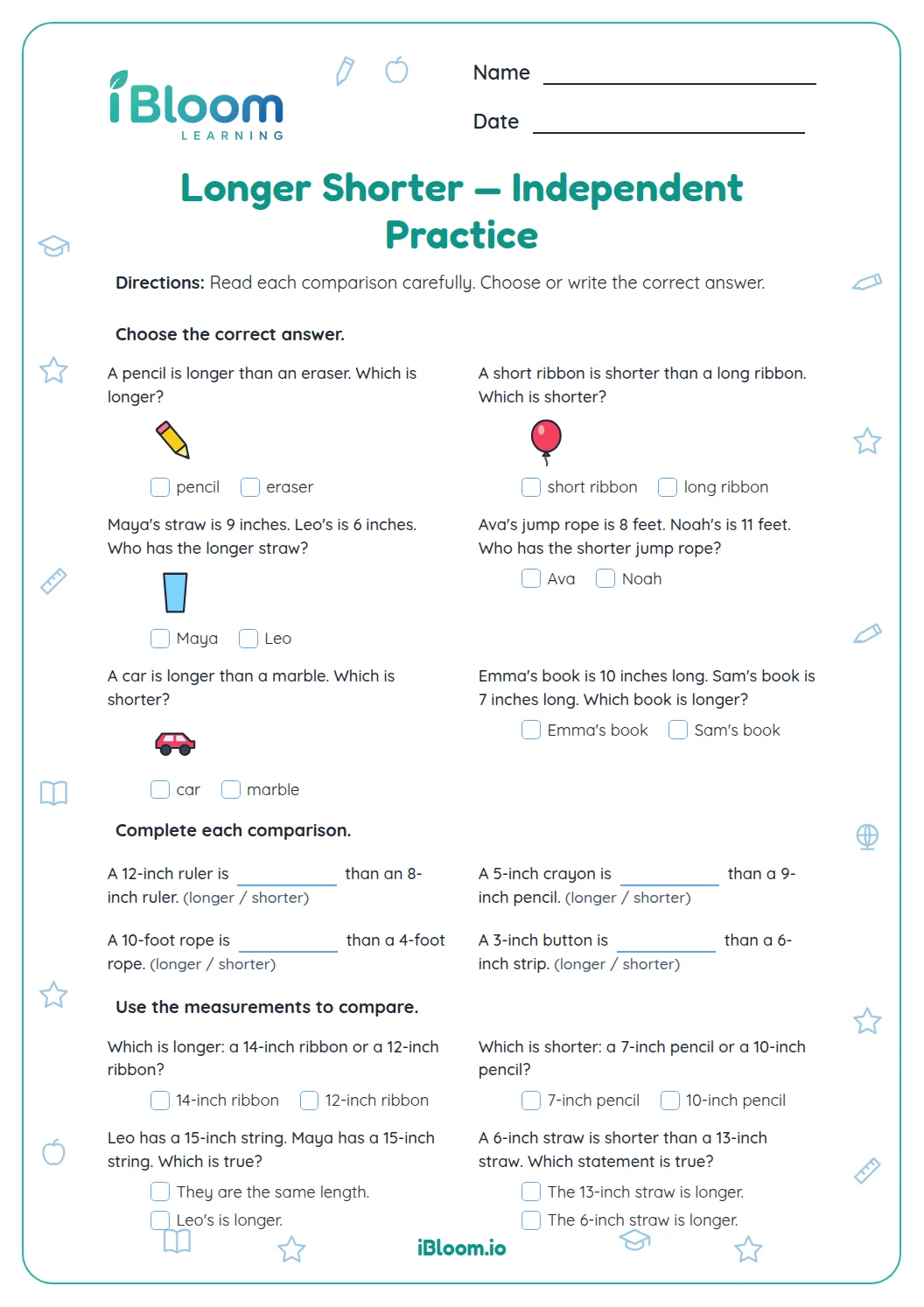
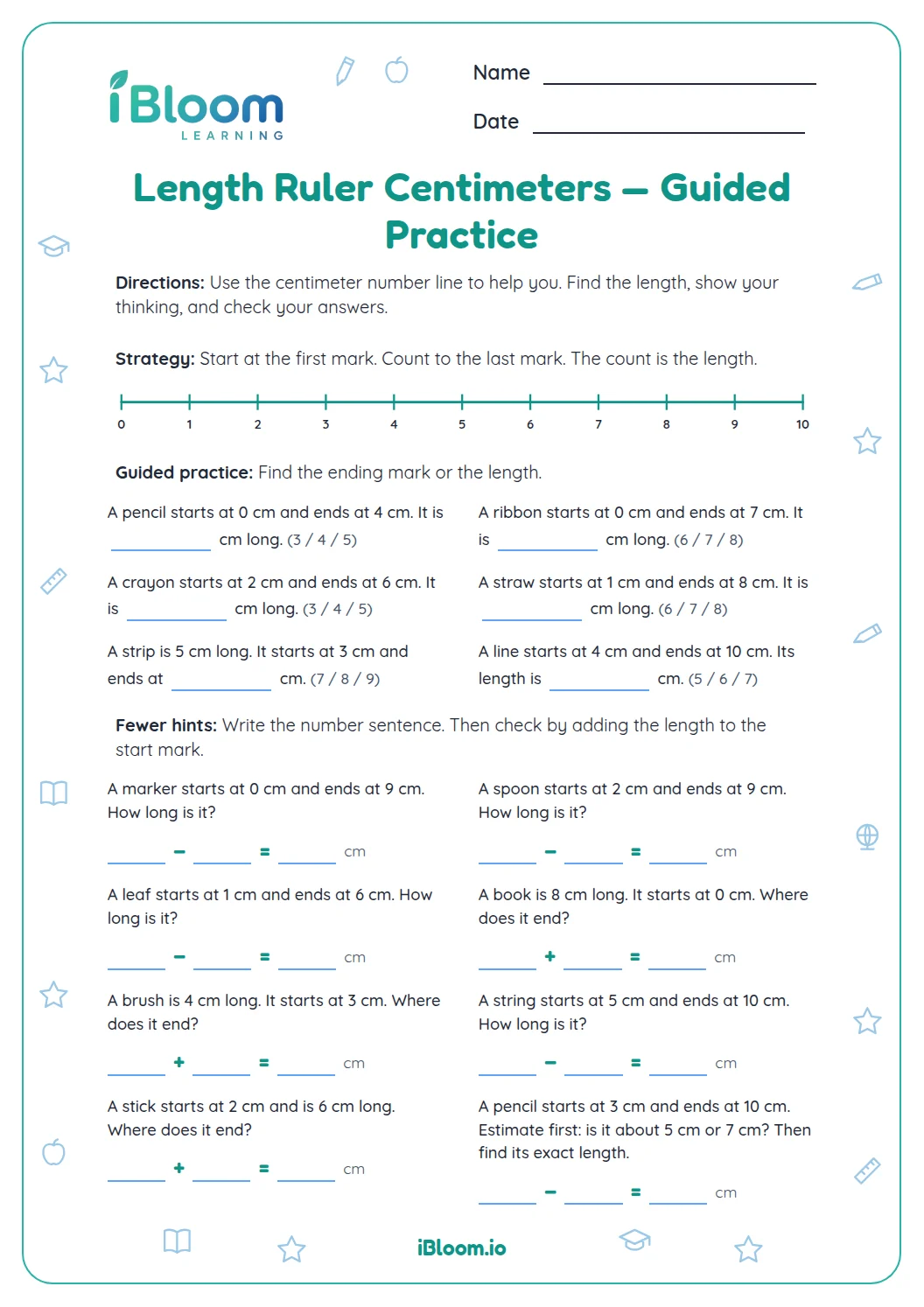
This Grade 1 worksheet gives children practice comparing and ordering lengths measured in centimeters. The 20 questions move from choosing the longer or shorter measurement to ordering three lengths and comparing lengths in short situations. Children can use the numbers and units in each prompt to decide which length is greater and find a difference. A separate answer key lists the response to every item.
What will children practice?
The sheet begins by comparing pairs and ordering three lengths. It then asks children to choose comparison words and use short measurement situations.
For the final story, subtract 11 cm from 16 cm to find that the red ribbon is 5 cm longer.
How can a child compare lengths?
Check that both measurements use the same unit. The greater number names the longer length; the smaller number names the shorter length. Put three measurements in order from least to greatest when the prompt asks for shortest to longest.
How should I use the answer key?
Have the child finish the page before checking. For an ordering item, compare the sequence against the key from shortest to longest. For the story item, ask the child to explain what the difference means in centimeters.
How to use this worksheet
- 1Read each measurement and its unit.
- 2Compare two lengths by deciding which number is greater.
- 3Order three lengths from shortest to longest.
- 4Use subtraction to find a difference when the story asks how much longer.
- 5Check all responses with the separate answer key.
Common mistakes and quick fixes
The mistake
Treating equal measurements as different lengths.
The fix
Compare the numbers; measurements with the same unit and value are equal.
The mistake
Choosing the smaller number as the longer length.
The fix
With the same unit, the greater measurement is longer.
The mistake
Subtracting the smaller length from the larger in the wrong order.
The fix
Subtract the smaller number from the larger to find the positive difference.
What to practice next
Make more practice
Questions parents and teachers ask
What does this worksheet practice?
It gives children 14 chances to compare two measured lengths, put three lengths in order, and use measurements in short situations. The items use centimeters throughout. The answer key lists the expected choices, orders, and difference. Use the printed examples and answer key to review the same skill after completing the page.
How can my child compare two lengths?
Read both measurements and check that they use the same unit. The greater number is the longer length, and the smaller number is the shorter length. For the ribbon problem, subtract 11 from 16 to find a difference of 5 centimeters. Use the printed examples and answer key to review the same skill after completing the page.
What does shortest to longest mean?
Start with the smallest measurement and list the other lengths in increasing order. For example, 4 cm, 7 cm, and 10 cm are already in shortest-to-longest order. The worksheet includes two such items with different sets of measurements. Use the printed examples and answer key to review the same skill after completing the page.
Is there an answer key?
Yes. The separate key gives the correct choice or sequence for every item. For the story question, it gives the difference in centimeters. Ask your child to describe how the numbers show which length is longer. Use the printed examples and answer key to review the same skill after completing the page.
Can the page be used independently?
A child can work through the choices and ordering questions independently after reading the directions. An adult can review the first comparison together, then let the child continue and check responses with the key after finishing. Use the printed examples and answer key to review the same skill after completing the page.