






About this worksheet
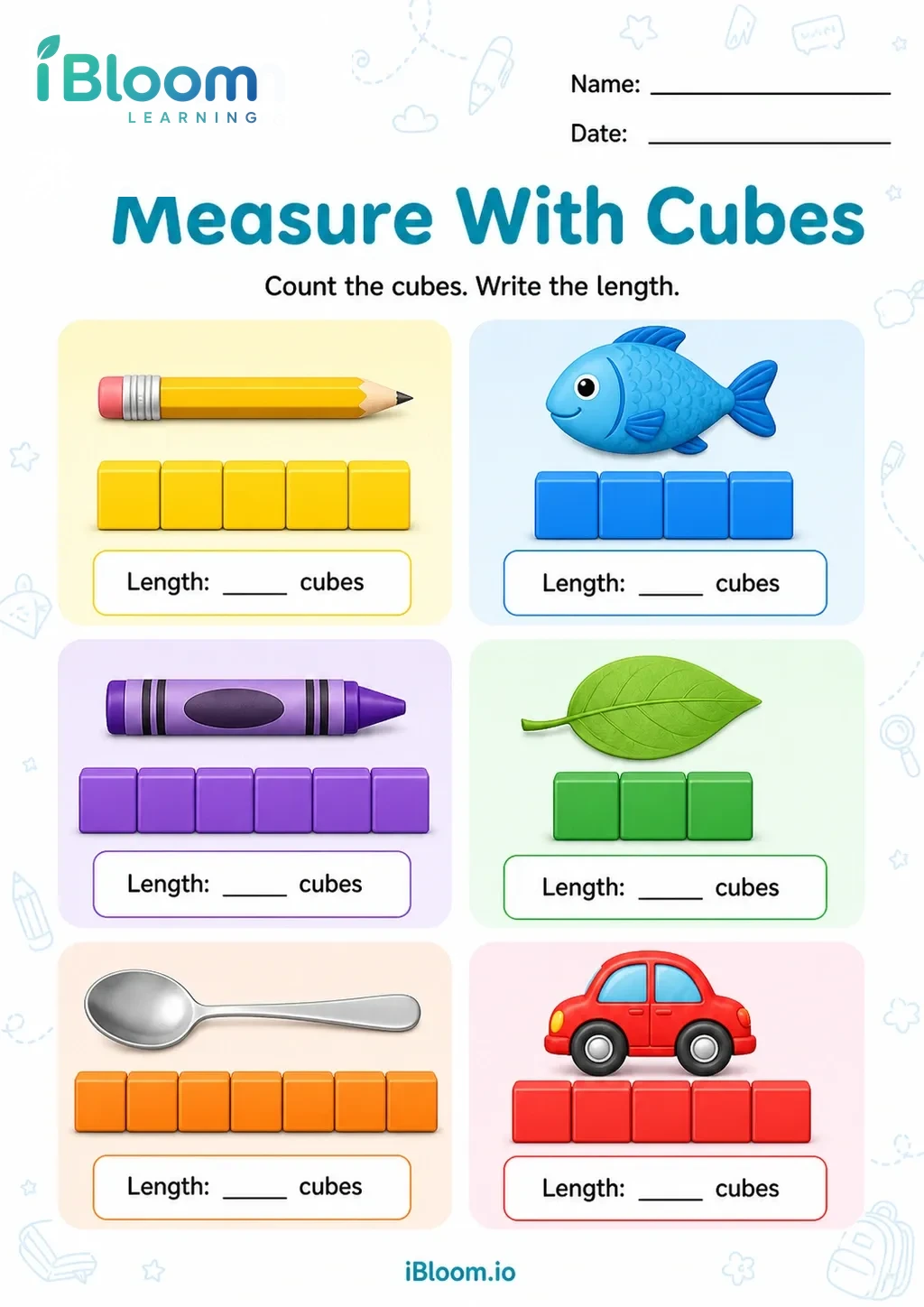
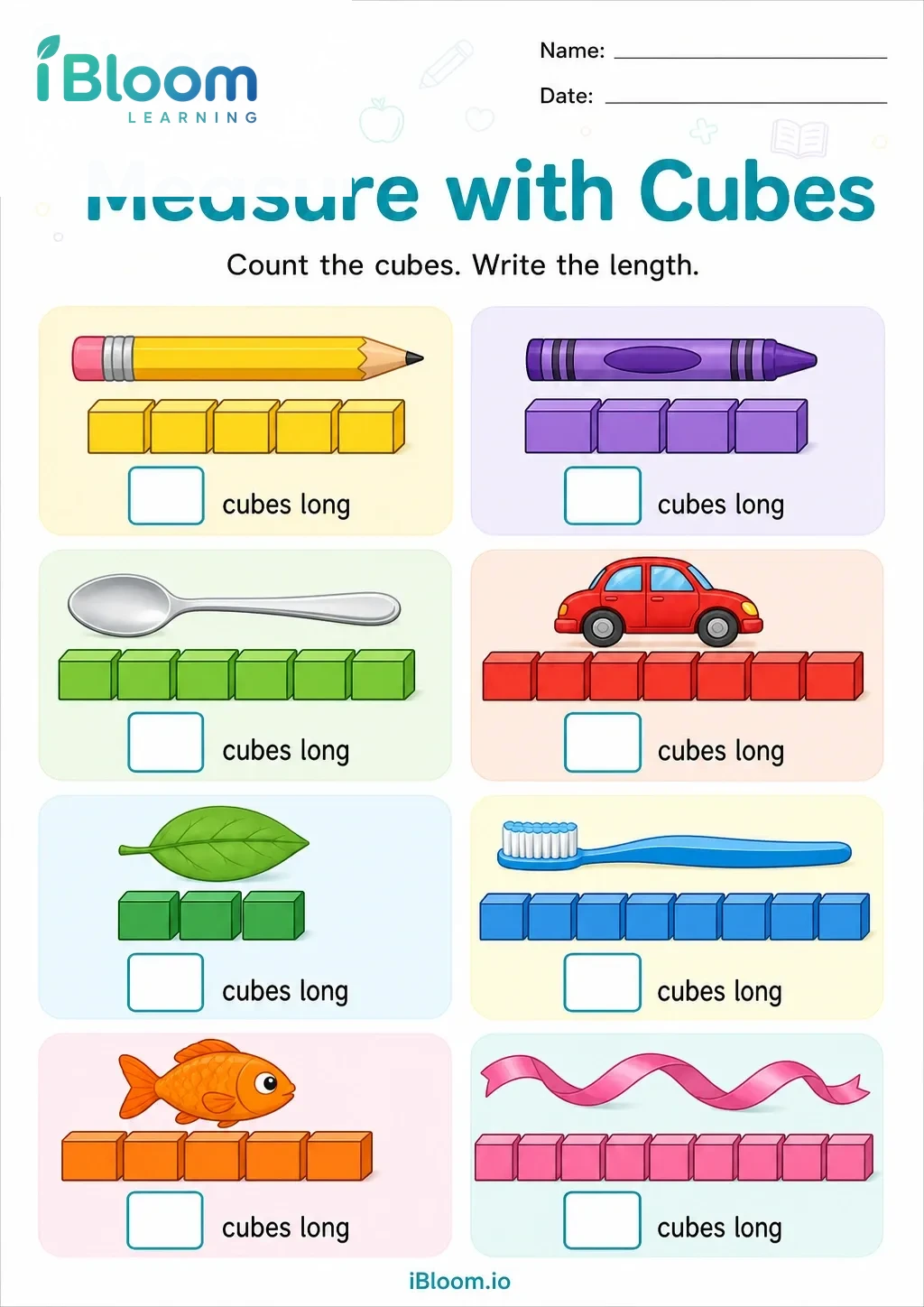
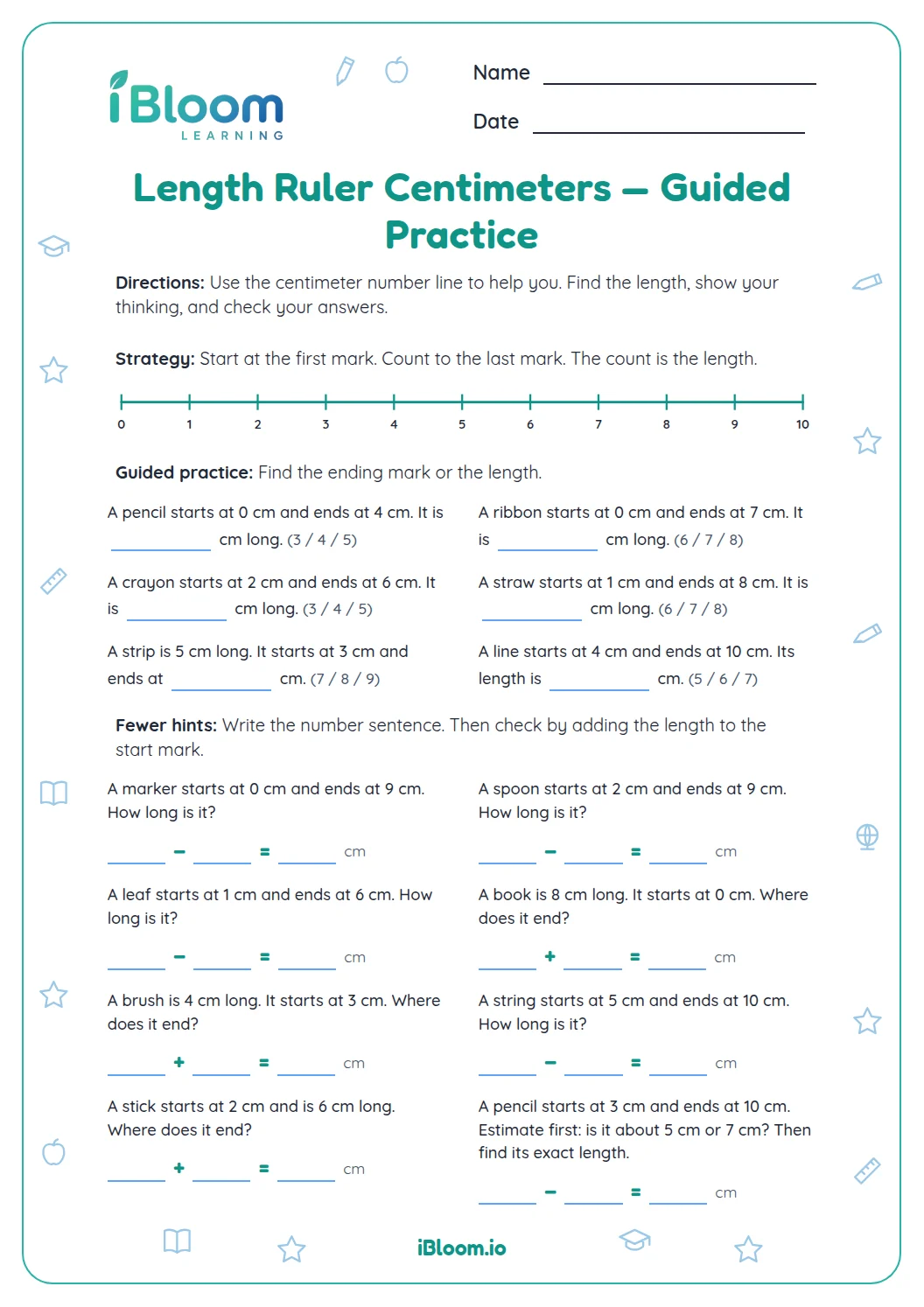
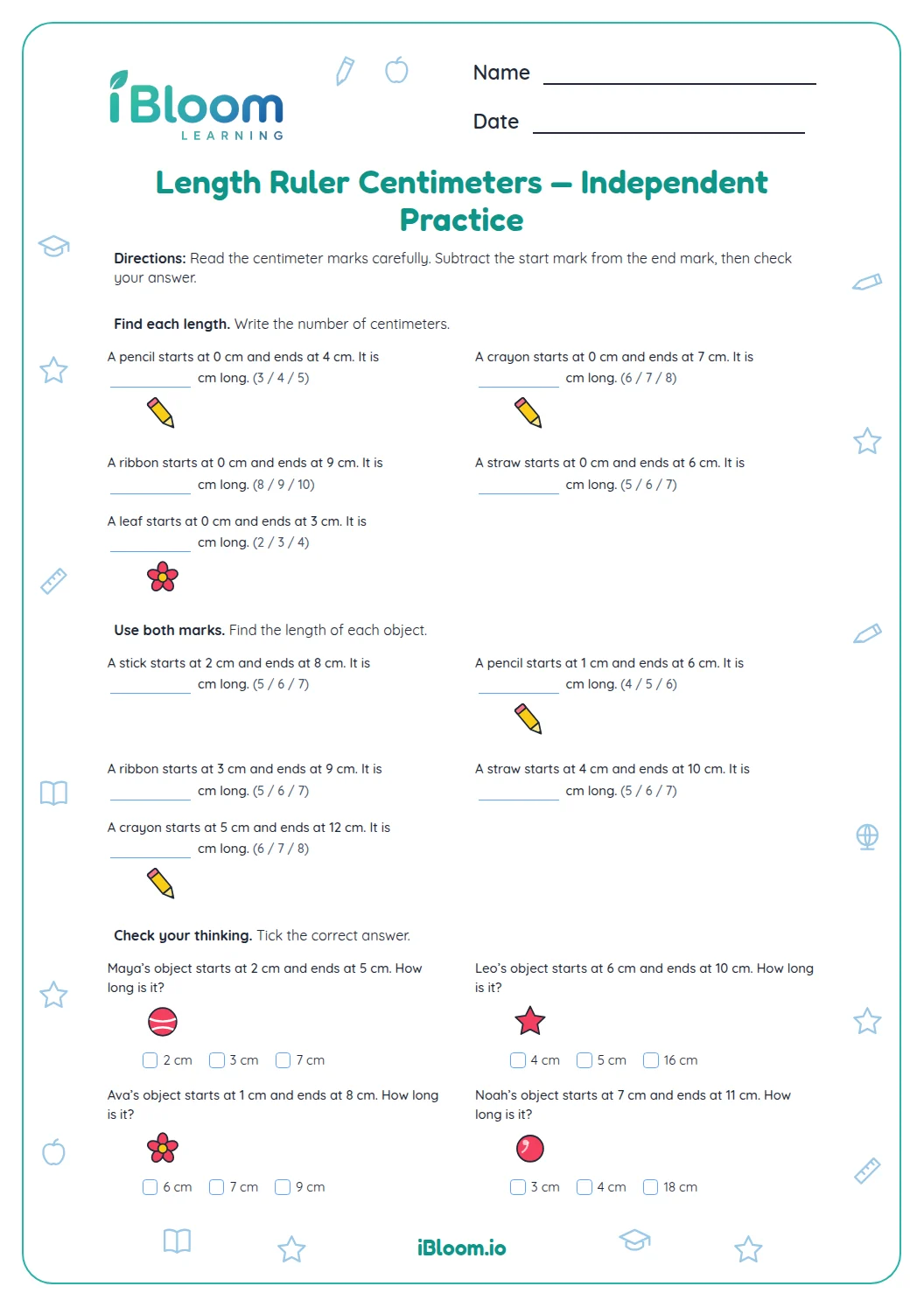
This free Grade 1 printable introduces centimeter lengths with ruler descriptions, comparisons, and short measurement stories. Students read two ruler situations, compare lengths in centimeters, and solve simple addition and subtraction questions about lengths. The ruler-reading questions practice CCSS 2.MD.A.1, selecting and using tools such as rulers to measure an object. A separate answer key is included.
Aligned to 2.MD.A.1
How do students read a centimeter ruler?
Start at zero, then count the centimeter spaces to the endpoint. The first two questions use a pencil and crayon ruler drawing; identify the endpoint and include the centimeter unit in your answer.
- 1The pencil starts at 0 cm.
- 2It reaches the 6 cm mark.
- 3Its length is 6 cm.
How can students compare two lengths?
When lengths use the same unit, compare the numbers. To find how much longer one is, subtract the shorter length from the longer one. For example, 7 cm is 2 cm longer than a bow, so the bow is 5 cm long.
What other length practice is included?
The 14 questions include ruler descriptions, longer and shorter comparisons, ordering, and short stories about joining or separating lengths. Each measured length uses centimeters unless the question asks students to choose a better unit for a door.
How to use the centimeter worksheet
- 1Start each ruler reading at zero.
- 2Count equal centimeter spaces to the endpoint.
- 3Write cm after a length measurement.
- 4Compare the numbers when both lengths use centimeters.
- 5For a story, decide whether lengths are joined or a piece is removed.
- 6Check the answer and unit with the key.
Centimeter-measurement slips to check
The mistake
Counting ruler marks instead of spaces.
The fix
Begin at zero and count each centimeter interval to the endpoint.
The mistake
Starting at the 1 mark when the object begins at zero.
The fix
Use the zero mark as the starting point.
The mistake
Comparing numbers that use different units.
The fix
Check that both lengths are in the same unit before comparing.
Common Core alignment
The ruler-reading questions practice this Common Core measurement standard.
Measure an object by selecting and using a ruler or another suitable tool.
On this sheet: Six ruler questions ask students to use a pictured ruler to measure lengths.
Show the official wordingHide the official wording
Measure the length of an object by selecting and using appropriate tools such as rulers, yardsticks, meter sticks, and measuring tapes.
What to practice next
Make more practice
Further reading
Questions parents and teachers ask
How many questions are included?
This worksheet has 14 questions about read rulers and compare lengths. The separate answer key gives an answer to each item in order. Students can complete one part at a time, then check the key and revisit any prompt that needs another look.
Does the printable include an answer key?
Yes. A separate answer key follows the practice sheet and lists a response for each numbered question. Students can finish the work before checking it, then compare each response with the key. For an incorrect answer, return to the prompt and identify the step that needs another try.
How should students use this worksheet?
Read the direction at the start of each part, then answer one question at a time. The practice focuses on read rulers and compare lengths. After completing the page, use the separate key to check responses and review the items that were difficult.
How long does the worksheet take?
Plan about 15 minutes for the 14 questions, with extra time if a student wants to discuss a method. The exact pace depends on reading and writing speed. Breaking the practice into parts can make it easier to pause and return later.
Who is this worksheet for?
This printable is labeled Grade 1. Its questions focus on read rulers and compare lengths with short prompts and an answer key. A parent, teacher, or tutor can read a direction aloud, then let the learner complete the practice and check it afterward.