





About this worksheet
This Grade 1 measurement worksheet uses familiar objects such as pencils, ribbons, leaves, sticks, and toys to practice comparing lengths. Children choose the longest or shortest object in short stories, compare two measurements, and find how many inches longer one object is. The 14 questions use familiar measurements and clear units. The work practices CCSS 1.MD.A.1 by comparing and ordering object lengths. A separate answer key is included.
Aligned to 1.MD.A.1
How do children compare two lengths?
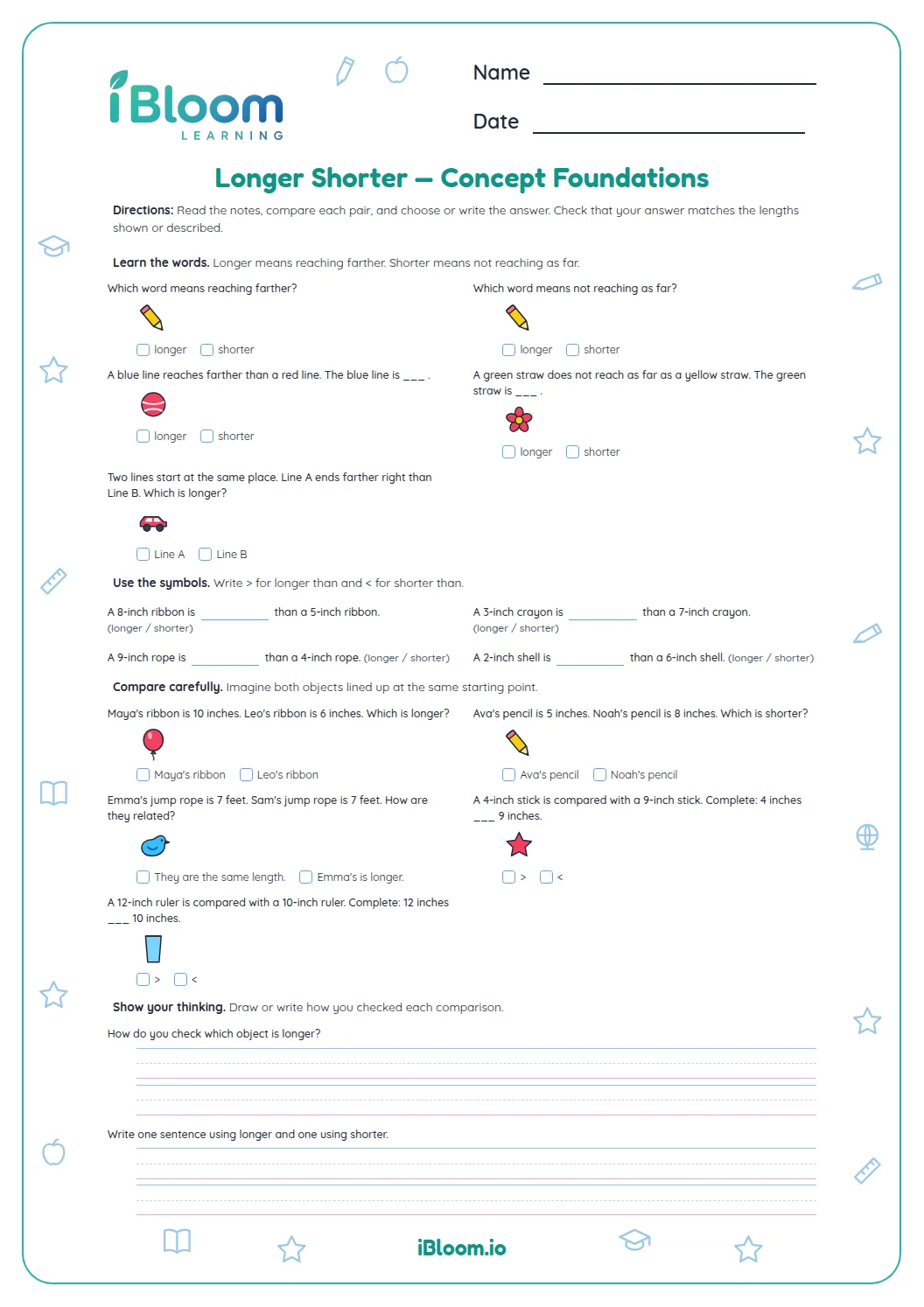
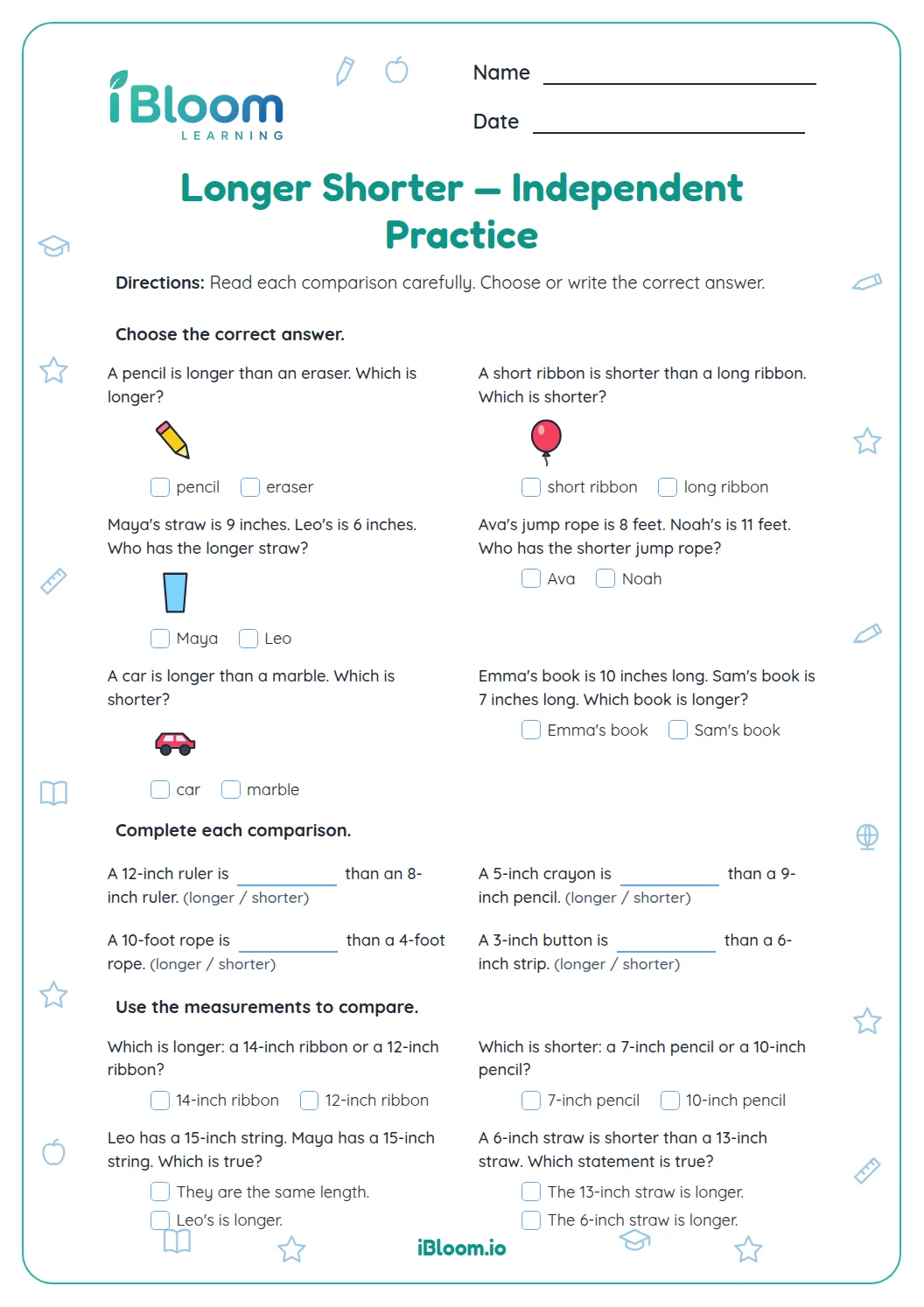
Read each object’s measurement, then compare the numbers. The greater number names the longer object, and the smaller number names the shorter one. In question 1, 9 inches is greater than 6 inches, so Maya’s ribbon is longer.
- 1Maya’s ribbon: 9 inches
- 2Leo’s ribbon: 6 inches
- 39 is greater than 6, so Maya’s ribbon is longer.
How can you find how many inches longer?
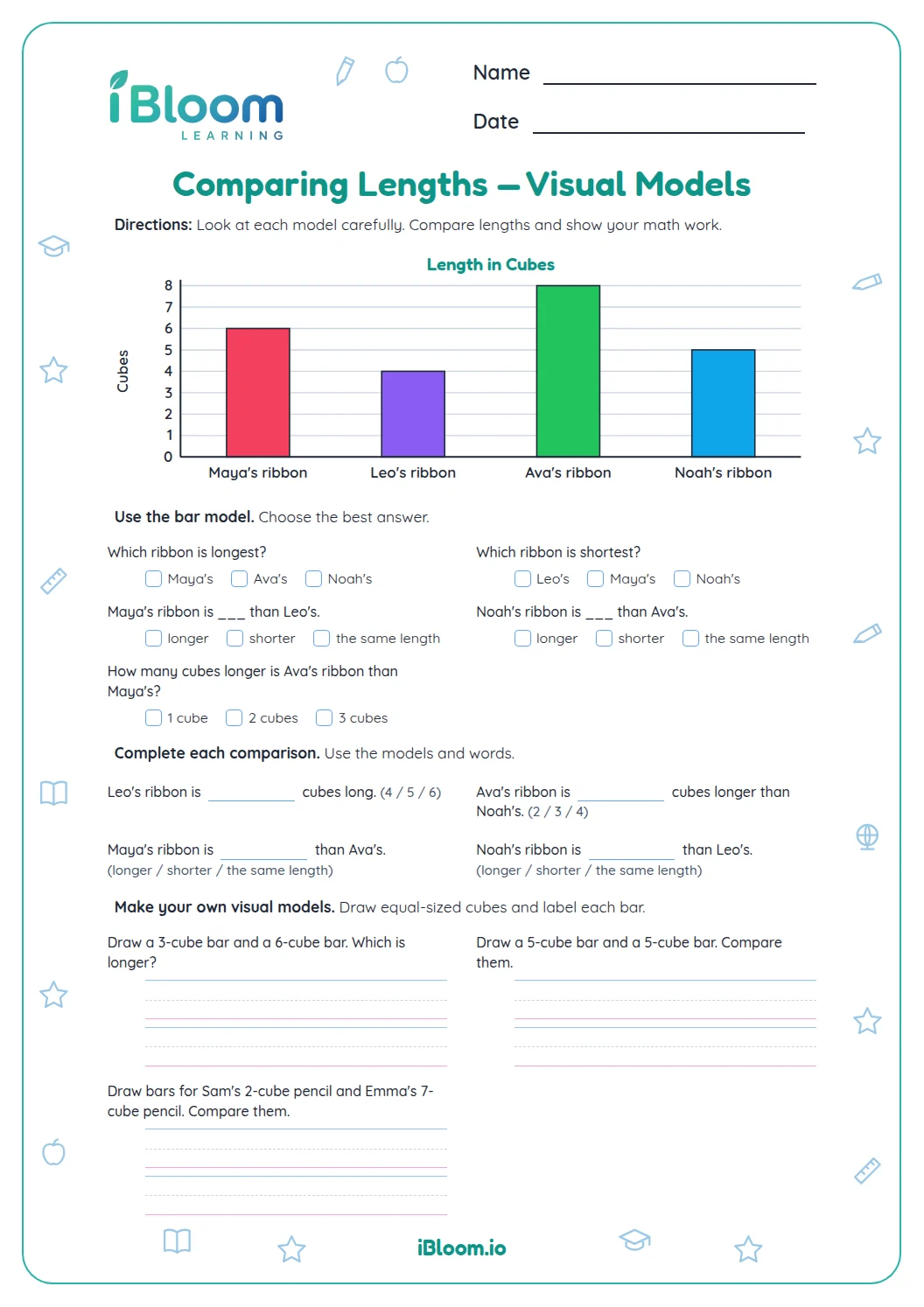
Find the gap between the two lengths. For a 9-inch ribbon and a 6-inch ribbon, count up from 6 to 9 or subtract: the difference is 3 inches. The last two questions give space to show the subtraction.
How do the stories help compare lengths?
The stories name the objects and give each length in a familiar unit. Compare the numbers first, then check whether the question asks for longest, shortest, or the difference. For a difference, subtract the shorter measurement from the longer one.
How to use this worksheet at home or in class
- 1Read the objects and their lengths in the story.
- 2Check that the lengths use the same unit.
- 3Compare the numbers to choose the longer or shorter object.
- 4For three objects, compare all three lengths before choosing.
- 5For “how many inches longer,” subtract the smaller length from the larger.
- 6Include the requested unit in a difference answer.
Common mistakes and quick fixes
The mistake
Choosing the longer object because its number is smaller.
The fix
Compare the measurements; the greater number is the longer length.
The mistake
Comparing measurements with different units as if they matched.
The fix
Check the unit words before comparing.
The mistake
Giving the longer length instead of the difference.
The fix
Subtract the shorter measurement from the longer one.
Curriculum alignment
The problems compare lengths in inches and connect the comparison to familiar objects.
Compare and order familiar objects by length using consistent units.
On this sheet: The questions compare object lengths and ask which is longer or shorter.
Show the official wordingHide the official wording
Order three objects by length; compare the lengths of two objects indirectly by using a third object.
What to practice next
Make more practice
Further reading
Questions parents and teachers ask
What does “longer” mean in these problems?
The longer object has the greater length when both use the same unit. For example, a 9-inch ribbon is longer than a 6-inch ribbon. The first eight questions ask children to choose the longest or shortest object in familiar situations.
How should a child read the ruler drawings?
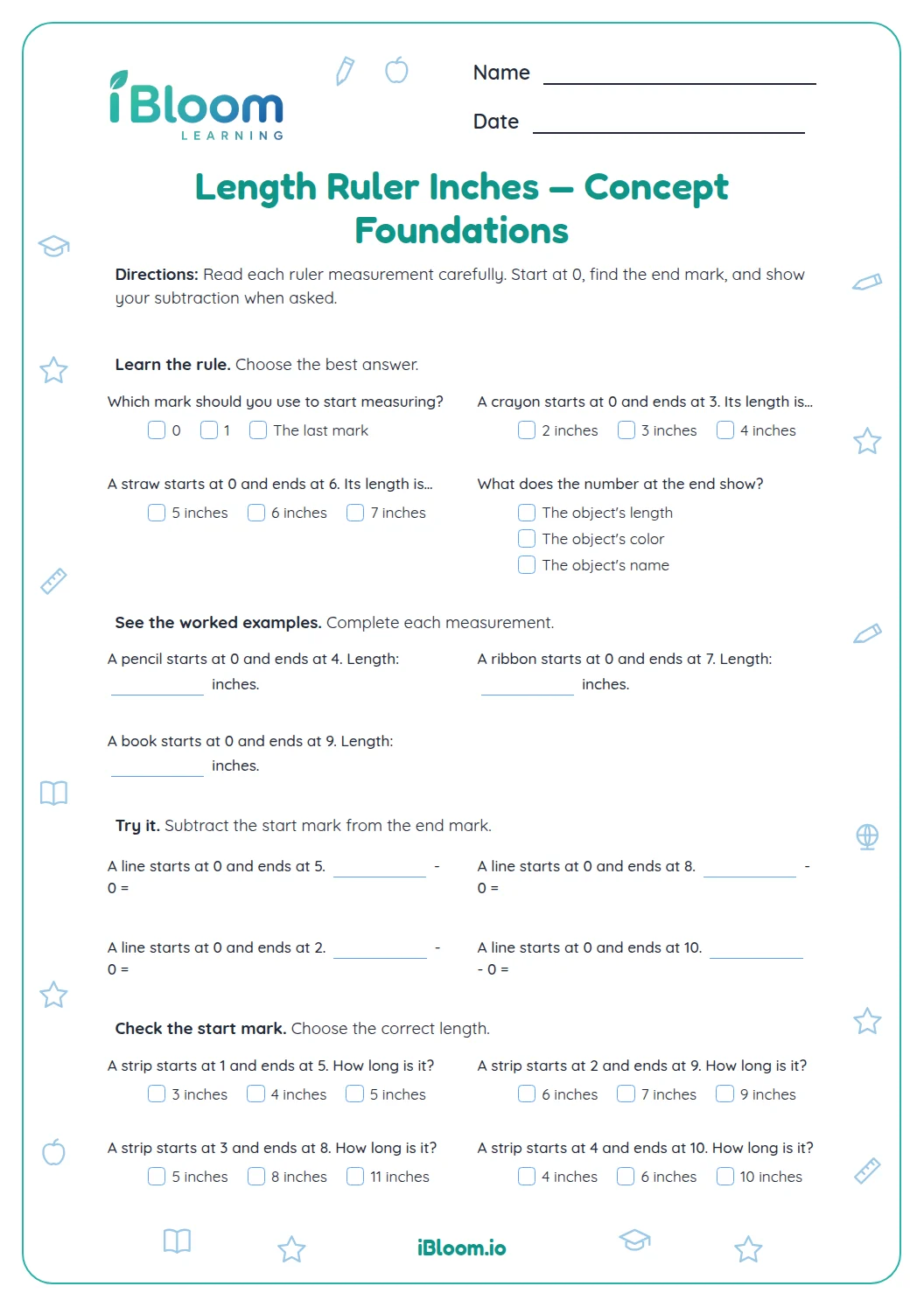
Read the object names and lengths in each story, then compare the numbers. The sheet gives lengths in inches or blocks within each question. A larger measurement means a longer object; a smaller one means a shorter object.
How do children answer “how many inches longer”?
Find the difference between the longer and shorter lengths. A child can subtract the smaller number from the larger number or count up from the smaller measurement. For 9 inches and 6 inches, the difference is 3 inches.
Why does the worksheet use familiar objects?
Pencils, ribbons, leaves, sticks, and toys give children familiar situations to imagine while comparing measurements. The lengths are stated so children can focus on choosing the longest or shortest object and finding a difference. Talk through which number belongs to each object.
How long does this worksheet take?
Plan for about 20 minutes for the 14 questions. The first questions ask children to compare two or three measurements, and the last two leave room to show subtraction. Read each story aloud and help your child keep the object and its length together.