




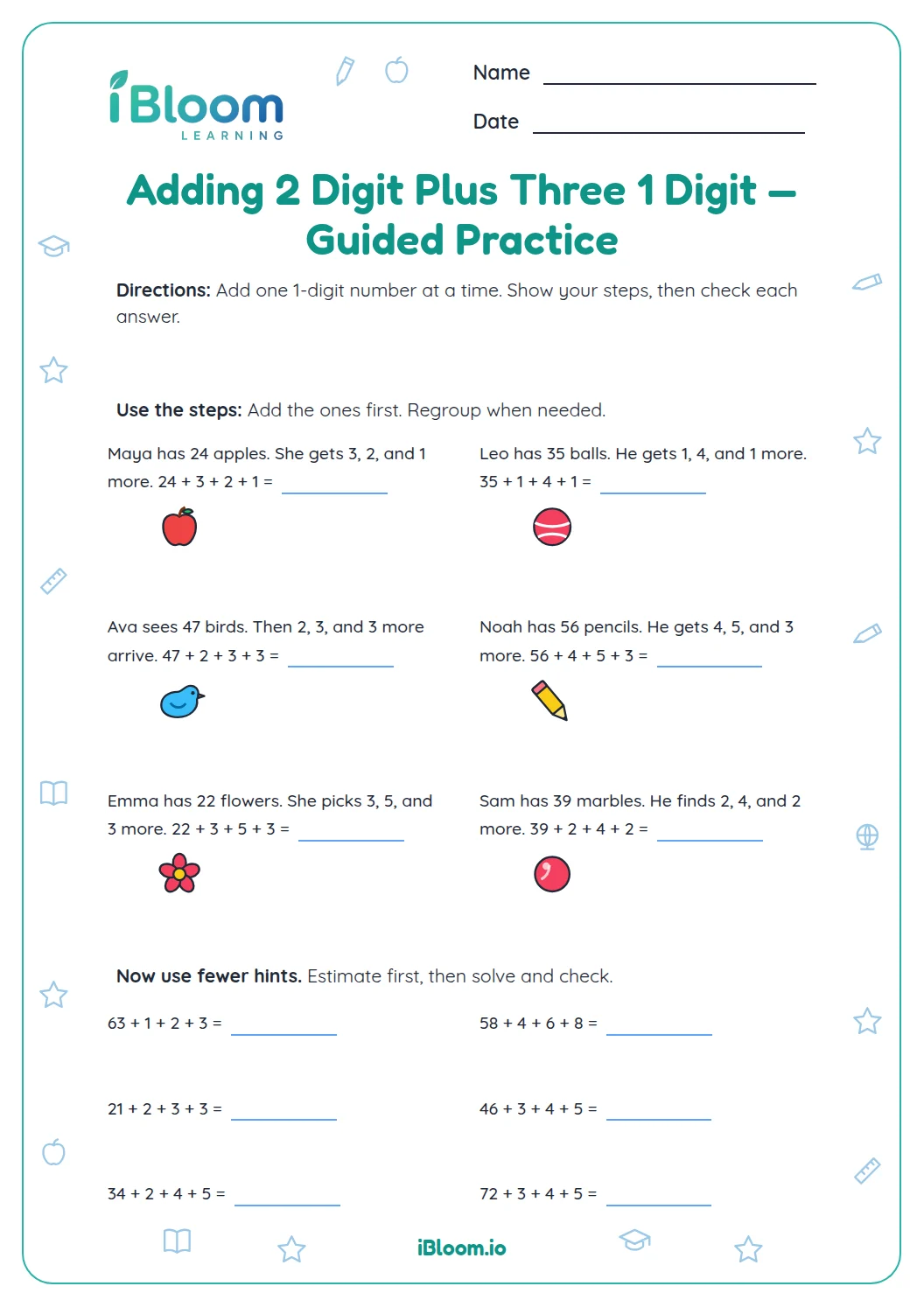
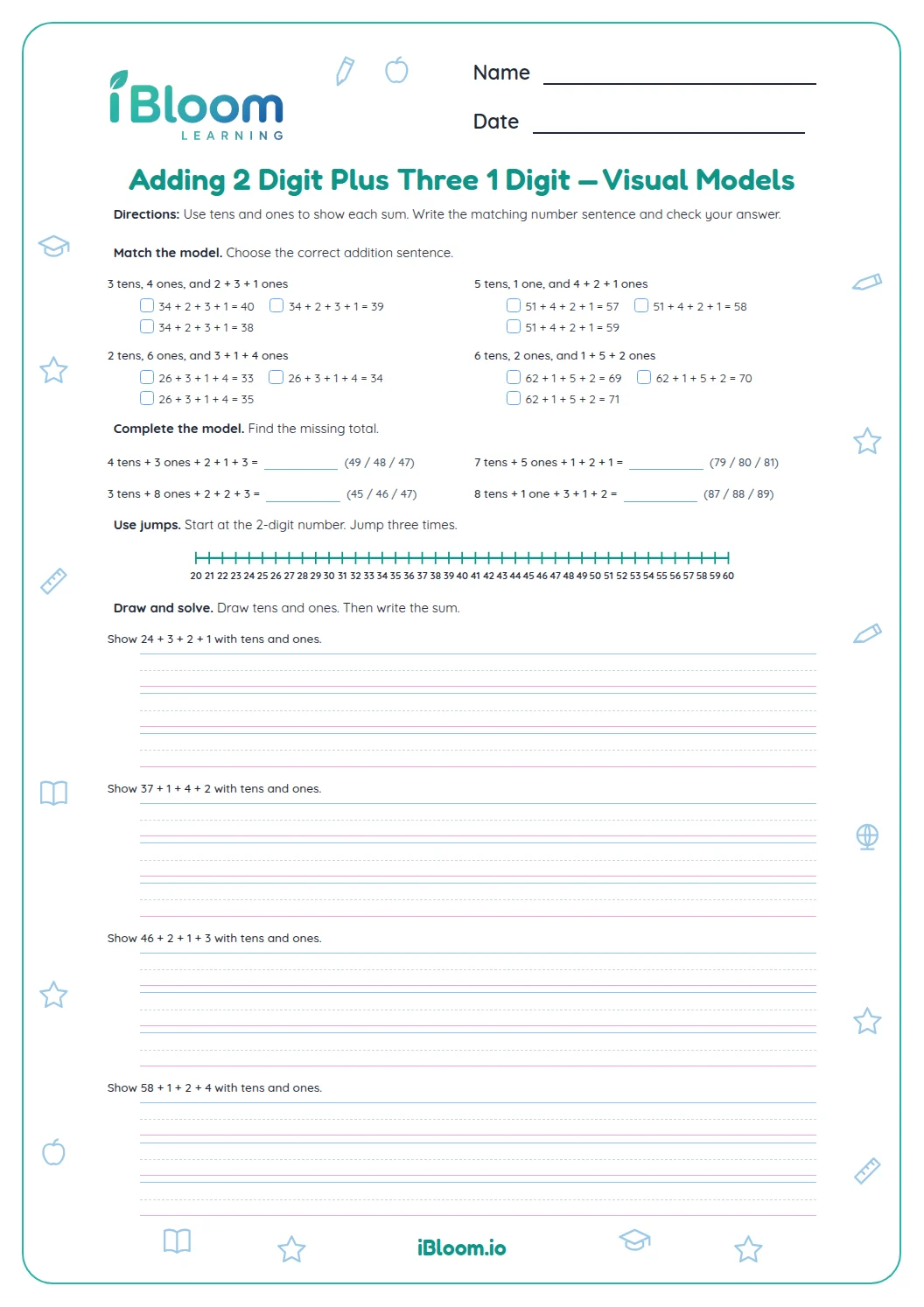
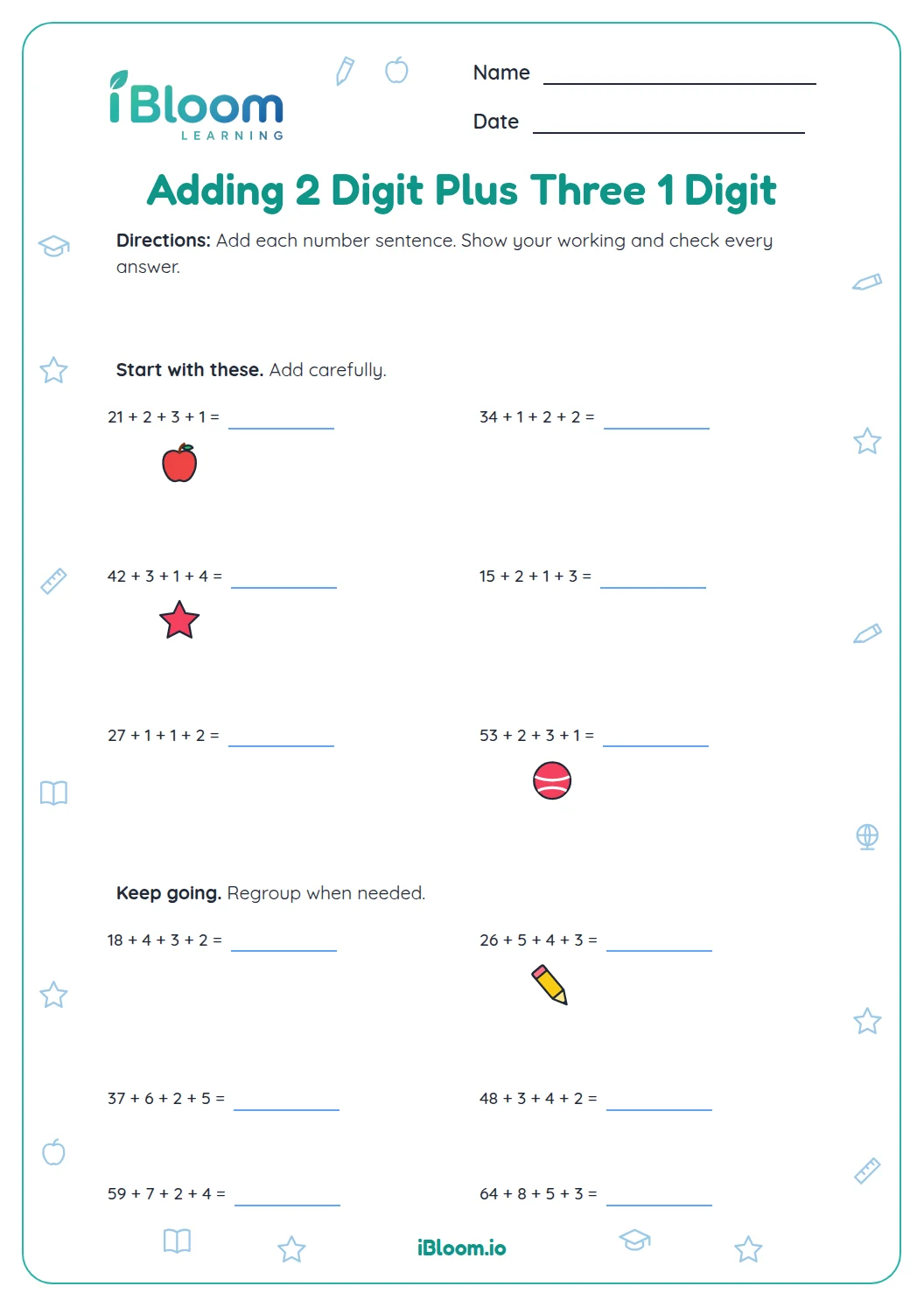
About this worksheet
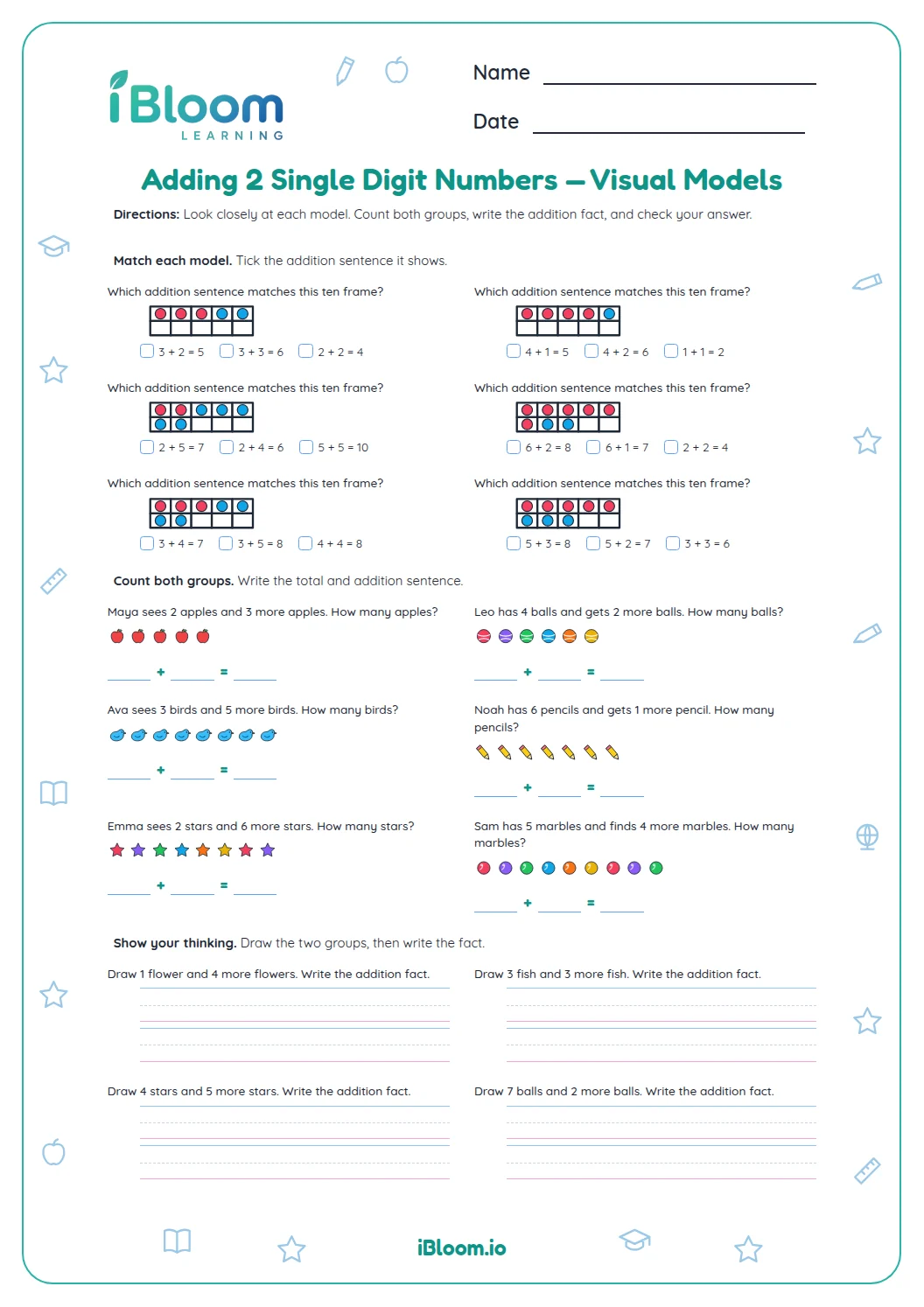
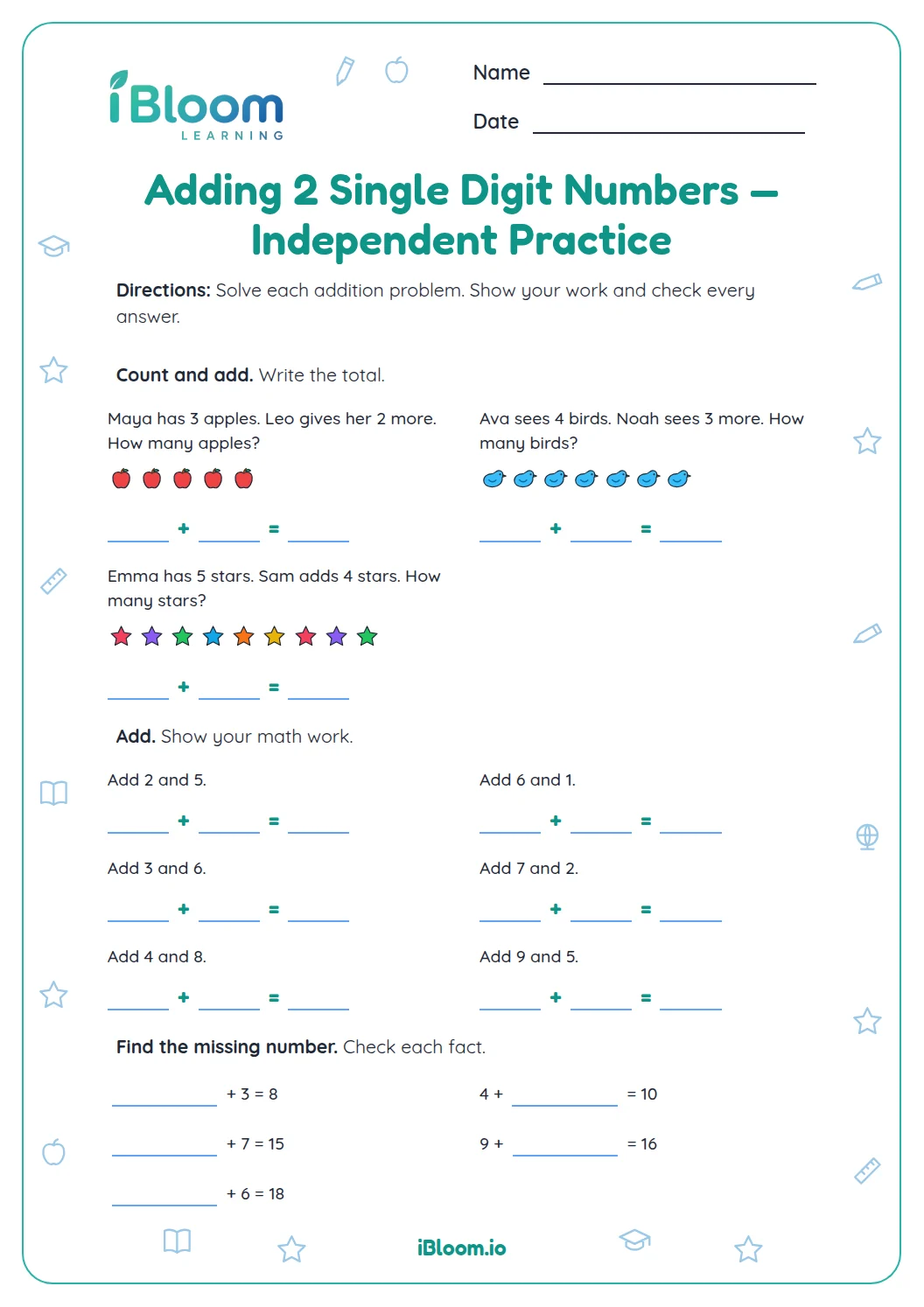
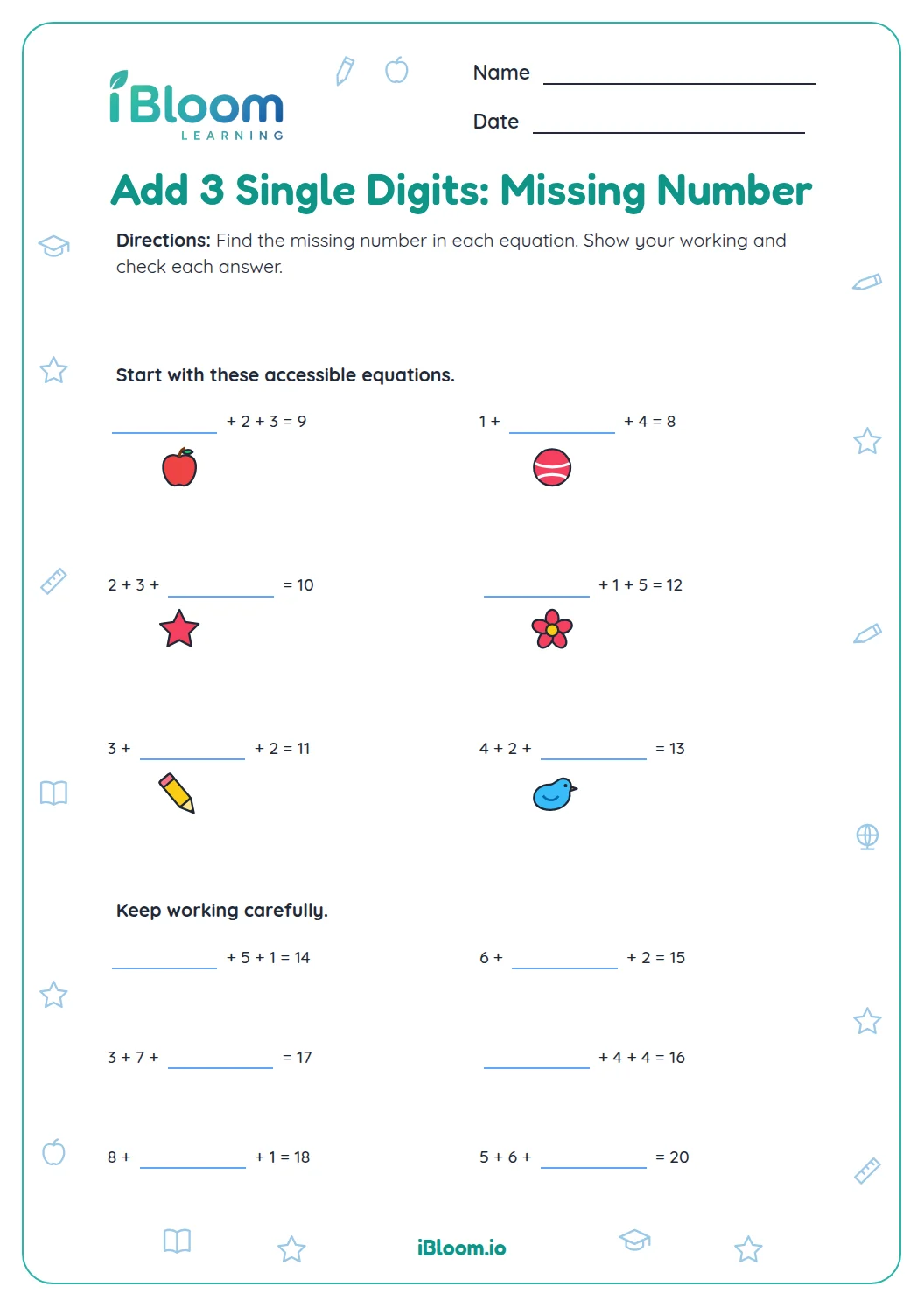
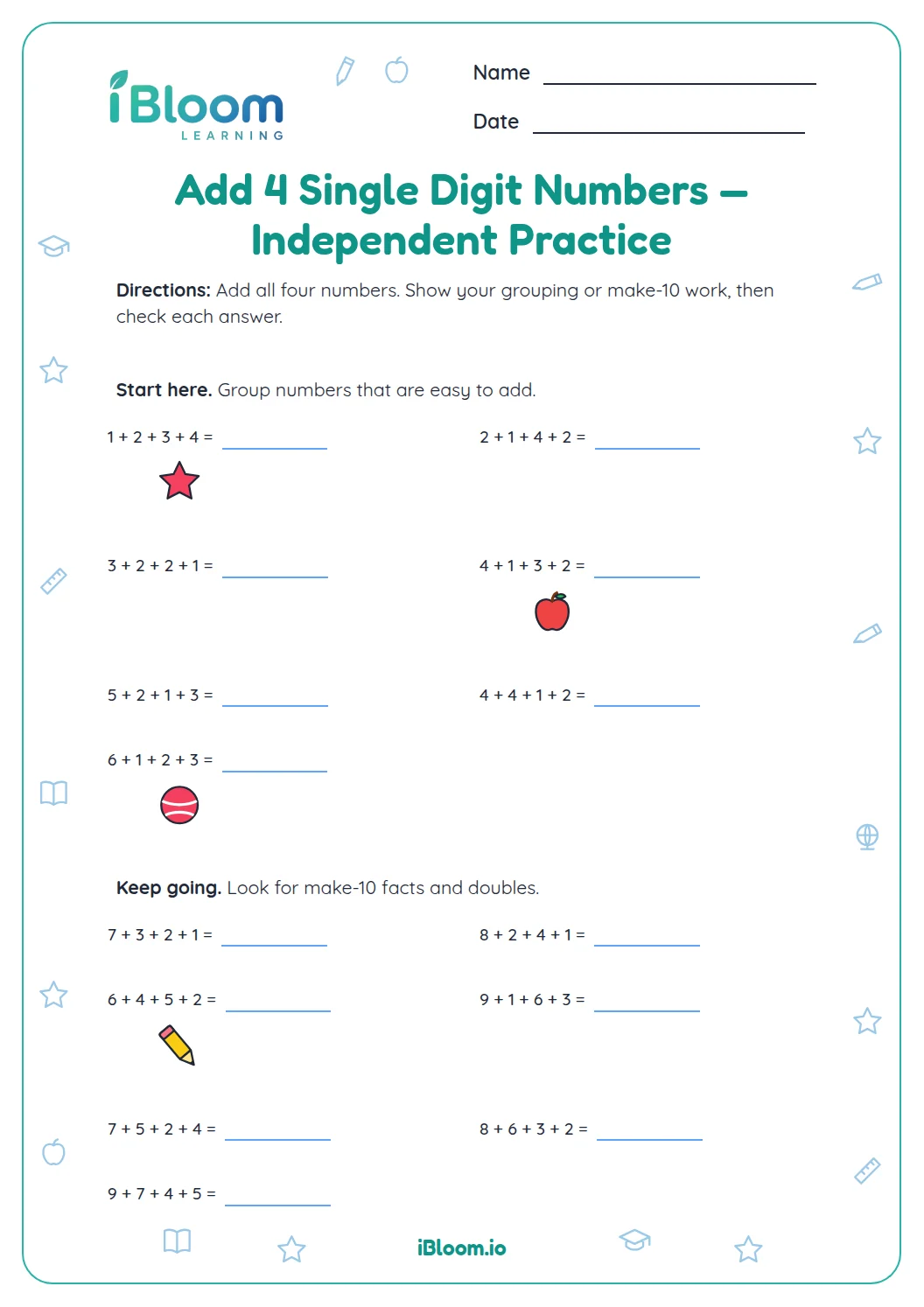
This free Grade 2 addition worksheet builds the skill of adding three single-digit numbers. Children choose a useful pair, add the third number, and solve four short story problems. It has 16 questions on two worksheet pages and a separate two-page answer key. The sums stay within 20 and support the mental strategies in 2.OA.B.2.
Aligned to 2.OA.B.2
How can a useful pair make addition easier?
Look for two addends that make 10 or another familiar sum. Add those first, then combine the total with the third addend.
How does 8 + 2 + 5 work?
The first two addends make 10. Add the remaining 5 to find the total.
- 18 + 2 + 5
- 28 + 2 = 10
- 310 + 5 = 15
What does the worksheet practice?
Questions 1–12 are three-addend number sentences. Questions 13–16 apply the same operation to groups of objects, books, points, and fruit. Each story has three quantities to combine.
How should a child check a sum?
Add the three numbers in a different order or group a pair that makes 10. Then reread the story and make sure the total counts all three groups.
How to add three addends
- 1Read all three addends before calculating.
- 2Find a pair that makes 10 or another familiar sum.
- 3Add that pair first.
- 4Add the remaining number to the partial sum.
- 5For a story, check that all three groups are included.
Common mistakes and quick fixes
The mistake
Adding only two of the three numbers.
The fix
Point to each addend as it is included in the total.
The mistake
Reusing an addend when regrouping.
The fix
Circle the pair you add first, then add only the number left.
The mistake
Reporting a partial sum as the answer.
The fix
Check whether a third addend still needs to be added.
Common Core alignment
Use addition strategies and known facts to find sums efficiently.
On this sheet: The questions combine three one-digit addends with mental strategies and familiar facts.
Show the official wordingHide the official wording
Fluently add and subtract within 20 using mental strategies. By end of Grade 2, know from memory all sums of two one-digit numbers.
What to practice next
Make more practice
Further reading
Questions parents and teachers ask
What is a useful pair in a three-number sum?
A useful pair is two addends that are easy to combine, such as 8 and 2, which make 10. Add that pair first, then add the third number to the total. This keeps all three addends in view. Ask the learner to point to the clue in the question before answering.
What is on this Grade 2 worksheet?
It includes 16 questions on two worksheet pages: 12 three-addend number sentences and four short word problems. A separate two-page answer key follows. The sums stay within 20 and use single-digit addends. Ask the learner to point to the clue in the question before answering.
Does the order of the addends matter?
No. The total stays the same when addends are regrouped or moved. A child can choose the pair that is easiest to add, then combine that partial sum with the remaining number. Ask the learner to point to the clue in the question before answering.
How can I help if a child loses an addend?
Have the child mark or point to each of the three numbers as it is added. For a story, underline each group or quantity before calculating, then check that the answer includes all three. Ask the learner to point to the clue in the question before answering.
Is an answer key included?
Yes. The printable includes a separate two-page key for the 16 questions. A child may use a different addition order from the worked example and still reach the same correct total. Ask the learner to point to the clue in the question before answering.