

About this worksheet
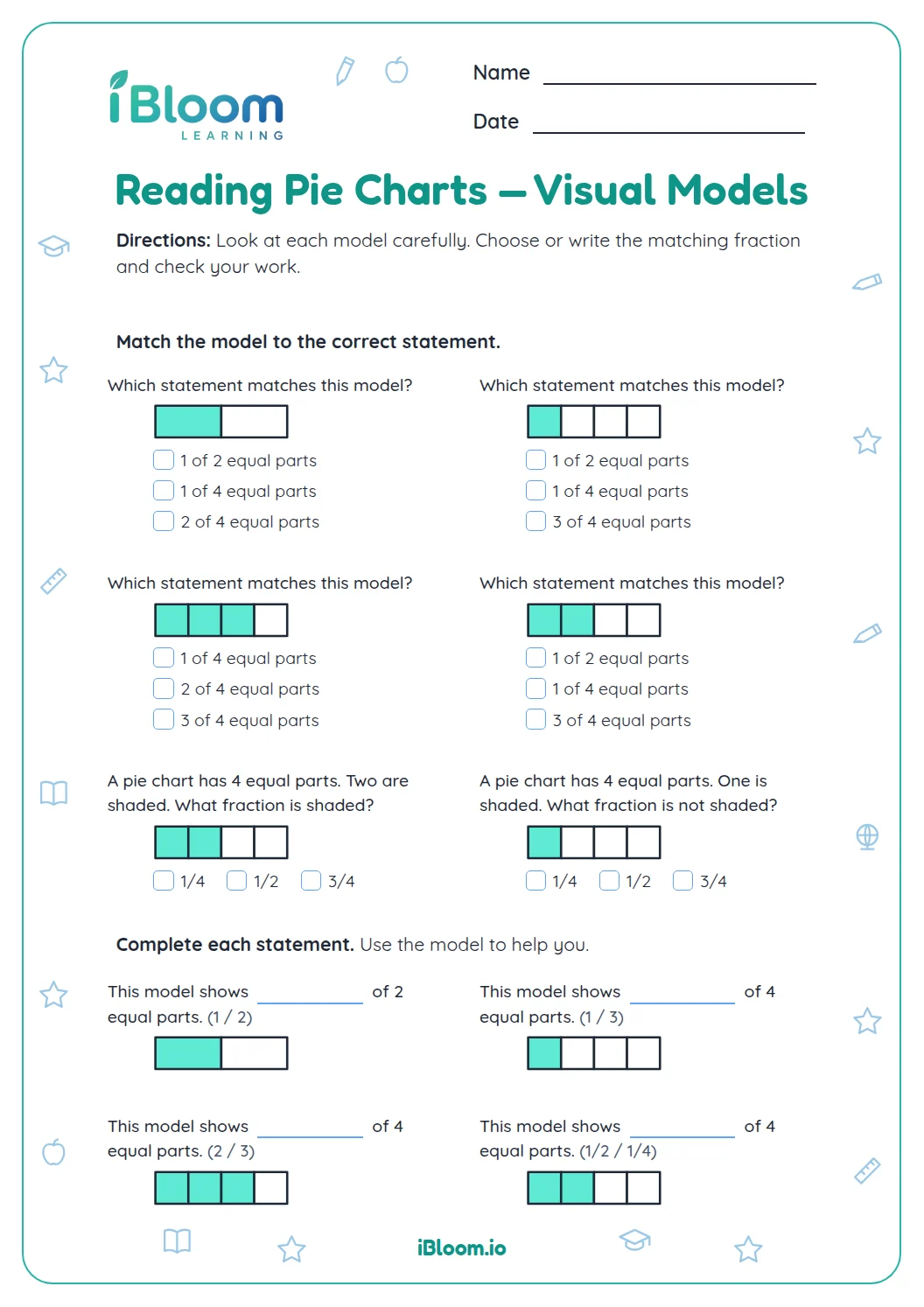
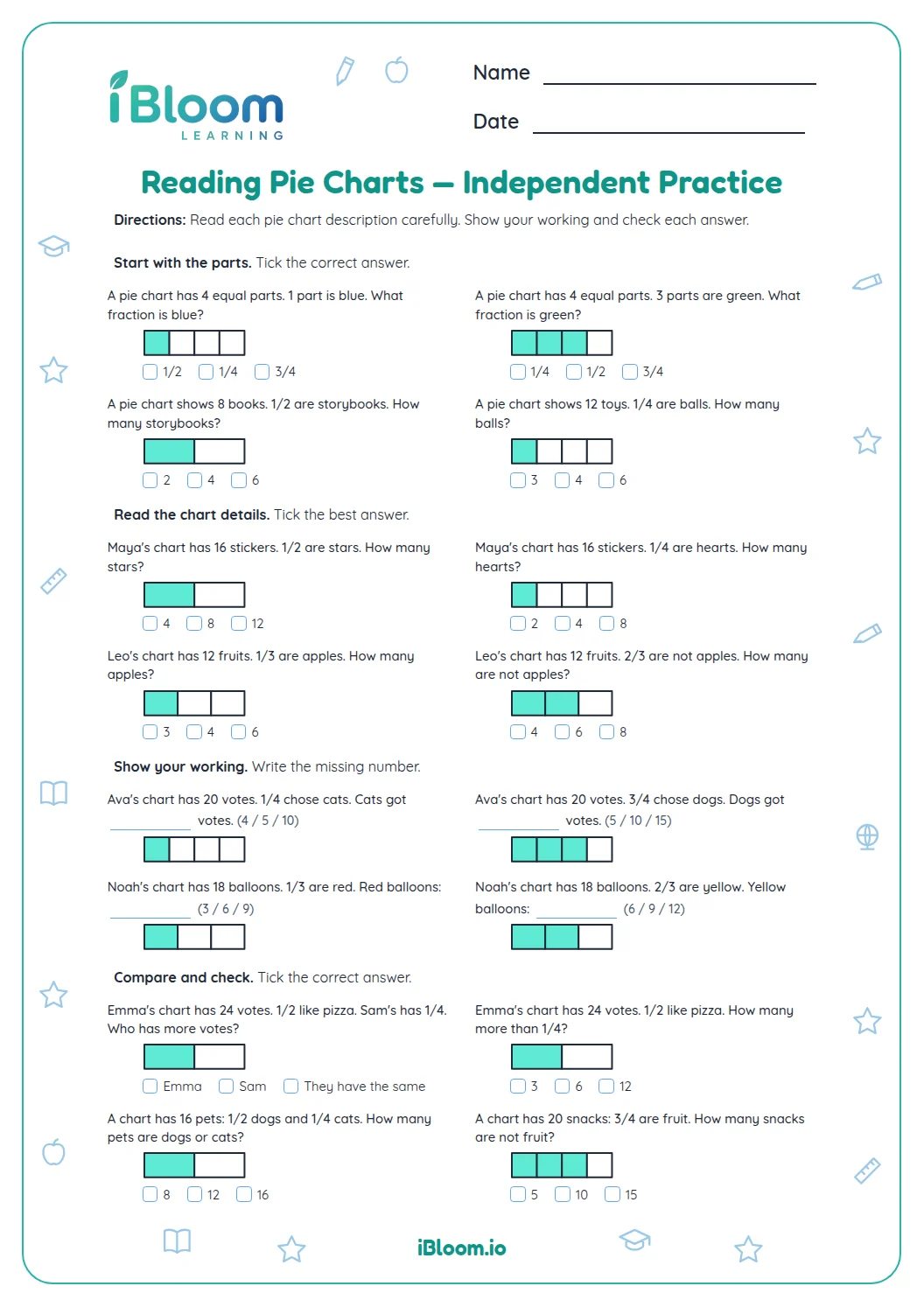
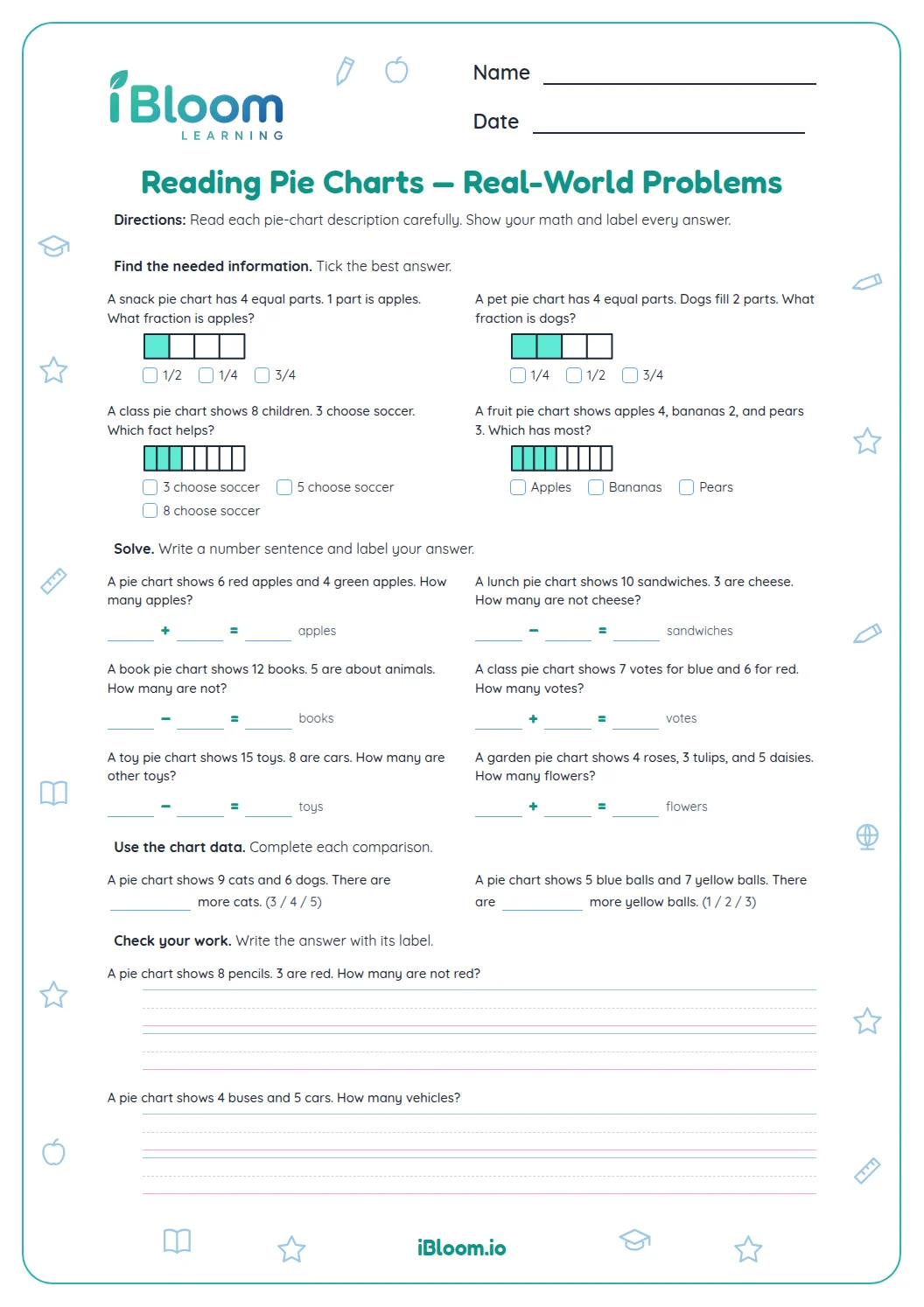
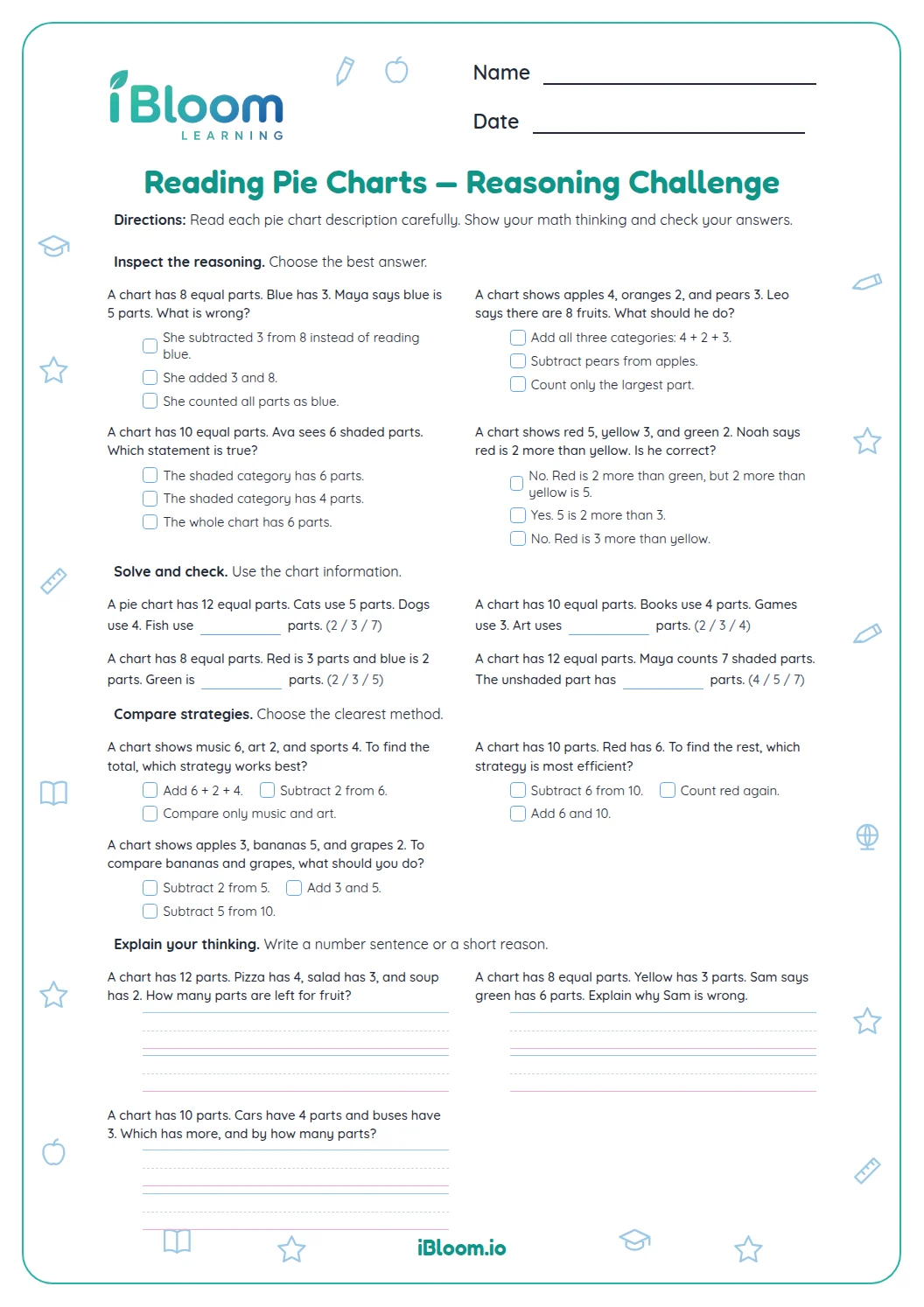
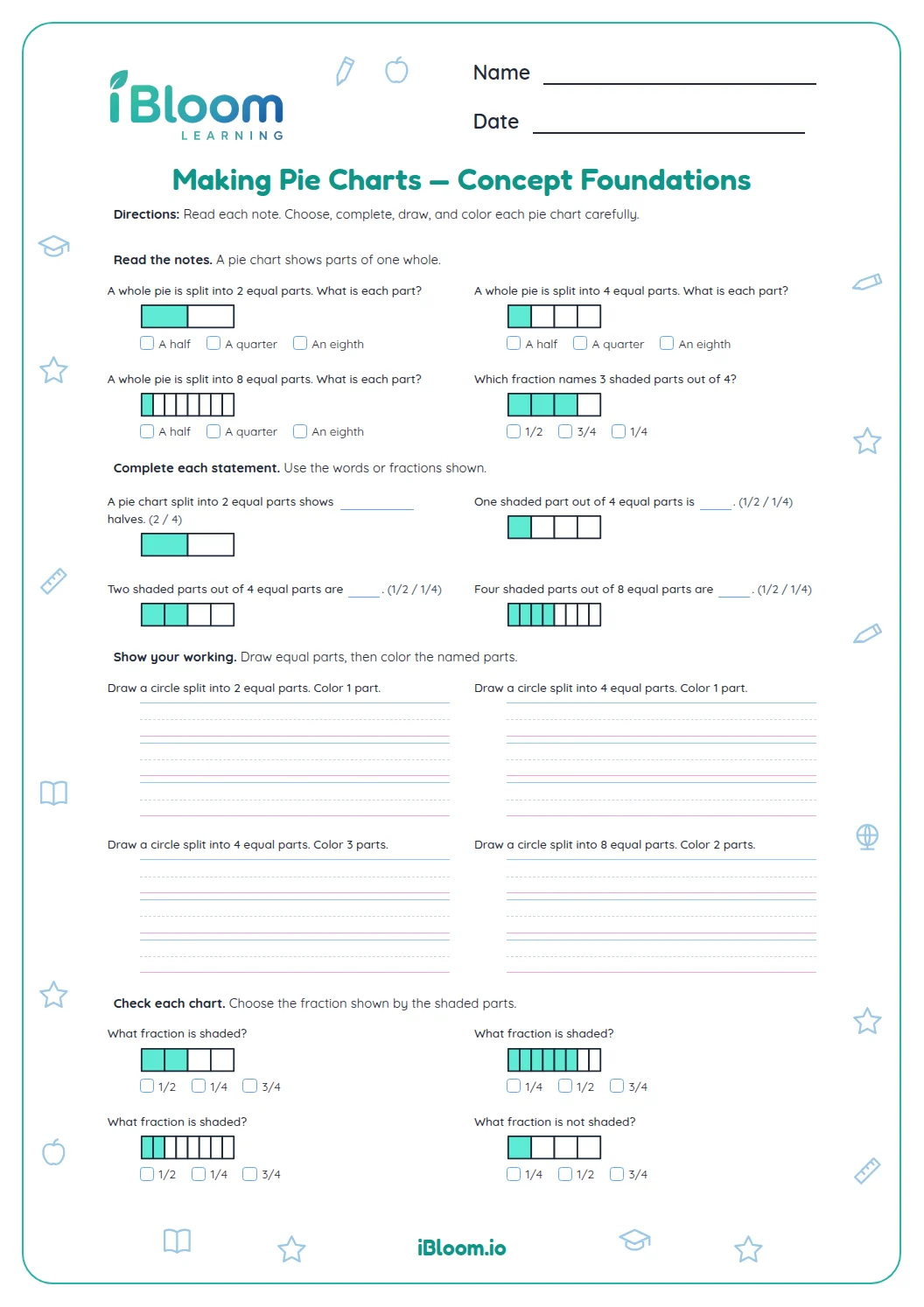
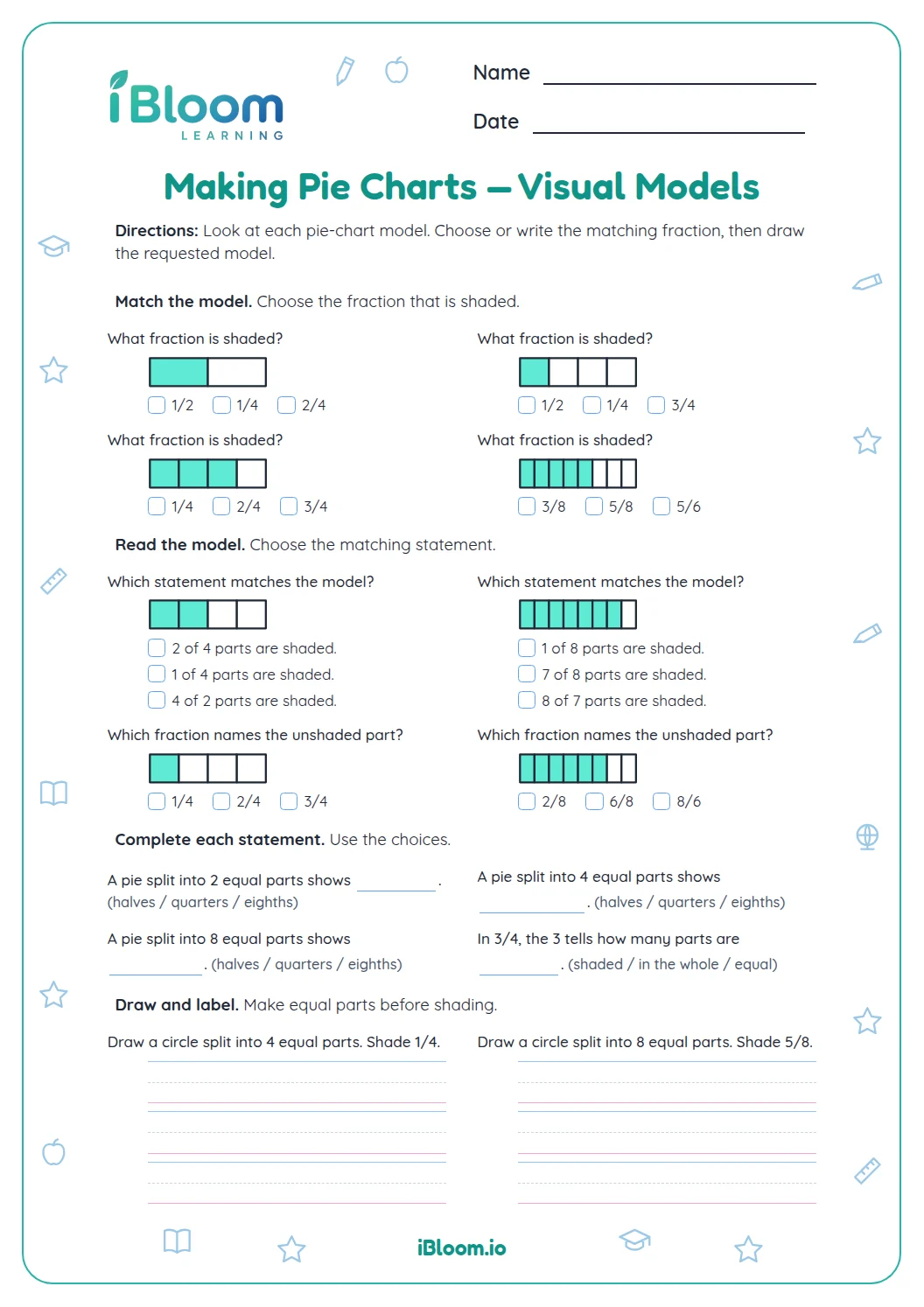
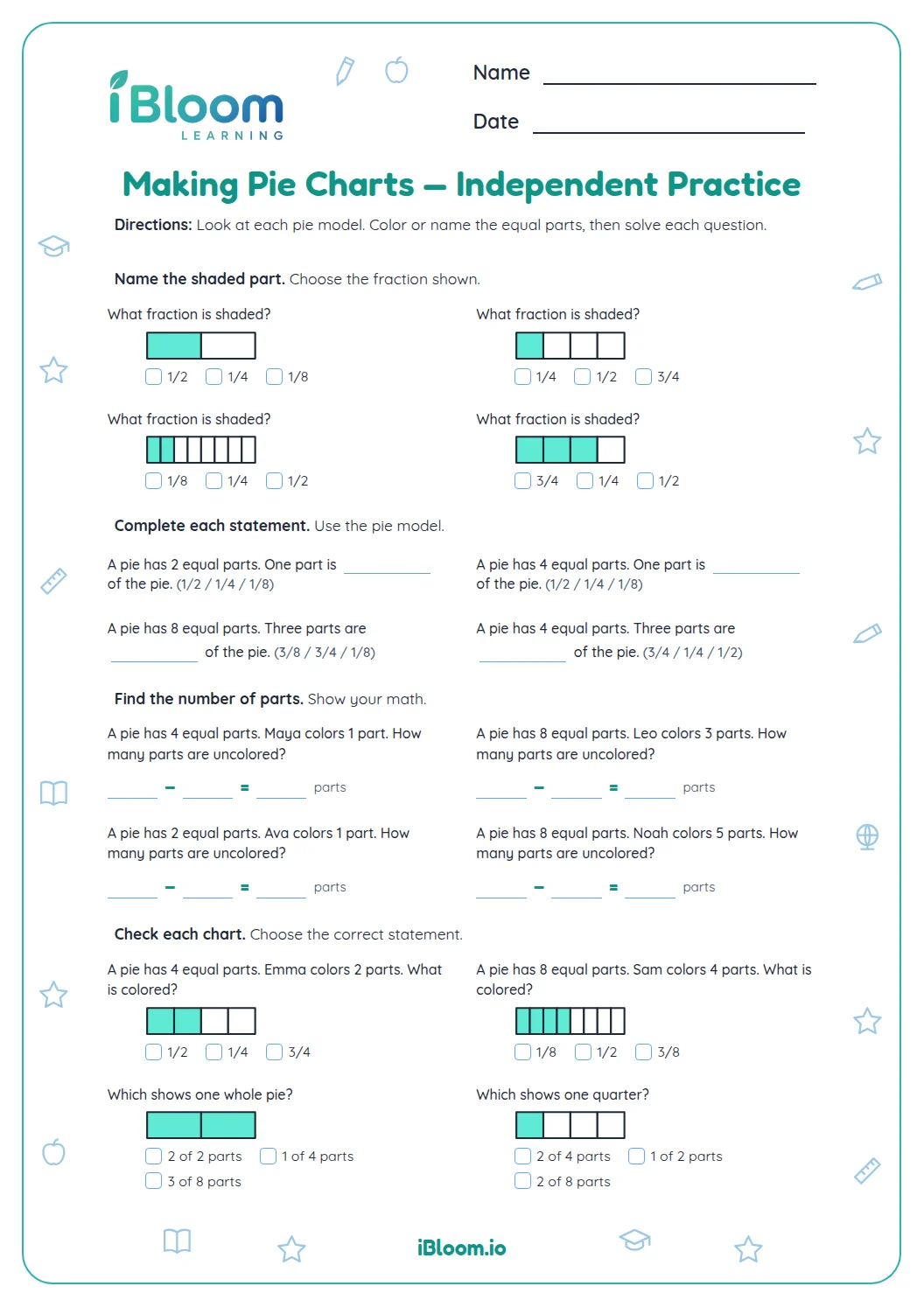
This Grade 2 printable has 14 short questions about equal shares. Three items show a circle divided into halves or fourths; students name a shaded or remaining fraction. Eleven compact questions reinforce the same skill through short equal-part descriptions. A separate answer key gives each fraction, and the practice aligns with CCSS 2.G.A.3.
Aligned to 2.G.A.3
How do you read the shaded share?
Count all equal parts in the circle, then count the shaded parts. Put the shaded count over the total number of equal parts.
- 1One of four equal parts shaded is one fourth.
How do you find the unshaded share?
Count the parts left blank and compare that count with all equal parts. The unshaded share names only the blank sections.
What models are on the page?
Part A reads eight shaded circle models. Part B applies the same fraction idea in six short descriptions.
How to use this worksheet
- 1Look at how many equal parts make the whole circle.
- 2Count the shaded parts for a Part A question.
- 3For Part B, count the parts with no shading.
- 4Name the selected share by saying the selected parts and total parts.
- 5Check that the denominator matches the total equal shares in the circle.
Common mistakes and quick fixes
The mistake
Using the number of shaded parts as the whole fraction.
The fix
Count all equal parts for the denominator, then count the selected parts for the numerator.
The mistake
Counting only shaded parts when a question asks for the unshaded share.
The fix
Look for the empty parts and count those as the category in the question.
The mistake
Treating unequal-looking parts as a valid chart share.
The fix
Check that the circle is split into equal parts before naming a fraction.
Curriculum alignment
This worksheet practices naming equal shares in circles.
Partition circles and rectangles into equal halves, thirds, and fourths.
On this sheet: Students identify shaded and unshaded equal shares in circle models and descriptions.
Show the official wordingHide the official wording
Partition circles and rectangles into two, three, or four equal shares. Describe the shares using the words halves, thirds, half of, a third of, etc., and describe the whole as two halves, three thirds, four fourths. Recognize that equal shares of identical wholes need not have the same shape.
What to practice next
Make more practice
Further reading
Questions parents and teachers ask
How do you name the shaded fraction?
Count all equal pieces in the circle, then count the shaded pieces. Name the shaded count over the total number of pieces. Three questions show circle models, followed by 11 short follow-up questions; the answer key lists every response.
What does unshaded mean?
Unshaded parts are the sections left blank. Count those sections and compare them with all equal parts in the circle. Four blank parts out of four would be four fourths; the worksheet uses circles with a mix of shaded and blank parts.
Which fractions appear?
The models use halves, thirds, and fourths. Students count equal parts and name the selected share. Some questions ask for the shaded part, while others ask for the part left unshaded. The key lists each fraction in words.
How many questions are included?
There are 14 questions: three circle models and 11 short descriptions of equal shares. Both groups ask students to name a fraction. A separate answer key lists each response so a student can check the selected parts and the whole.
Why count all the parts first?
The denominator names how many equal parts make the whole, so students need that total before naming the selected share. Counting shaded or unshaded pieces gives the numerator. Use the key to check both counts and the fraction name.