








About this worksheet
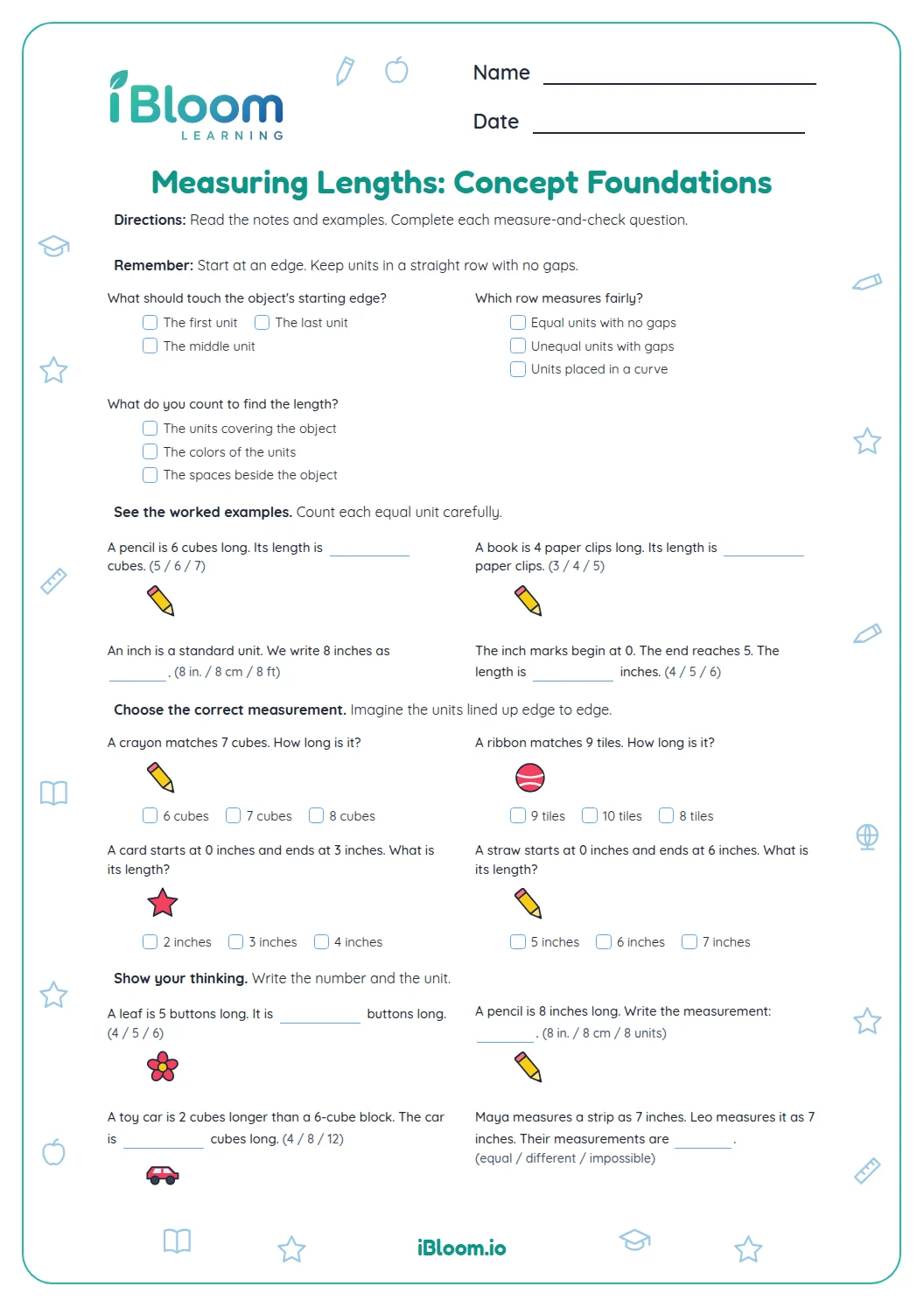
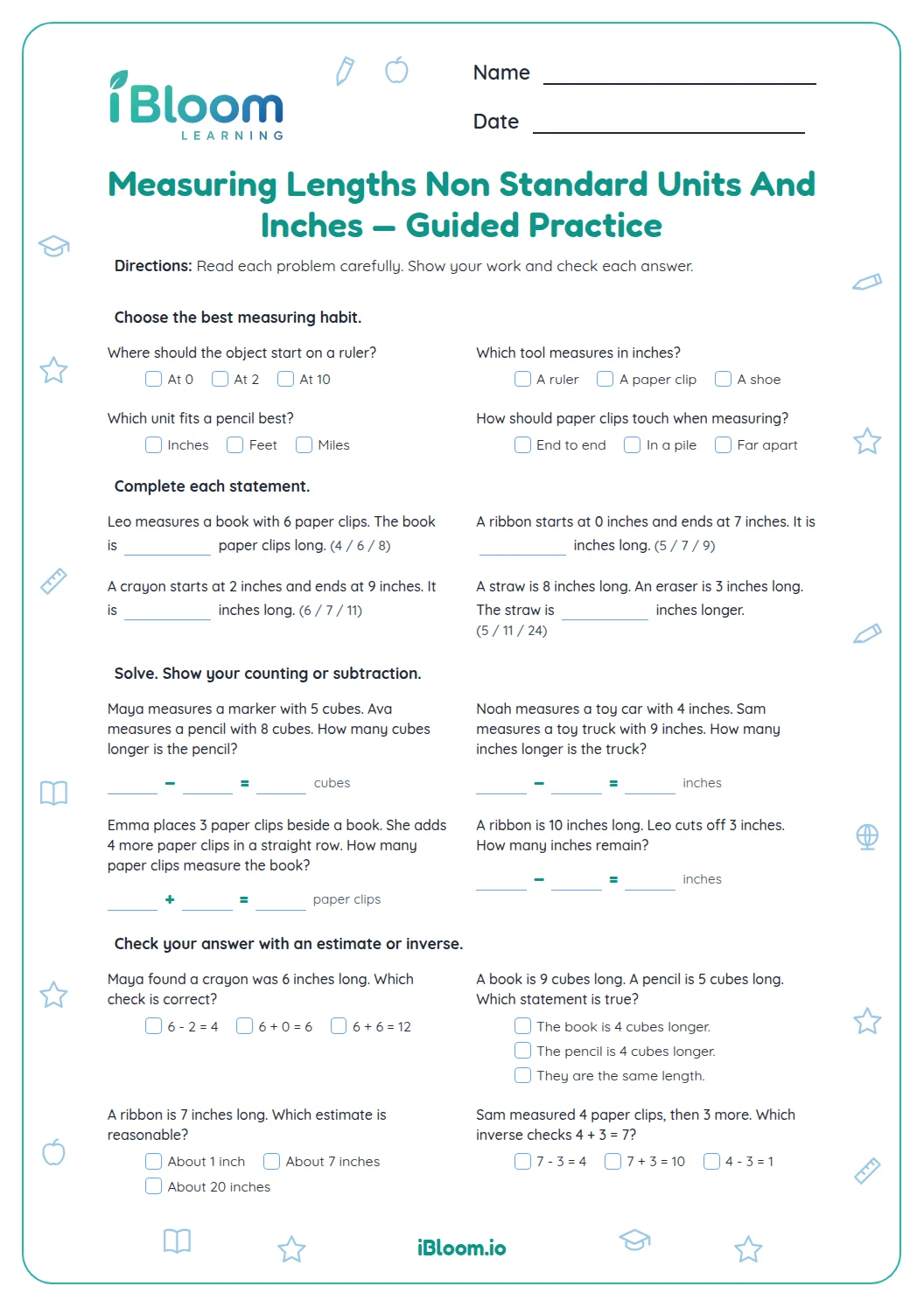
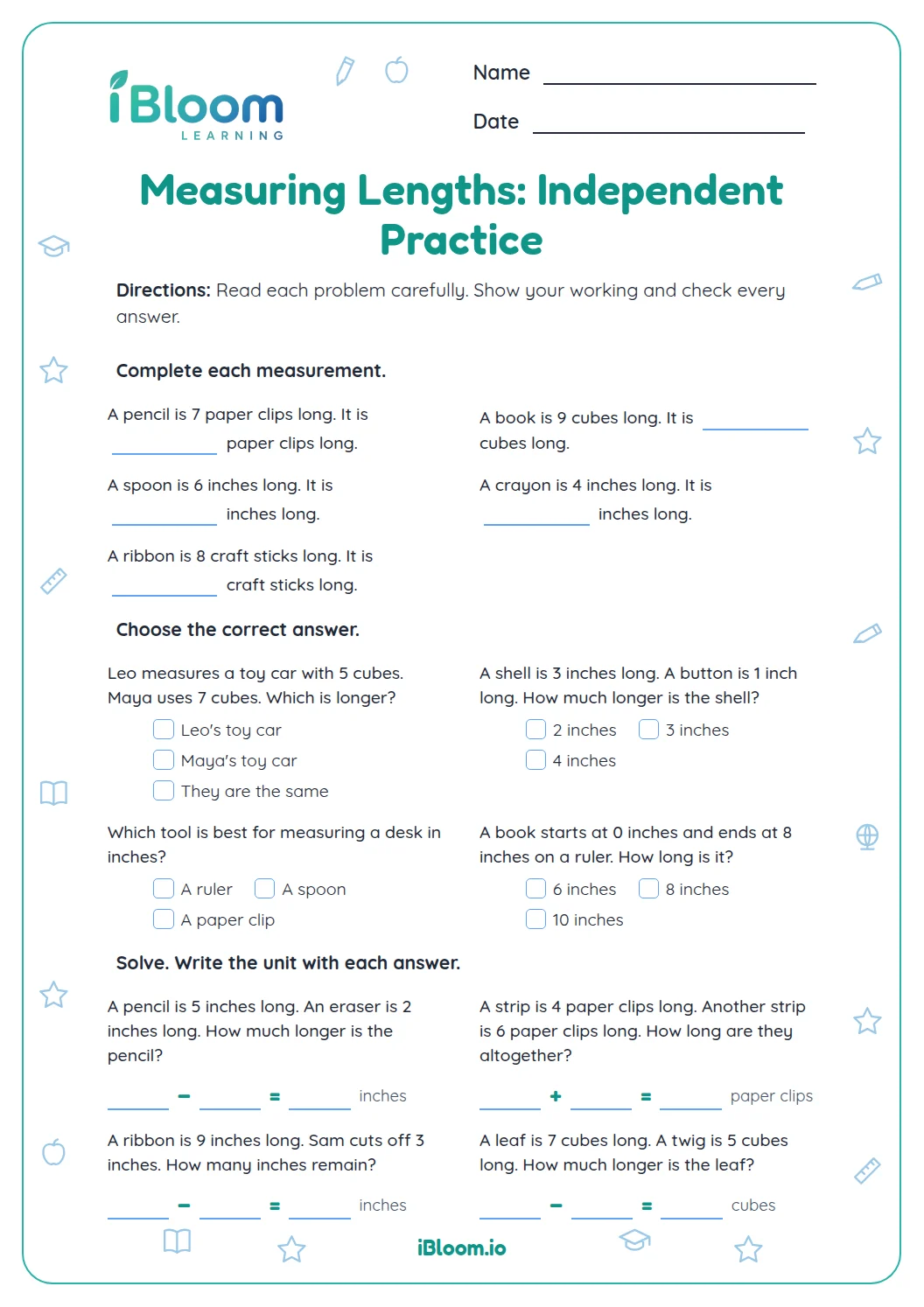
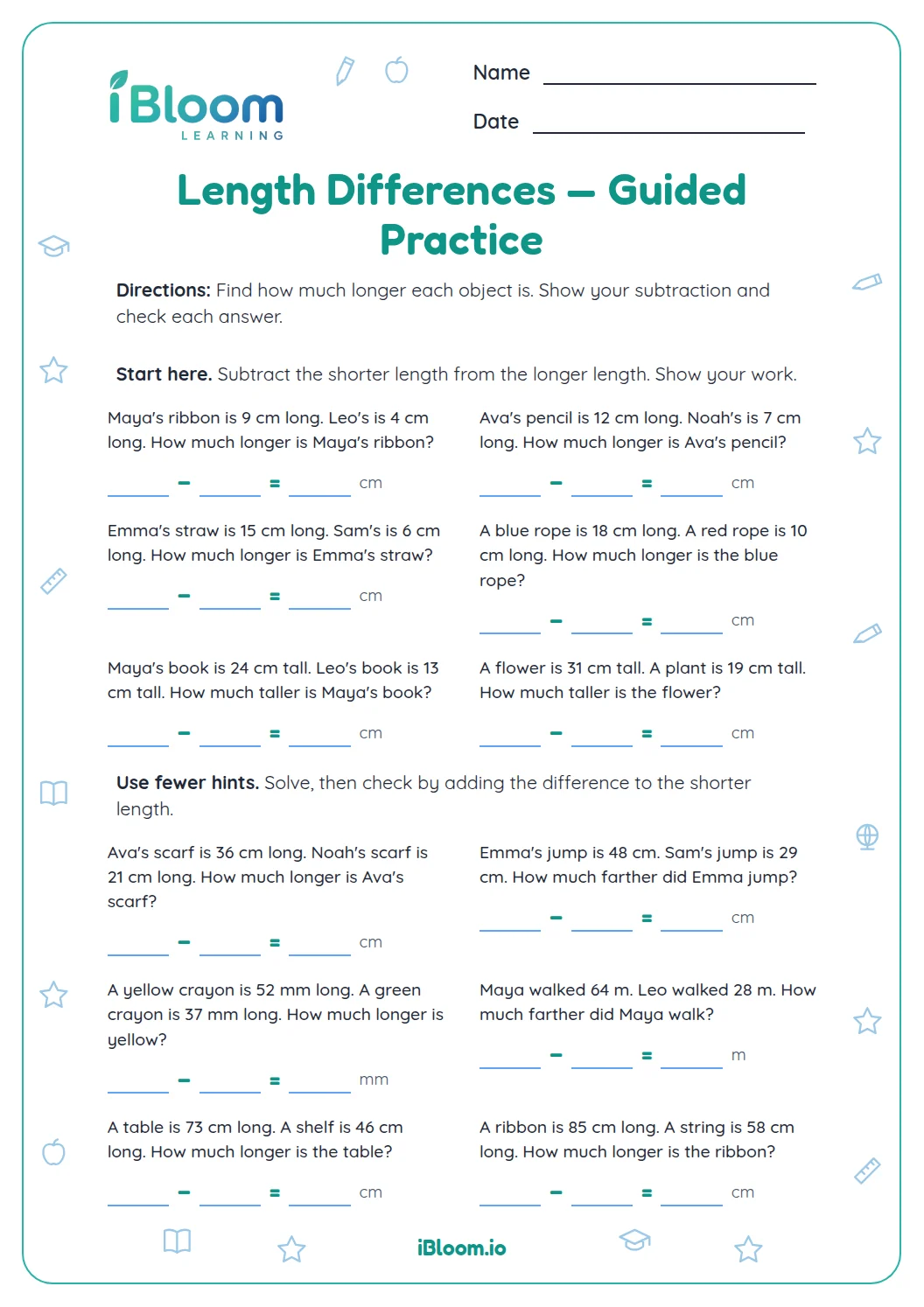
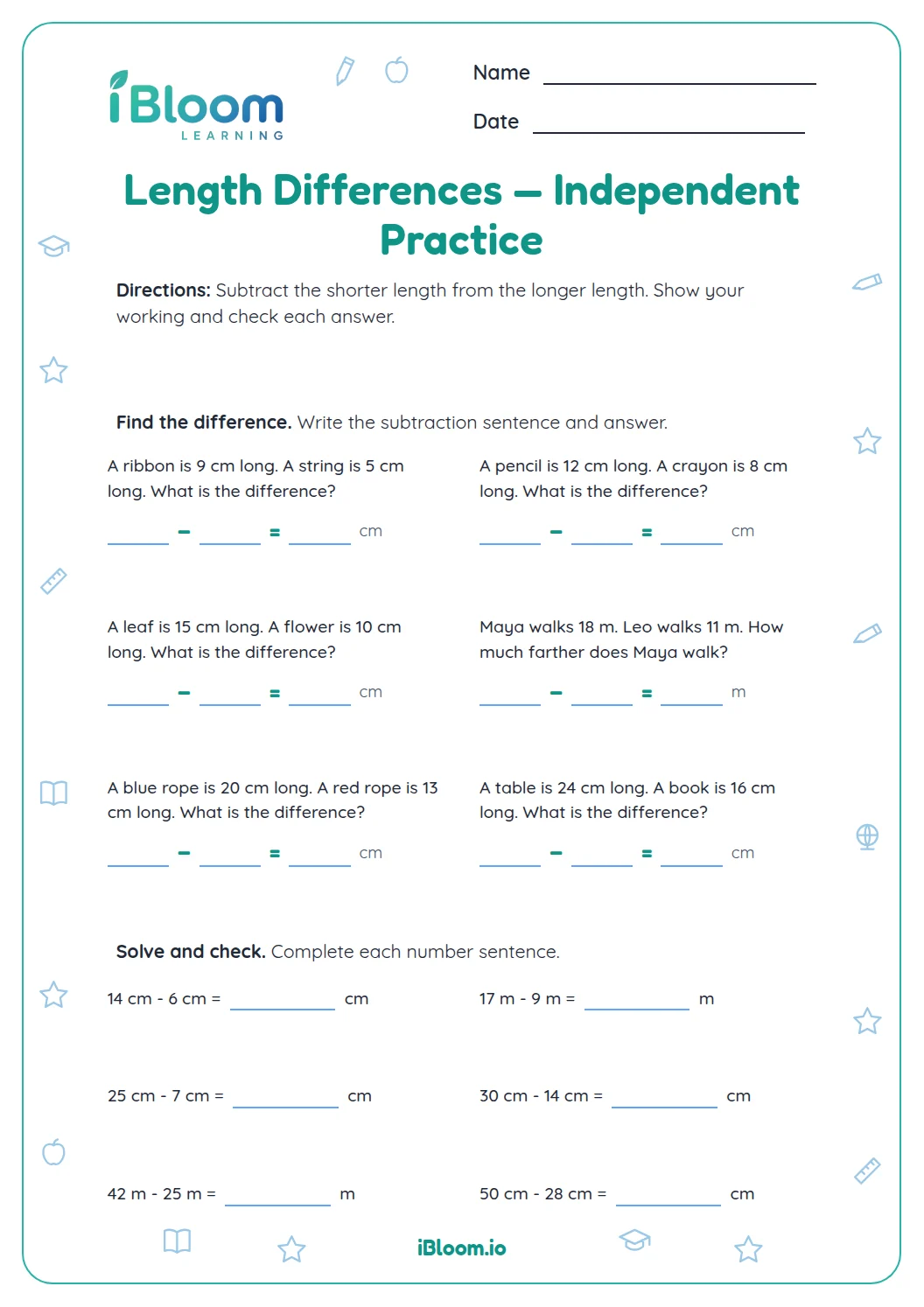
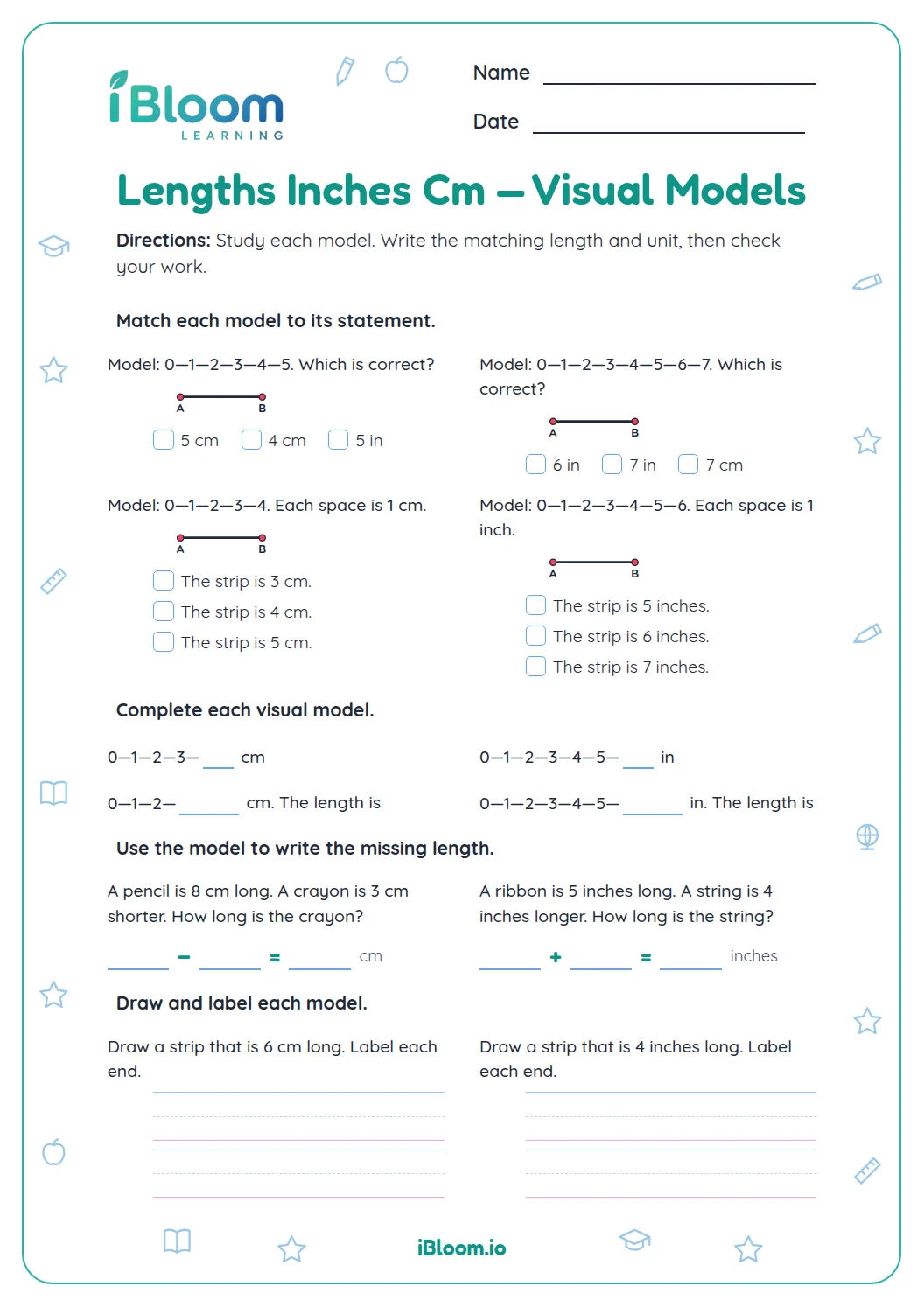
This printable Grade 2 worksheet practices measuring lengths in inches and using equal-size units fairly. Children read ruler drawings, find distances between marks, and reason about what makes a measurement reliable. A separate answer key is included.
Aligned to 2.MD.A.1
How does this sheet build length reasoning?
Children read rulers that start at zero, then calculate the distance between two inch marks. Later questions focus on fair comparisons: equal-size units make counts meaningful.
What will children practice?
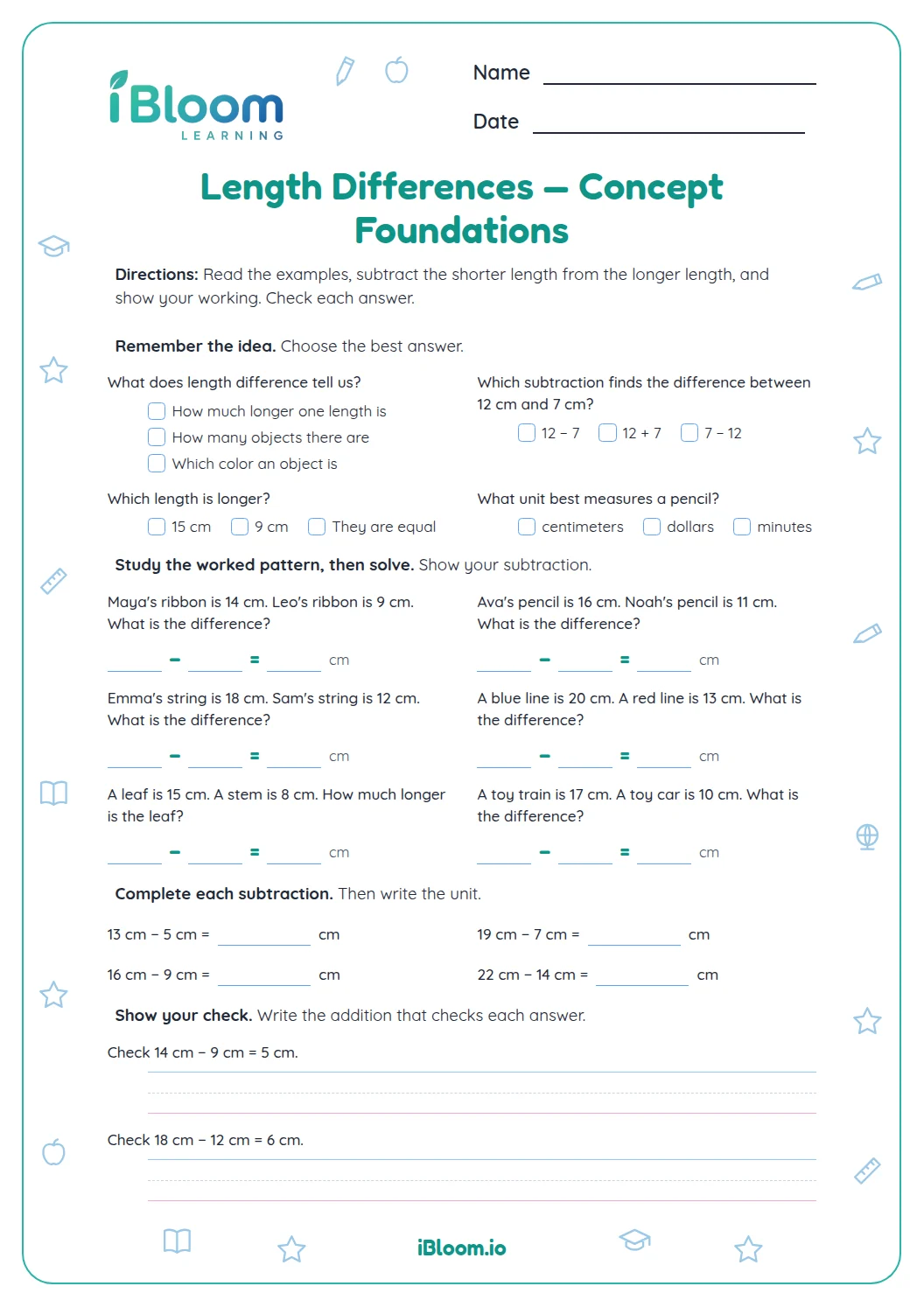
There are 16 questions in three parts: reading and measuring, comparing methods, and applying length ideas. For example, the distance from 7 inches to 3 inches is 4 inches because 7 − 3 = 4.
- Read inch rulers
- Find the distance between marks
- Use equal-size units
How to use this worksheet
- 1Start an object at the ruler’s zero mark when measuring its full length.
- 2For two marks, subtract the smaller reading from the larger reading.
- 3Check that repeated units are equal in size before comparing counts.
- 4Use the separate answer key to review each result.
Common mistakes and quick fixes
The mistake
Counting ruler labels instead of spaces
The fix
Count the intervals between the two marks.
The mistake
Starting a ruler measurement at 1
The fix
Align the object’s end with 0.
The mistake
Comparing counts made with different-size units
The fix
Repeat with equal-size units.
Common Core alignment
CCSS 2.MD.A.1: select and use appropriate tools to measure lengths.
Measure lengths with appropriate tools.
On this sheet: Students read ruler drawings and find lengths in inches.
Show the official wordingHide the official wording
Measure the length of an object by selecting and using appropriate tools such as rulers, yardsticks, meter sticks, and measuring tapes.
What to practice next
Make more practice
Further reading
Questions parents and teachers ask
Where should an object start on a ruler?
Line up one end with zero, then read the mark at the other end. The two ruler drawings in the first part begin at zero, so the number at the object’s endpoint gives its length in inches. Try one example together, then invite the child to solve the next one independently.
How do I find the distance between two ruler marks?
Subtract the smaller mark from the larger one. For example, the distance from 3 inches to 7 inches is 4 inches because 7 − 3 = 4; count the spaces between marks, not the labels. Try one example together, then invite the child to solve the next one independently.
Why should measuring units be equal in size?
A count is useful for comparing lengths only when the units are the same size. If one set uses different-size clips, the count may change even when the object does not. Try one example together, then invite the child to solve the next one independently.
What is on this worksheet?
The two-page sheet has 16 questions in three parts. It includes inch ruler readings, subtraction to find distances, and short items about using equal-size units; the answer key is separate. Try one example together, then invite the child to solve the next one independently.
How can children check a length answer?
For ruler distances, subtract the starting mark from the ending mark. For a repeated unit, check that each unit is equal and placed end to end with no gaps or overlaps. Try one example together, then invite the child to solve the next one independently.