


About this worksheet
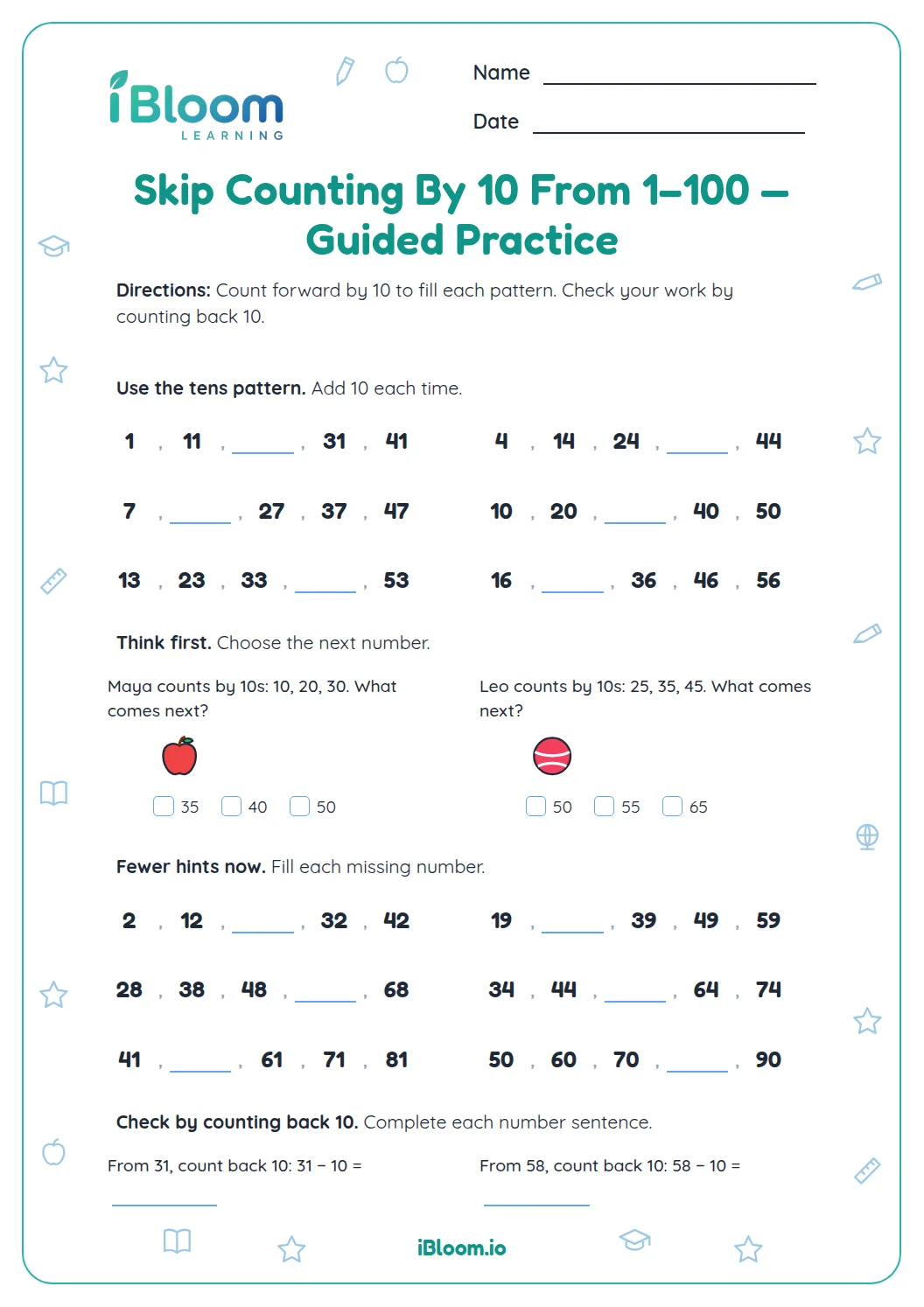
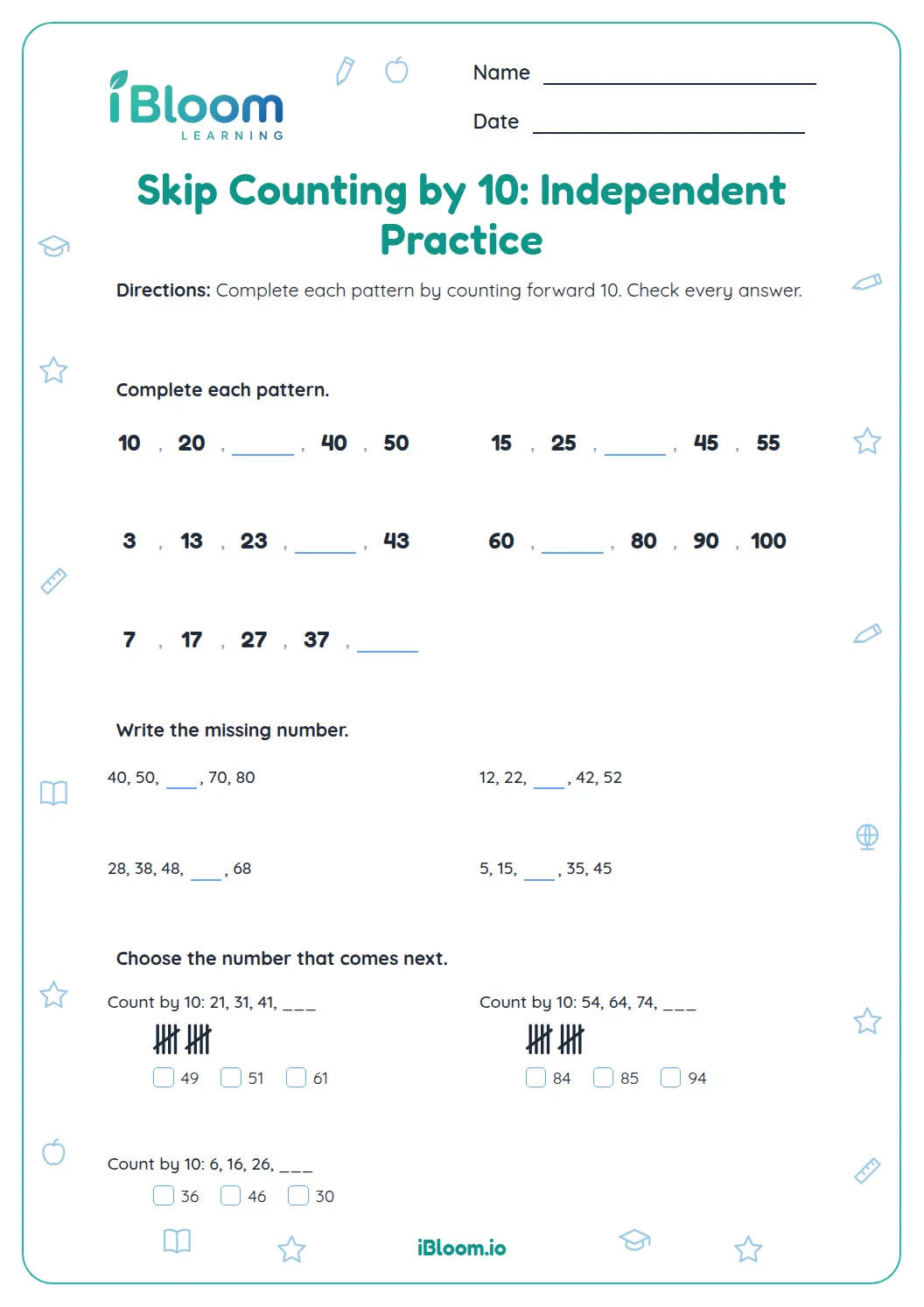
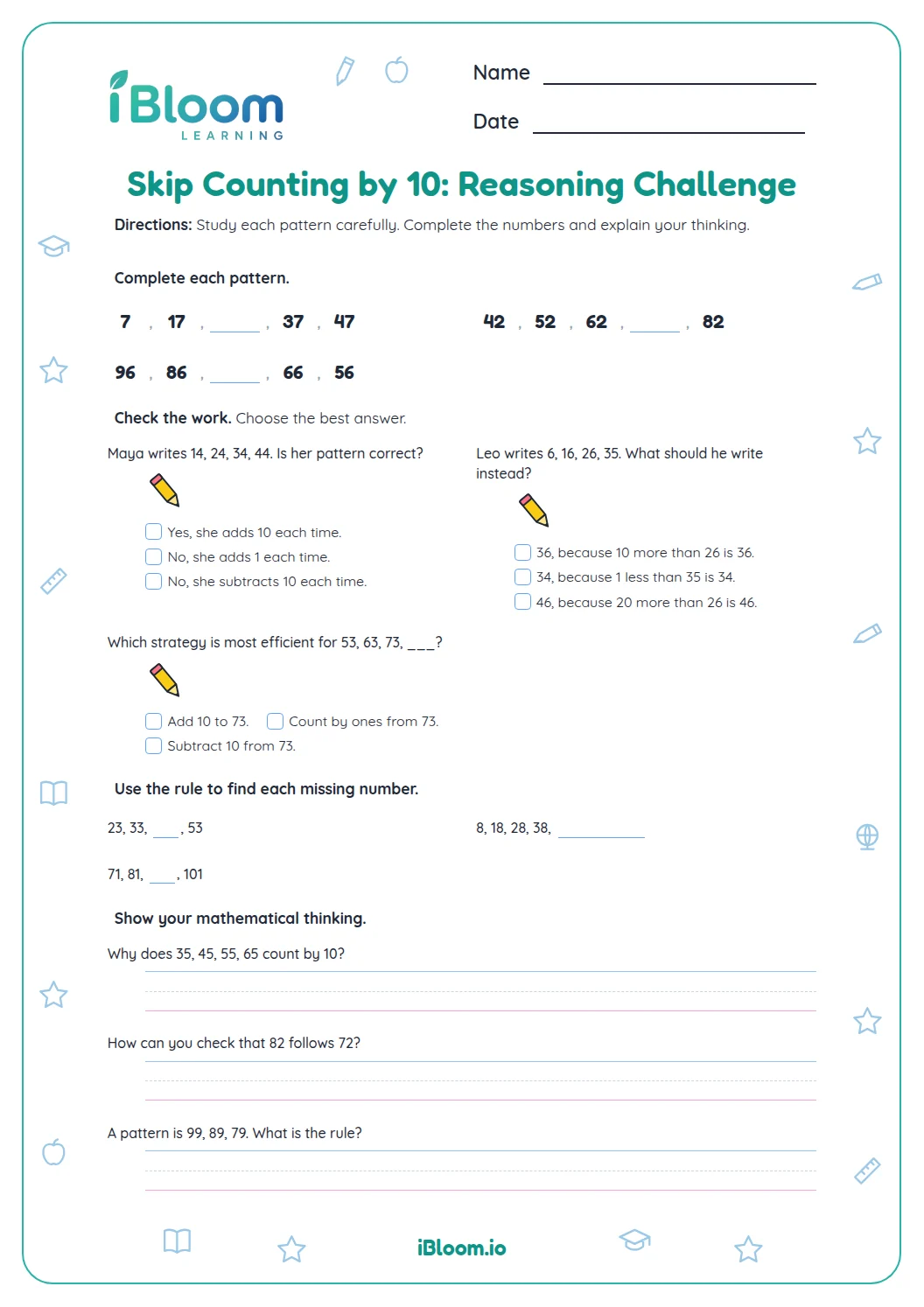
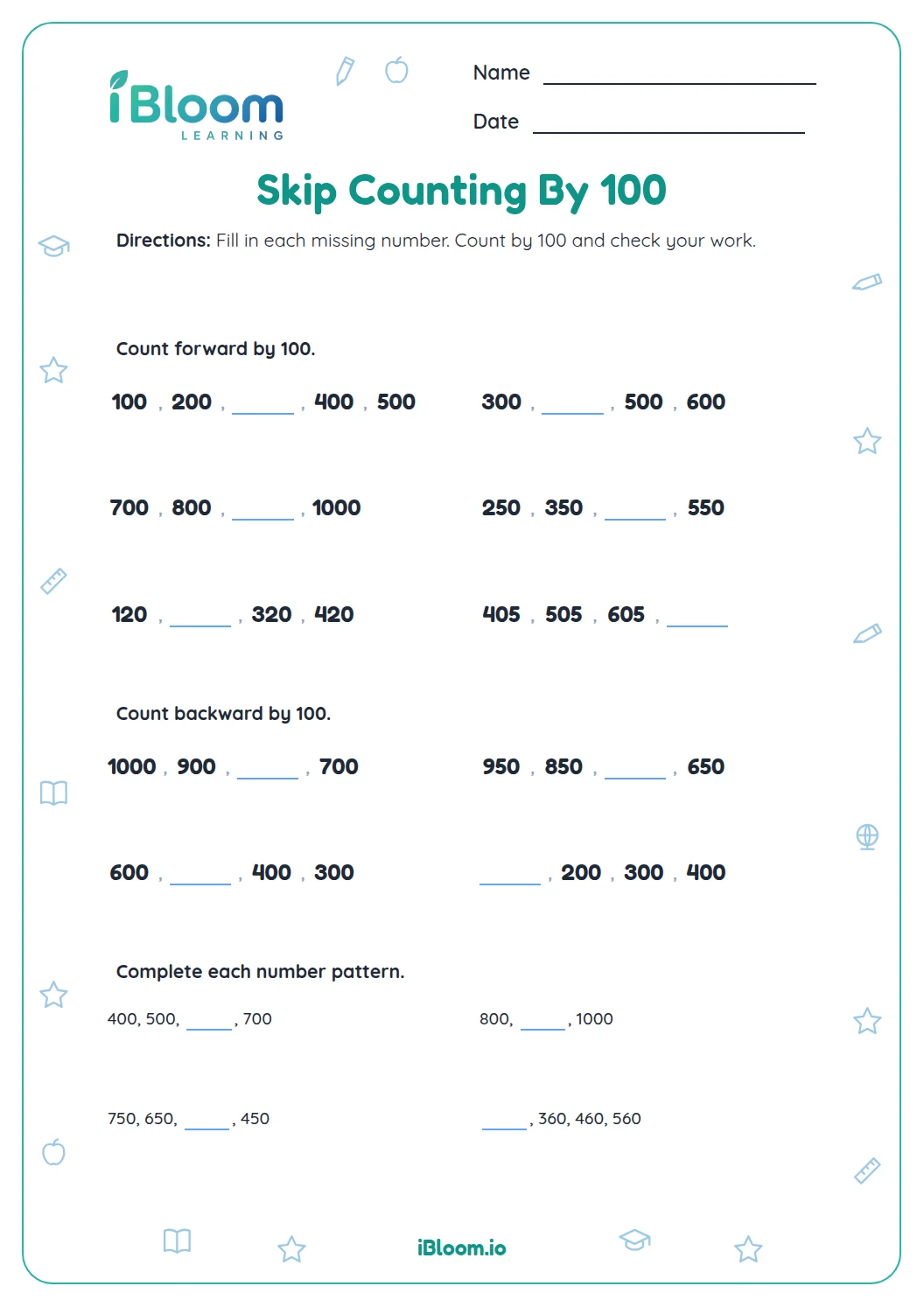
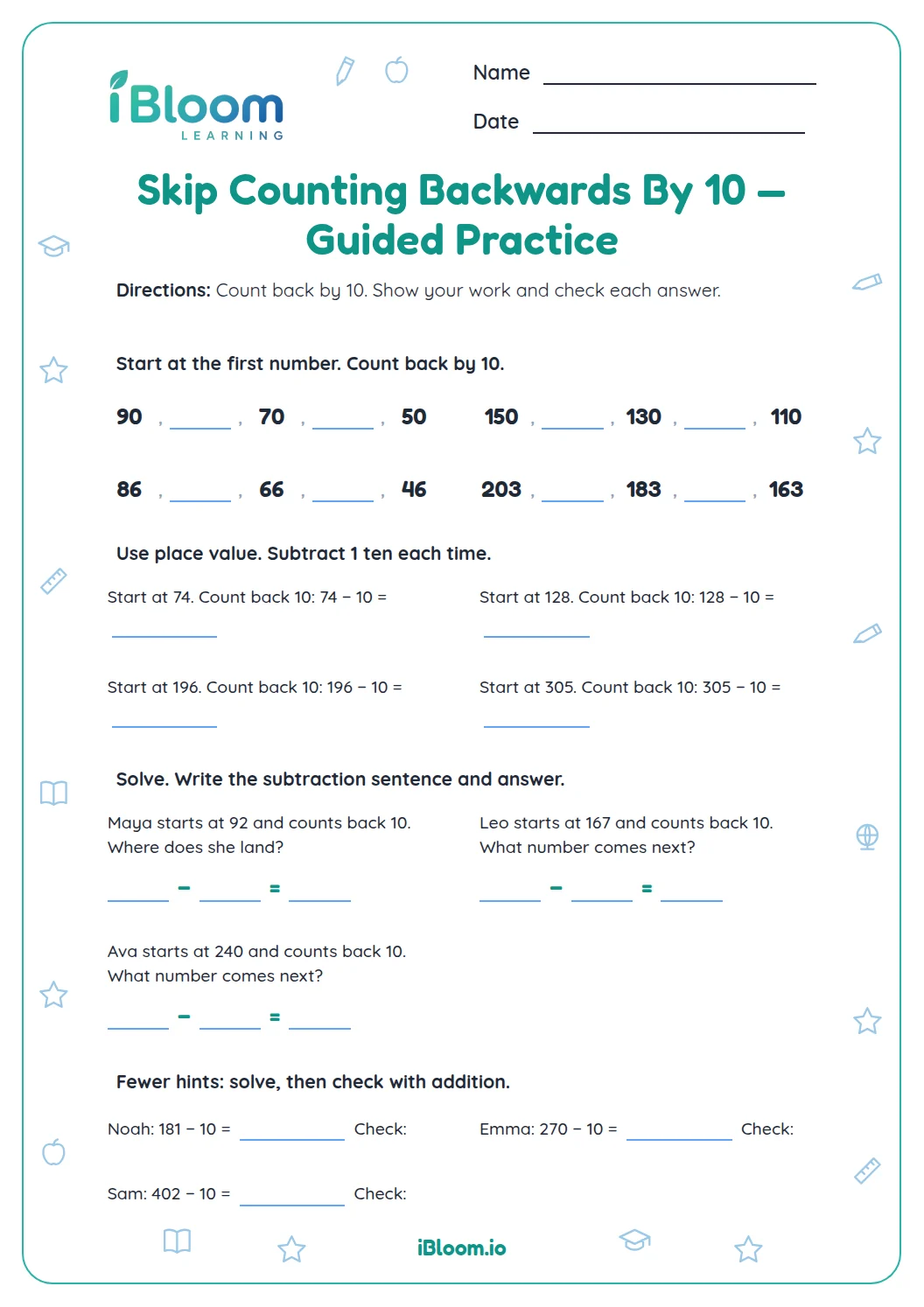
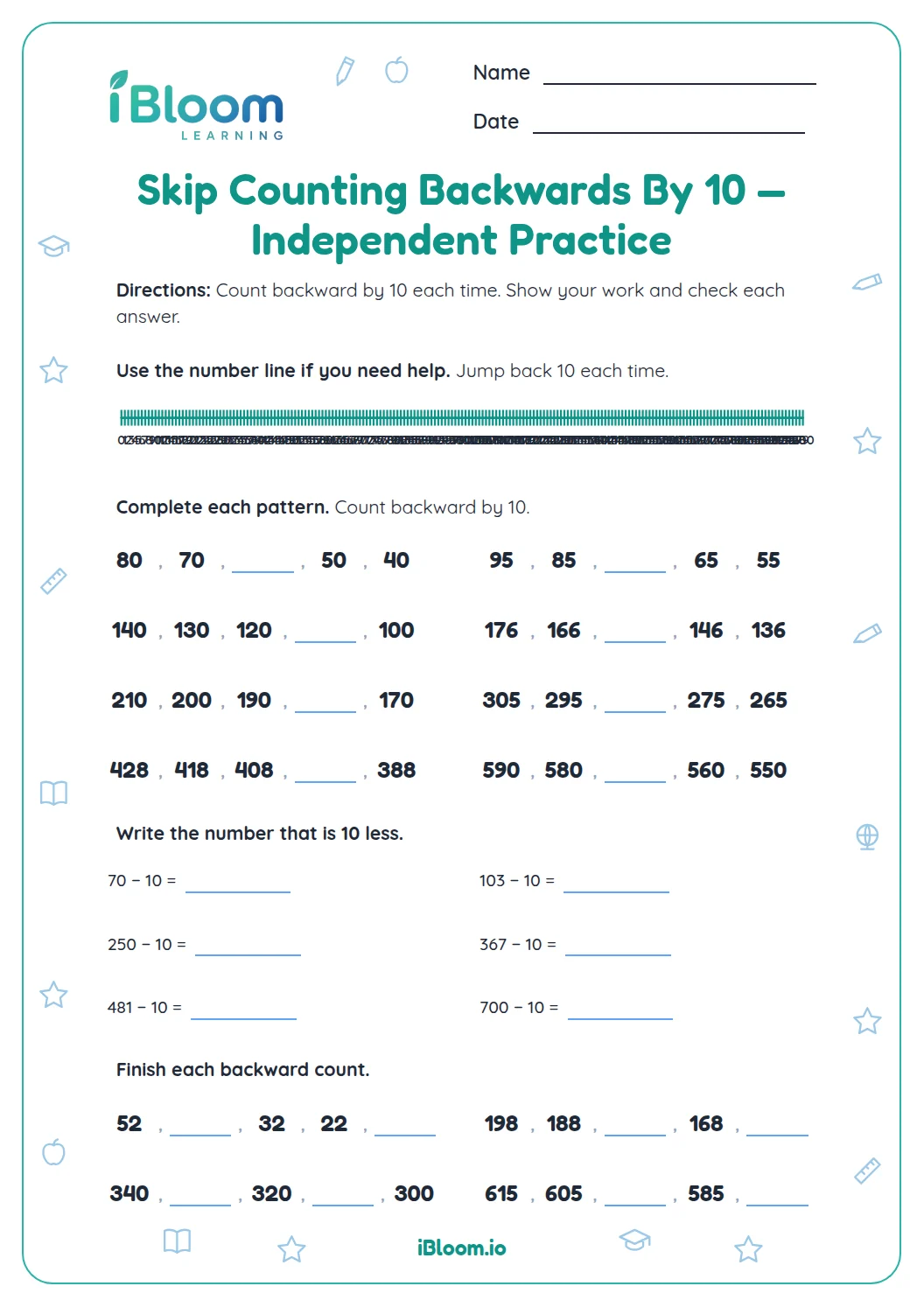
This Grade 2 worksheet builds skip counting by 10 from varied starting points, including numbers that do not end in zero. Students fill sequences, find a missing term, identify an incorrect count, and use tens to solve equal-group stories. The practice aligns with Common Core 2.NBT.A.2 and includes a separate answer key.
Aligned to 2.NBT.A.2
What happens when you add ten?
Each jump adds 10. The ones digit stays the same, while the tens digit increases by one; crossing from 90 reaches 100.
- 1Complete: 51, 61, ___, 81 → 71
How can you find a missing term?
Count one jump at a time from a number in the sequence. Check both neighbors to confirm the missing term is ten more than one and ten less than the other.
- 1Fill the missing numbers: 14, ___, 34, ___, 54 → 24, 44
How do equal groups connect to counting by tens?
Each group contains ten, so count one ten for each group. For six rows of ten chairs, six tens make 60 chairs.
- 1There are 6 rows of 10 chairs. How many chairs? → 60 chairs
How to use this worksheet
- 1Read the starting number.
- 2Add 10 for every next count.
- 3Check that the ones digit stays the same.
- 4Use the number of groups to count equal tens.
- 5Check the last number in the sequence.
Common mistakes and quick fixes
The mistake
Mistake.
The fix
Adding 1 instead of 10. Fix: say the next ten more.
The mistake
Mistake.
The fix
Changing the ones digit. Fix: compare the ones digits in neighboring terms.
The mistake
Mistake.
The fix
Skipping two tens. Fix: count one jump at a time.
Common Core alignment
This page connects the worksheet practice to a Common Core skill.
Count by tens from varied starting numbers and apply equal groups.
On this sheet:
Show the official wordingHide the official wording
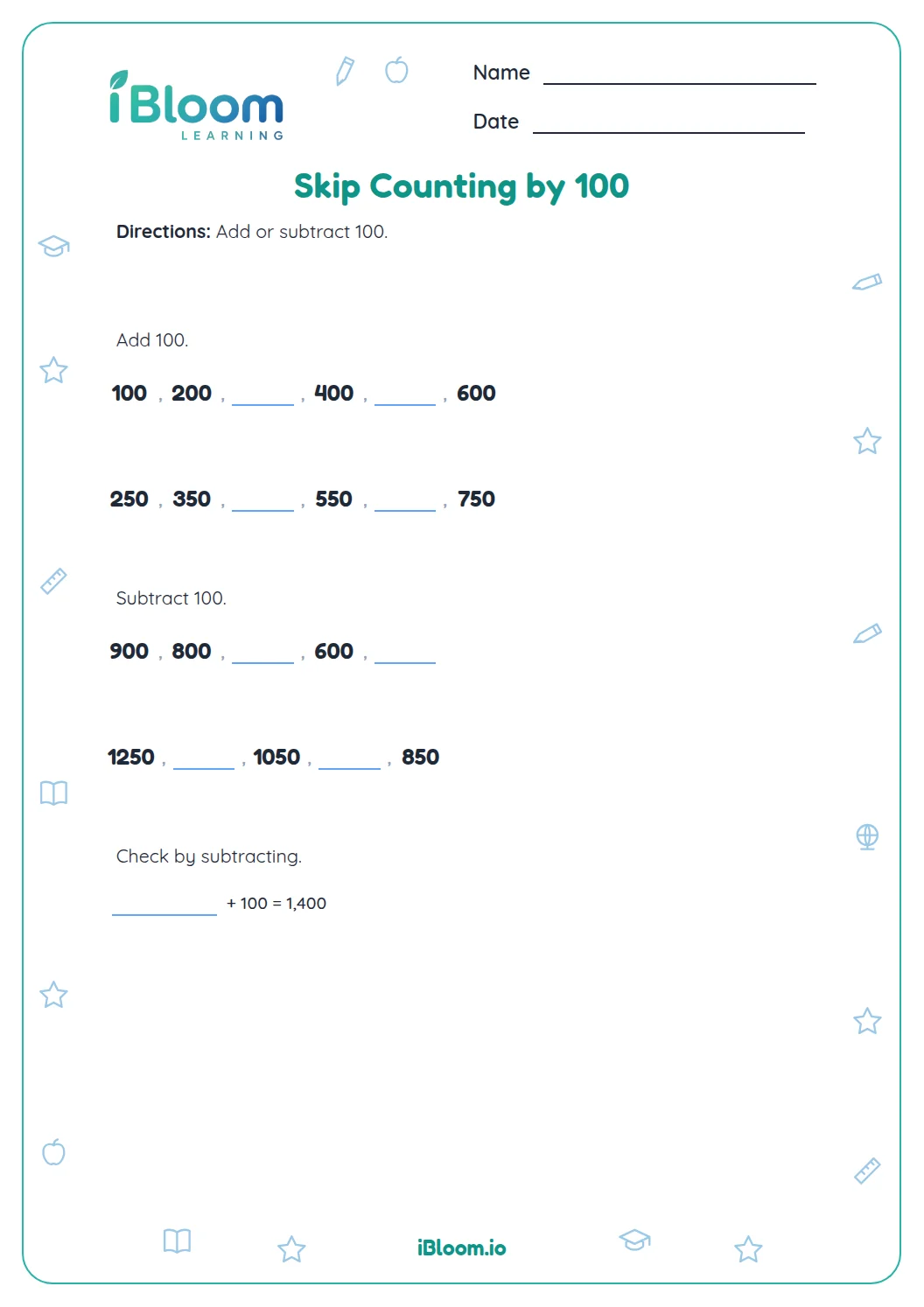
Count within 1,000; skip-count by 5s, 10s, and 100s.
What to practice next
Make more practice
Further reading
Questions parents and teachers ask
How can a child practice counting by tens?
Complete the number sequences by adding 10 each time, then use groups of ten to solve two short stories. The answer key lists each result. The page begins with direct number patterns, moves to missing terms and error checks, and ends with equal-group situations such as bags of shells and rows of chairs.
How should we use the answer key?
Let the learner try each item before checking. The key lists the intended answer and gives sample responses for open-ended writing, where a child may use different words while showing the same skill. Read the explanation together when an answer needs another try. Check a missing term against the number before and after it.
How can I make this practice conversational?
Ask the learner to explain one choice aloud. Naming the clue they used, such as a time word, first sound, or number pattern, helps you see how they reached an answer. Invite them to point to the exact word or step that helped. The story questions model groups of ten in familiar settings.
What can we do after this page?
Choose one item and make a new example together. Keep the same skill and change the words, numbers, or story detail so the learner can try the idea again in a fresh context. A new example makes a useful quick review another day. The answer key lists the completed counts and story totals.