



About this worksheet
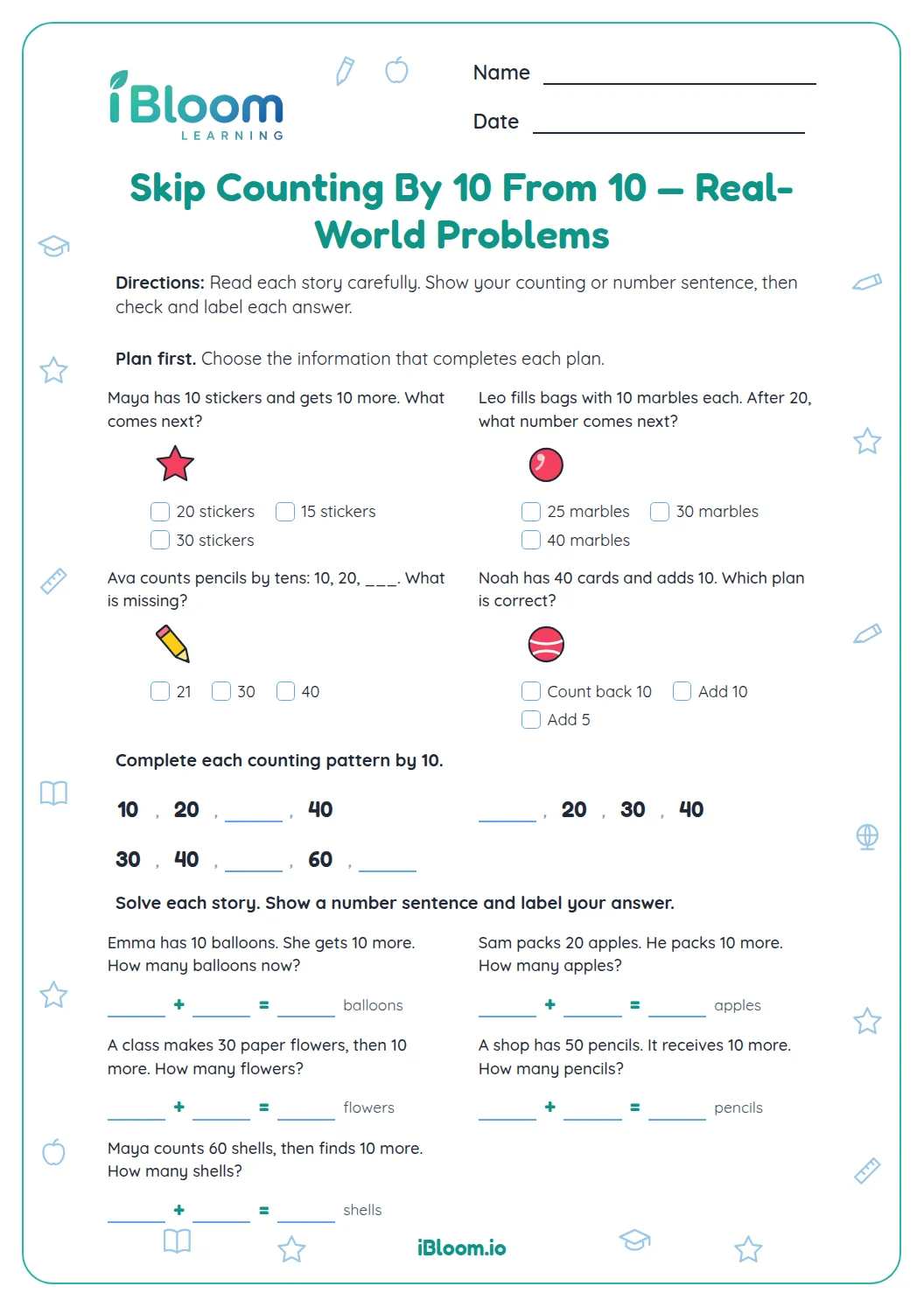
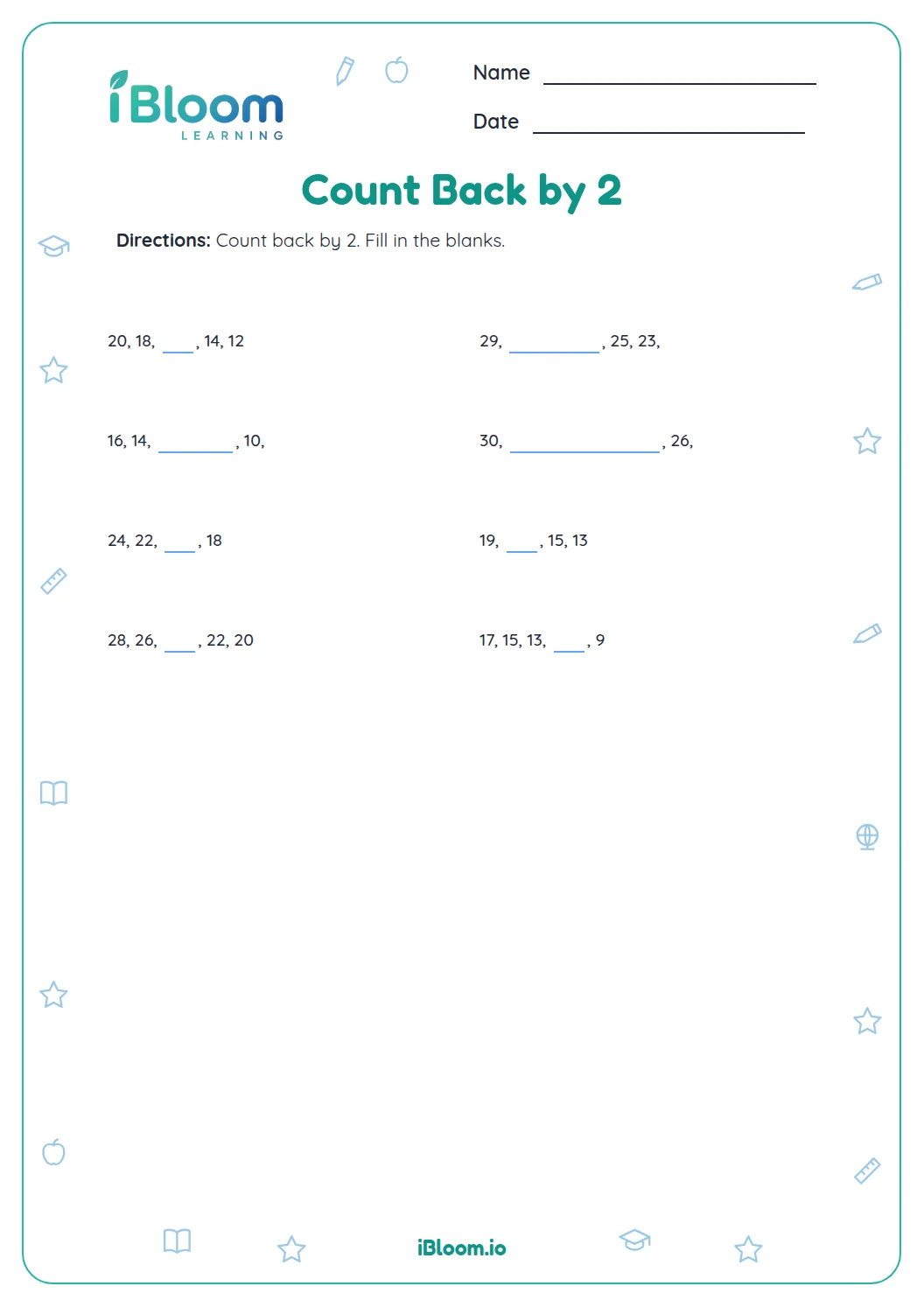
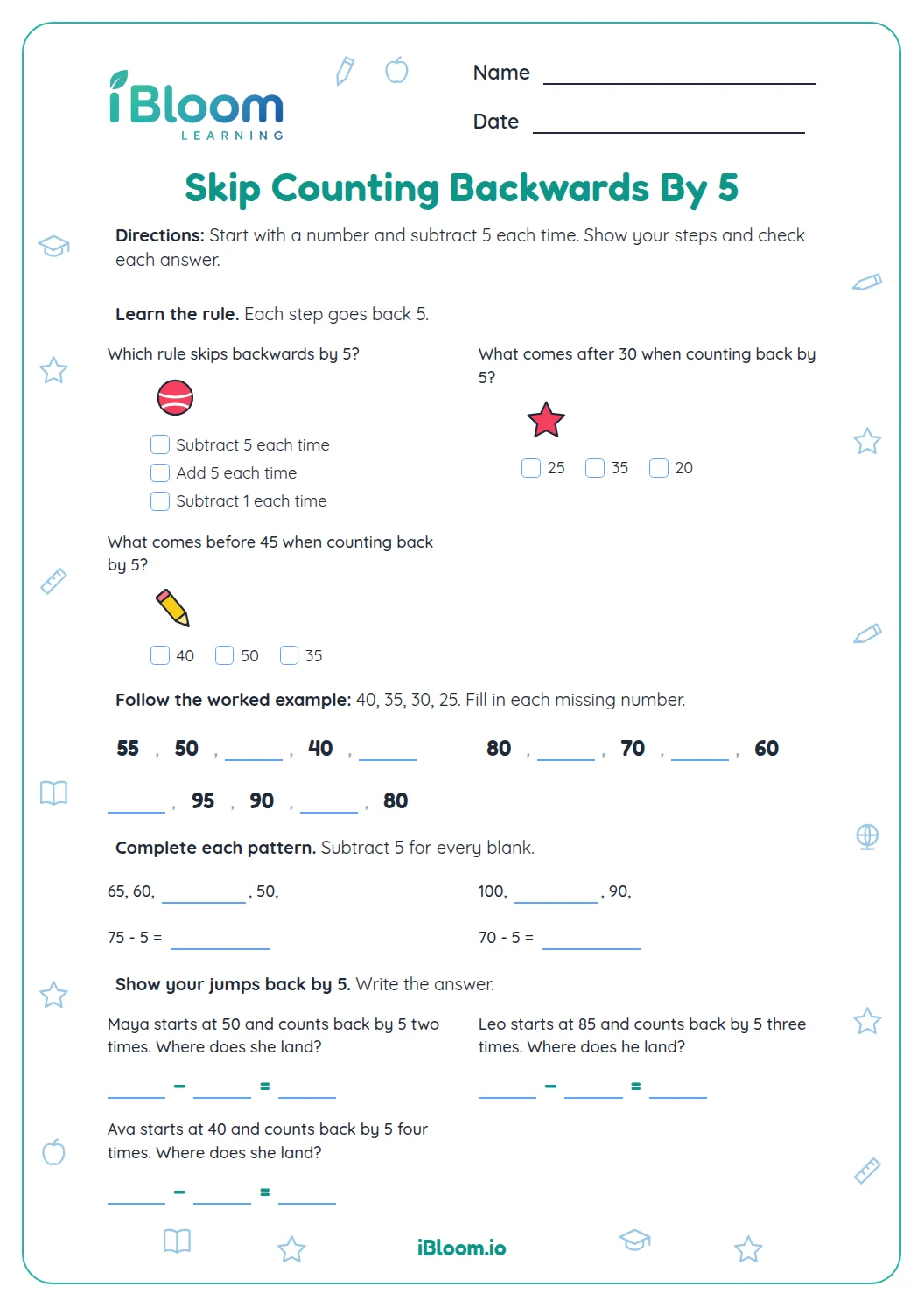
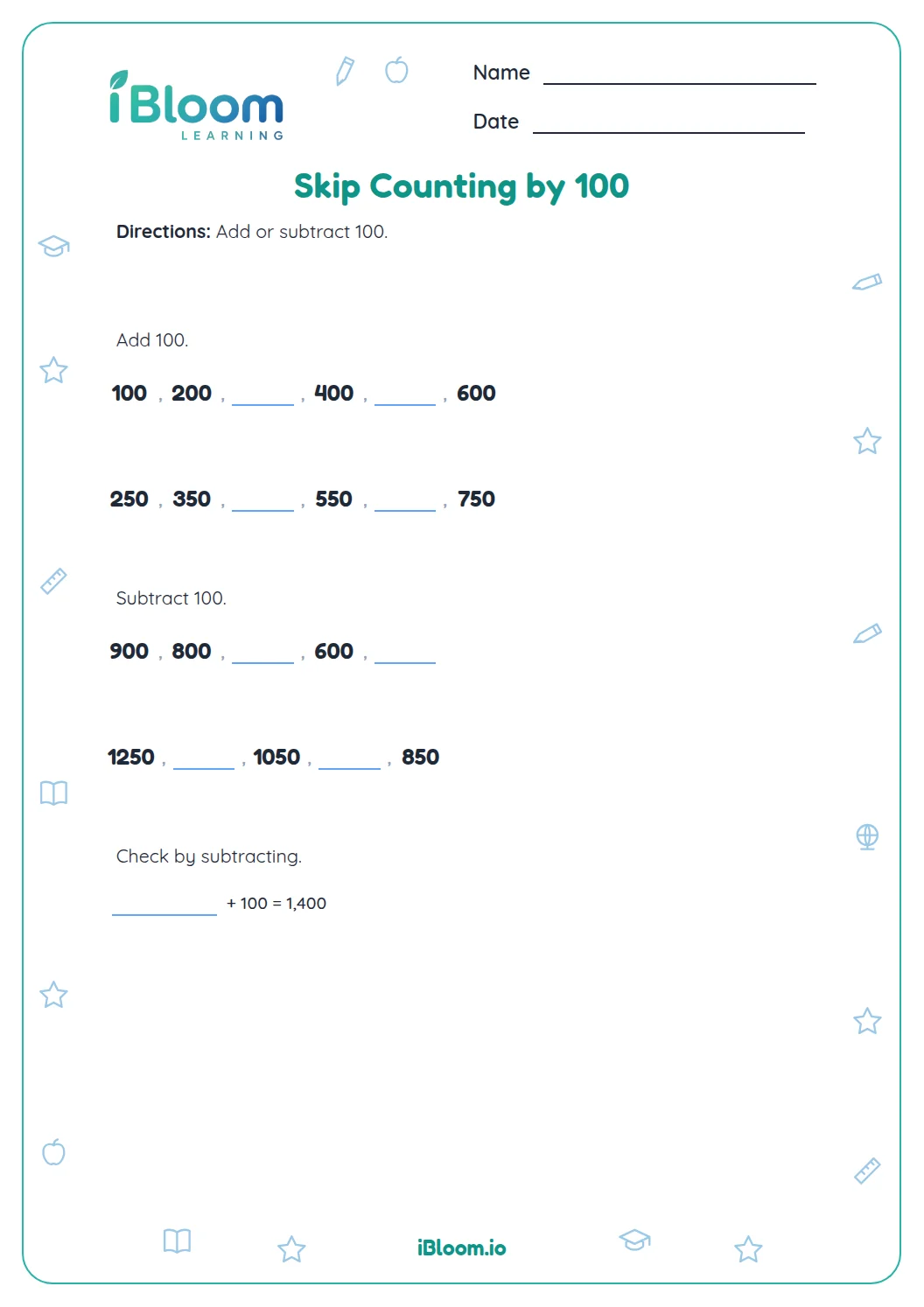
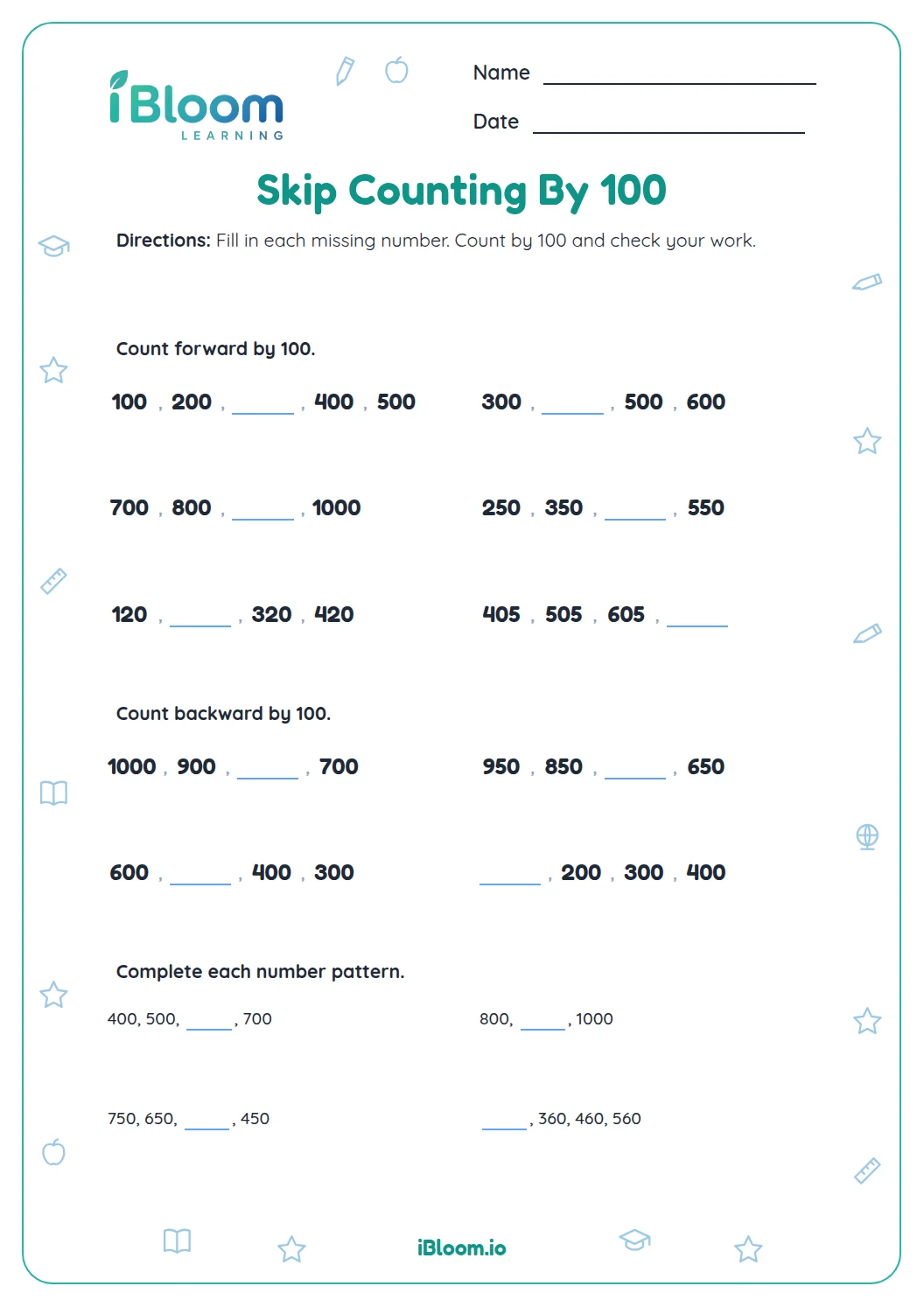
This Grade 2 worksheet practices skip counting by 10, beginning with 10 and continuing through 1,000. Students complete number sequences, count ten steps from a starting value, and find ten more or ten less. The two-page worksheet has 16 questions and a separate answer key.
Aligned to 2.NBT.A.2
What changes when you count by tens?
The tens digit increases by one ten at every step. Starting at 10 gives 10, 20, 30, 40. A hundreds digit changes when the count crosses 100, but the amount added stays 10.
Students can use a hundreds chart, bundles of ten straws, or ten frames grouped into tens to see the same pattern.
- 1Start at 80
- 280 + 10 = 90
- 390 + 10 = 100
- 4100 + 10 = 110
What does the worksheet include?
Part A begins with a sequence from 10. Part B continues count-by-ten sequences, Part C counts repeated tens from a starting value, and Part D asks for ten more or ten less. Values stay within 1,000.
- Missing numbers in forward sequences
- Counting a fixed number of steps from a start
- Ten more, ten less, and one skipped term
A useful visual check
On a hundreds chart, moving one row down in the same column adds 10. When the sequence reaches the next hundred, keep the same ten-step: 190, 200, 210.
Practice with tens
- 1Read the starting number in the sequence.
- 2Add 10 for every next step.
- 3Keep the same step when crossing a hundred.
- 4For ten more or ten less, add or subtract 10.
- 5Check that neighboring sequence values differ by 10.
Skip-counting slips
The mistake
Adding one instead of ten.
The fix
Say the tens aloud and show one bundle of ten for each jump.
The mistake
Skipping a number when the sequence crosses a hundred.
The fix
Continue the same rule: 980, 990, 1,000.
The mistake
Counting the start as the first step when asked for steps after it.
The fix
Mark the start, then make one jump for each step requested.
Common Core alignment
This page practices counting by tens within 1,000, including continuing a pattern from a given starting number.
Count within 1,000 by ones, tens, and hundreds.
On this sheet: Students extend the number pattern by tens from 10 and other start values within 1,000.
Show the official wordingHide the official wording
Count within 1000; skip-count by 5s, 10s, and 100s.
What to practice next
Make more practice
Further reading
Questions parents and teachers ask
What does skip counting by 10 mean?
It means adding 10 at every step. Starting at 10 gives 10, 20, 30, 40. Later questions continue the same pattern from other values, including values near a new hundred. Check each answer by adding ten to the preceding number or subtracting ten as needed.
Does every sequence start at 10?
The first sequence starts at 10, as the title promises. Other questions start at different multiples of ten so students can apply the same counting rule beyond the opening sequence. Check each answer by adding ten to the preceding number or subtracting ten as needed.
How can a child check a missing number?
Compare the numbers on either side of the blank. Each neighboring pair should differ by 10. For a sequence crossing a hundred, continue the same step, such as 980, 990, 1,000. Check each answer by adding ten to the preceding number or subtracting ten as needed.
What does ten more or ten less look like?
Ten more adds one ten to the number, and ten less subtracts one ten. For example, 390 + 10 = 400, while 620 − 10 = 610. Check each answer by adding ten to the preceding number or subtracting ten as needed.
Is an answer key included?
Yes. The separate key fills every missing sequence value and gives the answers to the short number sentences. Question 16 has three blanks, answered in order as 780, 790, 800. Check each answer by adding ten to the preceding number or subtracting ten as needed.