

About this worksheet
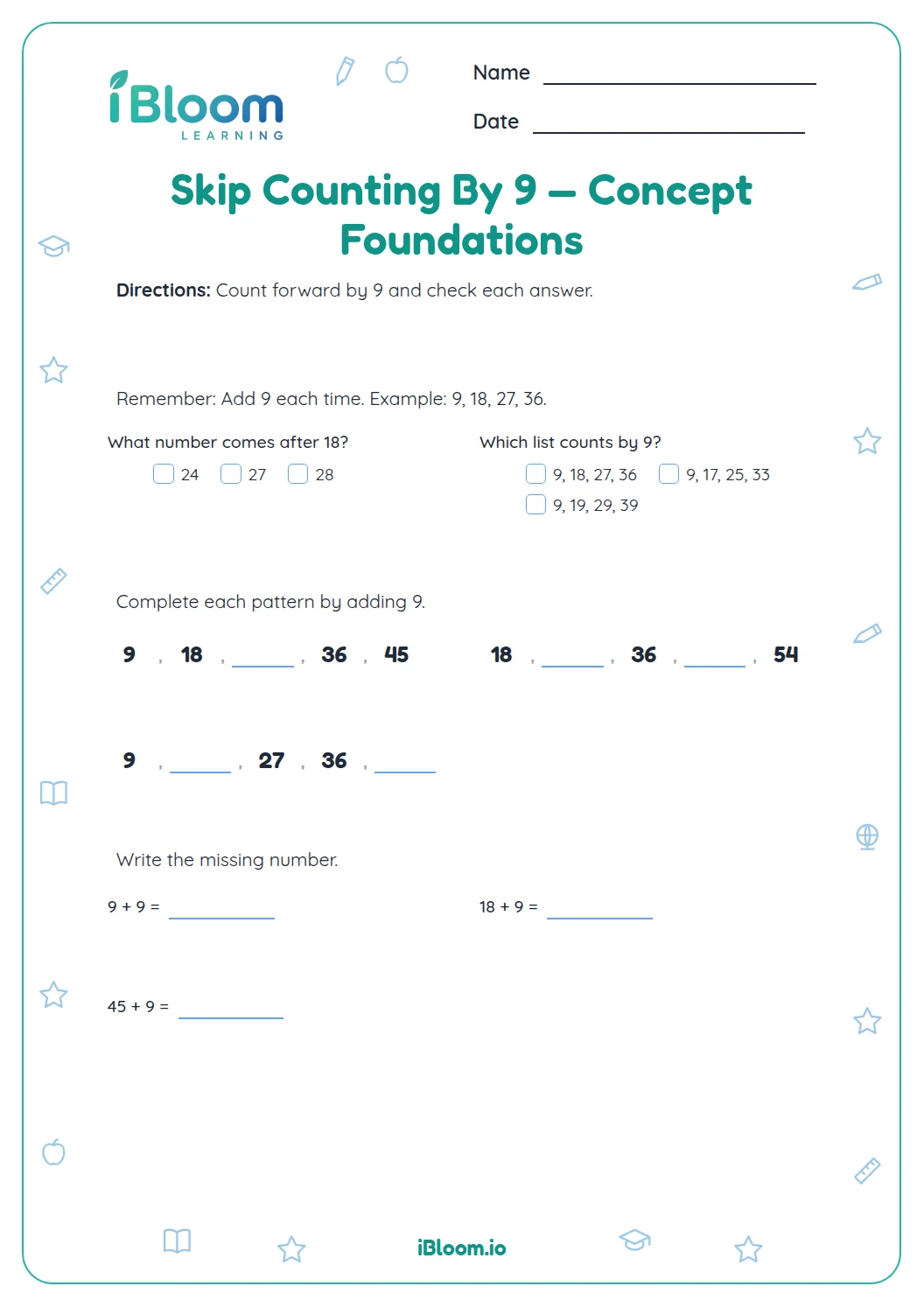
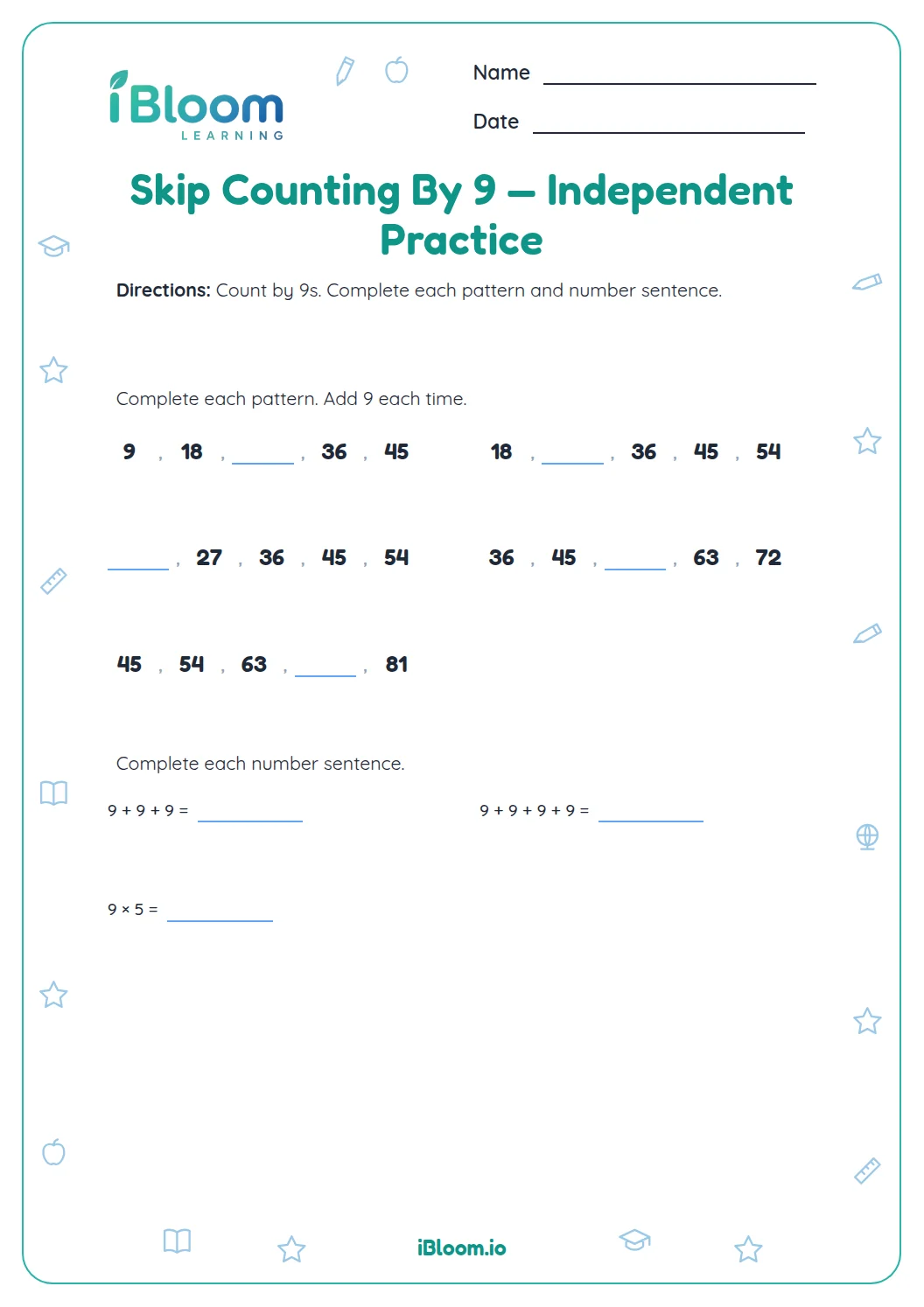
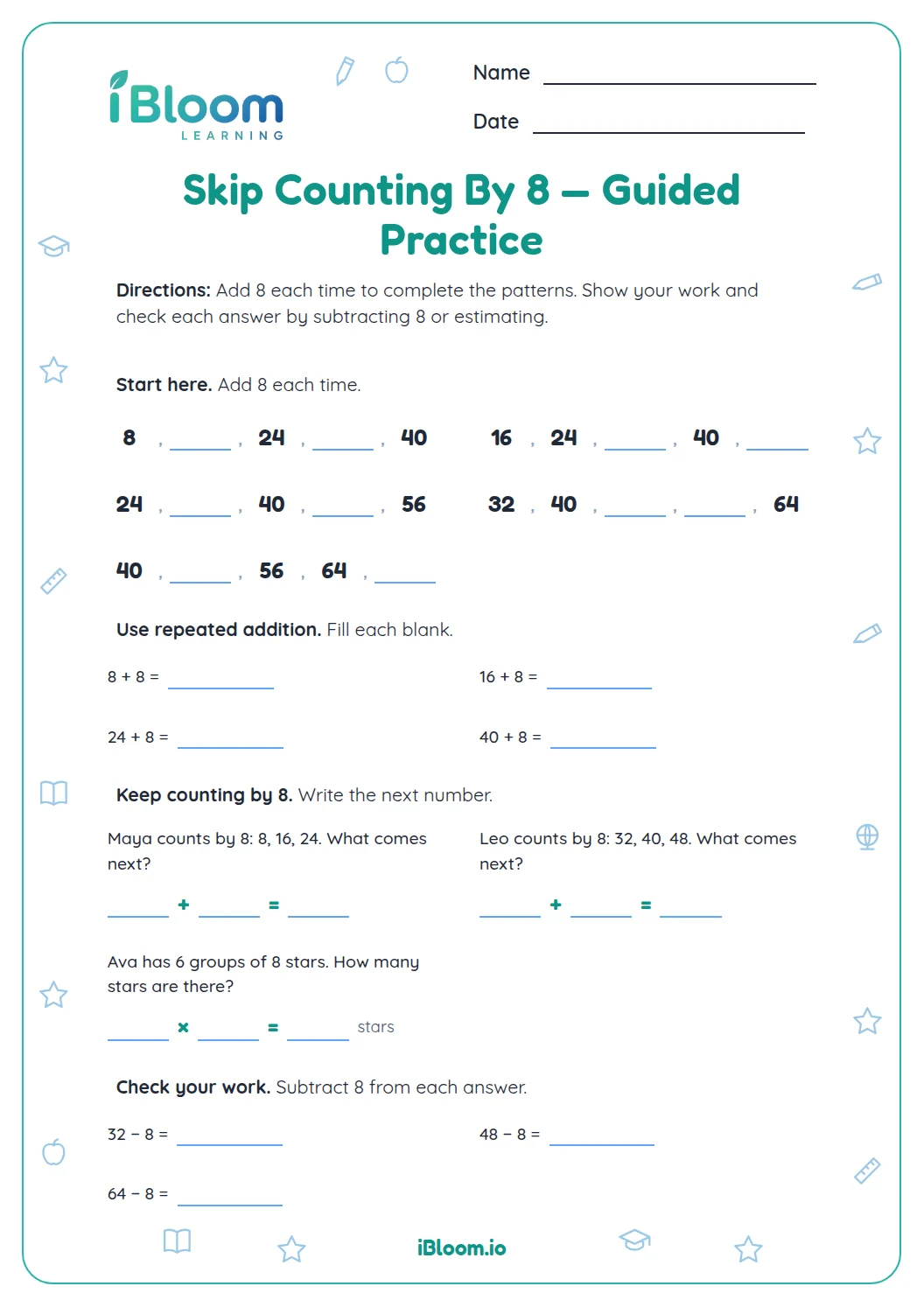
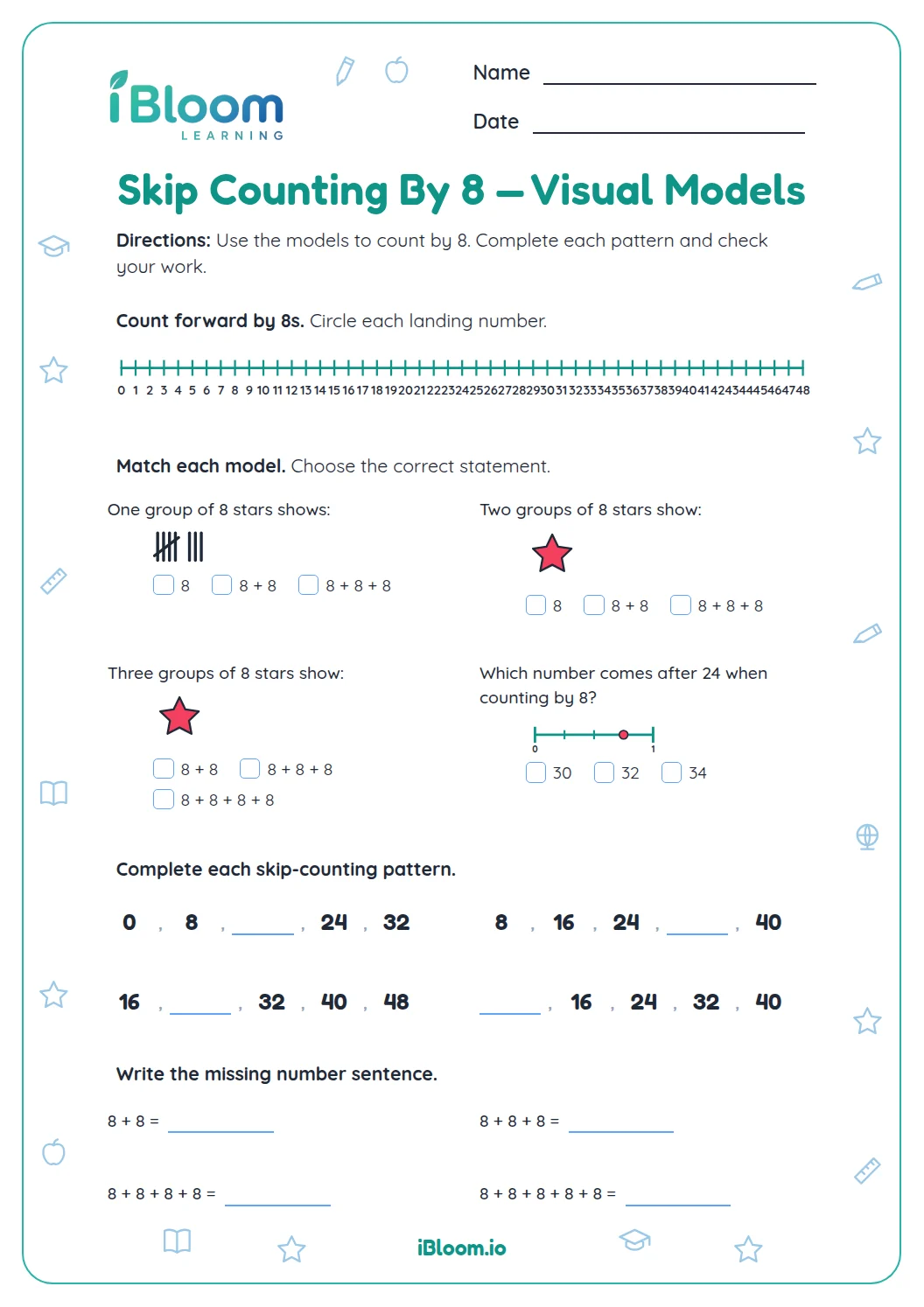
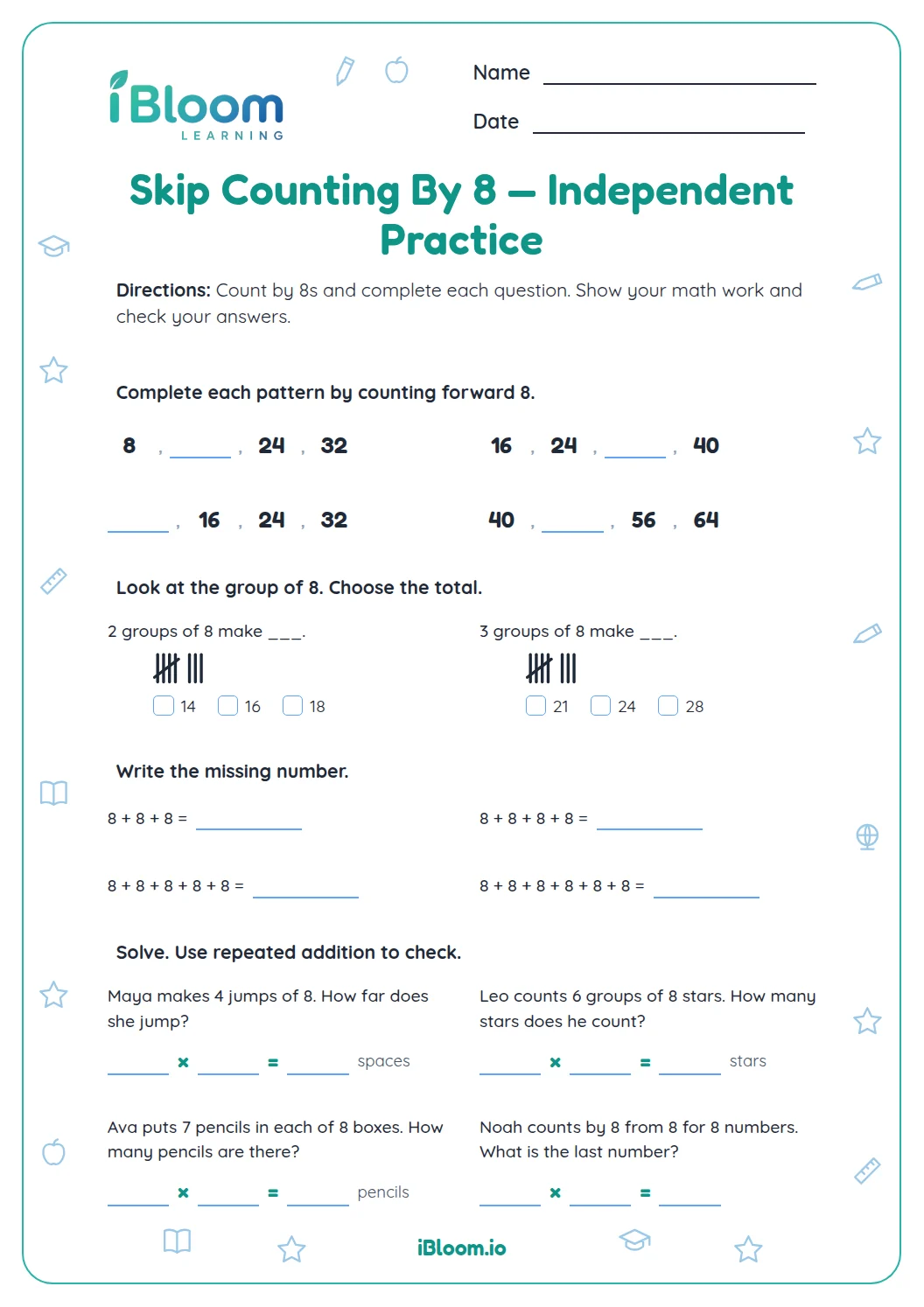
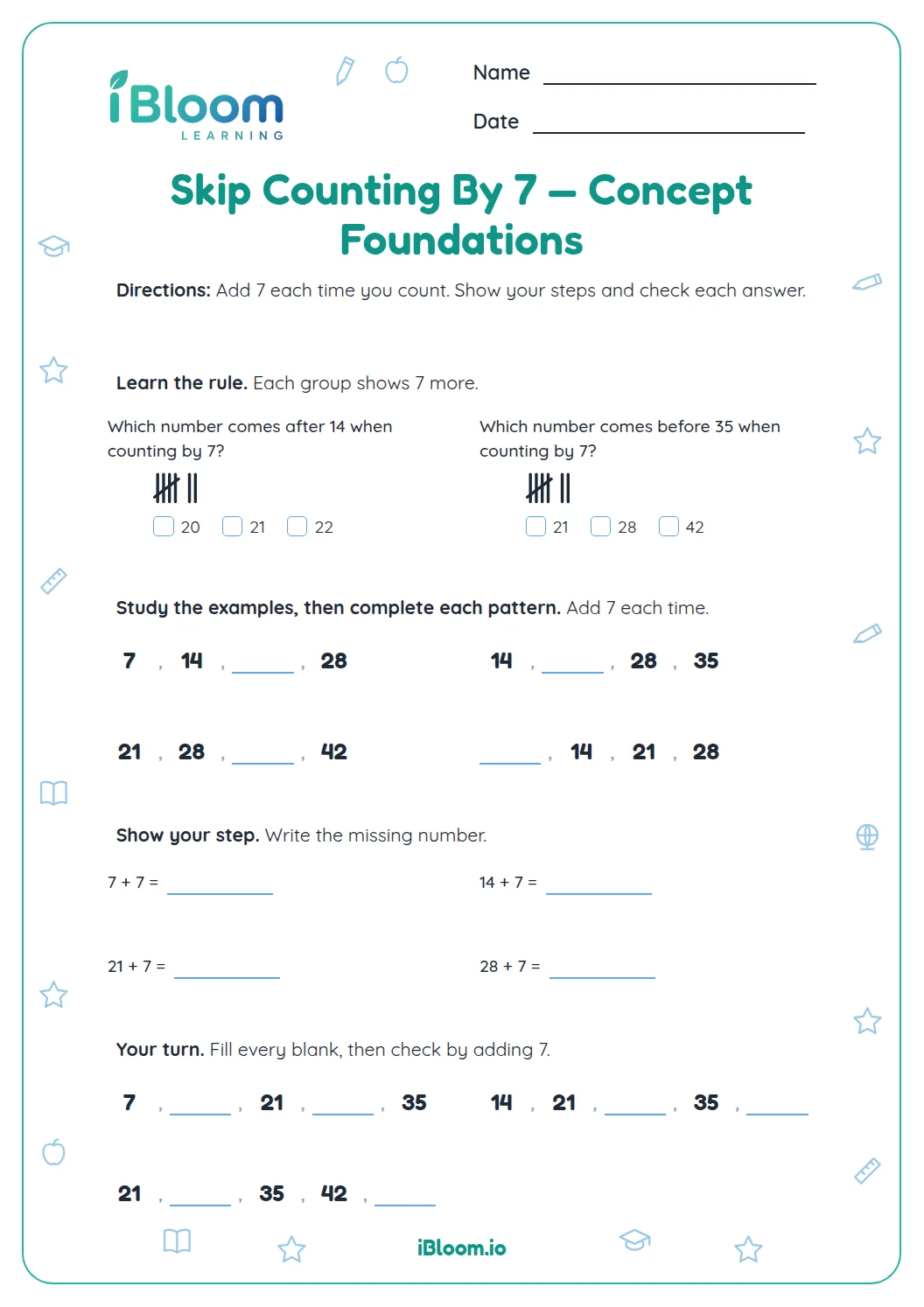
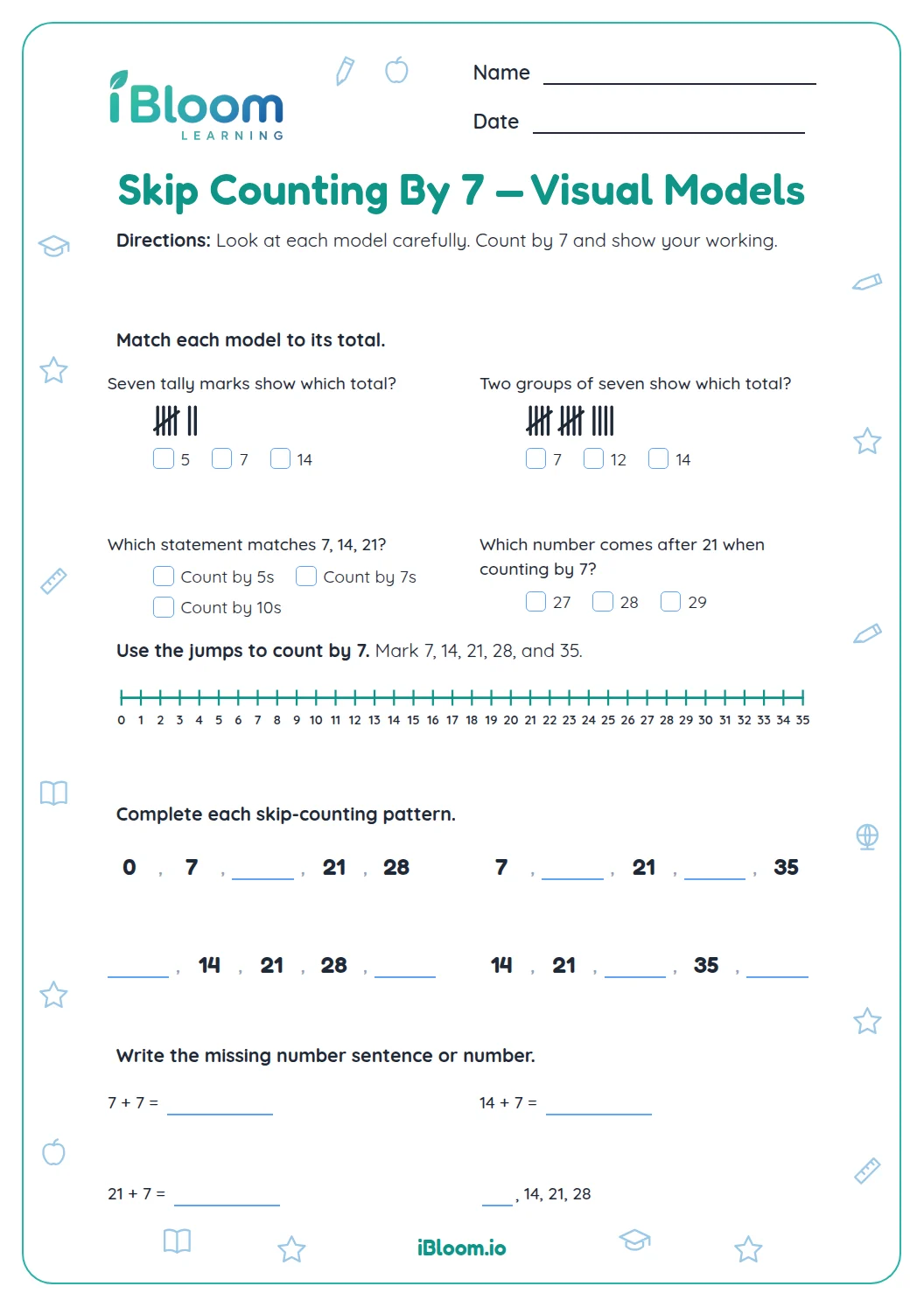
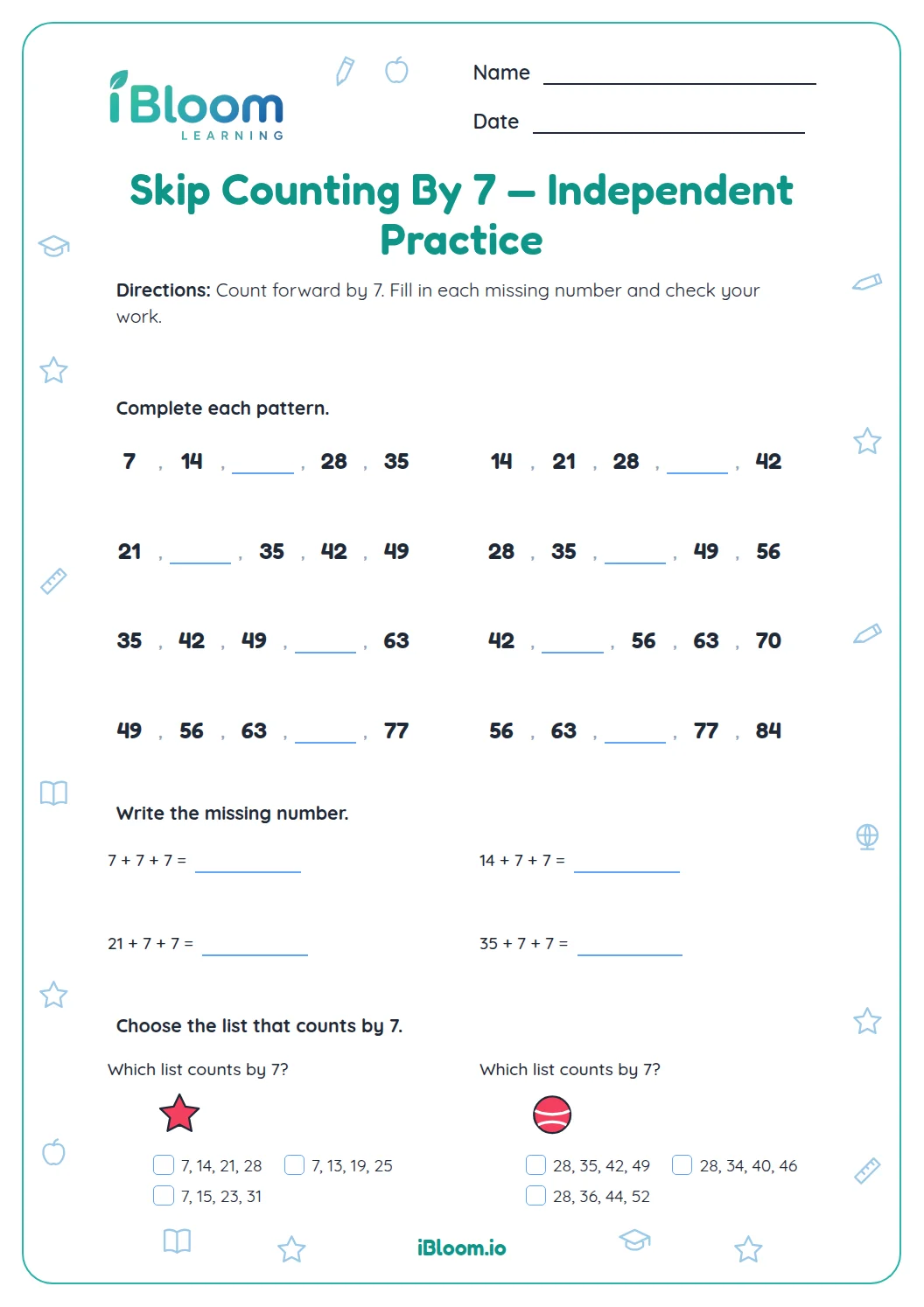
This Grade 2 worksheet gives students 14 compact questions about skip counting by 9. Learners complete sequences, move one jump forward or back, identify matching patterns, and check claims using numbers within 1,000. The separate answer key lists each correct choice and a check for the reasoning items.
How can you find the next number?
This Grade 2 worksheet builds reasoning with skip counting by 9.
Use the worked item below as a model, then continue through the parts in order.
- 127, 36, 45, ___
- 2Add 9 to 45: 54.
- 3Check: 54 + 9 = 63.
What does this challenge practice?
Students use the count-by-9 pattern in sequences and group stories, then check whether a claim matches the next jump.
How can skip counting solve a story?
Find the starting number in the sequence. Add 9 for each step to the right.
How to use this worksheet
- 1Find the starting number in the sequence.
- 2Add 9 for each step to the right.
- 3For one step backward, subtract 9.
- 4Check a missing term using the number before and after it.
- 5For a story, count nine in each group or multiply groups by 9.
Common mistakes and quick fixes
The mistake
Adding 10 instead of 9.
The fix
Add 10, then subtract 1 for each jump.
The mistake
Skipping a term when filling a blank.
The fix
Say every count aloud and write one number per jump.
The mistake
Finding the count but forgetting the story total.
The fix
Multiply the number of groups by 9 or count nine per group.
What to practice next
Make more practice
Questions parents and teachers ask
What does skip counting by 9 mean?
It means adding 9 each time you say the next number. Starting at 9 gives 9, 18, 27, 36, and so on. Compare neighboring terms to check the pattern: each number should be 9 more than the one before it.
How can a student find a missing term?
Start with a nearby term and make one jump of 9 at a time. If the blank follows 45, add 9 to get 54. Check by adding 9 again to see whether the next number is 63. This confirms the missing term fits both neighbors.
How does skip counting connect to equal groups?
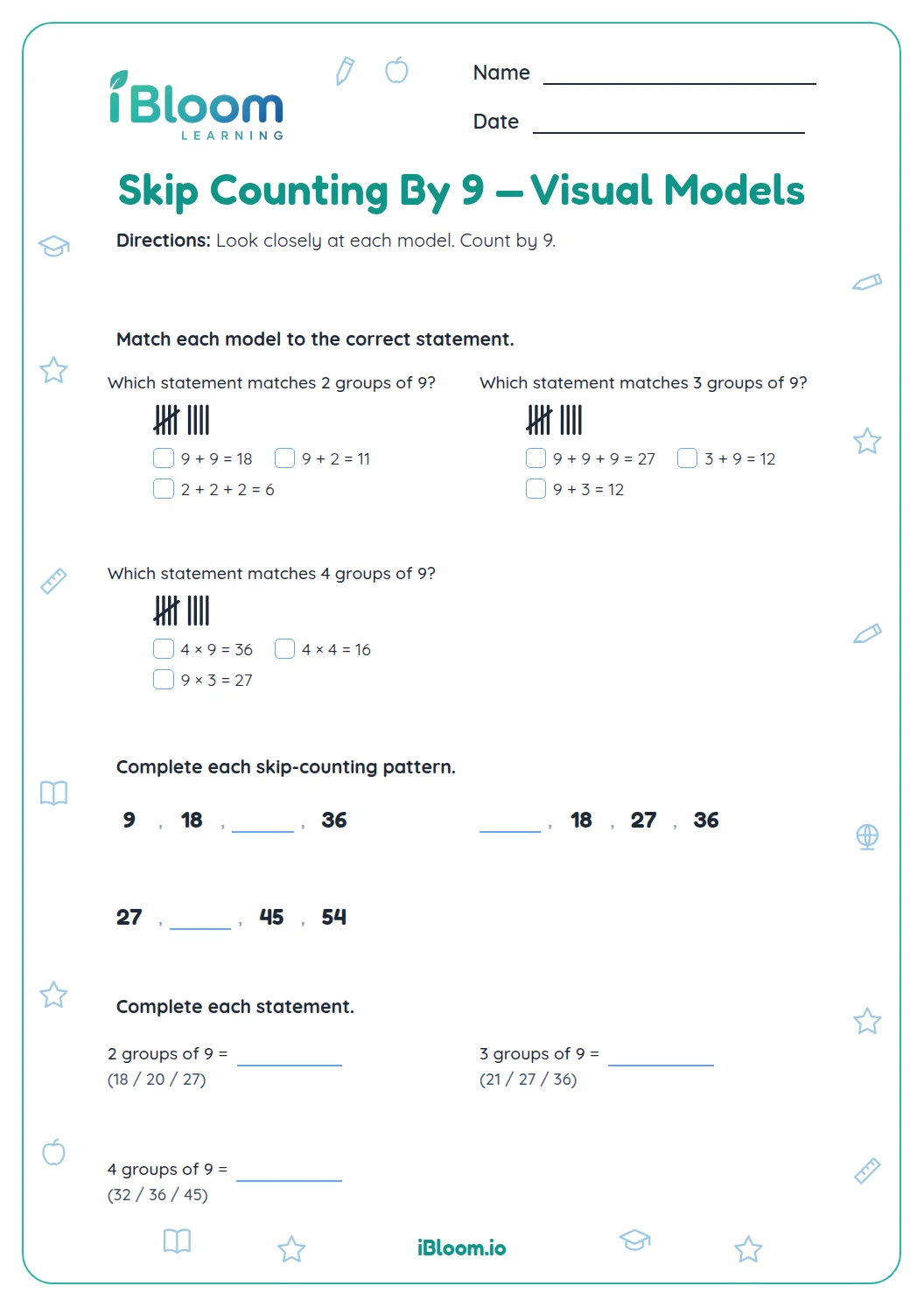
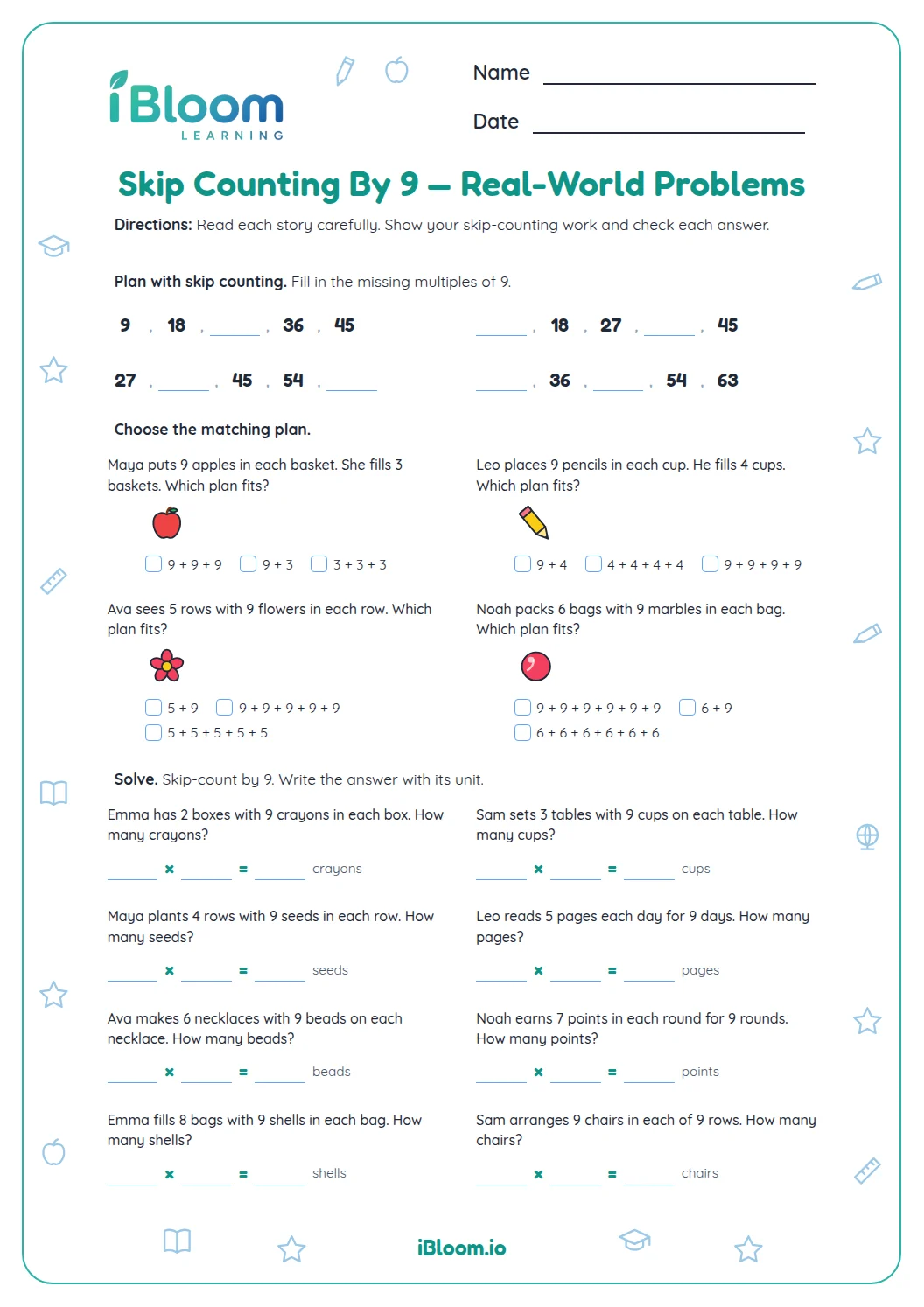
Four groups of nine can be counted as 9, 18, 27, 36, for a total of 36. A multiplication fact, 4 × 9 = 36, describes the same groups. The worksheet uses stories so students can connect the count pattern to a total.
How many questions and pages are included?
There are 14 questions across two worksheet pages. Students complete sequences, solve equal-group stories, find forward or backward jumps, and check a pattern claim. The separate two-page answer key lists the expected terms and totals, with a model explanation for the final reasoning item.
What if a student adds 10 each time?
Adding 10 makes each jump one too large. One check is to add 10 and subtract 1: from 72, 72 + 10 − 1 = 81. Compare neighboring numbers in the sequence; their difference should be 9, not 10.