

About this worksheet
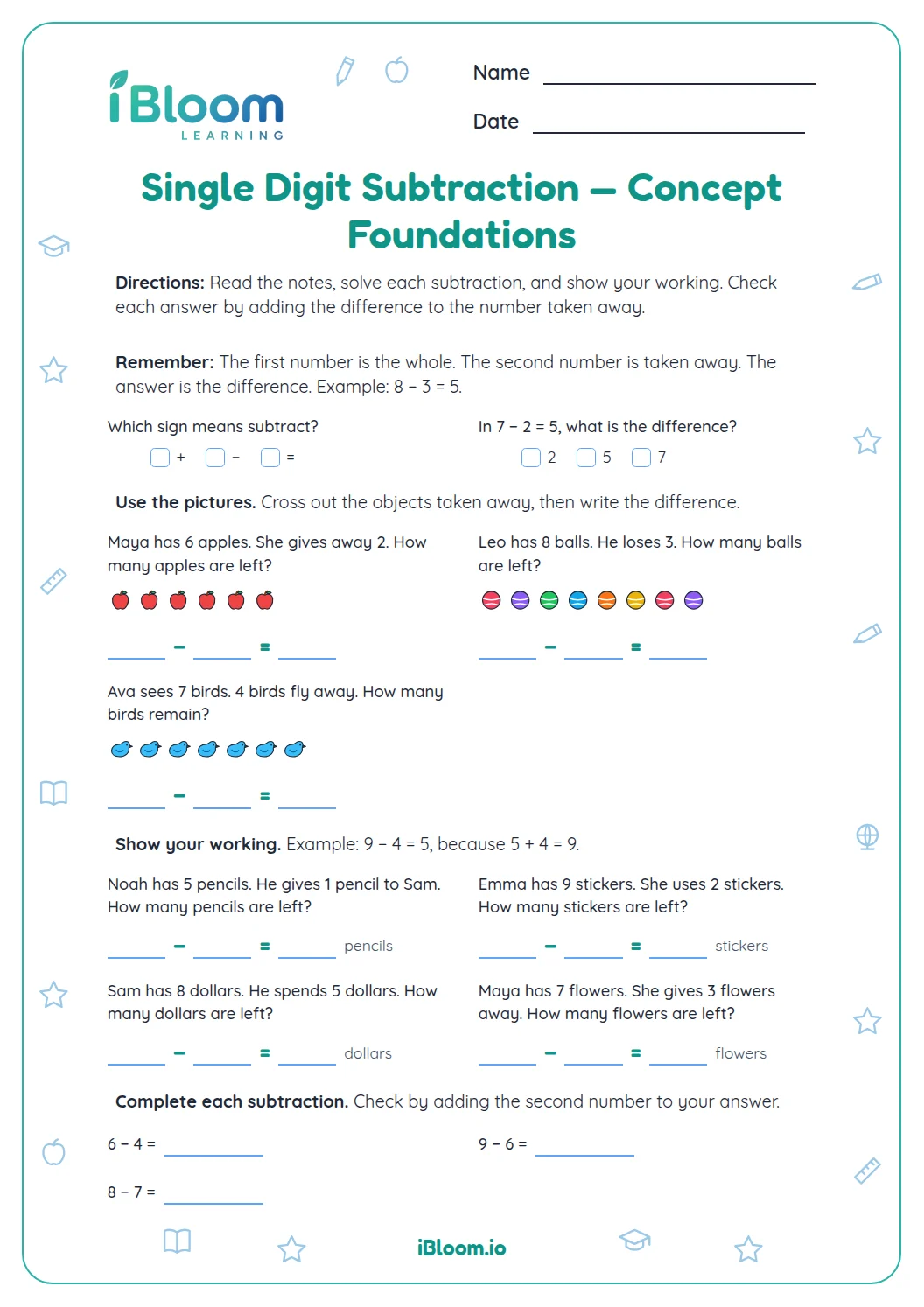
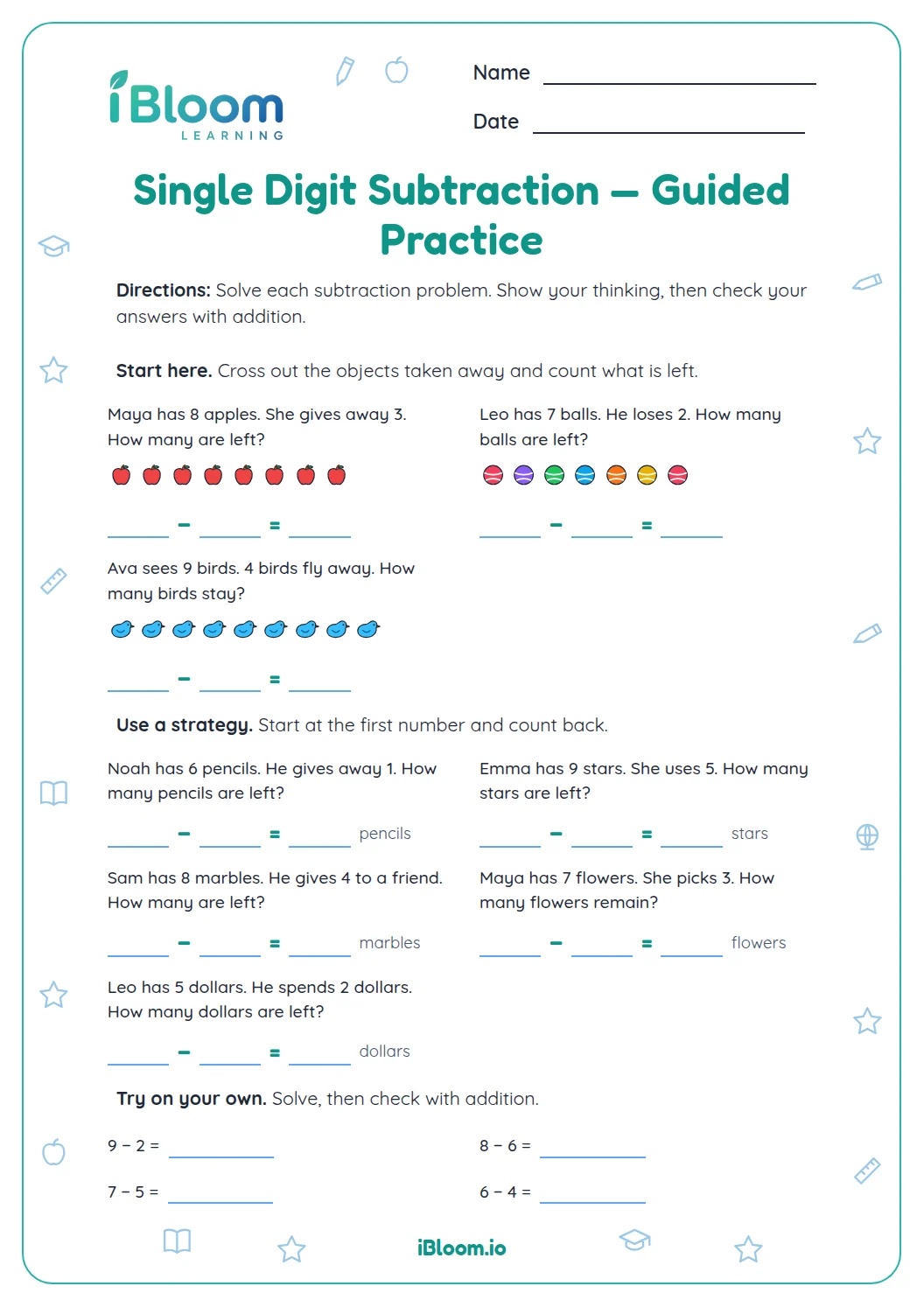
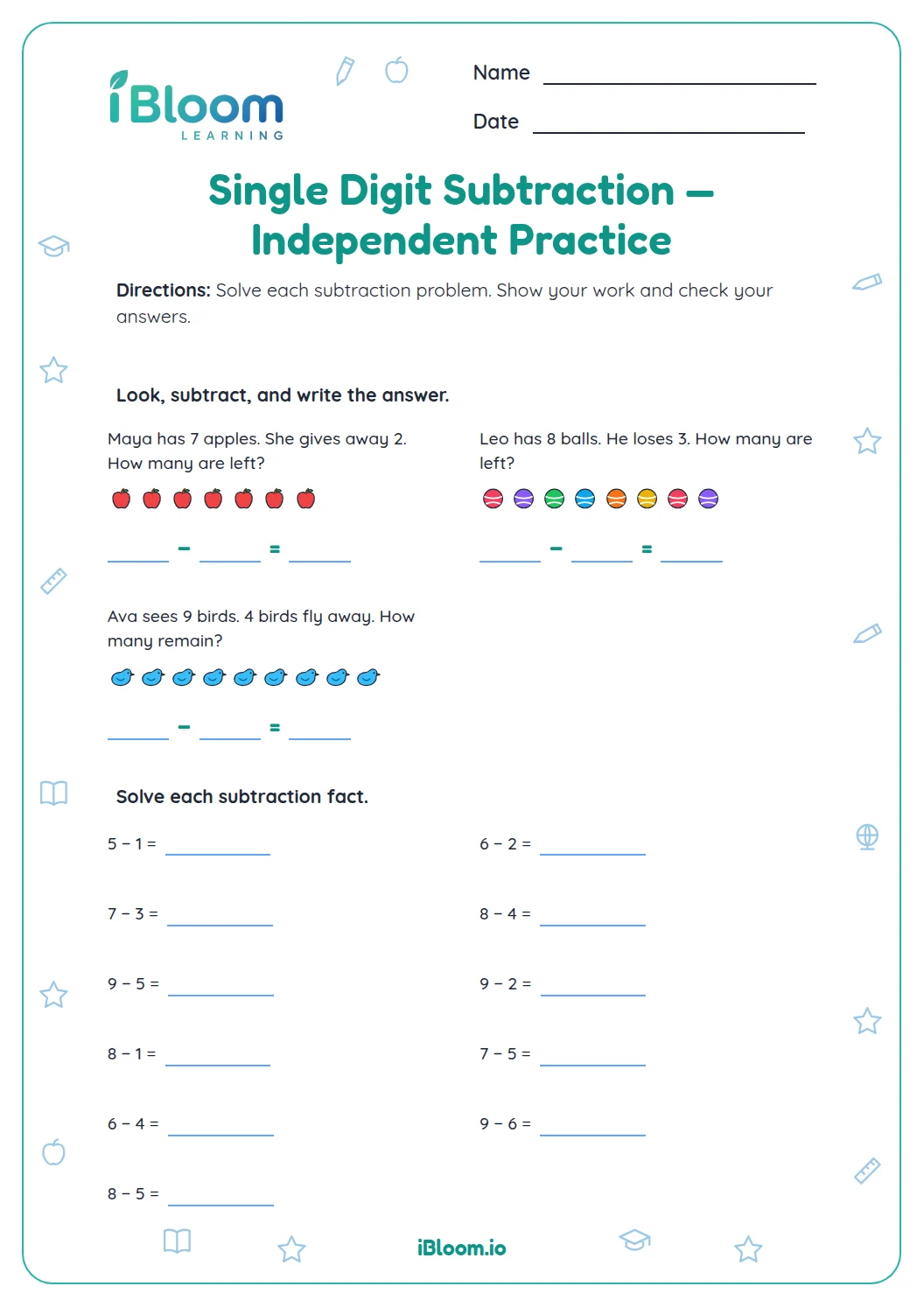
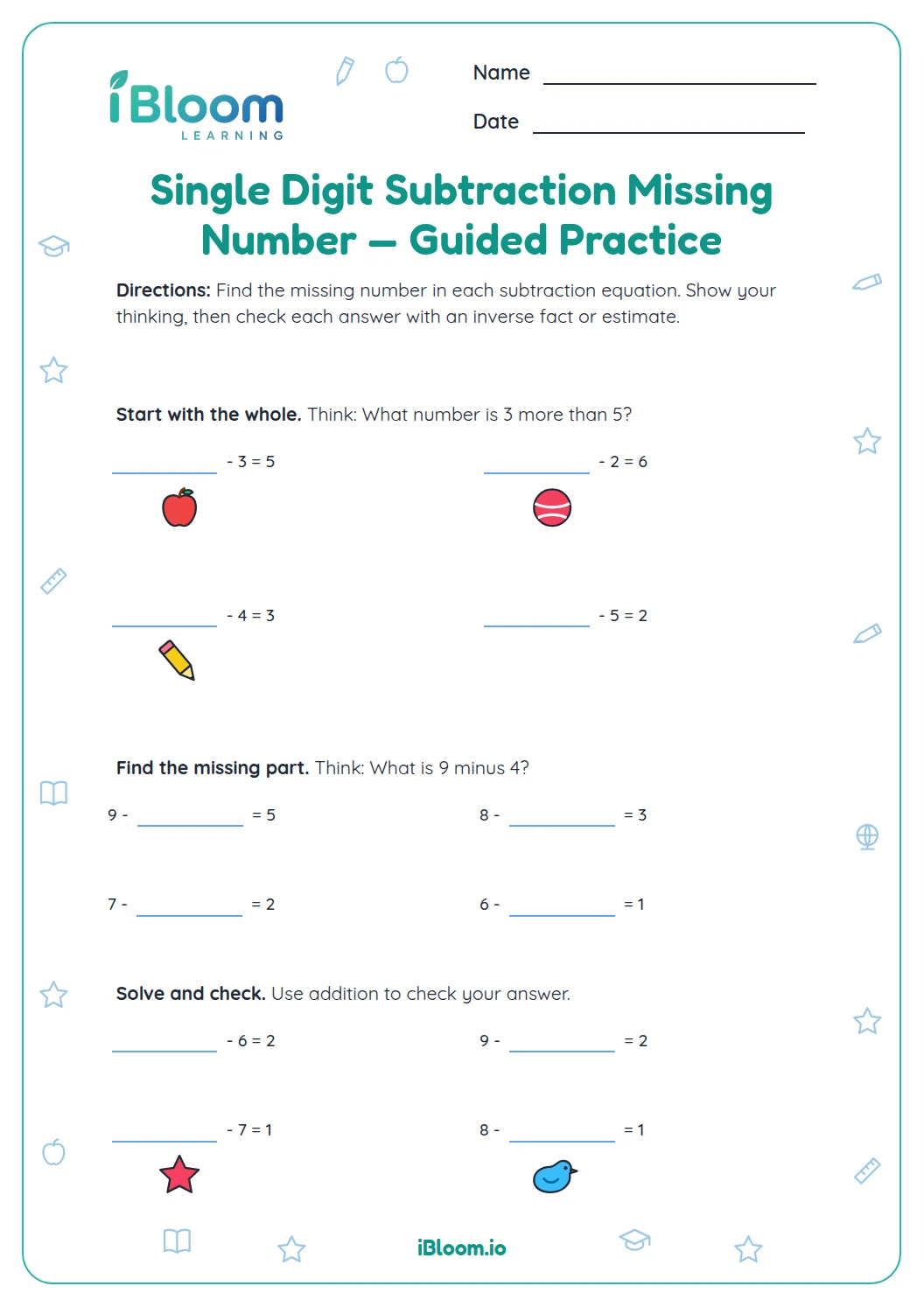
This Grade 2 worksheet gives students 16 ways to practice subtraction in real situations. They match six short stories to true subtraction sentences, solve five equations, and work through five varied stories with two-digit amounts. The answer key includes the matching sentences and labeled totals. The story problems connect to CCSS 2.OA.A.1.
Aligned to 2.OA.A.1
How does a story become a subtraction sentence?
Find the starting amount, then identify how many leave or are put away. For “Mia has 9 stickers. She gives 4 away,” write 9 − 4 = 5. The answer tells how many remain.
- 1Mia has 9 stickers. She gives 4 away.
- 29 − 4 = 5
- 35 stickers are left.
What kinds of questions are on the pages?
Part A has six short stories to match with subtraction sentences. Part B gives five number sentences to finish. Part C asks children to write and solve five more take-away stories. The numbers stay within 9 so the focus stays on the subtraction relationship.
How to use this worksheet
- 1Read the whole story once.
- 2Underline the starting amount and the amount taken away.
- 3Write the starting amount first in a subtraction sentence.
- 4Solve, then check that the answer is less than the starting amount.
Common subtraction slips
The mistake
Adding the two amounts in a take-away story.
The fix
Ask whether the story says more joined or some left. “Gives away” means subtract.
The mistake
Subtracting the larger amount from the smaller amount.
The fix
The starting amount is the first number in the story and the subtraction sentence.
The mistake
Reporting how many were given away as the answer.
The fix
The question asks how many remain, so subtract the amount that left.
Common Core alignment
This worksheet practices the standards below.
Represent take-from stories with subtraction equations.
On this sheet: Students represent take-away situations with subtraction equations and solve them.
Show the official wordingHide the official wording
Use addition and subtraction within 100 to solve one- and two-step word problems involving situations of adding to, taking from, putting together, taking apart, and comparing, with unknowns in all positions, e.g., by using drawings and equations with a symbol for the unknown number to represent the problem.
What to practice next
Make more practice
Further reading
Questions parents and teachers ask
What does “left” mean in these problems?
“Left” means the amount still there after some objects are taken away. Start with the original number, subtract the number that leaves, and label the answer with the object when helpful. For example, 9 stickers minus 4 stickers leaves 5 stickers.
Should children write an equation for every story?
Yes. Writing an equation makes the action in the story visible. Put the starting amount first, the minus sign next, and the amount taken away after it. Then solve and reread the question to be sure the answer tells what remains.
Are the questions within 10?
Yes. The starting amounts range from 5 to 9, and each problem subtracts a smaller amount. Children can use known facts, count back, or think of the related addition fact to find each difference. Ask them to explain which number tells what was taken away.
How many questions and pages are included?
There are 16 questions in three parts. The worksheet uses two practice pages, followed by two answer key pages. Part A matches stories to equations, Part B gives number sentences, and Part C has open story problems to solve and label.
What comes after this practice?
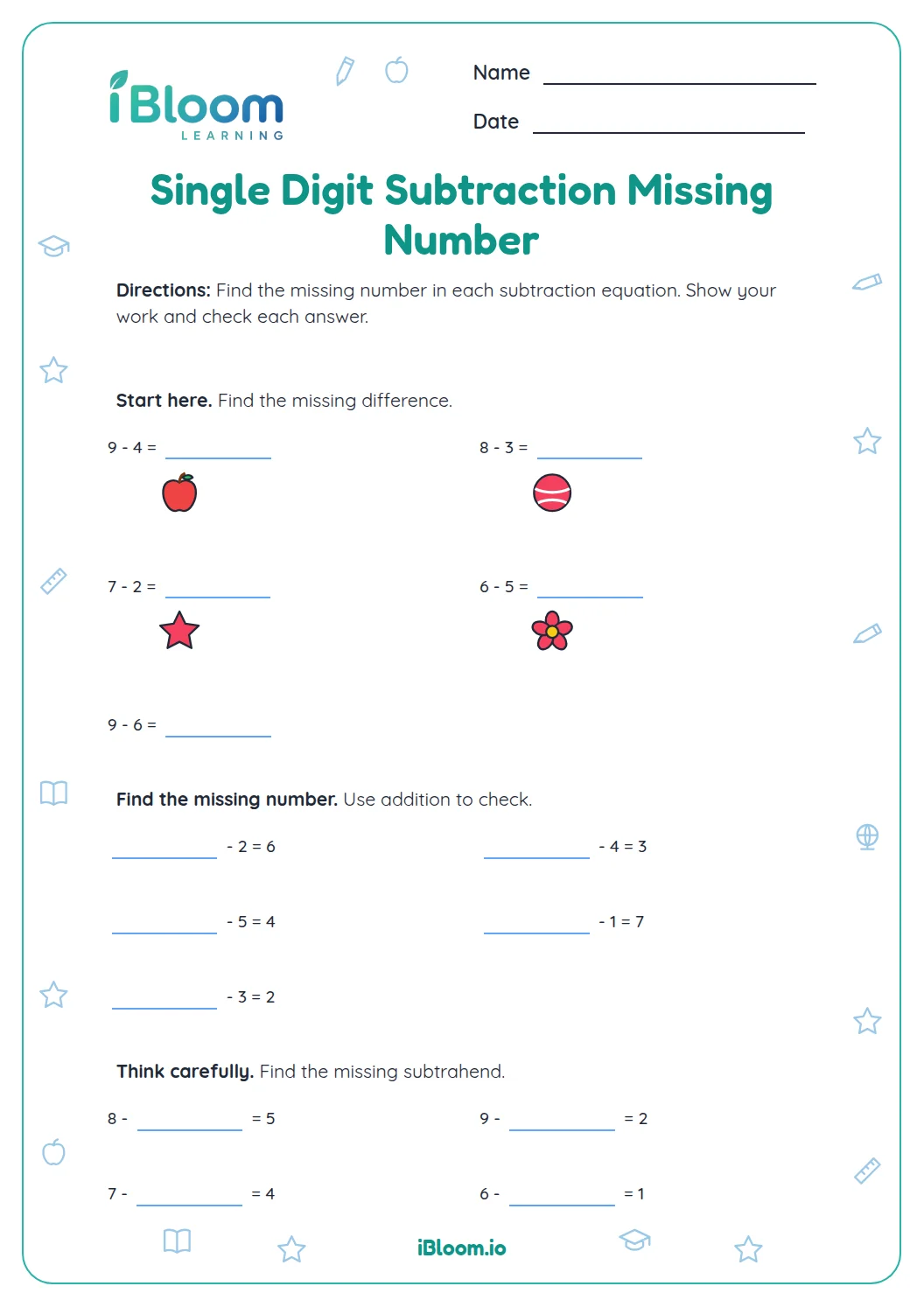
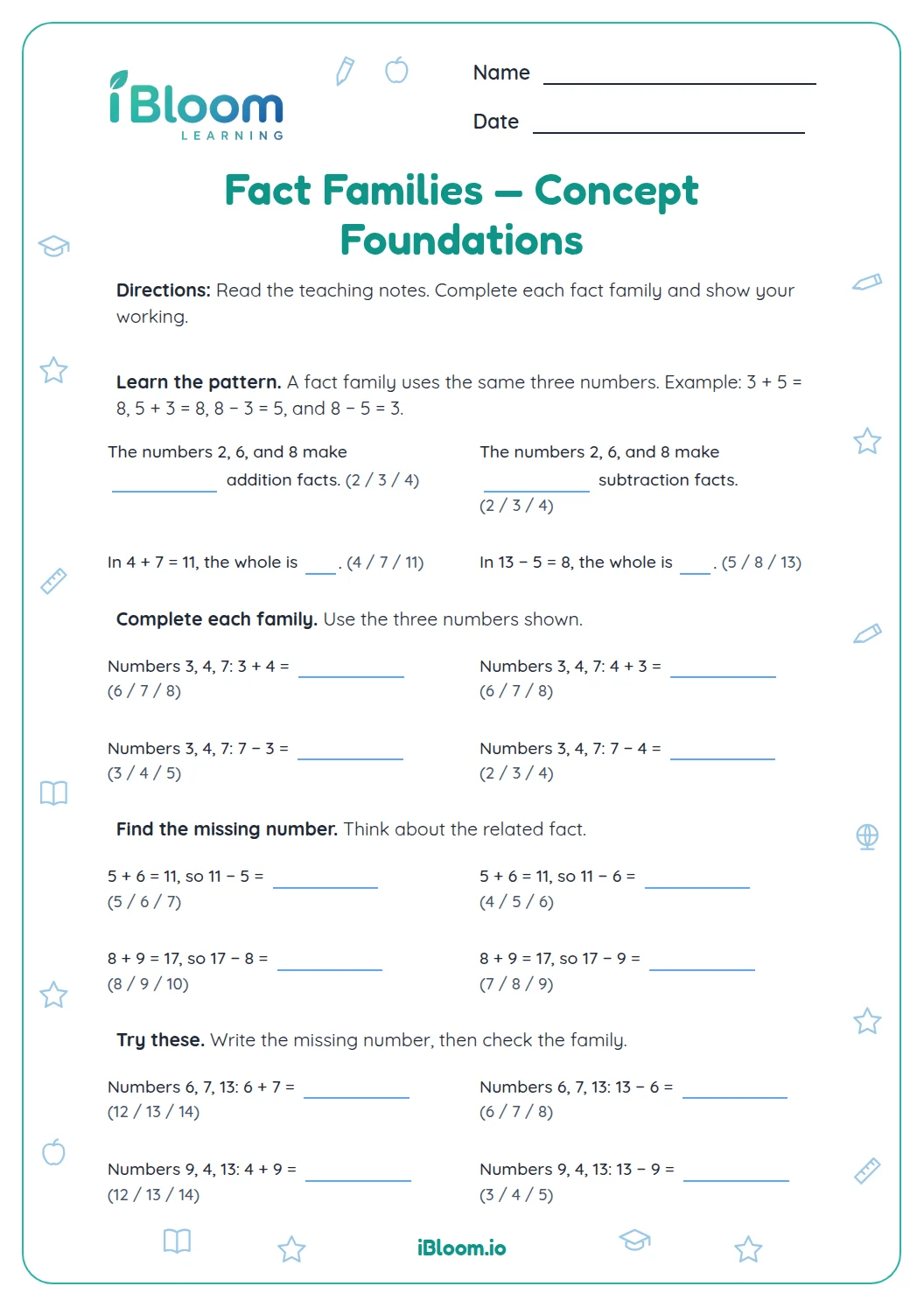
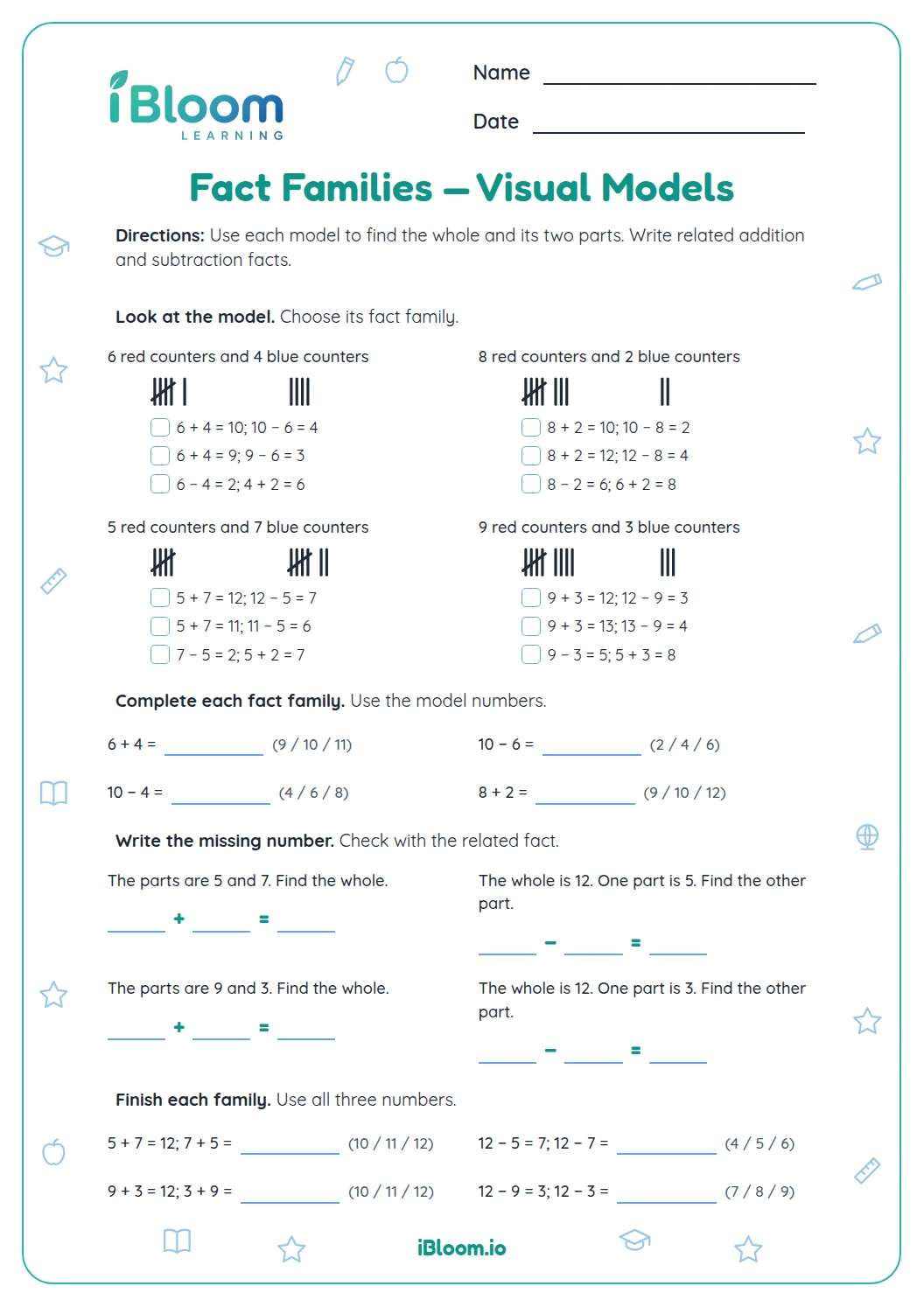
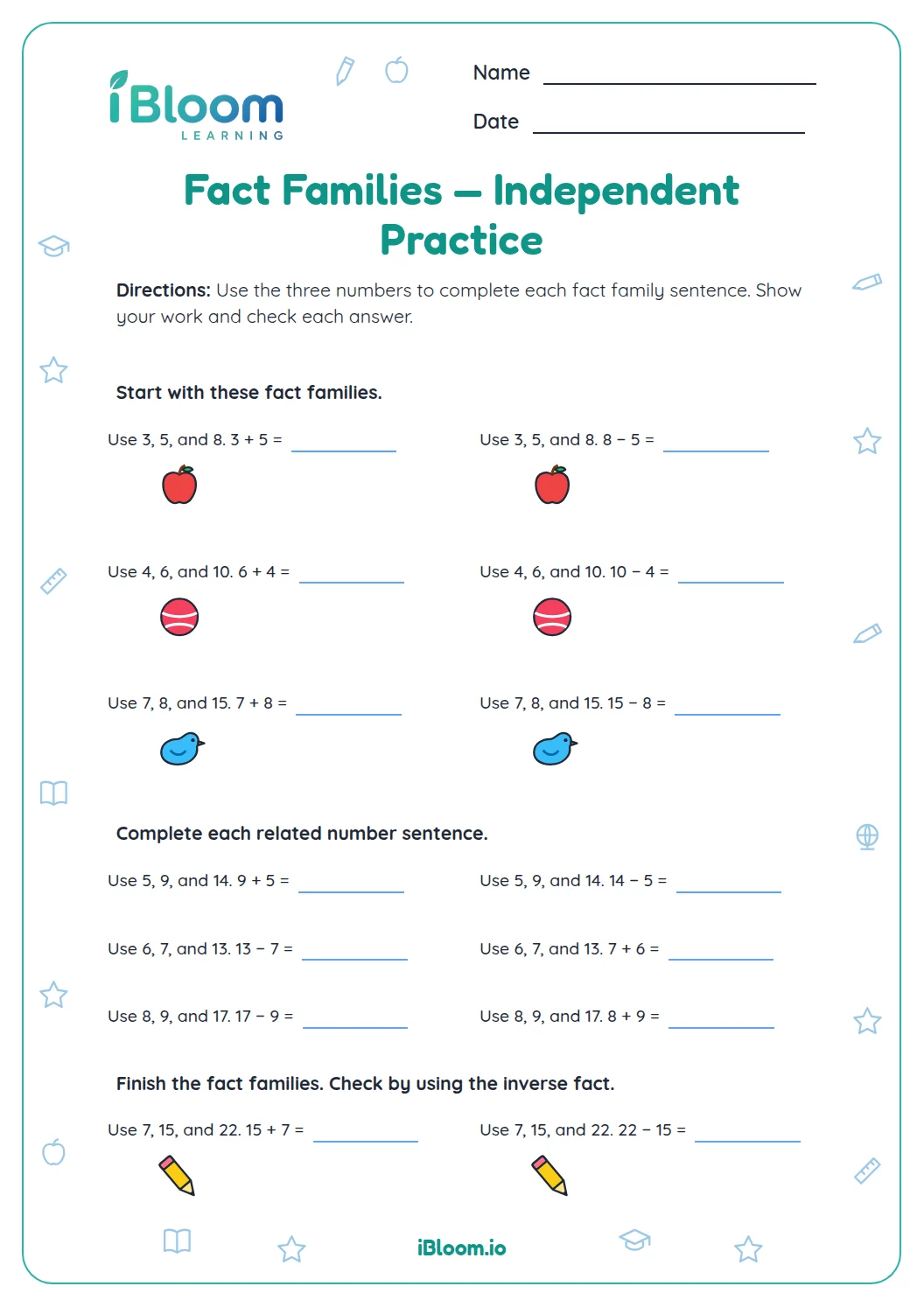
A useful next step is completing subtraction sentences with a missing number, then connecting subtraction to addition fact families. These related skills help children see how the numbers in a fact work together. This sheet builds that foundation with take-away situations and single-digit differences.