






About this worksheet
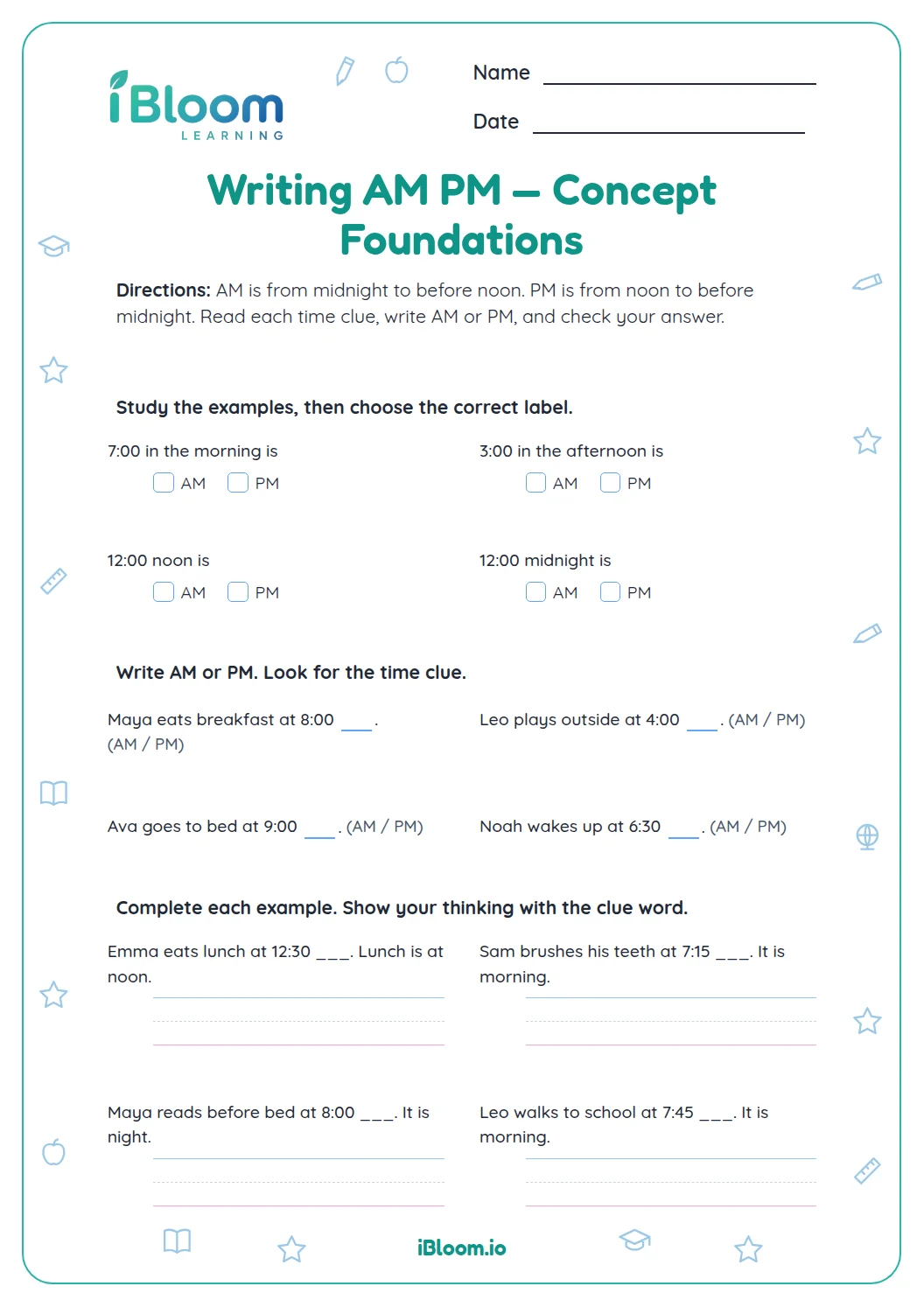
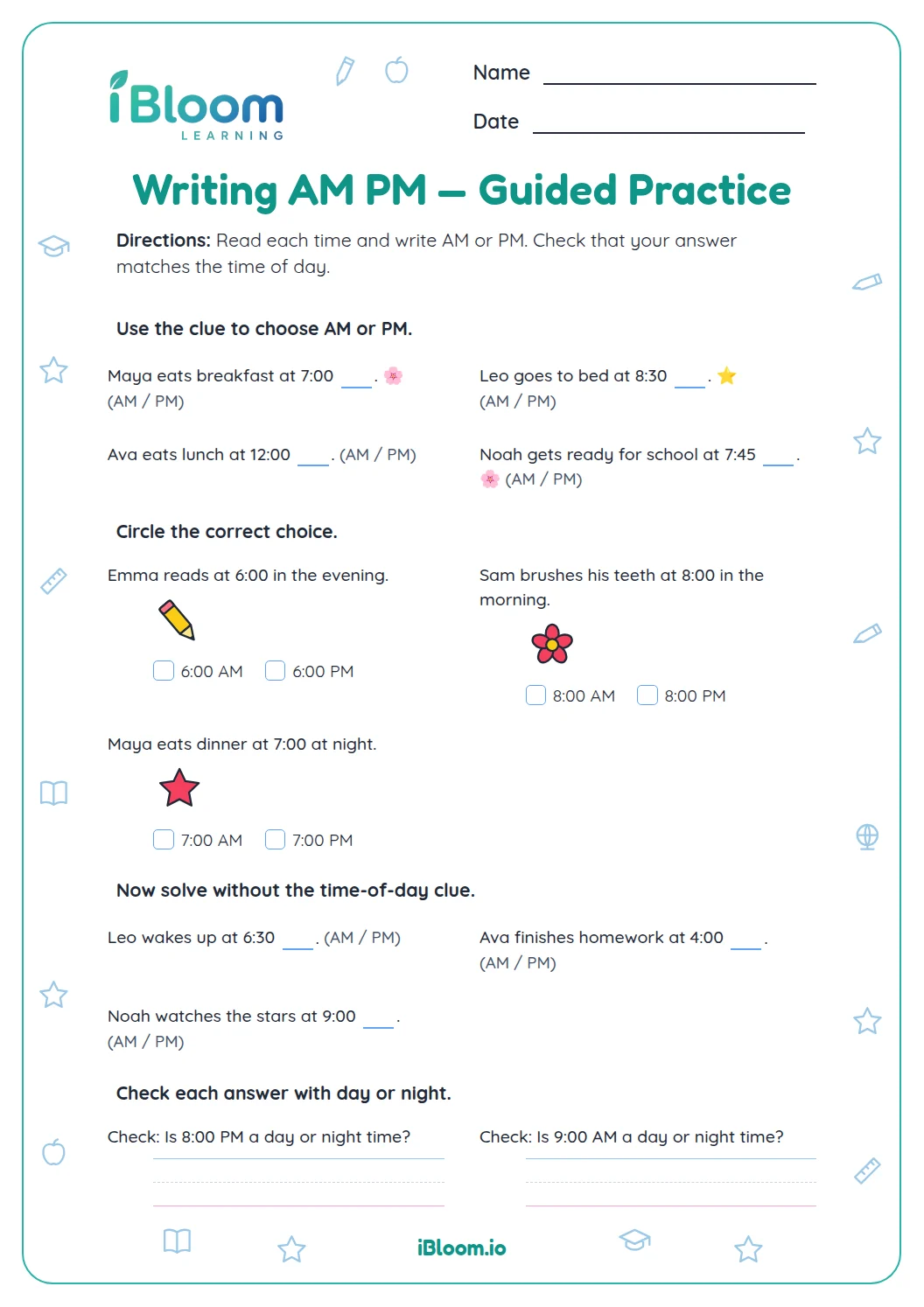
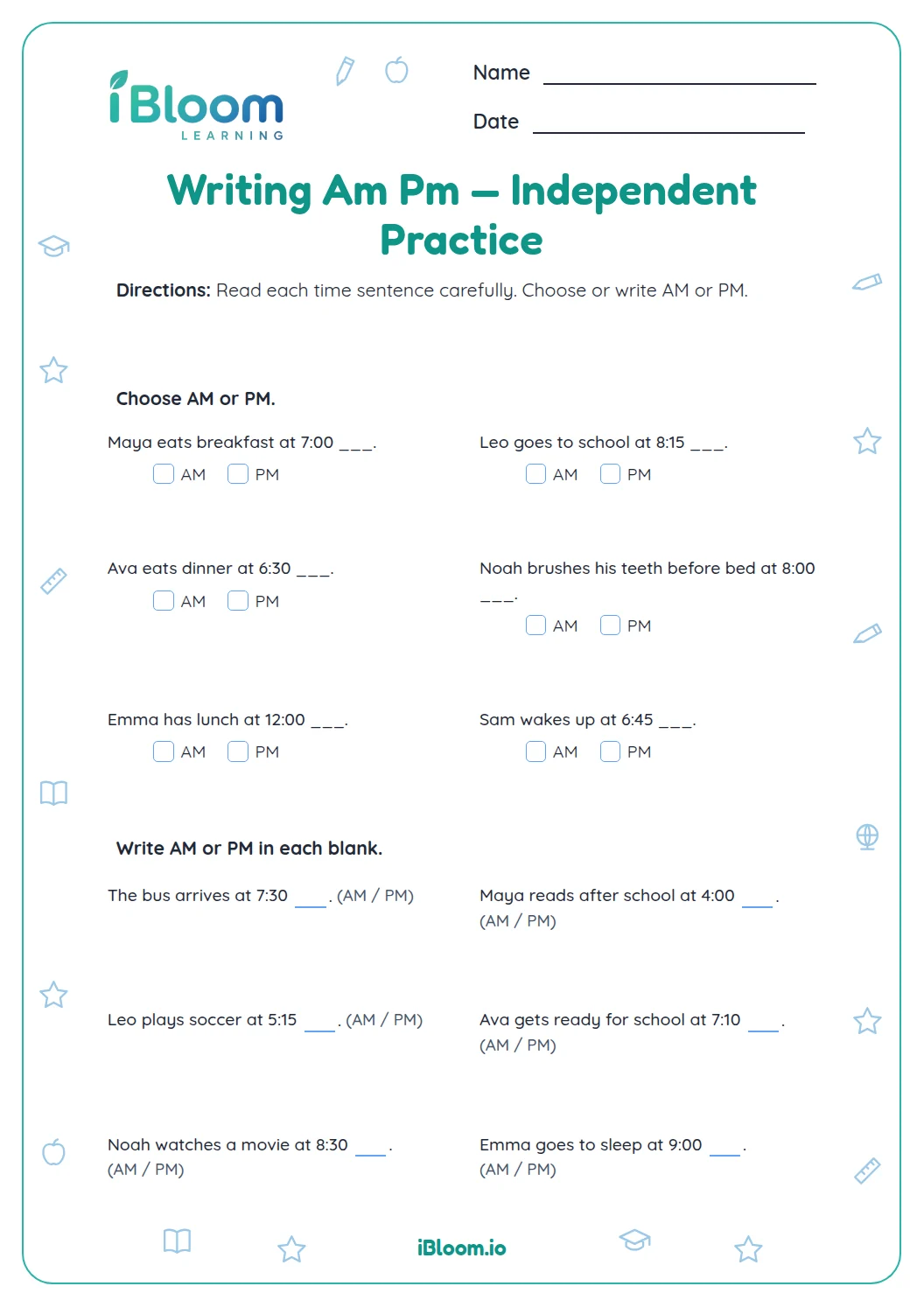
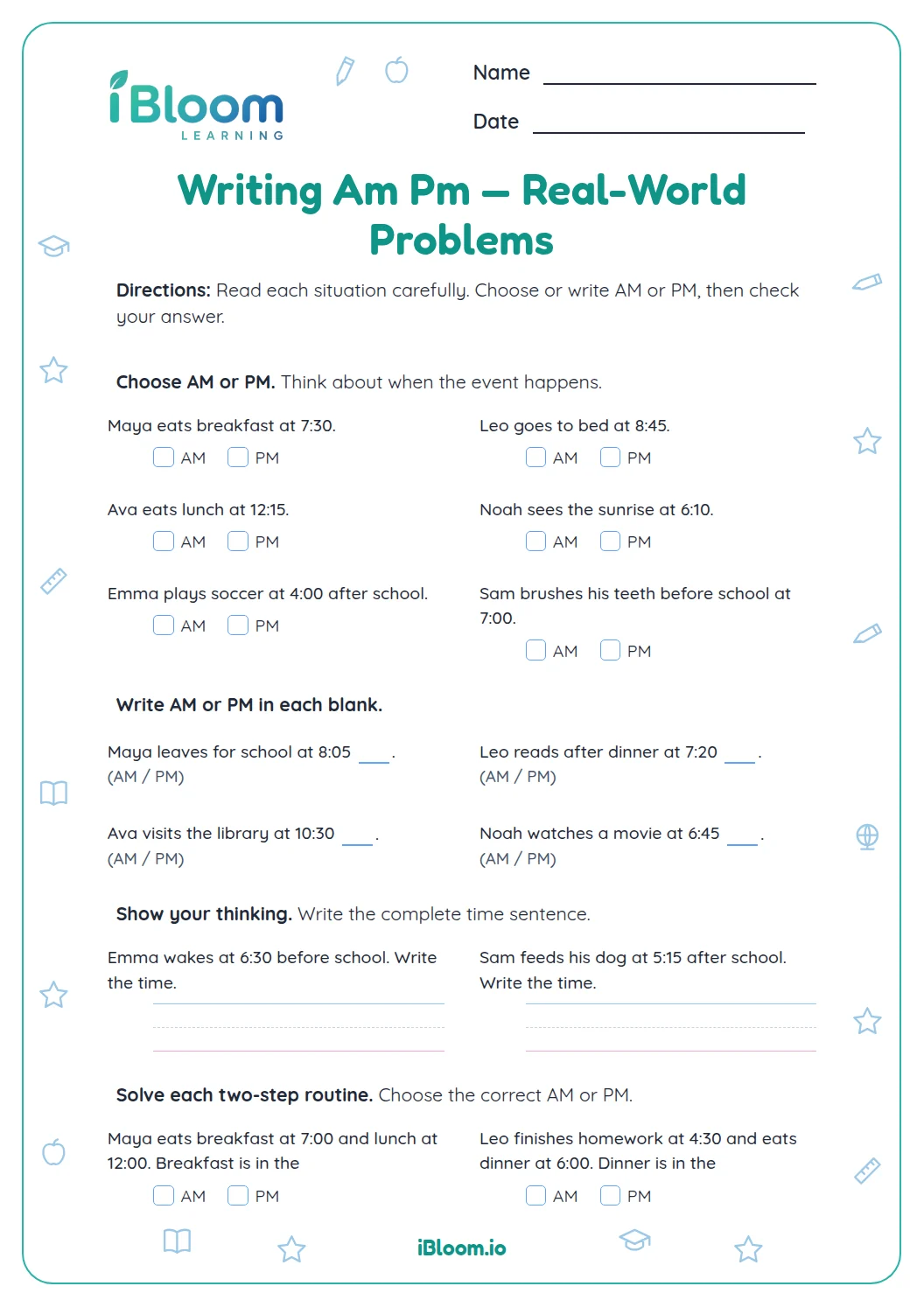
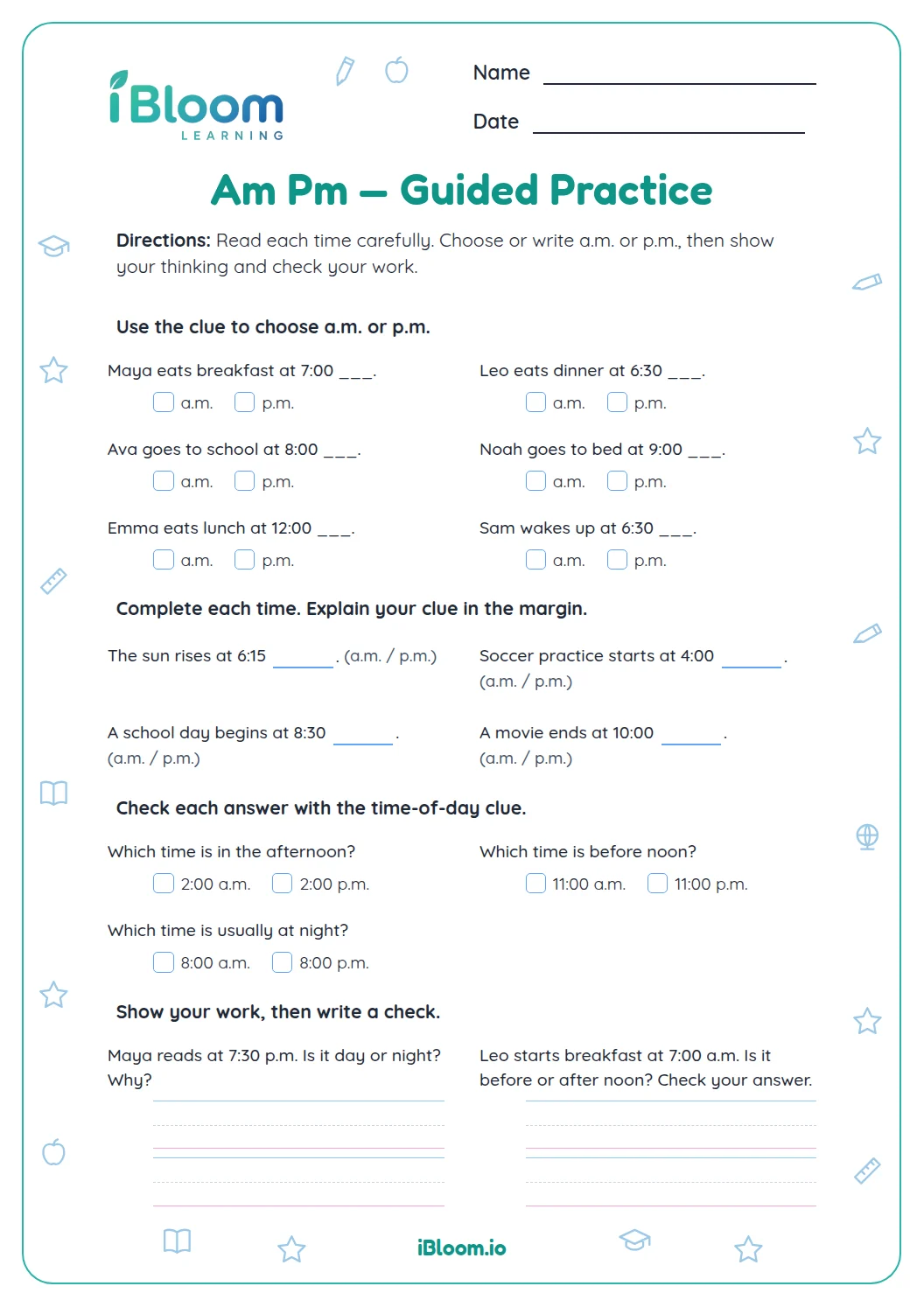
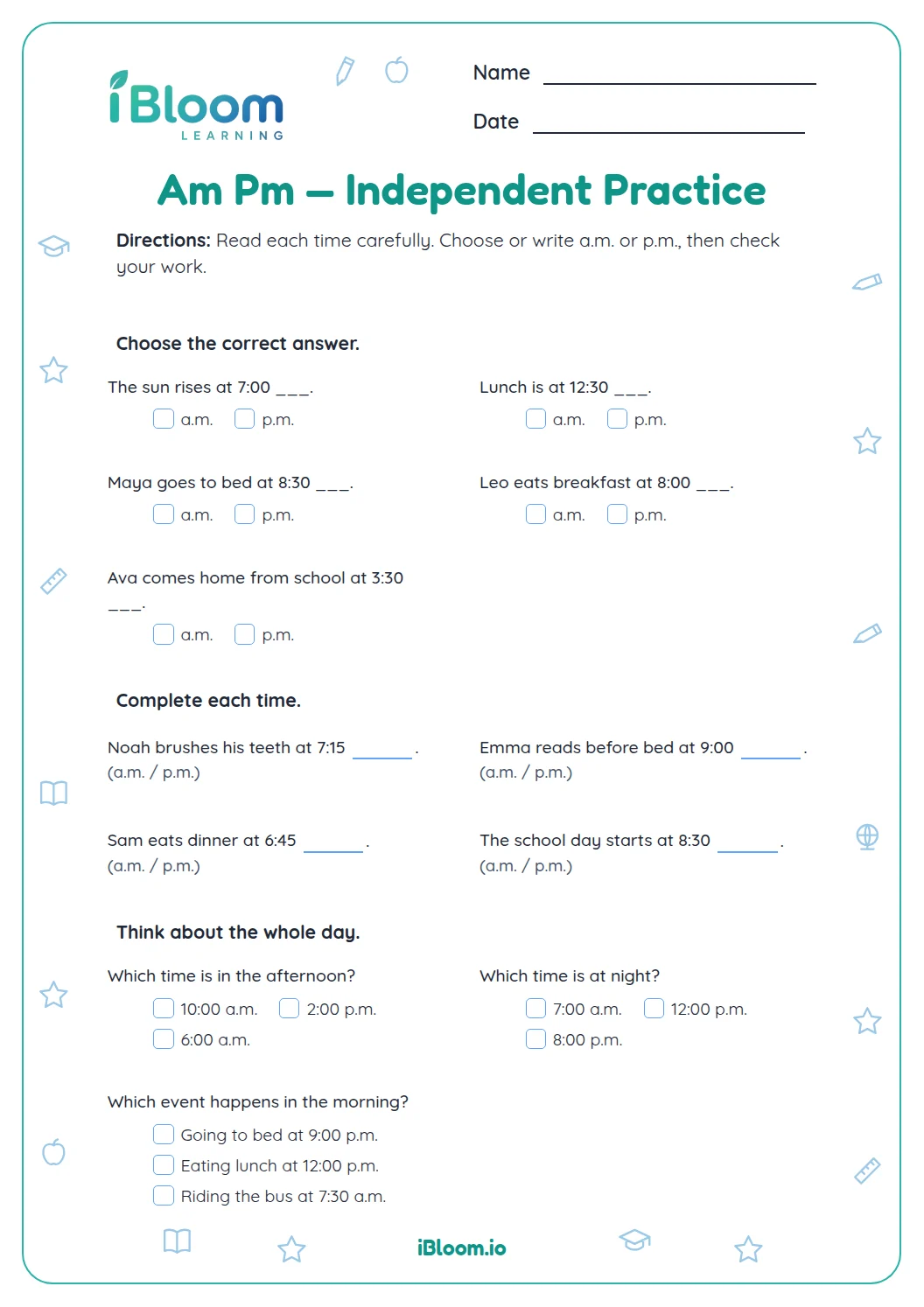
This Grade 2 telling-time worksheet helps students connect clock readings to a.m. and p.m. Part A shows six analog clocks and asks students to write the time with the correct abbreviation using a daily context. Part B uses familiar routines such as breakfast, lunch, dinner, school, and bedtime. The answer key includes each time label and routine choice.
Aligned to 2.MD.C.7
What information do the clock hands give?
The minute hand gives the minutes and the hour hand points to the hour or toward the next hour. Read those hands first. Then use the routine clue to decide whether the time belongs to a.m. or p.m.
- 1Question 2: The clock reads 3:30, and the clue says afternoon → 3:30 p.m.
How do daily routines help with a.m. and p.m.?
Breakfast and getting ready for school usually happen in the morning; dinner and bedtime usually happen later in the day. Read the stated clue carefully, especially at 12:00, when noon and midnight have different labels.
How can students check the time label?
Say the time aloud with the routine: “12:00, lunchtime” points to noon and p.m.; “12:00, day beginning” also indicates the daytime school schedule. Then write the abbreviation with periods.
How to use this worksheet
- 1Read the analog clock and say the hour and minutes.
- 2Notice the routine clue, such as breakfast, lunch, or bedtime.
- 3Decide whether the time is before noon or after noon.
- 4Write a.m. or p.m. with periods after the time.
- 5Use the answer key to discuss any clue that felt uncertain.
Common mistakes and quick fixes
The mistake
Assuming a.m. or p.m. comes from the clock hands.
The fix
The clock gives the time; the routine clue tells whether it is morning or later.
The mistake
Mixing up noon and midnight.
The fix
Lunch is around 12:00 p.m.; the middle of the night is 12:00 a.m.
The mistake
Writing the hour without reading the minute hand.
The fix
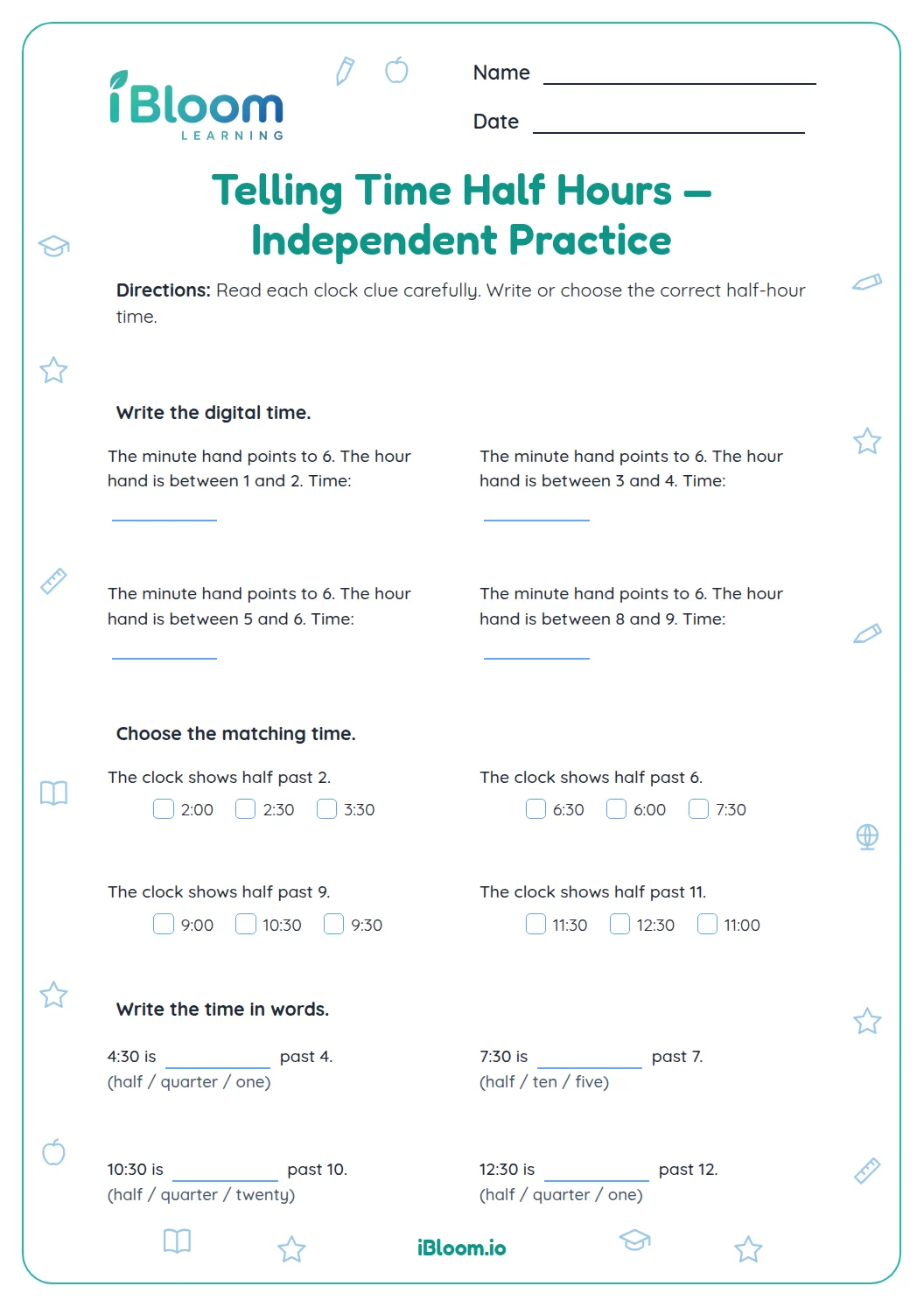
Check whether the minute hand points to 12 for :00 or 6 for :30.
Common Core alignment
This page practices reading analog clocks to five-minute intervals and connecting times to daily routines.
Tell and write times from analog clocks to the nearest five minutes.
On this sheet: Students read clock drawings and write times with a.m. or p.m. based on the accompanying routine clue.
Show the official wordingHide the official wording
Tell and write time from analog and digital clocks to the nearest five minutes, using a.m. and p.m.
What to practice next
Make more practice
Further reading
Questions parents and teachers ask
What does a.m. or p.m. tell a student?
A.m. identifies times from midnight through the morning before noon; p.m. identifies times from noon through the evening before midnight. The routine clue helps students choose the correct label for the same clock reading. The worksheet includes an answer key so the student can check the skill in the same context.
How many questions are on this worksheet?
There are 14 questions in two parts. Six include analog clock drawings and ask students to write a time with a.m. or p.m.; eight use routine clues and clock times to distinguish parts of the day. The worksheet includes an answer key so the student can check the skill in the same context.
Why can 12:00 be confusing?
Twelve o’clock changes the part of day: 12:00 a.m. is midnight and 12:00 p.m. is noon. A routine clue such as lunch or the start of the school day can help identify noon. The worksheet includes an answer key so the student can check the skill in the same context.
Do the clocks show different times?
Yes. The six clock drawings show 7:00, 3:30, 8:00, 9:30, 12:30, and 6:30. Students read each analog clock, then use the printed routine cue to add a.m. or p.m. The worksheet includes an answer key so the student can check the skill in the same context.
Is a.m. or p.m. determined by the clock hands alone?
No. The hands show the time, while a.m. or p.m. identifies whether it falls before noon or after noon. The daily routine clue supplies that context for each question. The worksheet includes an answer key so the student can check the skill in the same context.