

About this worksheet
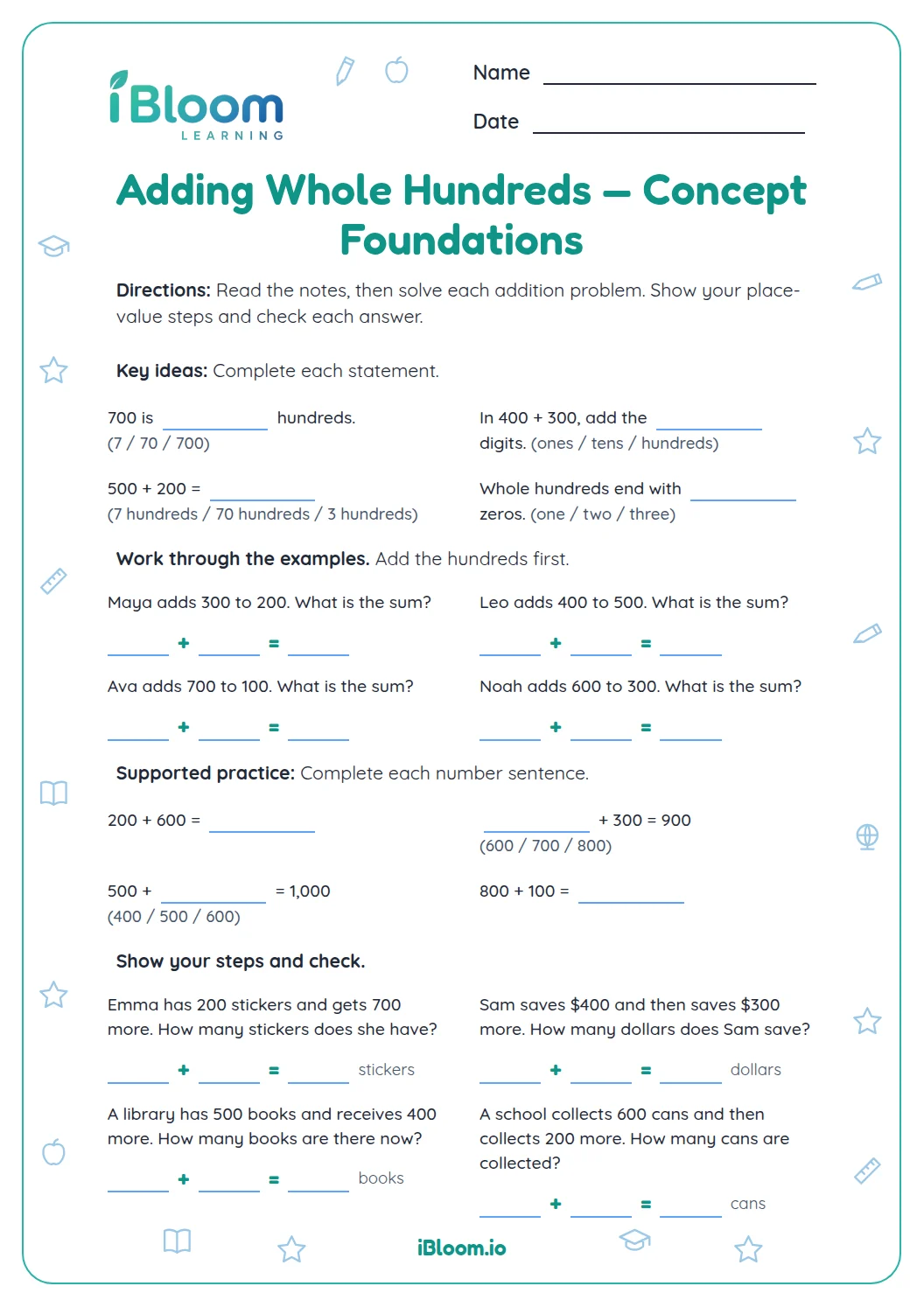
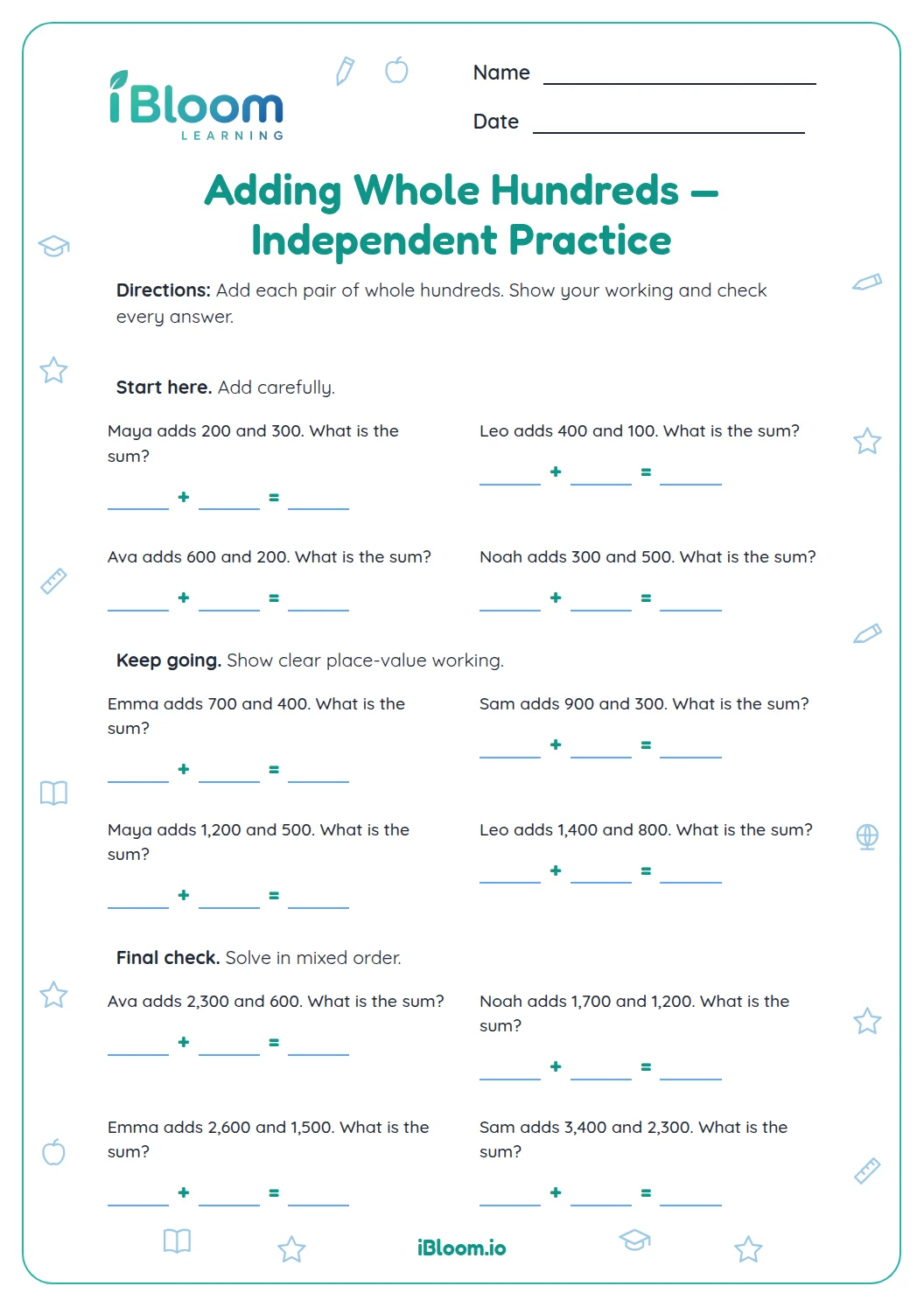
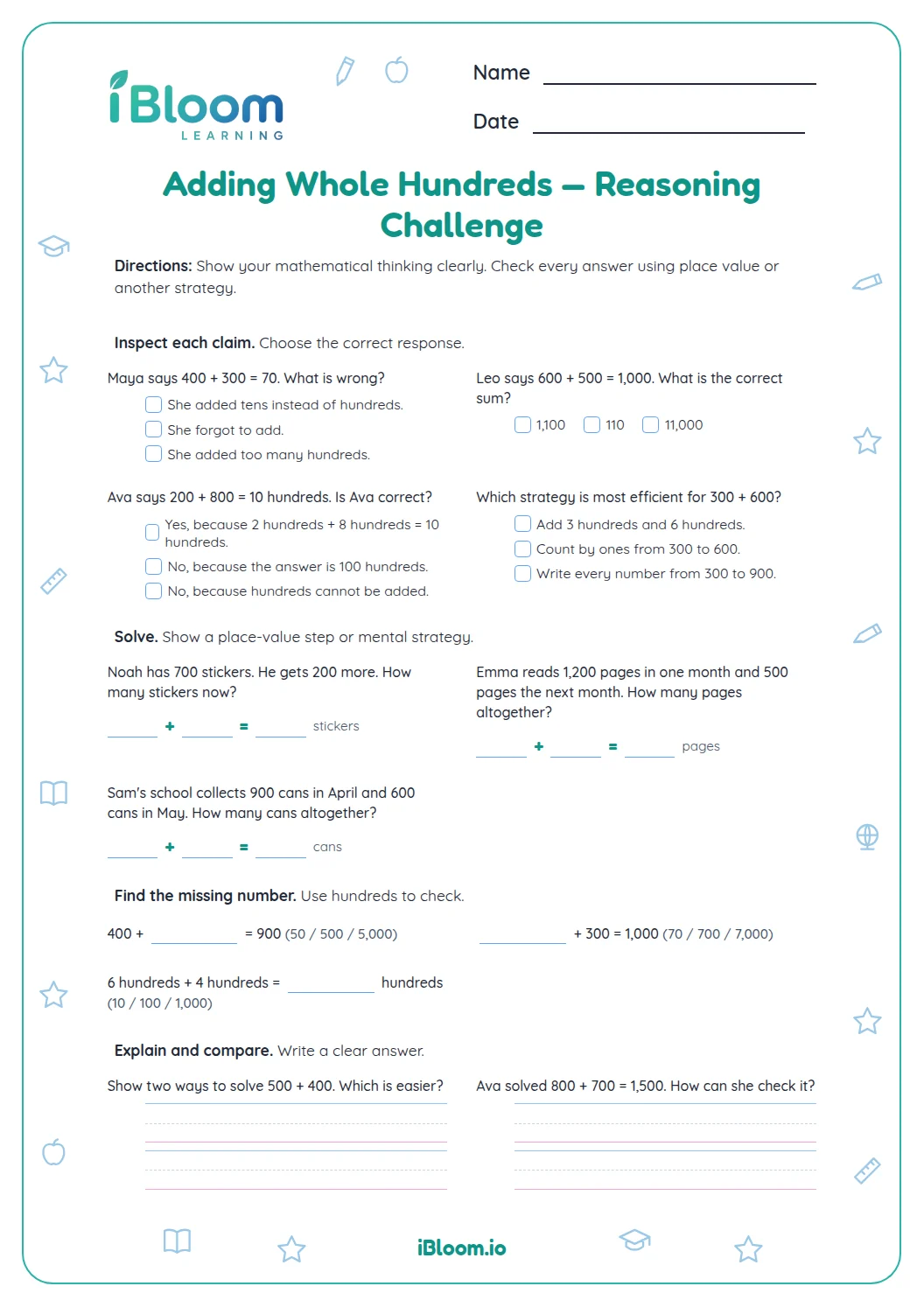
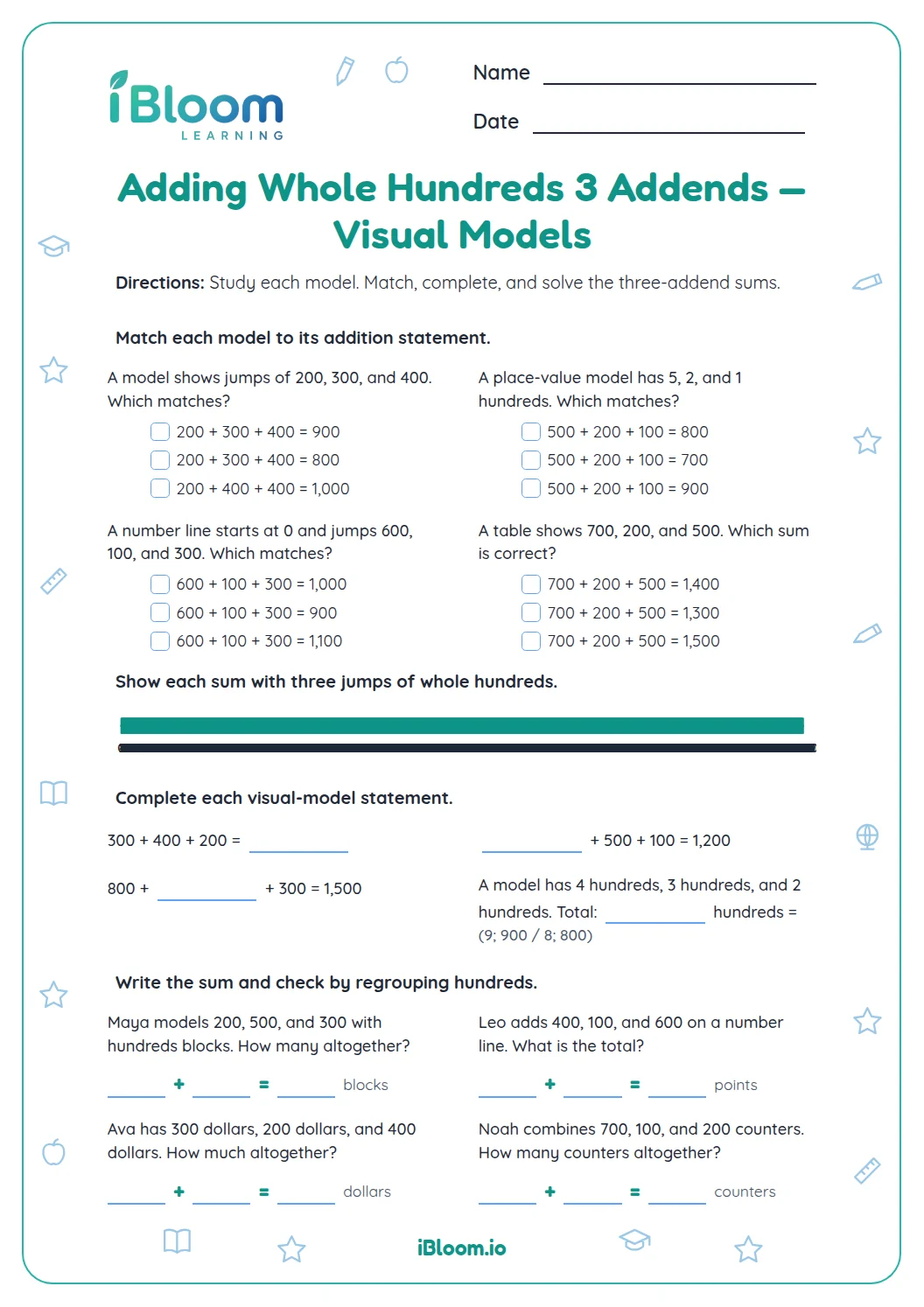
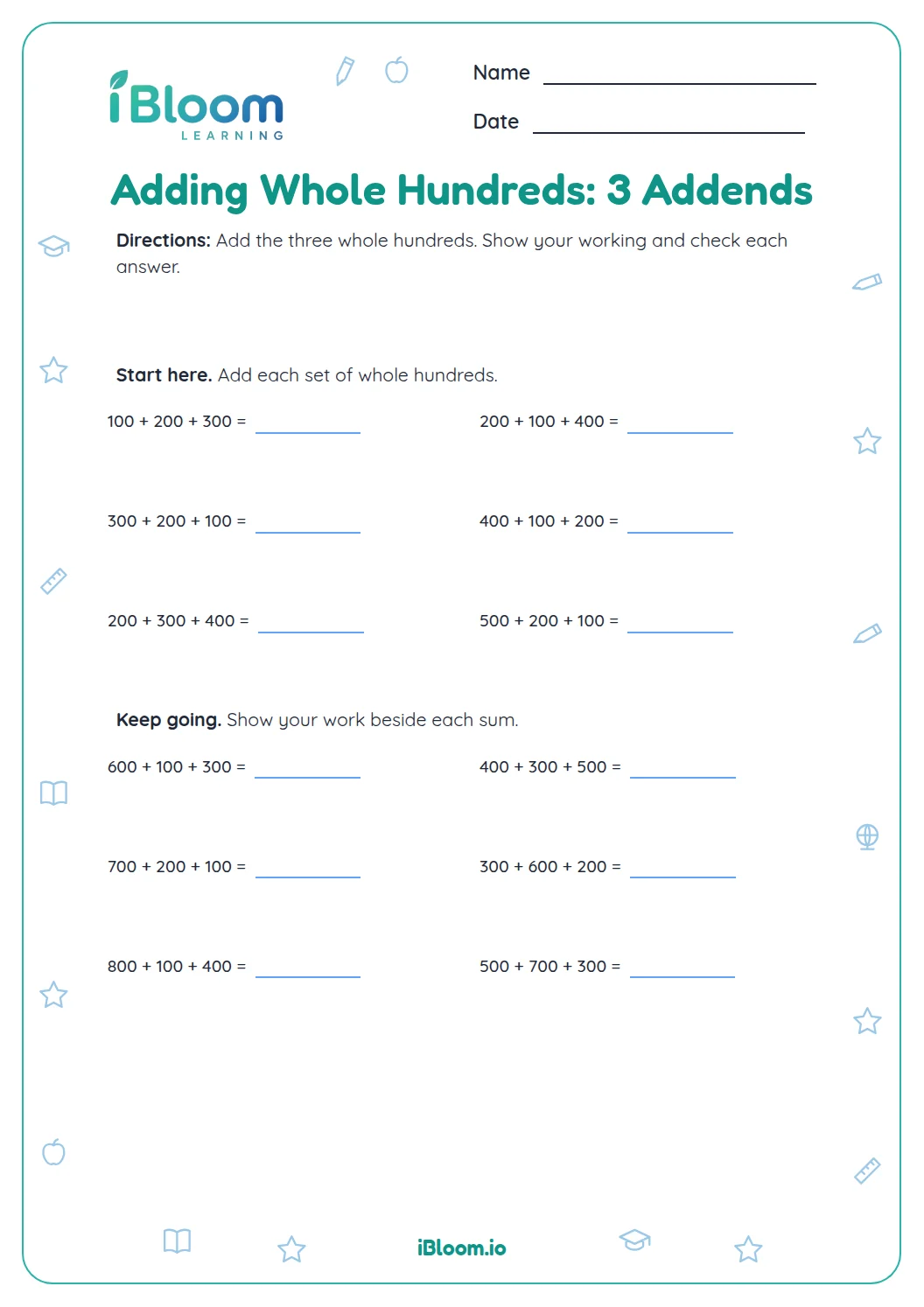
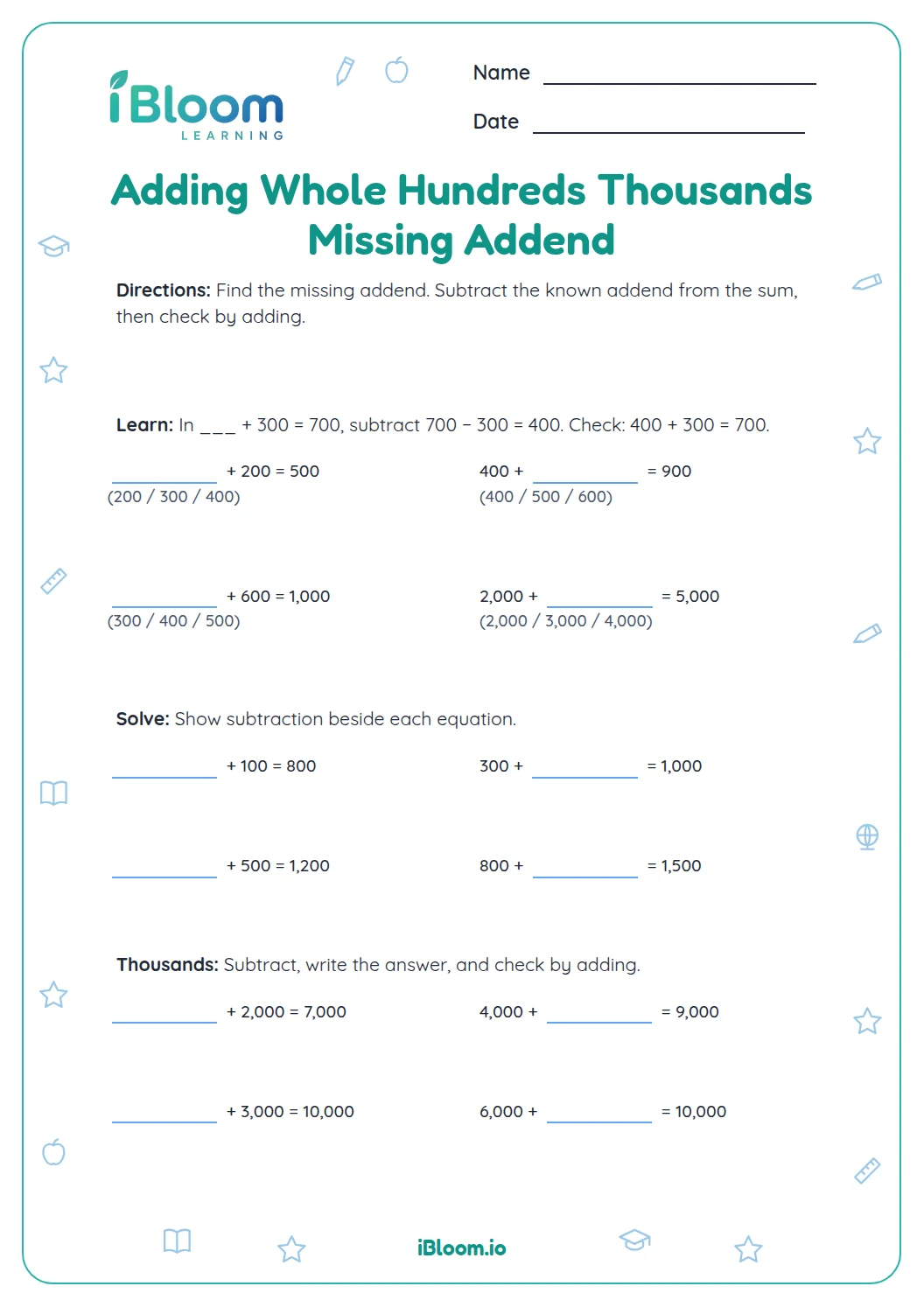
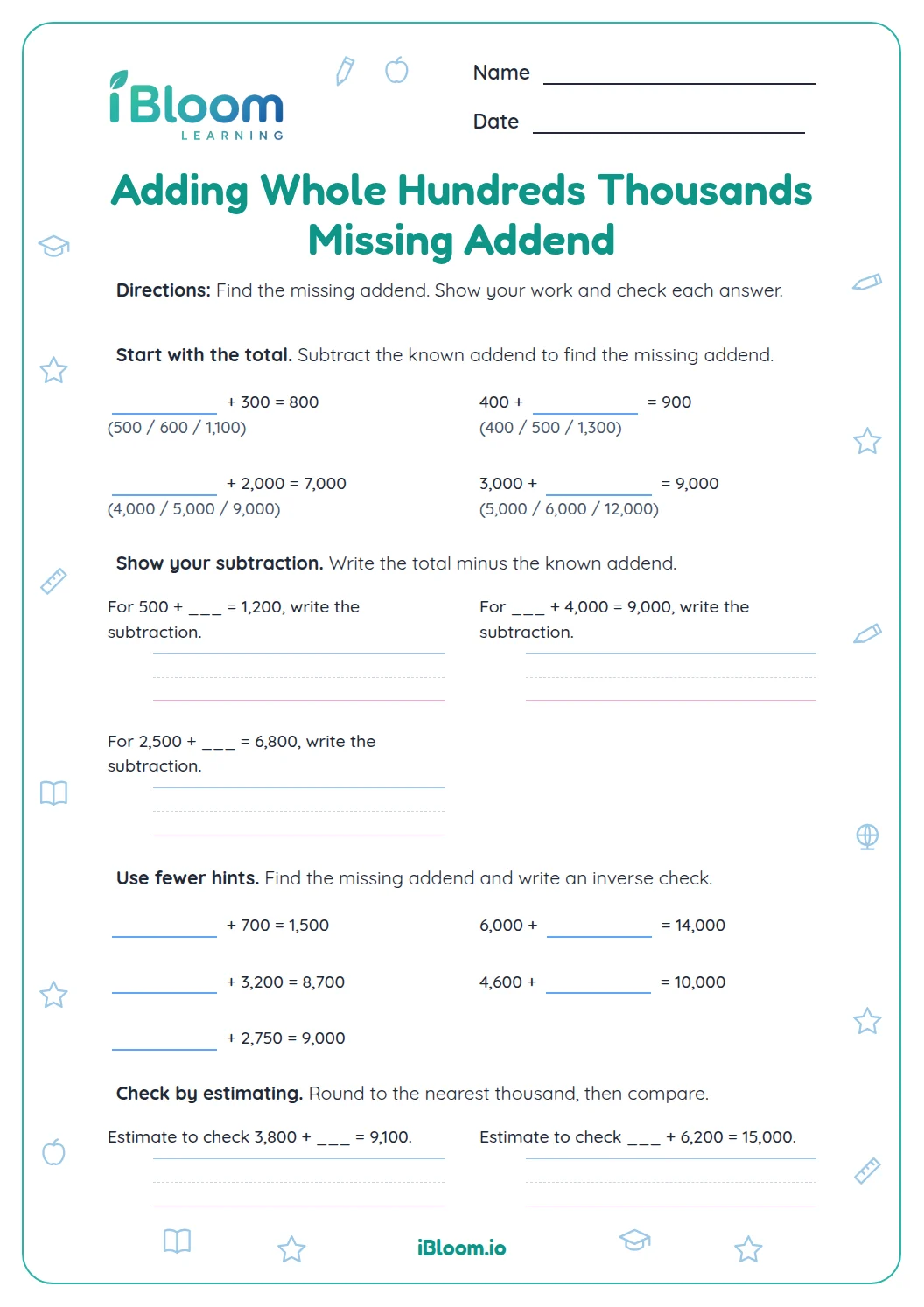
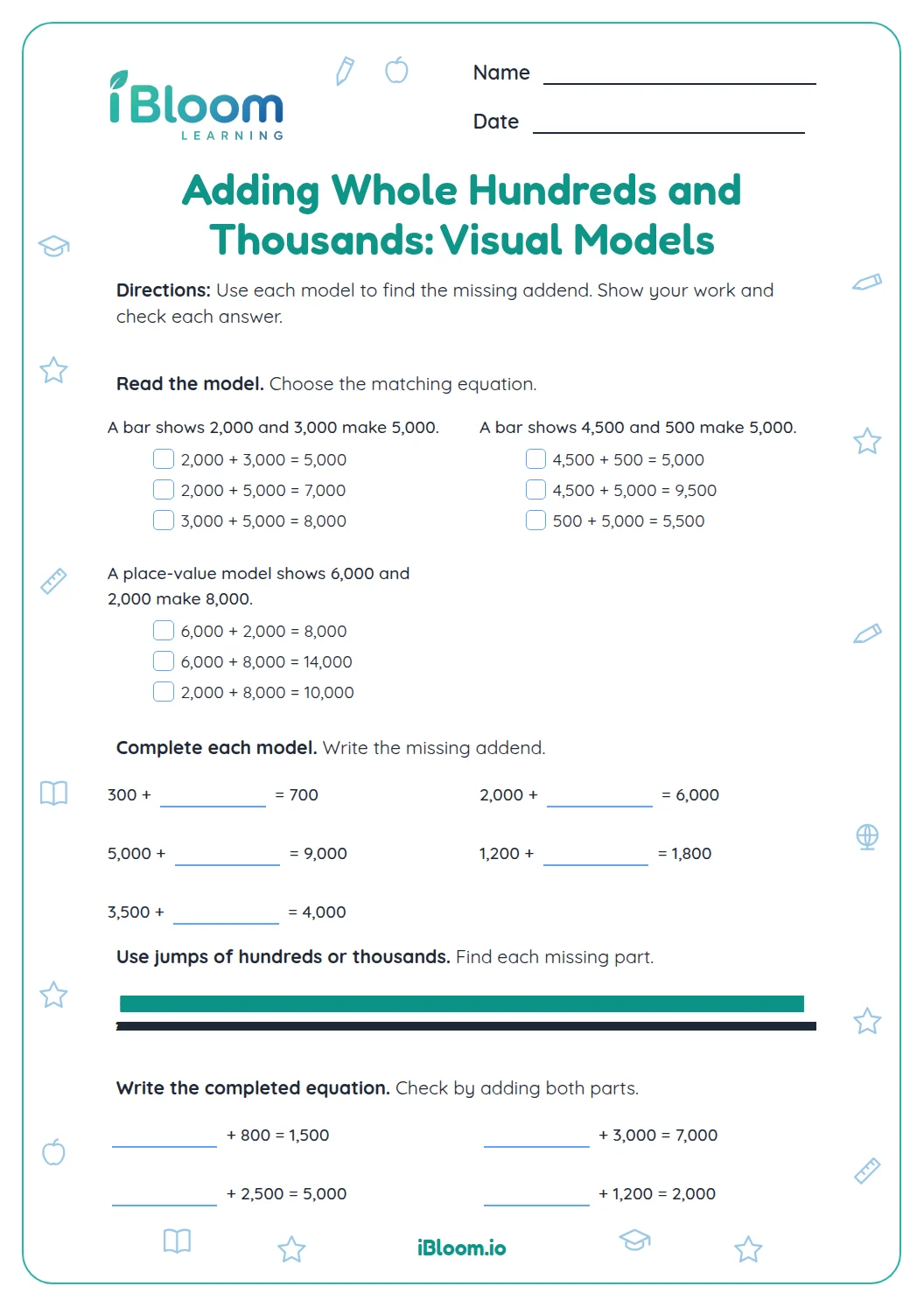
This Grade Four printable builds fluency adding whole hundreds by pairing base-ten block models with written addition. Learners read hundreds, tens, and ones in each model, add a whole-hundred amount, then solve fresh equations in a second part. The answer key shows each sum. The work supports CCSS 4.NBT.B.4 through accurate addition of multi-digit whole numbers.
Aligned to 4.NBT.B.4
How do the blocks help you add hundreds?
Each large block represents 100, each rod 10, and each small cube 1. Read the model as one number before adding the new hundreds.
- 1Question 1 shows 230. Add 400 hundreds: 230 + 400 = 630.
How can you check a sum without blocks?
In Part B, add the hundreds digits while keeping tens and ones in place. Estimating first can help catch a place-value slip.
- 1Question 9: 230 + 400 = 630. The tens and ones stay the same.
How to use this worksheet
- 1Name each block value before solving the first model.
- 2Add the hundreds in Part A and write the full number.
- 3For Part B, line up the hundreds, tens, and ones mentally or on scrap paper.
- 4Estimate each answer to check its size.
- 5Use the answer key after finishing a part.
Common mistakes and quick fixes
The mistake
Changing the tens or ones when adding hundreds.
The fix
Keep the tens and ones digits fixed; only the hundreds increase.
The mistake
Writing 400 + 230 as 430.
The fix
Count four added hundreds, so the hundreds digit increases by four.
The mistake
Forgetting a zero in the answer.
The fix
Read the place-value names aloud and include every place.
Curriculum alignment
This Grade Four practice connects each activity to the skill named in CCSS 4.NBT.B.4.
Adding whole hundreds with visual models and equations
On this sheet: Adding whole hundreds with visual models and equations
Show the official wordingHide the official wording
Fluently add and subtract multi-digit whole numbers using the standard algorithm.
What to practice next
Further reading
Questions parents and teachers ask
Which skill does this page practice?
It practices adding whole hundreds while preserving tens and ones. In Part A, base-ten blocks show the sum; in Part B, learners solve equations. The key lists each total so a student can compare place values after finishing each section.
How should a learner use the answer key?
Try a whole part before checking the key. If a sum differs, read the hundreds, tens, and ones separately, then recombine them. This makes it easier to spot whether the error came from adding the hundreds or recording a place value.
Can this worksheet be used at home?
Yes. The sheet is designed for independent practice, but a caregiver can read the directions and model one example. Ask the learner to explain how many hundreds were added and why the tens and ones stay the same. The included key makes a later review quick and clear.
What should I do when an answer is incorrect?
Ask the learner to estimate the sum and compare it with the exact answer. Then inspect each place value in the model or equation. Correcting one place at a time helps keep the hundreds, tens, and ones in order. The included key makes a later review quick and clear.
How long will the practice take?
Plan about 15 minutes for the questions, with time to review a few sums. Learners who already read base-ten blocks fluently may finish sooner; others may benefit from naming each block value aloud as they work. The included key makes a later review quick and clear.