

About this worksheet
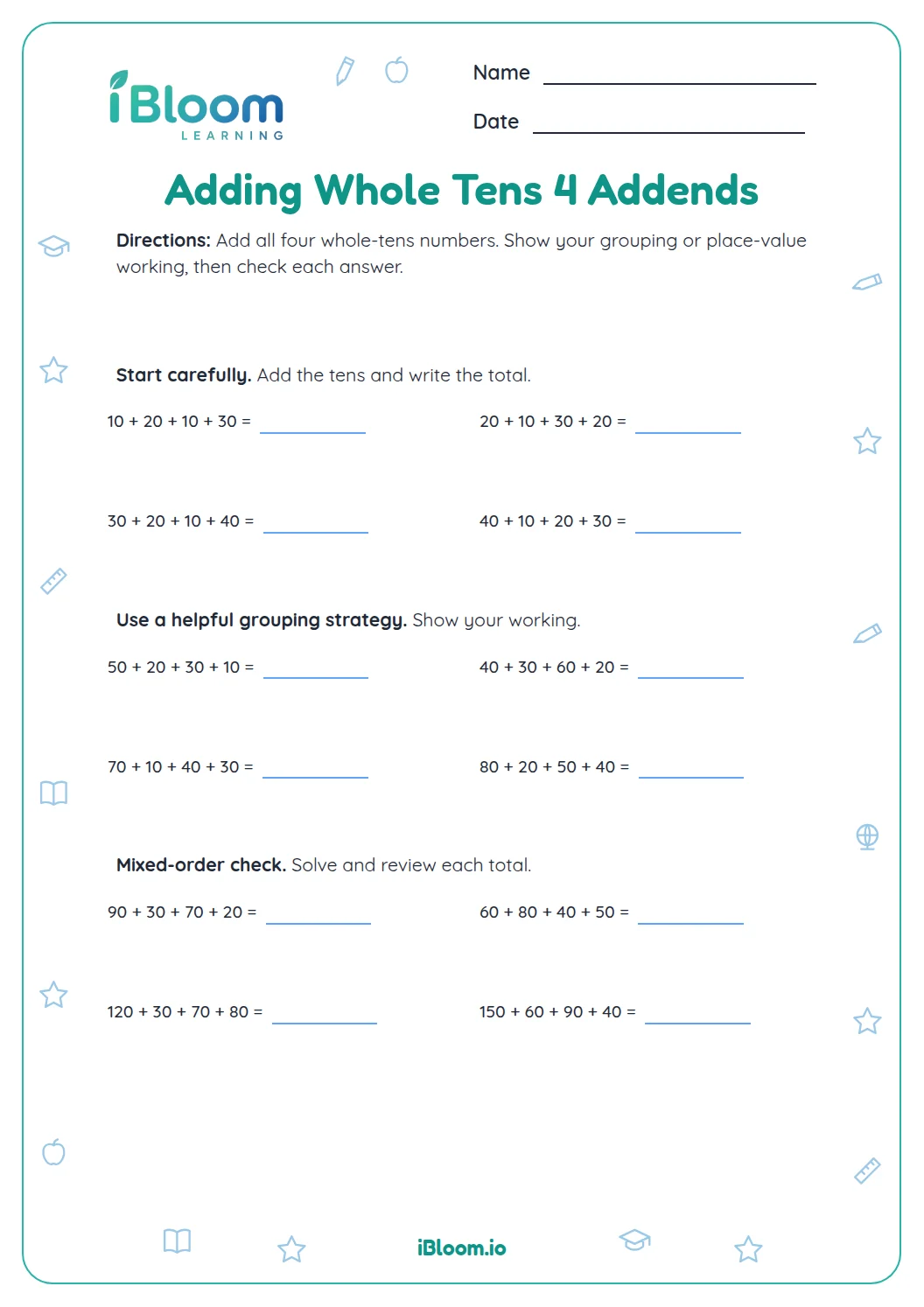
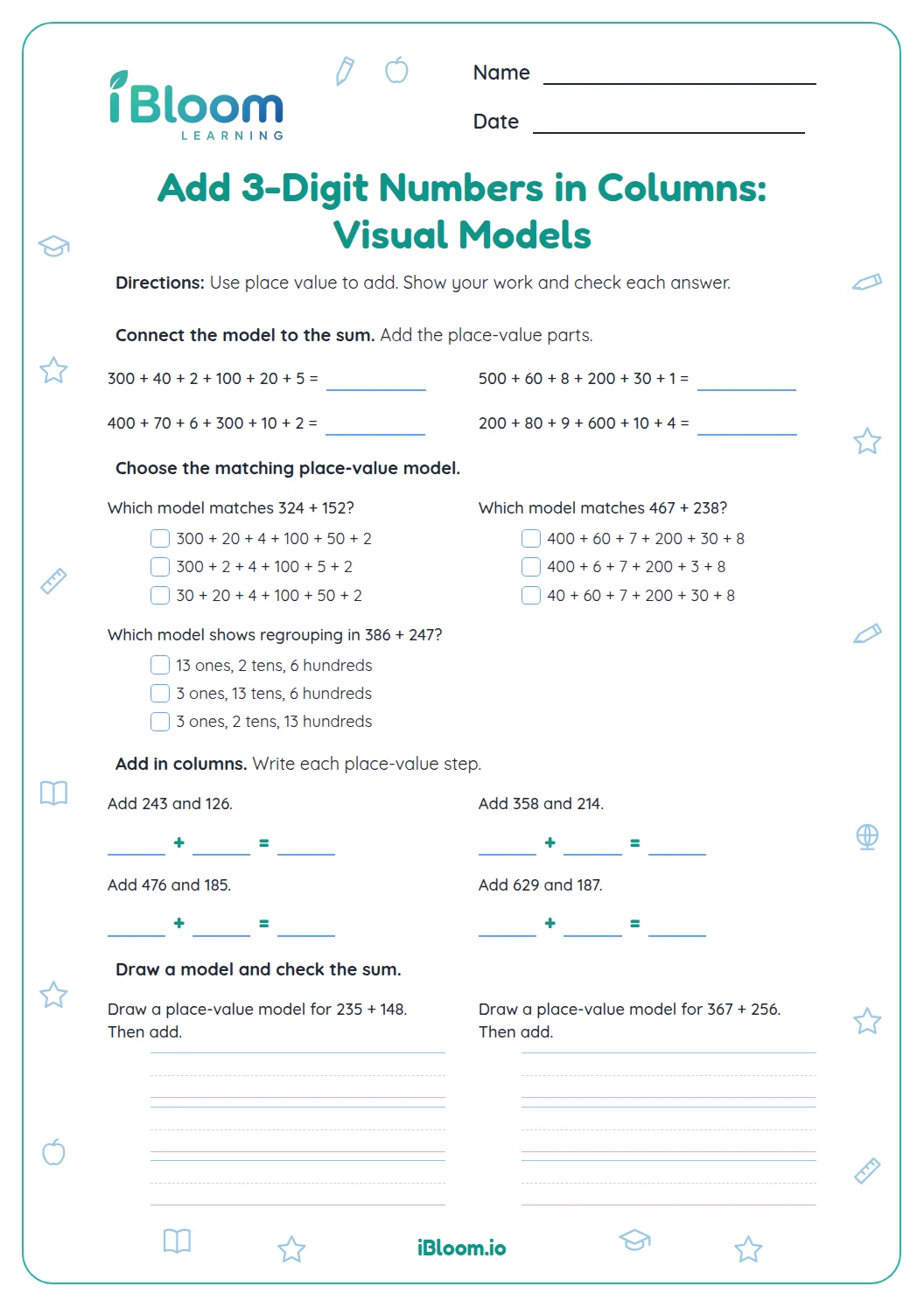
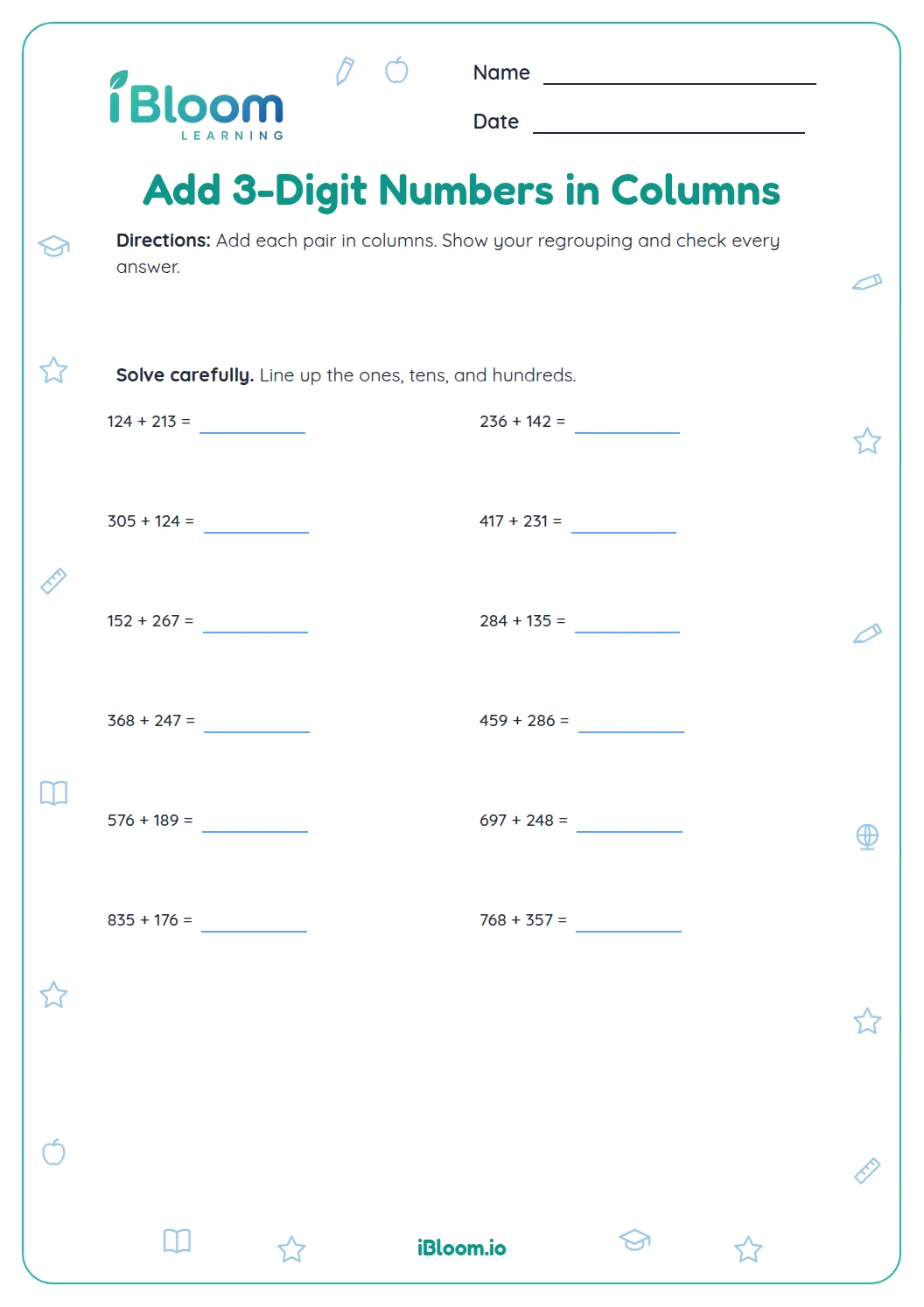
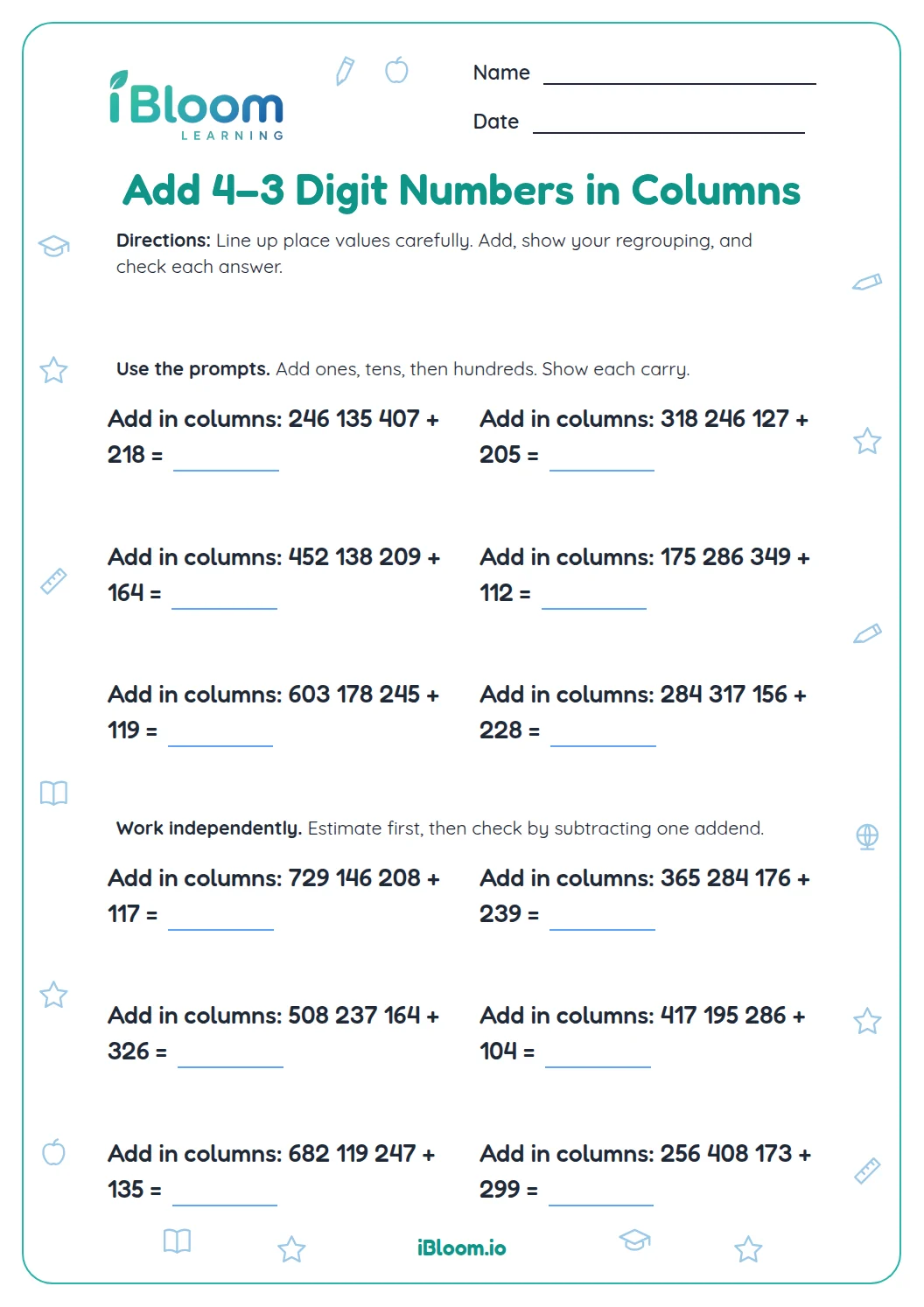
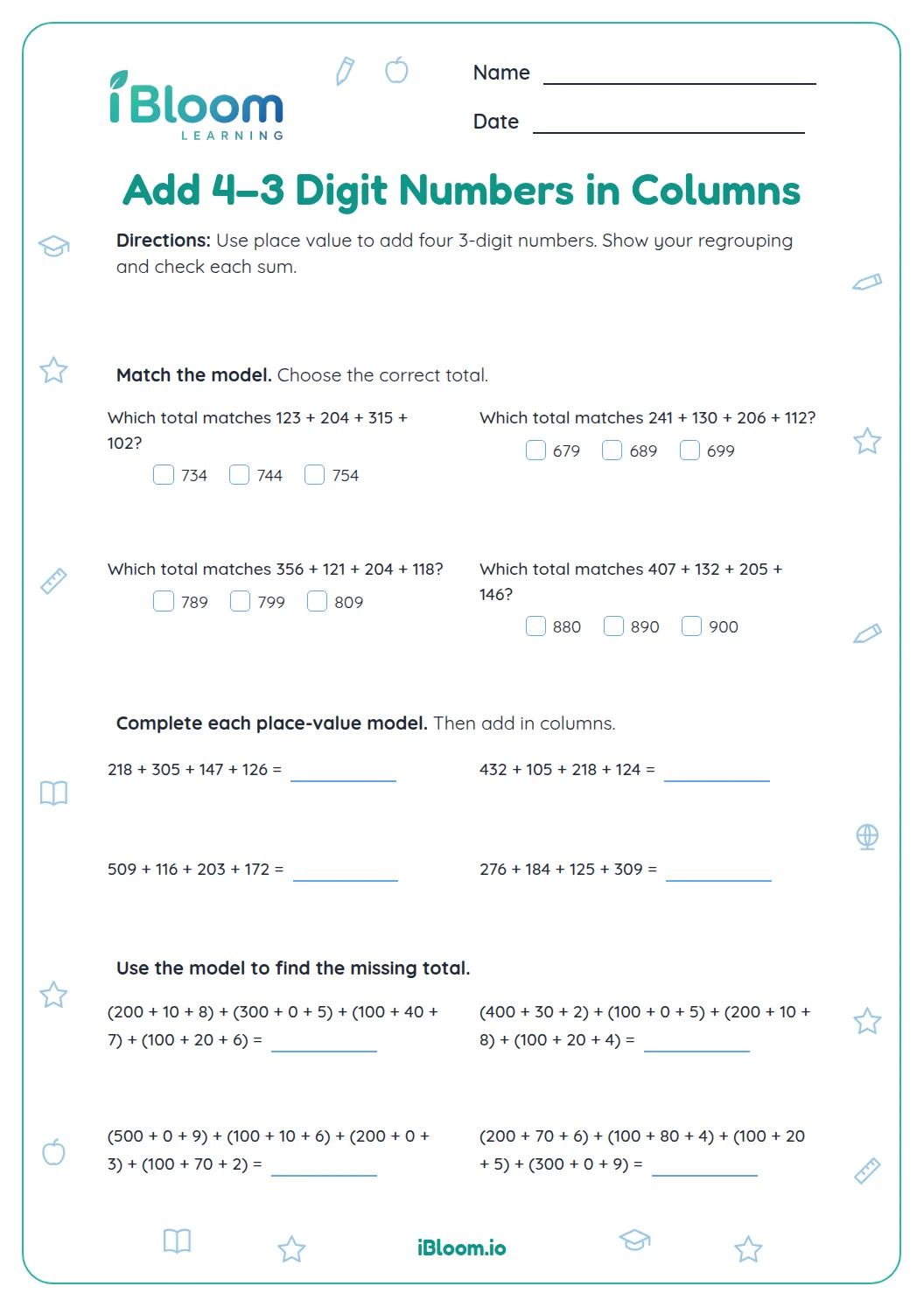
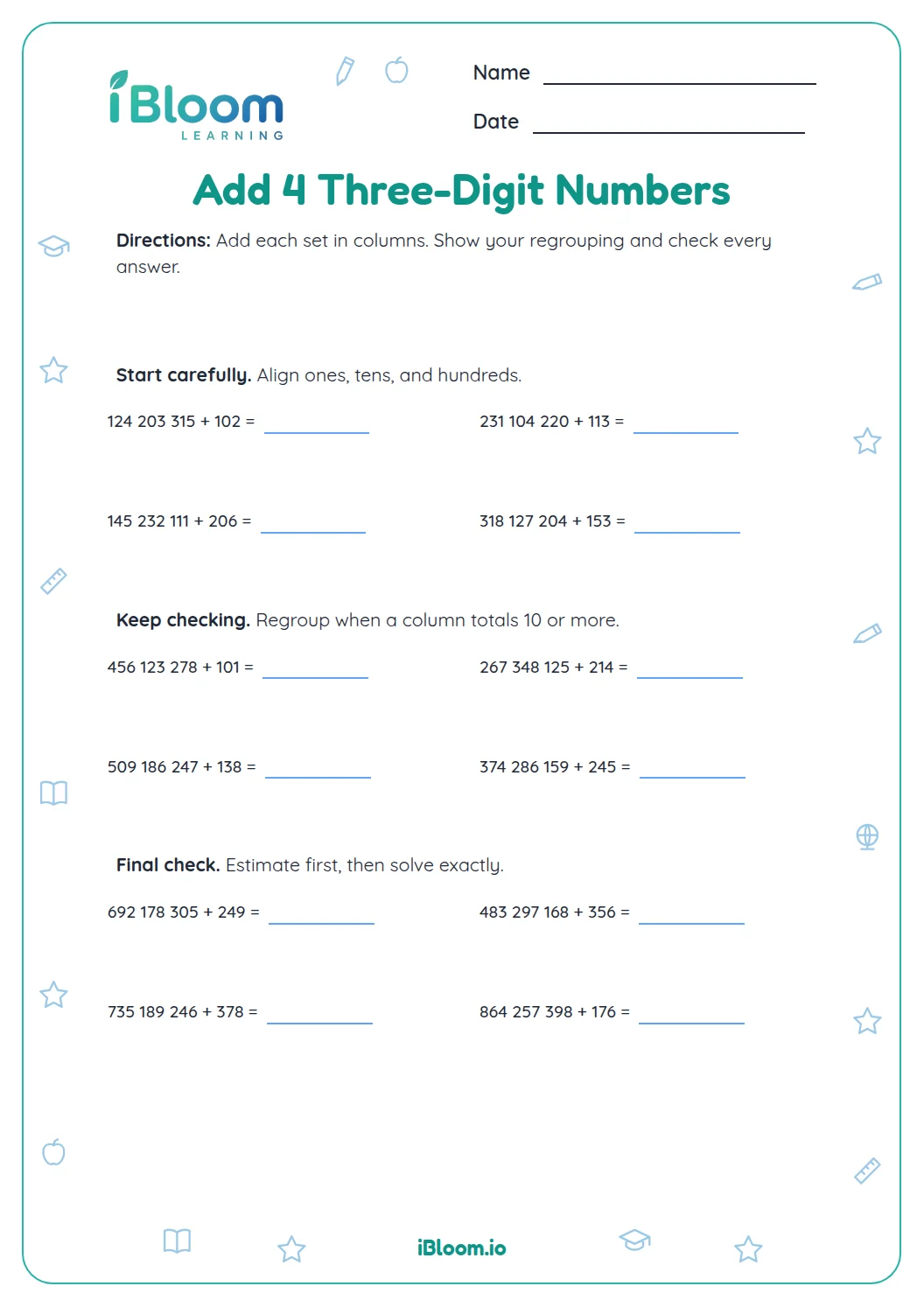
This free printable worksheet is for Grade 4 learners practicing adding four whole tens. It includes 16 questions arranged in parts that move from guided recognition or direct practice to independent application, plus a separate answer key for checking responses.
How can learners practice adding four whole tens?
Whole tens end in zero, so add their tens values. In question 1, group (30 + 40) + (20 + 10) to make 70 + 30 = 100. Grouping the addends differently keeps the total the same.
What is on the worksheet?
The 16 items move from supported practice to independent application. The answer key is a separate page.
How to use this worksheet
- 1Read the directions before starting each part.
- 2Complete the early items together if a reminder is useful.
- 3Work through the remaining questions in order.
- 4Use the answer key after finishing to review answers.
Common mistakes and quick fixes
The mistake
Rushing past an important word in the prompt.
The fix
Underline the action word and identify what the question asks.
The mistake
Skipping a check after finding an answer.
The fix
Read the prompt again and see whether the answer fits.
The mistake
Leaving a response incomplete.
The fix
Return to each item and fill every requested blank or line.
What to practice next
Questions parents and teachers ask
How many problems are included?
The worksheet contains 16 questions in four parts: direct sums, story problems, additional sums, and a final mixed set. Each addition item combines four whole tens, and the separate key lists the totals. This gives a clear way to review the skill together and discuss how the response fits the question.
What is a whole ten?
A whole ten is a multiple of ten, such as 120 or 340. Since each addend has zero ones, learners can add the tens values, regrouping tens into hundreds when needed. This gives a clear way to review the skill together and discuss how the response fits the question.
How can grouping help?
Look for pairs that make a friendly total, such as 30 + 70 or 120 + 180. Add those pairs and then combine the partial sums. Regrouping the addends this way keeps the total unchanged while making mental addition easier.
What do the story problems ask?
They describe four groups of books, cans, seedlings, miles, or money. Add the four amounts to find the total, then use the matching unit or dollar sign in the answer. This gives a clear way to review the skill together and discuss how the response fits the question.
Is an answer key included?
Yes. A separate key shows the total for each of the 16 questions. When checking, compare the sum and its unit, and revisit the tens and hundreds columns if a total does not match. This gives a clear way to review the skill together and discuss how the response fits the question.