


About this worksheet
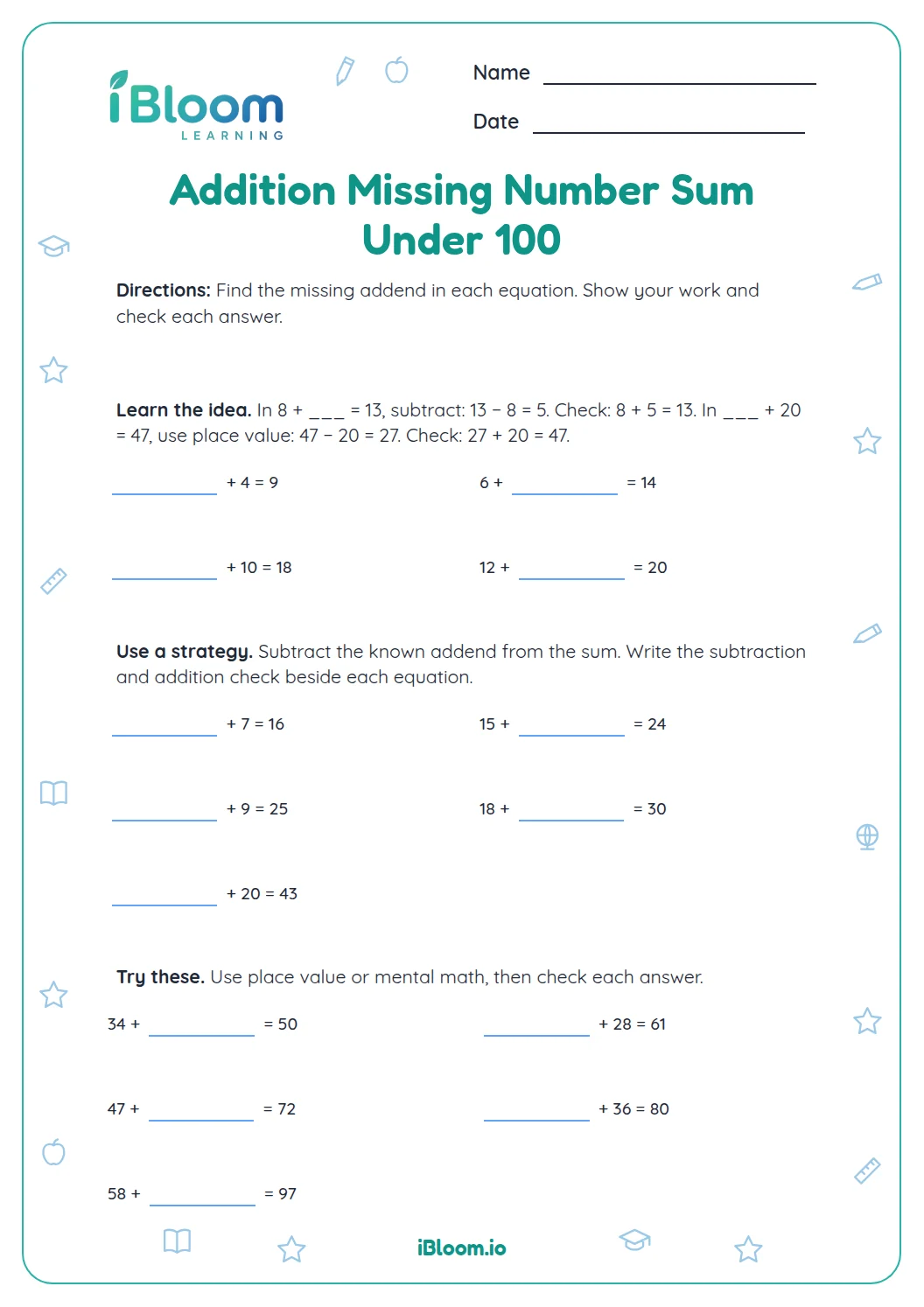
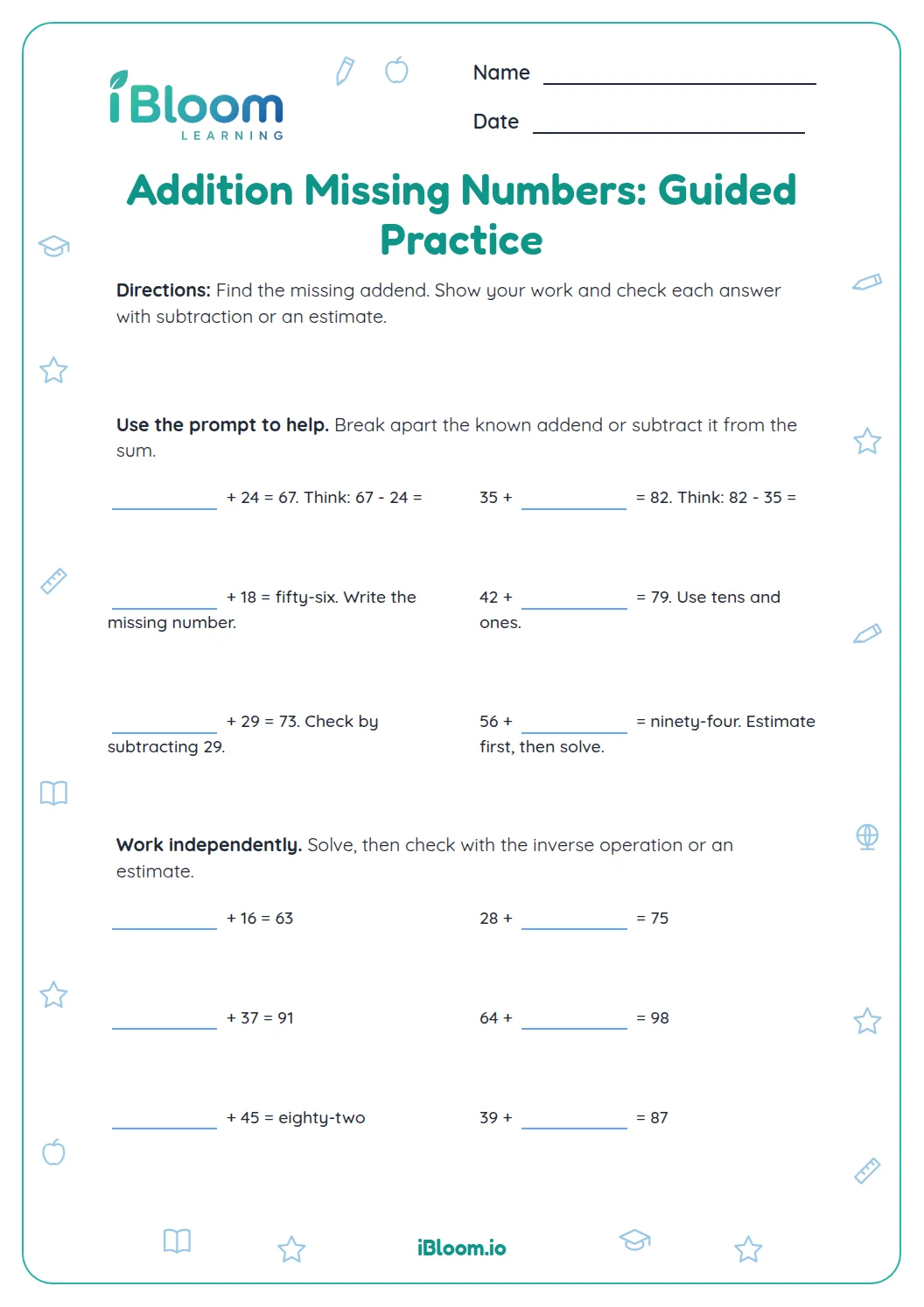
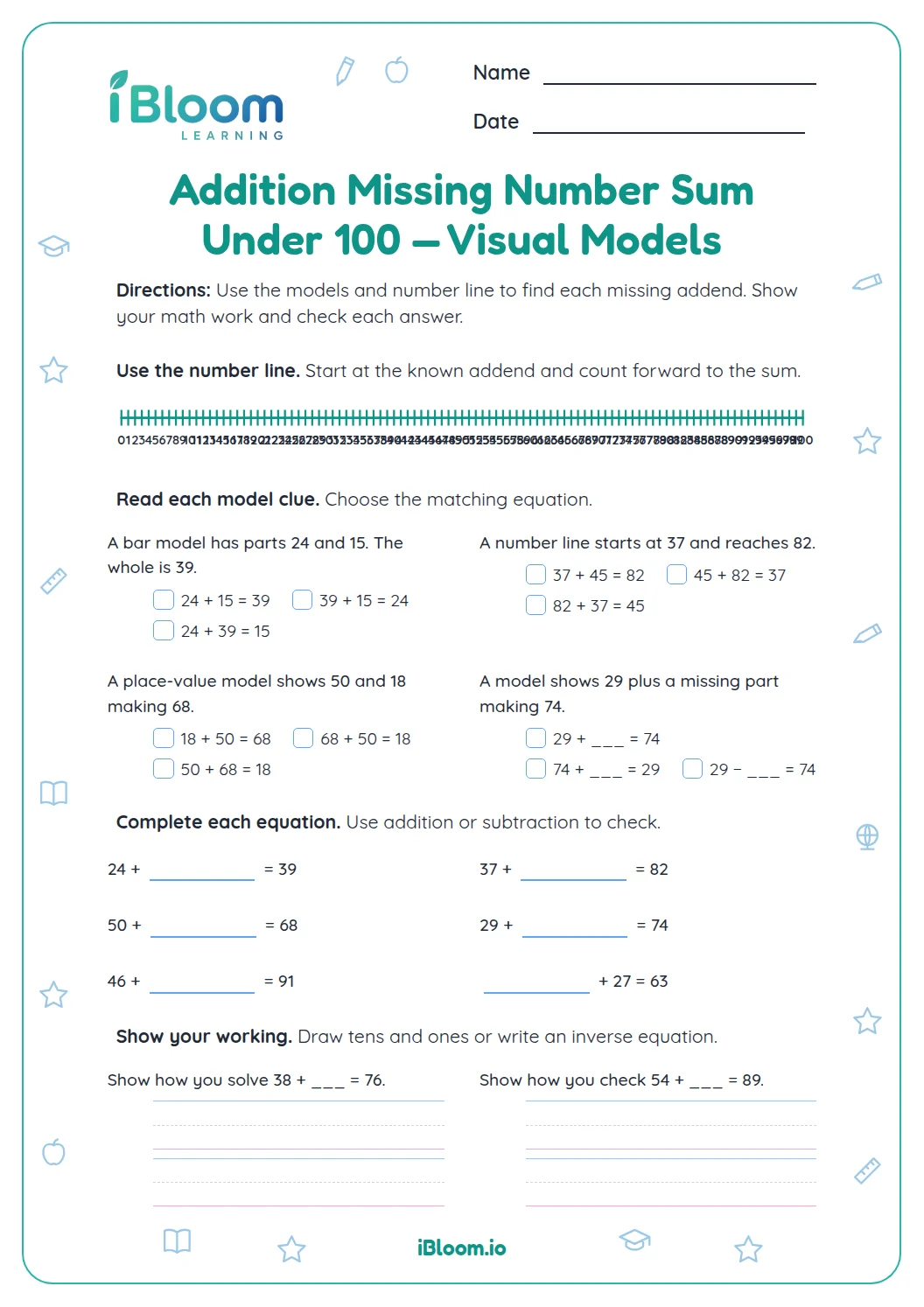
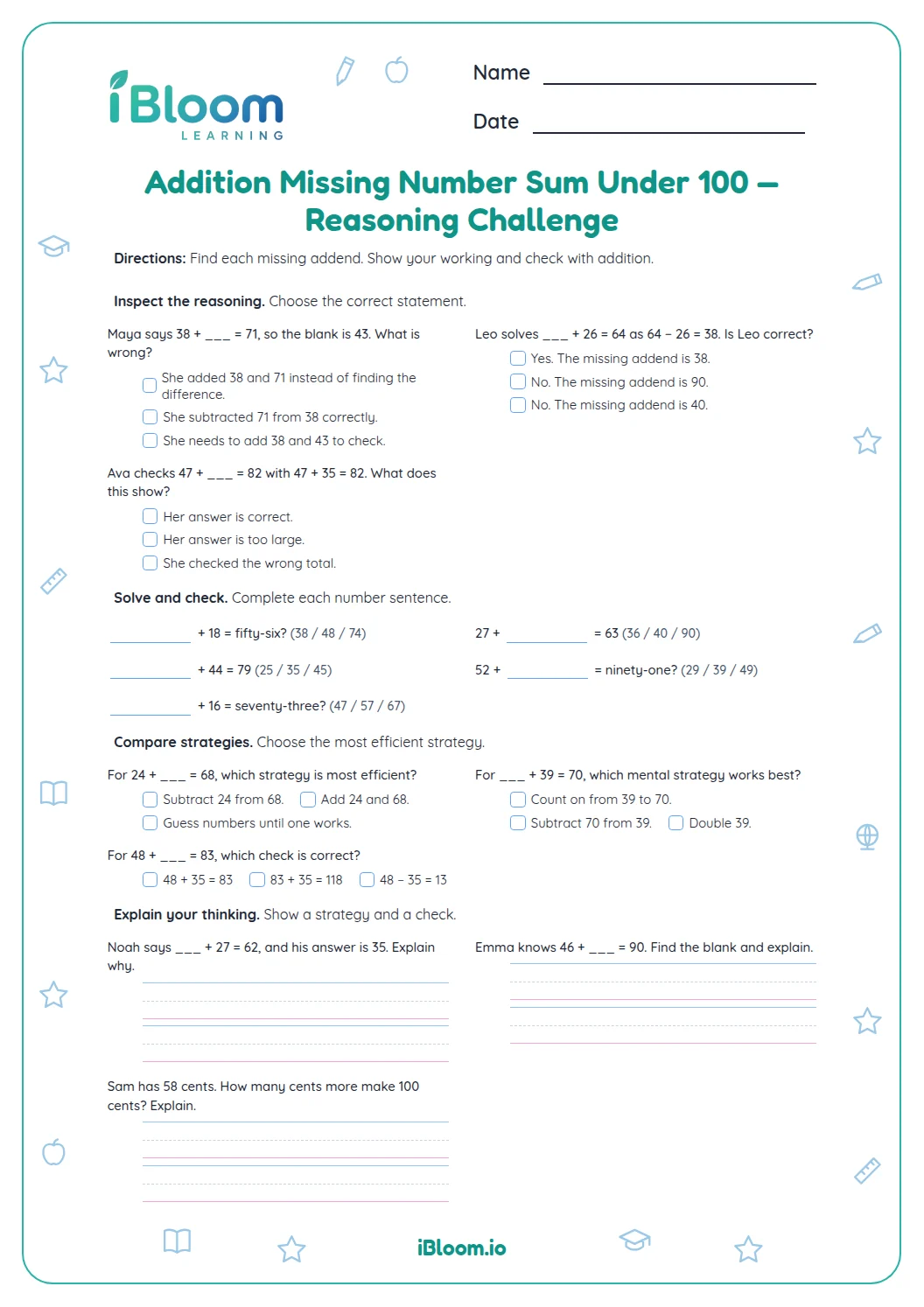
This printable Grade 4 math worksheet turns missing-addend problems into everyday stories. Children combine two known amounts, then find the amount still needed to reach a goal total. The 16 problems use whole-number totals below 100 and provide a line for each missing amount. Children can check a proposed answer by adding it to the known amounts and comparing the sum with the goal. Solving these multistep whole-number stories with an unknown addend practices CCSS 4.OA.A.3. A separate key lists each missing amount.
Aligned to 4.OA.A.3
What does a missing addend represent?
An addend is a number being added. In a story, a missing addend is often the amount still needed to reach a target. First combine the known quantities; then compare that subtotal with the target.
How can you find the missing amount?
One way is to subtract the subtotal from the total. Another is to count up from the subtotal to the target. Both methods should give the same amount.
- 124 cans + 18 cans = 42 cans collected
- 270 − 42 = 28
- 3The class collected 28 cans on Wednesday.
How can you check the answer?
Put the missing amount back into the addition sentence. For the example, 24 + 18 + 28 = 70. The known amounts plus the answer should match the story total.
How to use this worksheet
- 1Underline the goal total in the story.
- 2Add the quantities that are already known.
- 3Subtract the known subtotal from the goal, or count up to the goal.
- 4Write the missing amount on the answer line.
- 5Add the known amounts and your answer to check the goal total.
Common mistakes and quick fixes
The mistake
Subtracting just one known amount from the goal.
The fix
Combine all known amounts first, then compare their subtotal with the goal.
The mistake
Adding the goal to the known amounts.
The fix
The goal is the total; the parts must add up to it.
The mistake
Giving an answer with no connection to the story.
The fix
Include the unit or item named in the question, such as cans or dollars.
Common Core alignment
This page connects the worksheet practice to a specific Common Core skill.
Represent story problems with equations and check that answers make sense.
On this sheet: Each story combines known whole-number amounts and asks children to represent the total with an unknown addend.
Show the official wordingHide the official wording
Solve multistep word problems posed with whole numbers and having whole-number answers using the four operations, including problems in which remainders must be interpreted. Represent these problems using equations with a letter standing for the unknown quantity. Assess the reasonableness of answers using mental computation and estimation strategies including rounding.
What to practice next
Make more practice
Further reading
Questions parents and teachers ask
What is a missing addend?
A missing addend is an unknown part of an addition sentence. In these stories, children first add the amounts that are already known and then find what amount is needed to reach the stated total. The answer key shows each missing amount.
Are all the totals below 100?
Yes. Each story uses a whole-number target below 100, and the unknown is a whole number. The situations include collections, savings, reading, sales, and other familiar totals. The story gives a clear goal total, so the unknown is the amount still needed.
How can I check a missing amount?
Add the known amounts and the proposed missing amount. If their sum equals the goal total in the story, the answer checks. For example, 24 + 18 + 28 equals 70. A written equation helps show how the known amounts and the goal fit together.
Can a child count up instead of subtracting?
Yes. Counting up from the known subtotal to the goal is a valid way to find the unknown addend. A child might count from 42 to 70 by 28, then confirm by adding 42 and 28. The answer key lists the missing amount for every story problem.
How can children check their answers?
Add the two known amounts and the proposed missing amount. If the sum equals the goal total in the story, the answer checks. For example, 24 + 18 + 28 equals 70. Children can write that number sentence on scrap paper if they want to show their thinking.
Is there an answer key?
Yes. A separate answer key lists the missing amount for each of the 16 stories. Children can compare their equation and answer with the key, then use addition to verify that the full total matches the story. The story gives a clear goal total, so the unknown is the amount still needed.