
About this worksheet
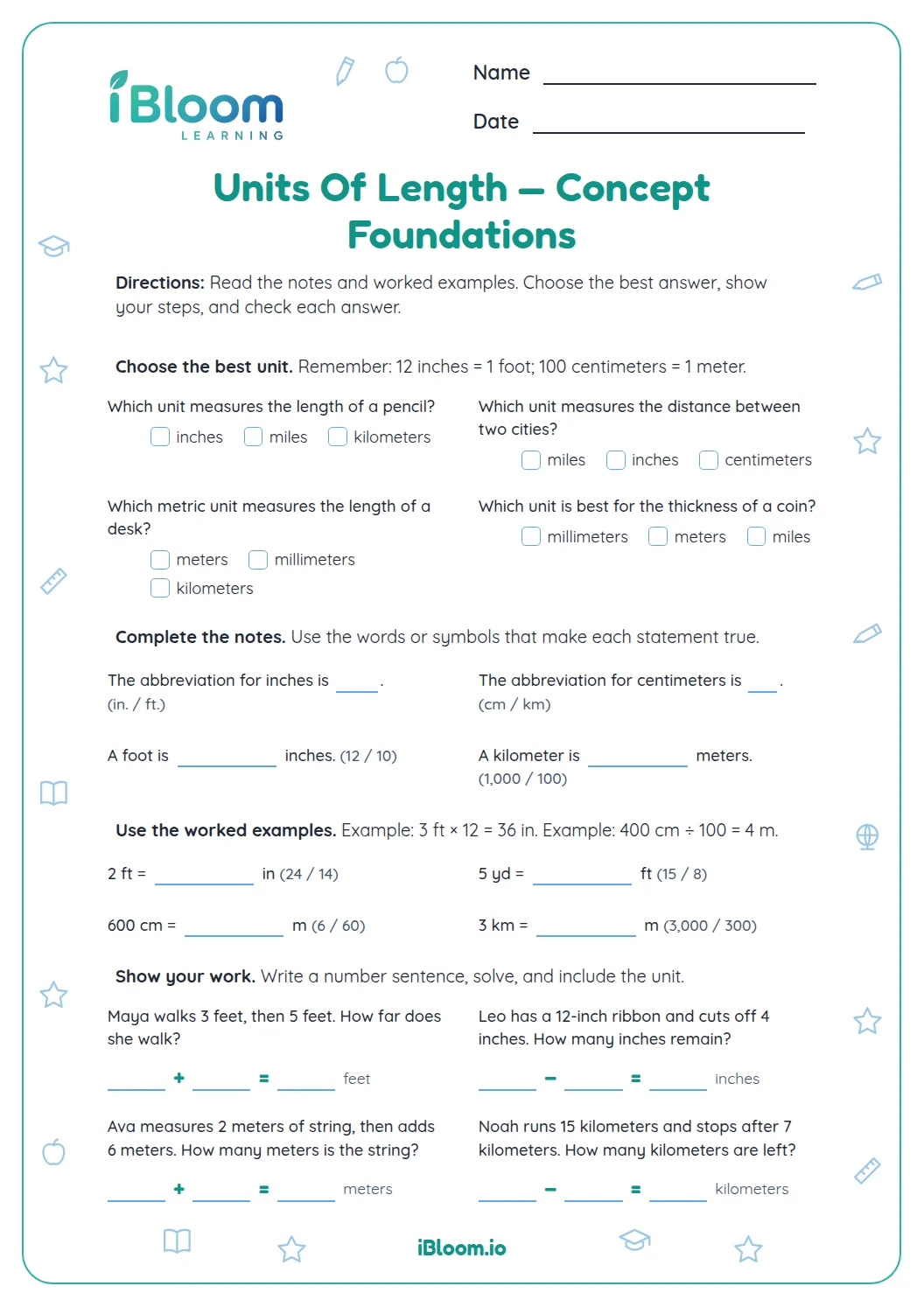
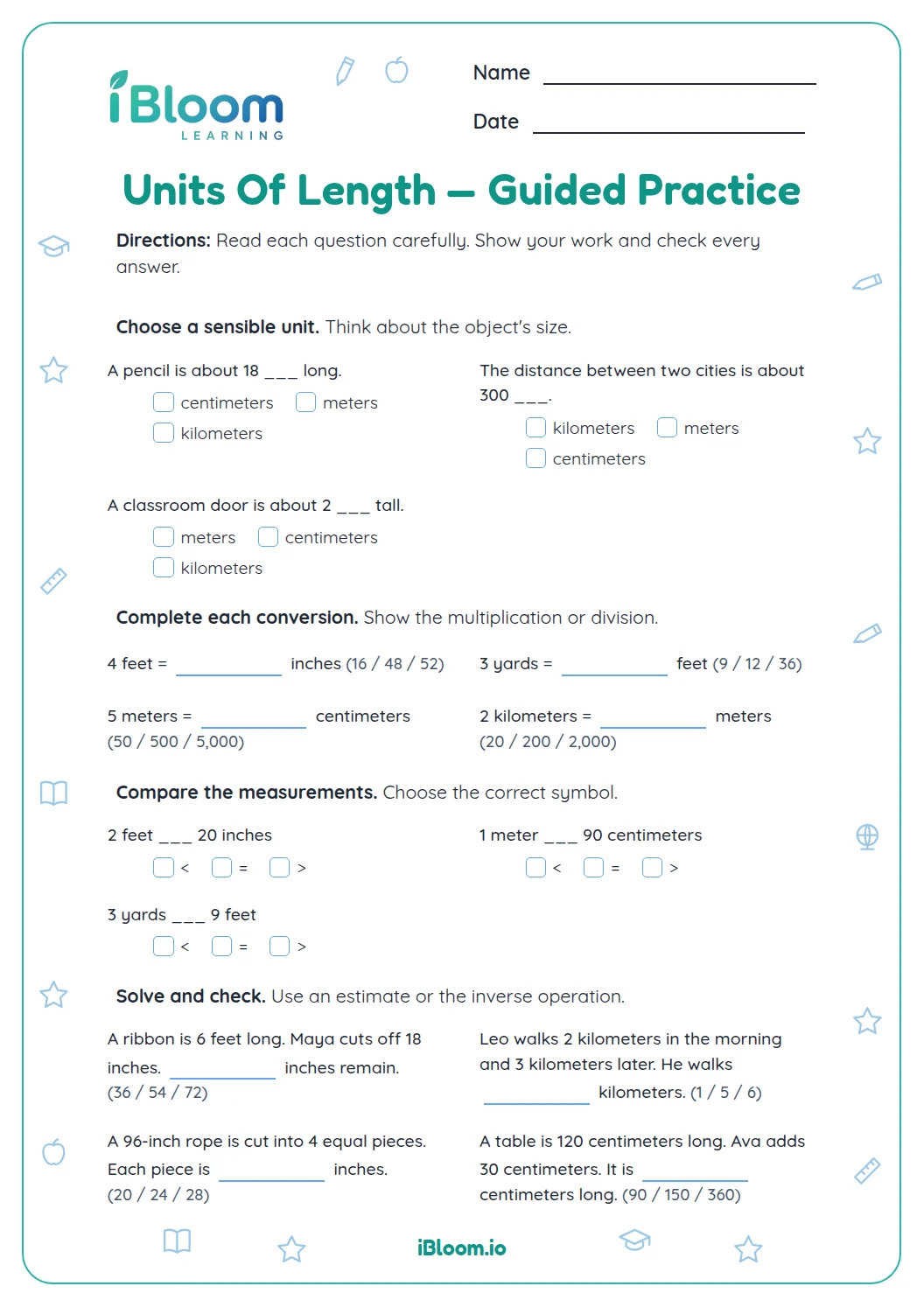
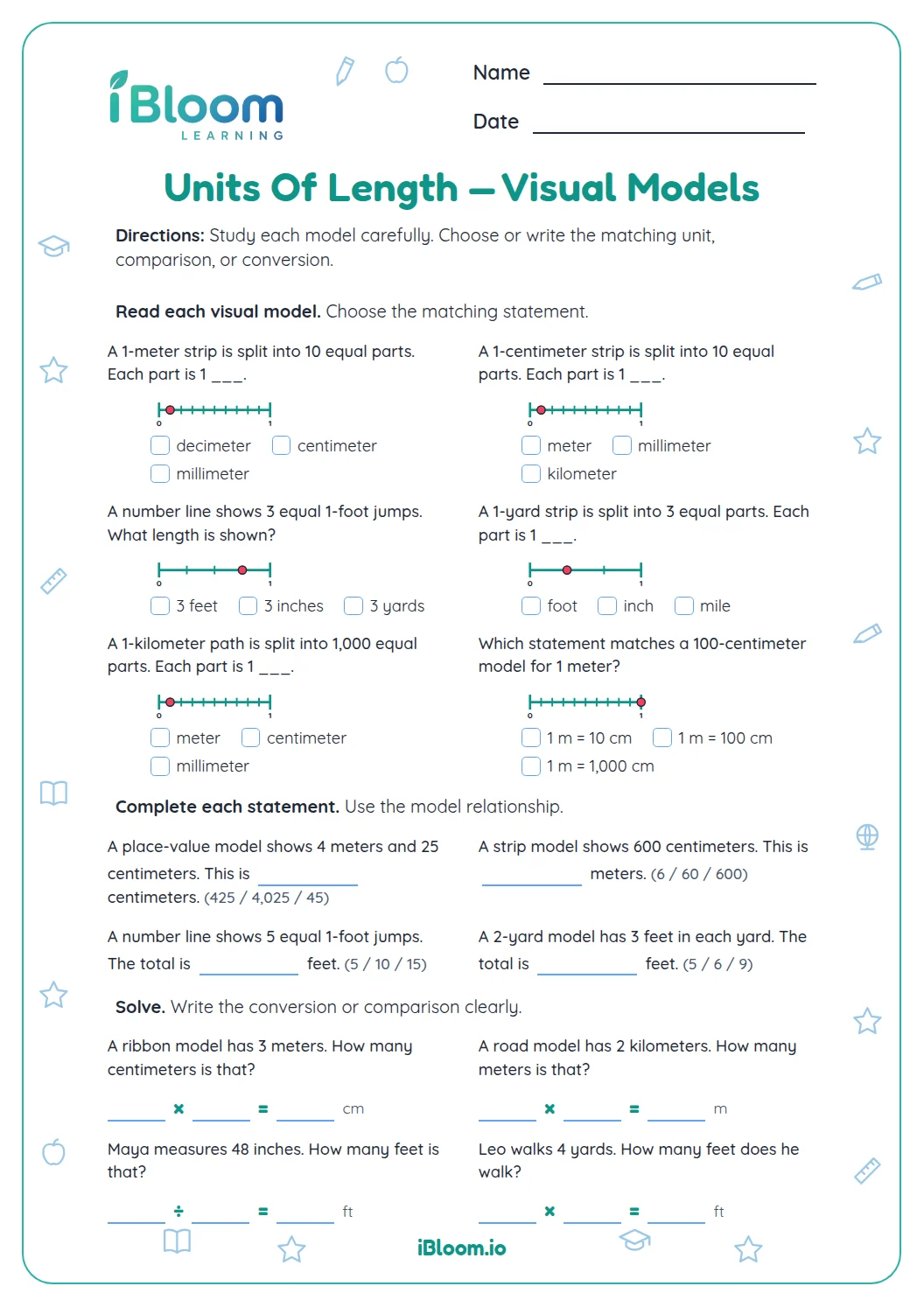
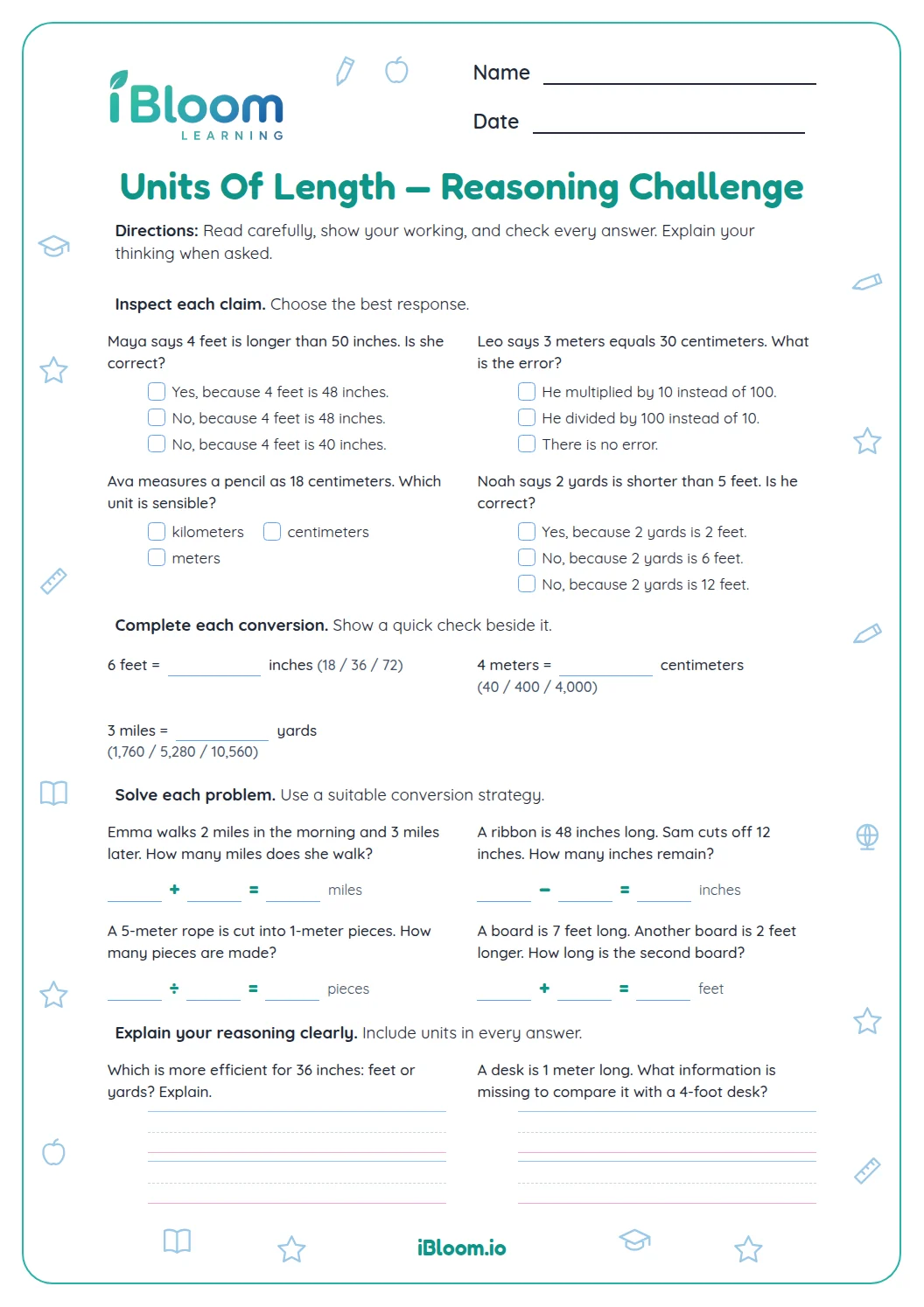
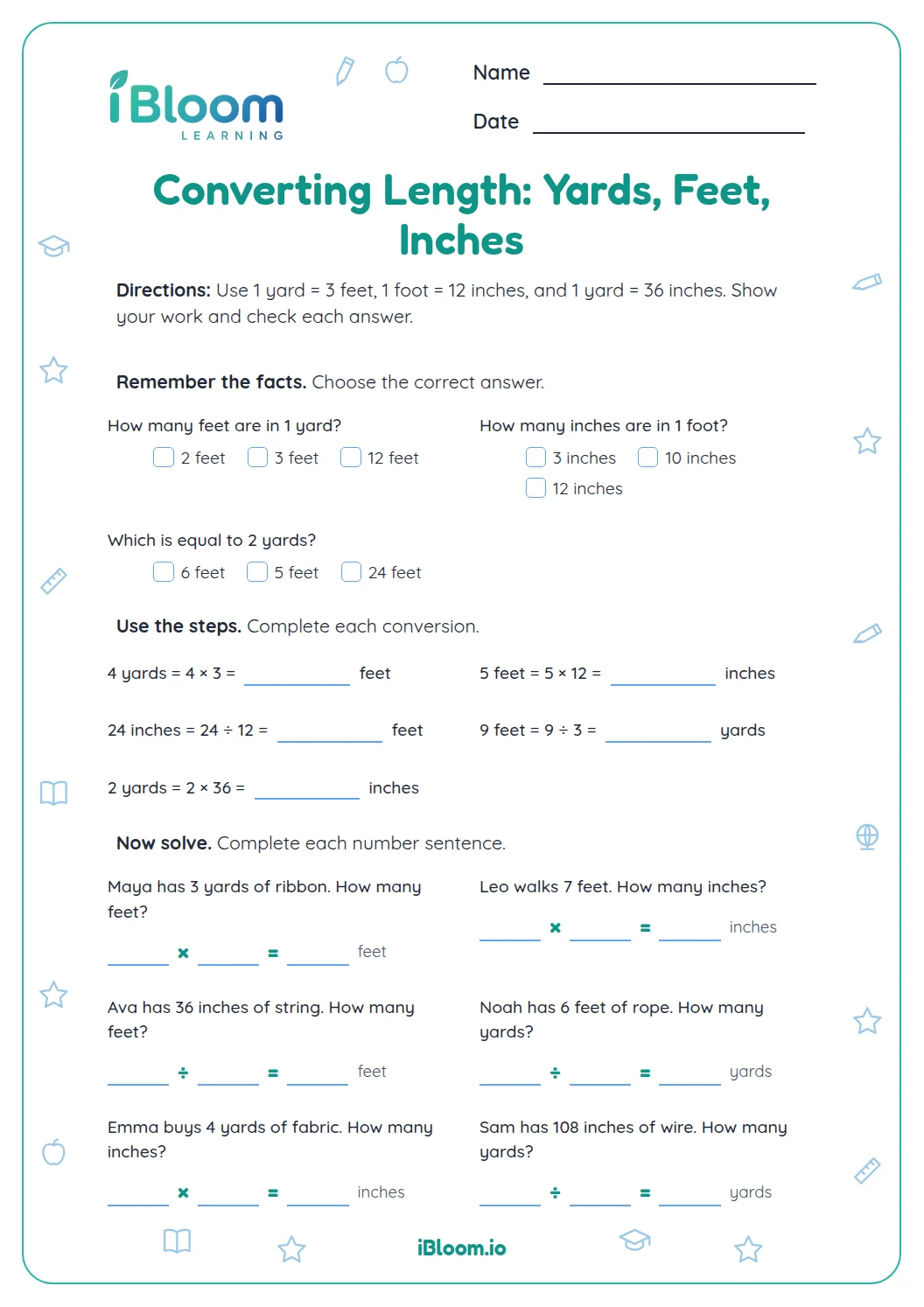
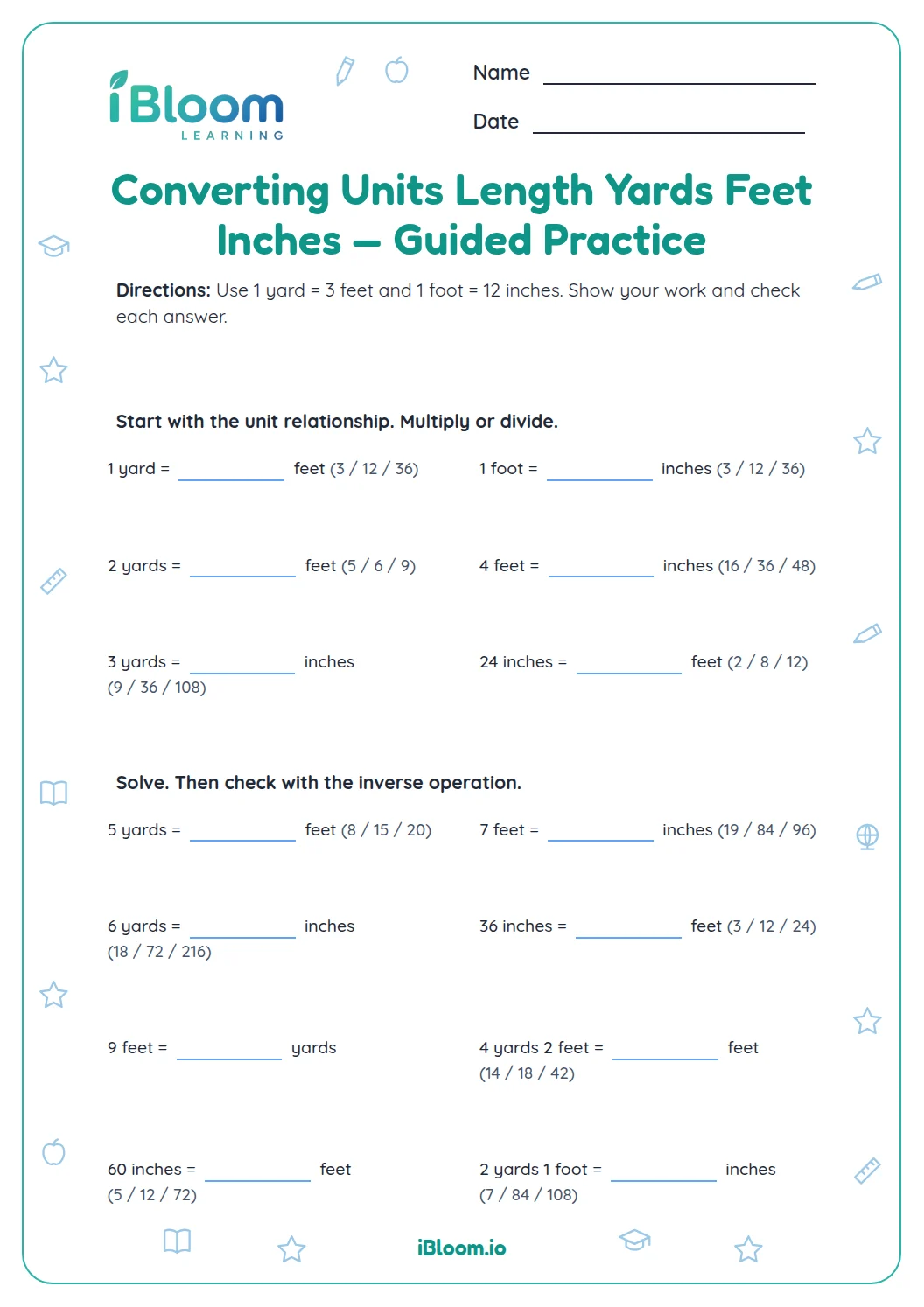
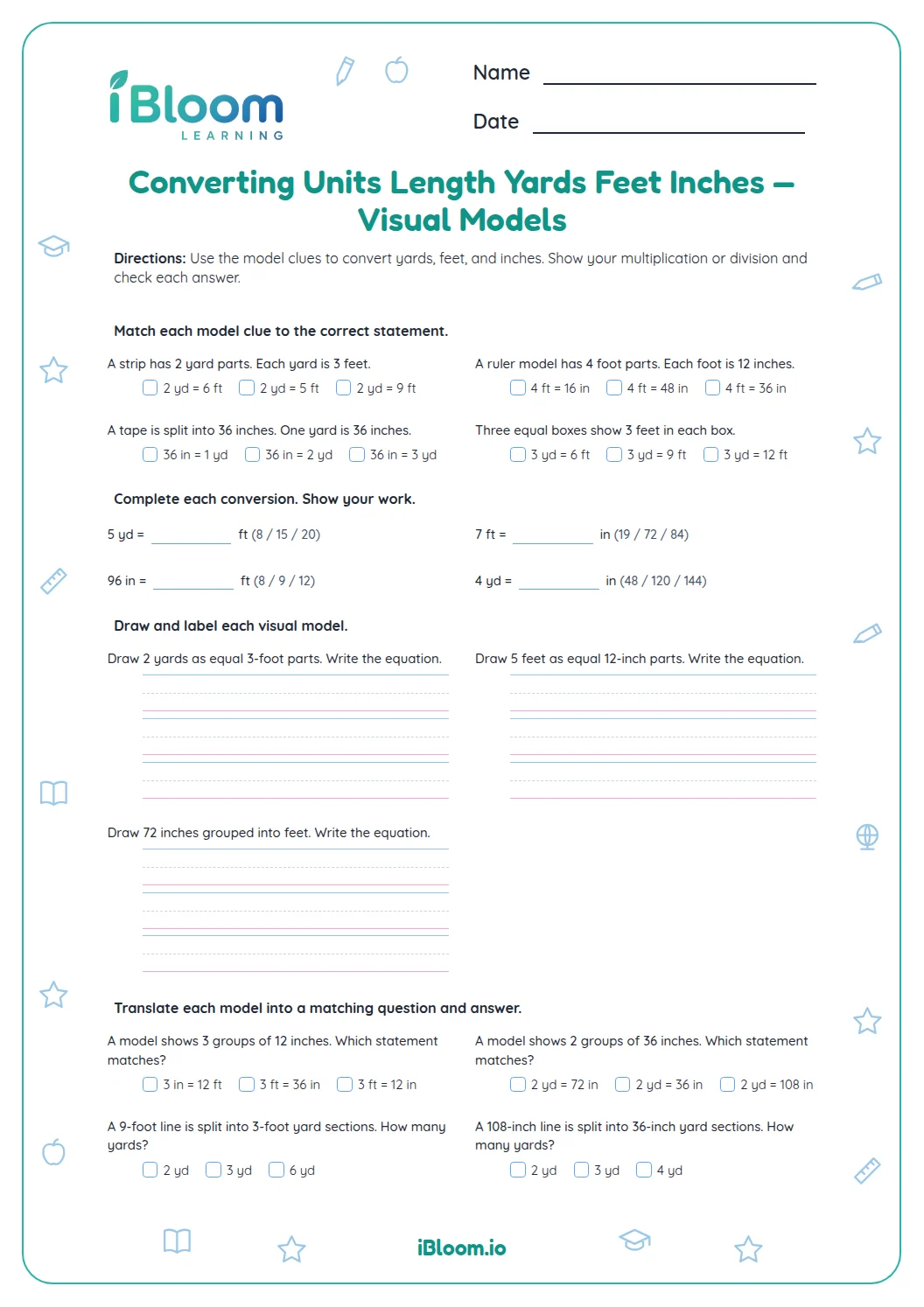
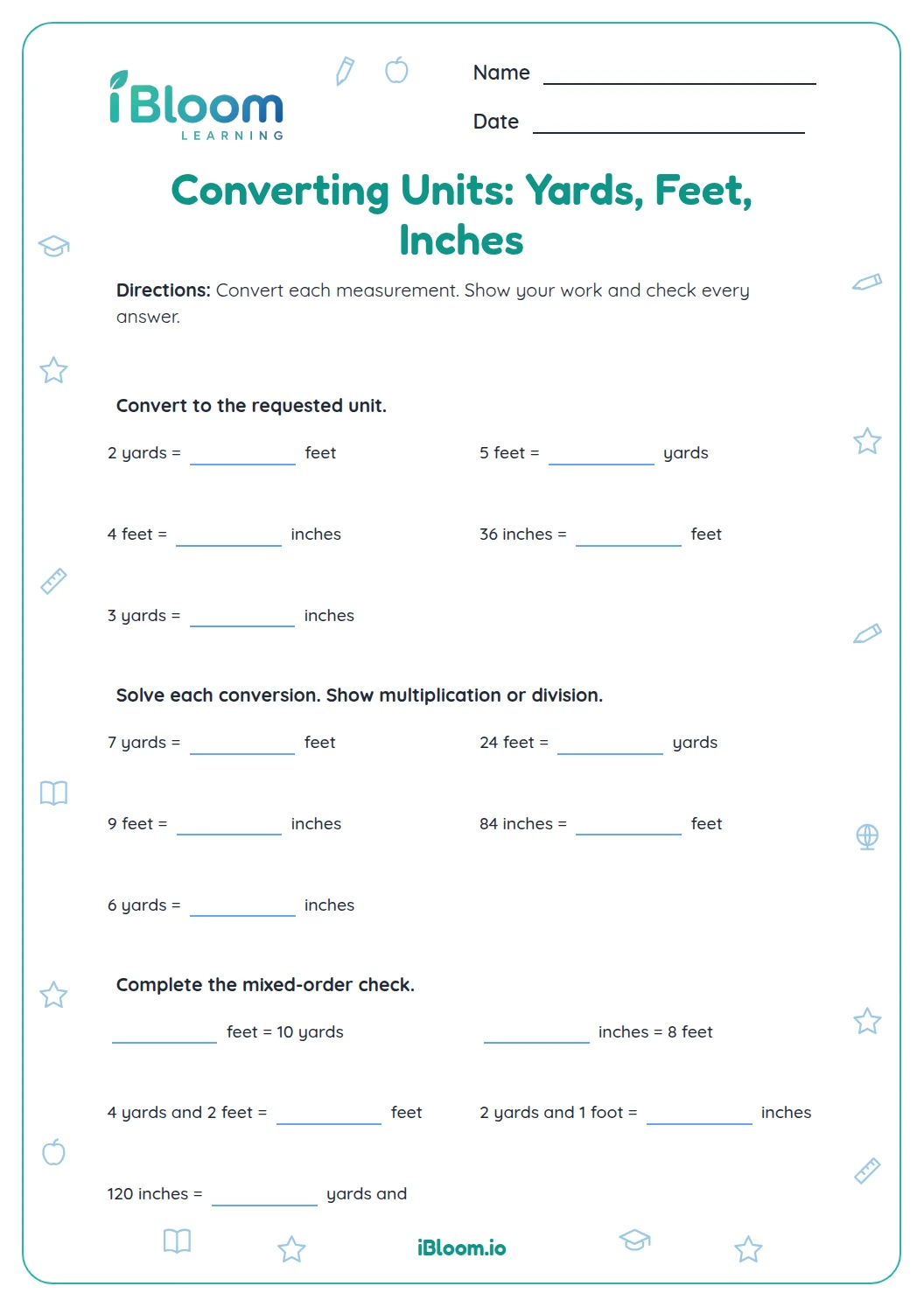
Fifteen Grade 4 problems connect customary-unit conversions to practical length situations. Learners convert, compare, and solve for remaining or combined lengths, showing an equation and a unit with each answer. The printable includes a separate key and practices CCSS 4.MD.A.1.
Aligned to 4.MD.A.1
How do you choose a useful unit?
Convert to one unit before adding or subtracting lengths. For example, 5 yards and 7 feet become 15 feet and 7 feet, for a total of 22 feet. Keeping the units alike makes the operation clear.
- 15 yd = 15 ft
- 215 ft + 7 ft = 22 ft
How do the problems use conversions?
Part A starts with direct conversions, Part B compares two lengths, and Part C asks about equal groups or remainders. Part D combines conversions with a second operation, such as finding a total or an amount still needed. In each case, the answer unit comes from the question.
How to use the worksheet
- 1Read the requested unit before choosing a conversion.
- 2Convert both lengths to the same unit before comparing or combining.
- 3Write the unit after the number in the final answer.
- 4Check a conversion by reversing it, such as multiplying feet by 12 to return to inches.
Common mistakes and quick checks
The mistake
Mixing feet and inches in one addition
The fix
Convert both lengths to inches or both to feet before adding.
The mistake
Using 3 feet for a mile
The fix
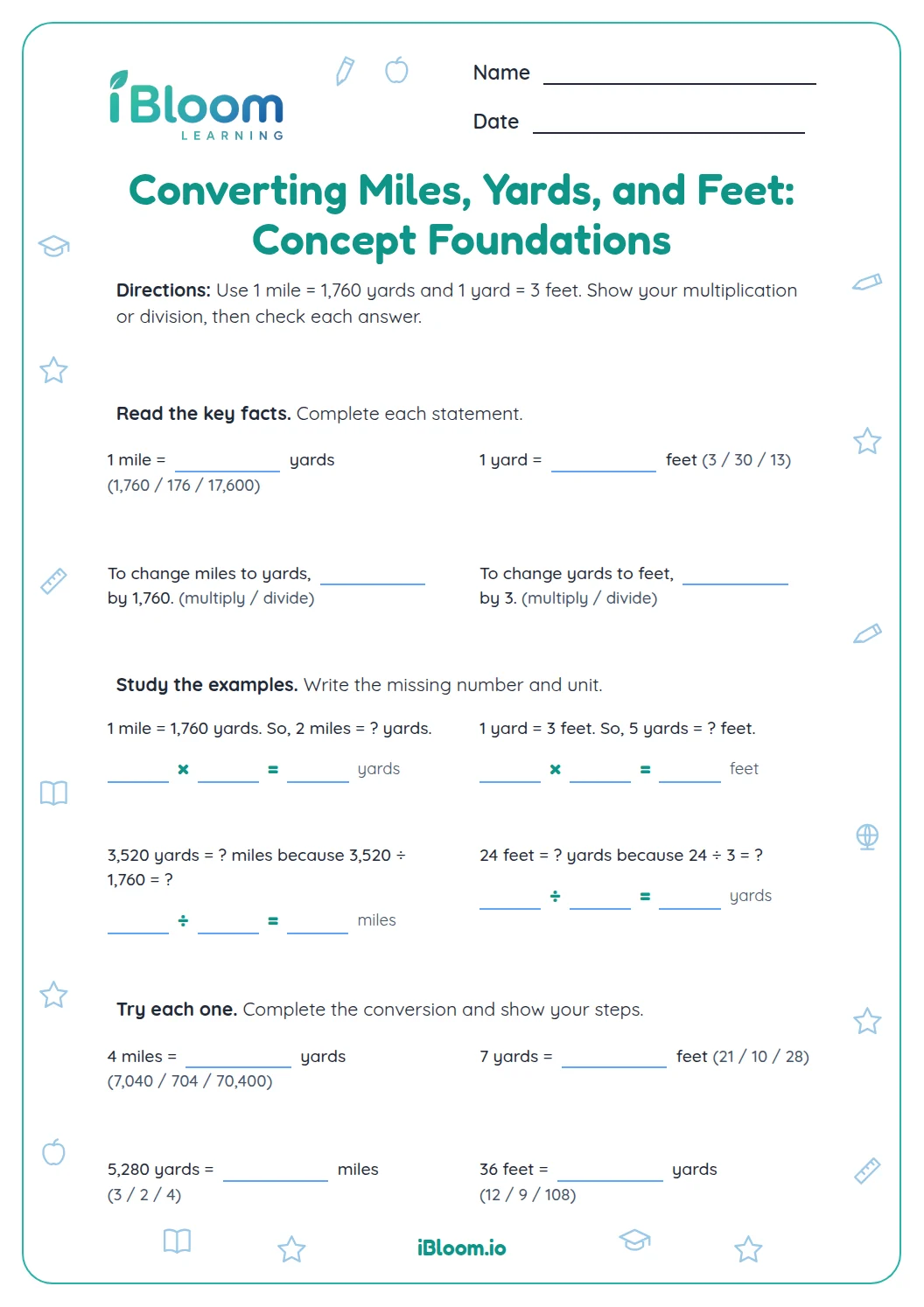
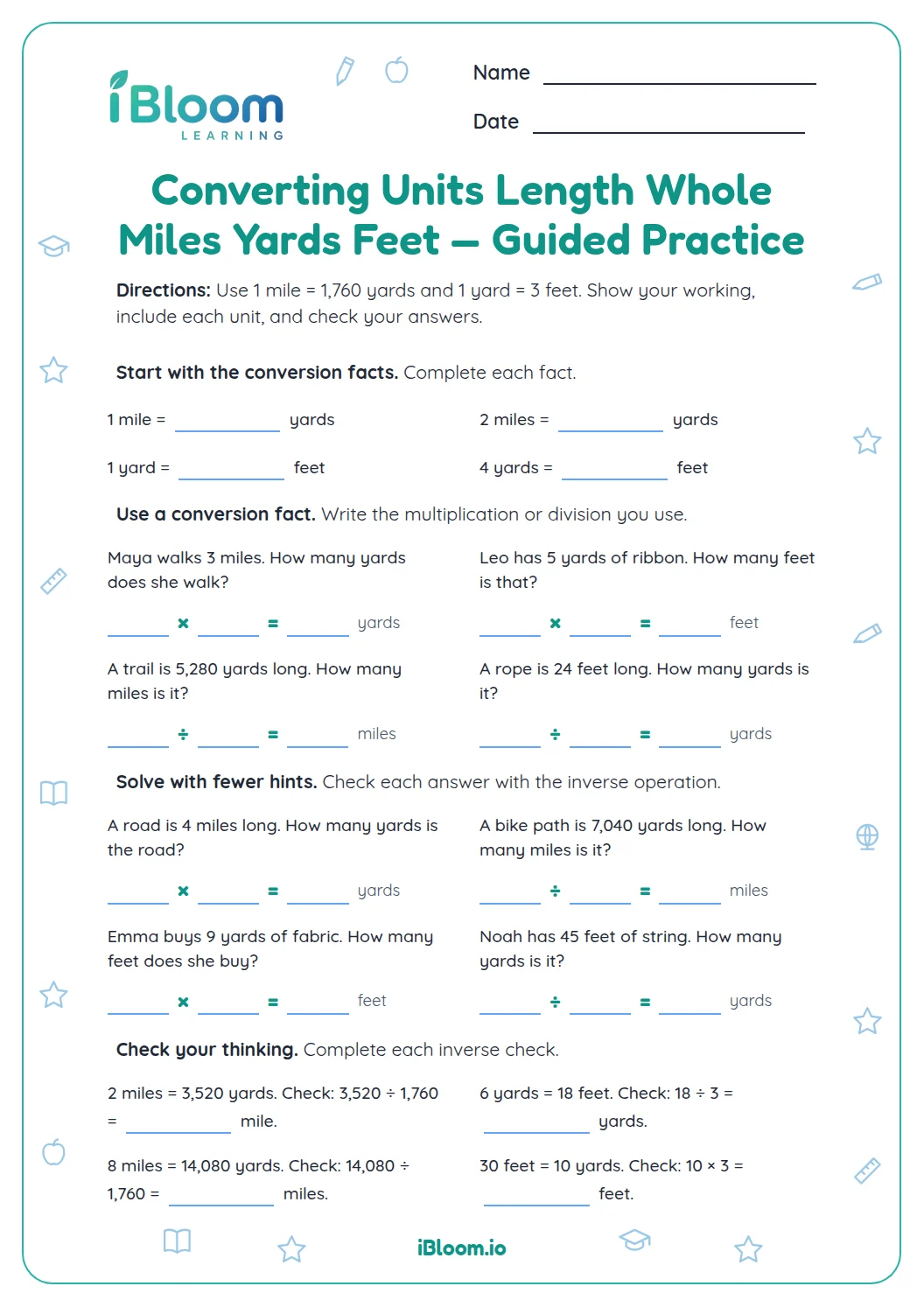
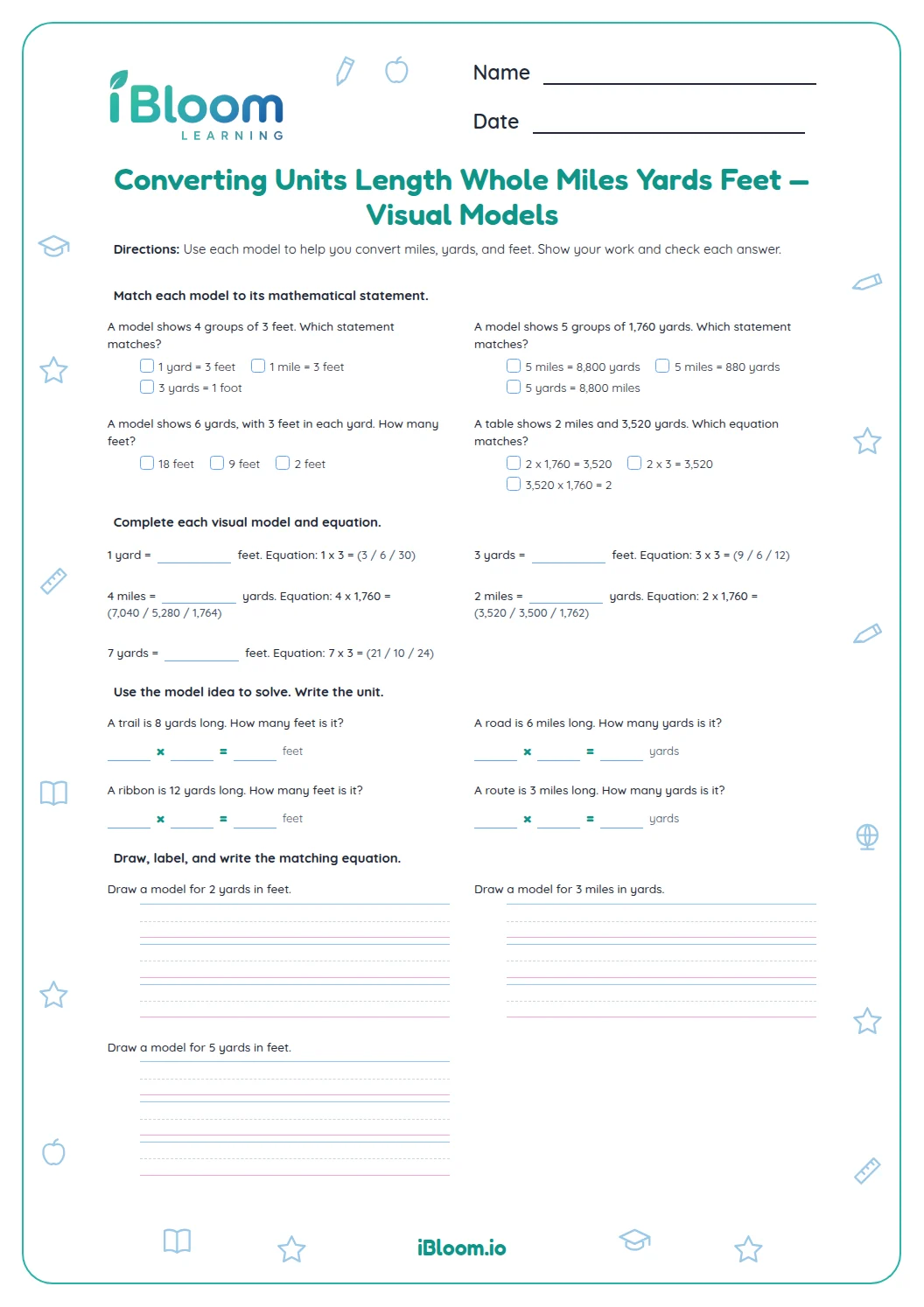
Keep the conversion chain straight: 1 mile = 1,760 yards and 1 yard = 3 feet.
The mistake
Giving a number without its unit
The fix
Copy the unit named in the question into the final answer.
Curriculum alignment
This worksheet practices 4.MD.A.1.
Express customary length measures in smaller units and solve length problems.
On this sheet:
Show the official wordingHide the official wording
Know relative sizes of measurement units within one system of units including km, m, cm; kg, g; lb, oz.; l, ml; hr, min, sec. Within a single system of measurement, express measurements in a larger unit in terms of a smaller unit. Record measurement equivalents in a two-column table.
What to practice next
Make more practice
Further reading
Questions parents and teachers ask
Which customary units appear?
The questions use inches, feet, yards, and miles. Relationships include 12 inches per foot, 3 feet per yard, and 1,760 yards per mile. Several problems ask for a converted amount before adding, subtracting, or dividing. Keep the unit labels beside each number while solving.
How do I compare two lengths?
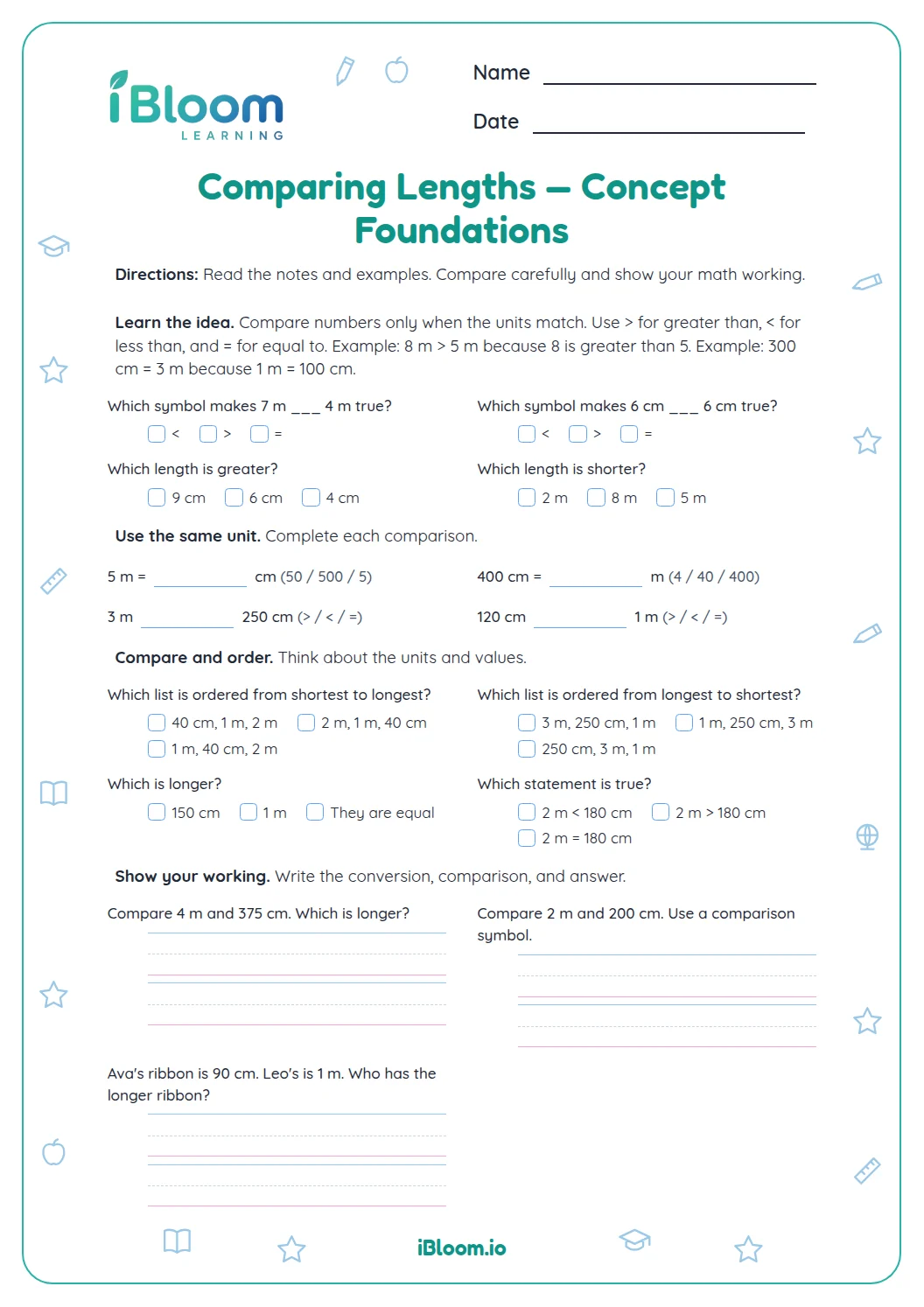
Rewrite both measurements in the same unit first. For example, change 7 feet to 84 inches before comparing it with 80 inches. Once the units match, compare the numbers and choose the longer measurement. Keep the unit labels beside each number while solving.
Does the worksheet include multi-step problems?
Yes. Some items ask learners to convert and then find a remaining length or a combined length. The prompt names the unit for the final answer, so learners can use that unit to plan the conversion. Keep the unit labels beside each number while solving.
How can a child check a conversion?
Use the related fact in reverse. If 3 feet is written as 36 inches, divide 36 by 12 to return to 3 feet. For longer conversions, check each link in the conversion chain and keep the unit labels visible. Keep the unit labels beside each number while solving.
Is an answer key included?
Yes. A separate answer key lists the expected amount and unit for each of the 15 items. Reviewing the unit as well as the number helps catch answers that use a correct value in the wrong measurement unit. Keep the unit labels beside each number while solving.