


About this worksheet
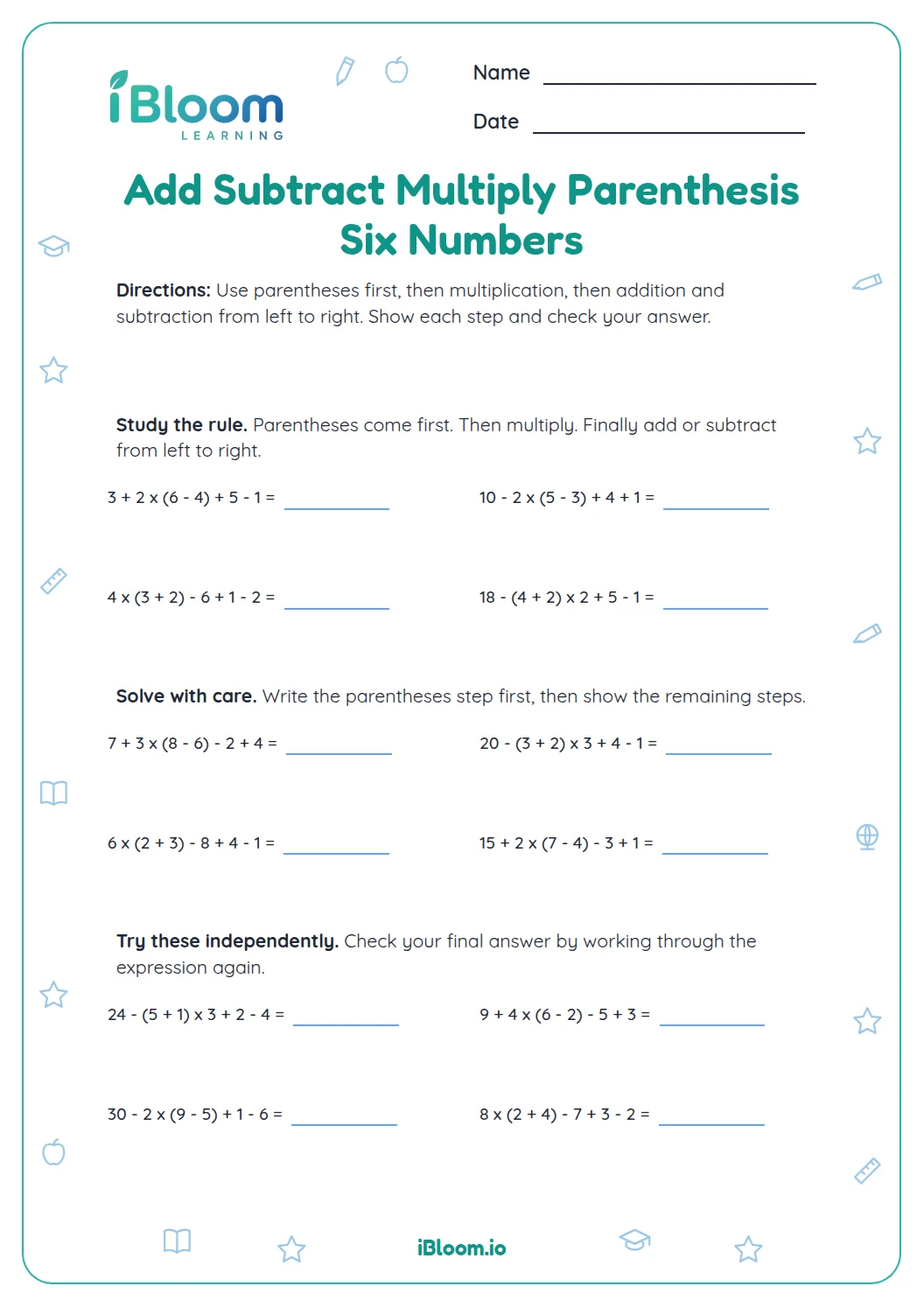
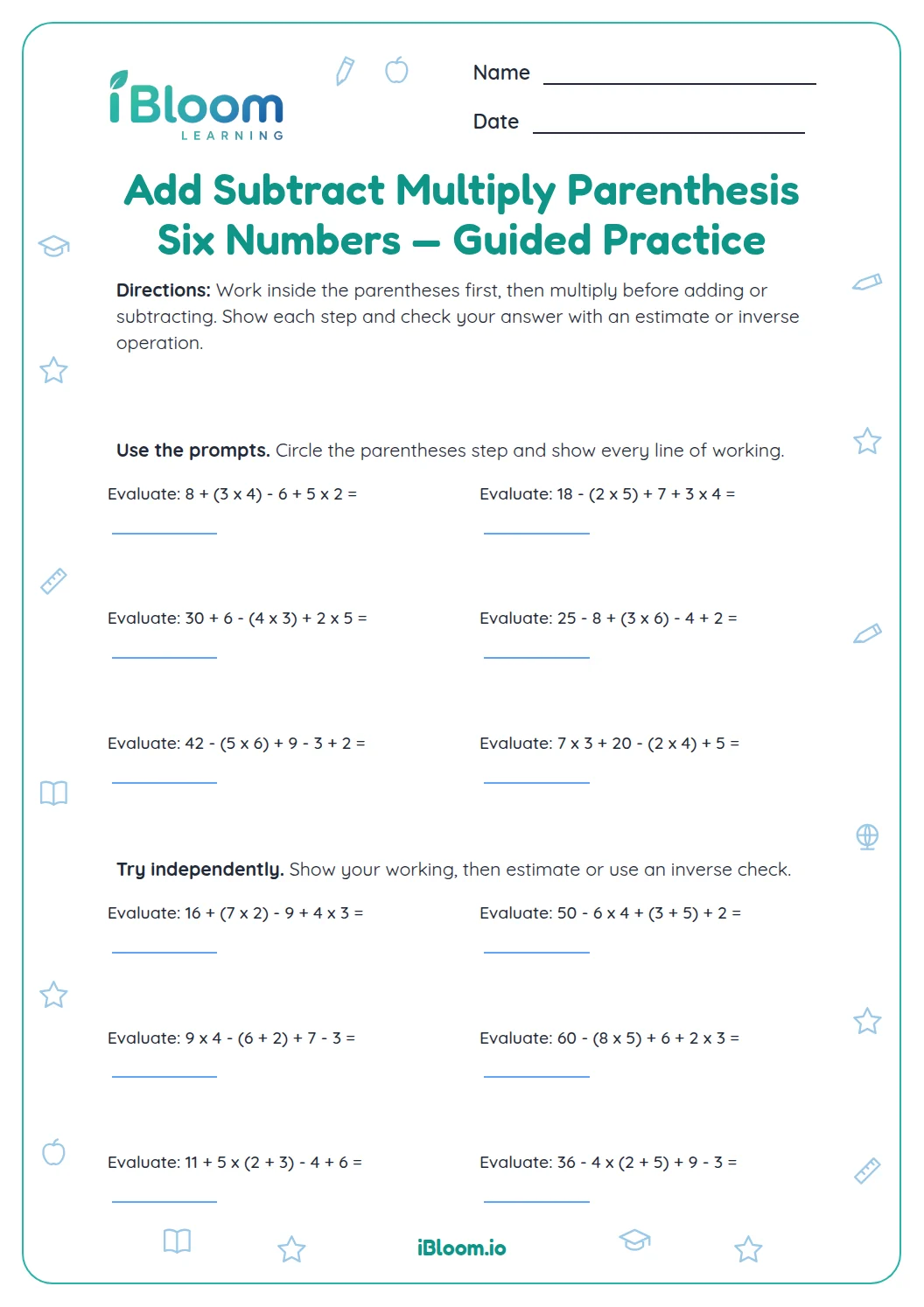
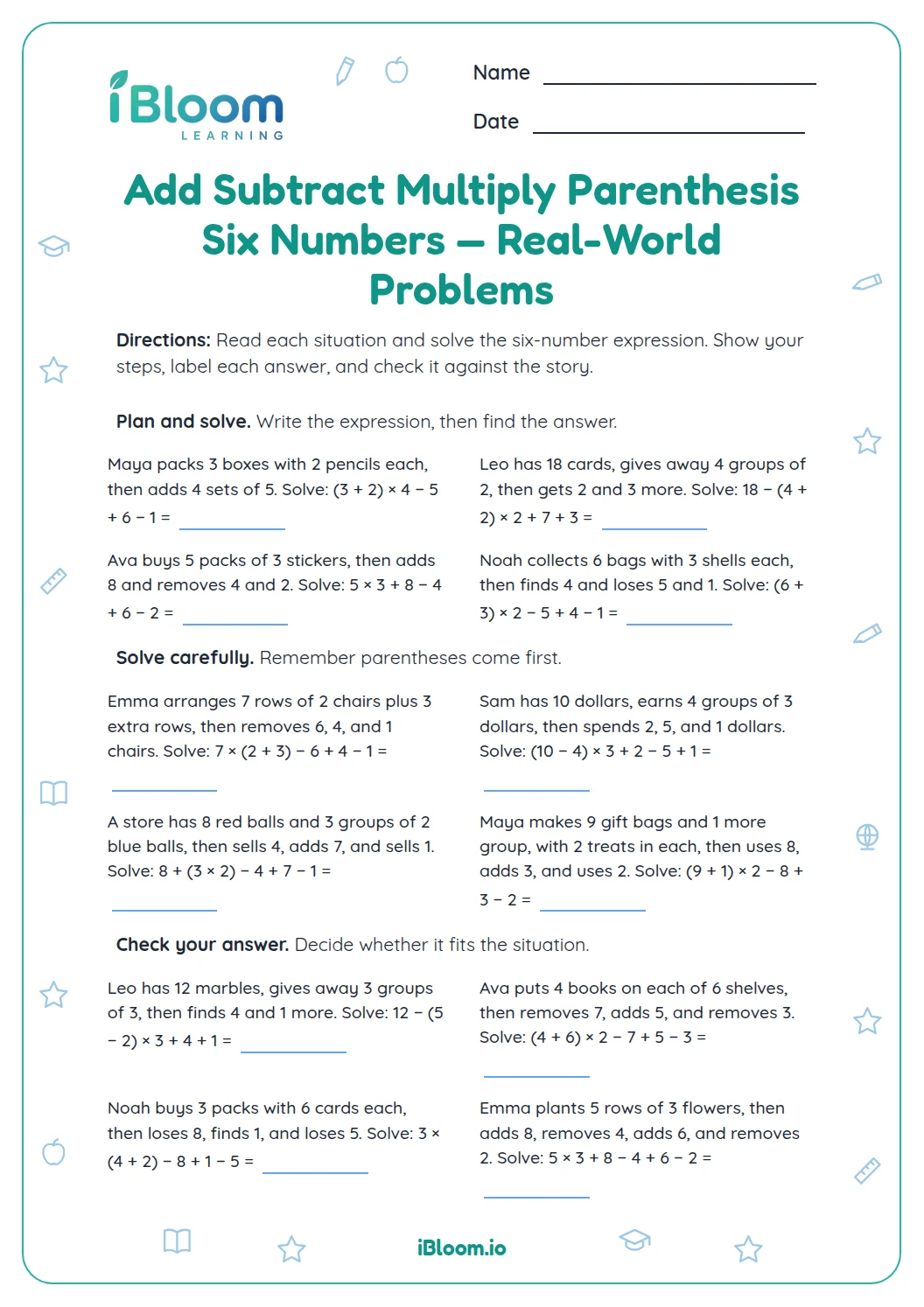
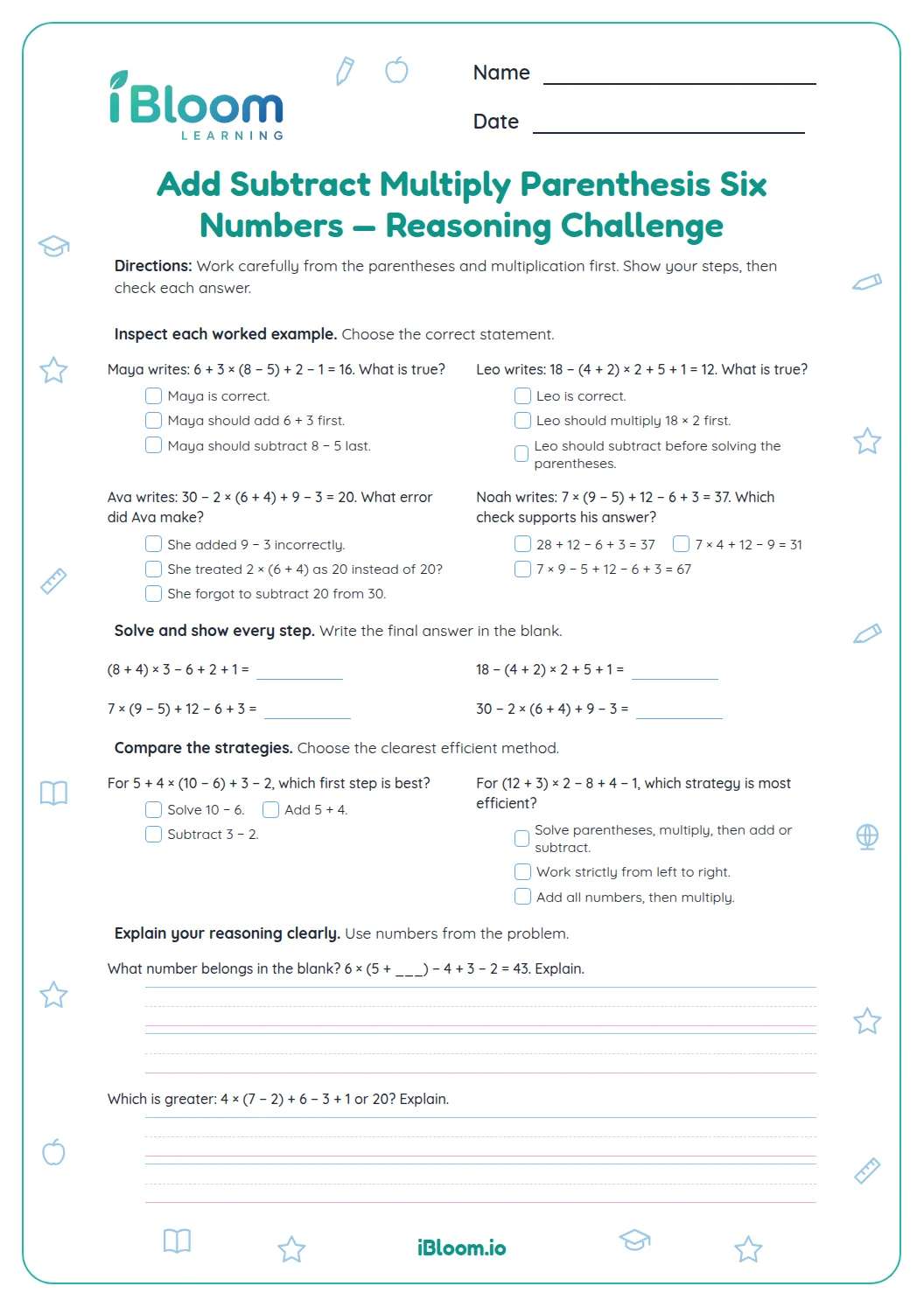
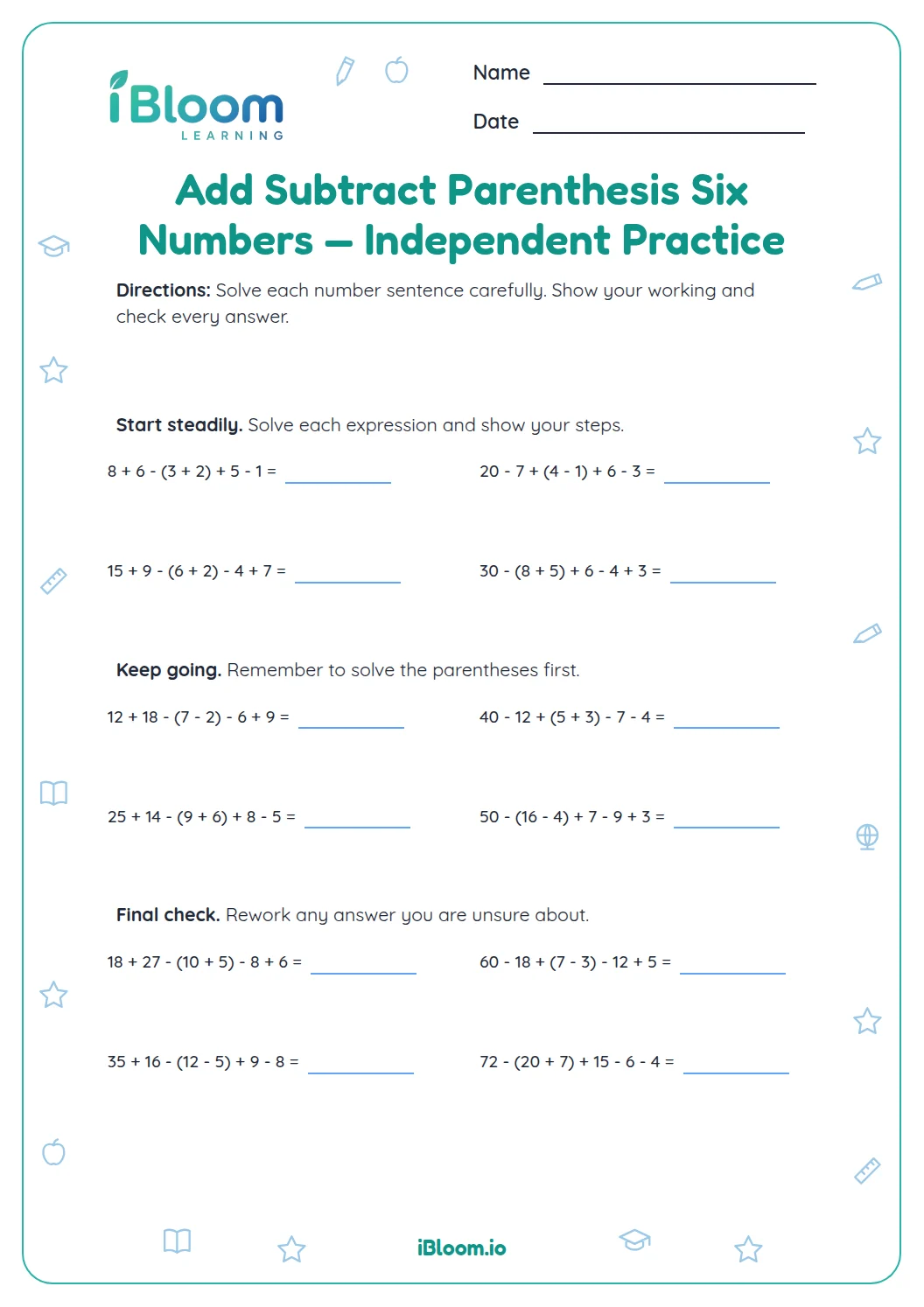
This Grade 4 math worksheet gives children 14 chances to evaluate expressions with addition, subtraction, multiplication, and parentheses. Array drawings reinforce multiplication groups as students work through each expression in order. The activity supports multistep computation and includes a separate answer key.
Aligned to 5.OA.A.1
What does order of operations mean?
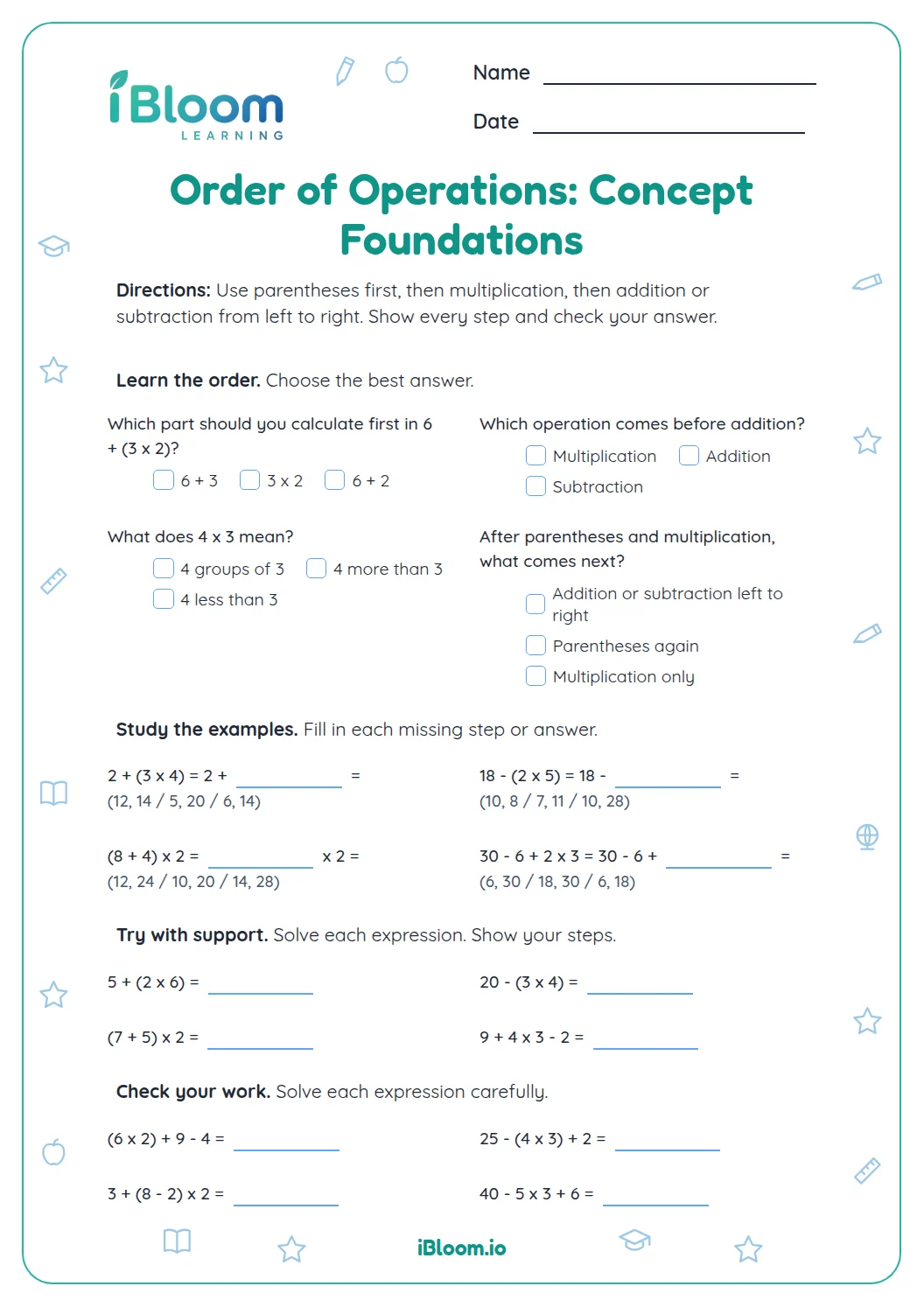
An expression can have several operations, so a shared order keeps everyone’s answer consistent. Parentheses mark a group to evaluate first. Multiplication is completed before addition or subtraction.
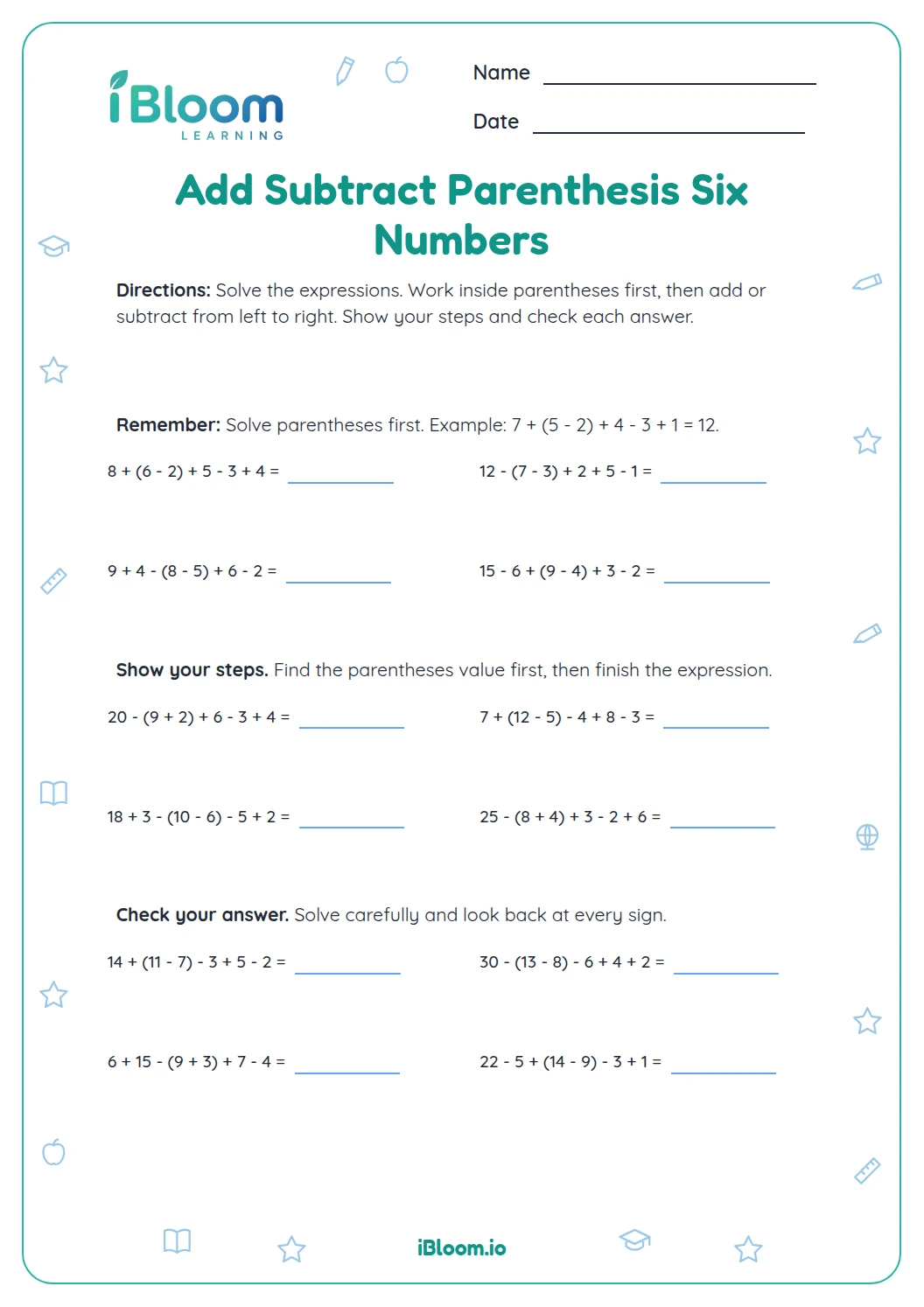
These Grade 4 problems combine the named operations in six-number expressions. The array drawing offers a visible reminder of the factors in a multiplication step.
How do parentheses change the first step?
Begin with the operation inside parentheses. Next multiply. Then finish addition and subtraction from left to right. Keep each step written clearly in the work area.
- 1(3 + 5) × 4 − 6 + 2
- 2Parentheses: 3 + 5 = 8
- 3Multiply: 8 × 4 = 32
- 4Then subtract and add: 32 − 6 + 2 = 28
What do the models help children see?
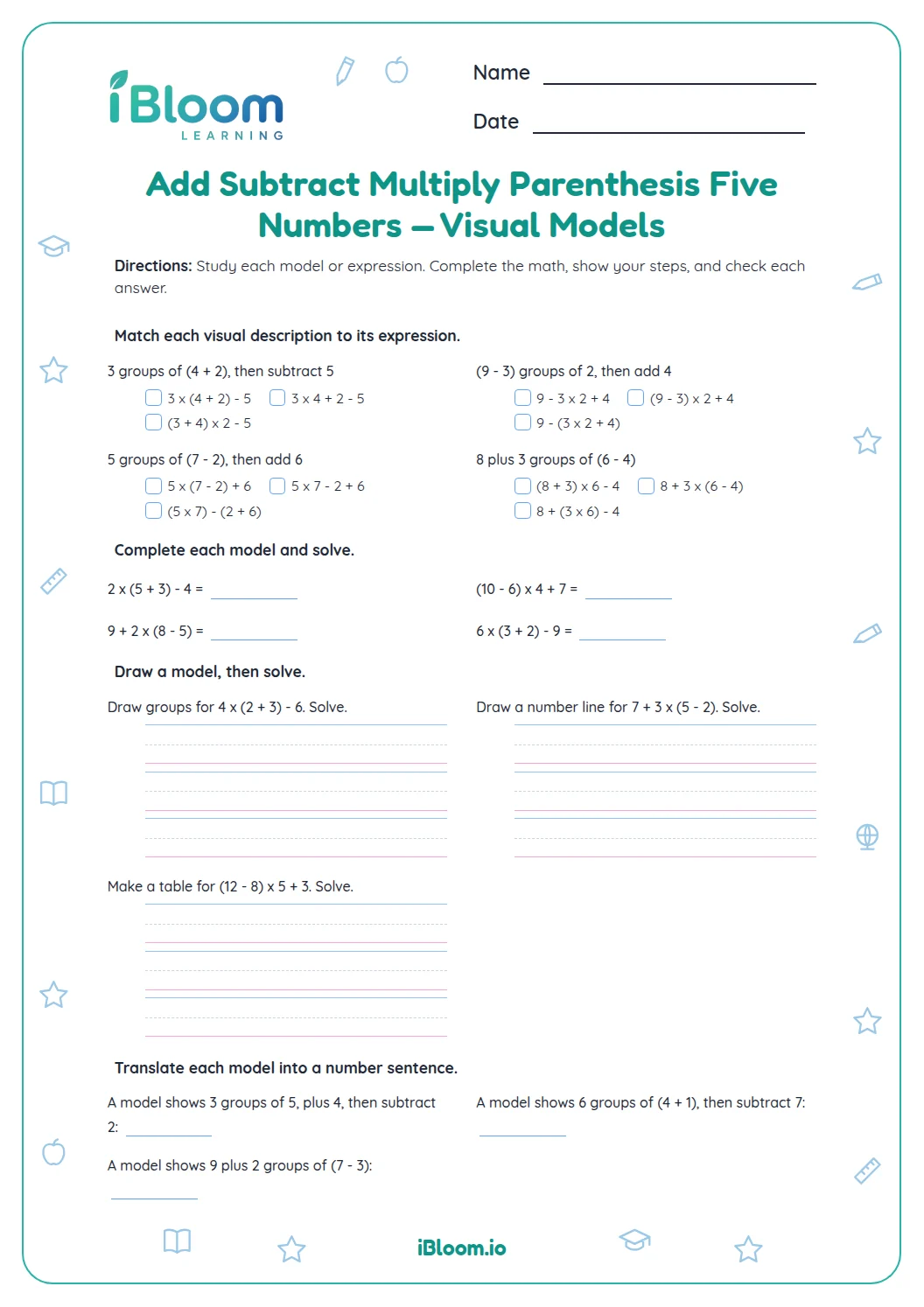
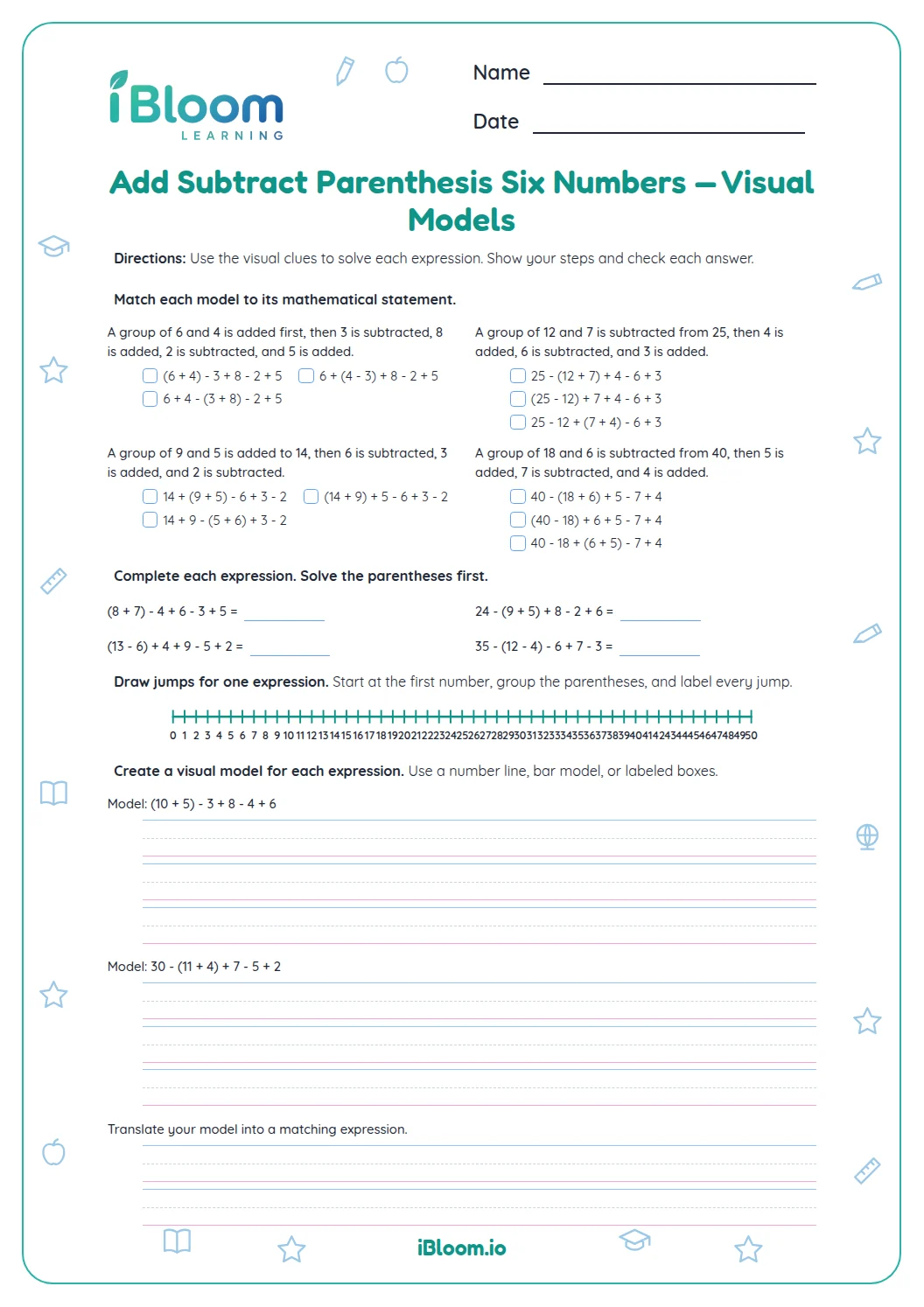
The arrays pair equal rows and columns with the factors used in multiplication. Students connect that model to the expression, then use the parentheses to decide when the multiplication group is ready to evaluate.
The answer key lists the final value for each of the 14 questions. Adults can ask the child to show where the parentheses and array helped.
How to use this worksheet
- 1Find the operation inside parentheses.
- 2Evaluate that group.
- 3Multiply before adding or subtracting.
- 4Finish equal-priority operations from left to right.
- 5Compare the final value with the answer key.
Common mistakes and quick fixes
The mistake
Multiplying before evaluating parentheses.
The fix
Circle the parenthesized group and calculate it first.
The mistake
Adding before completing a multiplication.
The fix
Mark the multiplication step before finishing addition or subtraction.
The mistake
Skipping a subtraction or addition near the end.
The fix
Copy the expression one step at a time and check each operation sign.
Common Core alignment
This page connects the worksheet practice to a grade-level Common Core skill.
Use parentheses in numerical expressions and evaluate them.
On this sheet: Questions require evaluating expressions with parentheses before the other operations.
Show the official wordingHide the official wording
Use parentheses, brackets, or braces in numerical expressions, and evaluate expressions with these symbols.
What to practice next
Make more practice
Further reading
Questions parents and teachers ask
What should a student do first in these expressions?
Start with the numbers inside parentheses. Then complete multiplication before addition or subtraction, moving from left to right when operations have the same priority. The array helps show the multiplication group, while the parentheses show which numbers to combine first.
Why are arrays included?
An array shows equal groups, so it can make a multiplication step visible. For example, an array with six rows and three columns represents 6 × 3. Children still need to use the parentheses and operation order to finish the full expression.
How many questions are on the sheet?
There are 14 equations in the worksheet pages. Each combines six numbers with parentheses and the four operations named in the title, and each has a visual array model. The answer key is provided on matching pages so each final value is easy to check.
Is division included?
The printed expressions use addition, subtraction, multiplication, and parentheses, matching the worksheet title. Students practice calculating the grouped part first and completing the remaining operations in order. The set keeps each expression short enough to work through carefully, with room to check each step.
How can I check a child’s work?
Ask the child to point to the first operation and explain why it comes first. Then check each arithmetic step in order. The answer key gives the final value, and recalculating the grouped expression separately can help catch a misplaced operation.