


About this worksheet
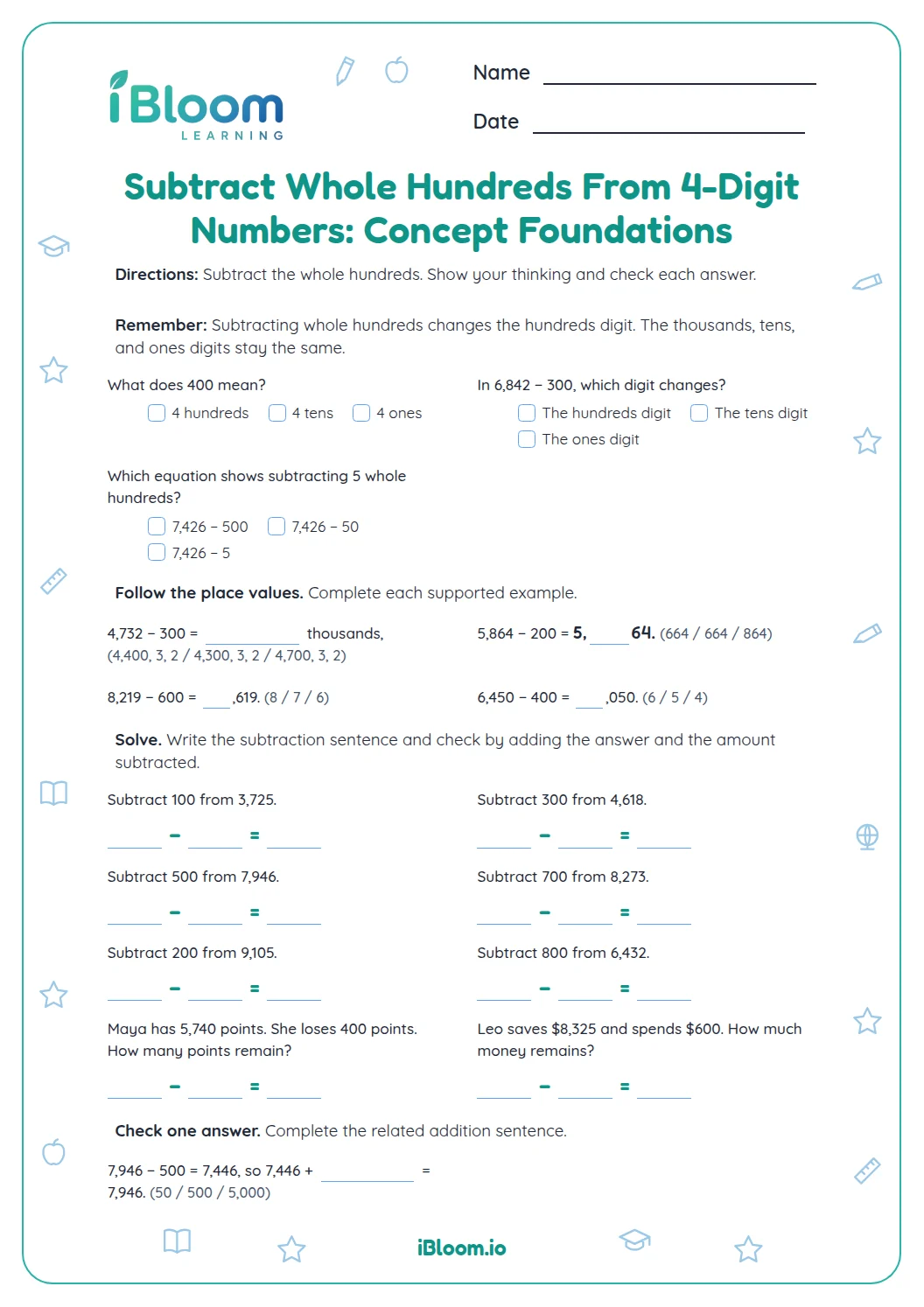
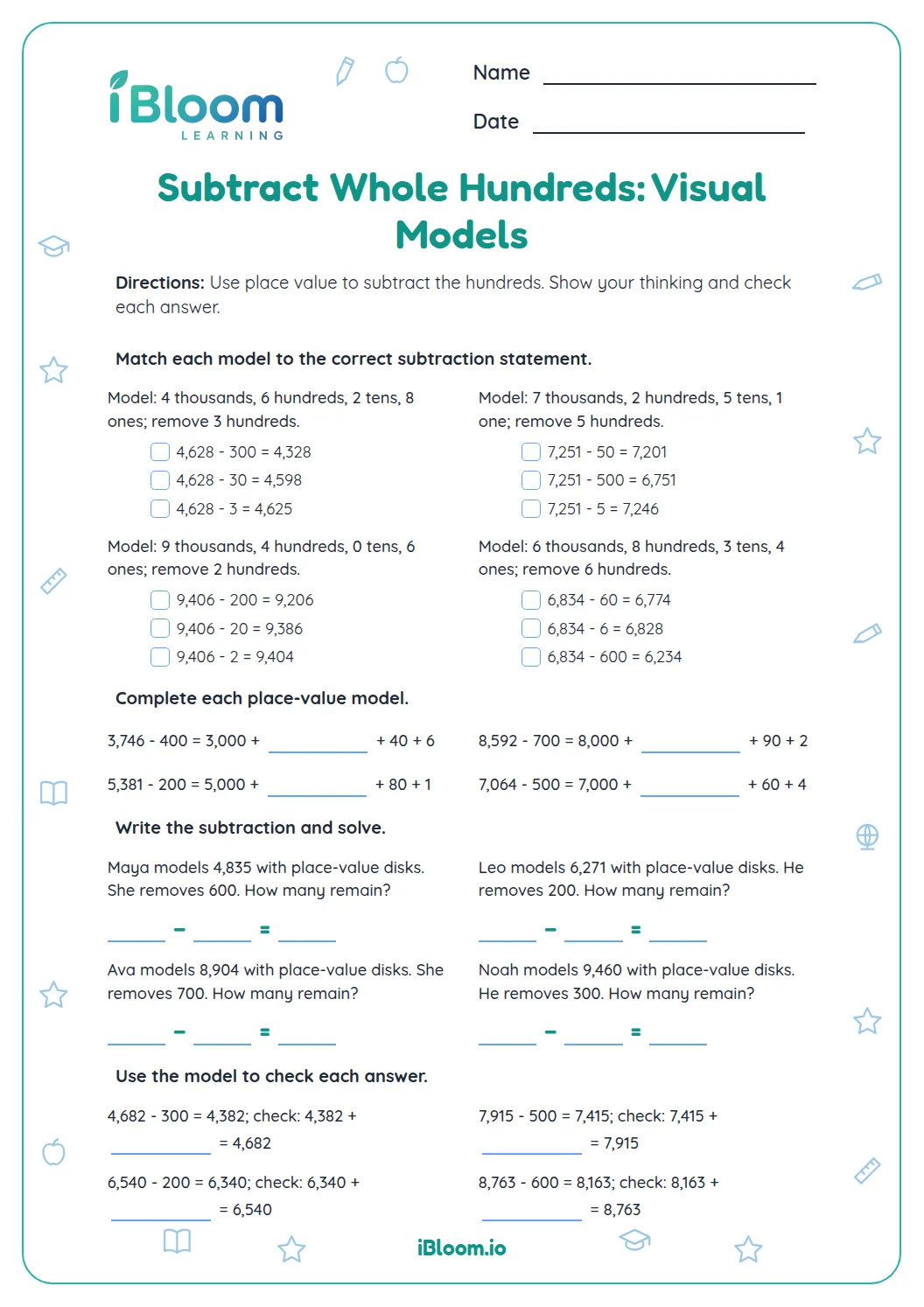
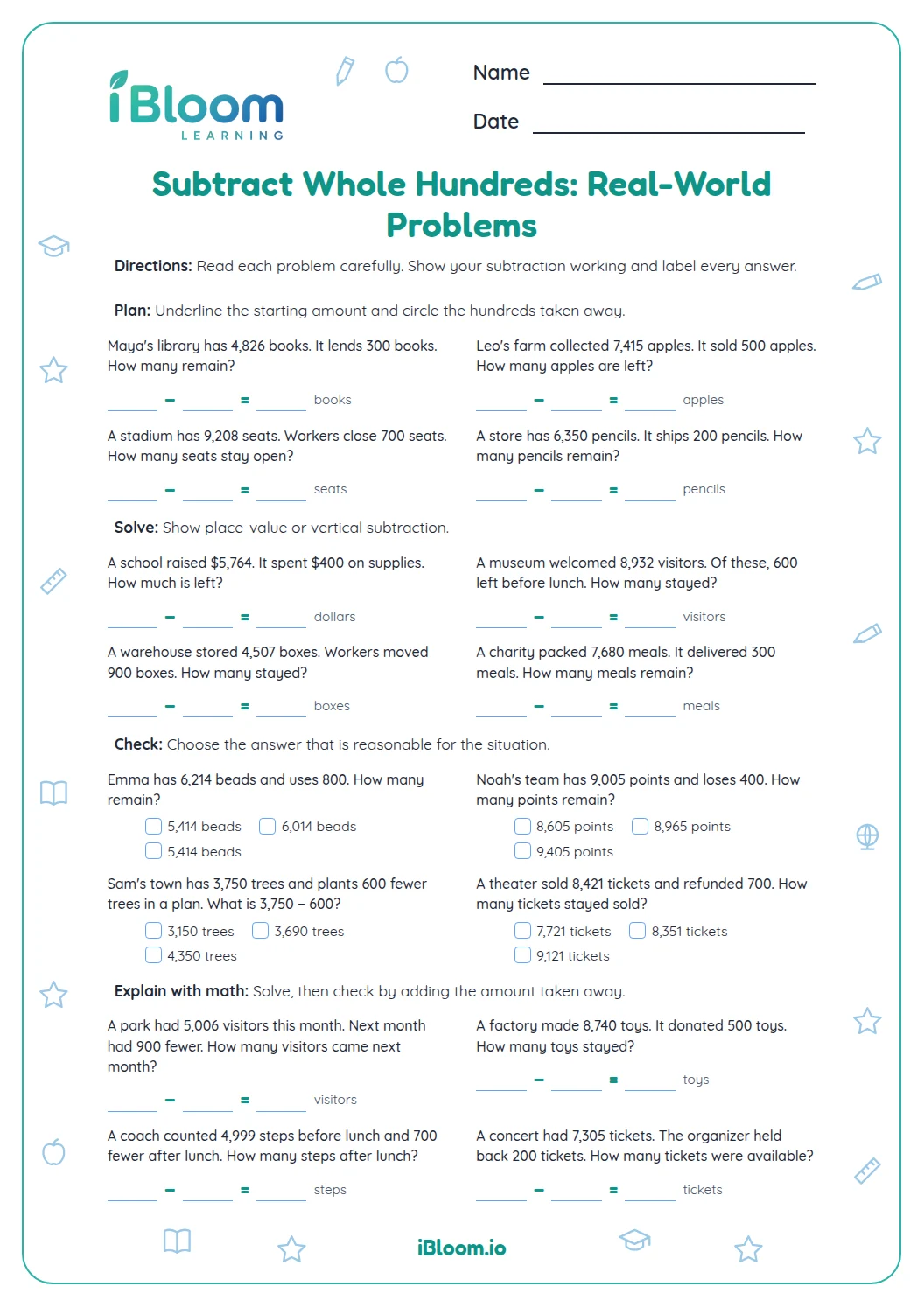
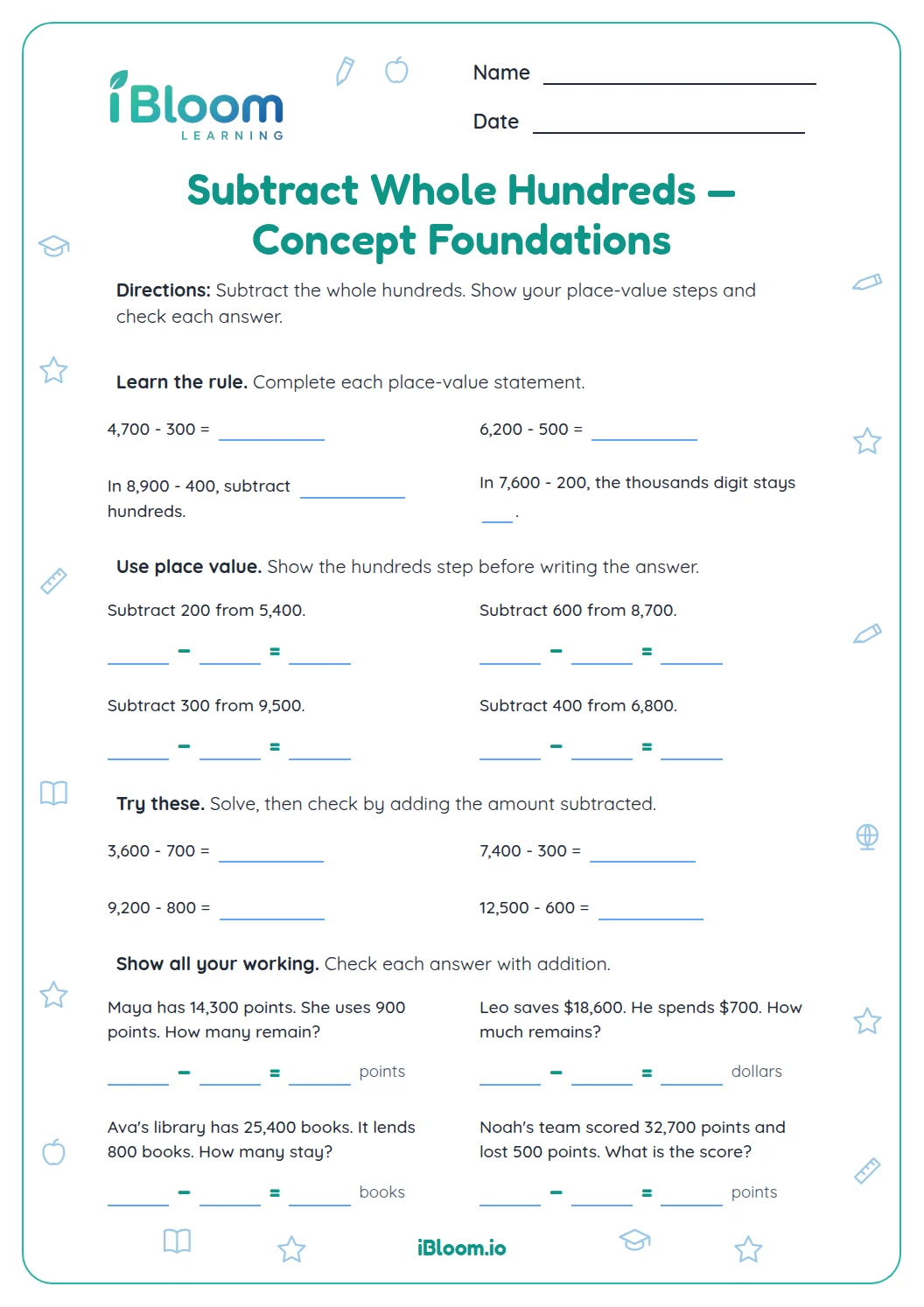
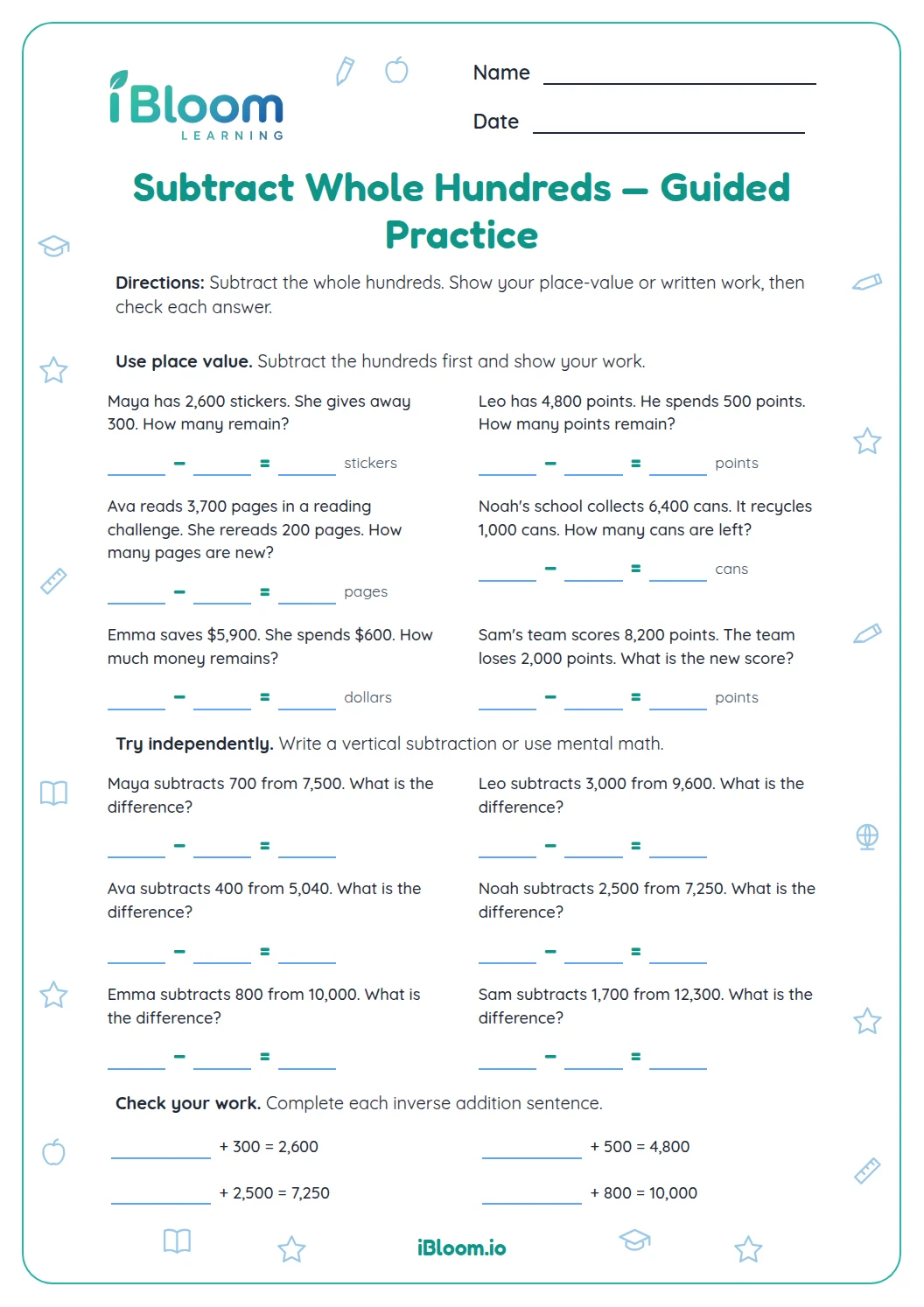
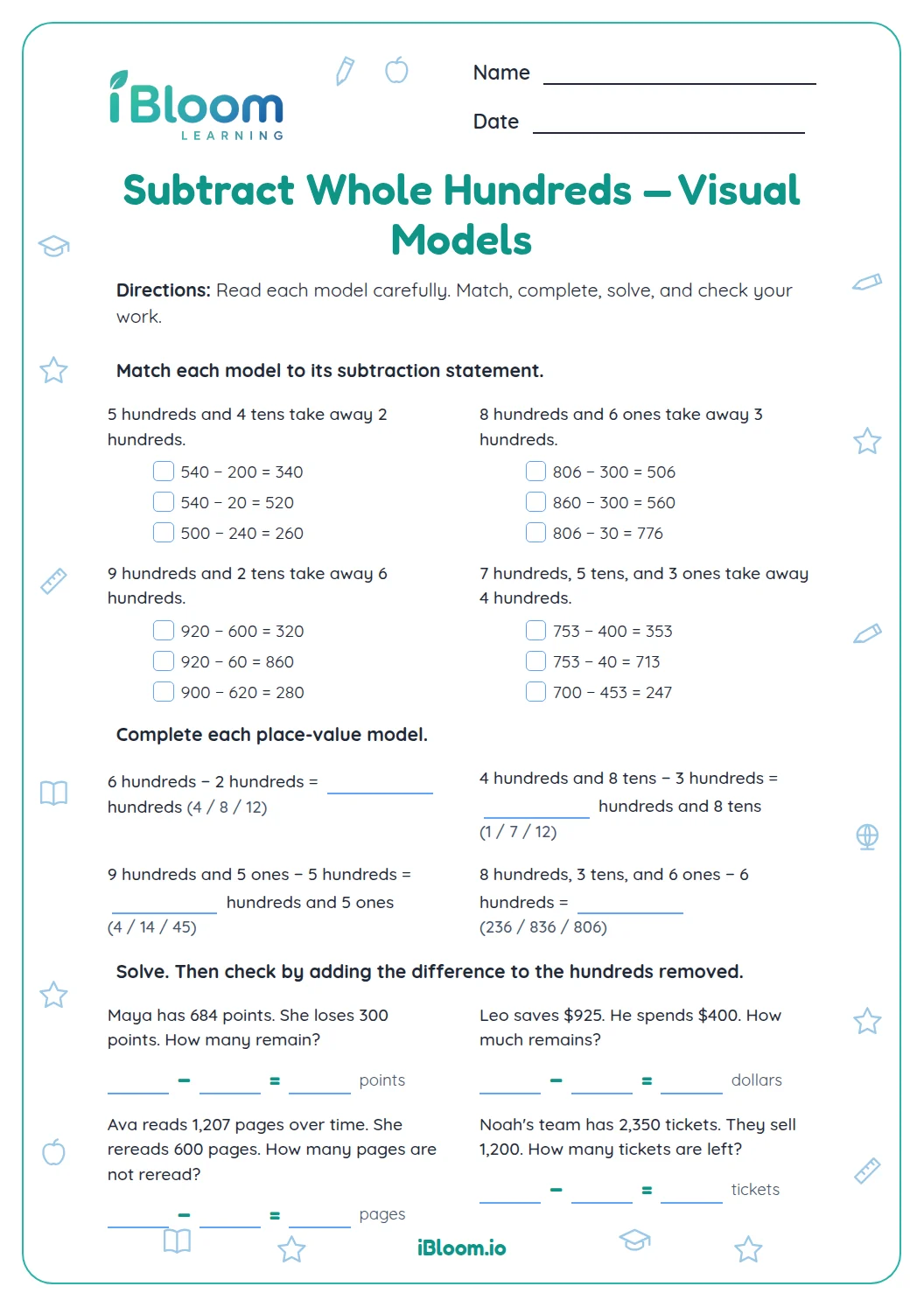
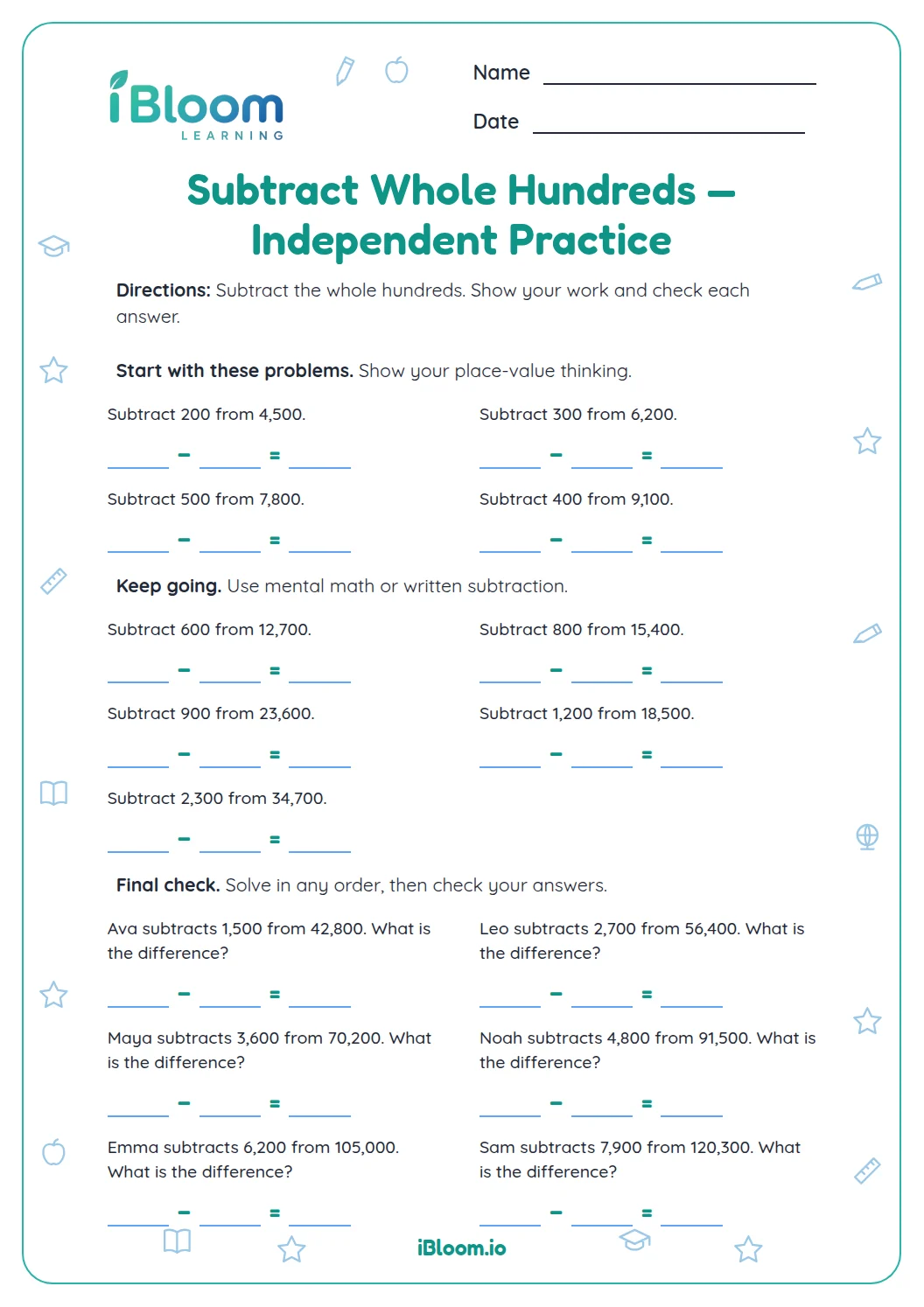
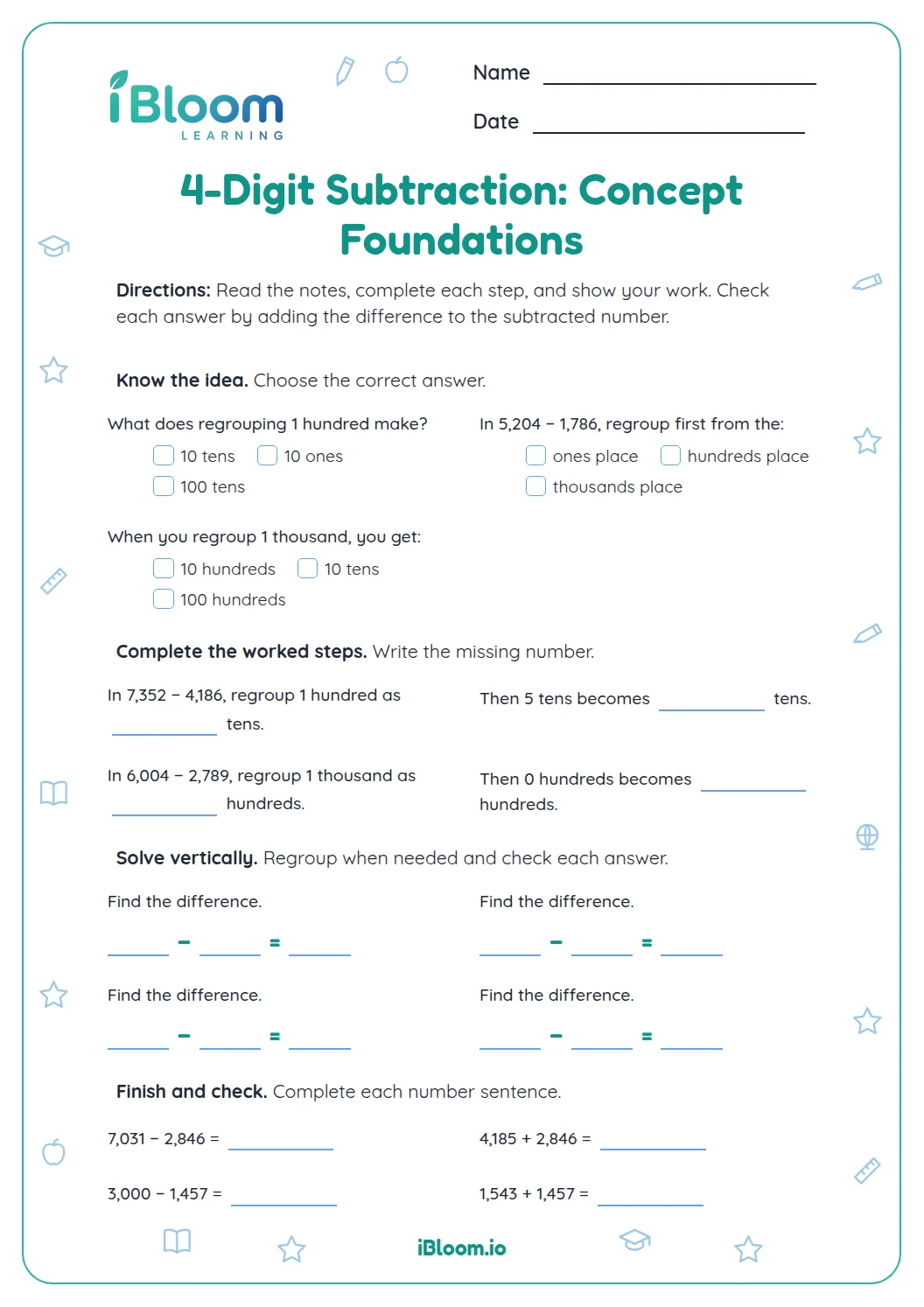
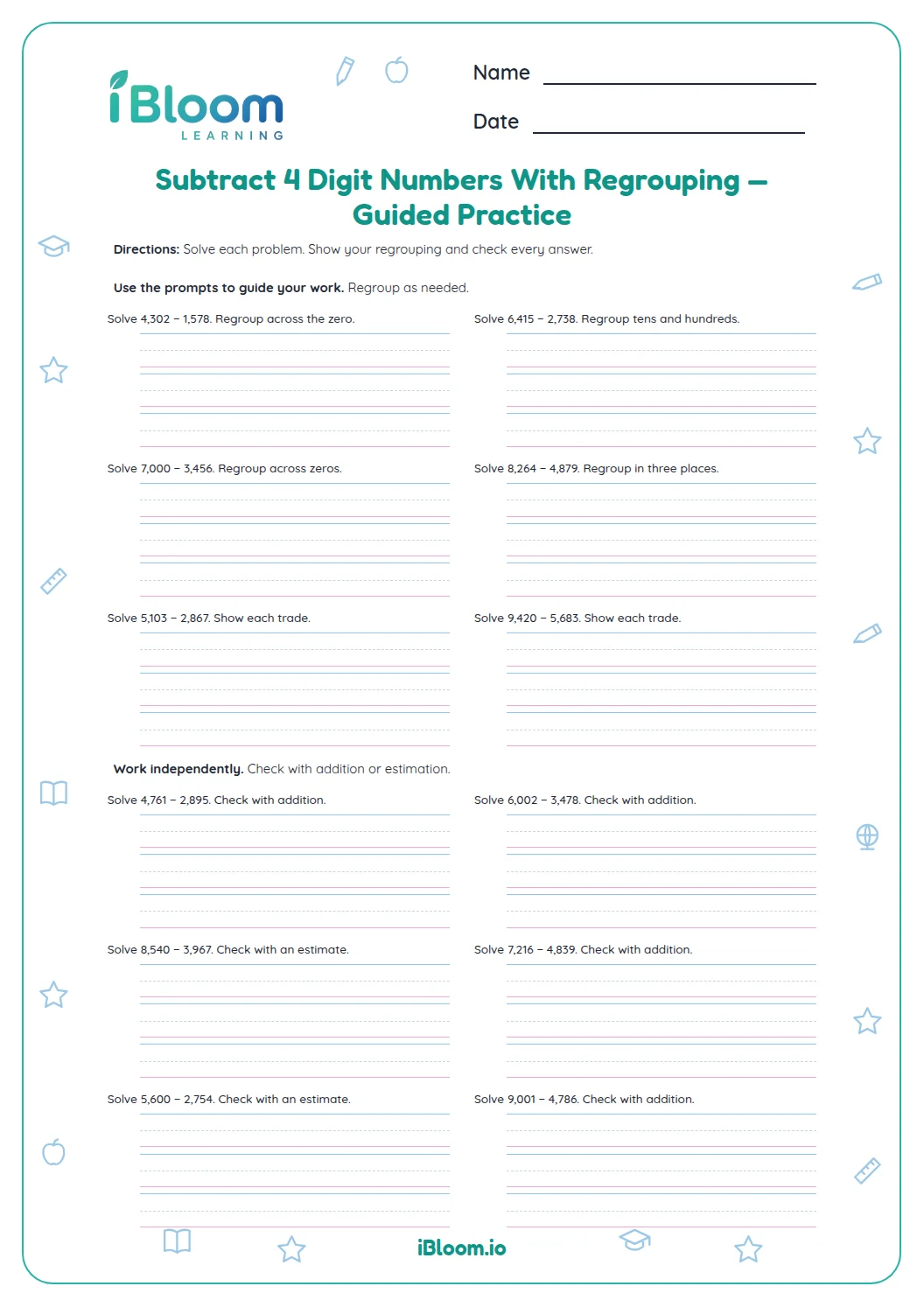
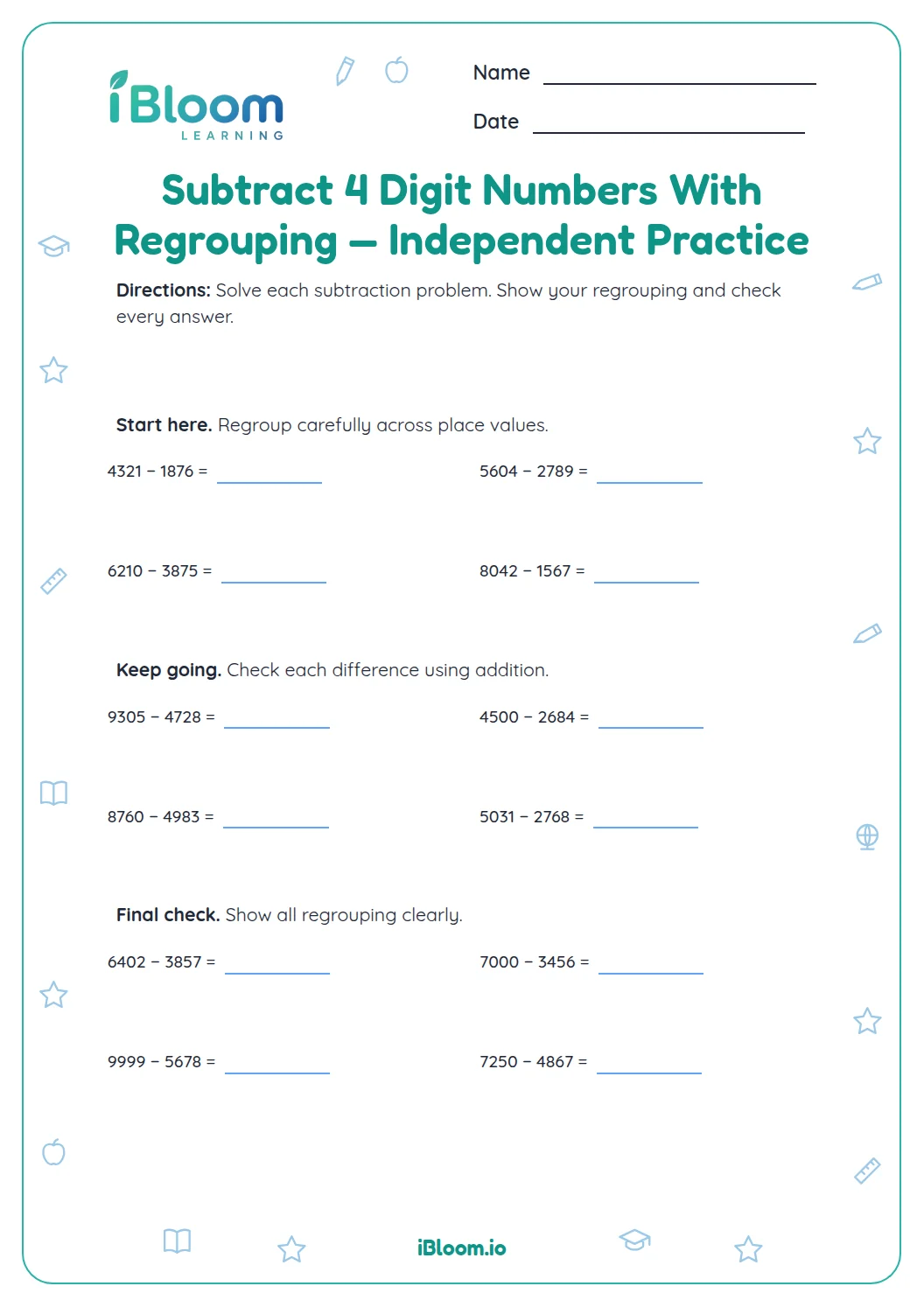
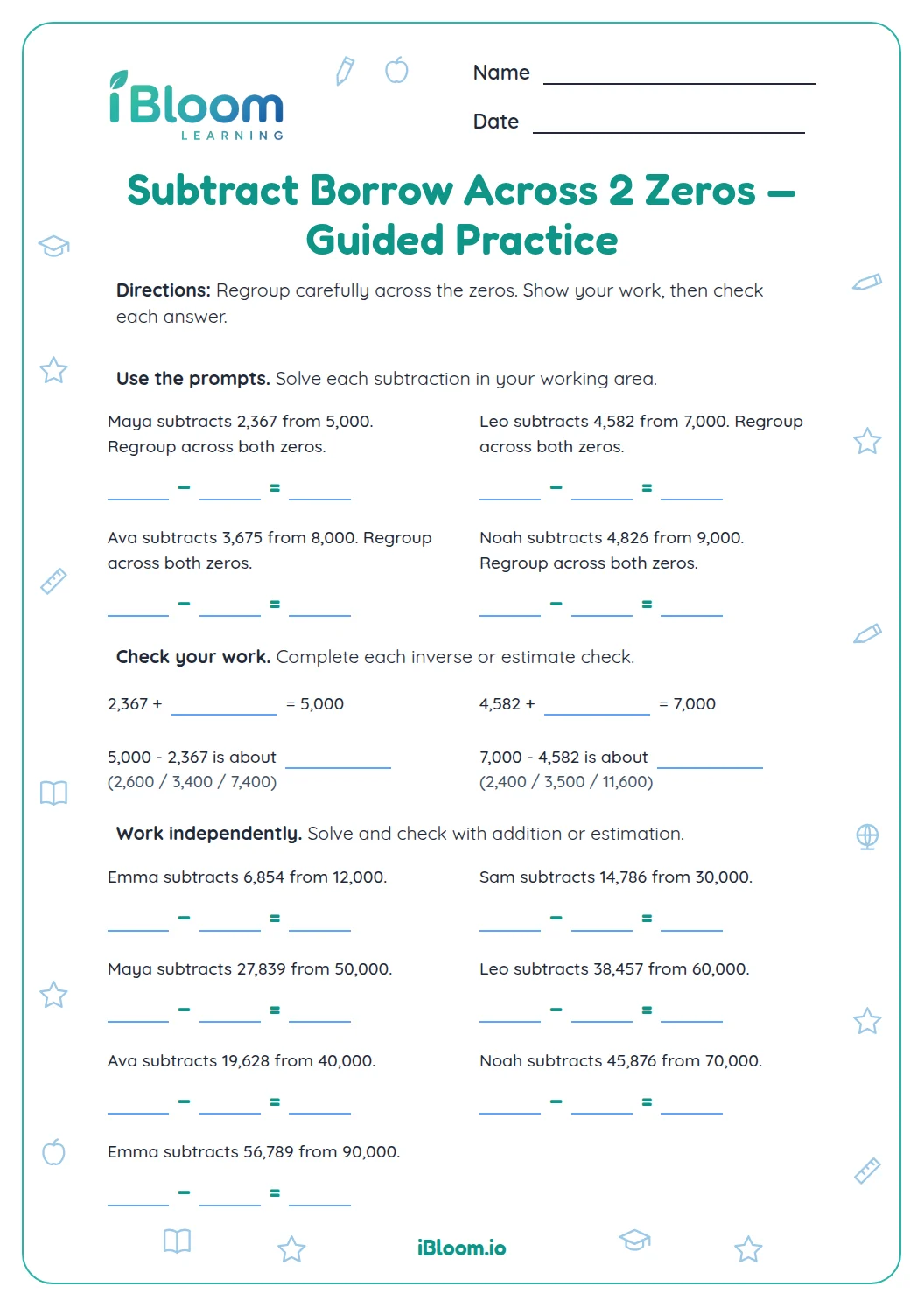
This free Grade 4 printable gives students 20 questions on subtracting a whole hundred from a four-digit number: 16 equations and four story problems. Some require regrouping in the hundreds place, including examples with zeros in other places. The practice supports fluent multi-digit subtraction under CCSS 4.NBT.B.4, and a separate answer key helps check results.
Aligned to 4.NBT.B.4
What changes when subtracting hundreds?
A whole hundred changes the hundreds value directly, but regrouping may be needed when the top hundreds digit is too small. For 4,326 − 300, subtract three hundreds from 32 hundreds to get 4,026.
Keep thousands, hundreds, tens, and ones in their columns so the value of each digit stays clear.
- 14,326 − 300
- 232 hundreds − 3 hundreds = 29 hundreds
- 34,326 − 300 = 4,026
How do you handle a zero in the hundreds place?
In 3,104 − 900, there is only one hundred in the hundreds place, so regroup one thousand as ten hundreds. Then 11 hundreds − 9 hundreds = 2 hundreds, leaving 2,204.
Only the needed place value changes during regrouping; the total value stays the same.
How can you check the difference?
Add the subtracted hundred back to the difference. If 4,026 + 300 returns 4,326, the subtraction is consistent. Estimating also helps: subtracting 300 should lower the number by three hundreds, not by three ones.
How to use this worksheet
- 1Align the digits by place value before subtracting.
- 2Look at the hundreds digit and decide whether regrouping is needed.
- 3Regroup one thousand as ten hundreds when necessary.
- 4Subtract the hundreds and keep the other digits in their correct places.
- 5Add the subtracted hundred back to check the difference.
Common mistakes and quick fixes
The mistake
Subtracting 3 from the ones digit in 4,326 − 300.
The fix
The 3 is in the hundreds place. Label the columns or write 300 beneath the hundreds column.
The mistake
Treating a zero in the hundreds place as if regrouping were impossible.
The fix
Exchange one thousand for ten hundreds, then subtract the hundreds needed.
The mistake
Changing a digit during regrouping but not keeping the total value equivalent.
The fix
When one thousand becomes ten hundreds, reduce the thousands by one and increase the hundreds by ten.
Common Core alignment
This worksheet practices the listed Common Core skill through the questions and examples on the printable.
Fluently subtract multi-digit whole numbers with the standard algorithm.
On this sheet: All items subtract a whole hundred from a four-digit whole number.
Show the official wordingHide the official wording
Fluently add and subtract multi-digit whole numbers using the standard algorithm.
What to practice next
Make more practice
Further reading
Questions parents and teachers ask
What kinds of subtraction problems are on this sheet?
The sheet has 20 questions: 16 equations and four short stories, all subtracting a whole hundred from a four-digit number. Some require regrouping because the hundreds digit is too small or a zero appears in a neighboring place. The answer key lists each difference.
How do you regroup when subtracting hundreds?
If there are not enough hundreds, exchange one thousand for ten hundreds. For example, 3,104 has one hundred; regrouping one thousand gives two thousand and eleven hundreds. Then subtract 900 from the hundreds and keep tens and ones in place.
Why is 4,326 − 300 not 4,323?
The 3 in 300 means three hundreds, not three ones. Subtracting 300 changes the hundreds value by three. Aligning the digits or naming each place helps keep the subtraction in the correct column. Have the student explain which place changed and use addition to verify the difference.
What grade is this subtraction worksheet for?
The questions are designed for Grade 4 practice with multi-digit whole-number subtraction. They focus on removing hundreds from four-digit numbers and regrouping where needed, an application of the standard algorithm. The practice emphasizes keeping each digit in its correct place.
How many problems are included?
The printable has 20 questions across two worksheet pages: sixteen fill-in equations and four story problems. The tasks vary the four-digit starting number and the hundred being subtracted, including regrouping cases. A separate key lists the answers. Students can use the key after solving each page to review their work.
How can a student check a subtraction answer?
Add the hundred back to the difference. For 4,326 − 300 = 4,026, check 4,026 + 300 = 4,326. This inverse operation confirms the result and can reveal a place-value mistake. Have the student explain which place changed and use addition to verify the difference.