
About this worksheet
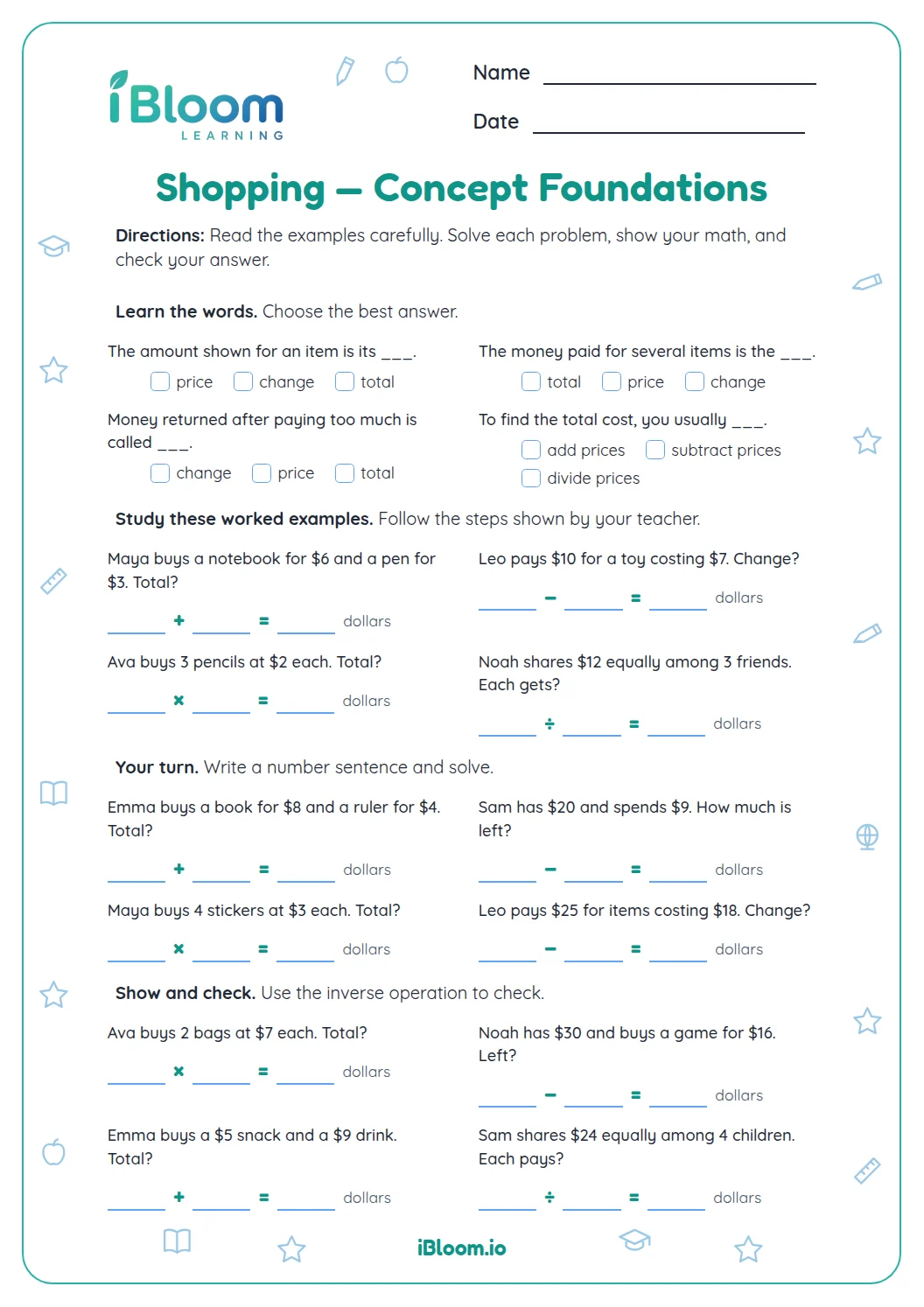
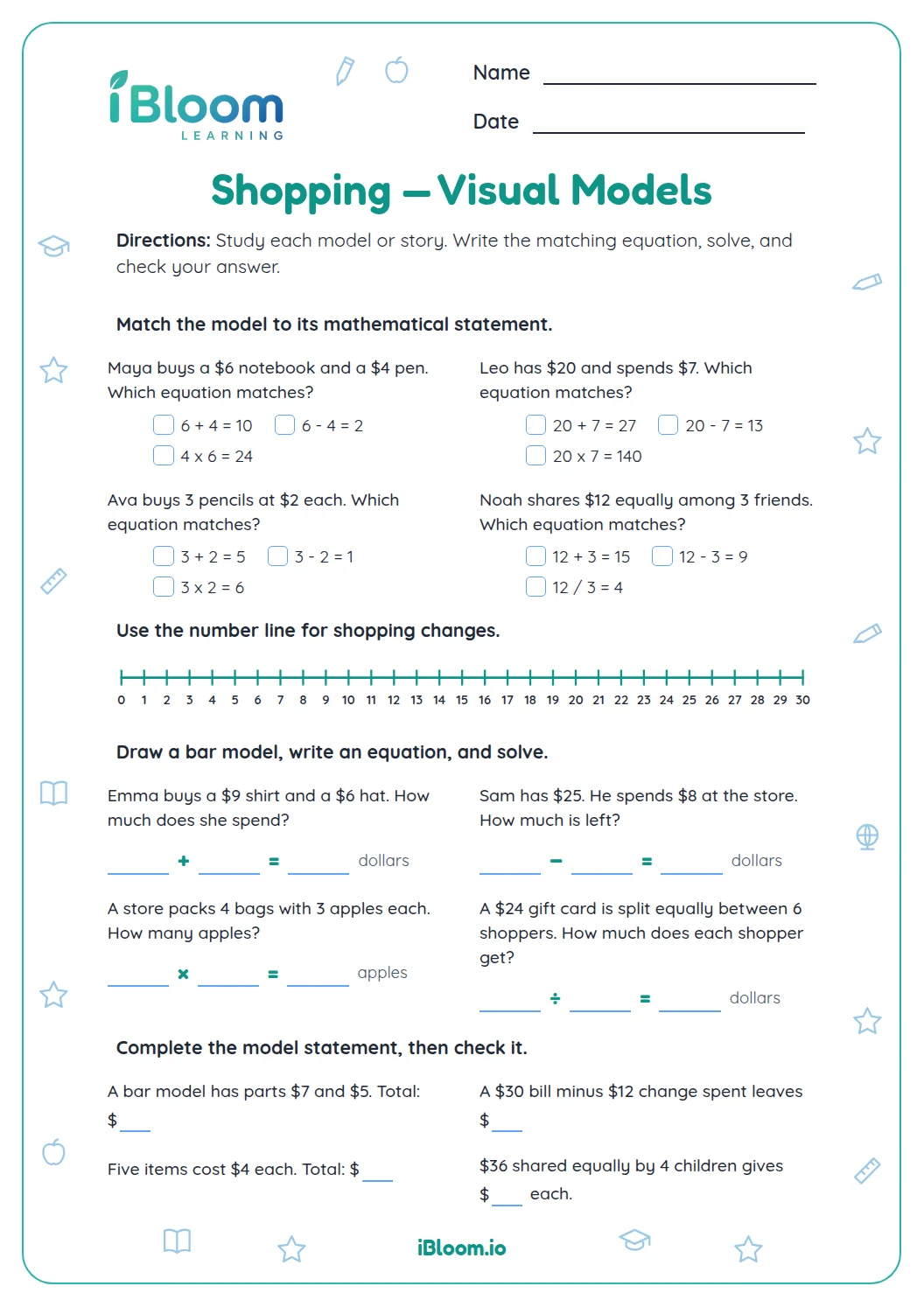
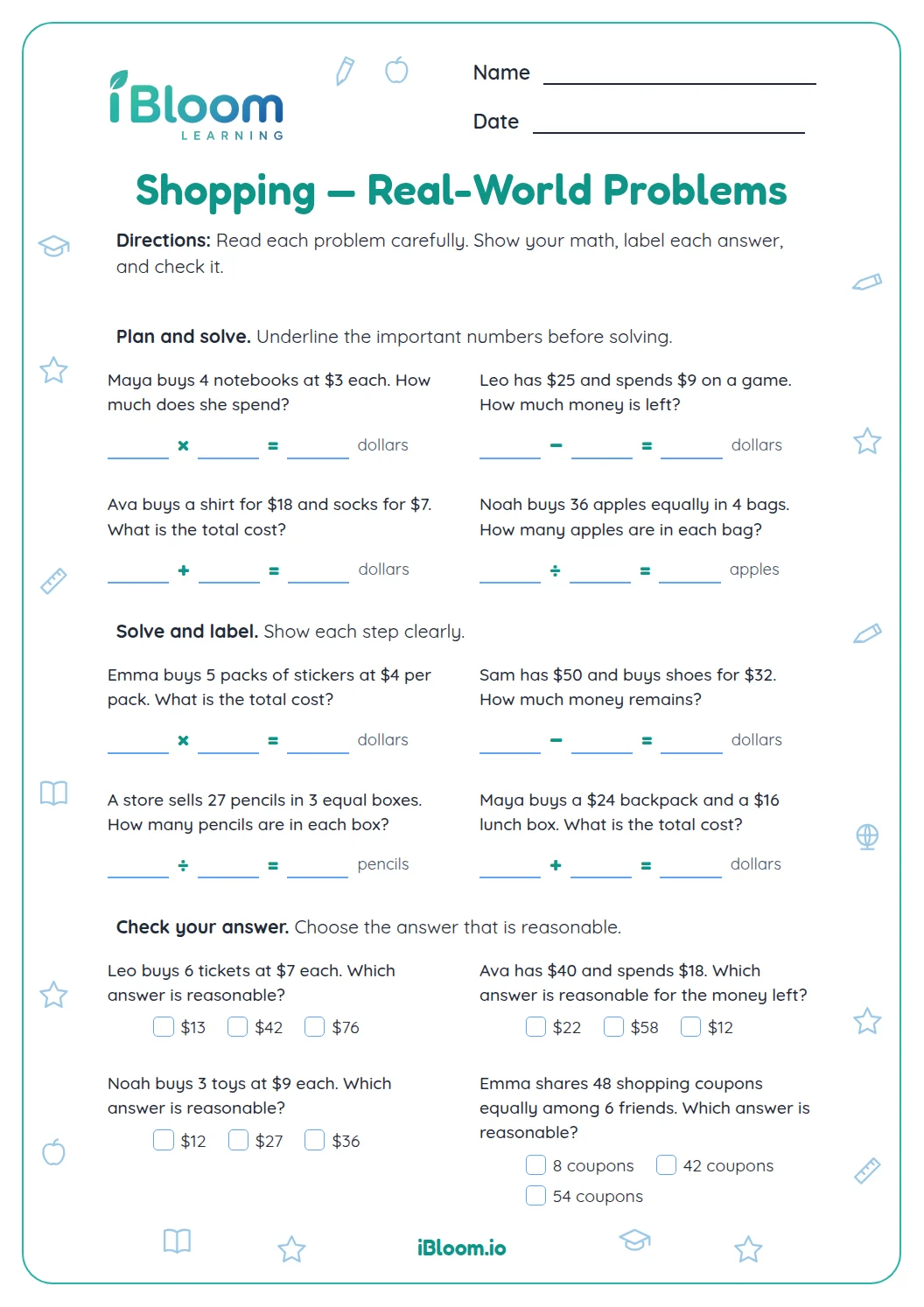
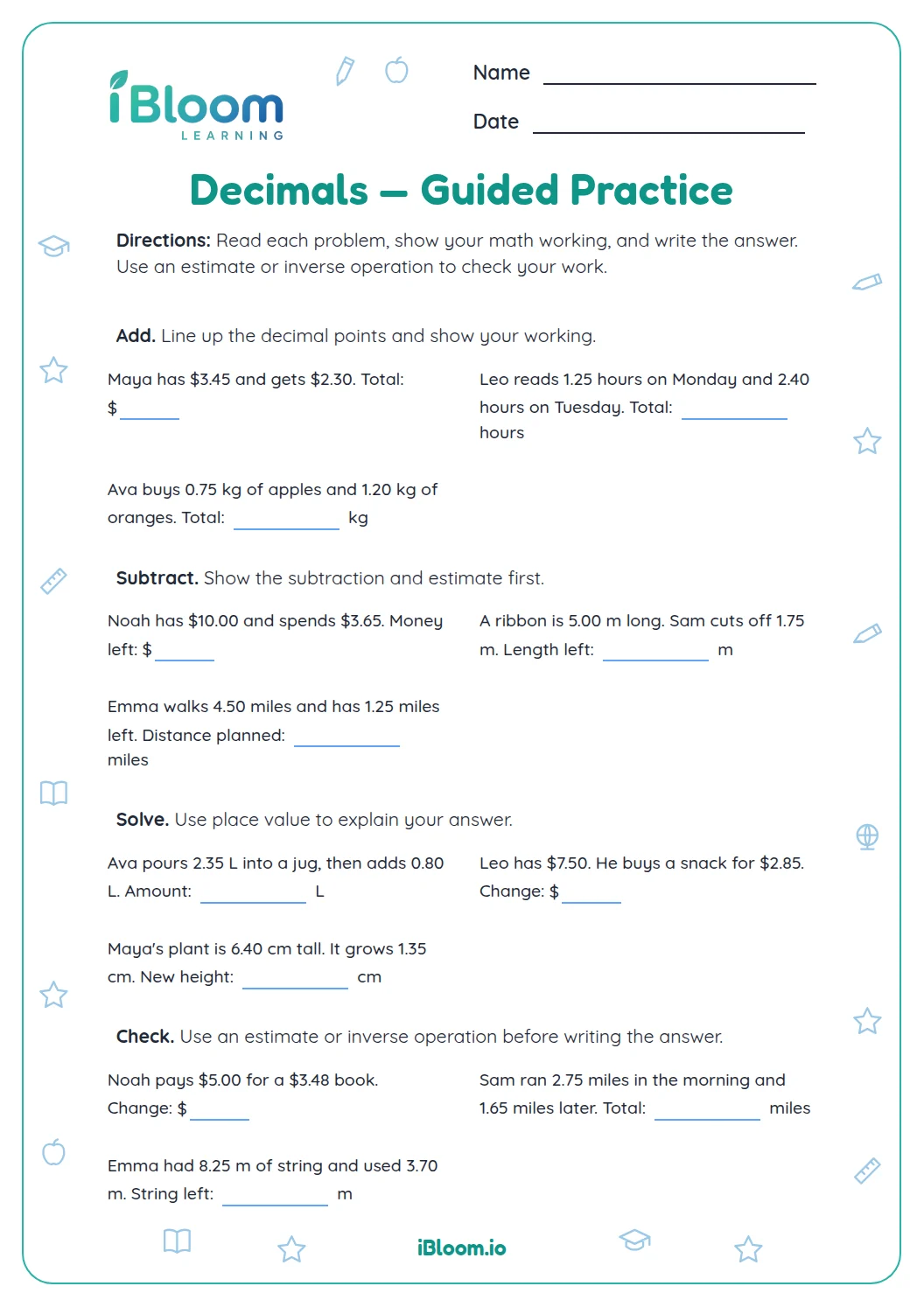
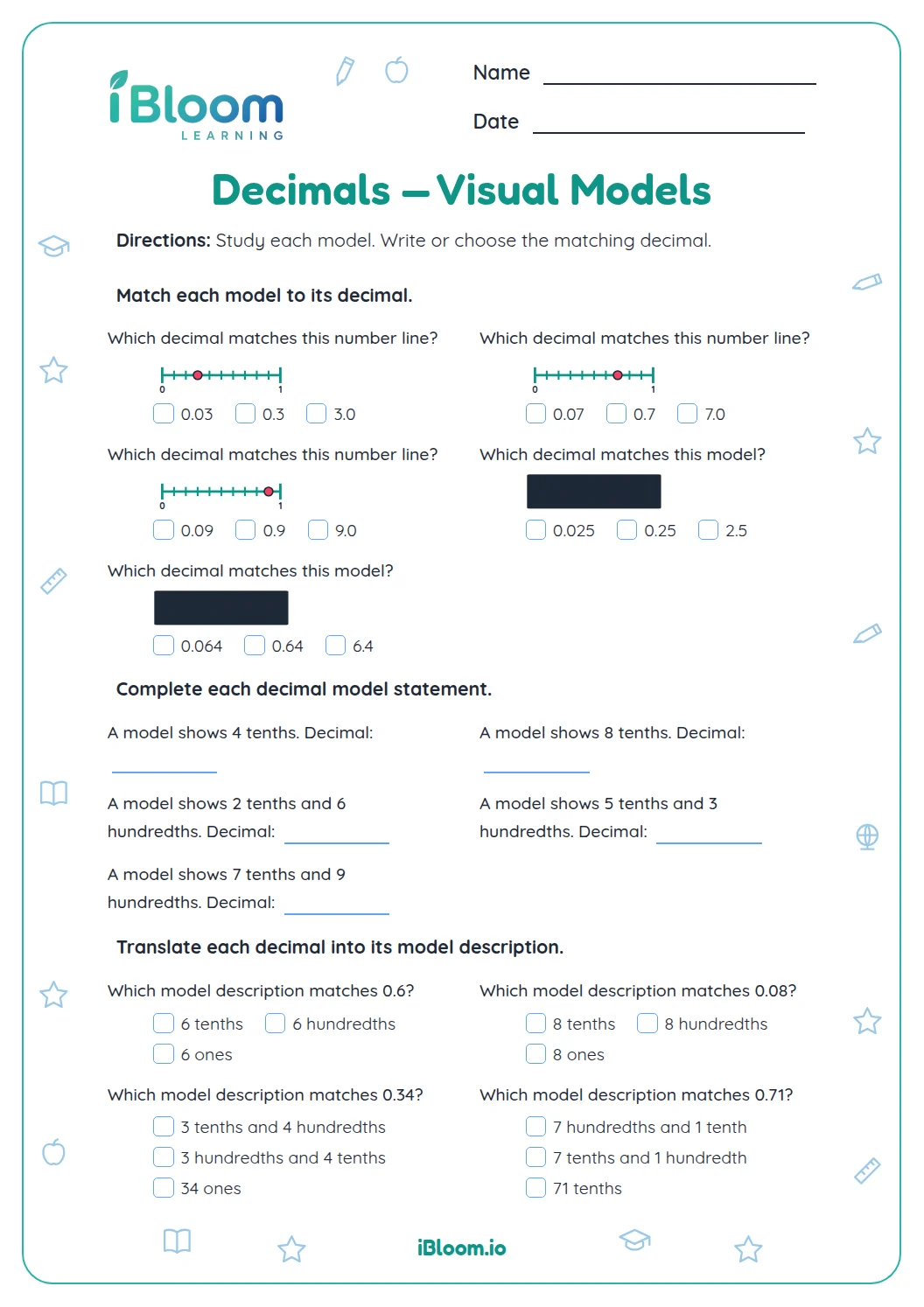
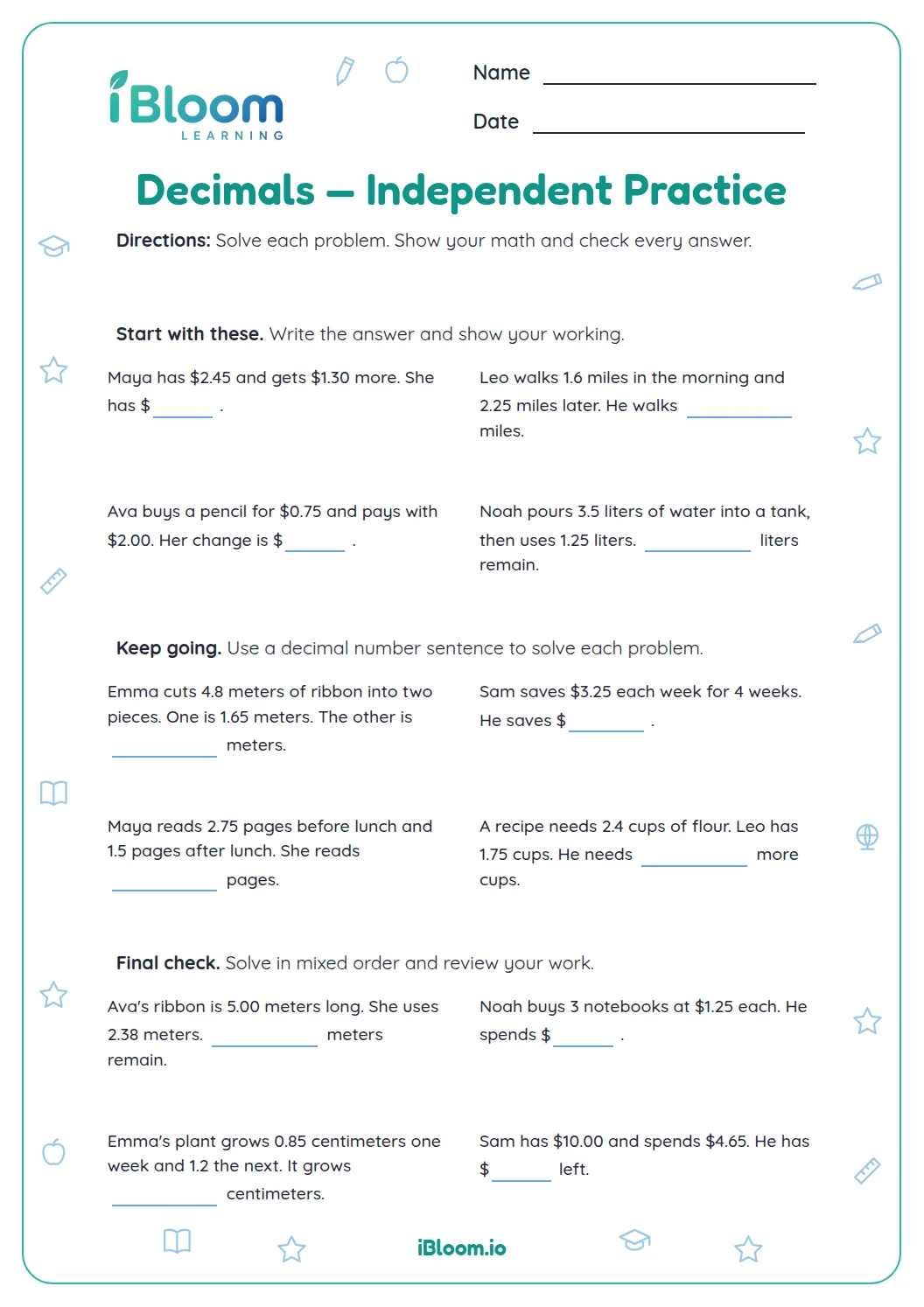
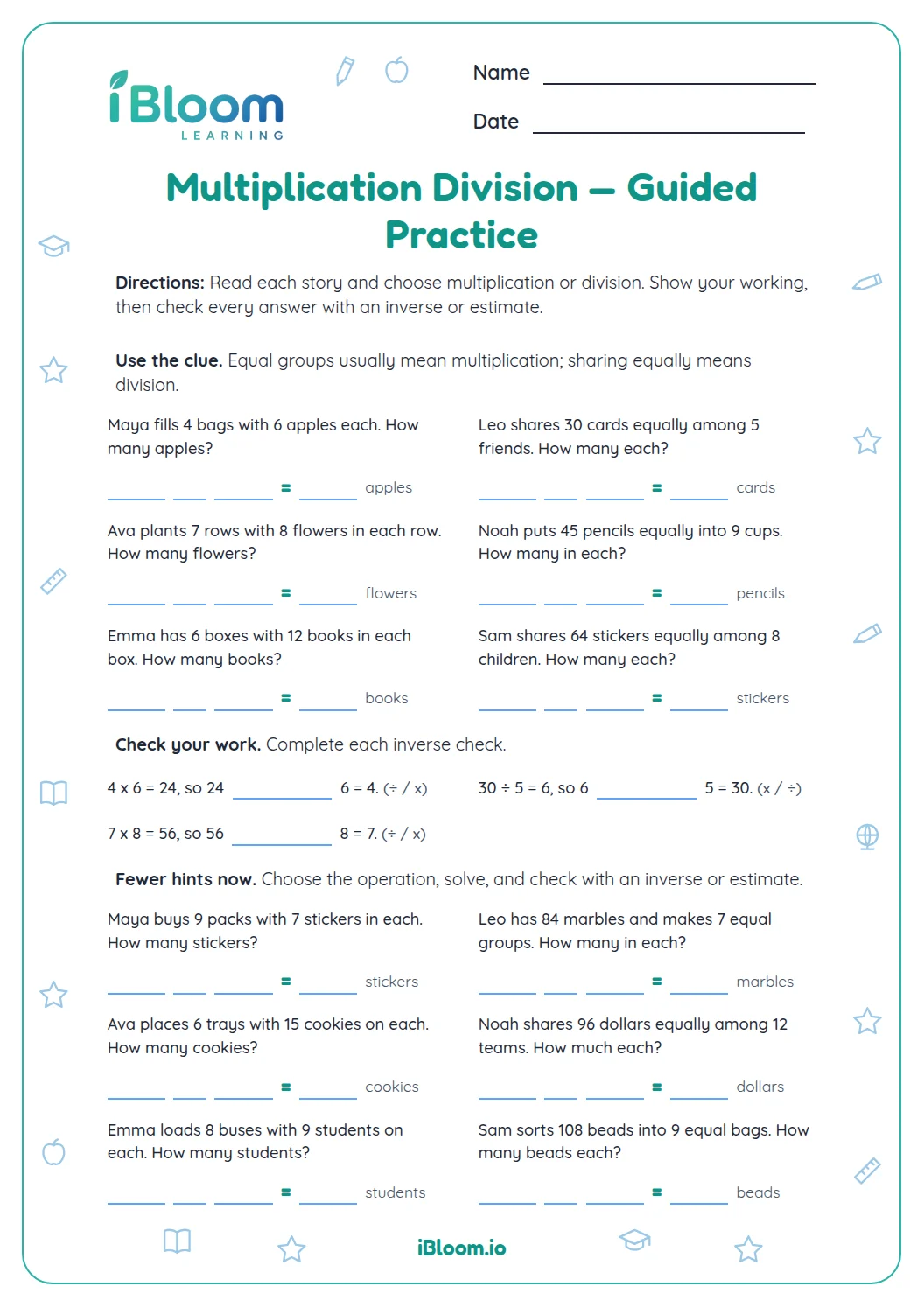
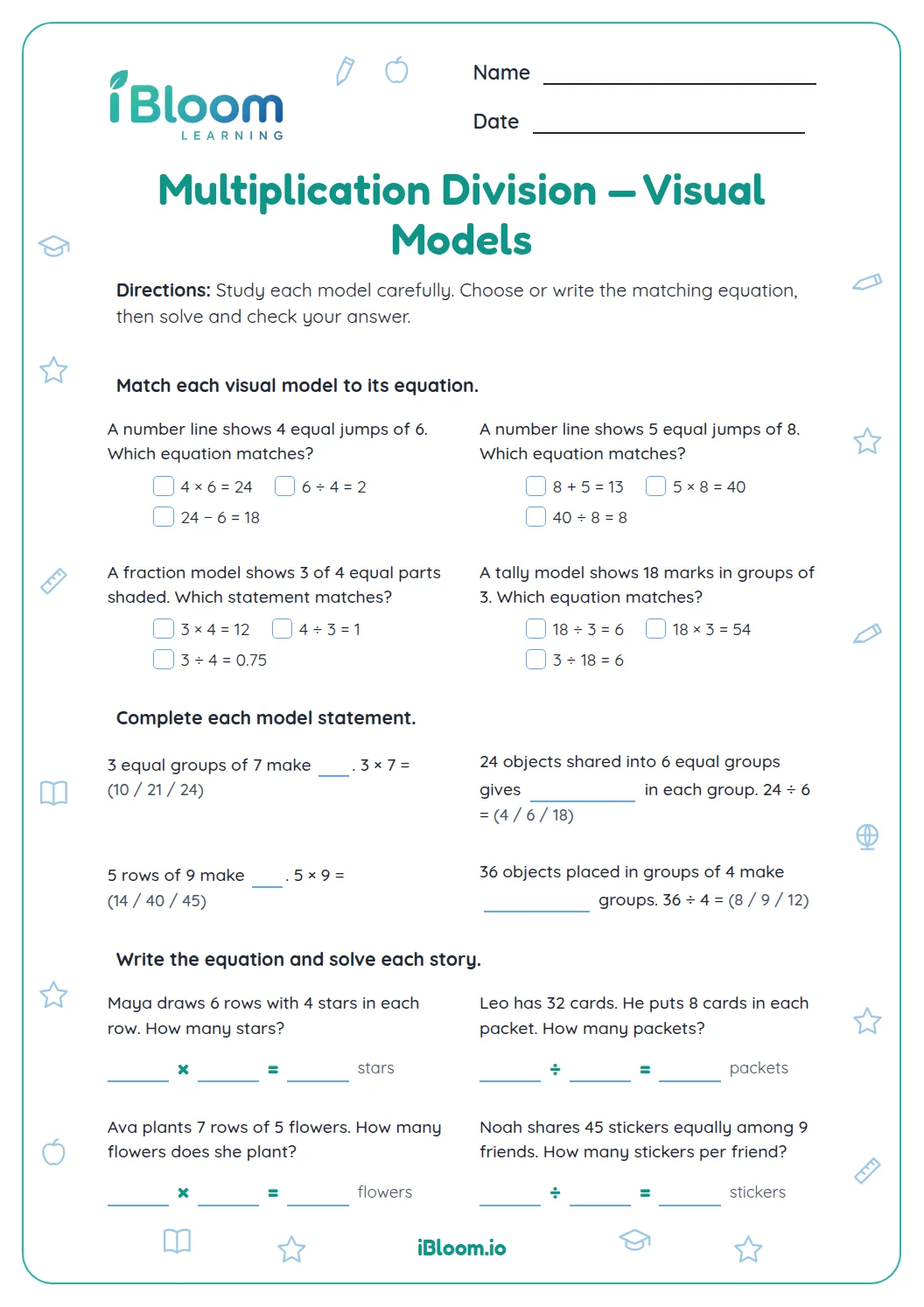
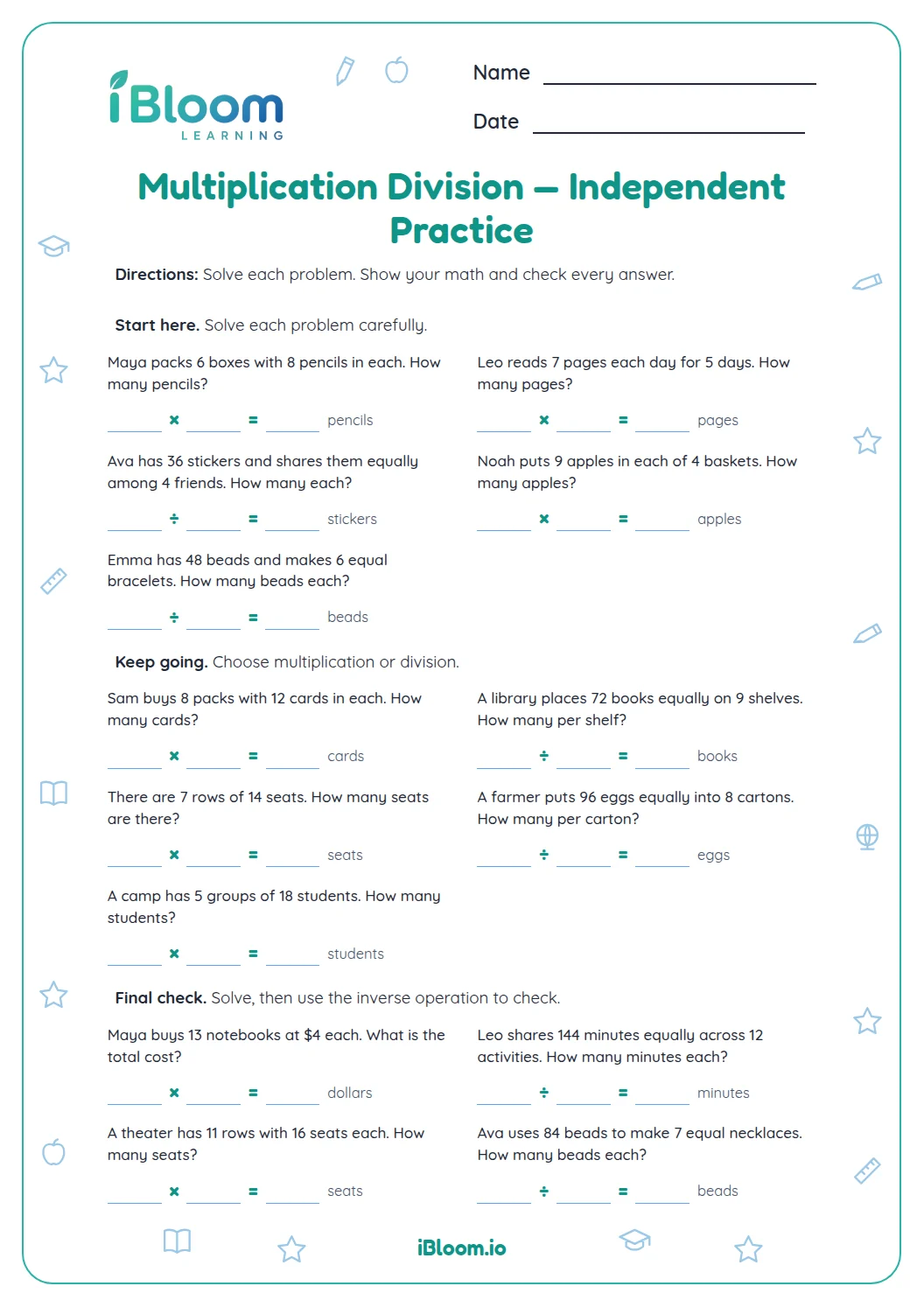
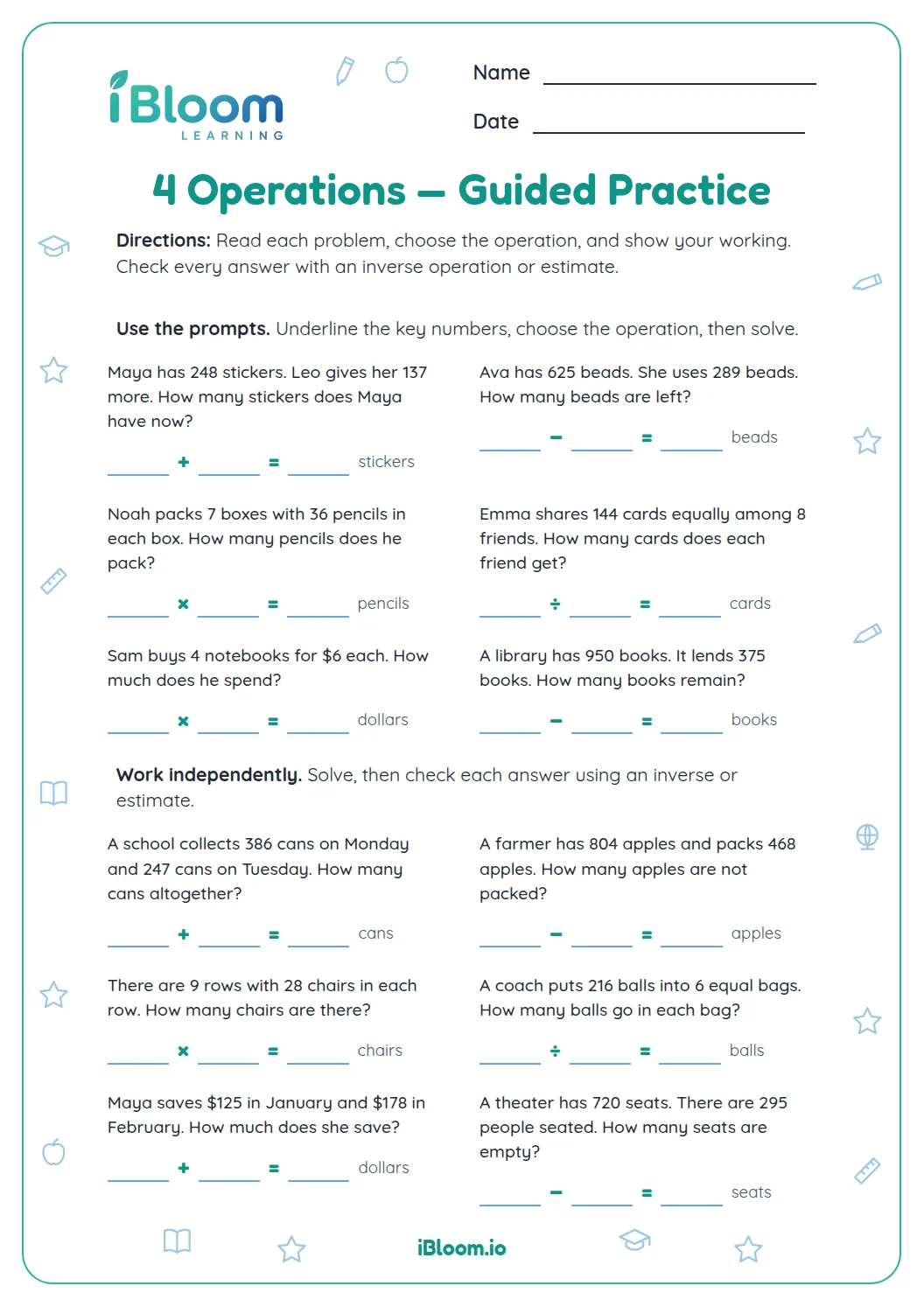
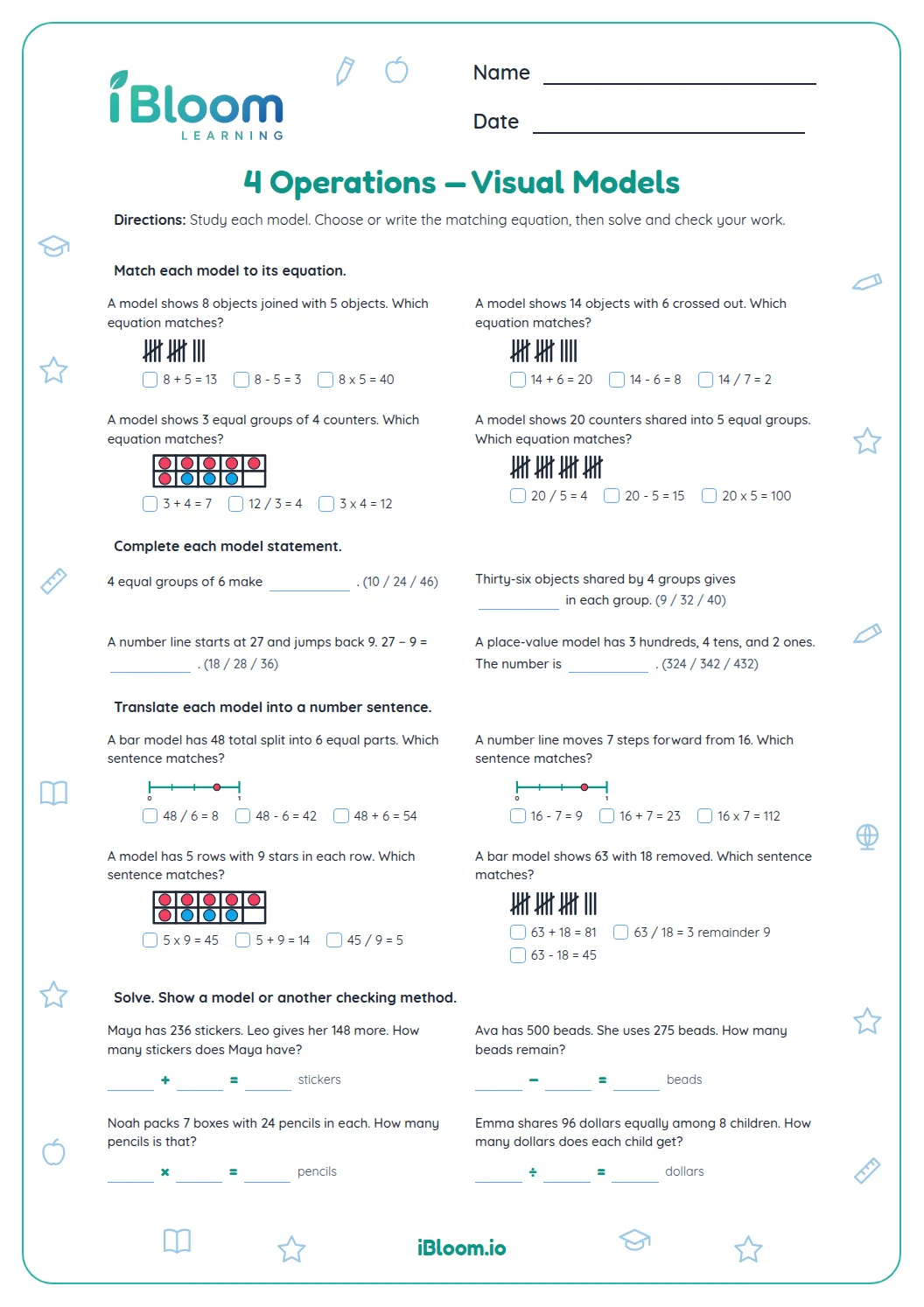
This Grade 4 printable builds a routine for solving shopping word problems with money amounts to hundredths. The 16 problems ask students to add prices, find change, compare costs, and divide equal totals into unit prices, practicing CCSS 4.MD.A.2. Students write equations and show their work, with a separate answer key. The examples use familiar store purchases and amounts that produce exact cent answers.
Aligned to 4.MD.A.2
How do you choose an operation?
First decide what the unknown amount represents. “Altogether” asks for a total, “change” asks for the amount left after payment, and “how much more” compares two prices. Equal groups can call for multiplication or division.
Question 1 asks for the combined cost of a notebook and folder, so add $3.25 and $1.40.
- 1$3.25 + $1.40 = $4.65
- 2The question asks for the total, so addition fits.
- 3Check: $4.65 is greater than either price.
How do you keep decimal prices lined up?
Write dollars and cents with the decimal points in one column. Add or subtract hundredths just as you would with whole numbers, then keep the decimal point in the answer. For change, subtract the cost from the amount paid.
What situations appear on the sheet?
Part A has eight guided word problems. Part B adds eight problems with similar prices and a mix of operations. Students write an equation for each one.
- Totals for several items or equal-price packs
- Change after paying with a larger amount
- Comparing prices and finding a unit cost
- A separate answer key
A repeatable way to solve each story
- 1Read the question twice and name the amount you need to find.
- 2Mark the prices and quantities that matter.
- 3Choose addition, subtraction, multiplication, or division from the relationship.
- 4Write an equation before calculating.
- 5Line up decimal points for money calculations.
- 6Check the amount against the story and include the dollar sign.
Common money problem mistakes
The mistake
Adding the payment and price when the problem asks for change.
The fix
Use amount paid minus total cost.
The mistake
Ignoring the number of identical items and using one item’s price as the total.
The fix
Multiply the unit price by the quantity.
The mistake
Misaligning decimal points when adding prices.
The fix
Stack dollars over dollars and cents over cents.
Common Core alignment
This page uses money stories to practice multistep problem solving and decimal calculations.
Use four operations to solve money word problems, including decimal amounts.
On this sheet: The shopping stories use addition, subtraction, multiplication, and division with money amounts in decimal notation.
Show the official wordingHide the official wording
Use the four operations to solve word problems involving distances, intervals of time, liquid volumes, masses of objects, and money, including problems involving simple fractions or decimals, and problems that require expressing measurements given in a larger unit in terms of a smaller unit. Represent measurement quantities using diagrams such as number line diagrams that feature a measurement scale.
What to practice next
Make more practice
Further reading
Questions parents and teachers ask
Which operations does this shopping sheet use?
The stories use addition for totals, subtraction for change or price differences, and multiplication or division for equal groups and unit prices. Students write an equation and solve each situation. Which operation fits a story depends on what amount the question asks them to find.
How should students line up decimal prices?
Write each amount with the decimal points in a vertical line. This keeps dollars, tenths, and hundredths in matching place-value columns during addition or subtraction. How might you check whether the final amount makes sense in the shopping story?
What is the answer to the notebook and folder problem?
The notebook costs $3.25 and the folder costs $1.40, so add the prices: $3.25 + $1.40 = $4.65. The sum is greater than either item price, which is a sensible check for a total. Students can use the same equation-first routine on the other problems.
Why do some problems ask for one item’s price?
Several stories give a total cost for identical items and ask for one item’s price. Divide the total by the number of items; for example, $2.70 split among three markers is $0.90 each. What quantity tells you how many equal parts to use?
How many problems are included?
There are 16 shopping word problems in two parts of eight. Part A includes guided totals, change, and unit-price examples; Part B mixes similar money situations. Each problem has working space for an equation and calculation. Students can pause after each part and check their equations before moving on.
Does the printable have an answer key?
Yes. A separate key page lists the answer to each story. Students can compare the final dollar amount after showing their equation and calculation, then return to the story if their result does not fit the situation. Encourage students to show their calculations so they can find and correct a decimal-place error.