

About this worksheet
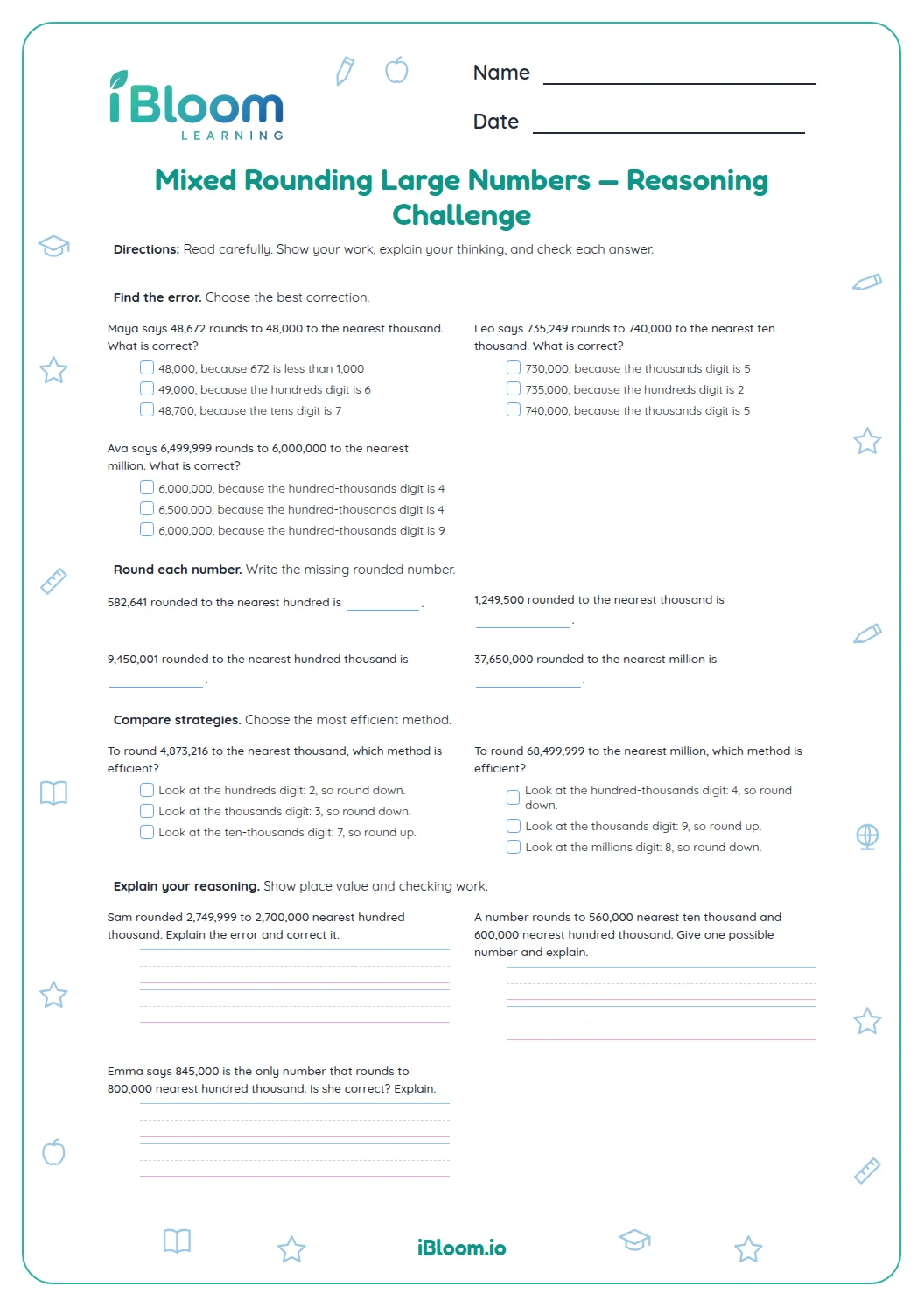
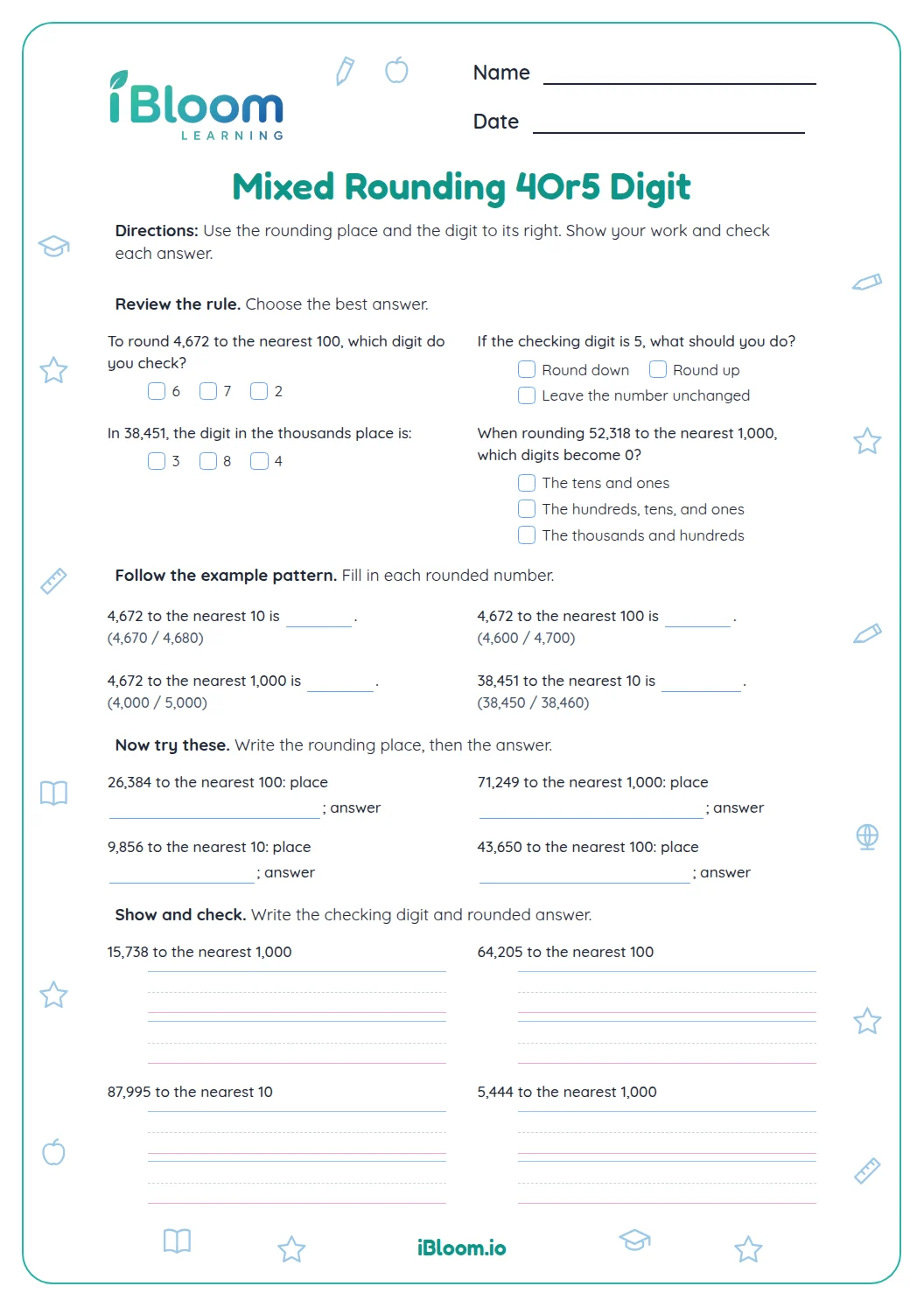
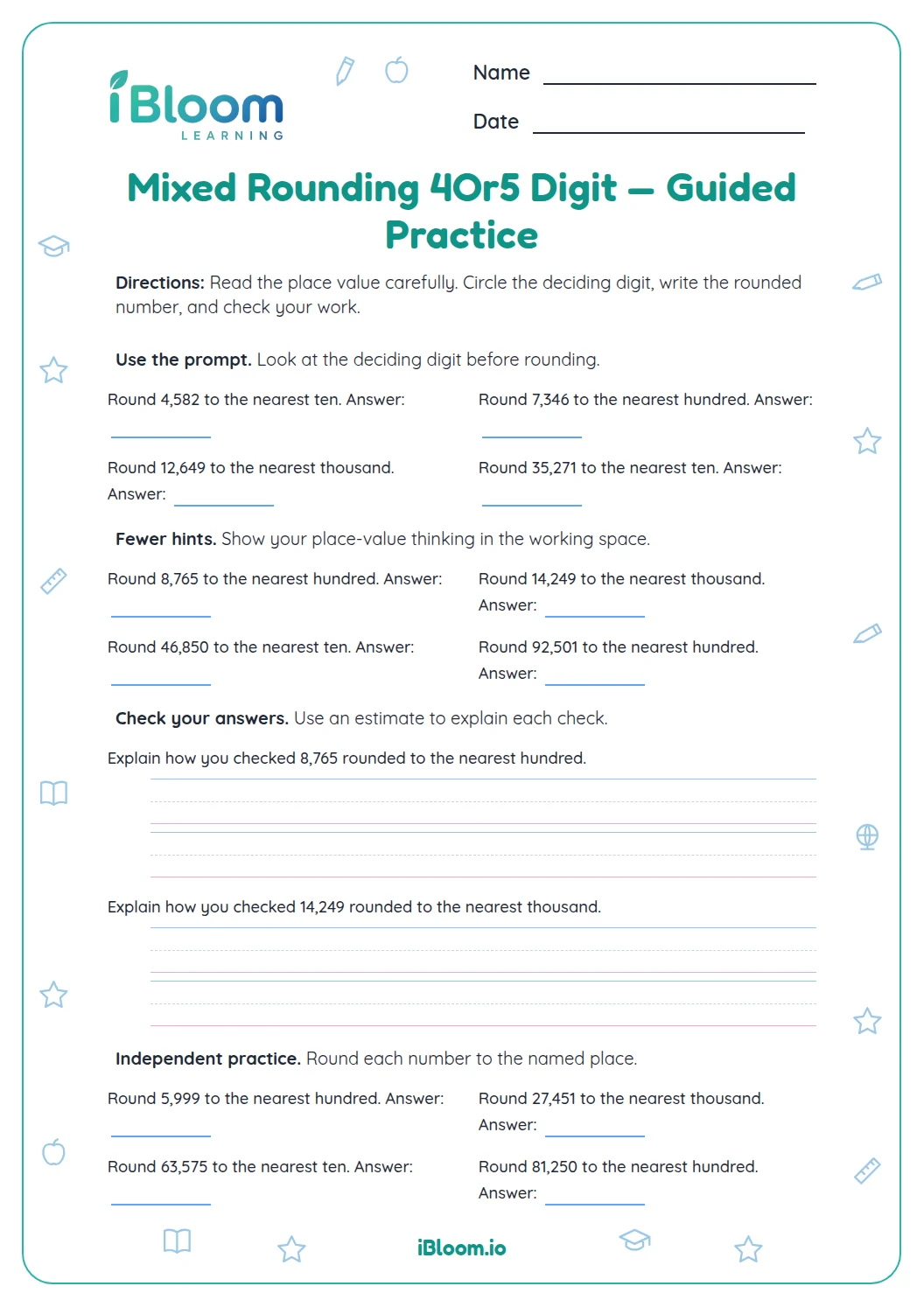
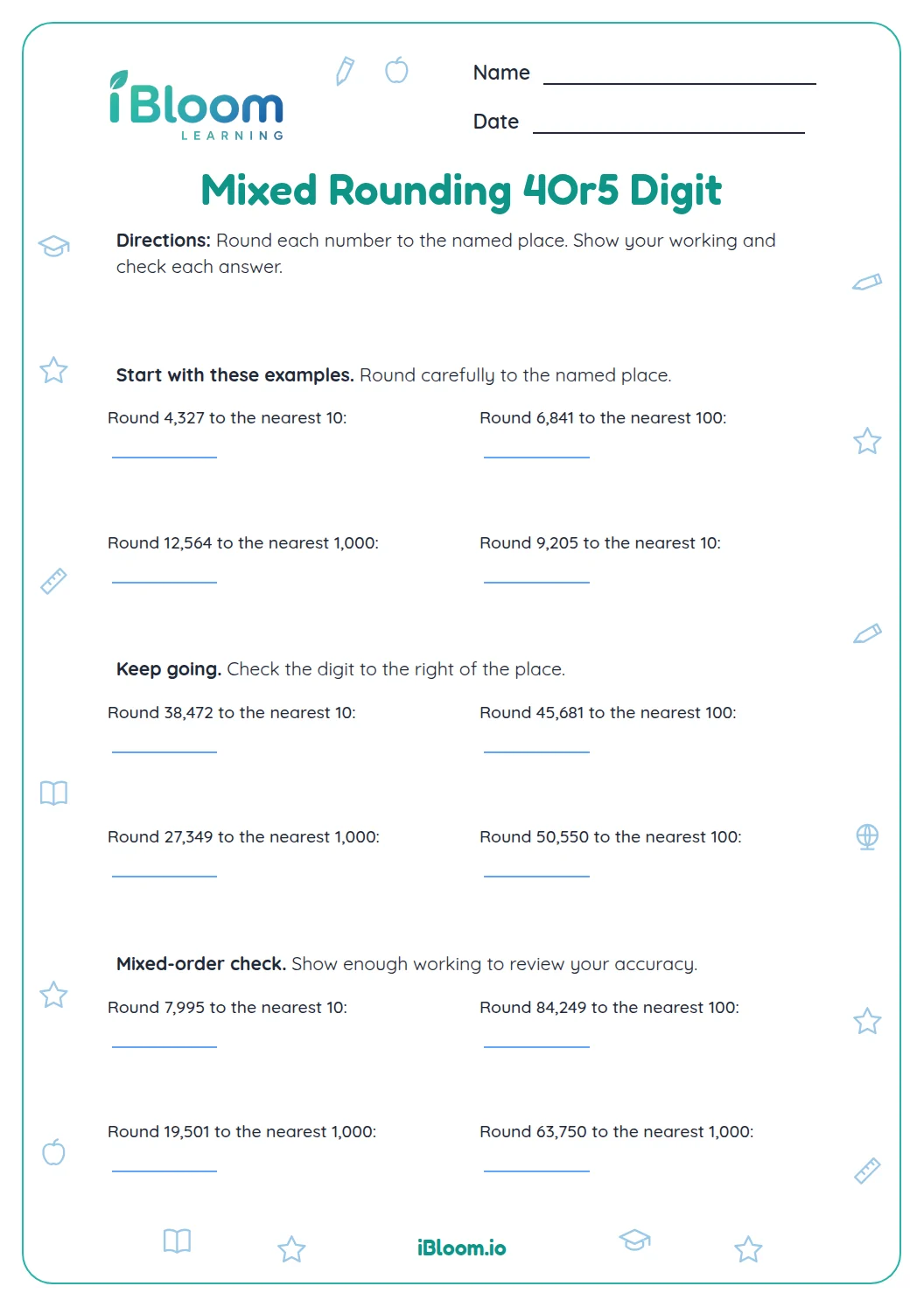
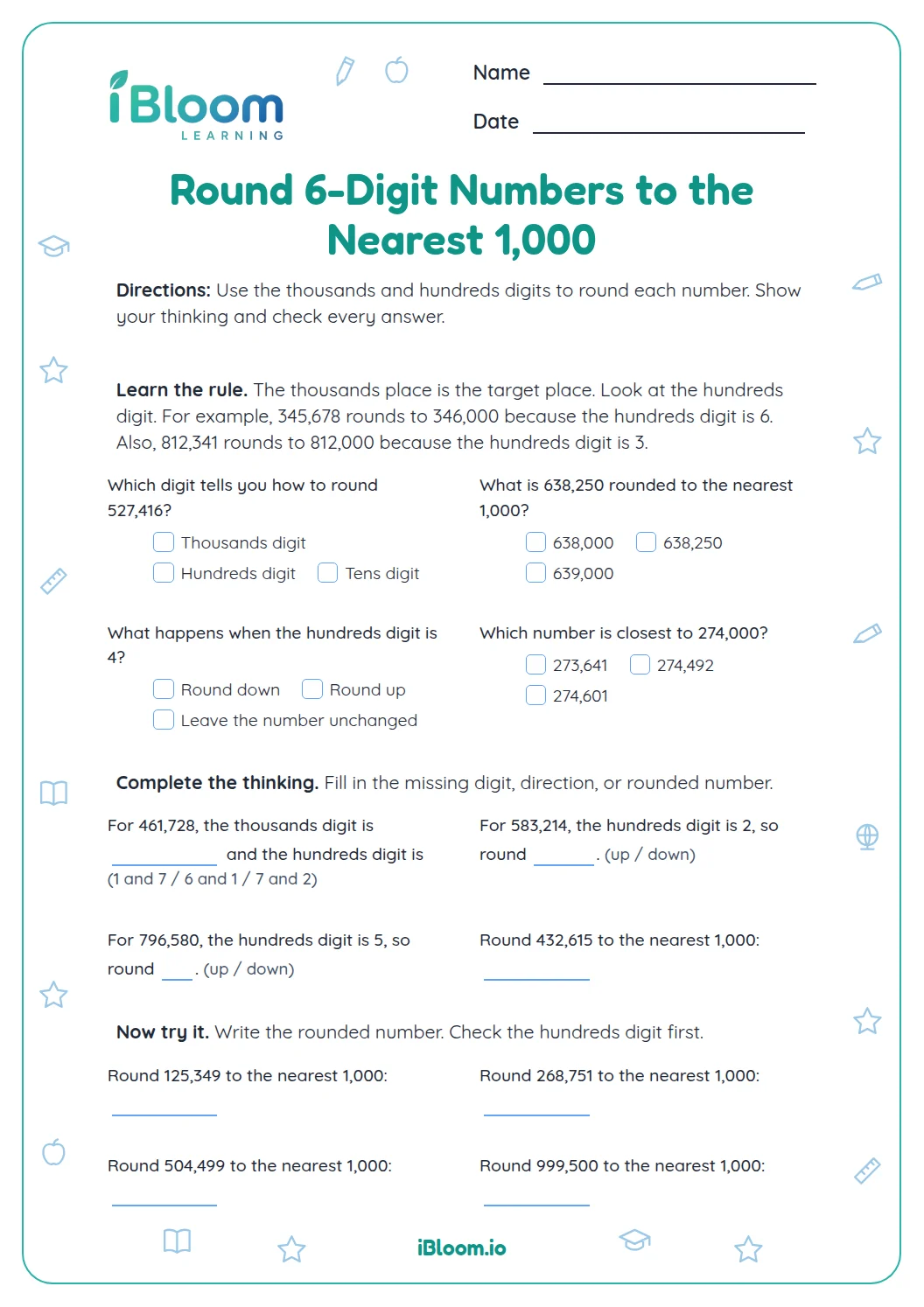
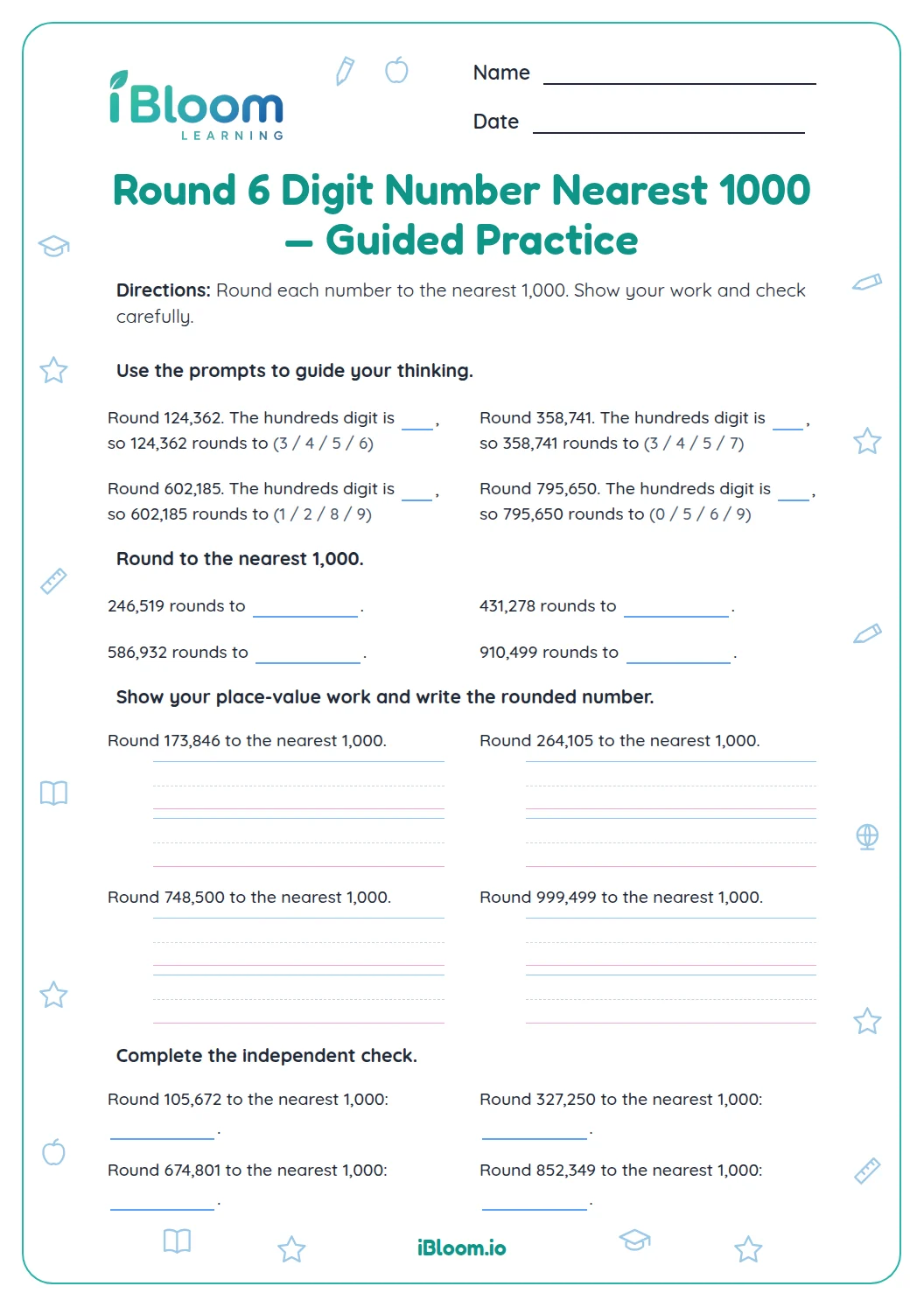
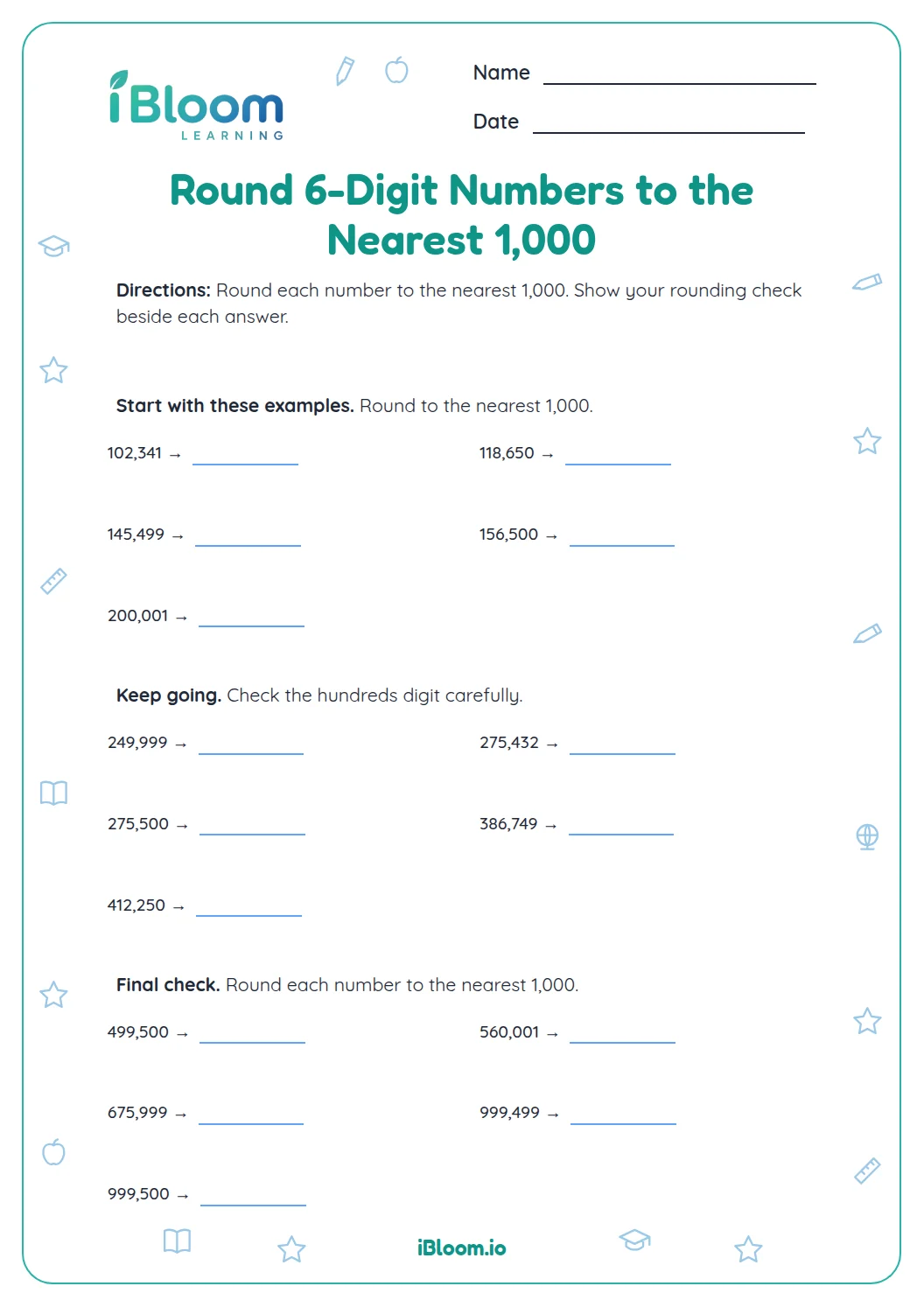
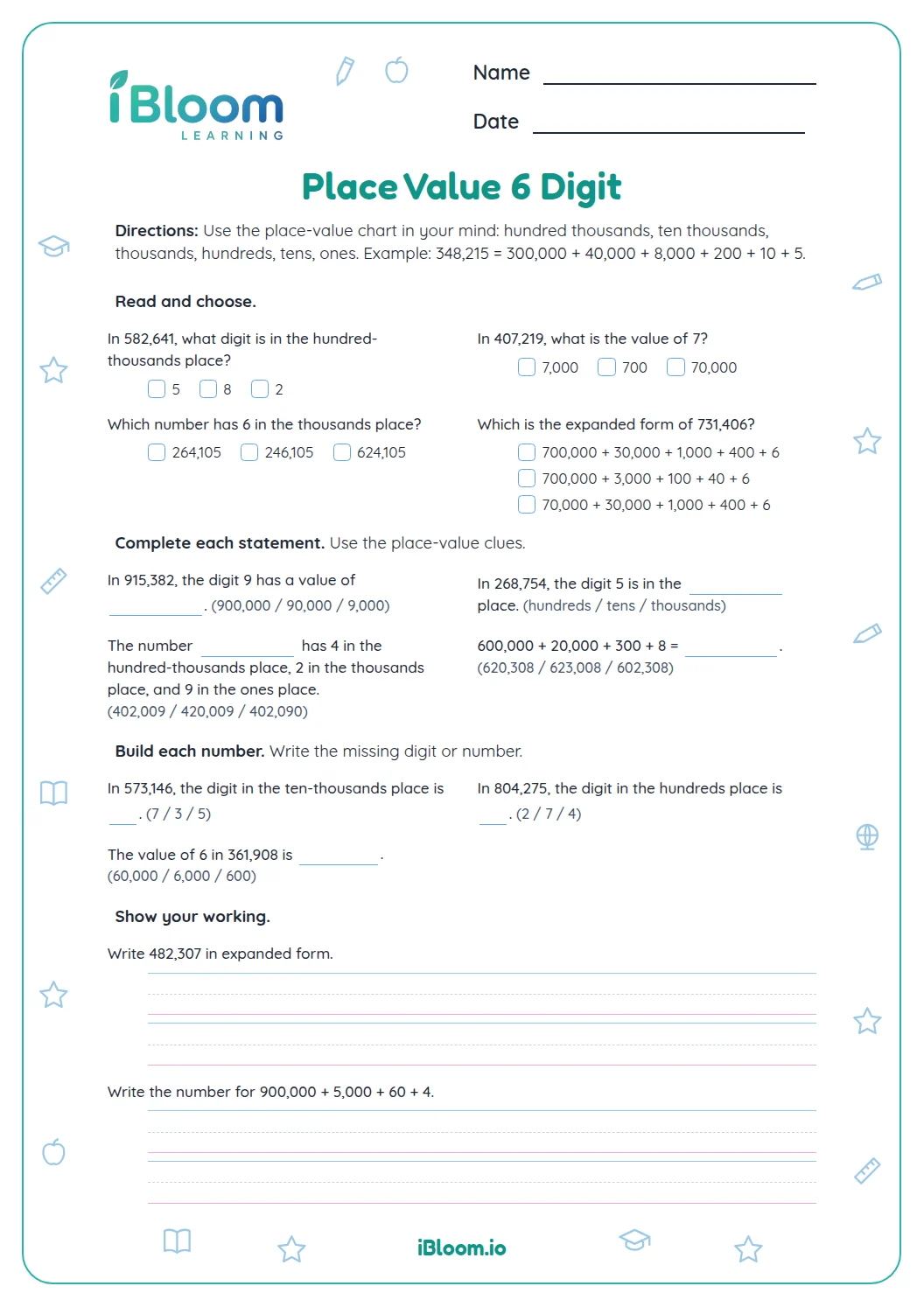
This Grade 5 printable begins by asking students to name digit places, then moves into rounding whole numbers from tens through millions. Four short contexts give students a chance to use the same rule with visitor, book, ride, and attendance totals. There are 14 questions across three parts, with a separate answer key. The rounding practice aligns with CCSS 4.NBT.A.3.
Aligned to 4.NBT.A.3
What will students practice in each part?
The first three questions identify a digit’s place. Students then round numbers to different places and use the same process on four short real-world totals.
- Part A: identify three digit places.
- Part B: round seven numbers from tens through millions.
- Part C: round four real-world totals.
How does the rounding rule work?
Locate the requested place and inspect the digit immediately to its right. A 5–9 raises the requested digit by one; a 0–4 leaves it as it is. Digits to the right become zeros.
- 1Question 4: 48,372 to the nearest hundred
- 2The tens digit is 7, so increase the hundreds digit from 3 to 4.
- 3Answer: 48,400
How can students avoid rounding to the wrong place?
Underline the place named in the question before deciding. Then check that all digits to the right of that place are zeros in the result.
How does rounding help with large totals?
A rounded count is an estimate at a useful scale. For example, question 11 rounds 138,672 visitors to the nearest ten thousand, giving 140,000.
How to use this worksheet
- 1Read each number from right to left when identifying a digit’s place.
- 2For each rounding question, mark the named place.
- 3Check the digit immediately to its right.
- 4Round up for 5–9; keep the named digit for 0–4.
- 5Replace digits to the right with zeros, then check the answer key.
Common mistakes and quick fixes
The mistake
Looking at the named digit instead of its right-hand neighbor.
The fix
Point to the named place, then move one digit right to make the decision.
The mistake
Leaving nonzero digits after the rounded place.
The fix
Write a zero in every place to the right of the requested place.
The mistake
Rounding to a nearby place word by mistake.
The fix
Underline “nearest hundred,” “nearest thousand,” or the exact place in the prompt.
Common Core alignment
Students use place value to round multi-digit whole numbers to the named place.
Round multi-digit whole numbers to the requested place using place value.
On this sheet: Questions ask students to round multi-digit whole numbers to named places.
Show the official wordingHide the official wording
Use place value understanding to round multi-digit whole numbers to any place.
What to practice next
Make more practice
Questions parents and teachers ask
How do students round a number to a named place?
Find the requested place and inspect the digit immediately to its right. For 48,372 rounded to the nearest hundred, the tens digit is 7, so the hundreds digit increases and the answer is 48,400. Then change every digit to the right of the hundreds place to zero.
Which place values appear on this page?
The questions use hundreds, thousands, ten-thousands, hundred-thousands, and millions, as well as tens in rounding practice. The first part also asks students to identify hundreds, thousands, and ten-thousands in whole numbers before rounding. These place names appear in prompts and answers.
What does the answer key include?
The separate key gives the correct place-name responses and all 11 rounded values. Students can compare the requested place and the digit they checked with each keyed result, then correct any answer that rounded to a different place. The key supports checking both the place and rounding direction.
How is rounding used in the word problems?
Each of the four short contexts gives an exact total and names a place to round to. For example, 138,672 visitors rounds to 140,000 to the nearest ten thousand. Students use the same rounding steps as in the number questions.
Can students use this after learning the rounding rule?
Yes. The sequence starts with place-value identification, continues with direct rounding, and ends with four applications. Students can work through the parts in order, then use the separate key to check each place and result. The final contexts name the requested place.