




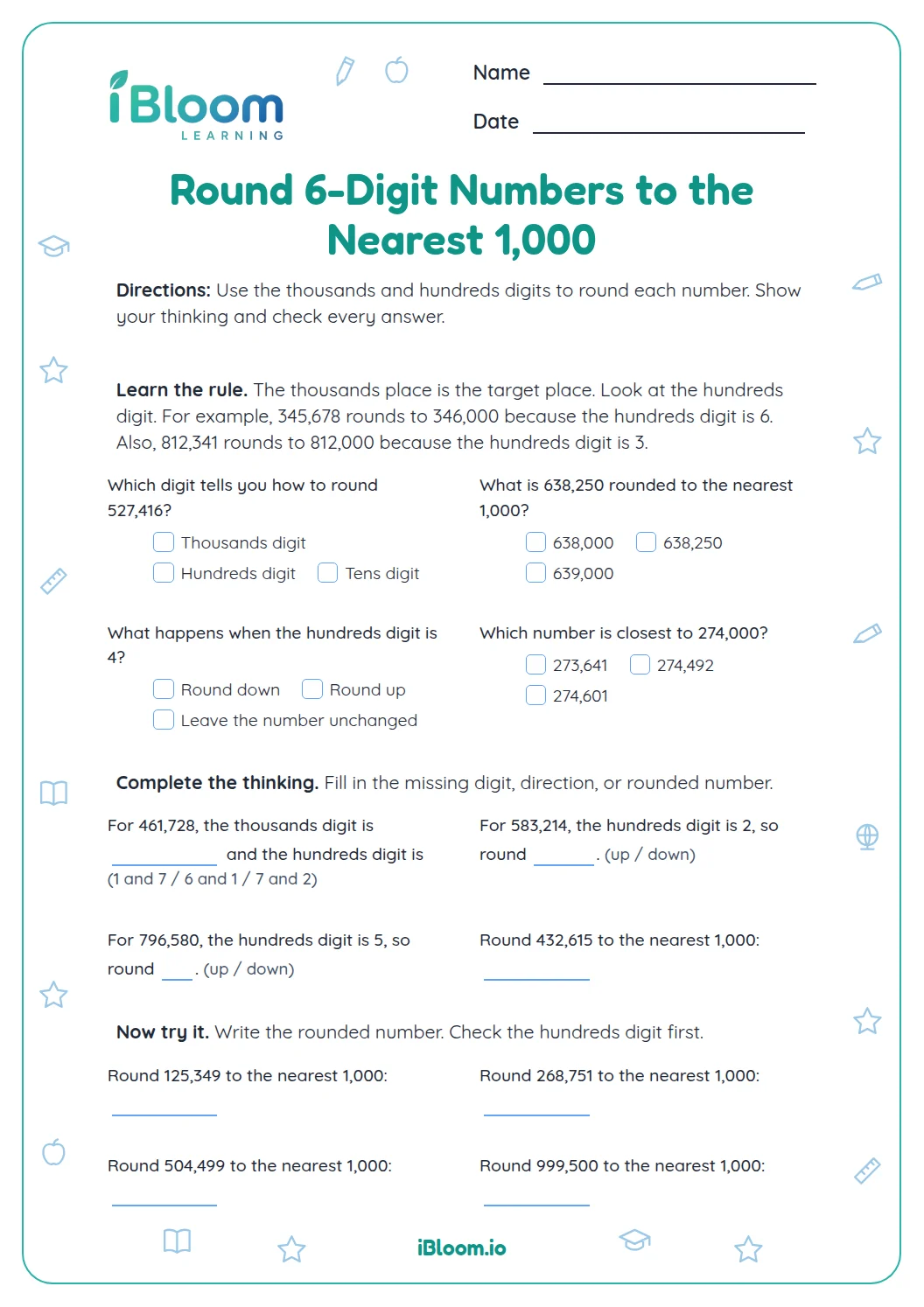
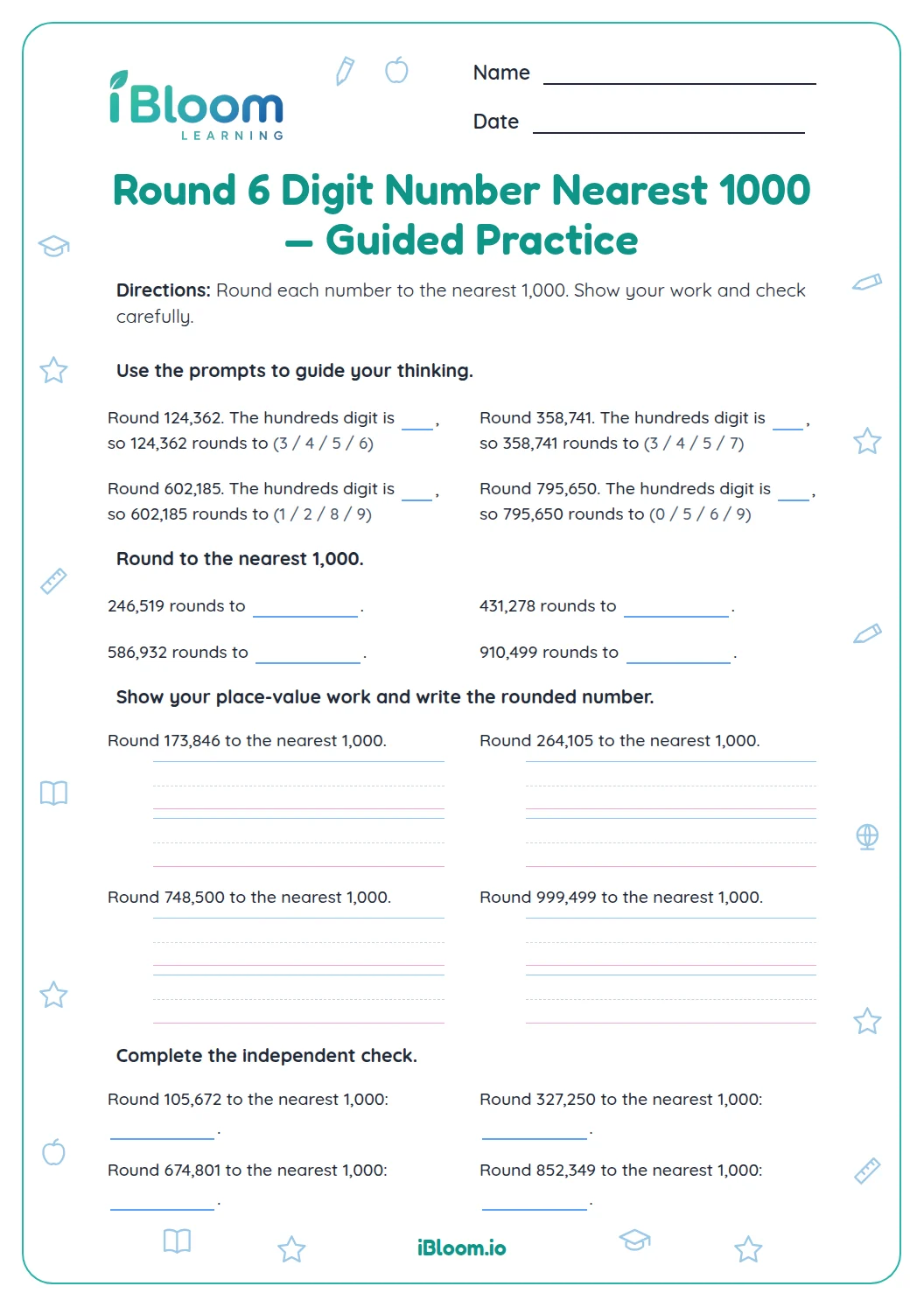
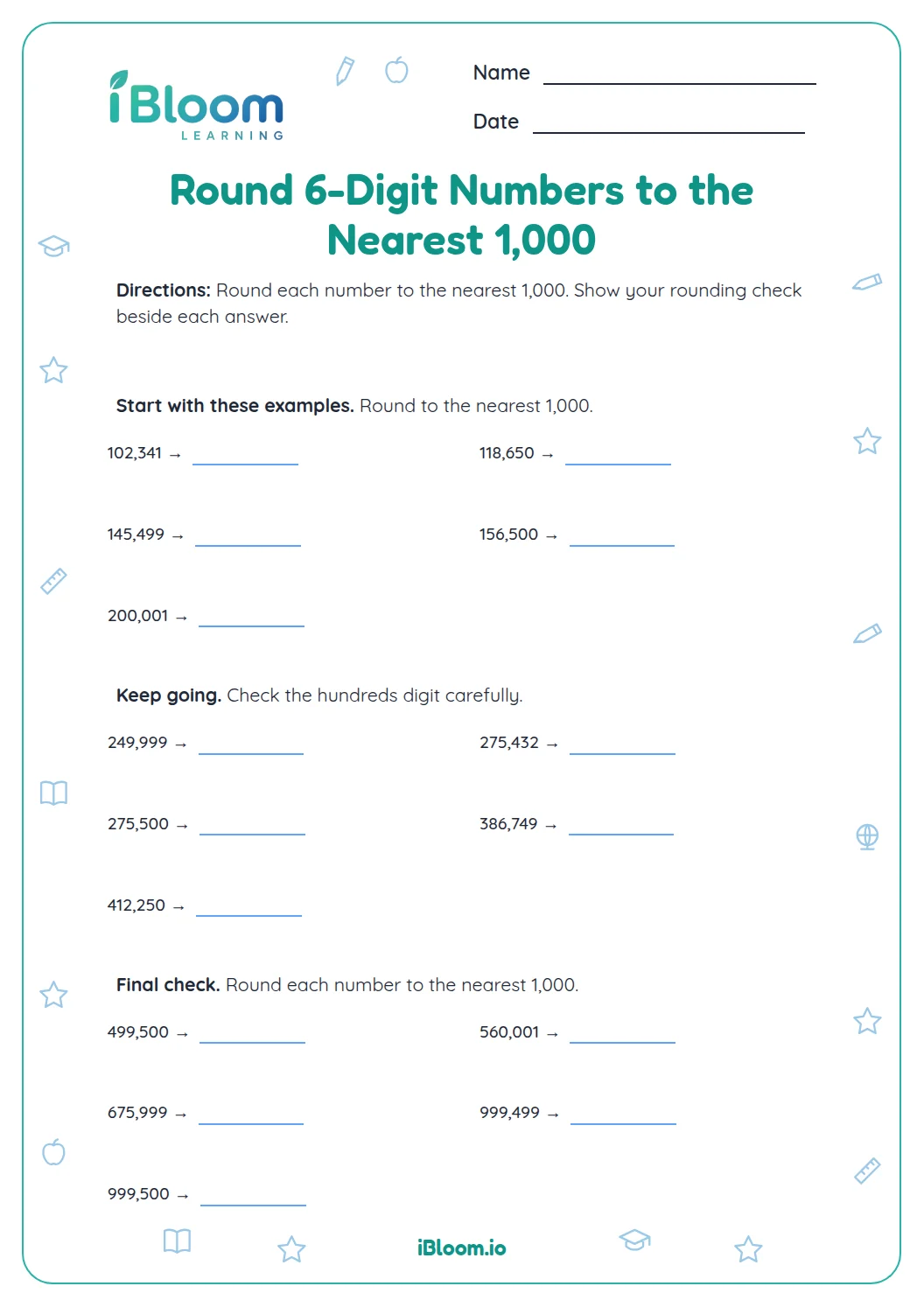
About this worksheet
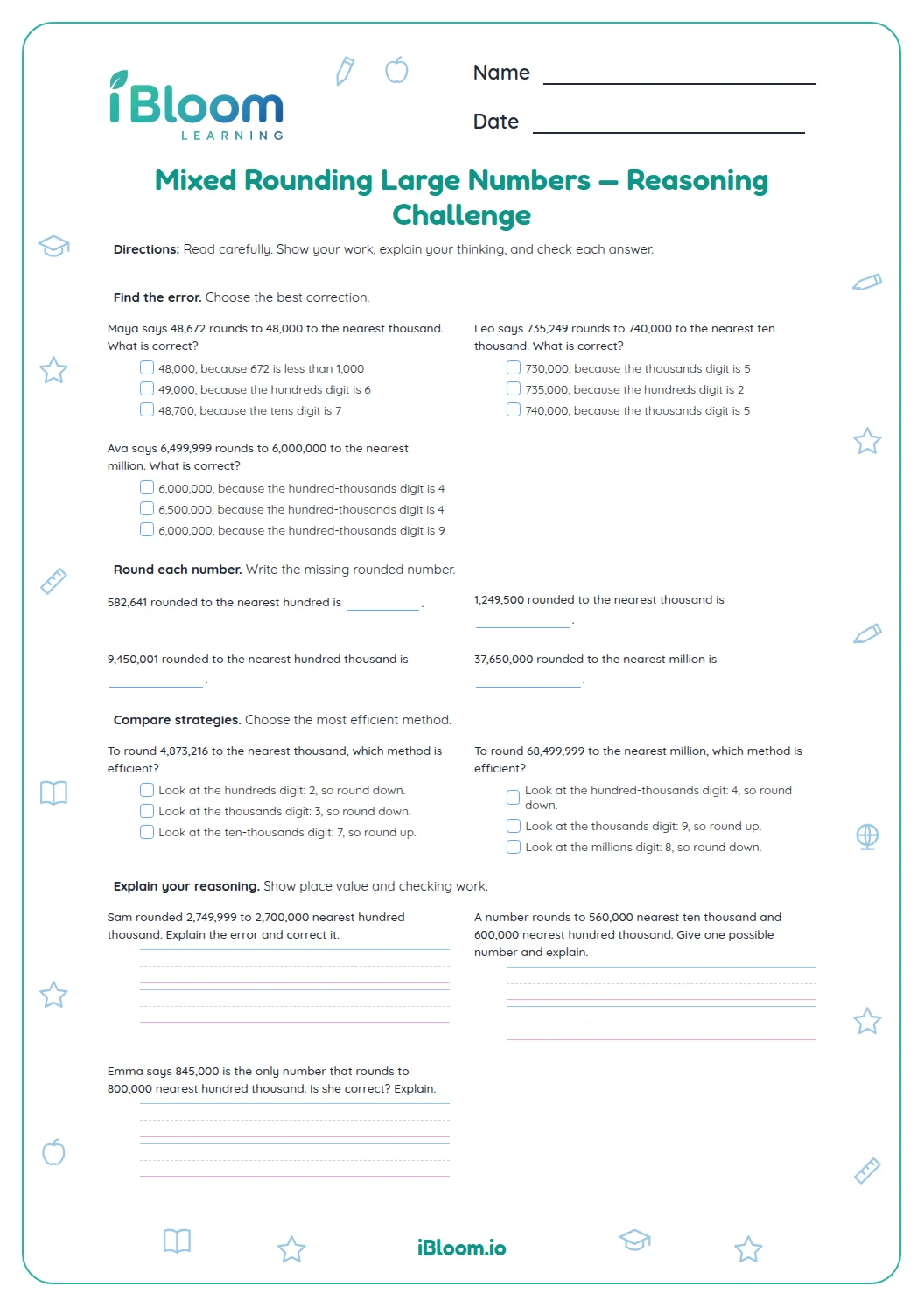
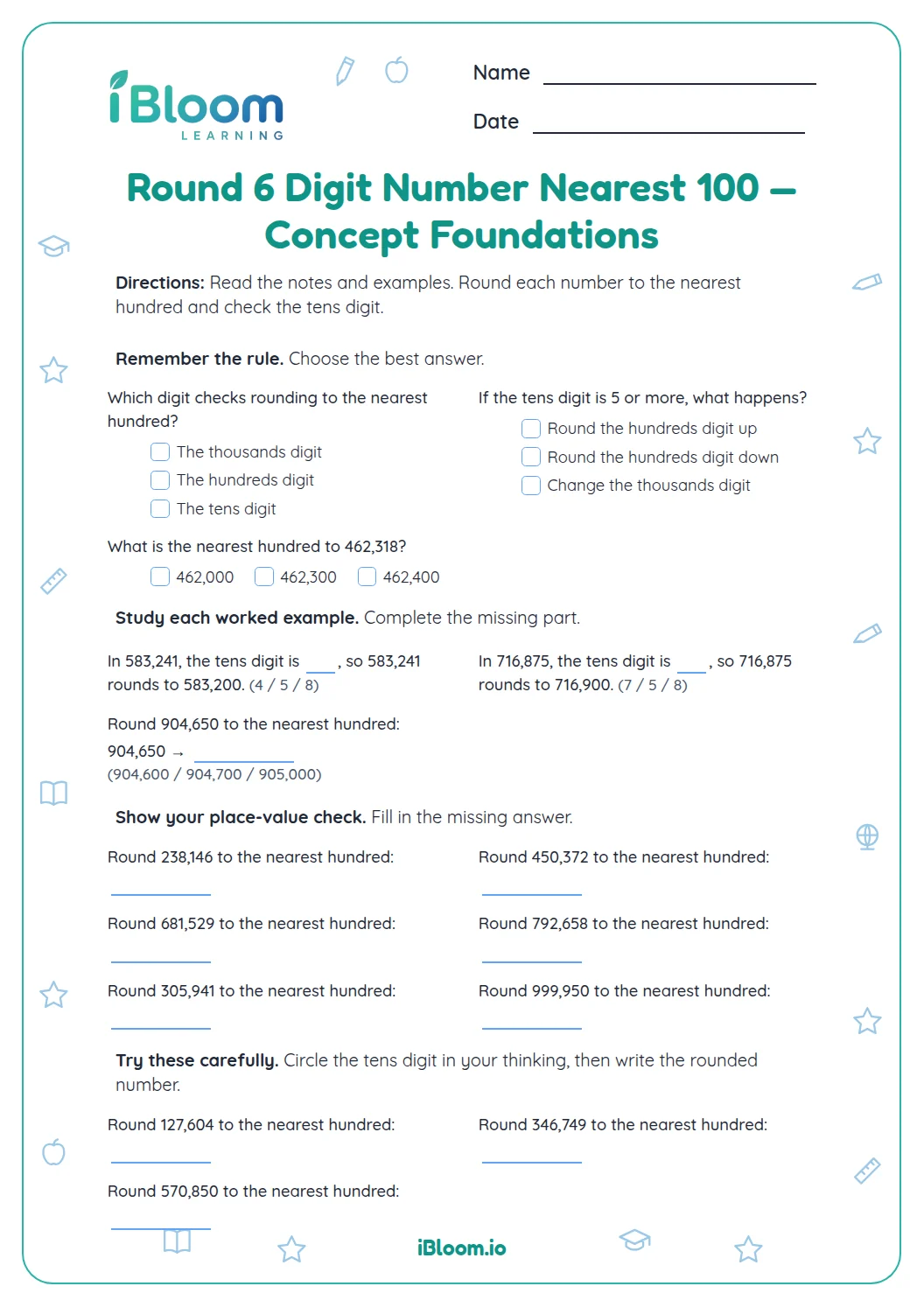
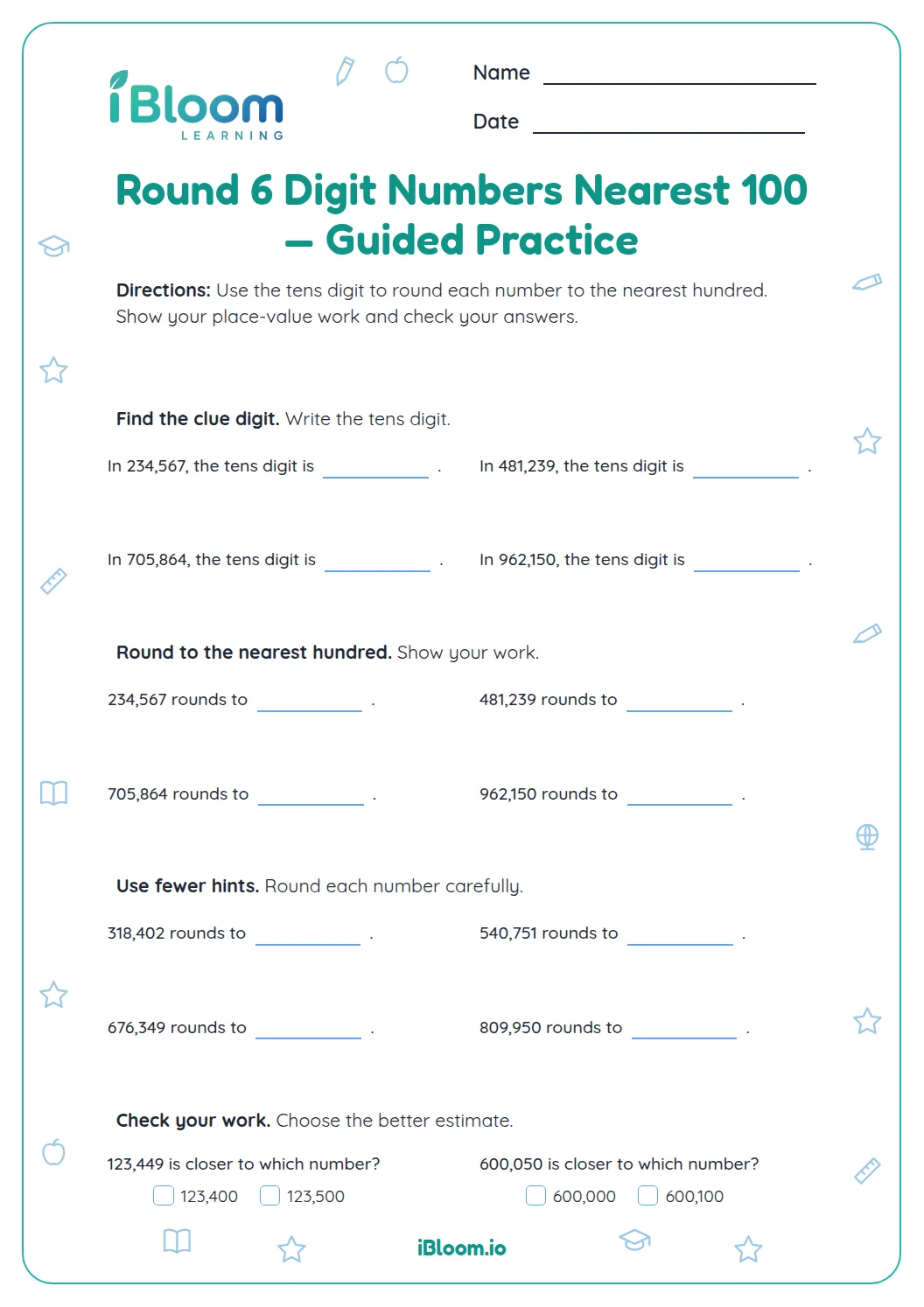
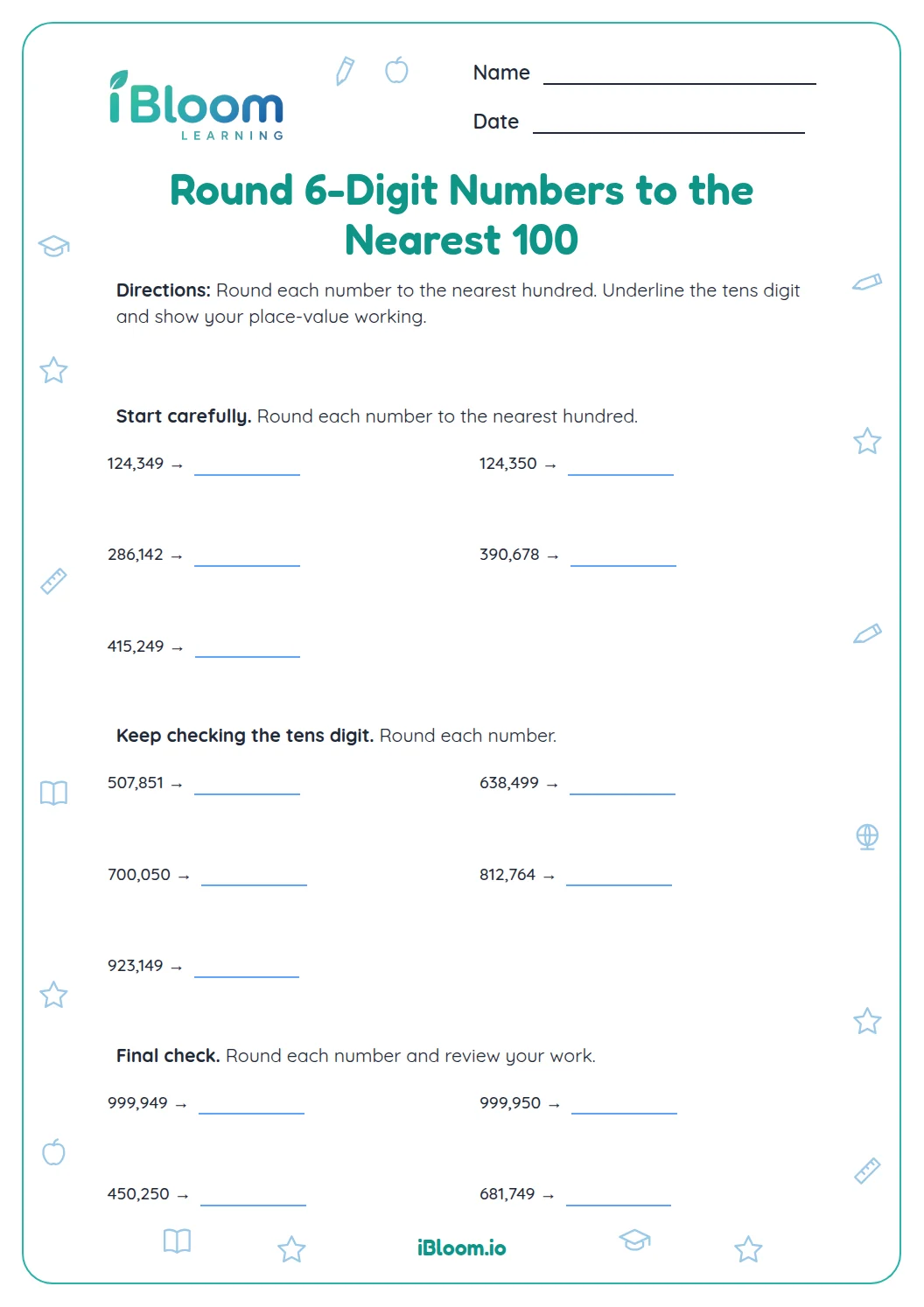
This free Grade 5 printable gives children repeated practice rounding large whole numbers to the nearest ten through ten million. The first questions begin with familiar places, then the practice moves across five- through nine-digit numbers and includes an estimate and a number-choice item. Each prompt names the target place so learners can focus on identifying the digit to its right and deciding whether to keep or increase the rounding digit. It practices the place-value reasoning in CCSS 4.NBT.A.3.
Aligned to 4.NBT.A.3
How does place value guide rounding?
Find the digit in the place named by the problem. Look one place to its right: 0–4 keeps the named digit the same; 5–9 increases it by one. Replace all digits to the right with zeros.
- 1Round 43,827 to the nearest ten.
- 2The tens digit is 2; the digit to its right is 7.
- 3Seven is 5 or more, so increase 2 to 3.
- 443,827 rounds to 43,830.
How can children avoid rounding to the wrong place?
Underline the named place before looking at the next digit. For 76,452 to the nearest hundred, the hundreds digit is 4 and the tens digit is 5, so the result is 76,500.
What does the practice cover?
The 14 questions move from rounding to tens and hundreds through millions and ten millions. Values range from five to nine digits; the final items include an estimate and a number that could round to a stated value.
- Part A: round numbers to five different places
- Part B: use rounding in estimates and number checks
How to use this worksheet at home or in class
- 1Model question 1 by circling the tens digit and underlining the ones digit.
- 2Have the child say the target place aloud before solving each item.
- 3Use a place-value chart if zeros make a result hard to read.
- 4For question 14, find the interval of whole numbers that round to 390,000, then test the choices.
- 5Review each result by checking that its digits to the right of the target place are zeros.
Common mistakes and quick fixes
The mistake
Changing the target digit after looking at a digit two places away.
The fix
Mark the target place, then check only the single digit immediately to its right.
The mistake
Rounding 43827 to 43820 when the ones digit is 7.
The fix
Since 7 is at least 5, increase the tens digit and write 43,830.
The mistake
Rounding 76,452 to 76,400 for the nearest hundred.
The fix
The tens digit is 5, so increase the hundreds digit from 4 to 5: 76,500.
Common Core alignment
This page practices the listed Common Core skill with examples drawn from the worksheet.
Use place-value understanding to round multi-digit whole numbers.
On this sheet: Questions apply whole-number rounding across five- to nine-digit values.
Show the official wordingHide the official wording
Use place value understanding to round multi-digit whole numbers to any place.
What to practice next
Make more practice
Further reading
Questions parents and teachers ask
Which digit tells a child whether to round up?
Look at the digit immediately to the right of the place named in the question. A 0, 1, 2, 3, or 4 keeps the target digit the same; a 5, 6, 7, 8, or 9 increases it by one. The named place stays the focus during each step.
How does a child round 43,827 to the nearest ten?
The tens digit is 2, and the digit just to its right is 7. Since 7 is at least 5, increase the tens digit to 3 and replace the ones digit with zero. The rounded number is 43,830. Check the target place before writing the final zeros.
Why does a rounded number end in zeros?
The target place keeps the useful estimate, while smaller places are no longer needed. For example, rounding 76,452 to the nearest hundred gives 76,500: the hundreds digit becomes 5 and the tens and ones become zero. This makes the estimated value easier to check.
What does the answer key include?
The separate answer key gives the rounded result for every prompt. Children can compare their result and check that the zeros to the right of the named place match the place value being rounded. The key is designed for quick review after practice.
Why do the digits after the target place become zeros?
Rounding keeps the value of the named place and removes the smaller-place detail. For example, 76,452 rounded to the nearest hundred is 76,500. The hundreds digit carries the estimate, while the tens and ones digits become zeros. Check the target place to verify the result.