


About this worksheet
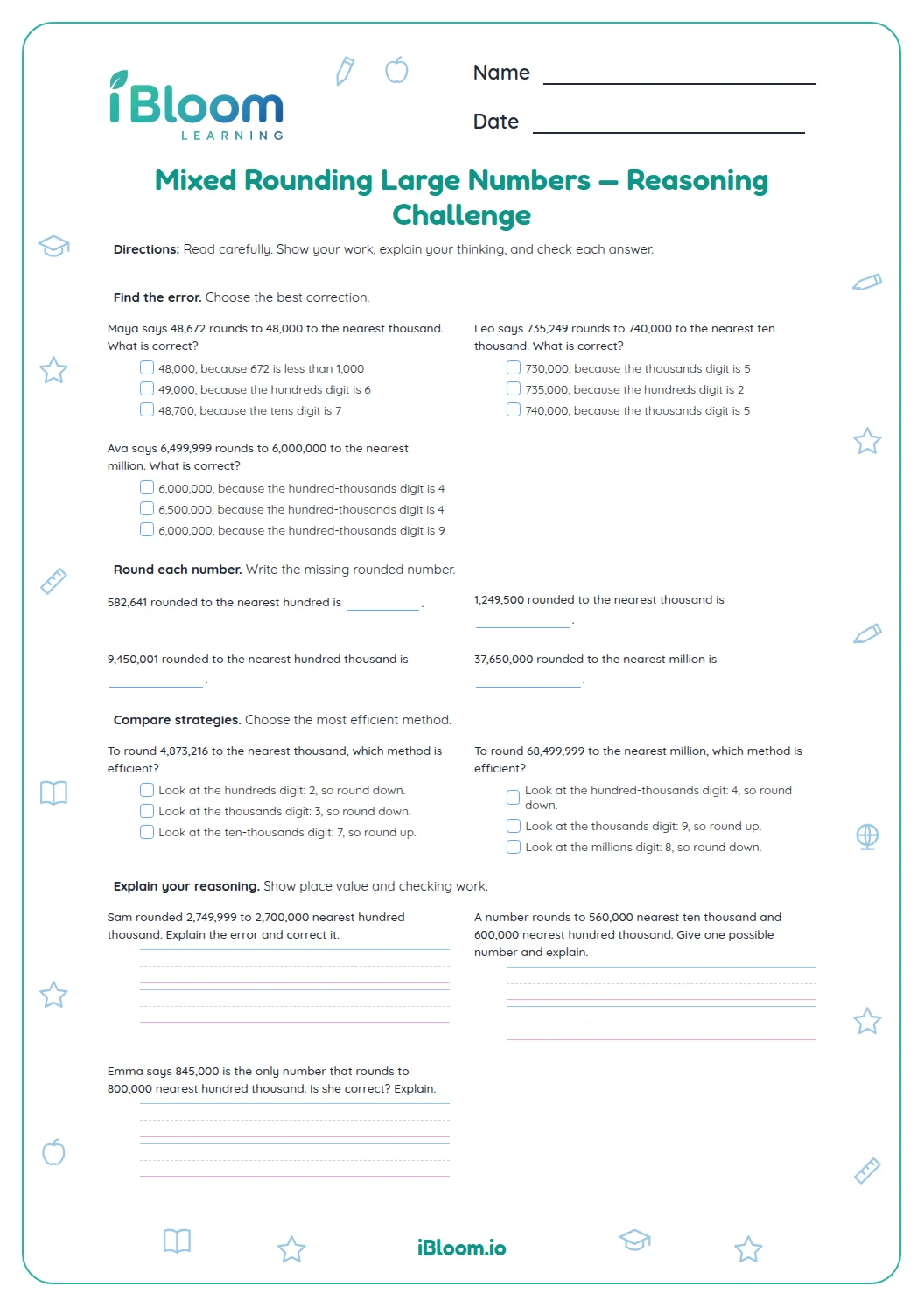
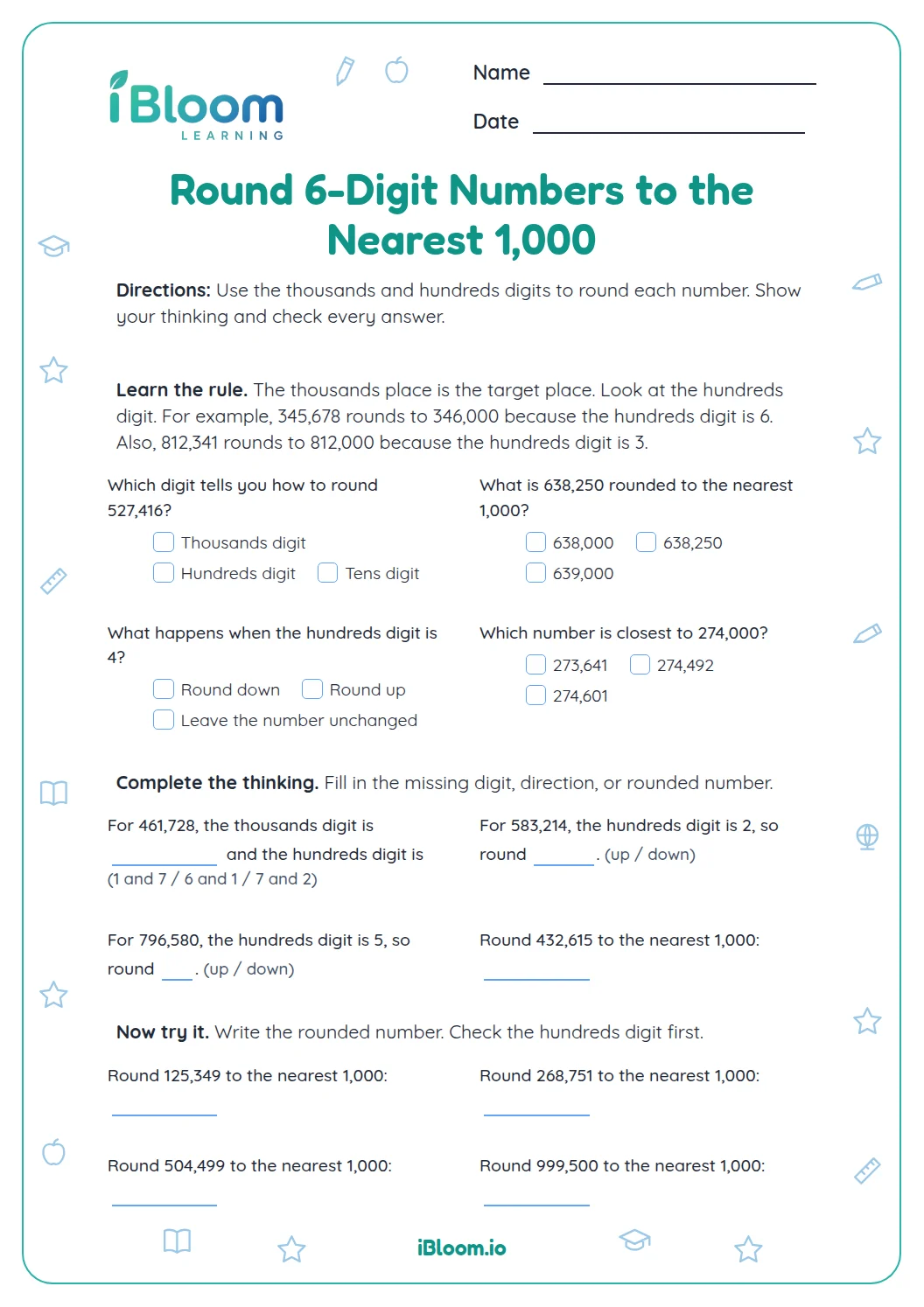
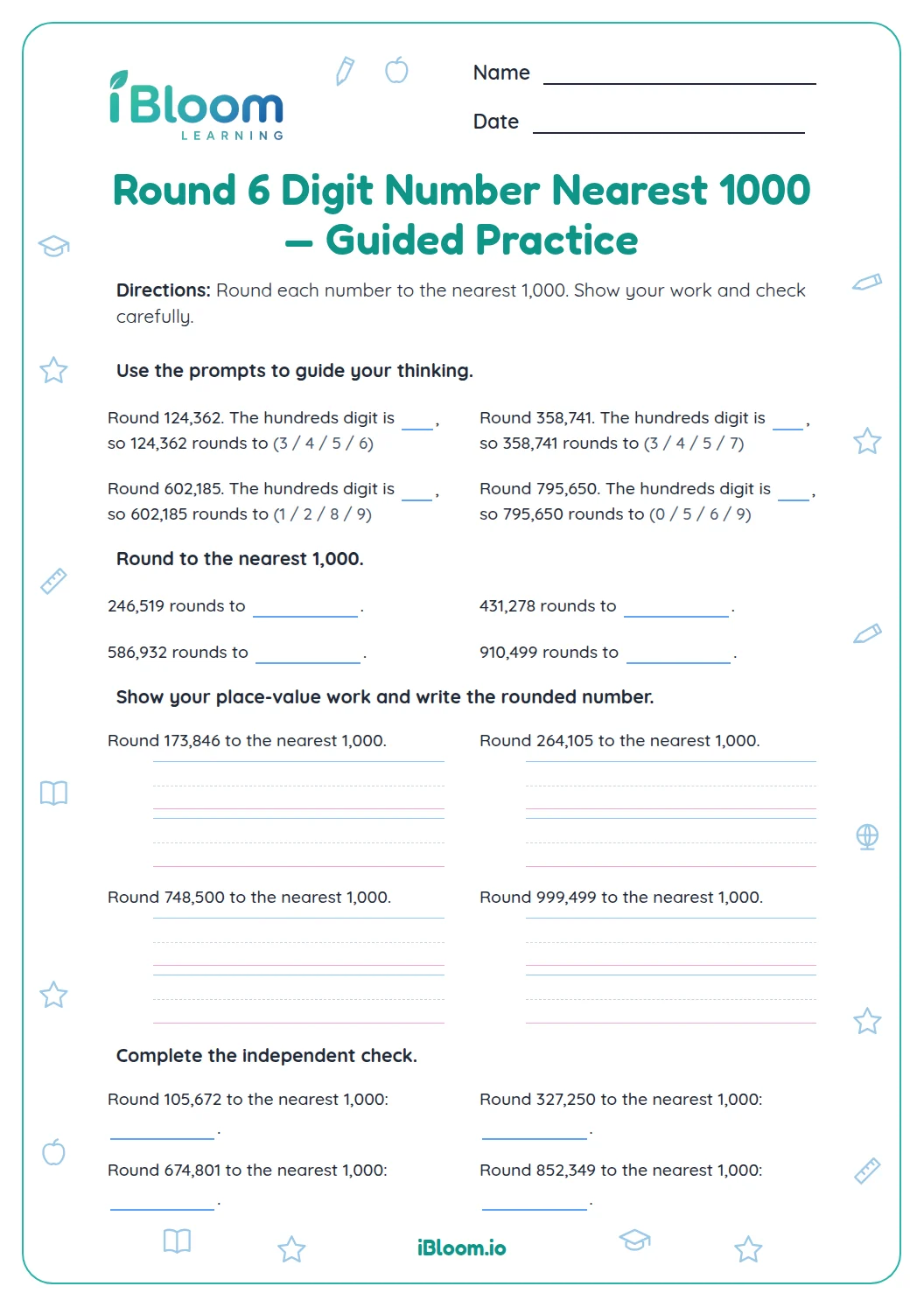
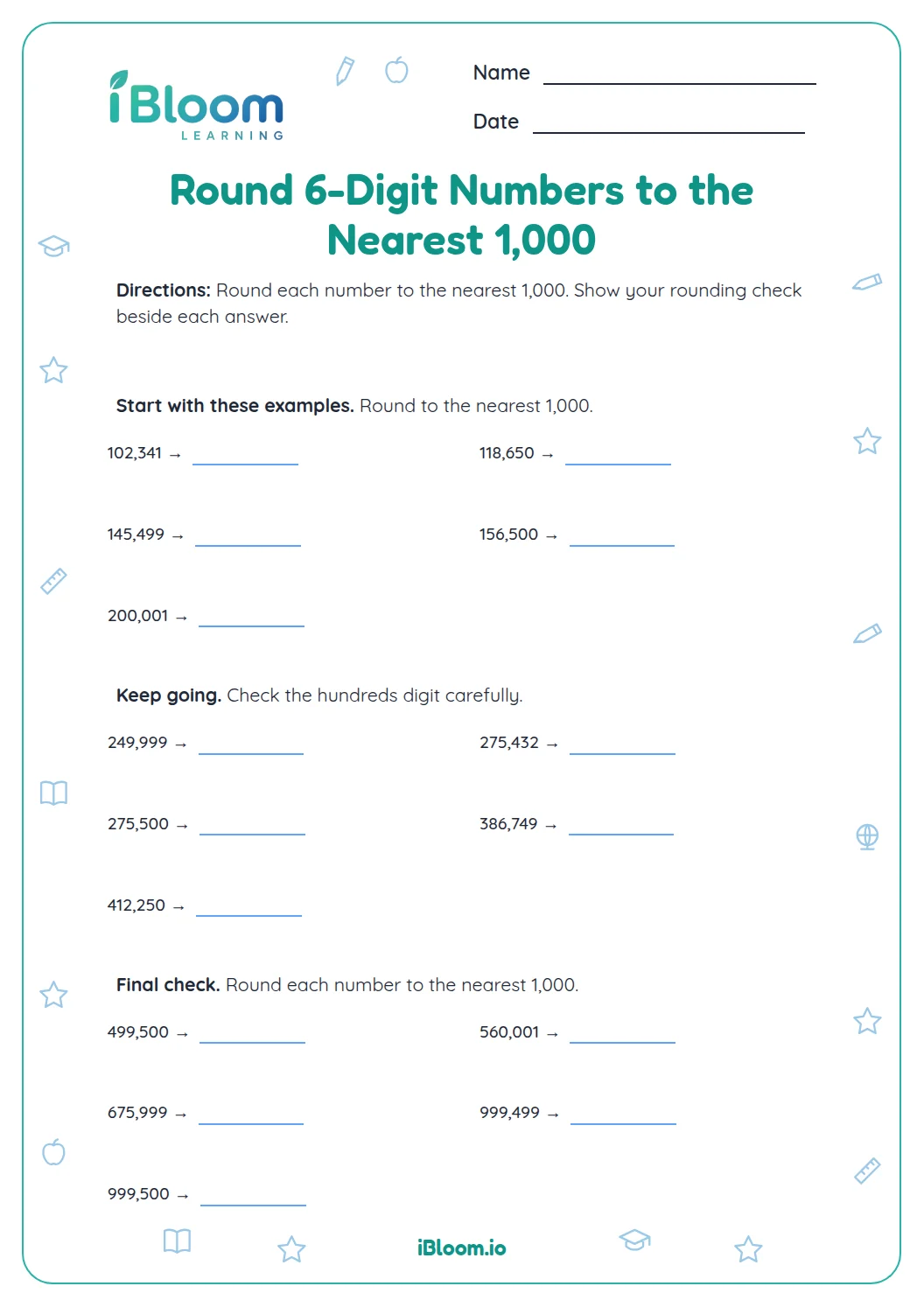
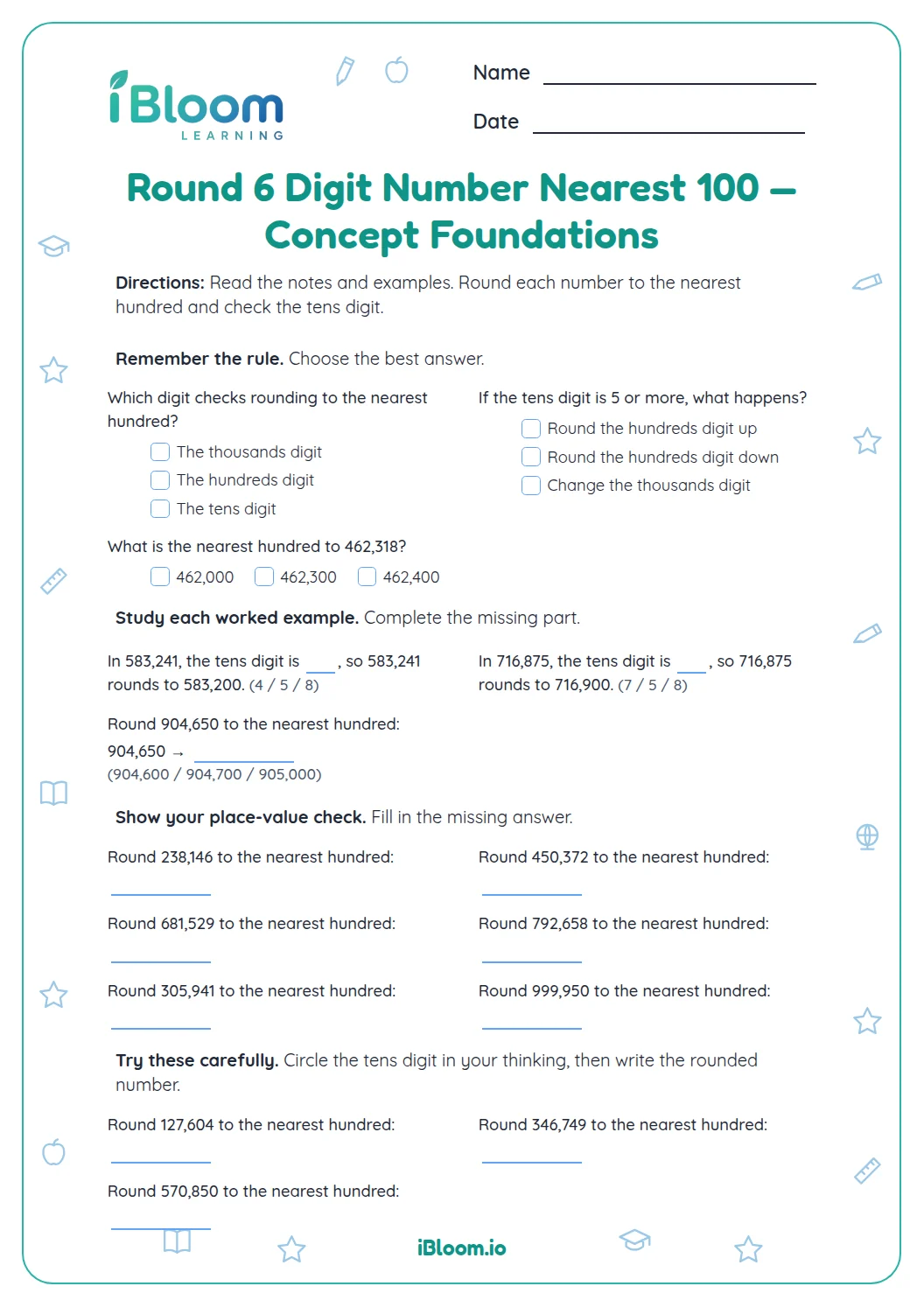
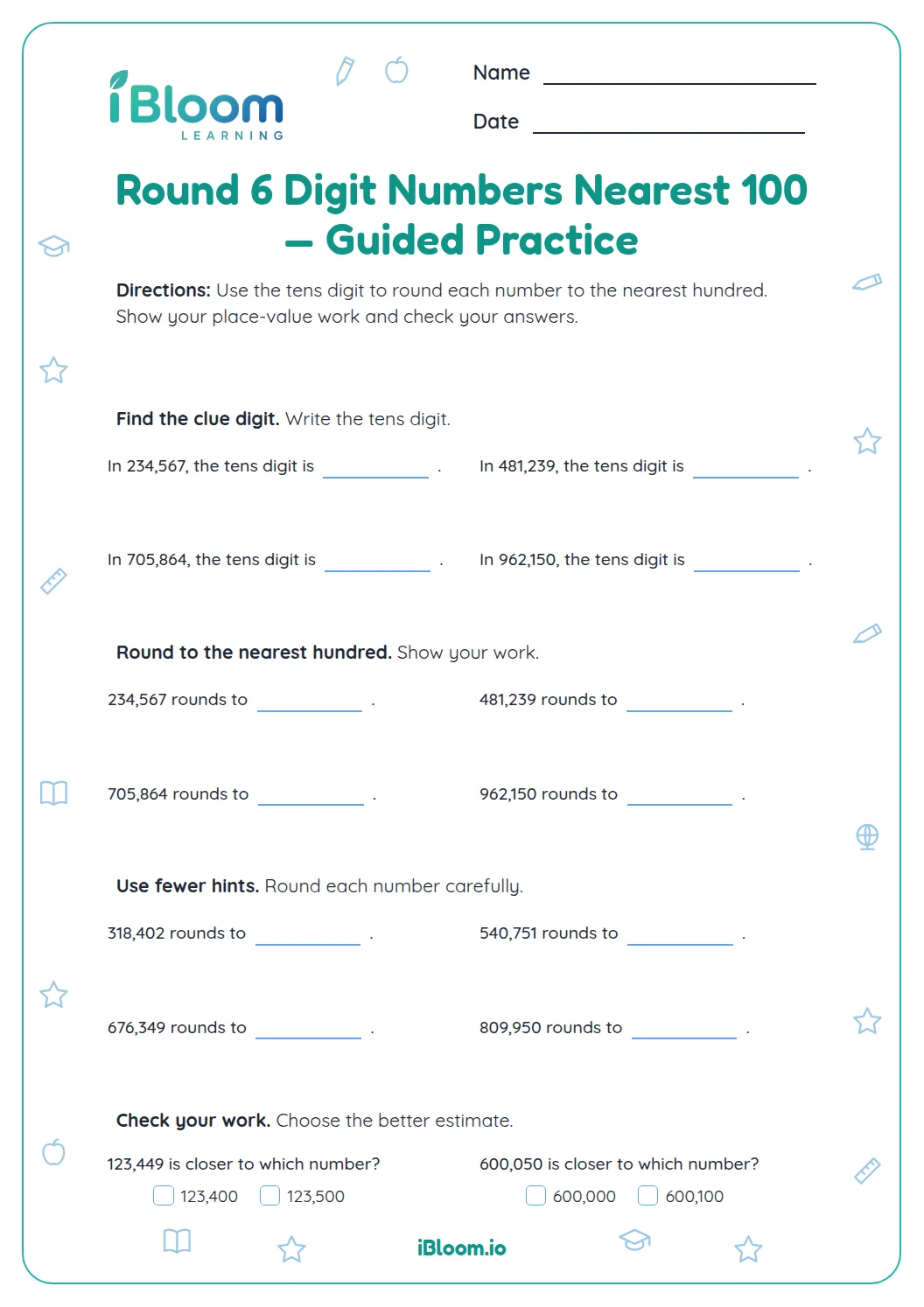
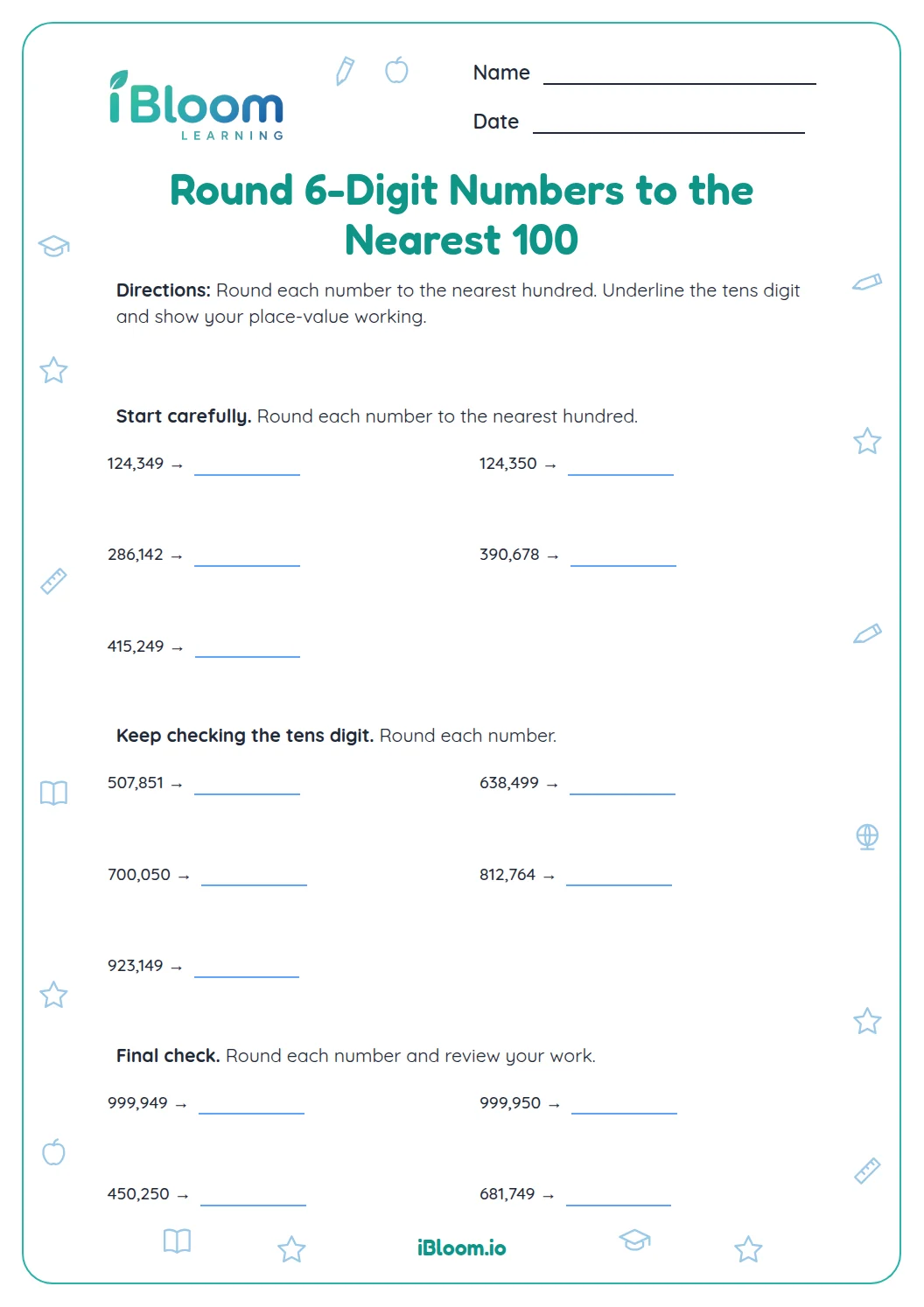
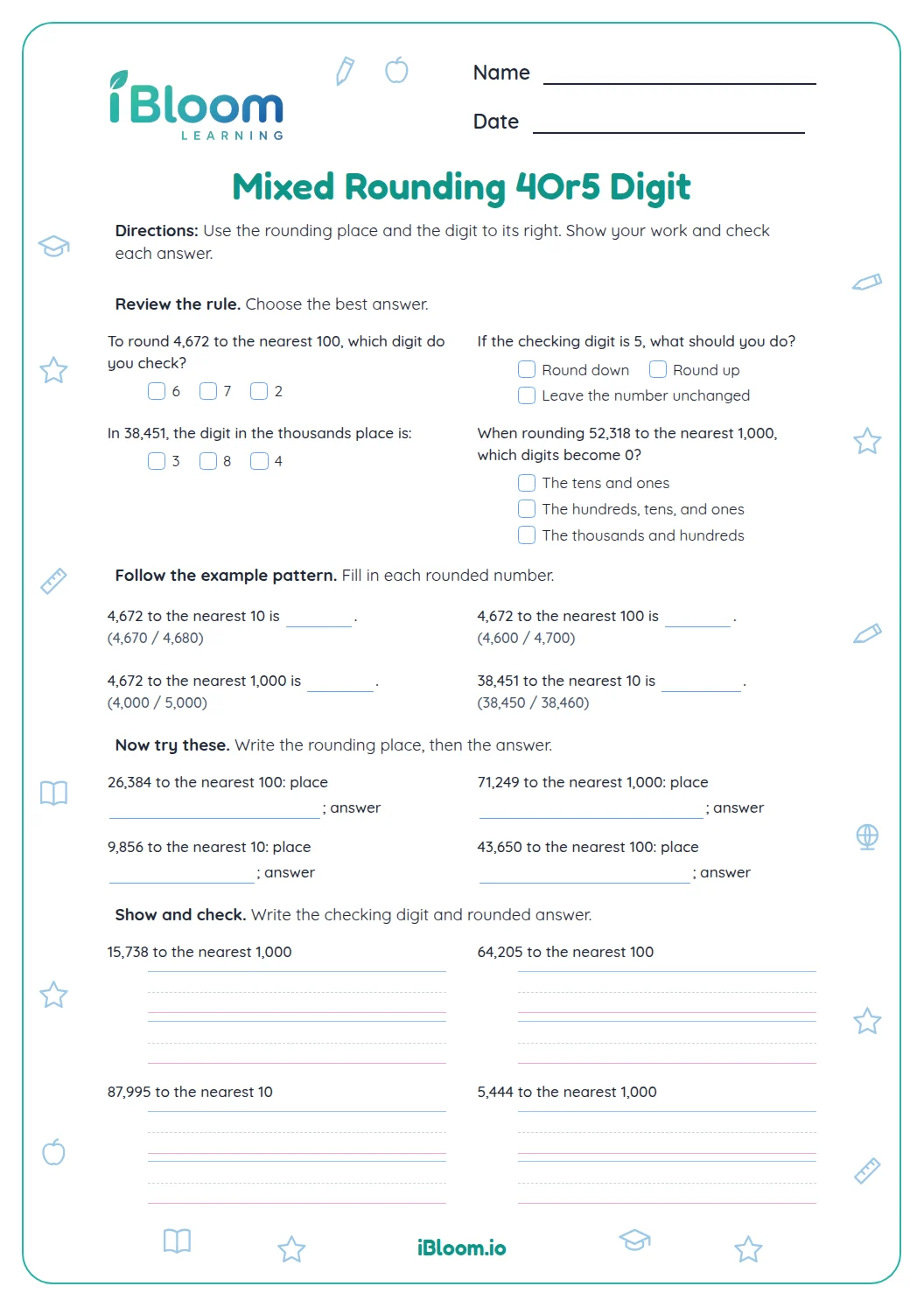
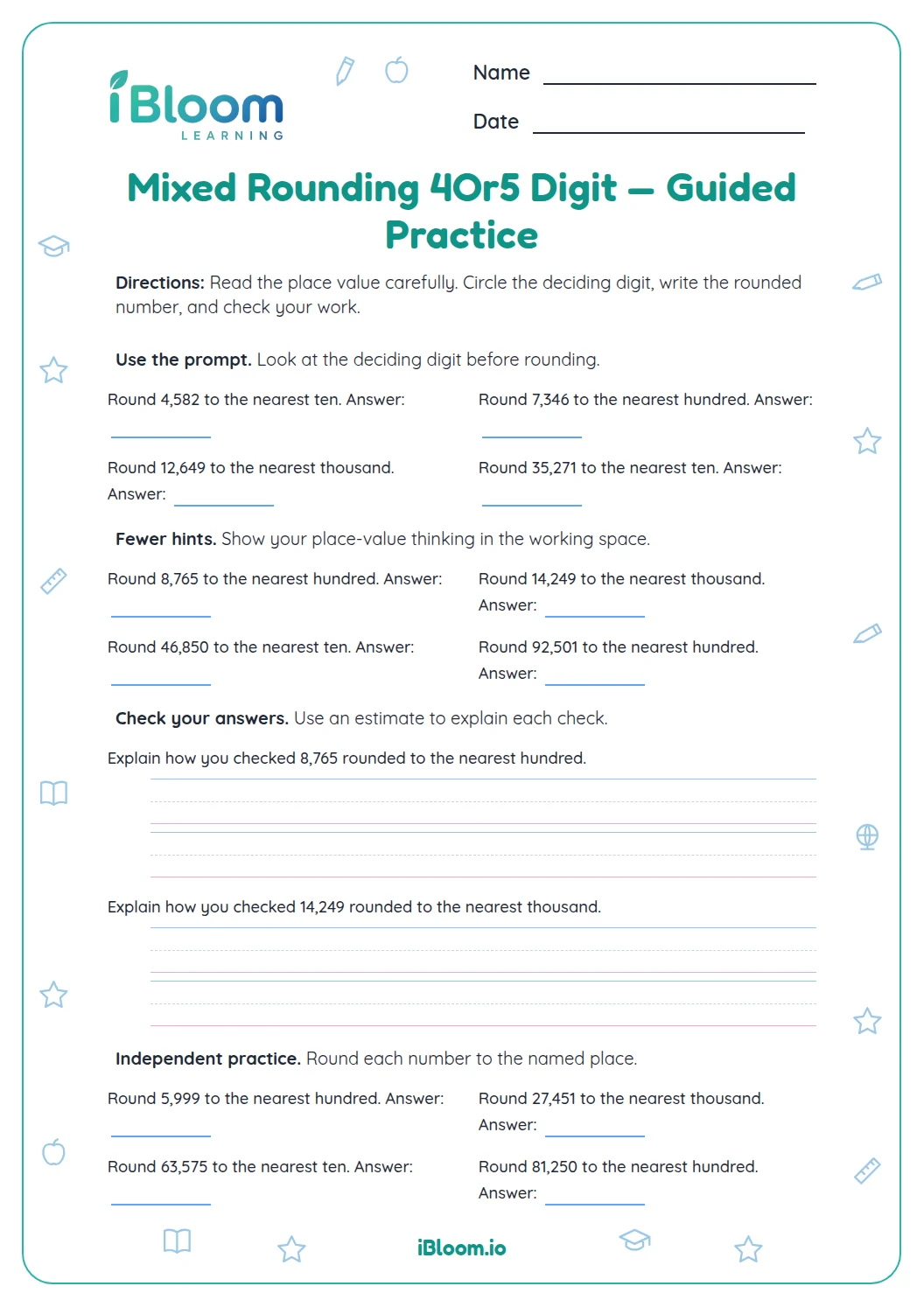
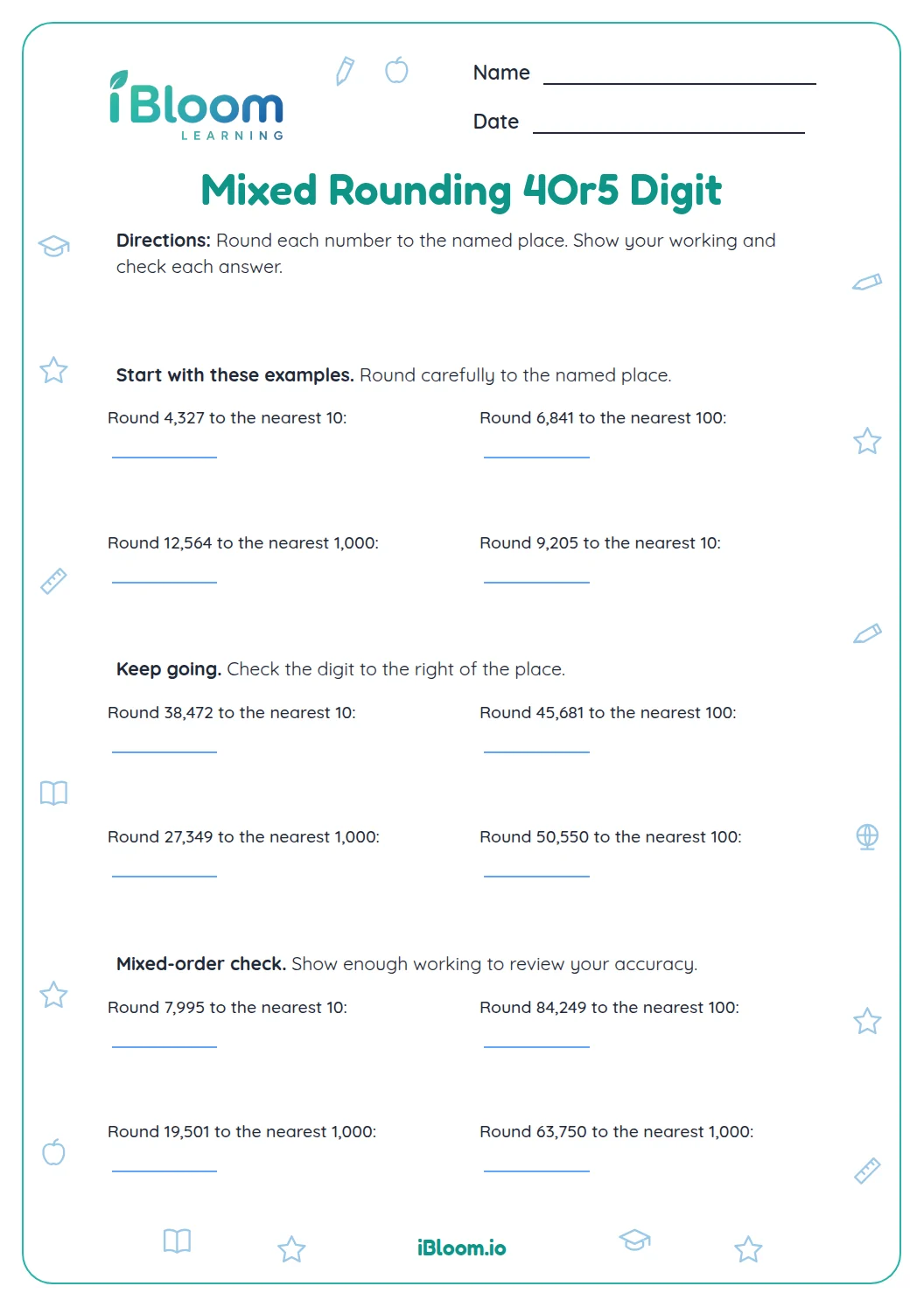
This Grade 5 rounding worksheet mixes large whole numbers and three rounding places: tens, hundreds and thousands. Children use the labeled number lines on the opening examples, then round a sequence of numbers by checking the digit immediately to the right of the target place. The answer key gives the rounded value for every item. The work aligns with Common Core 4.NBT.A.3, using place value understanding to round multi-digit whole numbers to any place.
Aligned to 4.NBT.A.3
Which digit tells you how to round?
First locate the named place. The digit immediately to its right determines whether that place stays the same or increases by one. Digits farther right do not change that decision.
- 1For 34,827 rounded to the nearest ten, inspect the 2 in the ones place. It is less than 5, so the tens digit stays 2: 34,830.
Why do digits to the right become zeros?
Rounding replaces the smaller place values with zeros to show that the number is now estimated to a larger unit. When rounding to the nearest hundred, the tens and ones places become zeros.
- 174,856 to the nearest hundred is 74,900: the tens digit 5 raises the hundreds digit, and the last two places become zeros.
How does a number line show the choice?
A number sits between two neighboring multiples of the place value. The closer multiple is the rounded result. A number exactly halfway between goes to the greater multiple.
How to use this worksheet
- 1Underline the place named in each prompt.
- 2Look one place to its right and decide whether the target digit stays or increases.
- 3Replace all digits to the right of the target with zeros.
- 4Use the number-line models to check which neighboring multiple is closer.
- 5Read the final number aloud to make sure its size is reasonable.
Mistakes to watch for
The mistake
Changing the target digit based on a digit farther away
The fix
Use only the digit immediately to the right of the named place.
The mistake
Keeping small-place digits after rounding
The fix
Replace every place to the right of the rounding place with zero.
The mistake
Raising the target when the next digit is below 5
The fix
Digits 0 through 4 keep the target digit the same.
Common Core alignment
This page gives focused practice with the skill named in each standard.
Round multi-digit whole numbers to tens, hundreds and thousands.
On this sheet: Every prompt asks children to round a large whole number to a named place.
Show the official wordingHide the official wording
Use place value understanding to round multi-digit whole numbers to any place.
What to practice next
Make more practice
Further reading
Questions parents and teachers ask
How do you round to the nearest ten?
Find the tens digit and inspect the ones digit. If the ones digit is 5, 6, 7, 8 or 9, increase the tens digit by one; otherwise leave it. Then make the ones digit zero. The first six questions give practice rounding to the nearest ten.
How do you round to the nearest hundred?
Find the hundreds digit and look at the tens digit immediately to its right. A tens digit of 5 or more increases the hundreds digit by one. Then replace the tens and ones digits with zeros. The worksheet includes five nearest-hundred examples.
What does a number line add to this practice?
A number line shows the two multiples that surround a number and helps children see which one is closer. The first examples include a point between neighboring multiples, so students can connect the digit rule to distance and confirm the rounded result.
What happens when the digit after the target is exactly 5?
The number rounds up to the next multiple. For example, 74,856 rounds to 74,900 to the nearest hundred because the tens digit is 5. The target hundreds digit increases, and the smaller place values become zeros in the final answer.
Why are the answers written with zeros?
The zeros mark place values that are no longer being reported exactly. For example, rounding to the nearest thousand leaves the thousands place and all larger places meaningful, while the hundreds, tens and ones become zeros in the rounded number.
How can I check a rounded answer?
Compare the number with the two nearest multiples of the requested place. The answer should be one of those multiples and should be closest to the original number. If the number is exactly halfway, use the greater multiple.