
About this worksheet
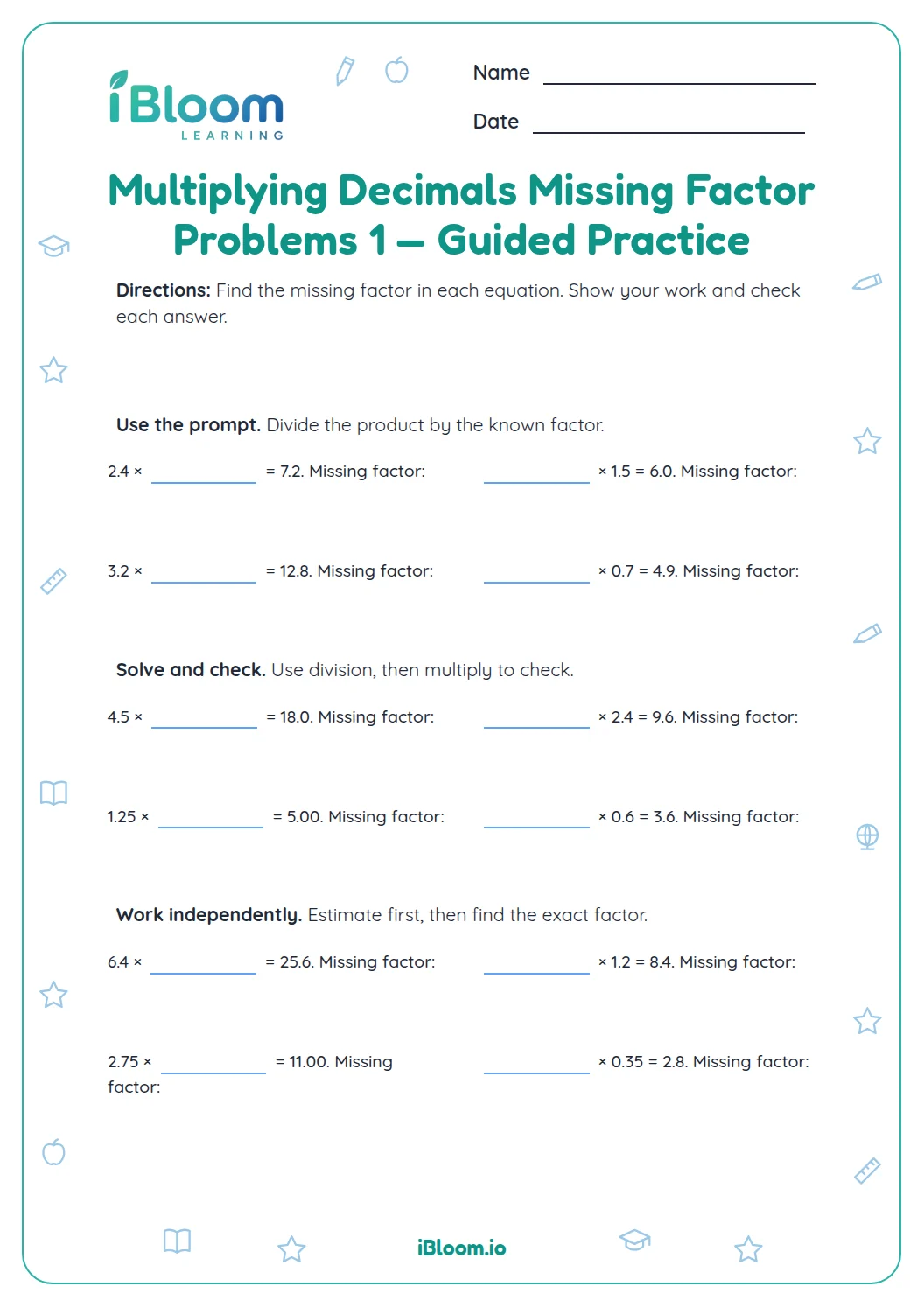
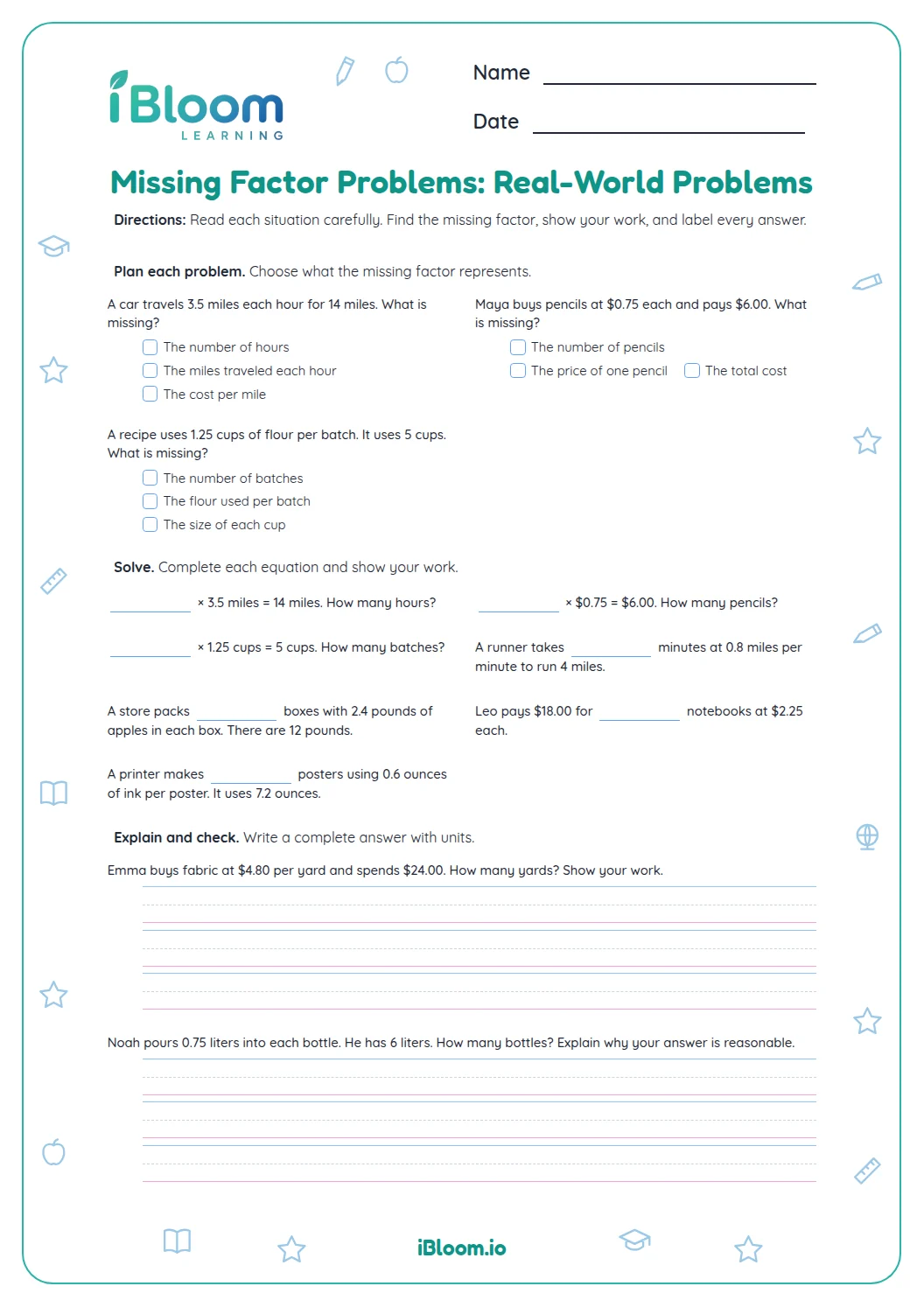
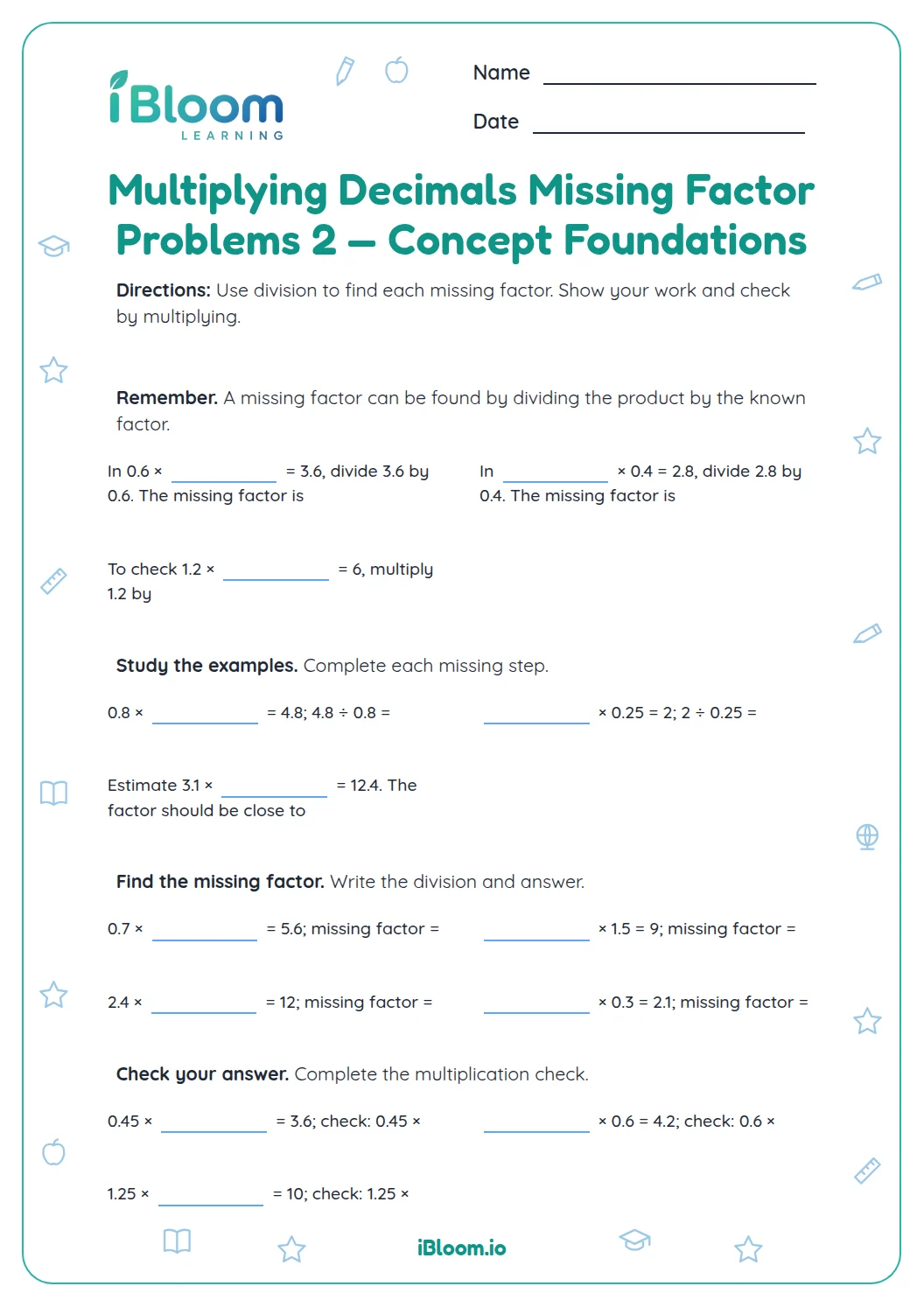
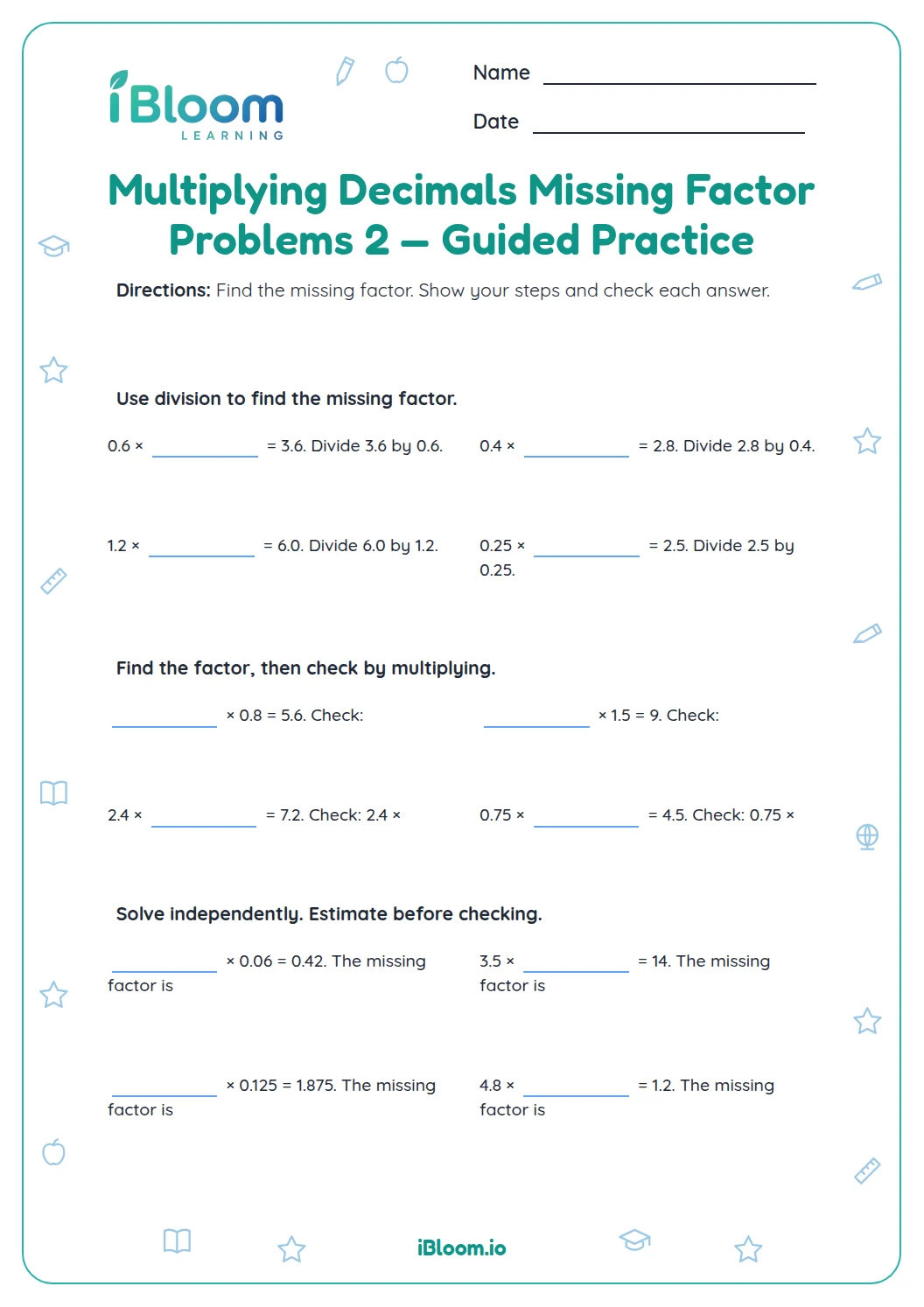
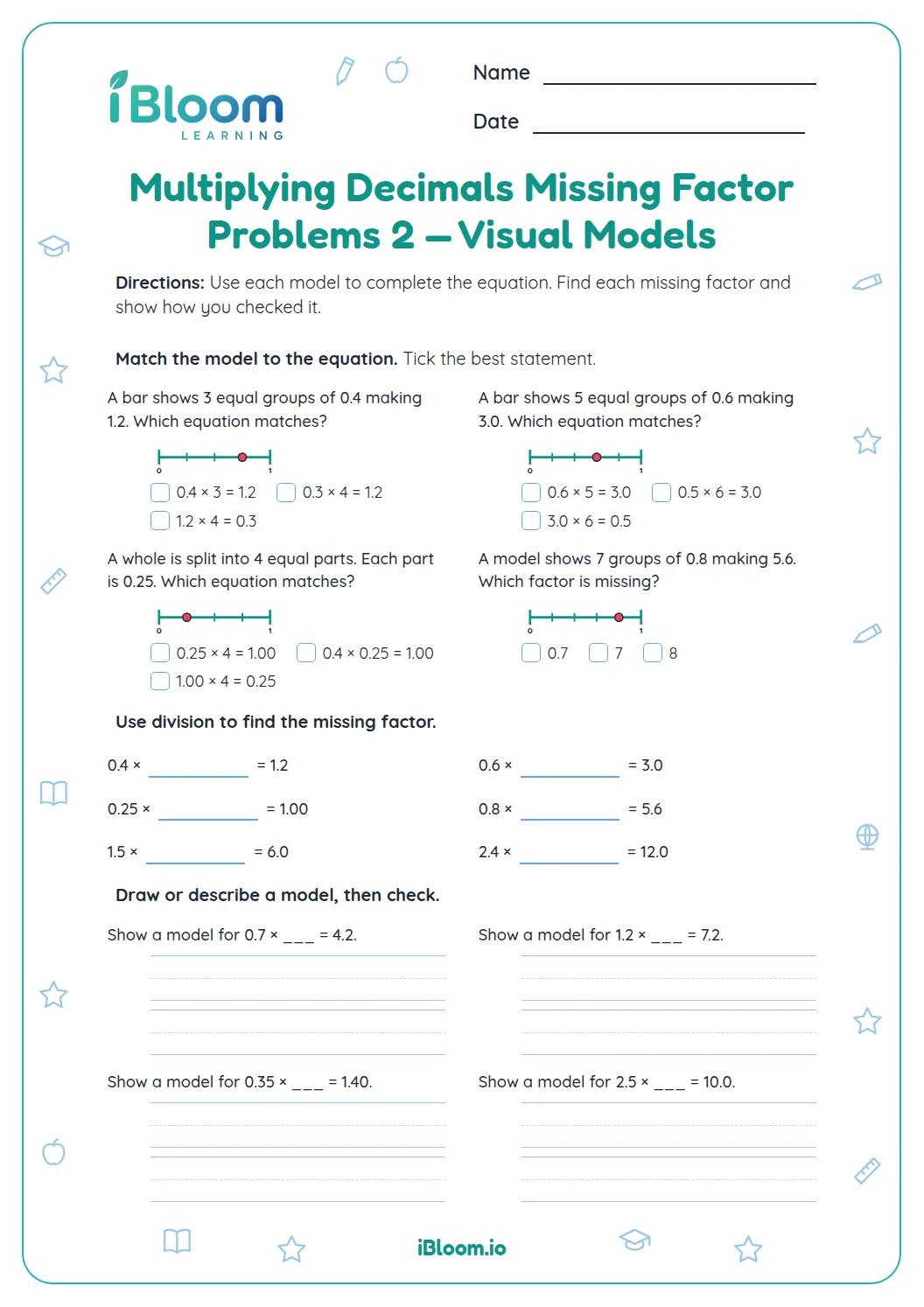
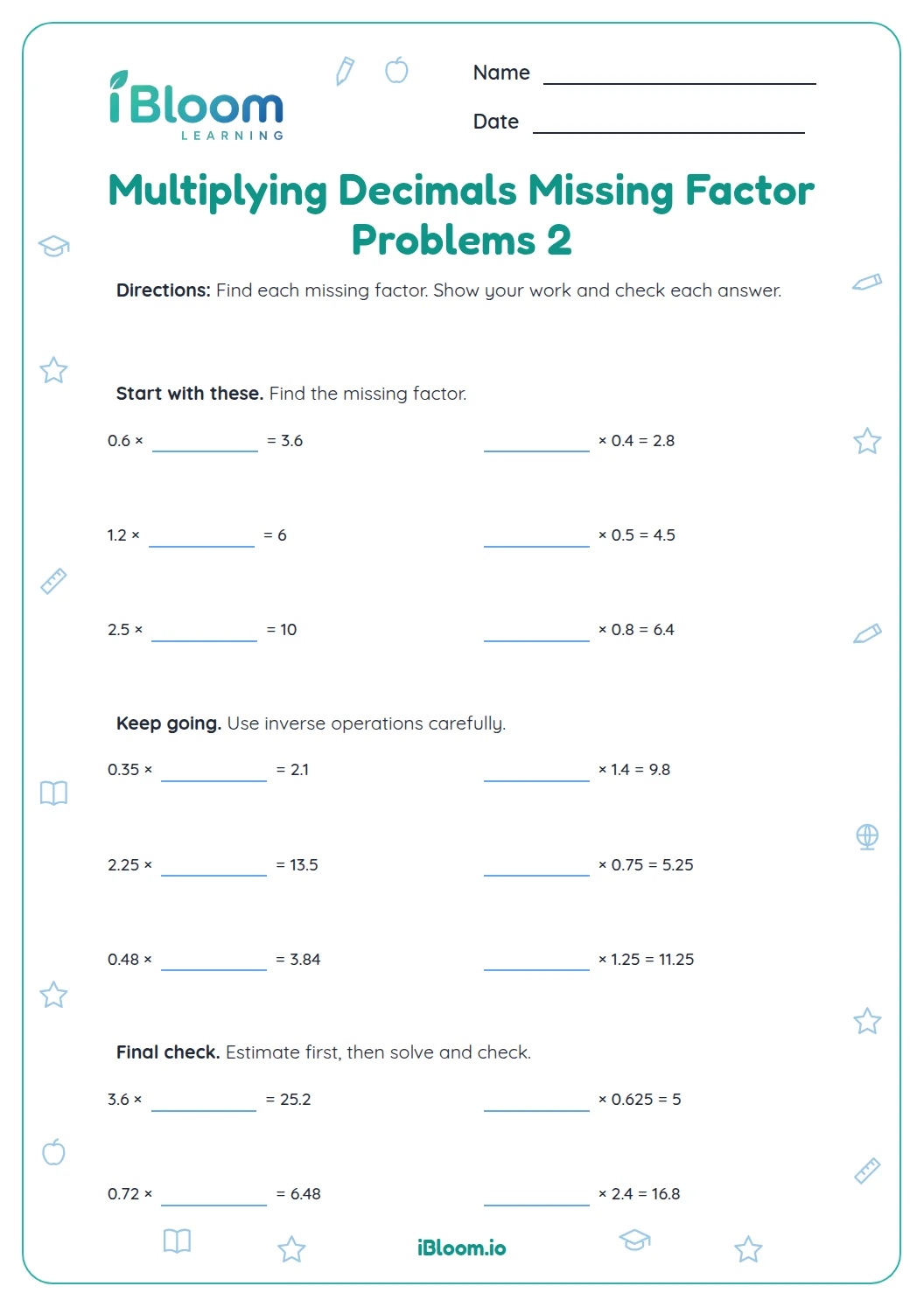
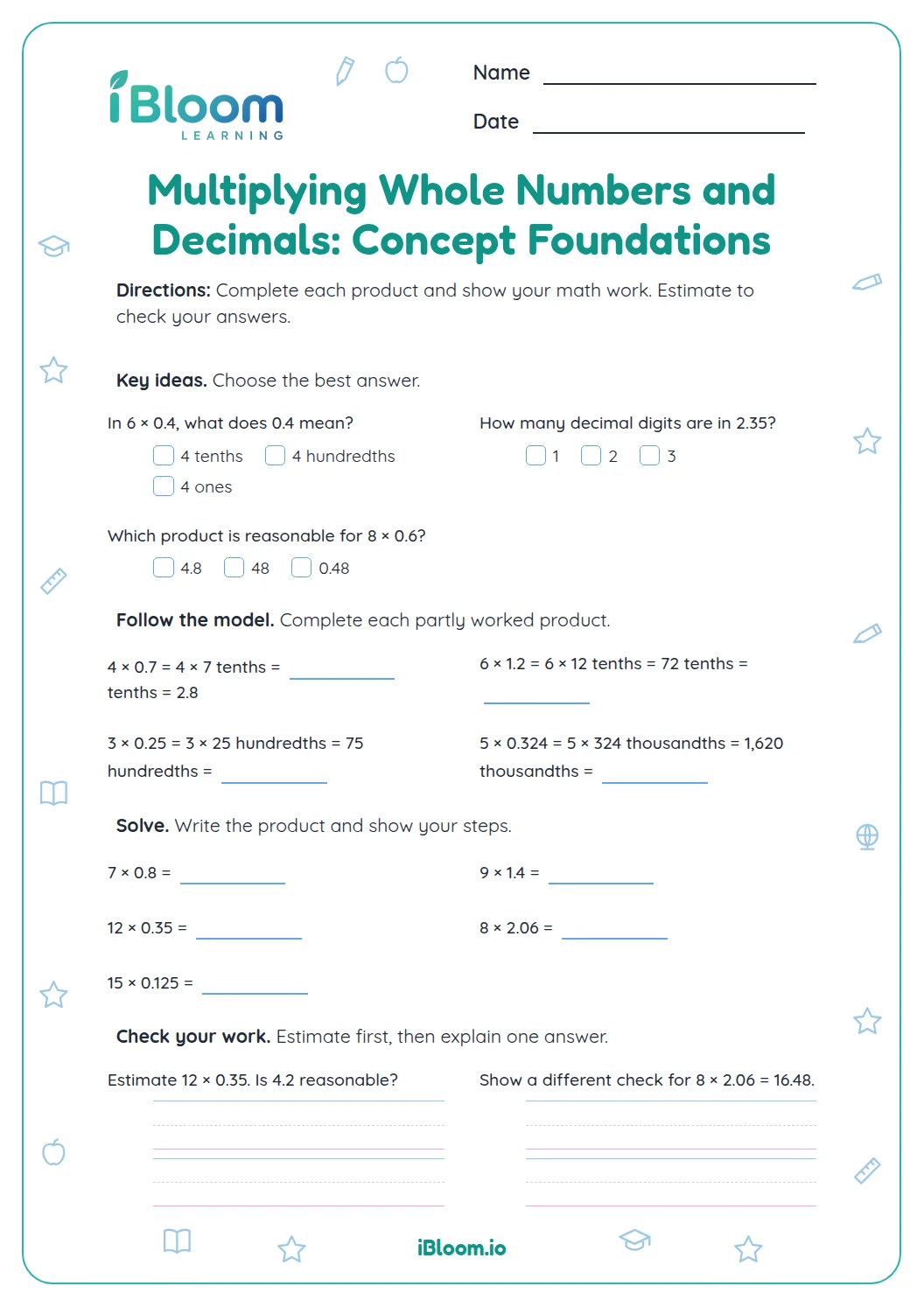
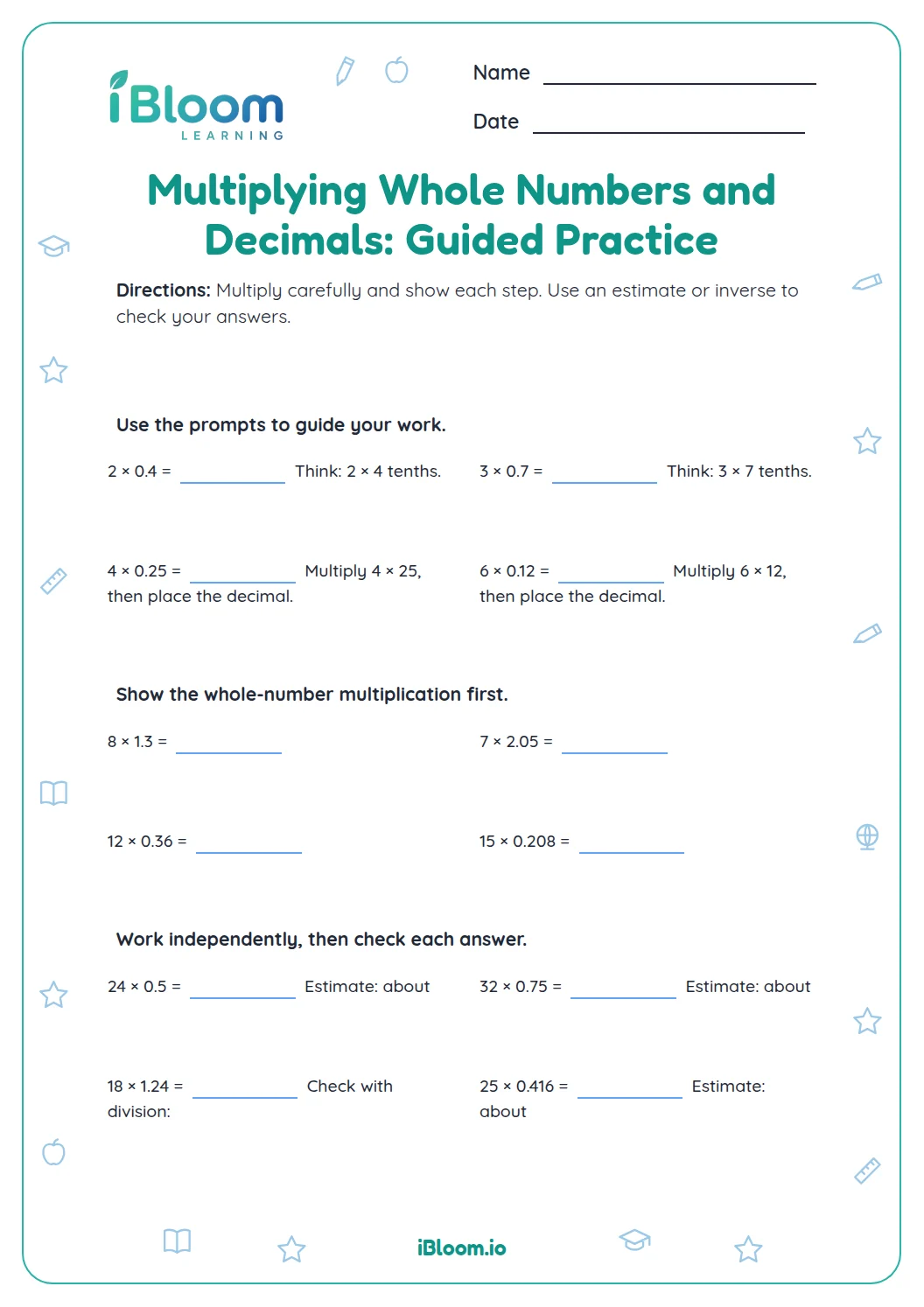
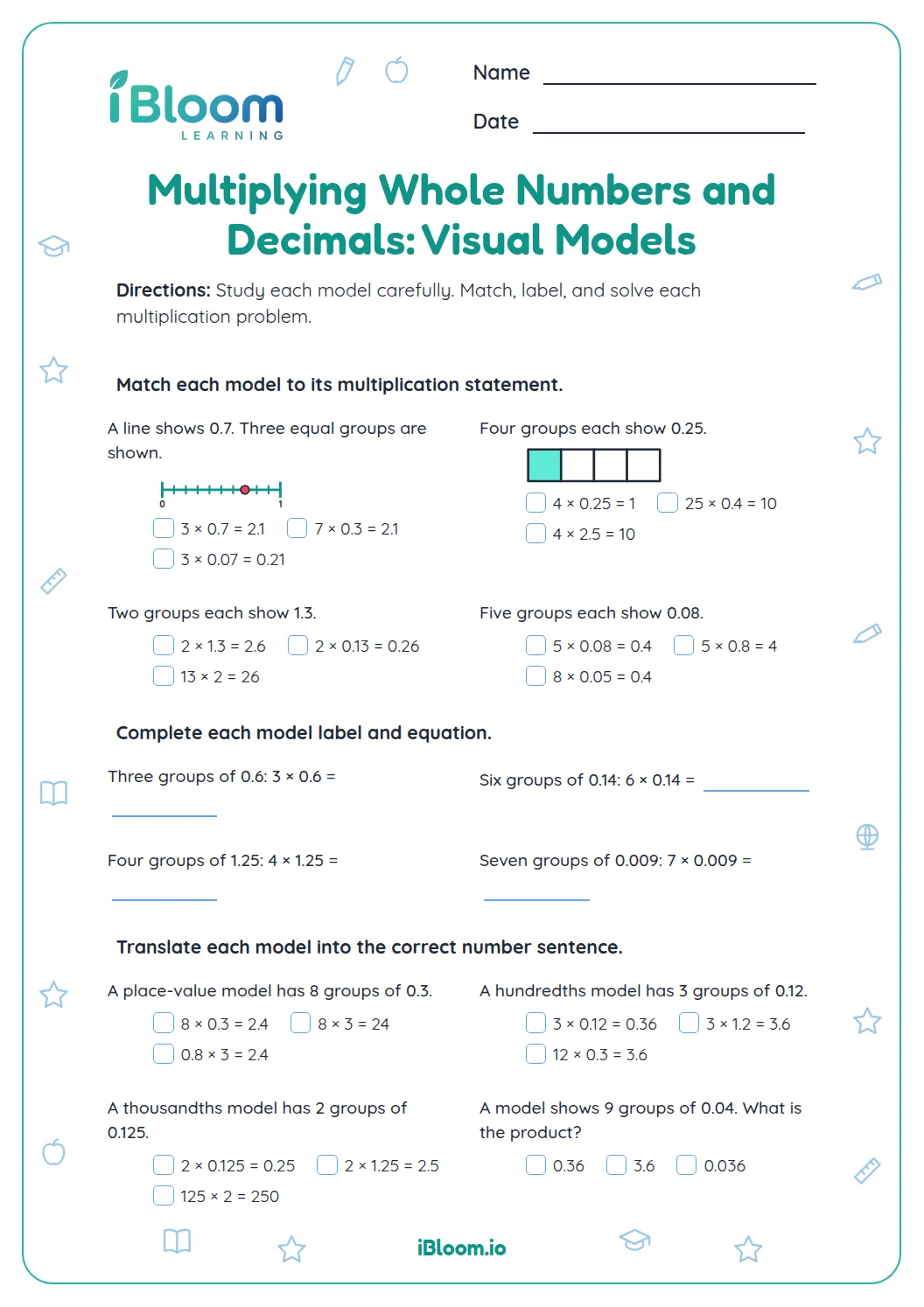
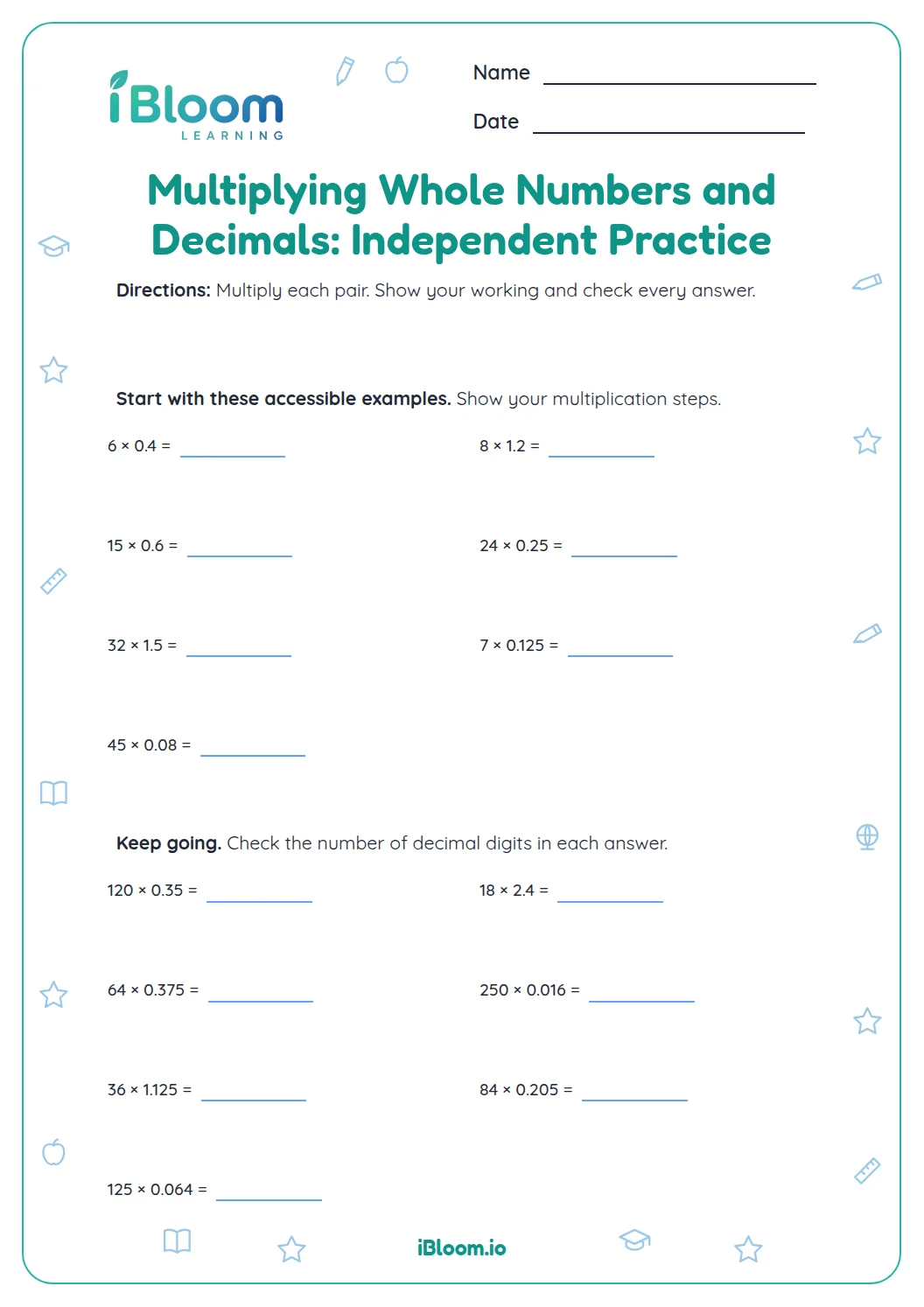
This free printable Grade 6 worksheet practices missing factors in decimal multiplication. Each of the 16 questions organizes the product and one known factor in a table; learners use those values to choose the missing factor and multiply to check. The work connects to CCSS 5.NBT.B.7 on decimal multiplication using models and strategies. A separate answer key is included.
Aligned to 5.NBT.B.7
How can a product table help find a missing factor?
Each table organizes the product and one known factor. Use those values to choose the other factor, then multiply to check that the product is correct.
Question 1 gives a product of 0.08 and a known factor of 0.2. The other factor is 0.4 because 0.4 × 0.2 = 0.08.
- 1Product: 0.08
- 2Known factor: 0.2
- 30.2 × 0.4 = 0.08
- 4Other factor: 0.4
How can multiplication help find the missing factor?
Use the product and known factor to reason backward. Ask what number multiplied by the known factor gives the product. Multiply your choice by the known factor to check.
Where does the decimal point go?
All 16 questions organize a decimal product and one known factor in a table. Use the two values to find the missing factor, then check with multiplication.
What is on this worksheet?
Every item pairs a product table with a missing-factor question. The answer key lists the correct factor for each item.
- Part A: solve products with smaller factors
- Part B: use varied known factors
- Part C: check each product by multiplying
- Answer key lists each missing factor
How can I use this worksheet?
- 1Read the product in the table.
- 2Read the known factor.
- 3Choose a number that completes the multiplication.
- 4Multiply the two factors.
- 5Check that your result matches the product.
Common mistakes and quick fixes
The mistake
Using the product as the missing factor.
The fix
Keep the product and known factor fixed; choose the number that completes their product.
The mistake
Changing the product instead of finding the factor.
The fix
Use both table values and solve for the other factor.
The mistake
Treating 0.20 and 0.2 as different values.
The fix
A trailing zero does not change the value, so both decimals name the same amount.
Common Core alignment
This sheet uses product tables and multiplication checks to find missing decimal factors.
Use the product and known factor to solve and check decimal multiplication.
On this sheet: Learners find a missing decimal factor from a product table and verify the product by multiplying.
Show the official wordingHide the official wording
Add, subtract, multiply, and divide decimals to hundredths, using concrete models or drawings and strategies based on place value, properties of operations, and/or the relationship between addition and subtraction; relate the strategy to a written method and explain the reasoning used.
What to practice next
Make more practice
Further reading
Questions parents and teachers ask
What information is in each product table?
Each table lists a decimal product and one known factor. Use both values to find the missing factor. For example, if the product is 0.08 and the known factor is 0.2, then 0.4 is the missing factor because 0.2 × 0.4 equals 0.08.
How do I solve a missing-factor equation?
Use the product and the known factor to find the number that makes the equation true. In ___ × 0.2 = 0.08, 0.4 is the missing factor because 0.4 × 0.2 equals 0.08. Multiply to check the result.
Why does the product sometimes end in zero?
A zero at the end of a decimal does not change its value. For example, 0.20 and 0.2 are equal. The table may use a trailing zero to show hundredths clearly, while the missing-factor choice may use a shorter decimal. Keep the product value the same as you solve.
How do I check a missing-factor answer?
Multiply the known factor by your chosen factor. The result should equal the product shown in the table. For example, 0.2 × 0.4 equals 0.08. If the product differs, check the decimal place and try the multiplication again.
What should I do if my answer seems too large?
Estimate before choosing. When one positive factor is less than 1, the product is smaller than the other factor. Multiply your proposed missing factor by the known factor and compare the result with the product in the table. Recheck the decimal place if they differ.
Does the answer key show the missing factors?
Yes. The separate answer key lists the missing factor for each of the 16 questions. Try using the product and known factor in the table first, then multiply your choice to check it. The key is useful for reviewing decimal placement and equivalent forms such as 0.20 and 0.2.