




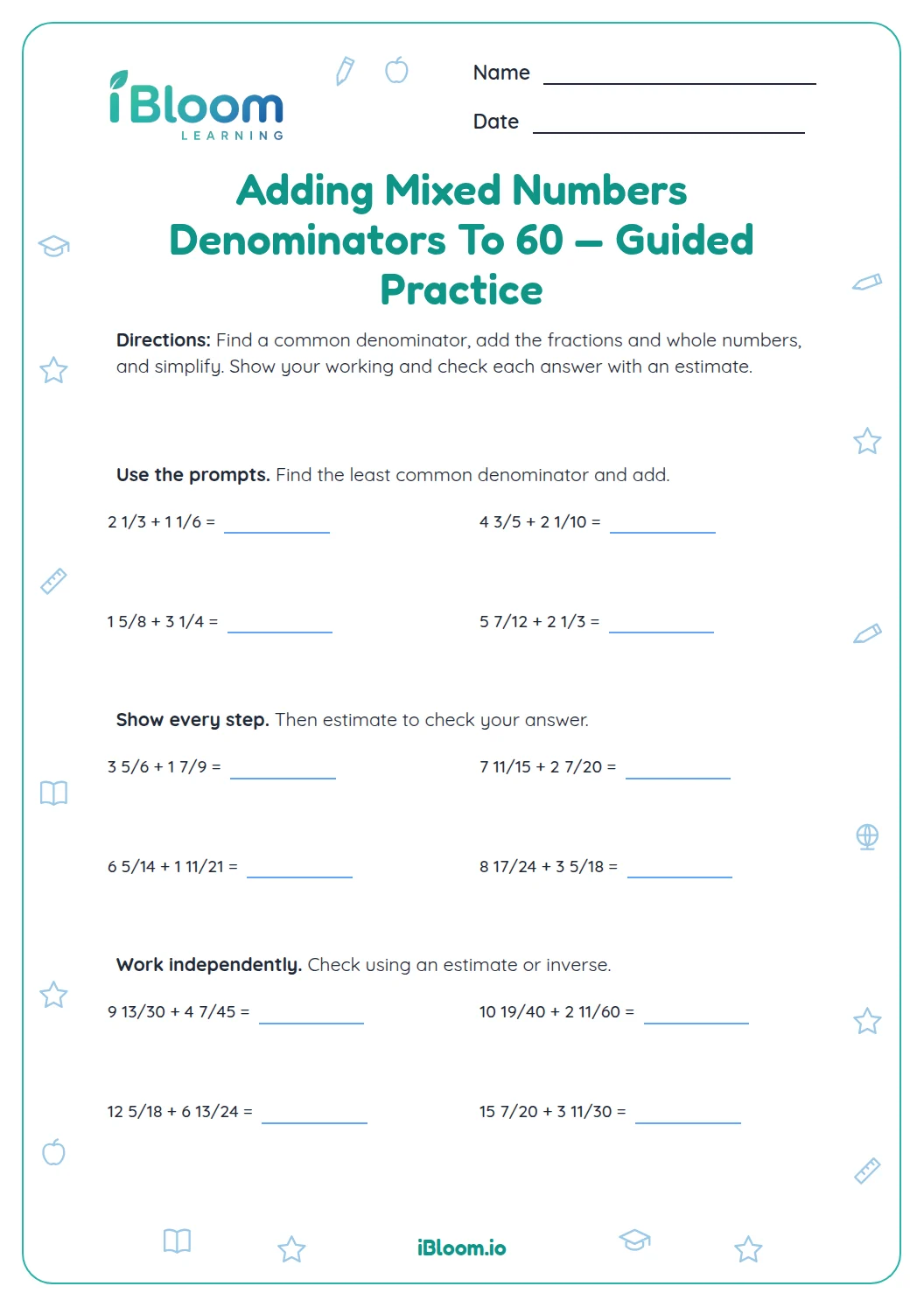

About this worksheet
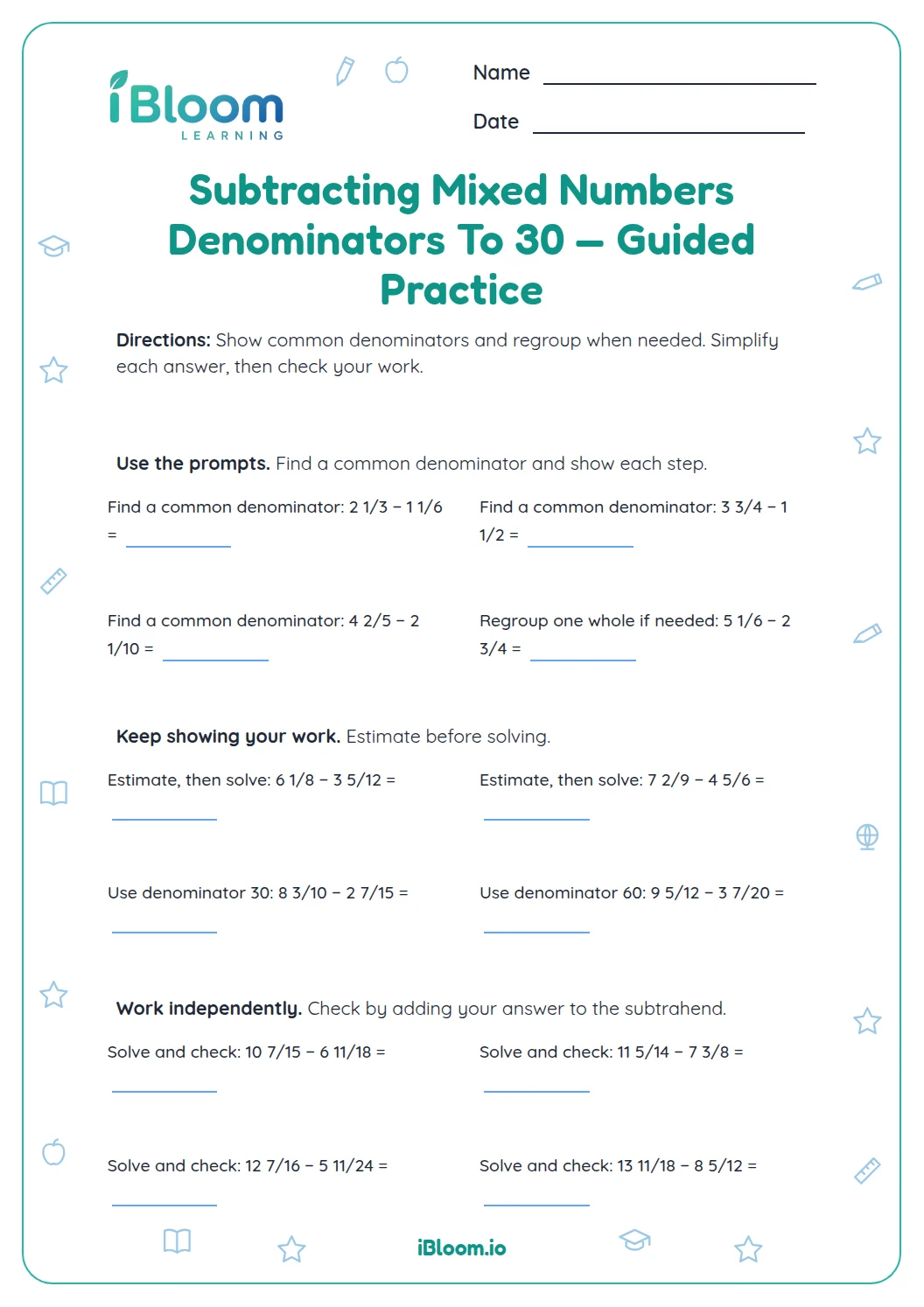
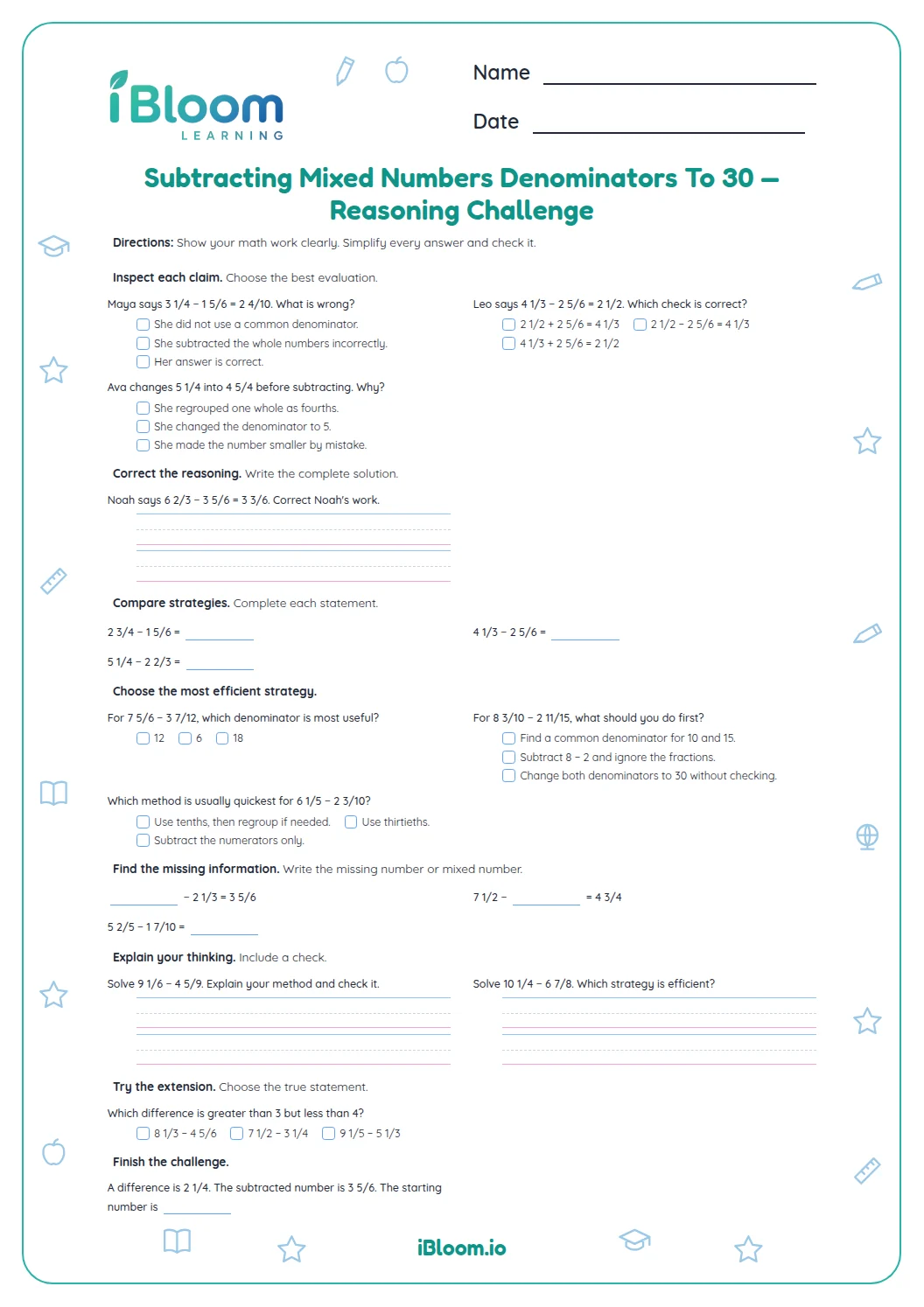
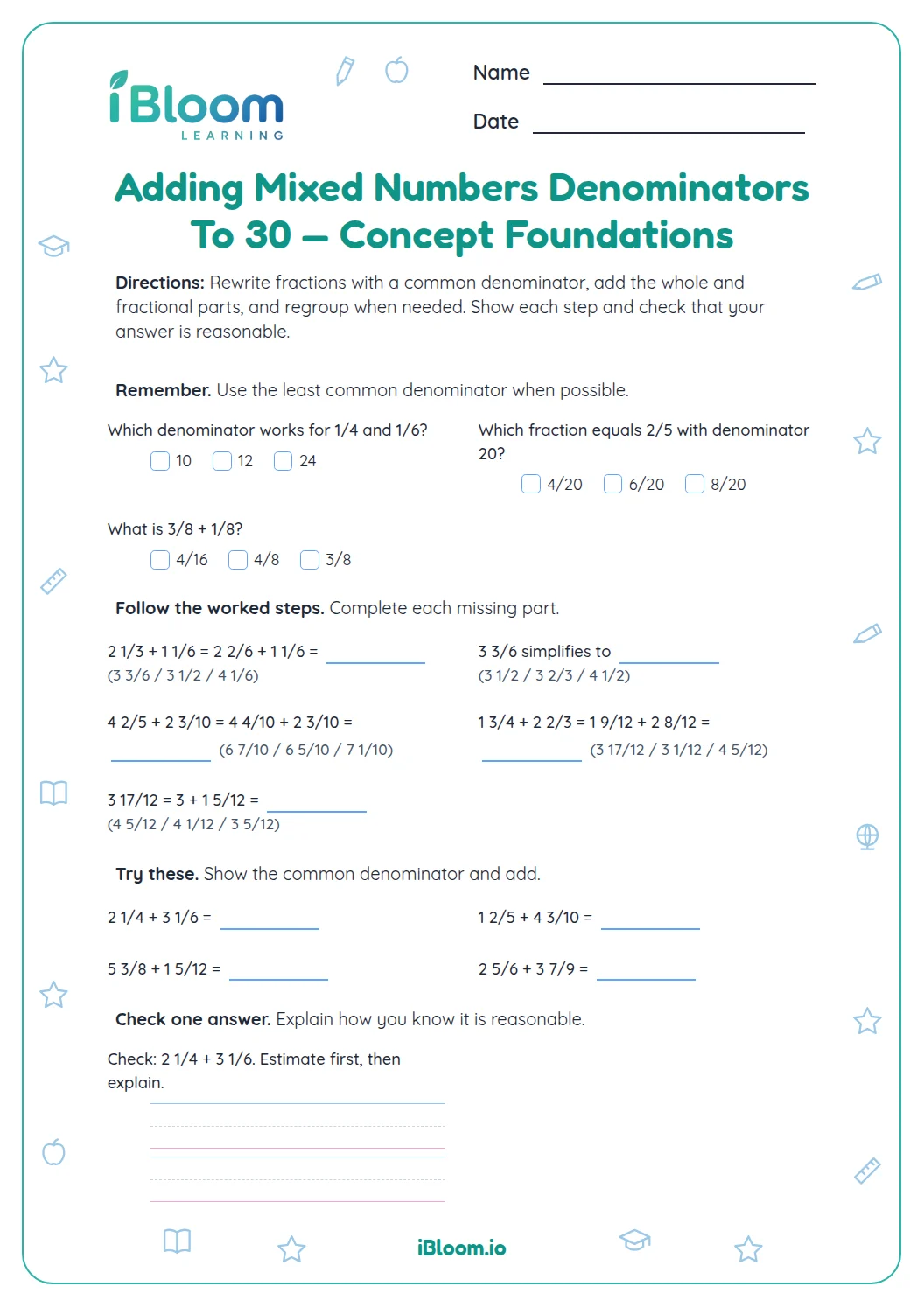
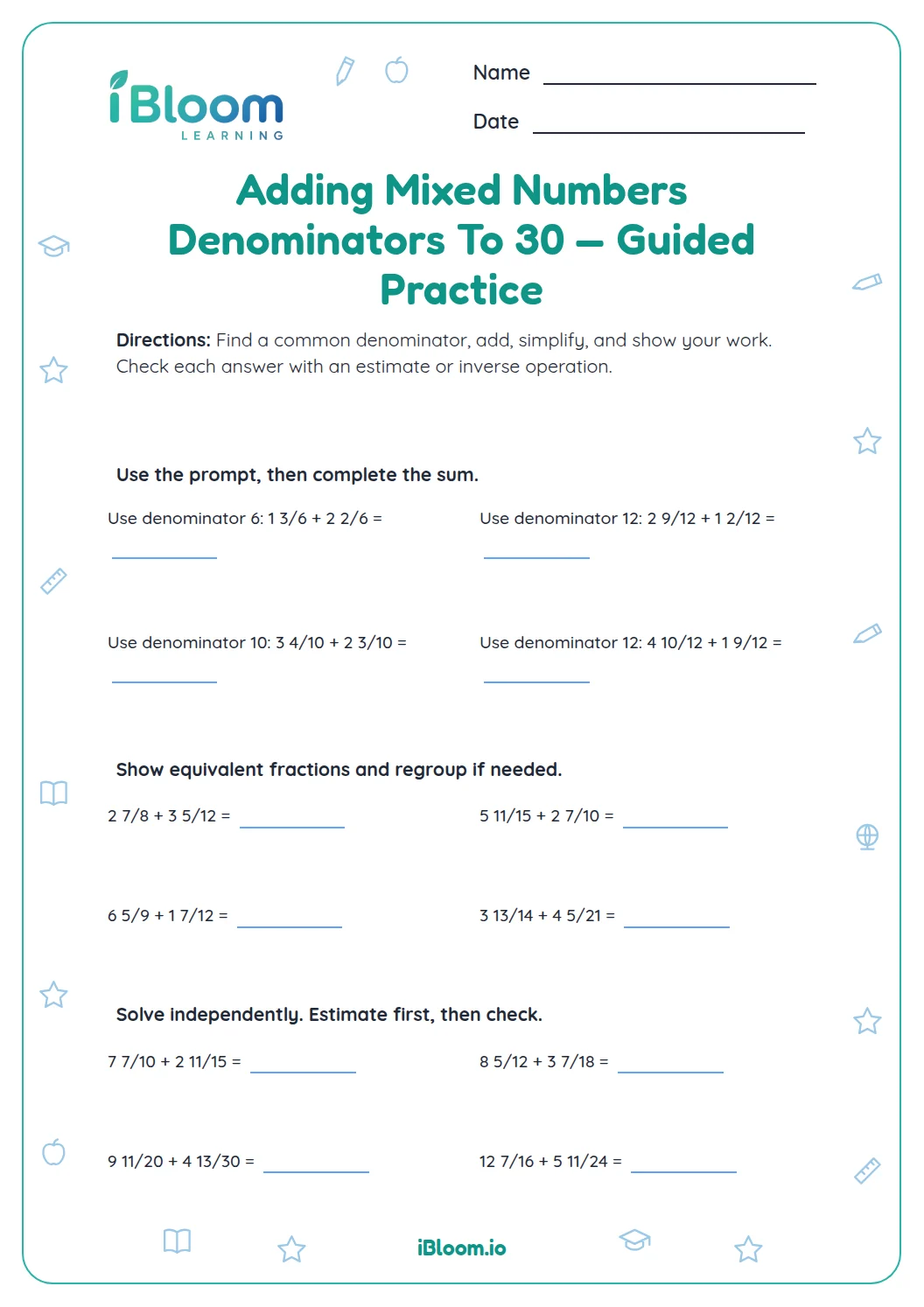
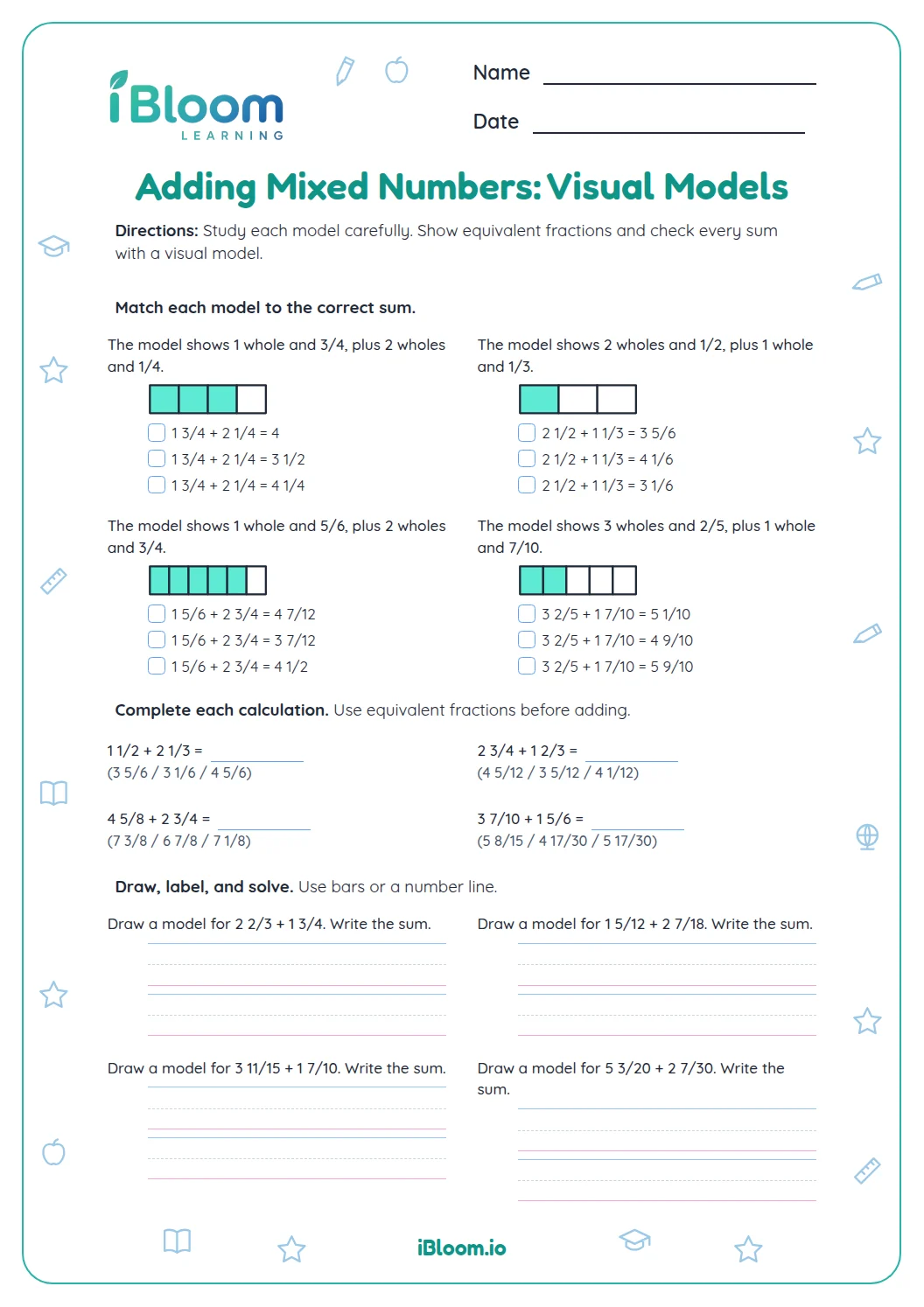
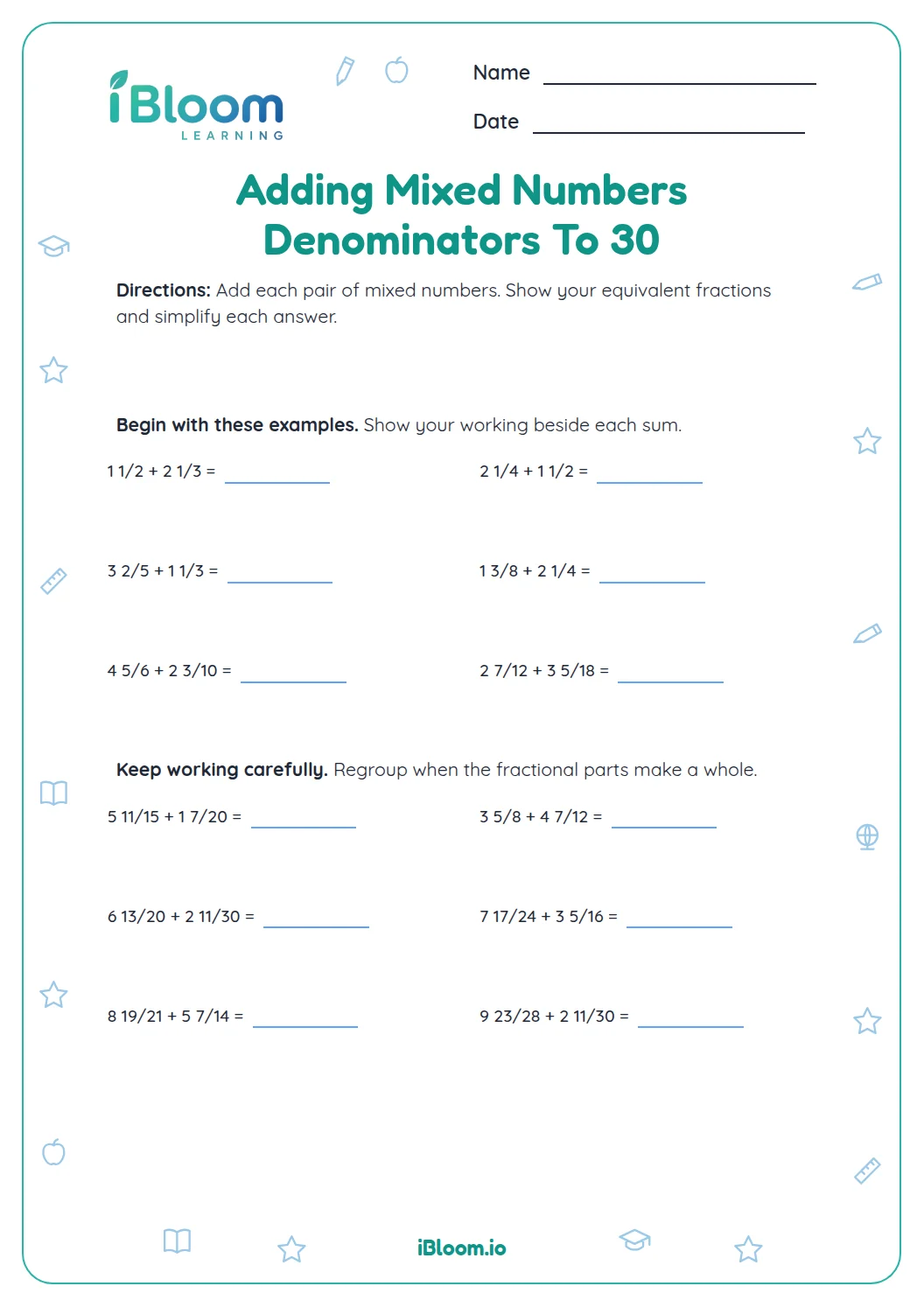
This free printable worksheet is for Grade 6 learners practicing subtracting mixed numbers in measurement situations. It includes 16 questions arranged in parts that move from guided recognition or direct practice to independent application, plus a separate answer key for checking responses.
How can learners practice subtracting mixed numbers in measurement situations?
For question 1, subtract the fractional parts with denominator 12, then subtract the whole numbers: 5 7/12 − 2 5/12 = 3 2/12 = 3 1/6 m. Reduce the fraction and keep the unit from the question.
What is on the worksheet?
The 16 items move from supported practice to independent application. The answer key is a separate page.
How to use this worksheet
- 1Read the directions before starting each part.
- 2Complete the early items together if a reminder is useful.
- 3Work through the remaining questions in order.
- 4Use the answer key after finishing to review answers.
Common mistakes and quick fixes
The mistake
Rushing past an important word in the prompt.
The fix
Underline the action word and identify what the question asks.
The mistake
Skipping a check after finding an answer.
The fix
Read the prompt again and see whether the answer fits.
The mistake
Leaving a response incomplete.
The fix
Return to each item and fill every requested blank or line.
What to practice next
Questions parents and teachers ask
How many problems are included?
There are 16 real-world subtraction problems in two parts. The first part uses like denominators; the second uses unlike denominators. Answers are written as simplified mixed numbers with the unit named in each situation. This gives a clear way to review the skill together and discuss how the response fits the question.
How do I subtract mixed numbers with unlike denominators?
Rename the fractions with a common denominator before subtracting. If the top fraction is smaller, regroup one whole as a fraction with that denominator. Simplify the remaining fraction and include the measurement unit from the question. This gives a clear way to review the skill together and discuss how the response fits the question.
Are the denominators limited to 30?
The unlike-denominator items use denominators no greater than 24 in their given fractions, and the common denominators needed to solve them remain within 30. Learners may simplify an answer when possible. This gives a clear way to review the skill together and discuss how the response fits the question.
Is an answer key included?
Yes. The key gives the result for each situation, including its unit. Use it after solving, and if an answer differs, check the common denominator and any regrouping before redoing the subtraction. This gives a clear way to review the skill together and discuss how the response fits the question.
Why do the questions use measurement stories?
The situations frame subtraction as finding what remains after a length, amount, or distance is used or completed. Translate the story into starting amount minus amount taken away, then check that the difference is smaller than the starting amount. This gives a clear way to review the skill together and discuss how the response fits the question.