


About this worksheet
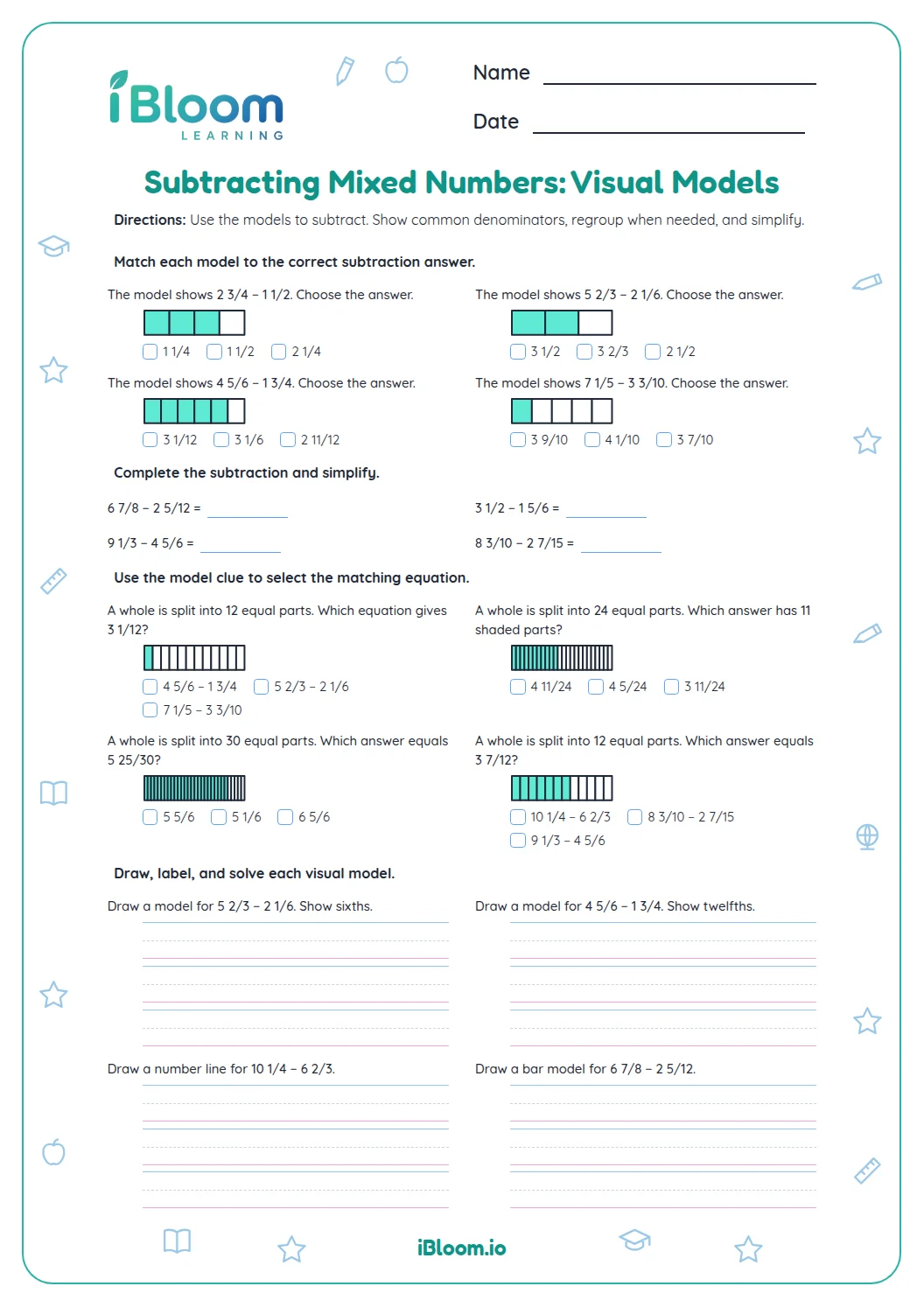
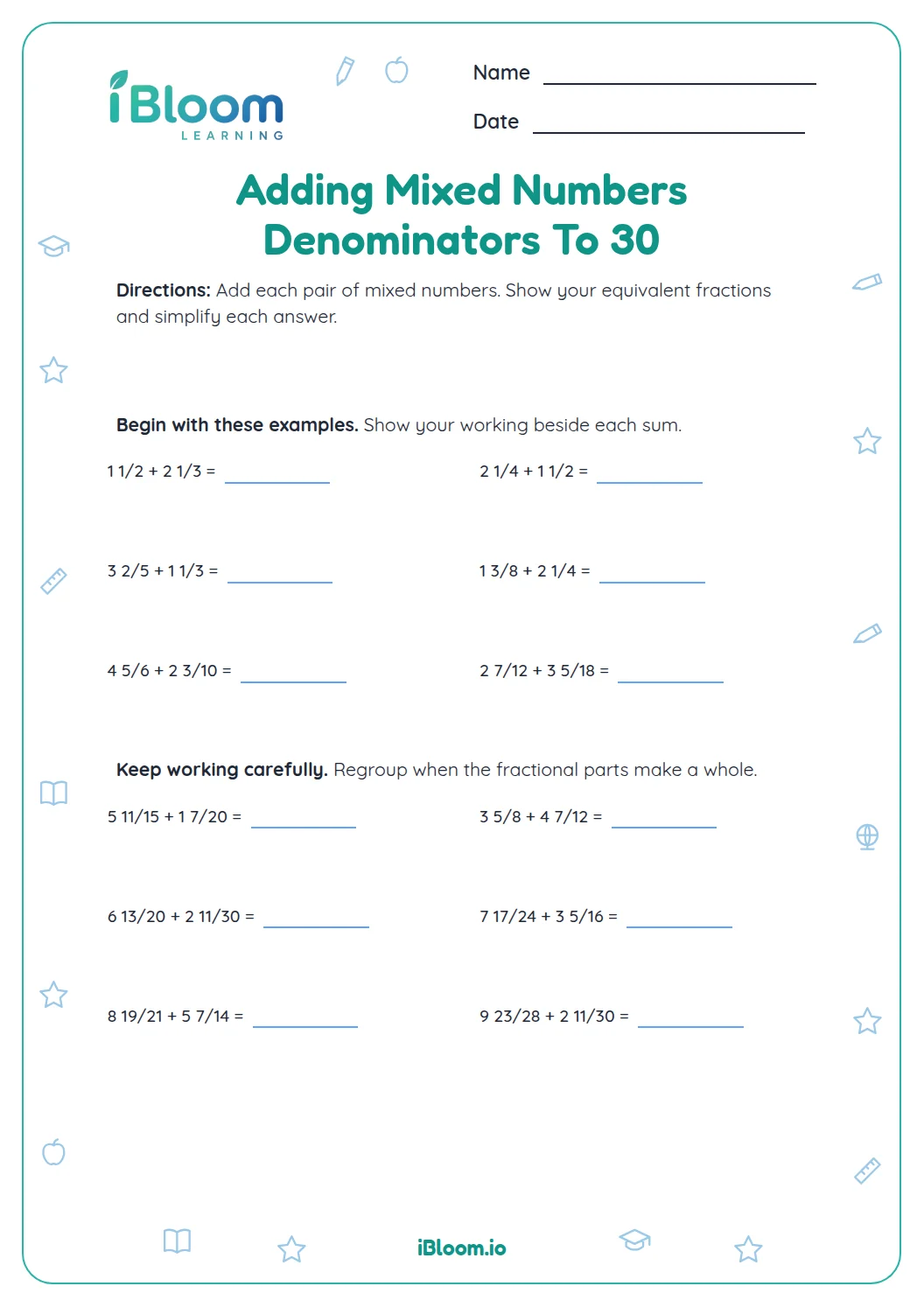
This worksheet uses shaded fraction bars alongside mixed-number subtraction. Students find common denominators up to 30, regroup when needed, and solve two application problems. The models reinforce how fractional parts can be renamed before subtracting.
Aligned to 5.NF.A.1
Connect a model to a mixed number
A fraction names equal parts of one whole. The shaded bars beside the subtraction items model a fractional amount in equal parts; use them as a visual reminder while finding common denominators. Question 2 pairs a bar divided into eighths with 4 3/8 − 1 1/8.
Find a common denominator and regroup
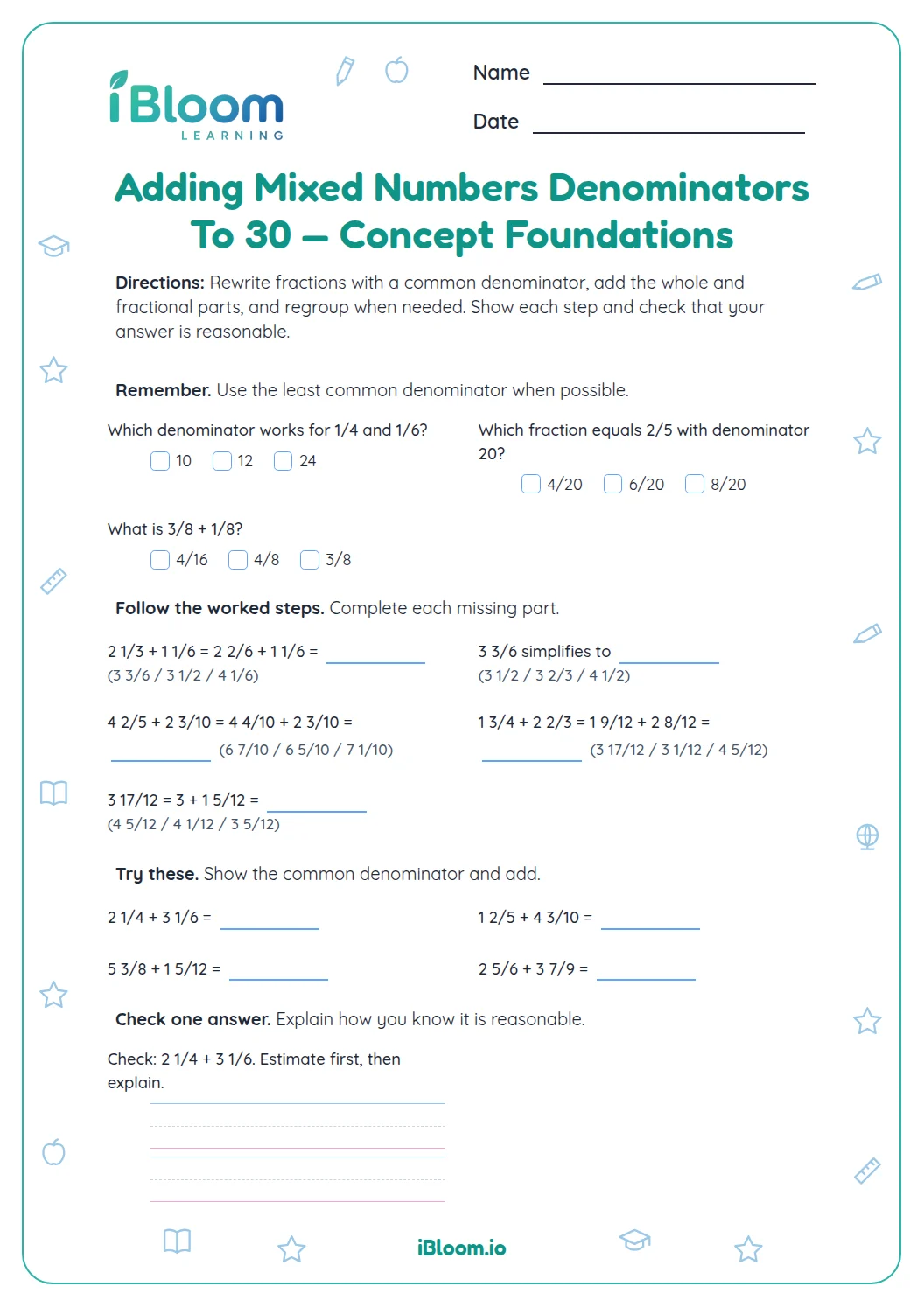
Rename fractions with a common denominator before subtracting. If the first fractional part is smaller, rename one whole as fractional parts. Reduce the final fraction when its numerator and denominator share a factor.
Practice in three steps
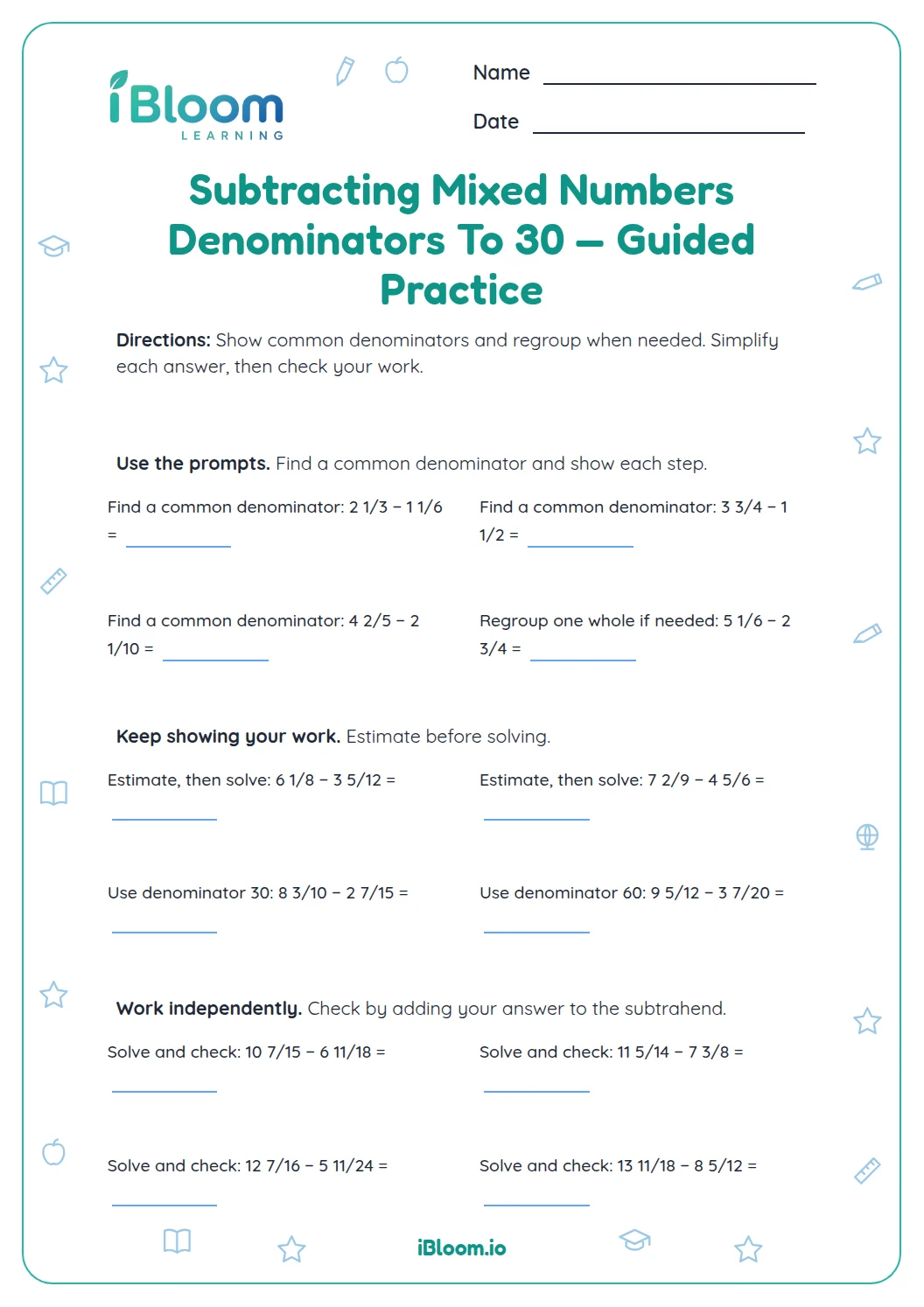
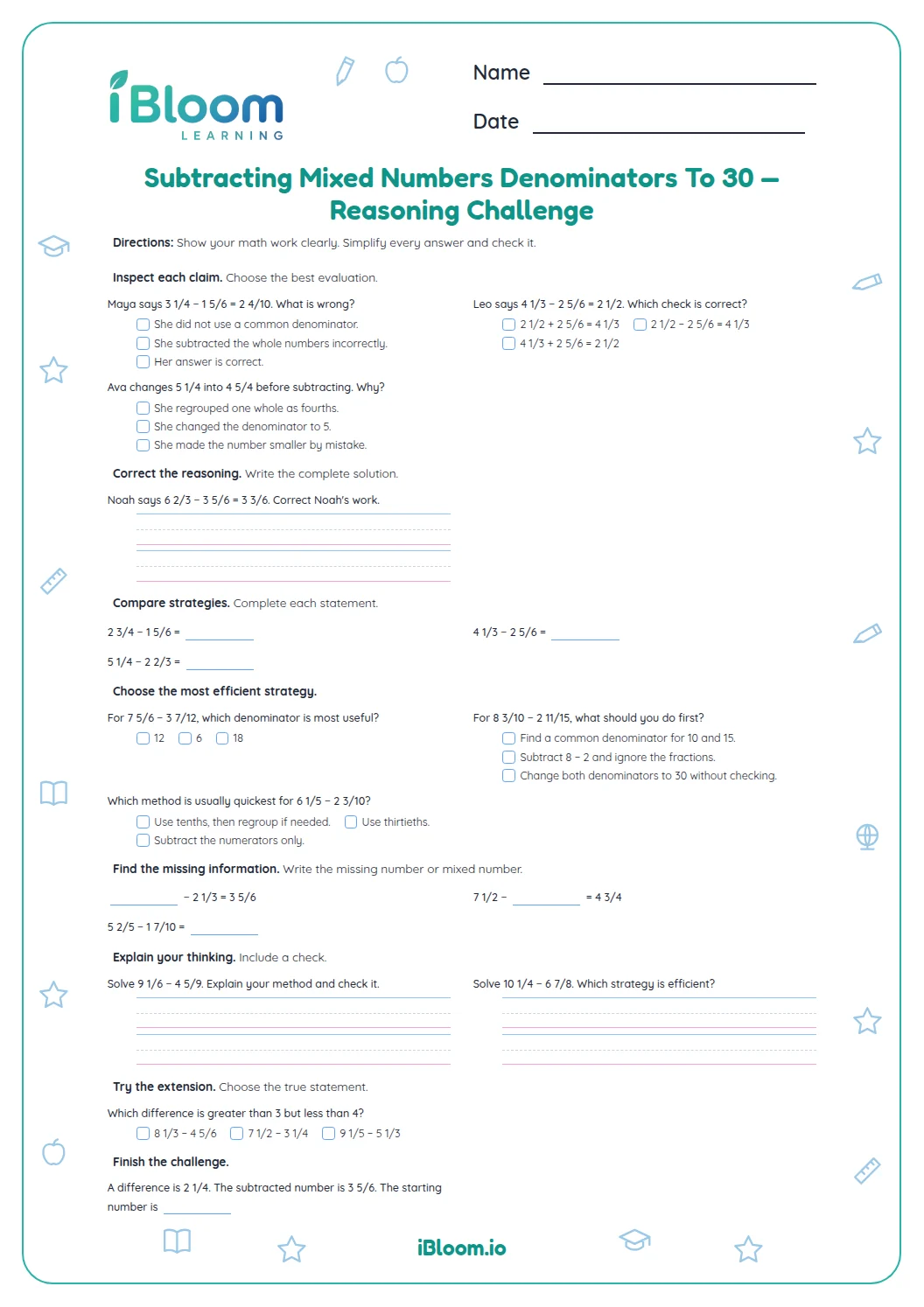
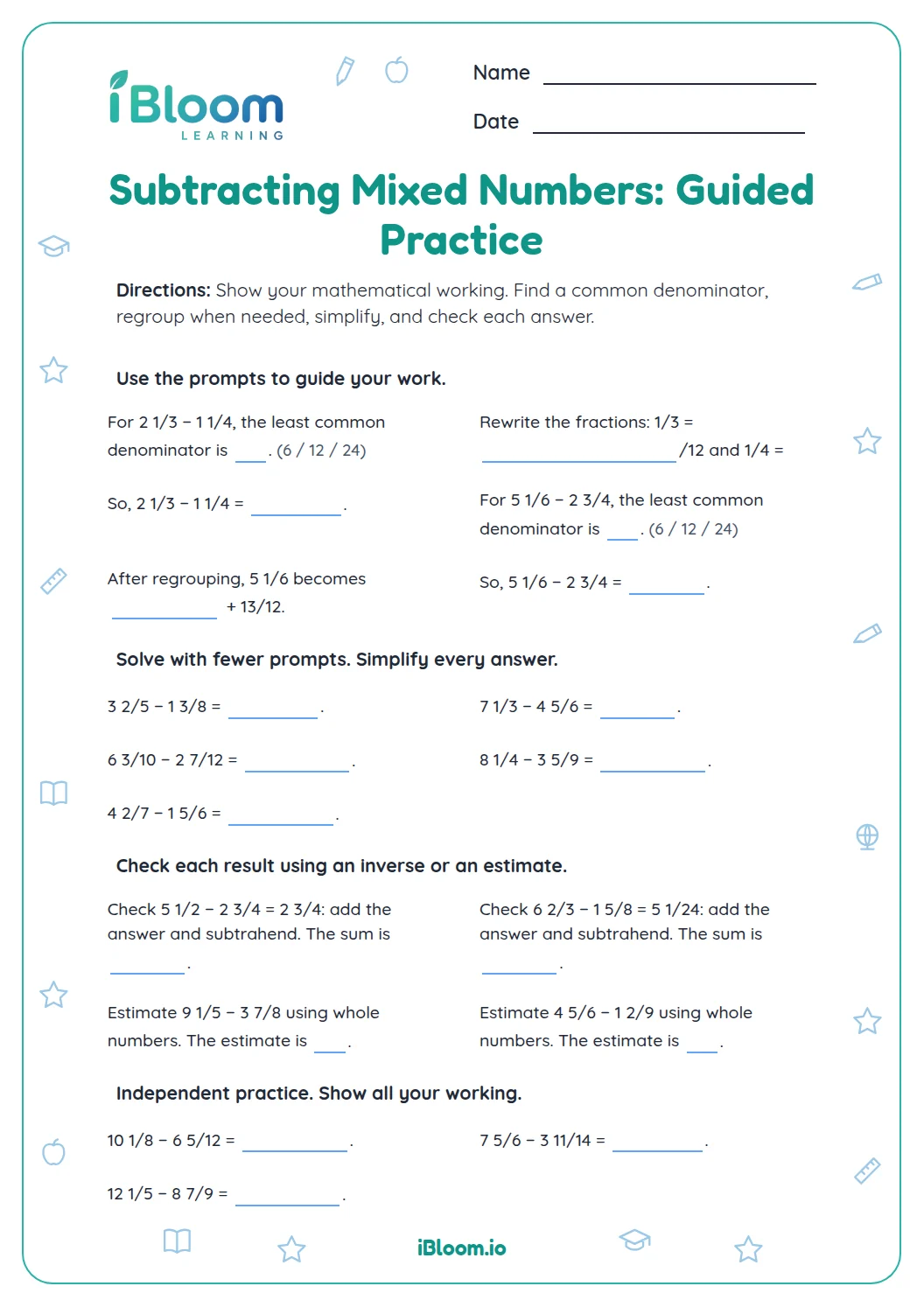
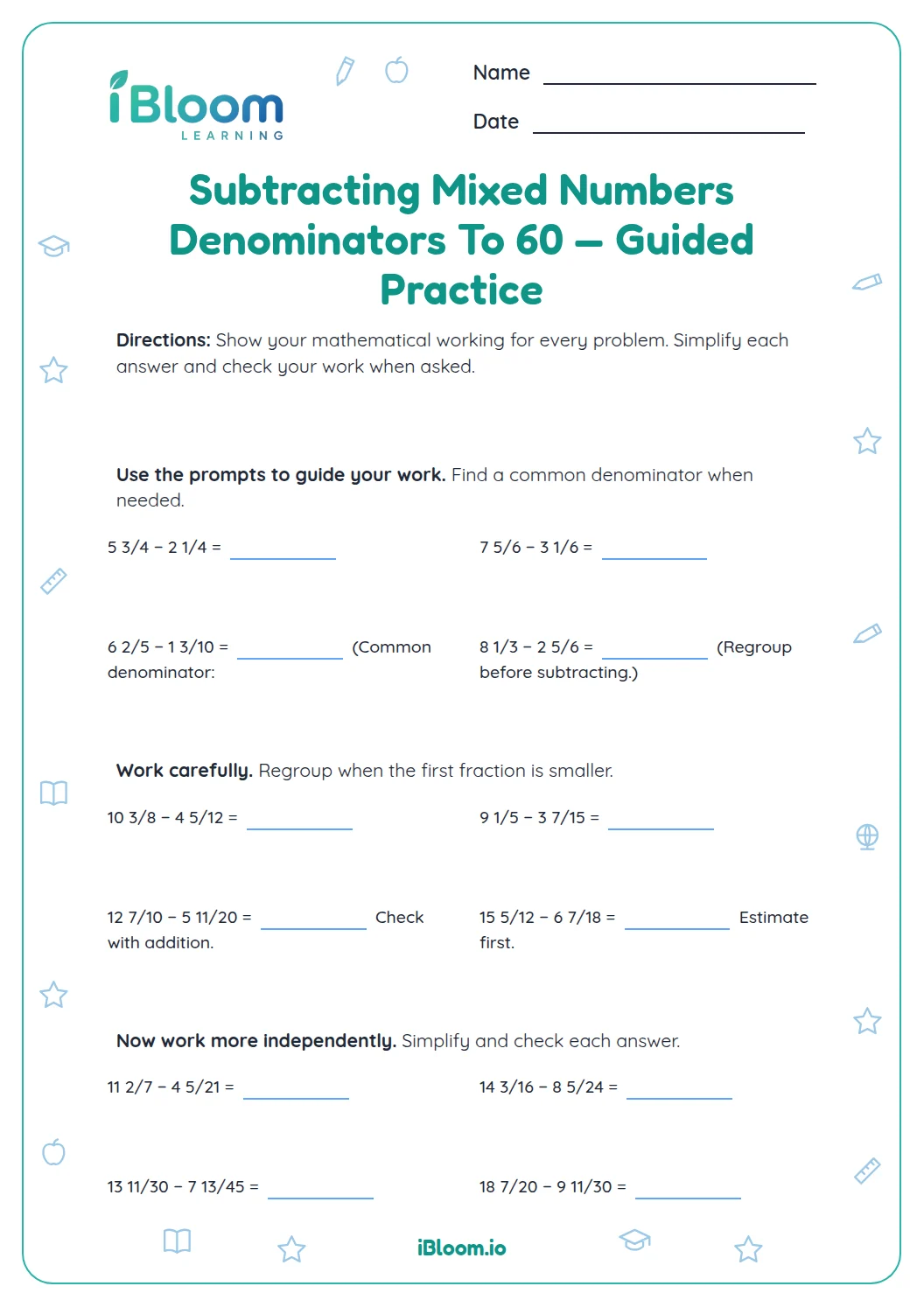
Part A pairs shaded fraction bars with subtraction calculations, followed by two short story problems. This three-page worksheet makes room for models and working space. Students find common denominators, regroup when needed, and simplify.
- Read whole and fractional parts
- Subtract with like and unlike denominators
- Regroup and simplify
- Label story answers with units
How to use this worksheet
- 1Use Part A to review whole and fractional parts.
- 2Find a common denominator for Part B.
- 3Regroup one whole when the first fractional part is too small.
- 4Reduce the final fraction and check by adding back.
Common mistakes and quick fixes
The mistake
Subtracting denominators as well as numerators.
The fix
Use a common denominator, then subtract only the numerators.
The mistake
Subtracting a larger fractional part from a smaller one without regrouping.
The fix
Trade one whole for fractional parts.
The mistake
Leaving a reducible fraction.
The fix
Check the numerator and denominator for a common factor.
Common Core alignment
Students make equivalent fractions with common denominators to subtract mixed numbers.
Students rename mixed-number fractions with common denominators before subtracting.
On this sheet:
Show the official wordingHide the official wording
Add and subtract fractions with unlike denominators (including mixed numbers) by replacing given fractions with equivalent fractions in such a way as to produce an equivalent sum or difference of fractions with like denominators.
What to practice next
Make more practice
Further reading
Questions parents and teachers ask
How do I subtract mixed numbers with different denominators?
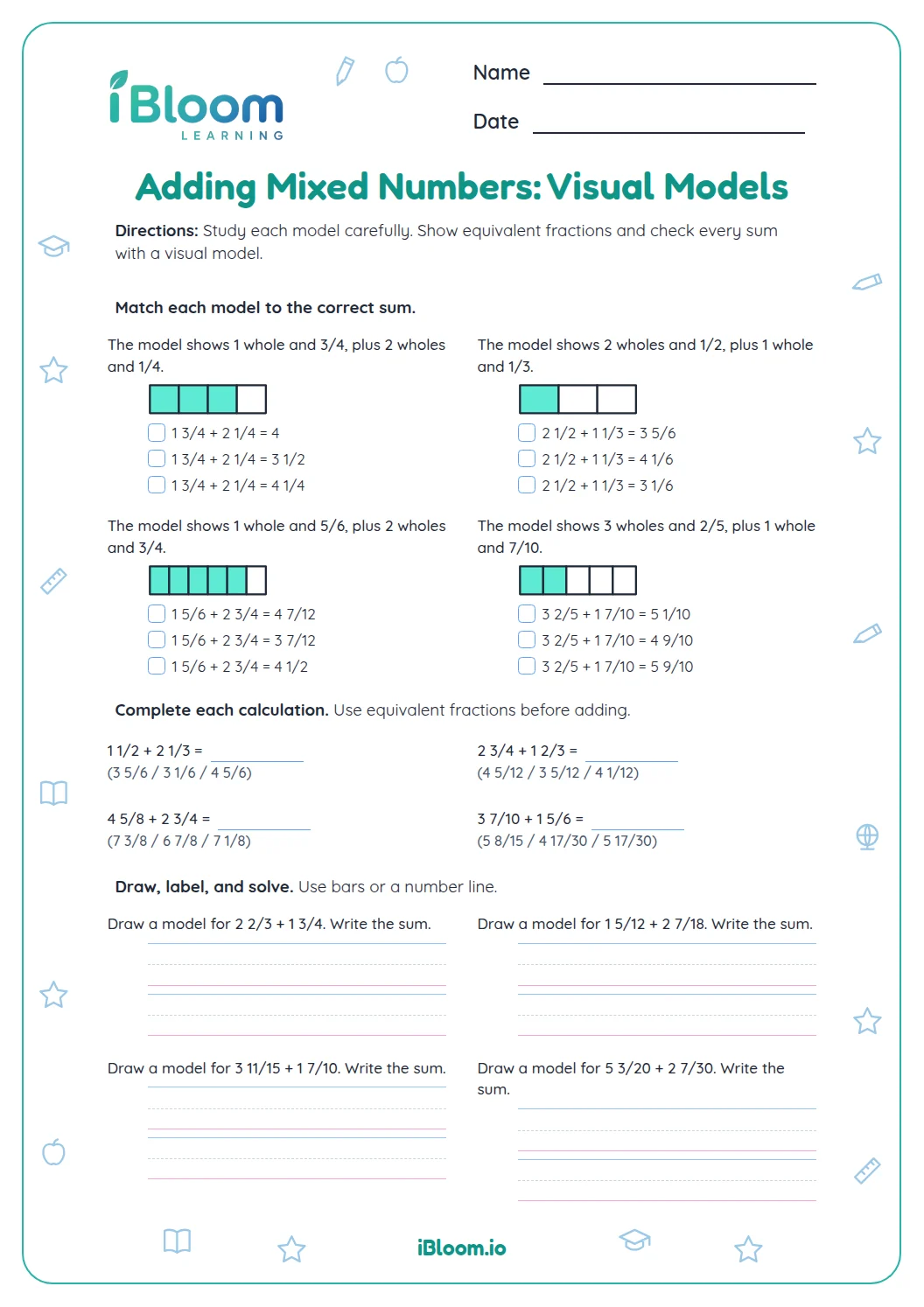
First read the model as a mixed number: count each completely shaded bar as one whole, then count shaded pieces in the partial bar. For example, one whole bar and five of eight pieces represents 1 5/8. The model questions review this structure before subtraction.
When should I regroup?
Find a common denominator so both fractional parts name pieces of the same size. The least common multiple is often convenient. Rename each fraction as an equivalent fraction, then subtract the numerators and whole-number parts. Reduce the final fraction if its terms share a factor.
Why use a common denominator?
Regroup when the first mixed number’s fractional part is smaller than the second number’s fractional part. Trade one whole from the first number for fractional pieces using the common denominator. Then subtract the fractional parts and whole numbers. The example in the page text shows this process.
Should I simplify the answer?
A common denominator makes the fractional pieces equal in size. For example, fourths and eighths cannot be subtracted by comparing their numerators directly. Rename fourths as equivalent eighths, then subtract the counts of eighth-sized pieces. This keeps the amount represented unchanged.
What do the visual models show?
The shaded fraction bar shows three of four equal parts in one whole. It refreshes the idea of fractional pieces before students find common denominators and subtract mixed numbers. The later questions use denominators up to 30, including regrouping and story problems.
Are there word problems?
The shaded bars show mixed numbers as whole units plus fractional parts. They do not draw every later denominator, since those calculations may use common denominators up to 30. The models provide a visual review before students continue with numerical subtraction and story problems.