



About this worksheet
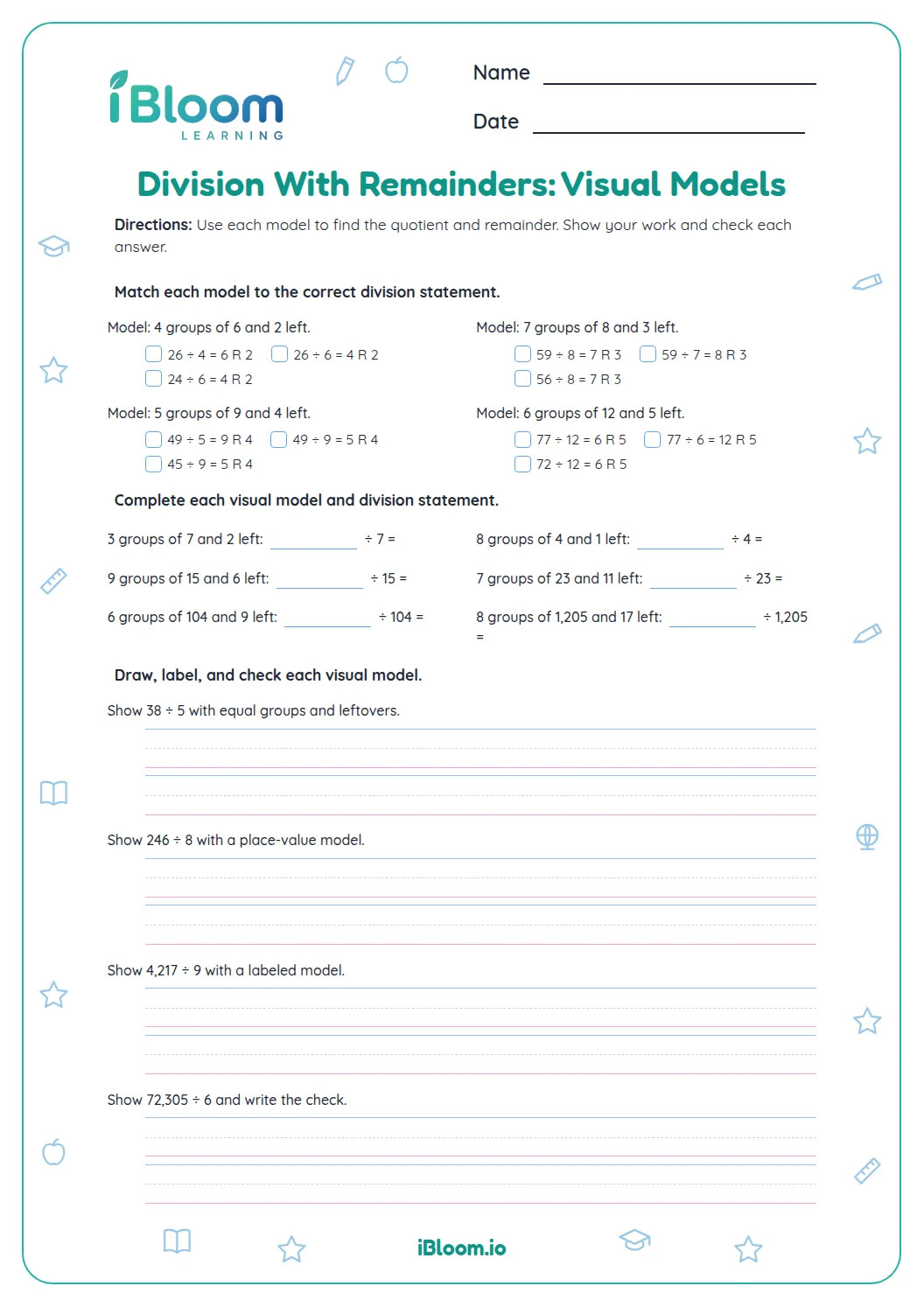
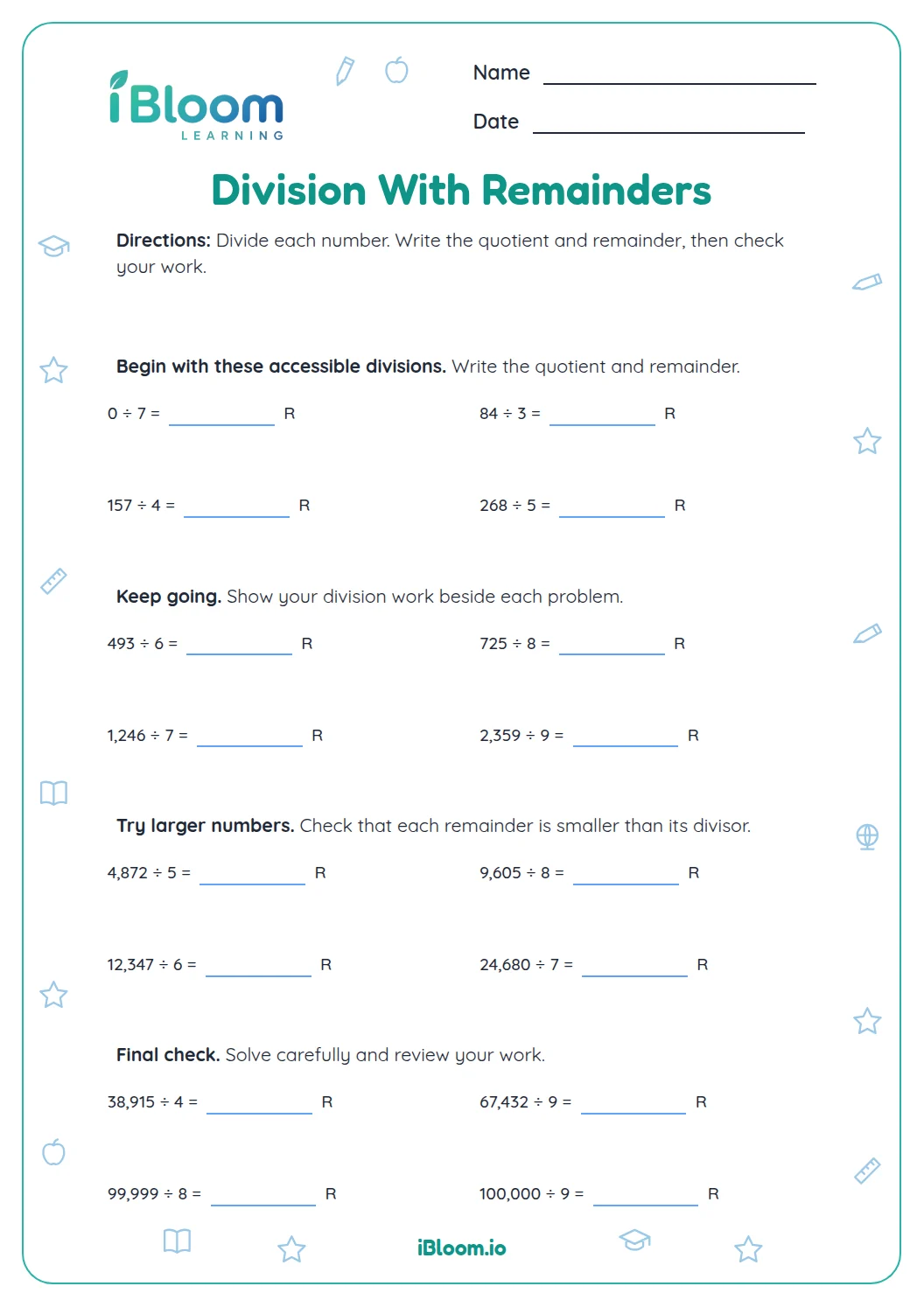
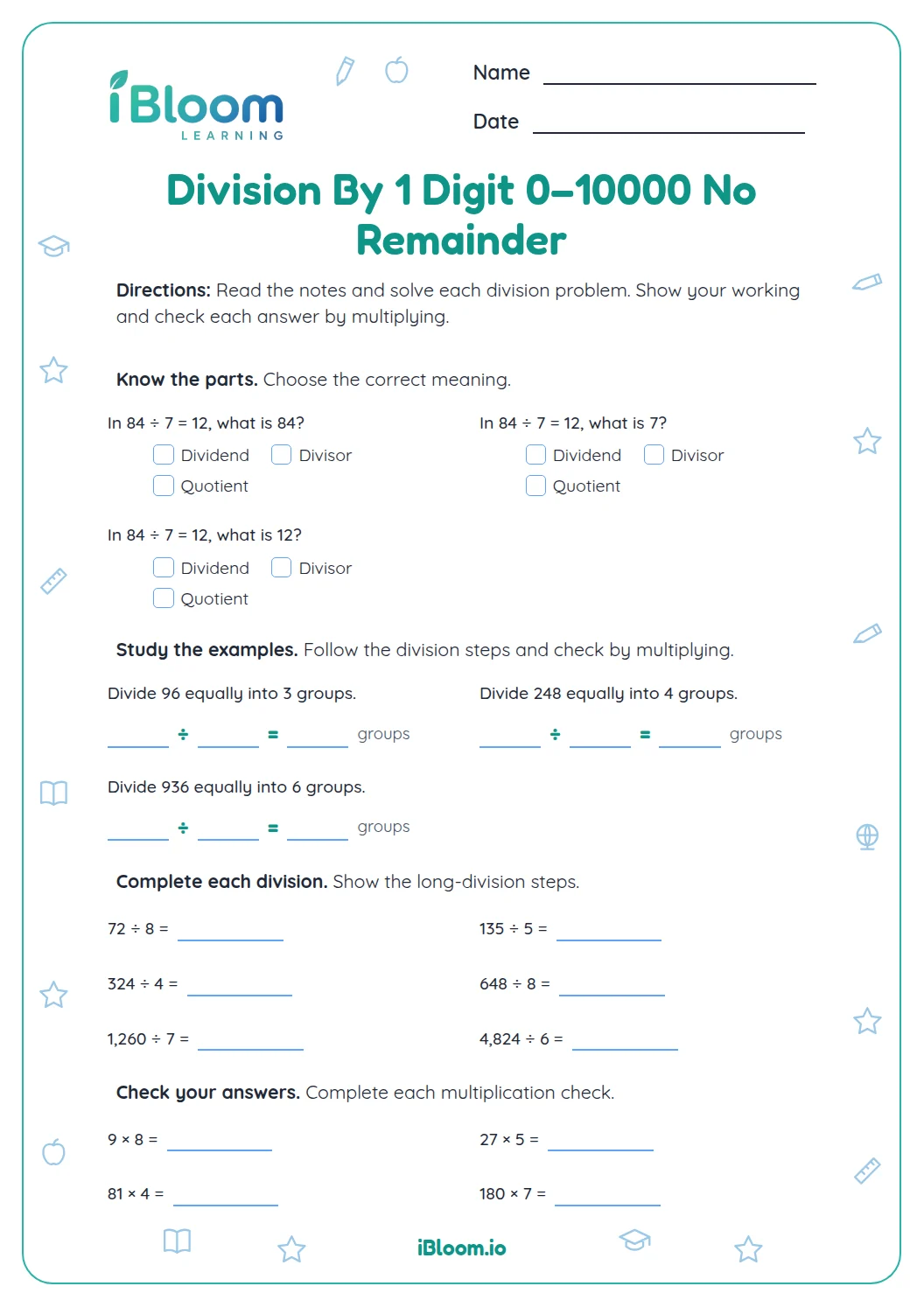
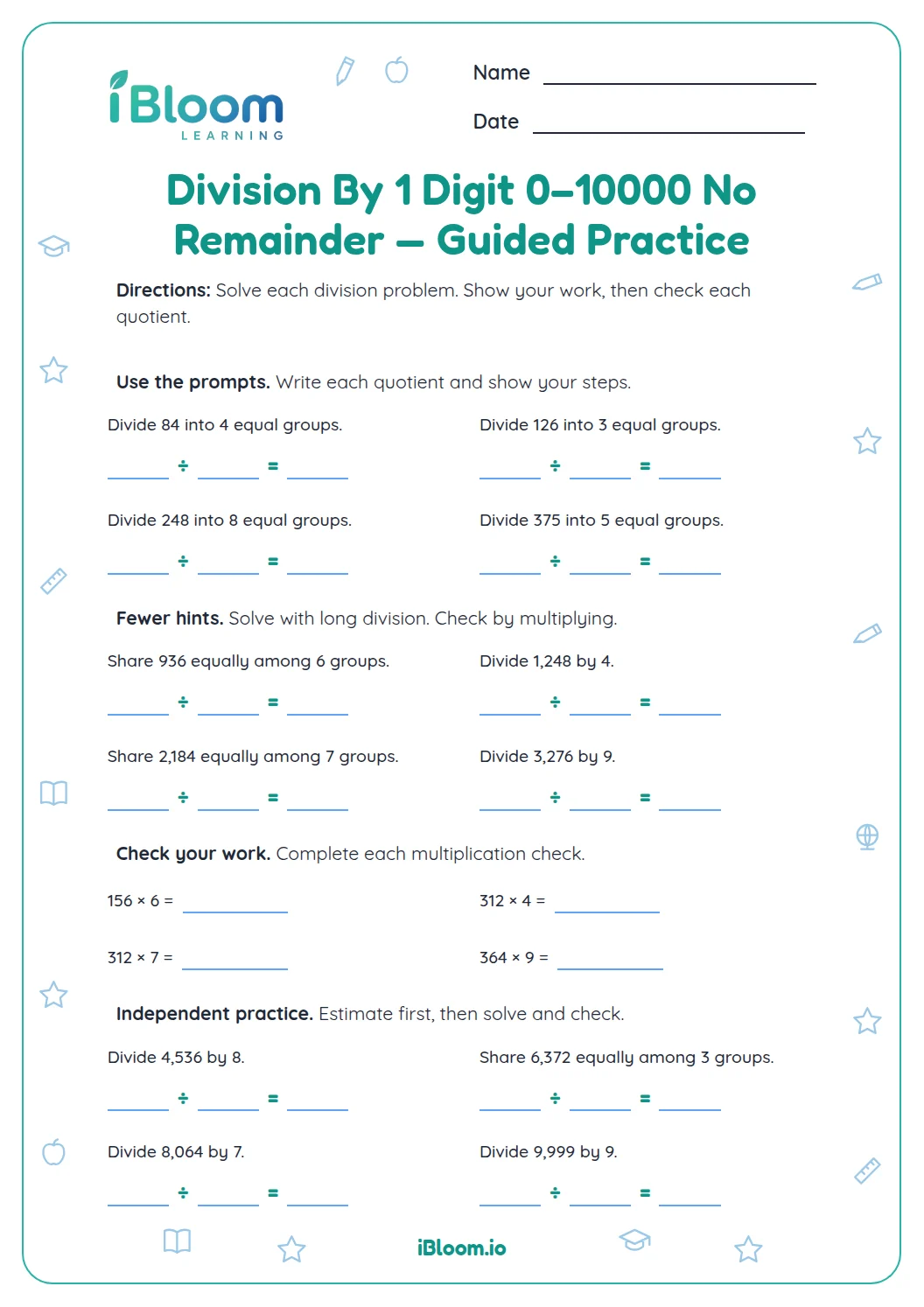
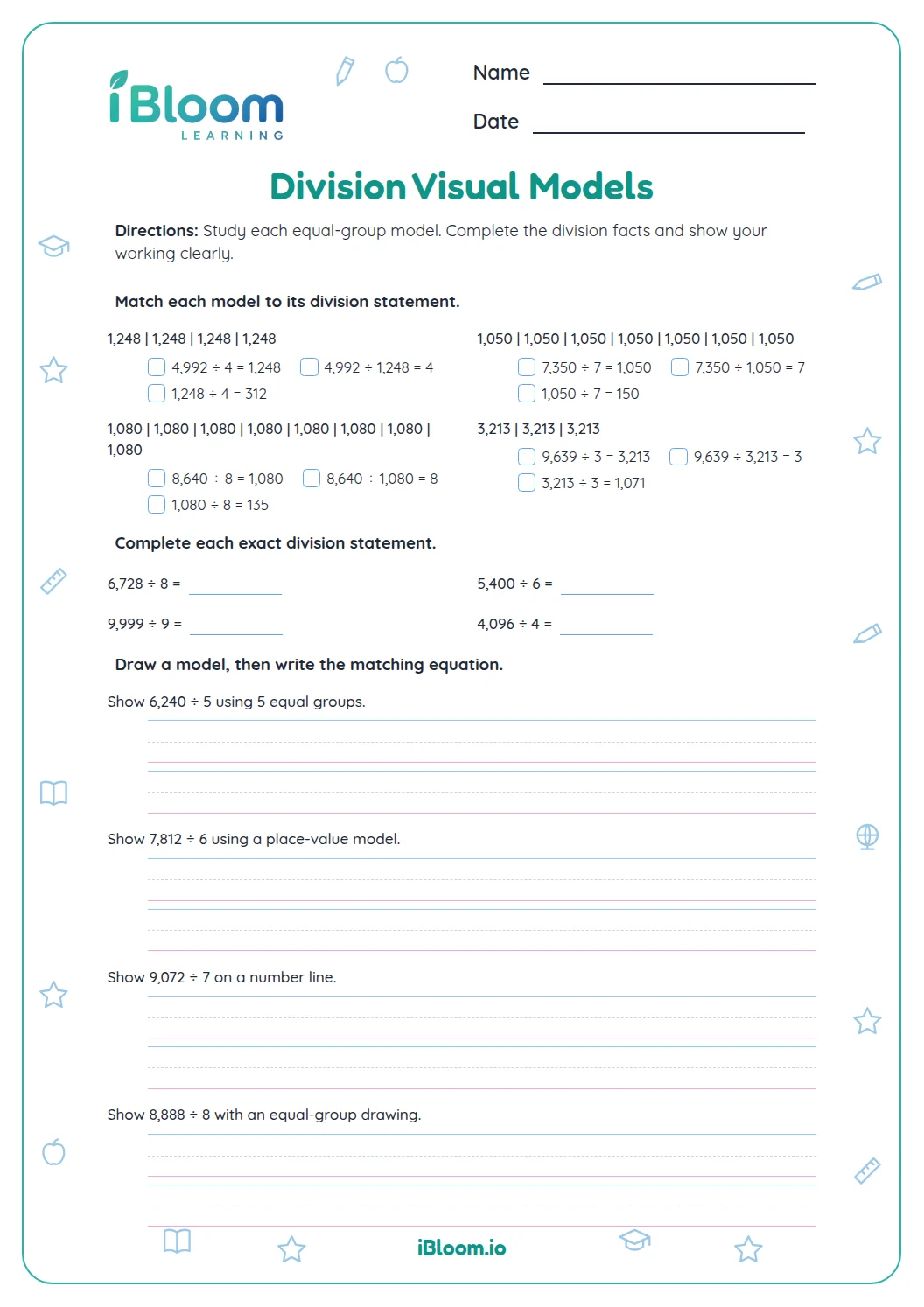
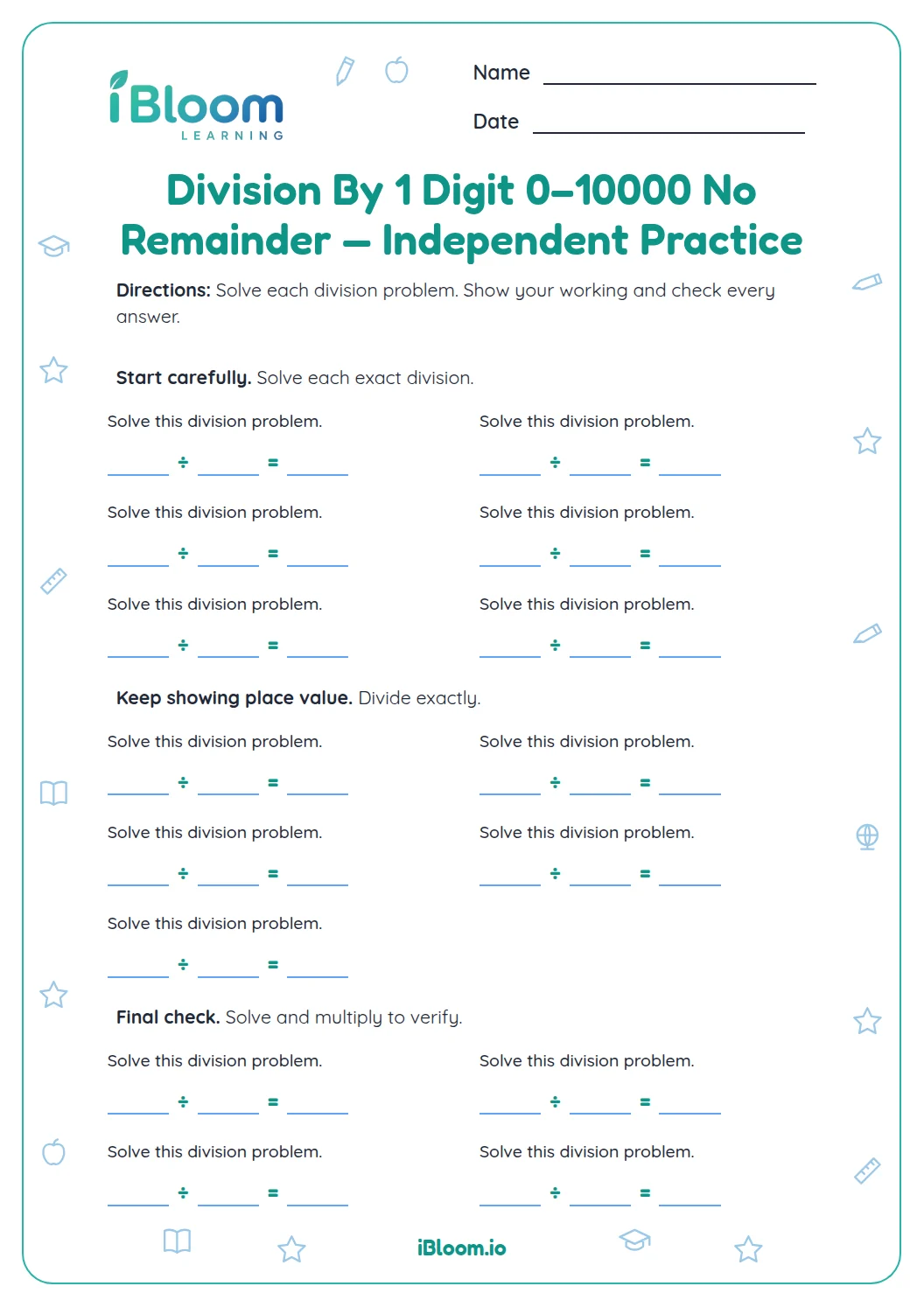
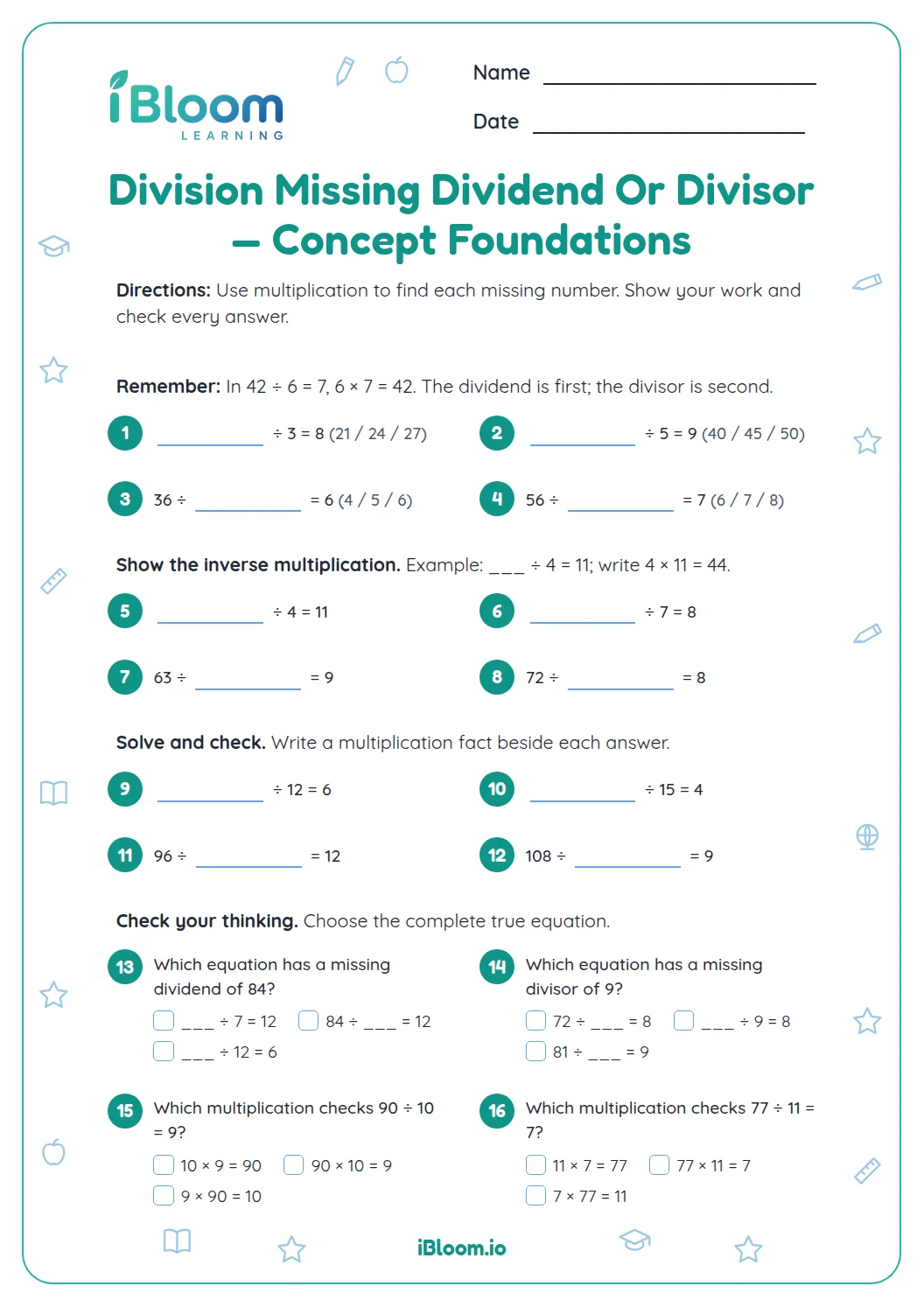
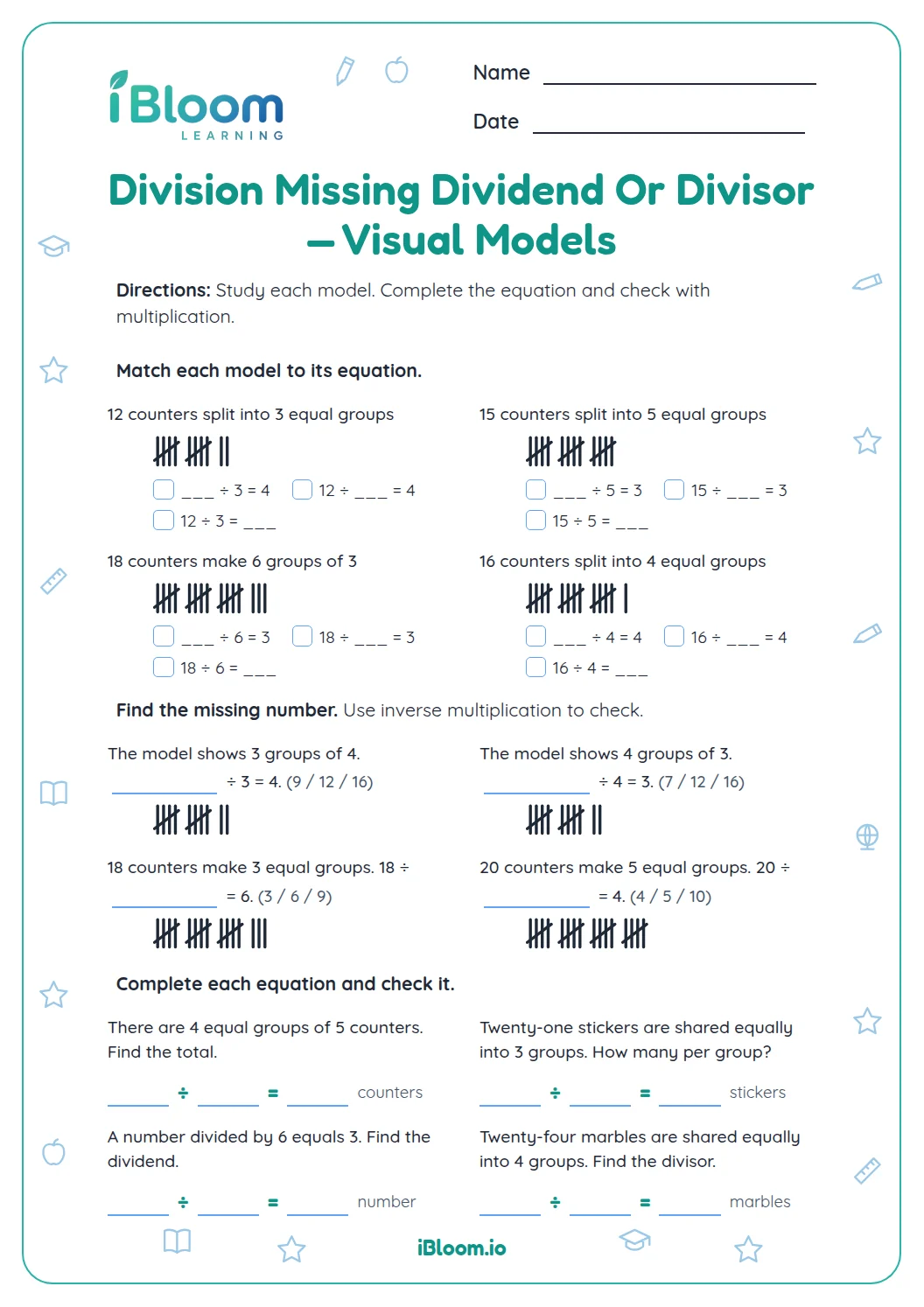
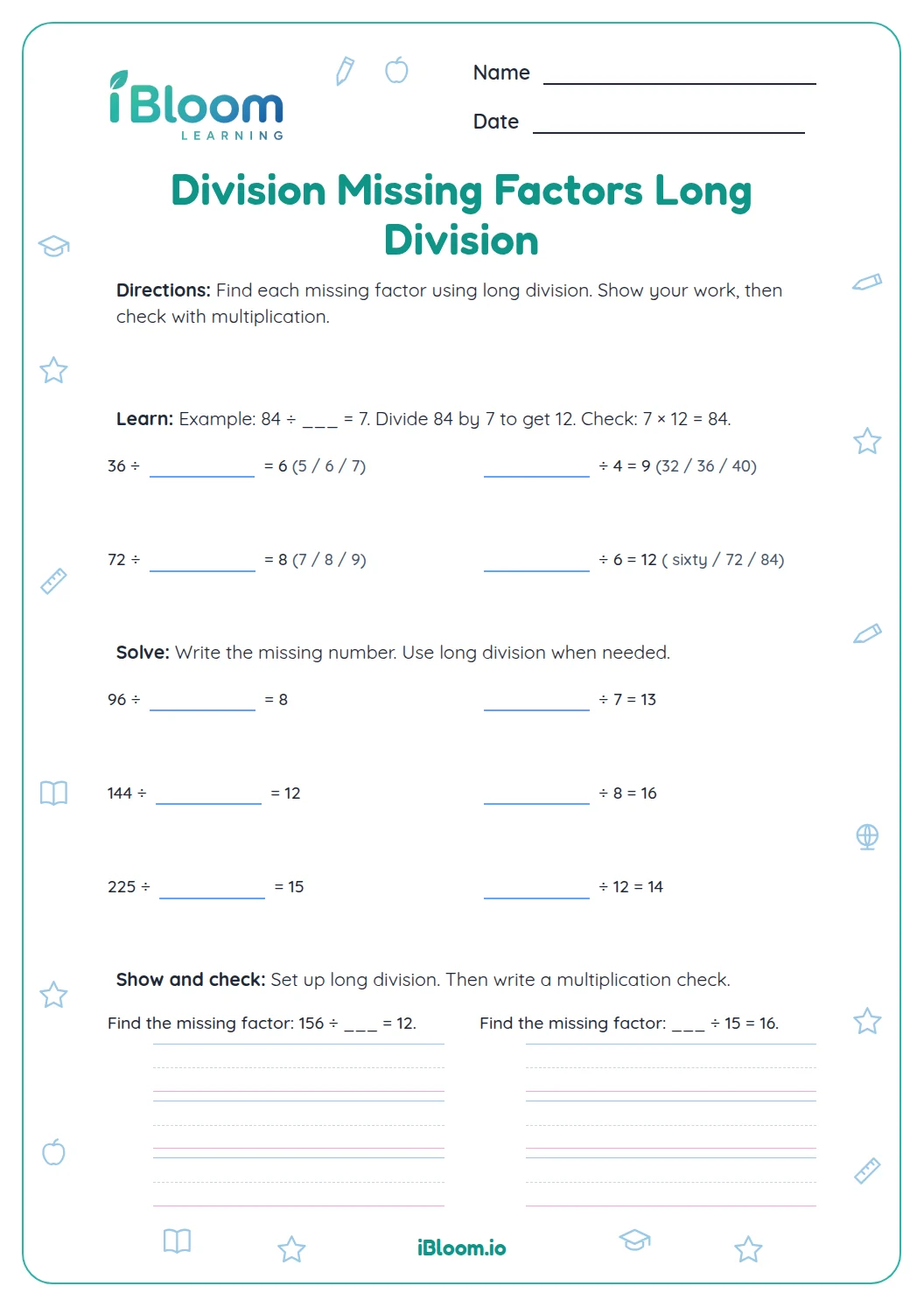
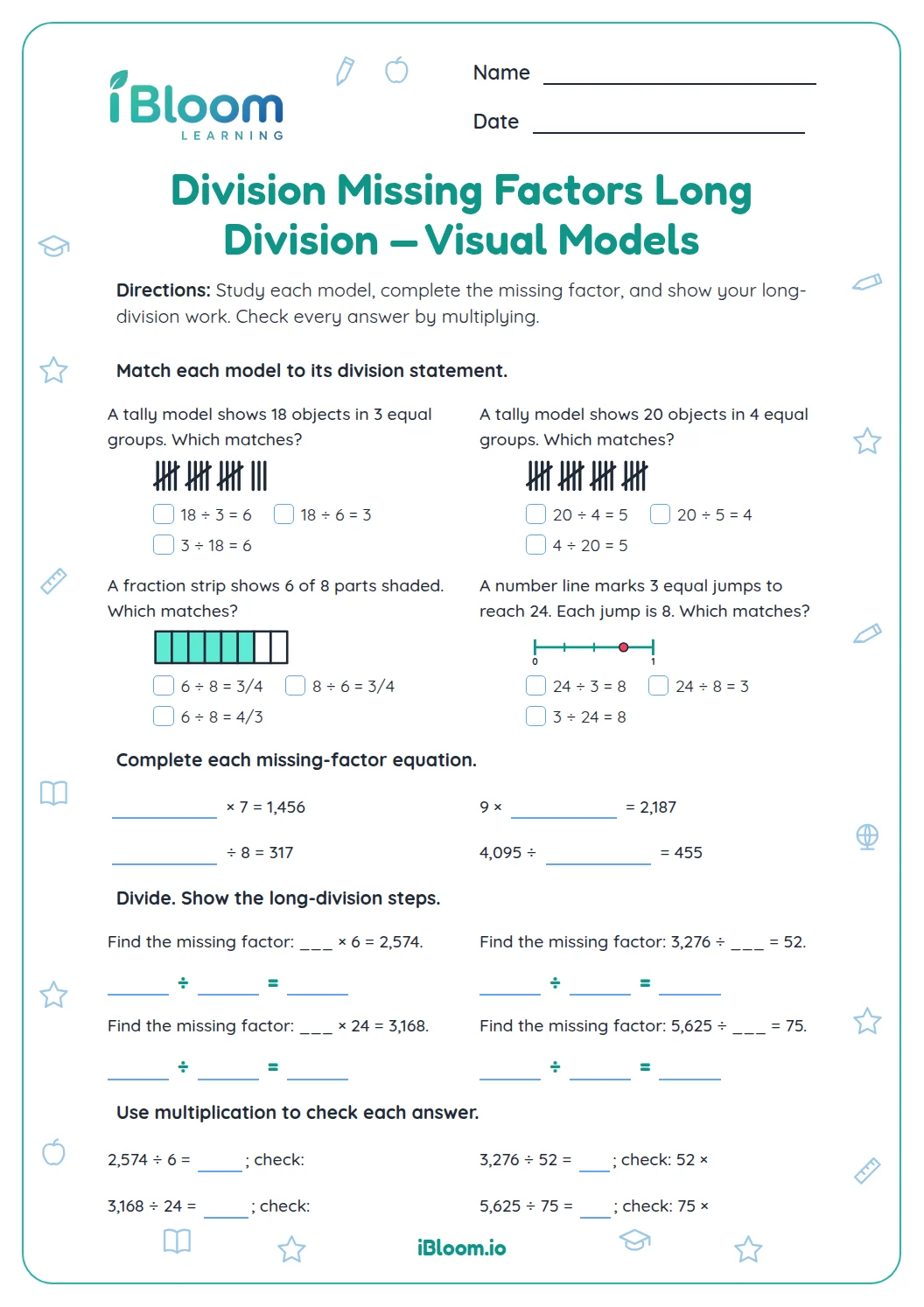
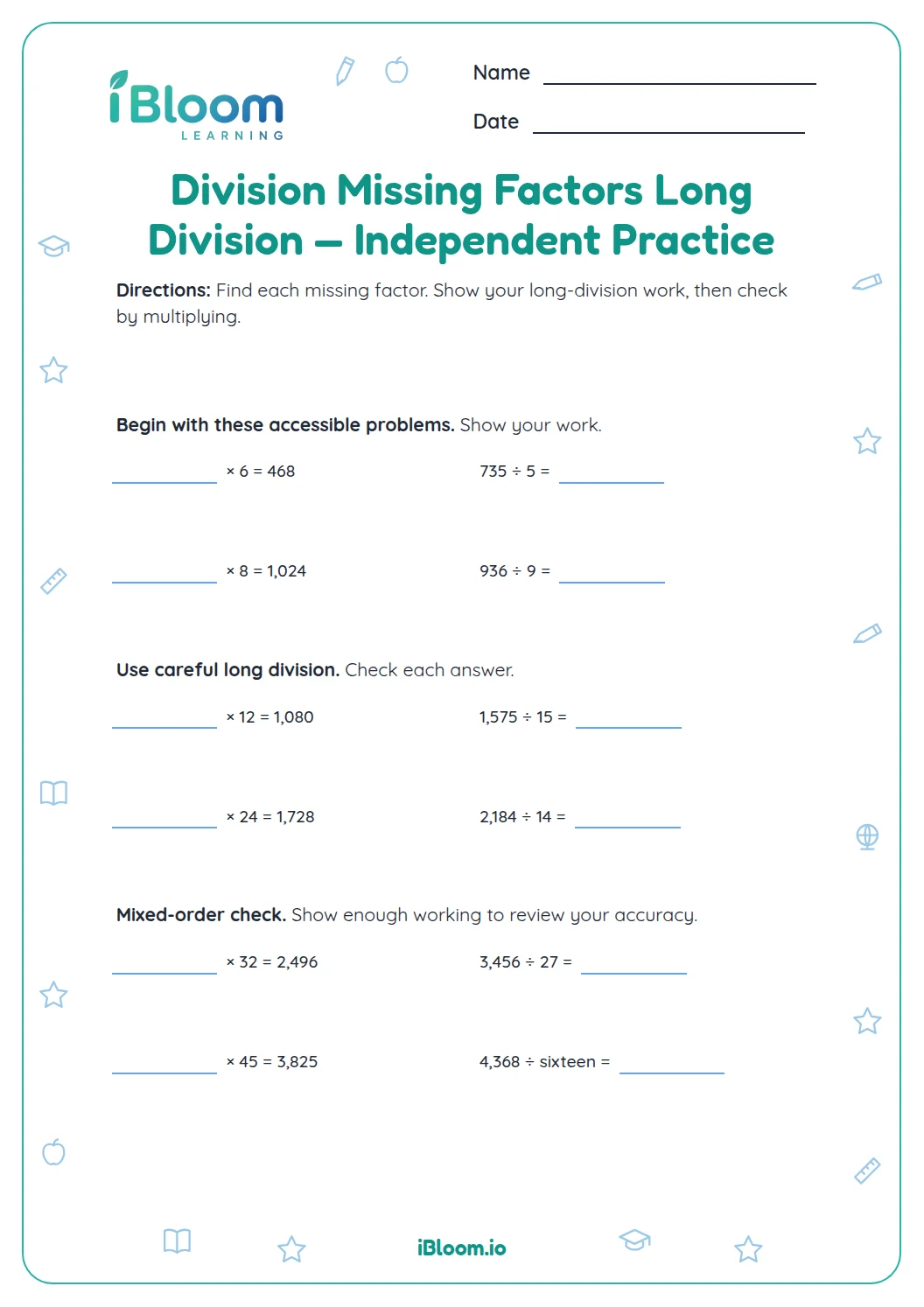
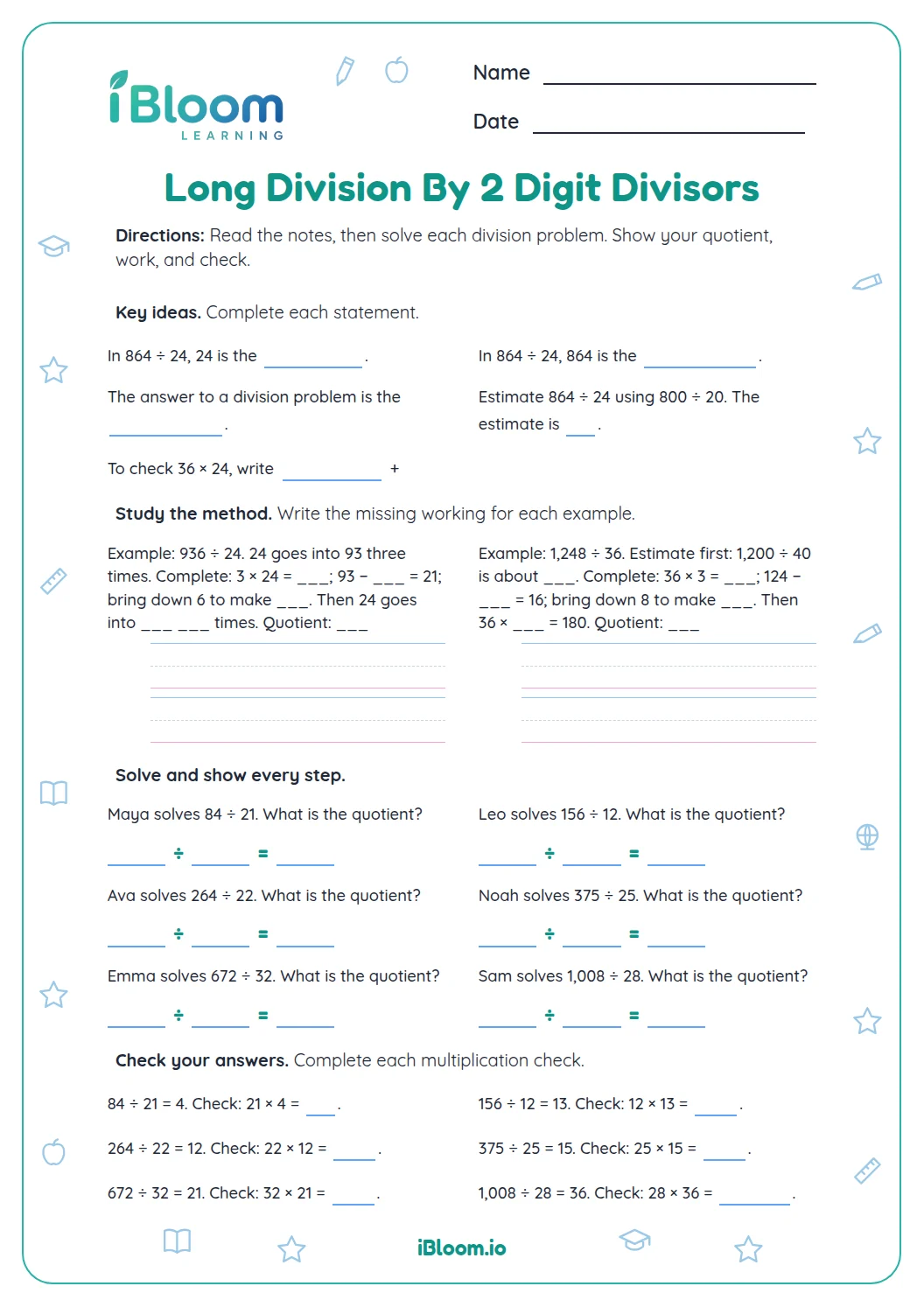
This free Grade 6 worksheet gives students 14 problems dividing multi-digit whole numbers by one-digit divisors. Students calculate quotients and remainders, use multiplication to check inverse problems, and apply division to equal-sharing contexts. Two later questions ask students to explain whether a remainder is valid. The separate answer key includes concise results and sample reasoning. This practice connects to Common Core 6.NS.B.2, fluently dividing multi-digit numbers with the standard algorithm.
Aligned to 6.NS.B.2
What kinds of division problems are included?
Part A begins with quotient-and-remainder calculations and inverse questions. Part B applies division to cards, kits, libraries, crates, and tickets. Part C asks students to check a remainder claim and explain an error.
- Calculate quotients with remainders
- Use multiplication to find a missing dividend
- Interpret remainders in equal groups
- Explain why a remainder is valid or too large
How can multiplication check a quotient and remainder?
Multiply the divisor by the quotient, then add the remainder. The result should equal the dividend, and the remainder must be smaller than the divisor.
- 16,245 ÷ 6 = 1,040 R 5 → 6 × 1,040 + 5 = 6,245, and 5 < 6.
How should students interpret a remainder in a word problem?
Read what is being grouped. Equal shares may leave items unused, while a “full kits” question asks for complete groups and leftovers. Keep the unit with the quotient and explain what remains.
How to use this worksheet
- 1Divide to find a quotient and remainder.
- 2Multiply the quotient by the divisor and add the remainder to check.
- 3Confirm that the remainder is less than the divisor.
- 4For sharing problems, label the quotient and leftover with the correct units.
- 5For an inverse problem, multiply divisor × quotient, then add the remainder.
- 6Explain the validity checks in Part C using both rules.
Common mistakes and quick fixes
The mistake
Writing a remainder equal to or larger than the divisor.
The fix
Make another group if possible; a remainder must be less than the divisor.
The mistake
Checking only divisor × quotient and forgetting the remainder.
The fix
Add the remainder after multiplying; the total should equal the dividend.
The mistake
Reporting all items as full groups in a sharing problem.
The fix
Use the remainder to state how many items are left after the complete groups are made.
Common Core alignment
This worksheet connects its practice to a Common Core learning goal.
Fluently divide multi-digit whole numbers using the standard algorithm.
On this sheet: Students divide multi-digit dividends by one-digit divisors and check remainders.
Show the official wordingHide the official wording
Fluently divide multi-digit numbers using the standard algorithm.
What to practice next
Make more practice
Further reading
Questions parents and teachers ask
What does the remainder tell a student?
A remainder tells how many items are left after making as many equal groups as possible. For example, 2,387 cards placed in five boxes gives 477 cards per box with two left. Keep the context’s units in the written answer.
How can students check a division answer?
Multiply the divisor by the quotient, then add the remainder. The result should match the dividend. Also check that the remainder is smaller than the divisor; both conditions matter when deciding whether a quotient-and-remainder statement is valid. Students can show this check in the work space.
Why does the worksheet include inverse questions?
A missing-dividend question reverses division: multiply the divisor by the quotient and add the remainder. This gives students another way to connect quotient, divisor, remainder, and dividend beyond carrying out a long-division calculation. The inverse relationship reinforces the division calculation.
How many problems and pages are included?
There are 14 written-response questions arranged in three parts: calculations and checks, real-world division, and reasoning about remainders. The worksheet and key each use three pages, leaving room to show work and explain selected answers. Each page gives room for work or a short explanation.
What should a student write for a full-kits problem?
State the number of complete kits and the leftover beads. For 8,056 beads with nine in each kit, the result is 895 full kits and one bead remaining. The units clarify why the remainder is not another full kit. The key shows both the quotient and leftover.