

About this worksheet
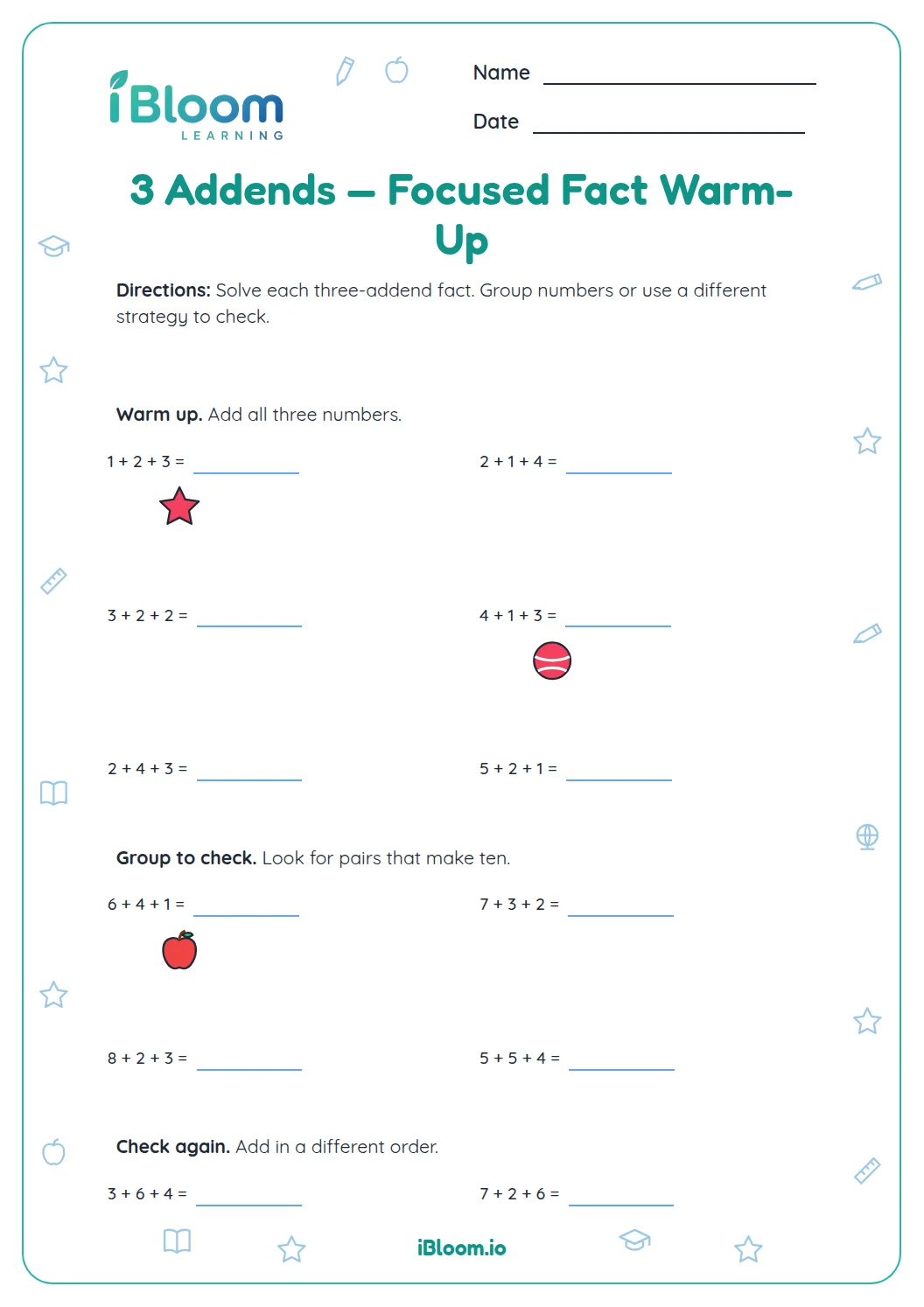
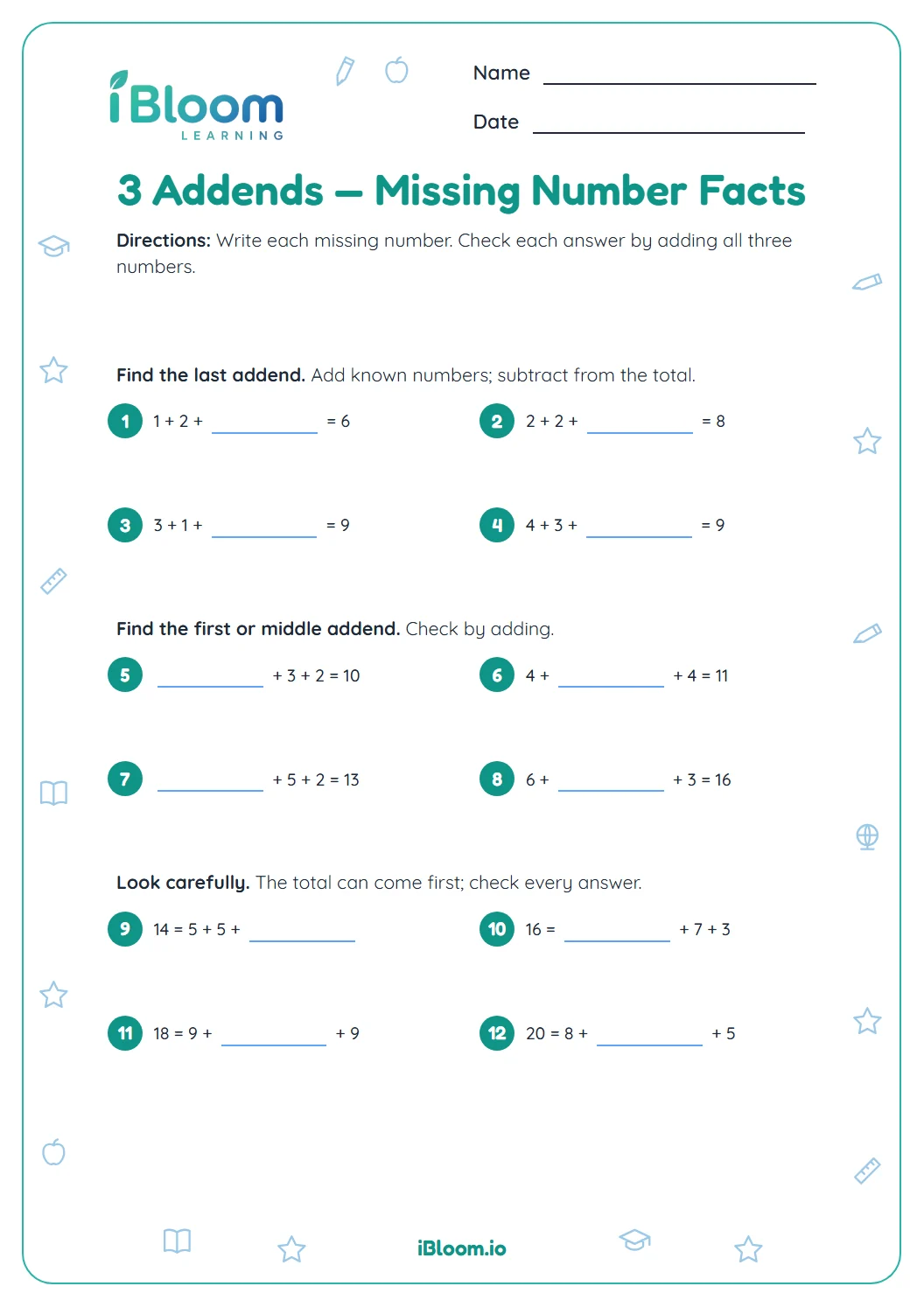
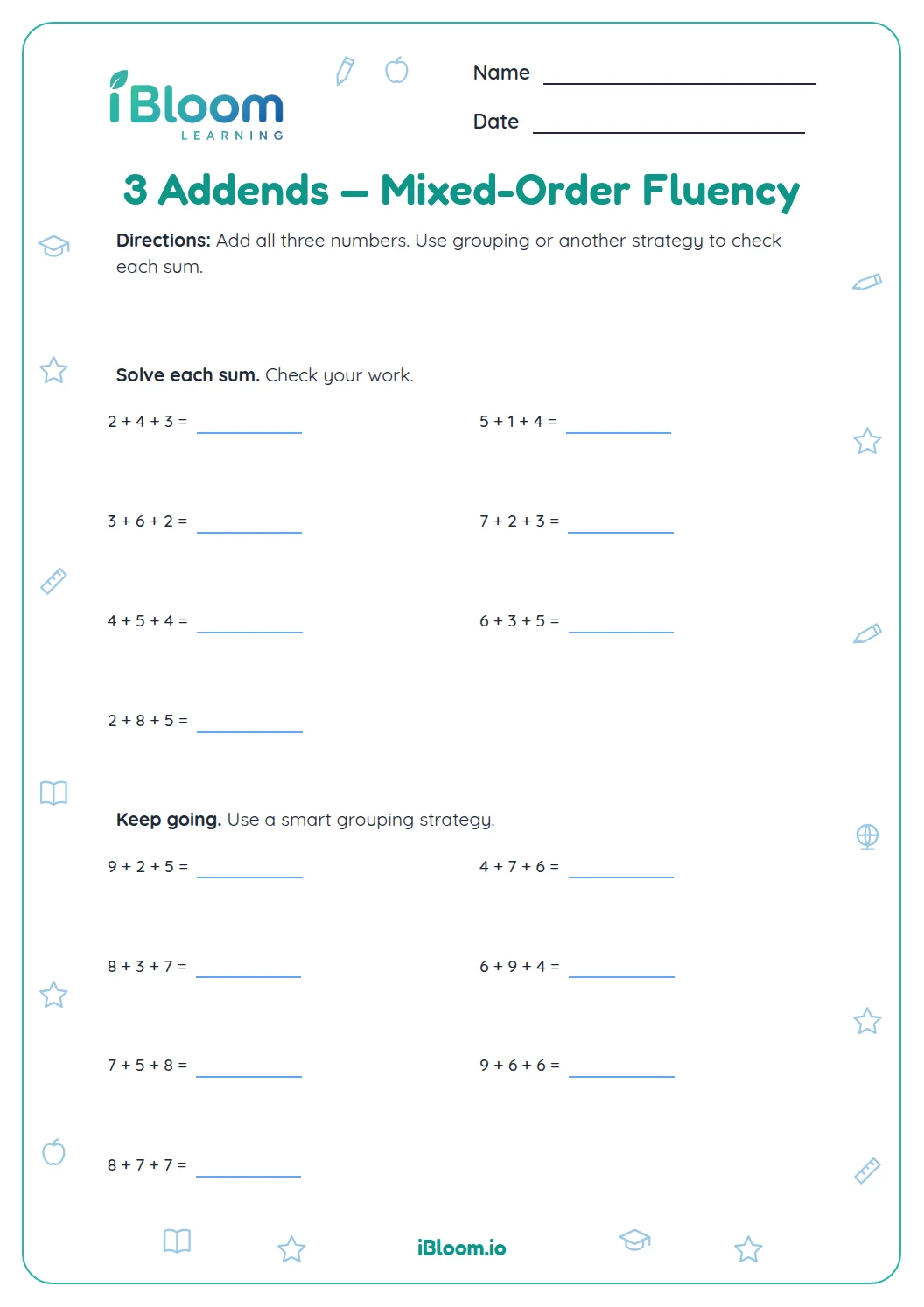
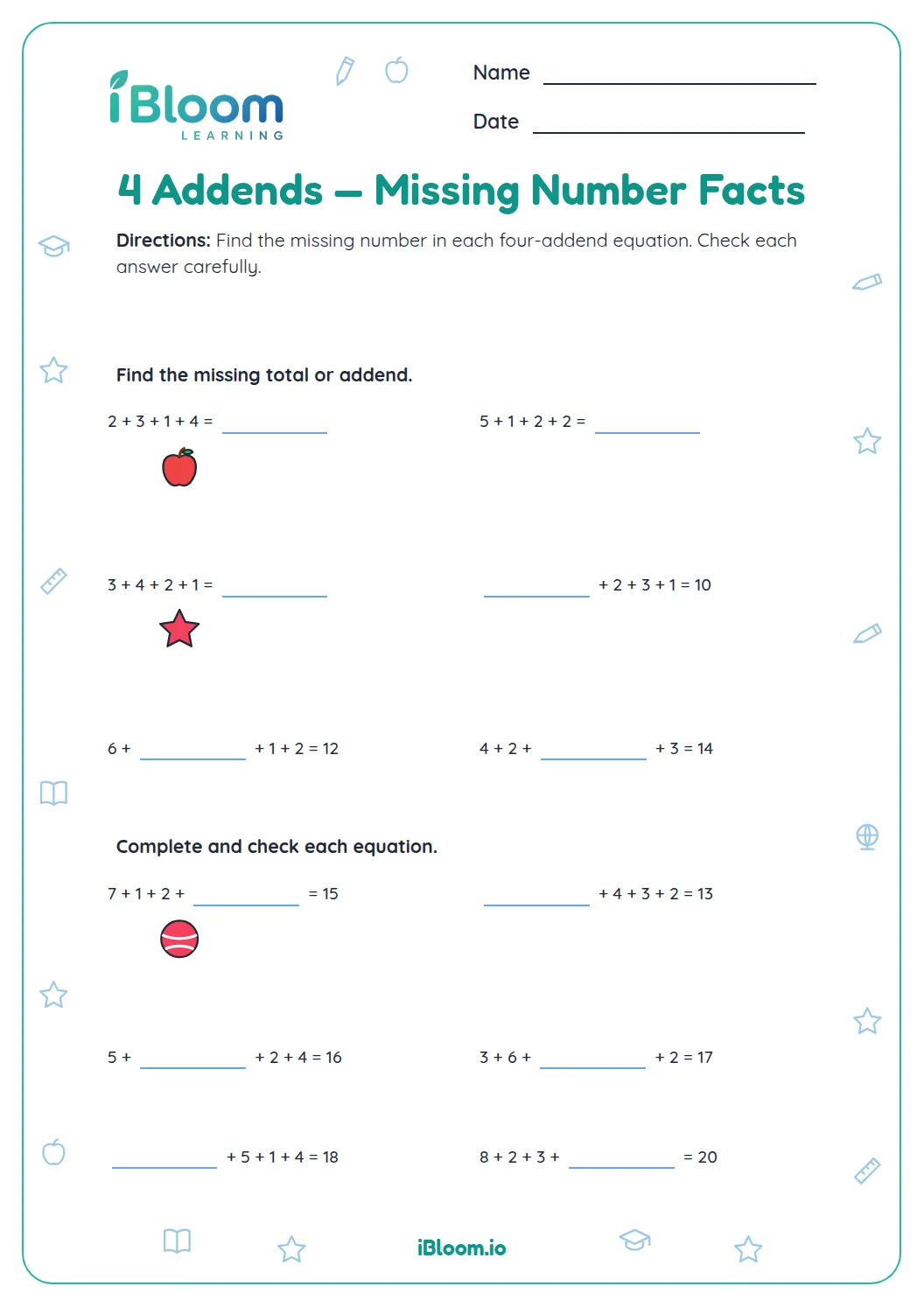
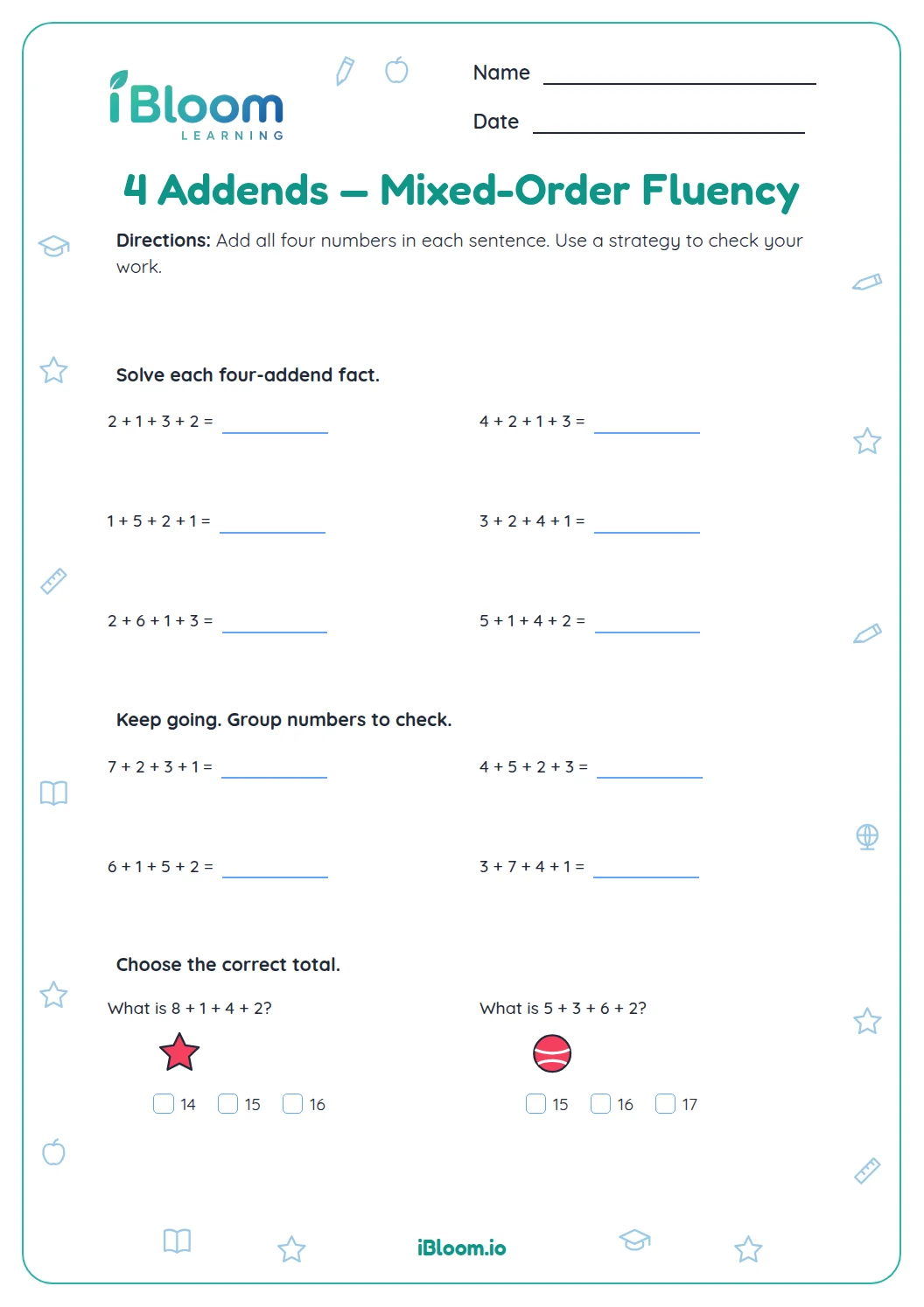
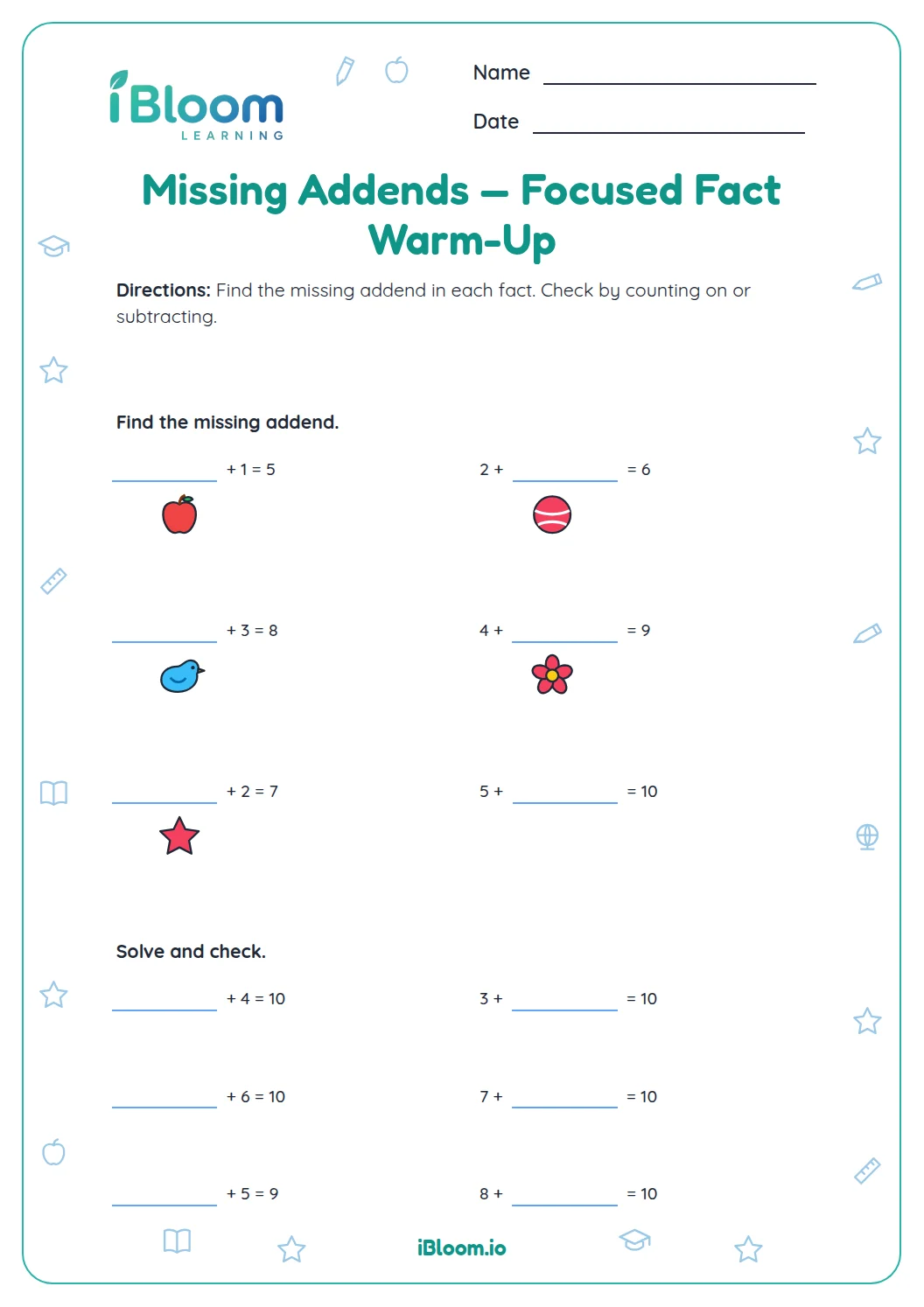
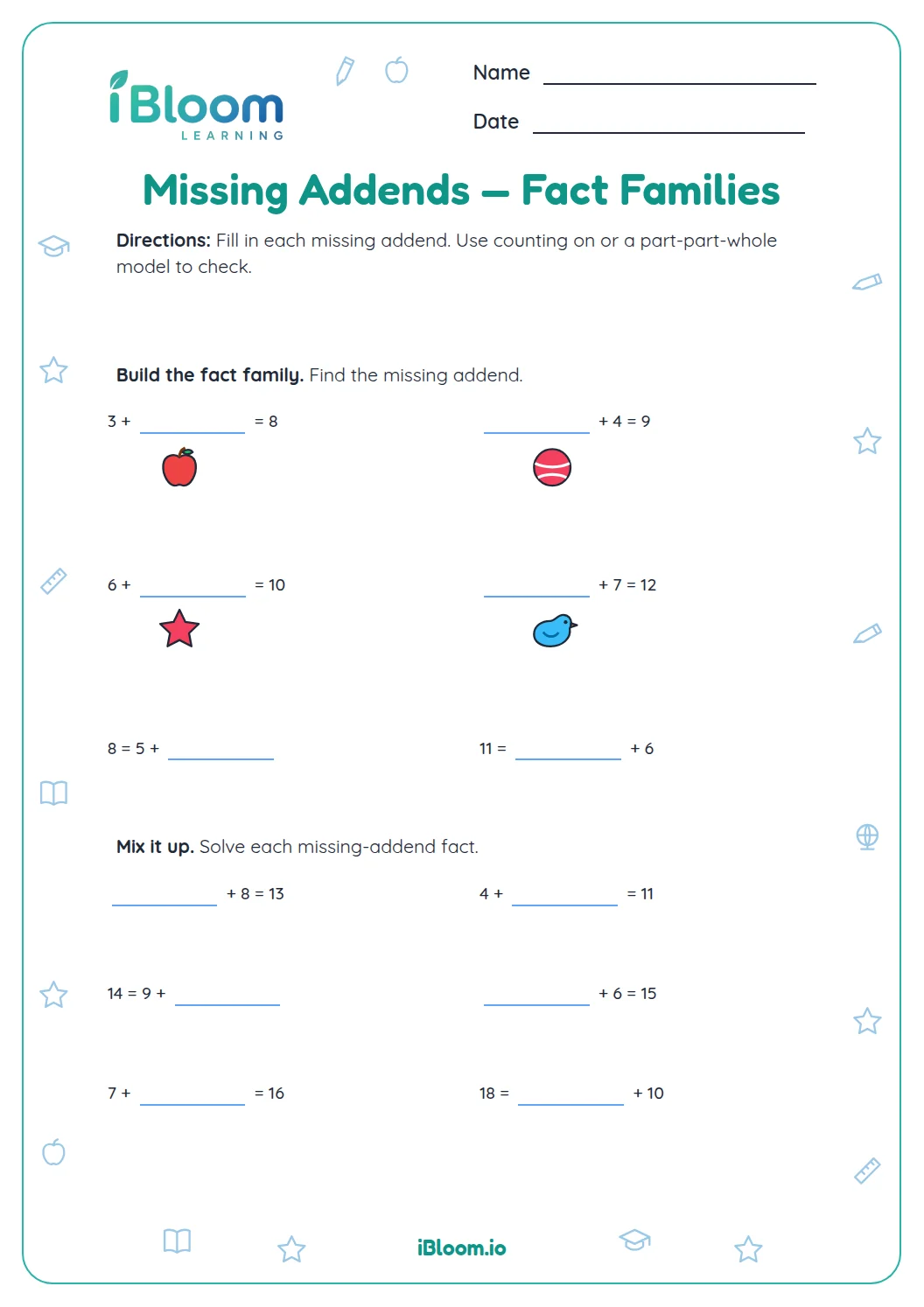
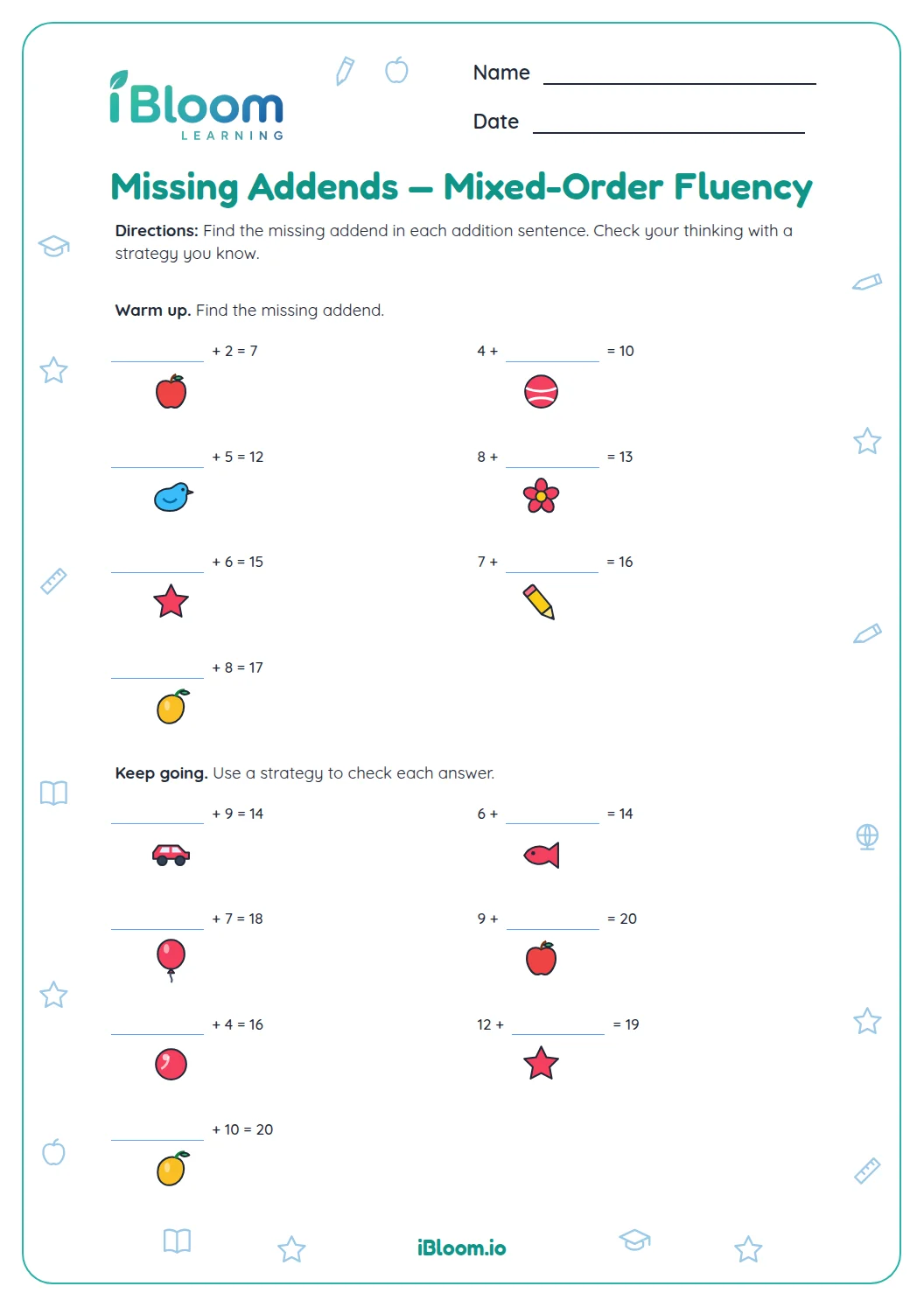
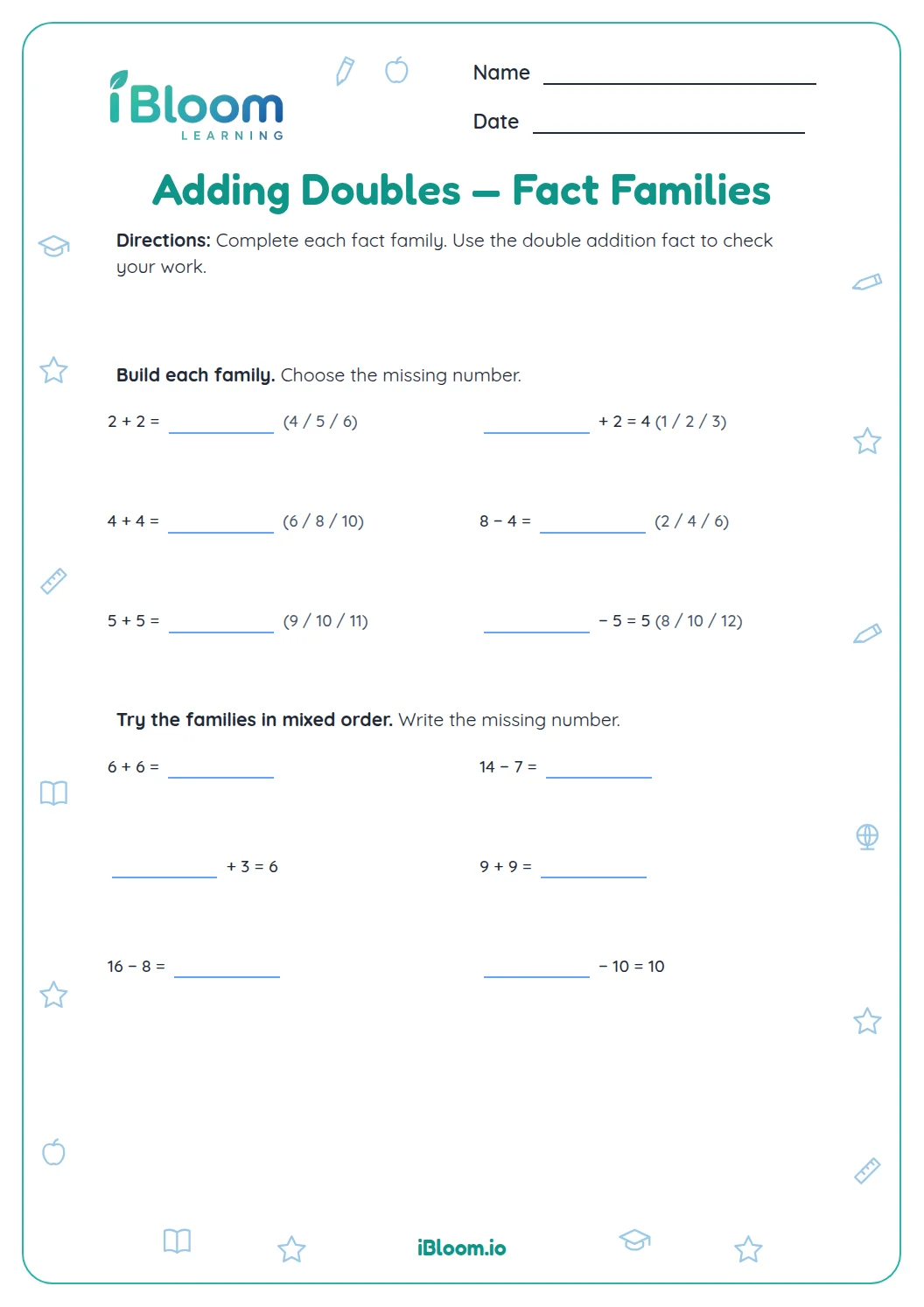
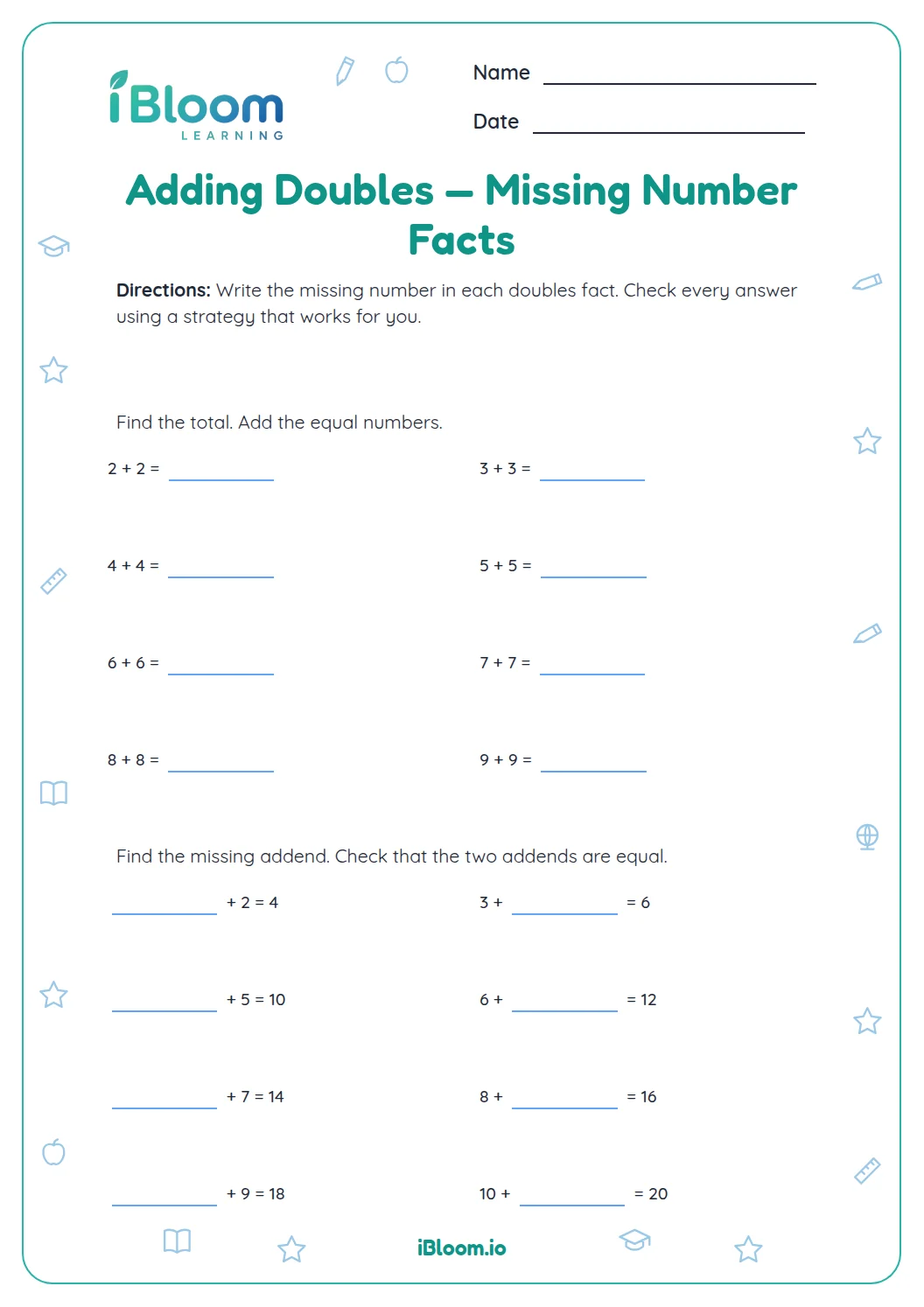
This printable gives Grade 1 and 2 learners 18 addition facts with three addends, with sums no greater than 20. The first part builds fluency with complete equations; the second asks for a missing addend; and the last mixes facts for flexible grouping strategies. The optional timing is for personal practice, not a required score. It supports CCSS 1.OA.C.6 and includes an answer key.
Aligned to 1.OA.C.6
How can three addends be grouped?
Look for numbers that make 10 or another easy sum. In 4 + 6 + 10, add 4 and 6 first to make 10, then add the last 10.
- 14 + 6 + 10 = 20
- 24 + 6 makes 10; 10 + 10 = 20.
How do you find a missing addend?
Add the known addends, then count on to the total. For 4 + ___ + 5 = 12, the known numbers make 9, and 3 more makes 12.
Why is the timer optional?
A timer can help a learner notice personal fluency over repeated tries. Accuracy and a useful strategy come first; children can complete the facts without timing.
How to use this worksheet
- 1Read the signs and numbers in one equation.
- 2Scan for a pair that makes 10.
- 3Add the remaining addend to that group.
- 4For a blank, add the known numbers and count on to the total.
- 5Check the answer by adding all three numbers again.
- 6Use a timer only if it helps you practice calmly.
Common mistakes and quick fixes
The mistake
Adding only two of the three numbers.
The fix
Point to each addend as you add it.
The mistake
Using subtraction in the wrong direction for a blank.
The fix
Add the known numbers first, then find how much more reaches the sum.
The mistake
Writing a sum without checking it.
The fix
Add the three addends again in a different grouping.
Common Core alignment
The facts provide practice adding within 20 and using strategies to make sums.
Add within 20 using strategies such as making ten.
On this sheet: The sums encourage making ten and grouping known sums, and all totals are within 20.
Show the official wordingHide the official wording
Add and subtract within 20, demonstrating fluency for addition and subtraction within 10. Use strategies such as counting on; making ten (e.g., 8 + 6 = 8 + 2 + 4 = 10 + 4 = 14); decomposing a number leading to a ten (e.g., 13 − 4 = 13 − 3 − 1 = 10 − 1 = 9); using the relationship between addition and subtraction (e.g., knowing that 8 + 4 = 12, one knows 12 − 8 = 4); and creating equivalent but easier or known sums (e.g., adding 6 + 7 by creating the known equivalent 6 + 6 + 1 = 12 + 1 = 13).
What to practice next
Make more practice
Further reading
Questions parents and teachers ask
What does “three addends” mean?
An addend is a number being added. A three-addend equation has three numbers to combine, such as 4 + 3 + 2. The sheet practices sums up to 20 and asks children to check each fact carefully. A learner can check it by first adding two numbers that make ten, then combining the third number.
Is the timed drill required?
Timing is optional. Children can use the page as untimed fact practice, then try timing another day if that feels useful. Accuracy and a sensible strategy come first for this drill. If timing feels stressful, skip it and focus on accurate sums. Repeating a calm practice later can show which facts are becoming easier.
Are missing-number problems included?
Yes. Four questions have one missing addend, such as 4 + blank + 5 = 12. Children can add the known numbers and then find what reaches the total. The answer key shows each missing number. The four missing-addend questions use one blank each. Check a response by putting it back into the equation and adding the three numbers.
What grade is this worksheet for?
The source skill is listed for Grades 1 and 2. All sums on this sheet stay within 20, and the directions invite learners to group addends in a helpful way, such as making ten first. The sums use familiar small facts and stay within 20. Children can count on, make ten, or group addends they already know.
Is an answer key provided?
Yes. The separate key gives each sum or missing addend. Learners can check the equation by adding all three values once more, using a different grouping if they want. The key lists answers in question order. Recompute a fact with a different pair first to see whether both methods reach the same total.