

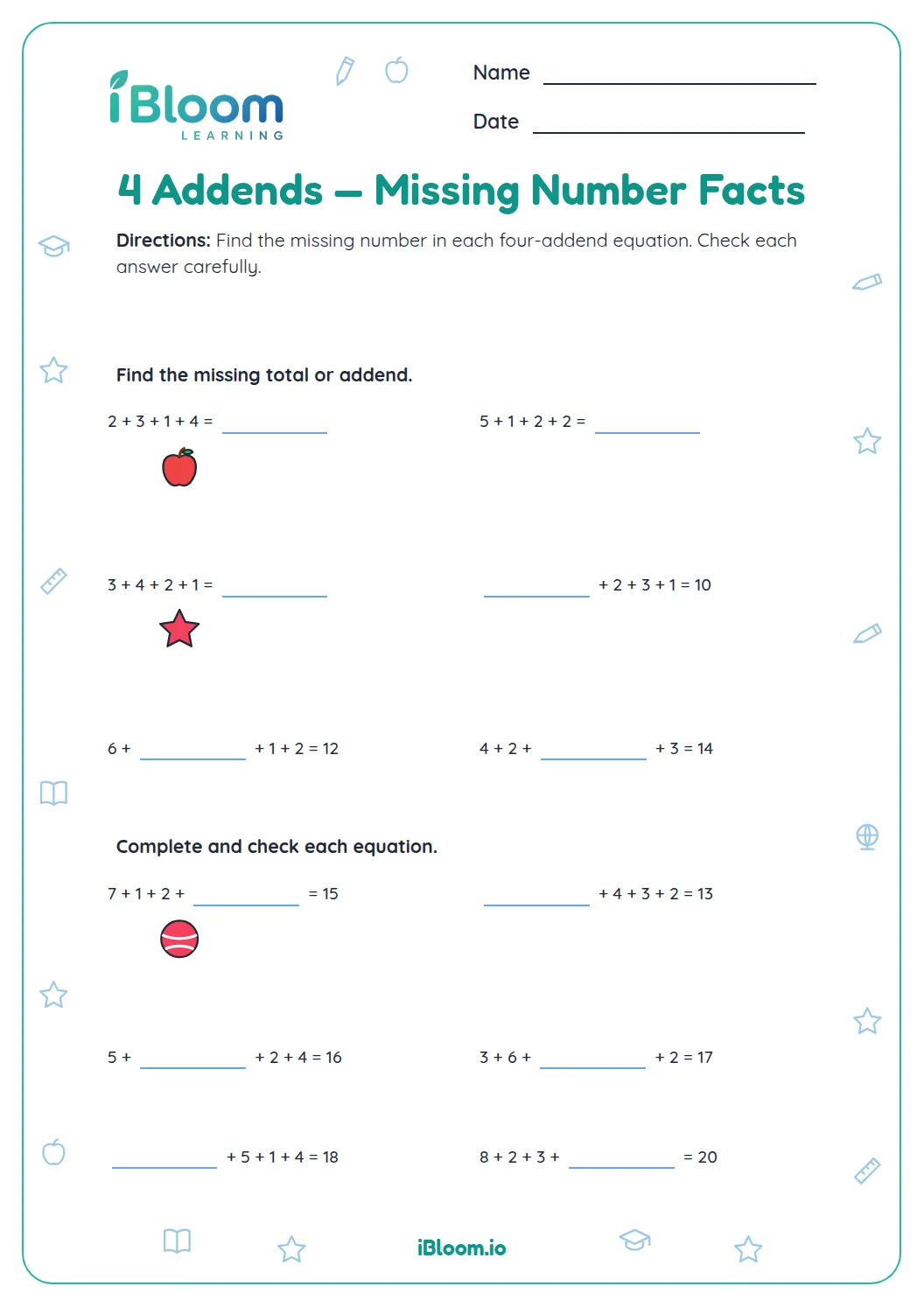
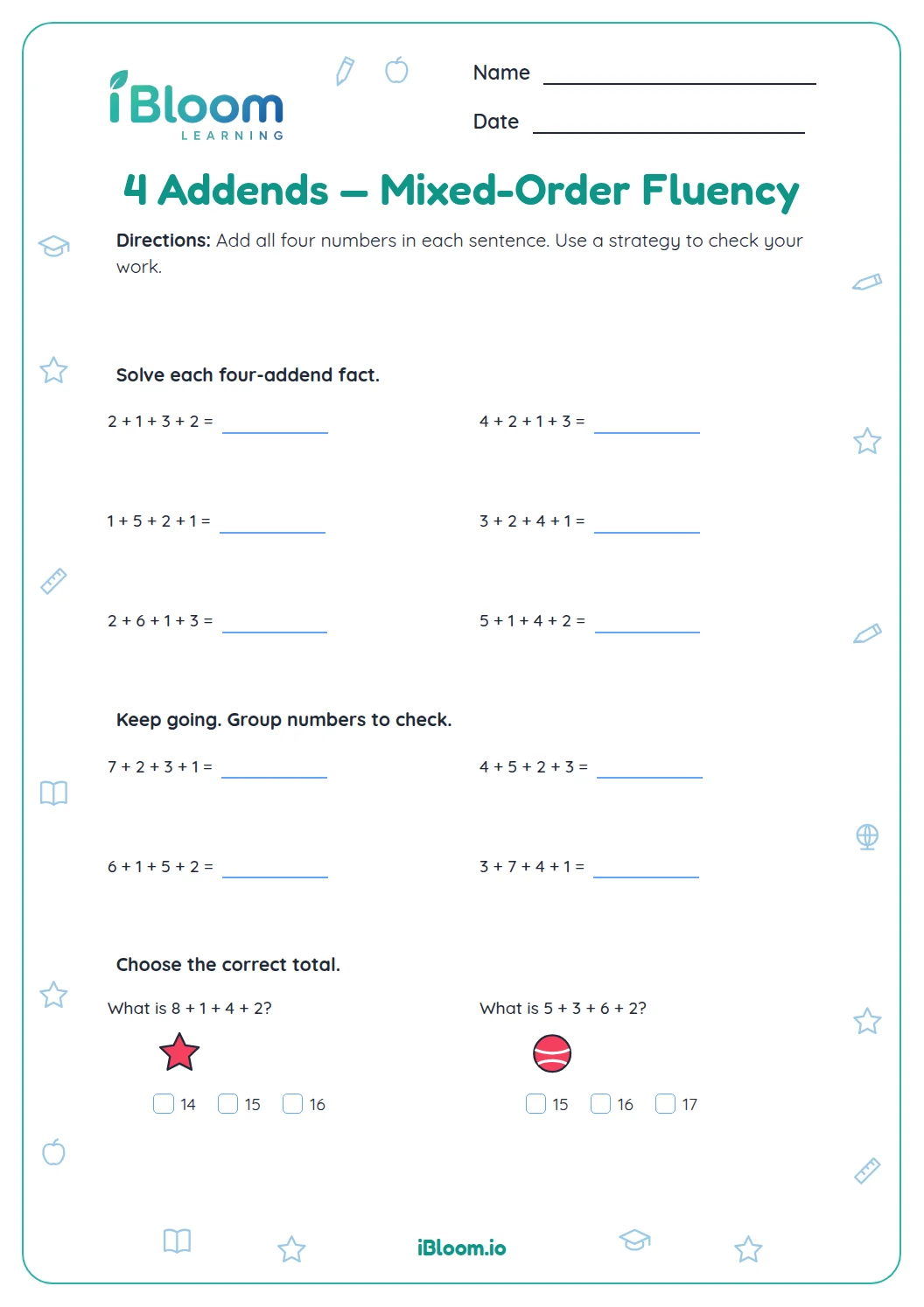
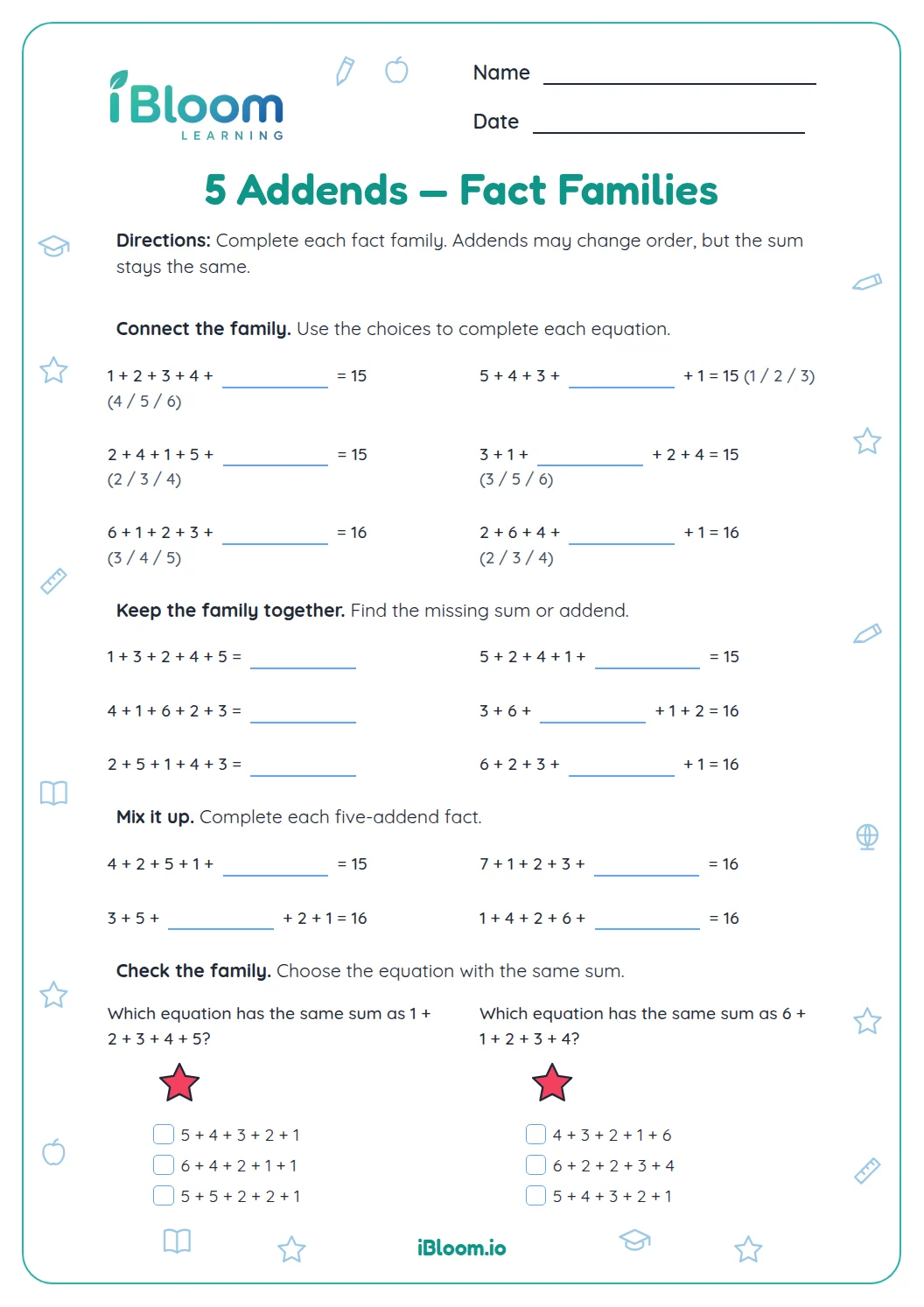

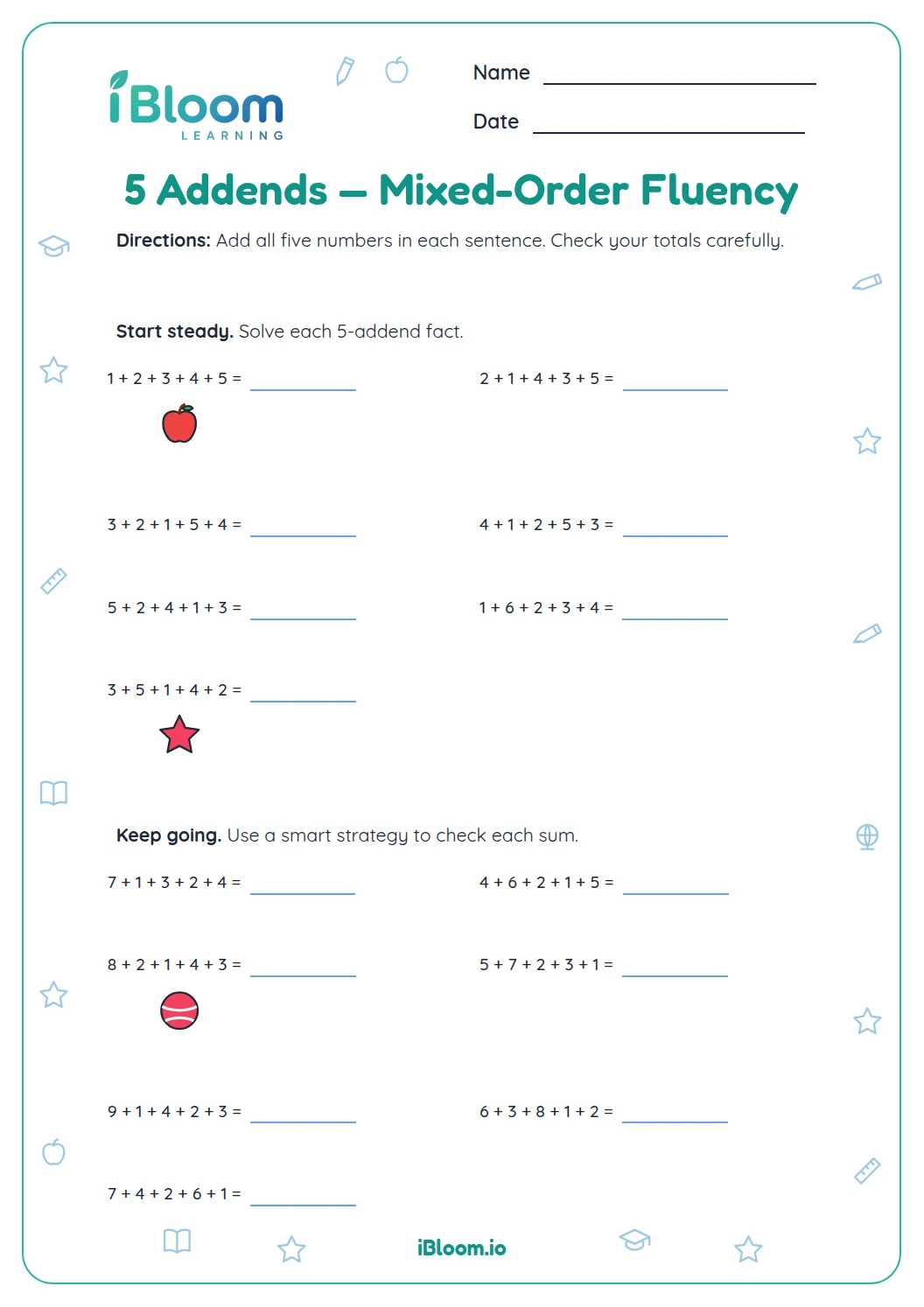
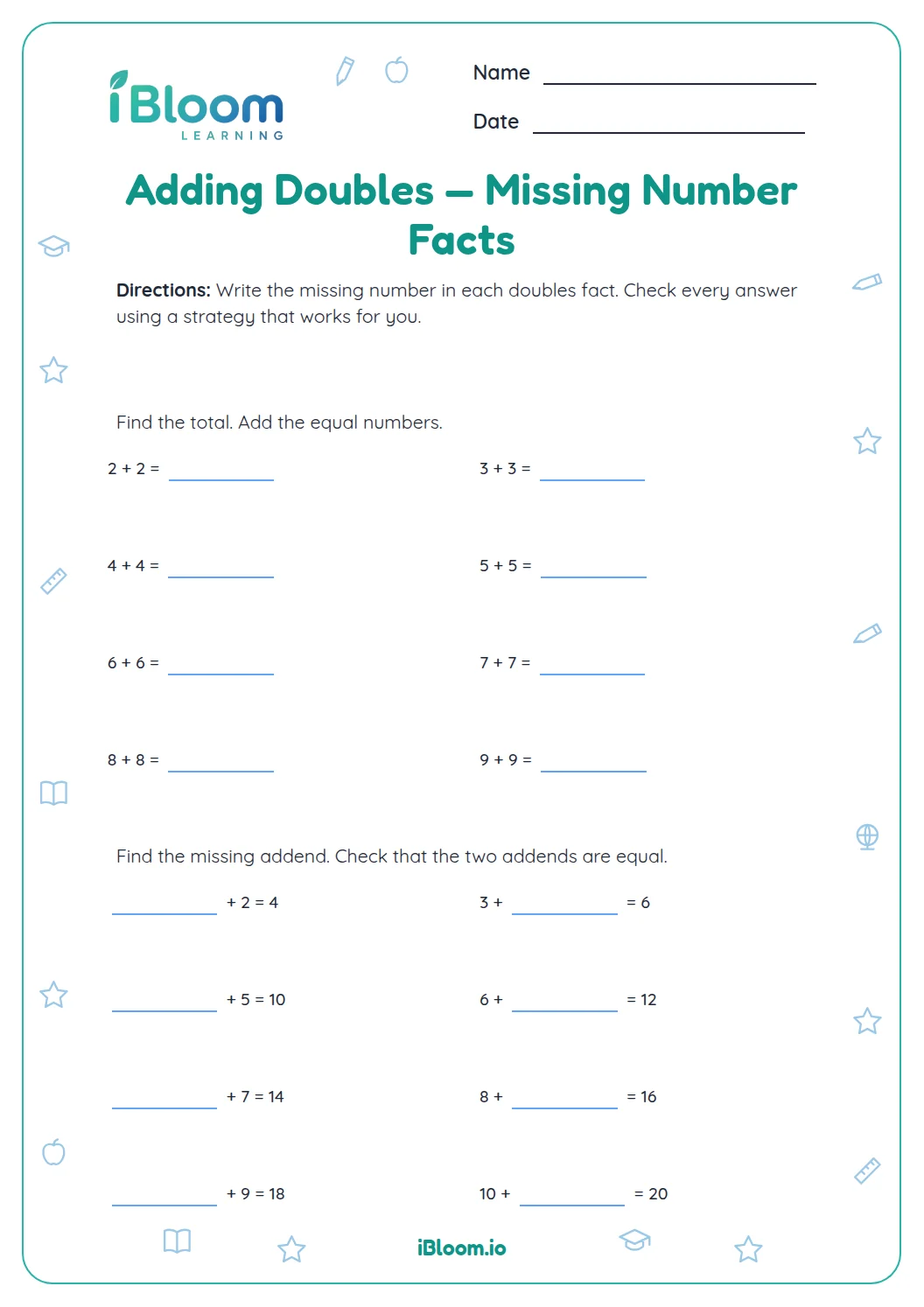
About this worksheet
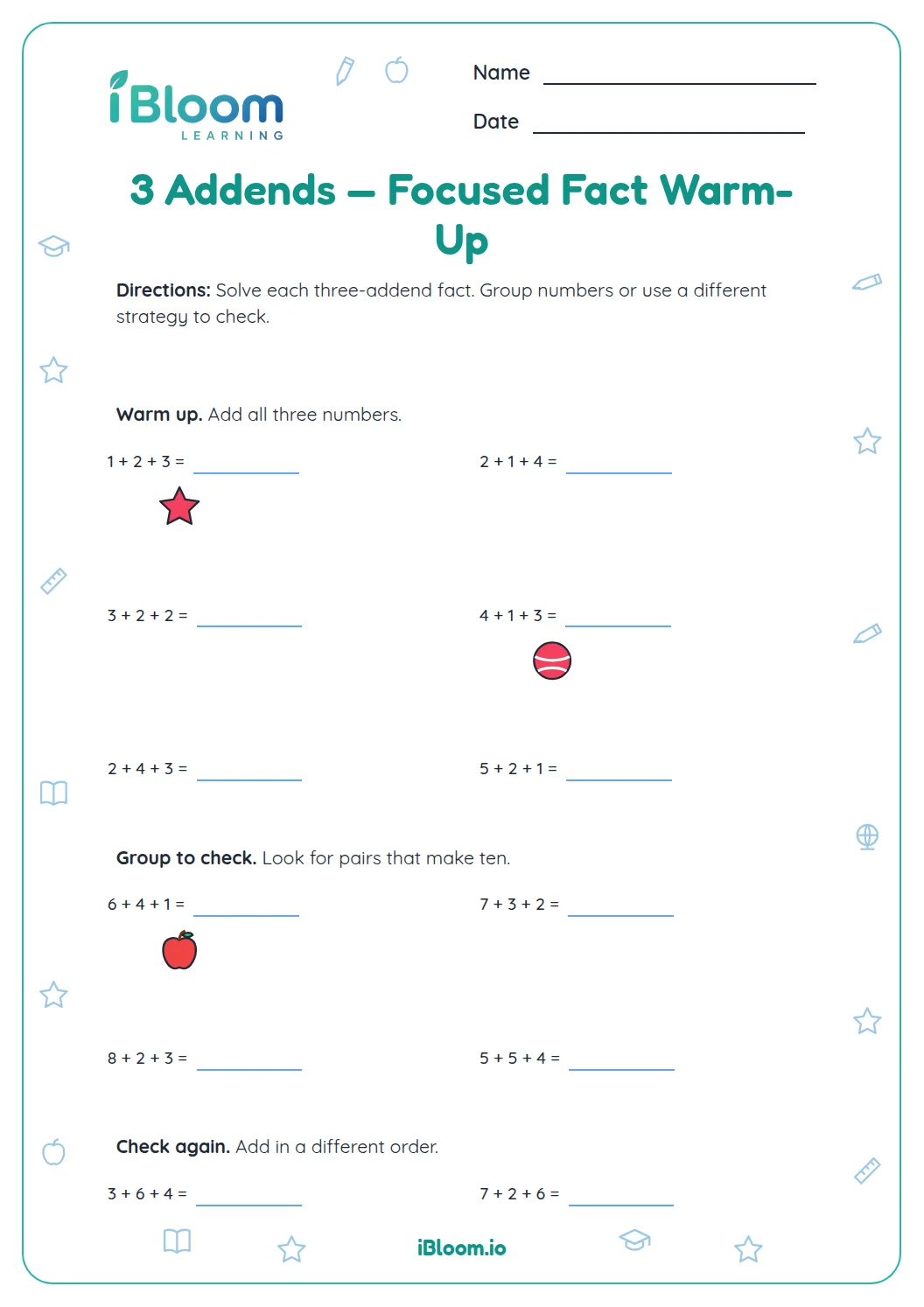
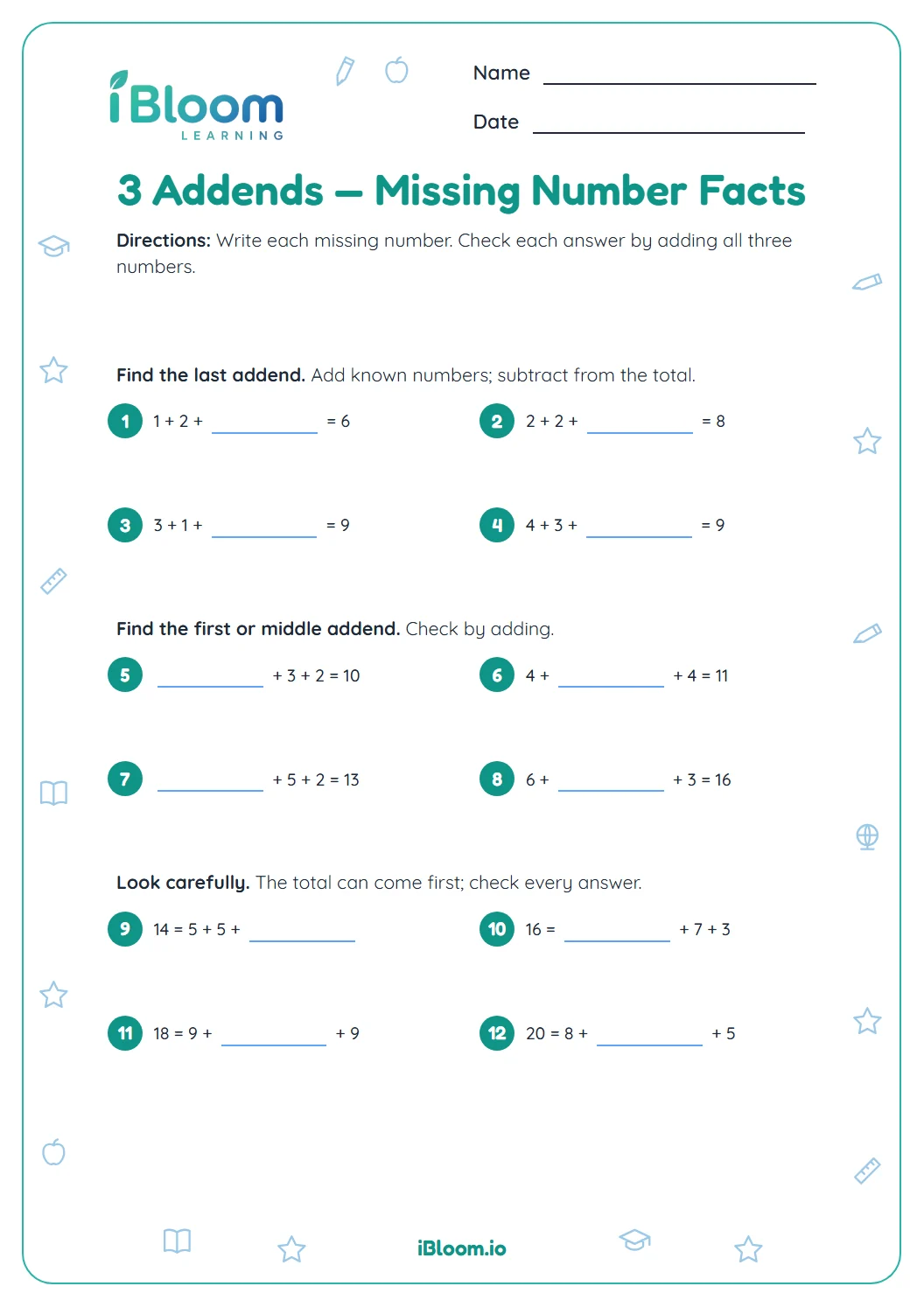
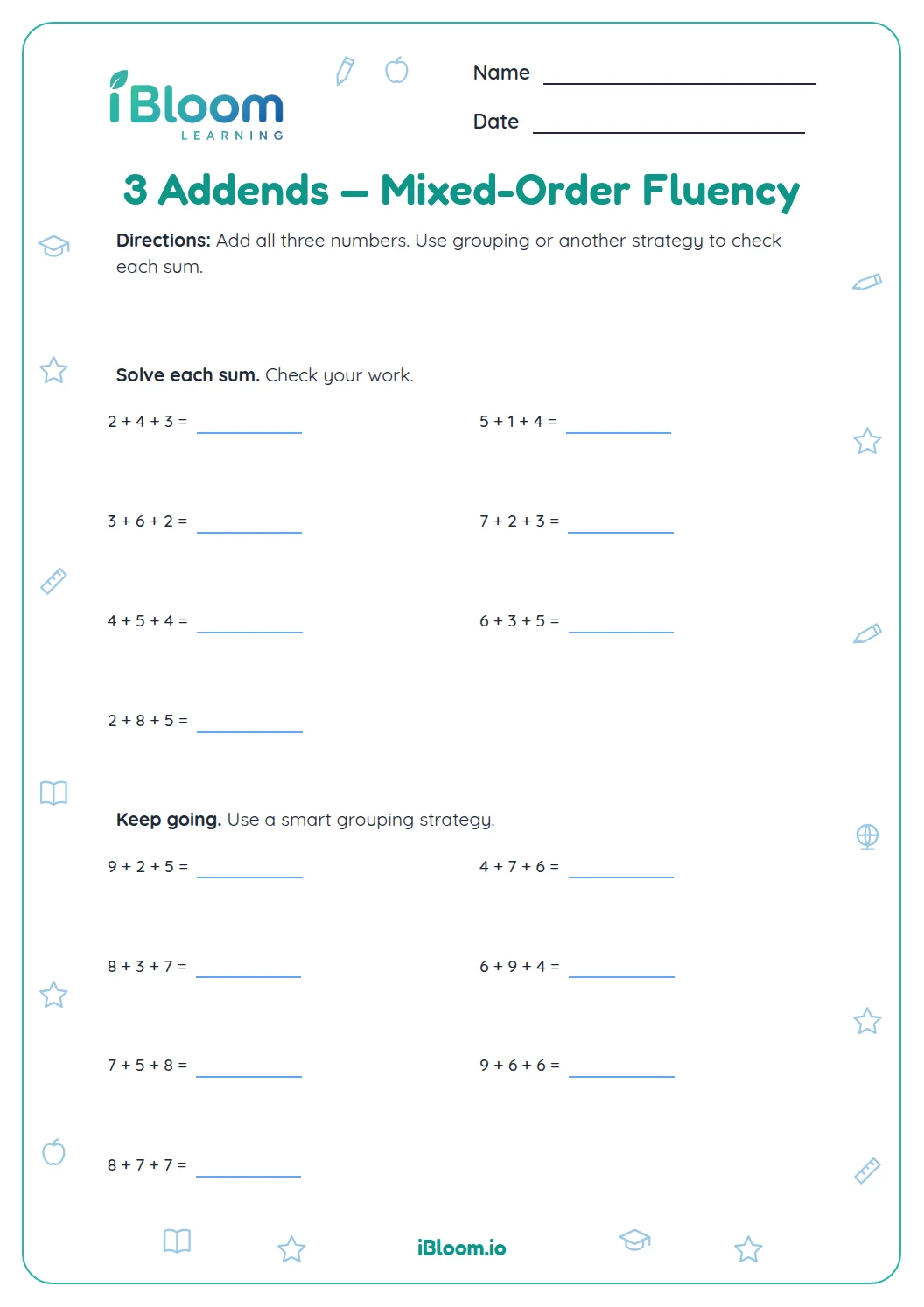
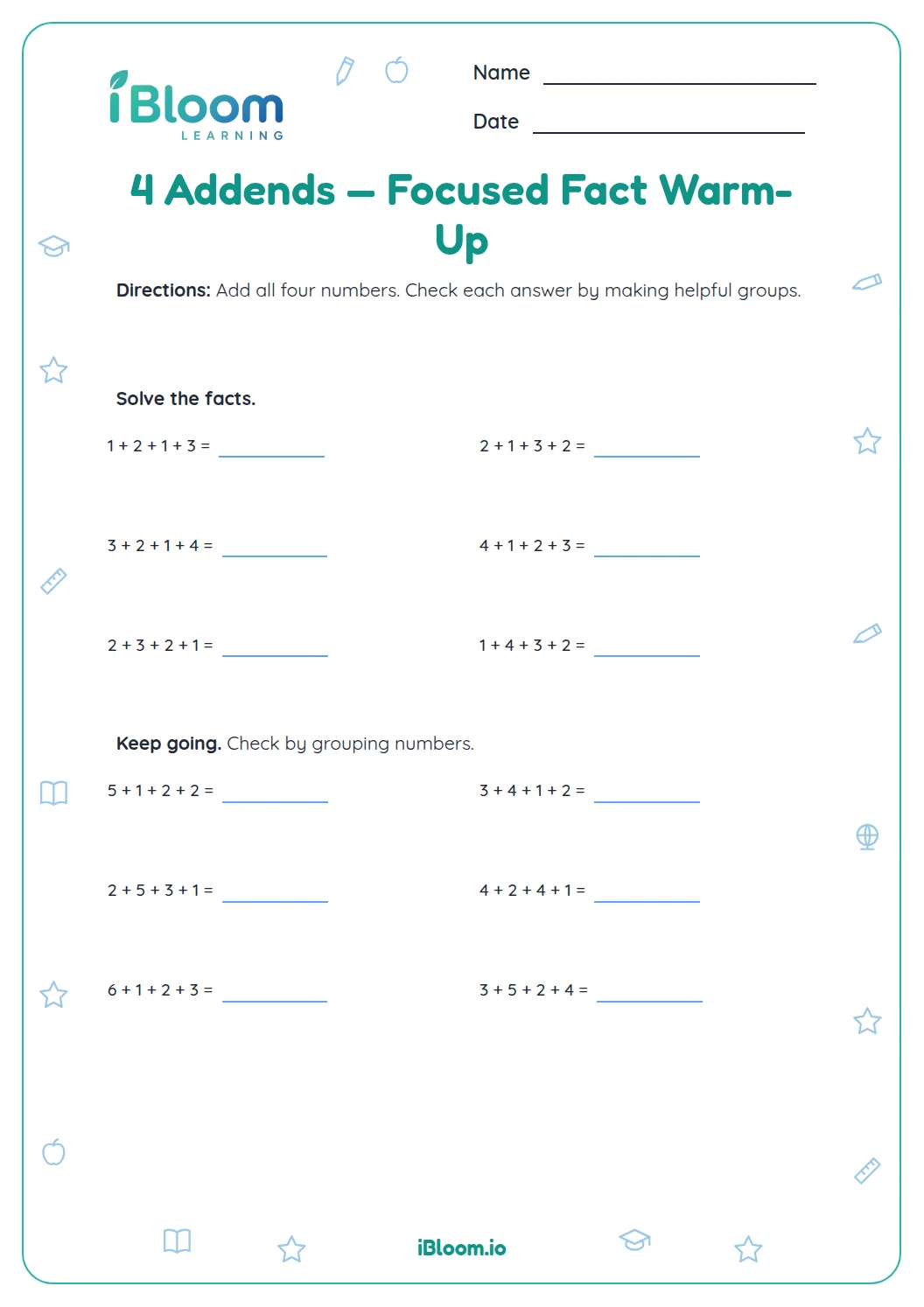
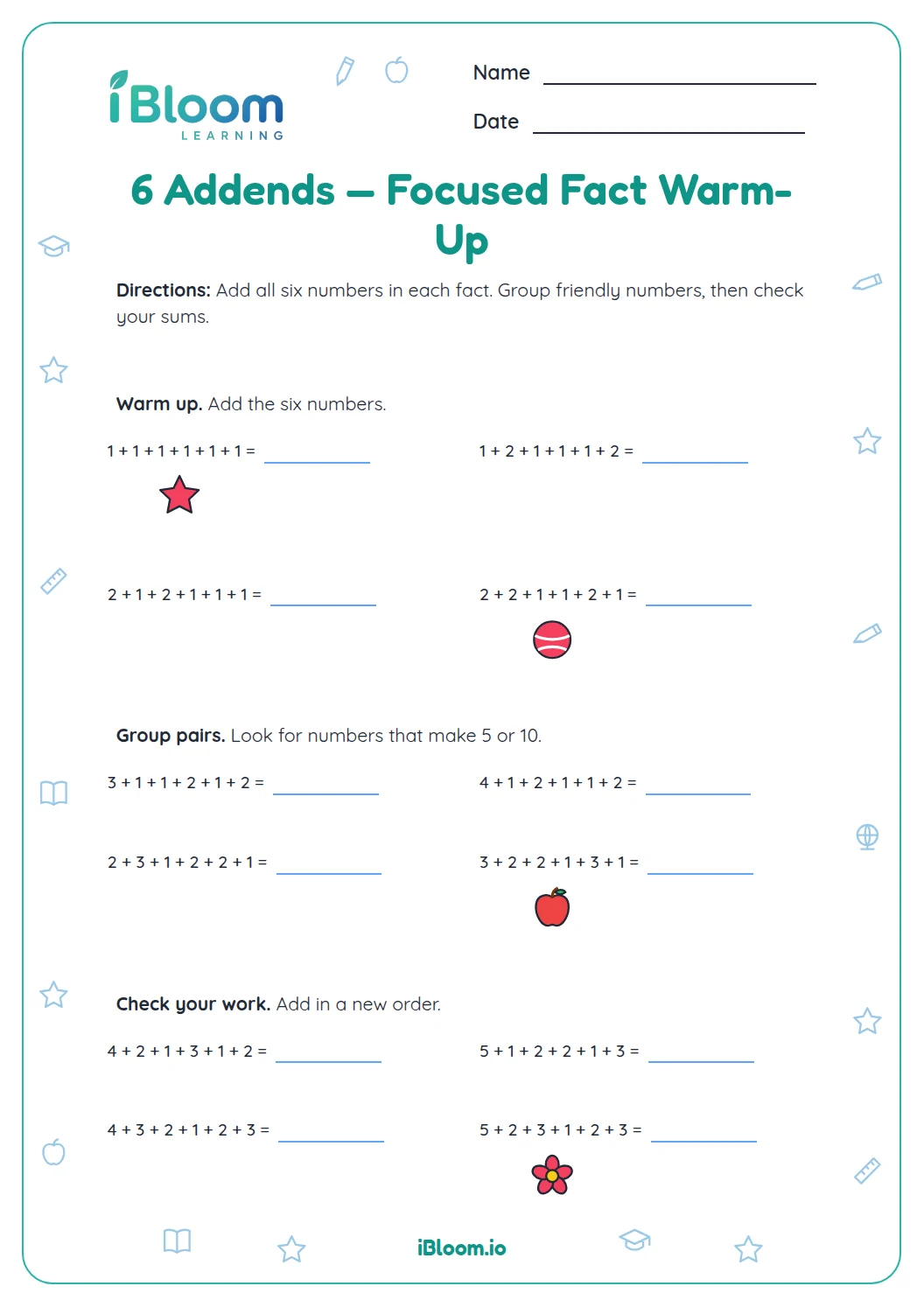
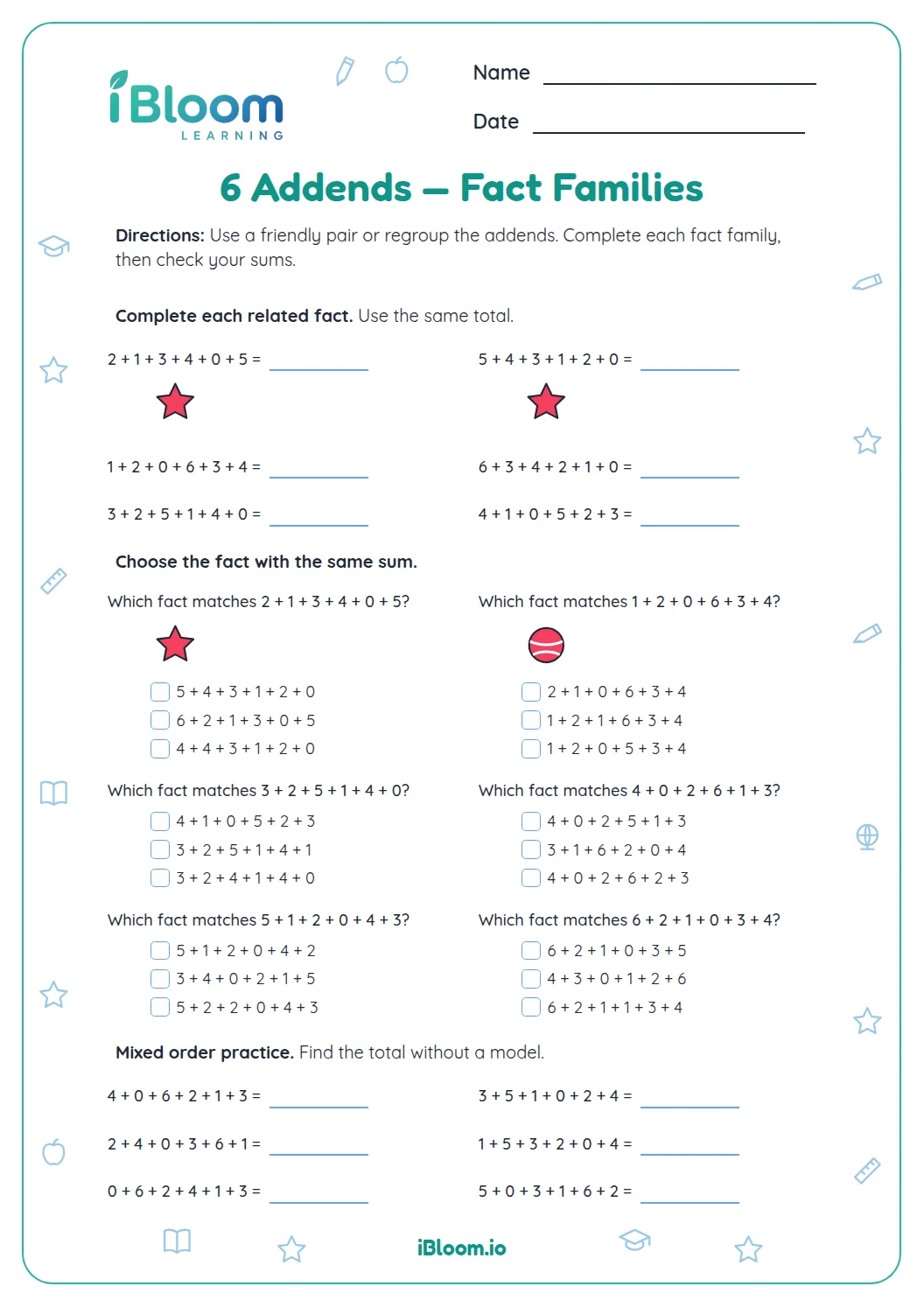
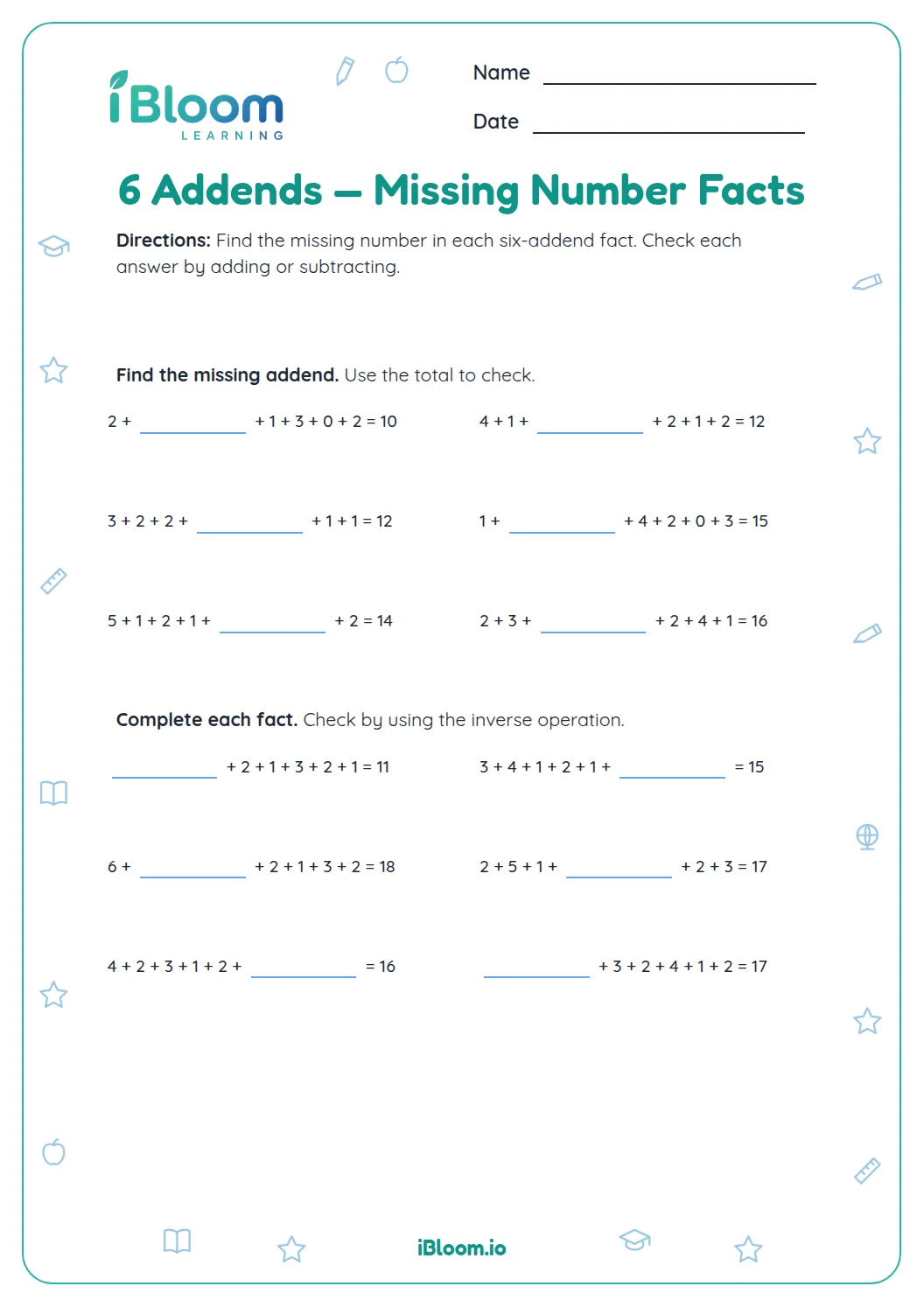
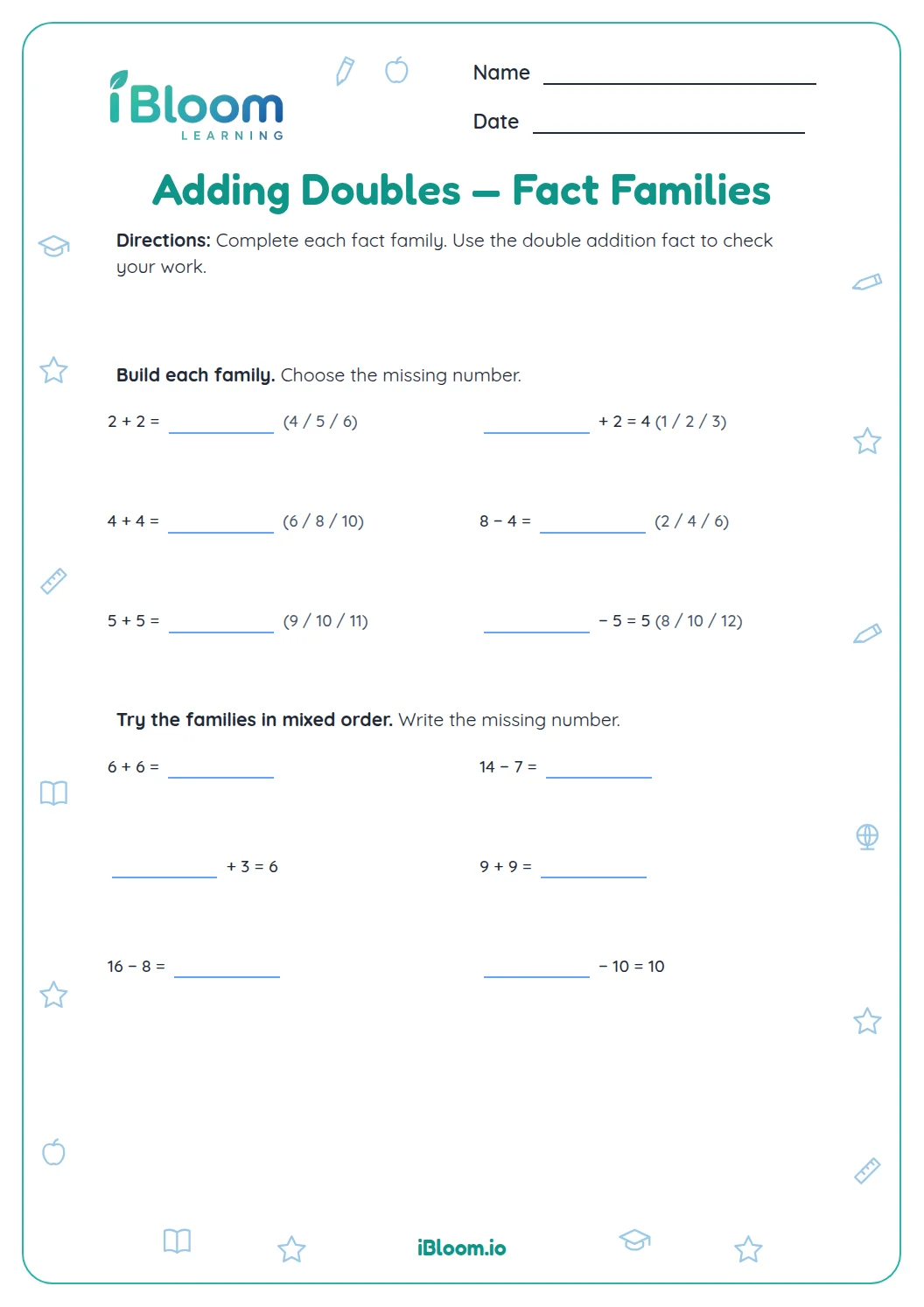
This Grade 2 printable pairs three-addend addition with the related addition facts children can use to check a total. Part A has six sums, Part B has five missing addends, and Part C asks for both addition orders in five fact families. The separate answer key gives each numerical answer and both equations for every family. The page connects addition fluency within 20 to combining three addends.
Aligned to 2.OA.B.2
What does each part practice?
Part A asks for totals when three addends are shown. Part B leaves one addend blank. Part C gives three related numbers and asks for the two addition equations that make the same total.
How can a fact family help with three addends?
Combine two addends first, then add the third. In a fact family, reverse the two addends and the total stays the same.
- 12 + 3 + 4 = ___
- 22 + 3 = 5, then 5 + 4 = 9
How can students check their work?
For a missing addend, add the known numbers first and subtract their sum from the total. For a fact family, check that both addends make the given total in either order.
How to use this worksheet
- 1Read the direction at the start of each part.
- 2Add two of the three numbers, then add the remaining number.
- 3For a missing addend, find how much is needed to reach the total.
- 4Write both addition orders for each fact family.
- 5Check each result with the separate answer key.
Common mistakes and quick fixes
The mistake
Adding only two of the three addends.
The fix
Point to each number as you add it, and make sure all three are included.
The mistake
Changing the total while reversing the addends.
The fix
Check that both equations use the same three numbers and total.
The mistake
Filling the blank before combining the known addends.
The fix
Add the known addends first, then find the difference to the total.
Common Core alignment
This worksheet supports the listed Common Core skill.
Use addition fluency to combine three addends and check related sums.
On this sheet: Known addition facts help combine the three addends and check related sums.
Show the official wordingHide the official wording
Fluently add and subtract within 20 using mental strategies. By end of Grade 2, know from memory all sums of two one-digit numbers.
What to practice next
Make more practice
Further reading
Questions parents and teachers ask
How many questions are on this worksheet?
There are 16 questions in three parts. Students solve six sums with three addends, complete five equations with a missing addend, and write two addition facts for each of five number families. The separate answer key supports a quick check and gives families a way to review the worksheet together.
What does “fact family” mean on this page?
Each set has two addends and their total. Students write the addition equation in both orders, such as 2 + 6 = 8 and 6 + 2 = 8, to show the related facts. The separate answer key supports a quick check and gives families a way to review the worksheet together.
Does the worksheet include an answer key?
Yes. The separate answer key gives the total or missing addend for each number sentence and lists both valid addition equations for each fact-family question. The separate answer key supports a quick check and gives families a way to review the worksheet together.
How can a student check a three-addend sum?
Add two of the numbers first, then add the third. For example, 2 + 3 makes 5, and 5 + 4 makes 9. Students can also change the order and check that the total stays the same. The separate answer key supports a quick check and gives families a way to review the worksheet together.
How long should this worksheet take?
Plan for about 15 minutes for all 16 questions. Students may need extra time to write both equations in each fact family and to review any missed sums with the answer key. The separate answer key supports a quick check and gives families a way to review the worksheet together.