

About this worksheet
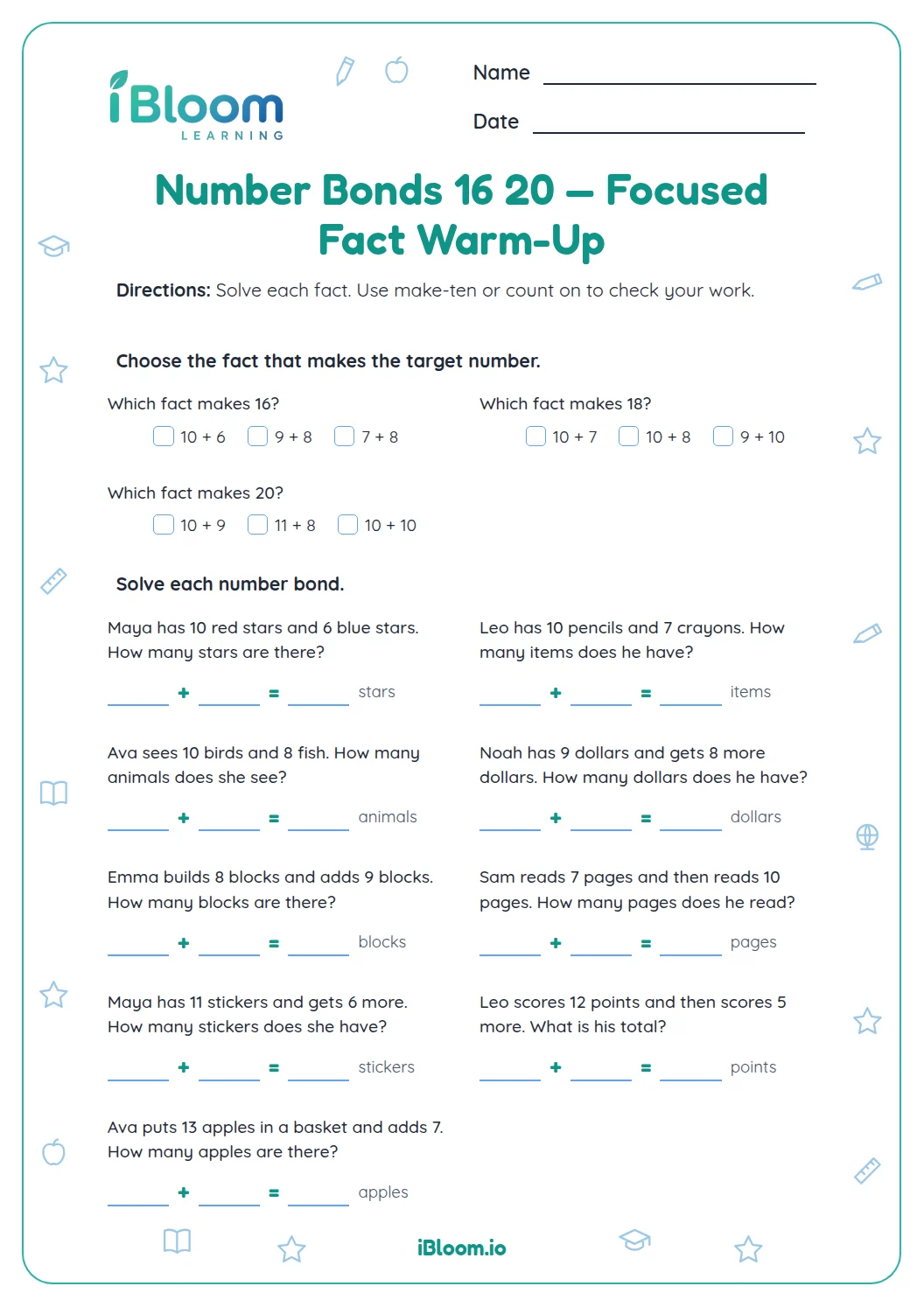
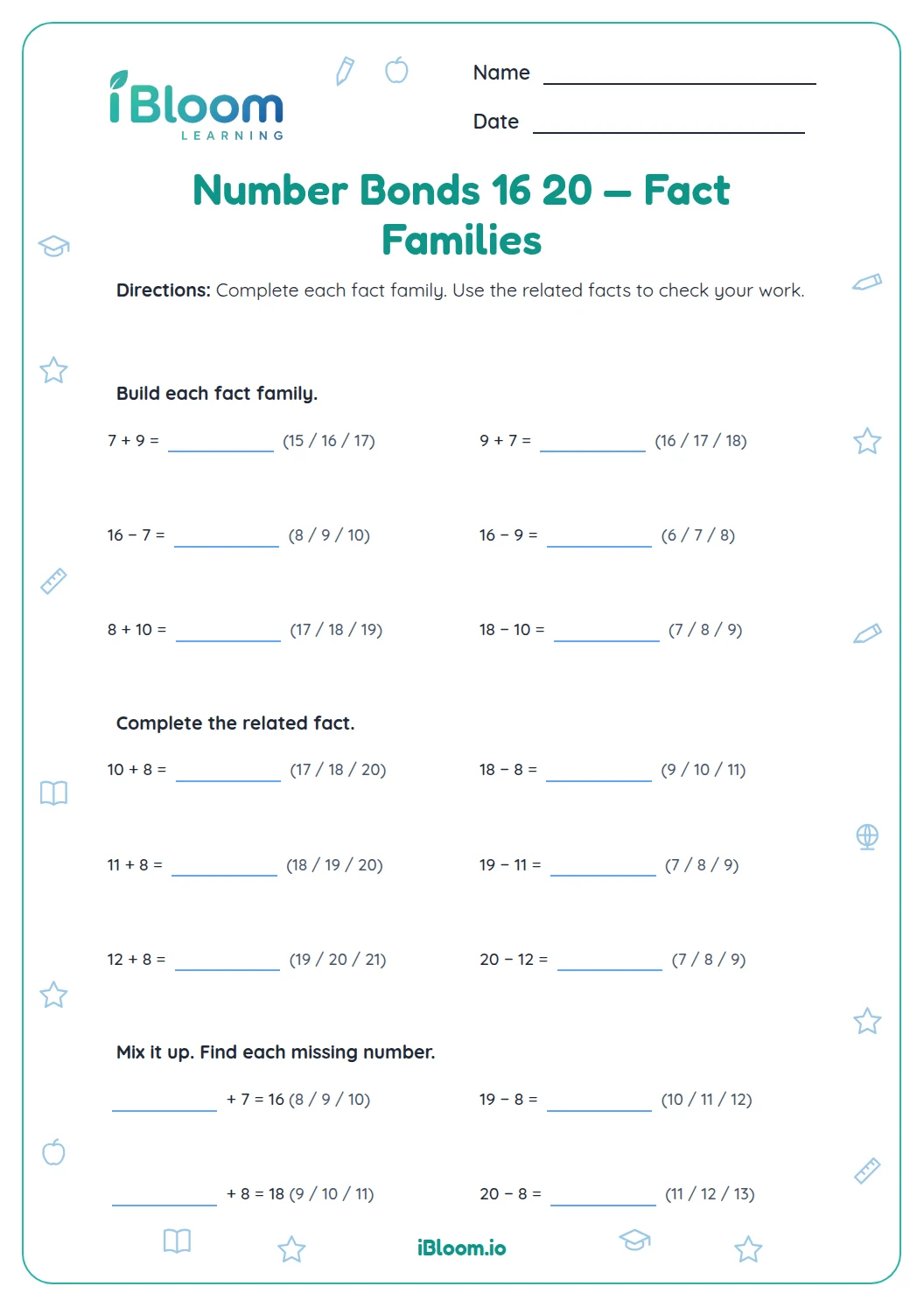
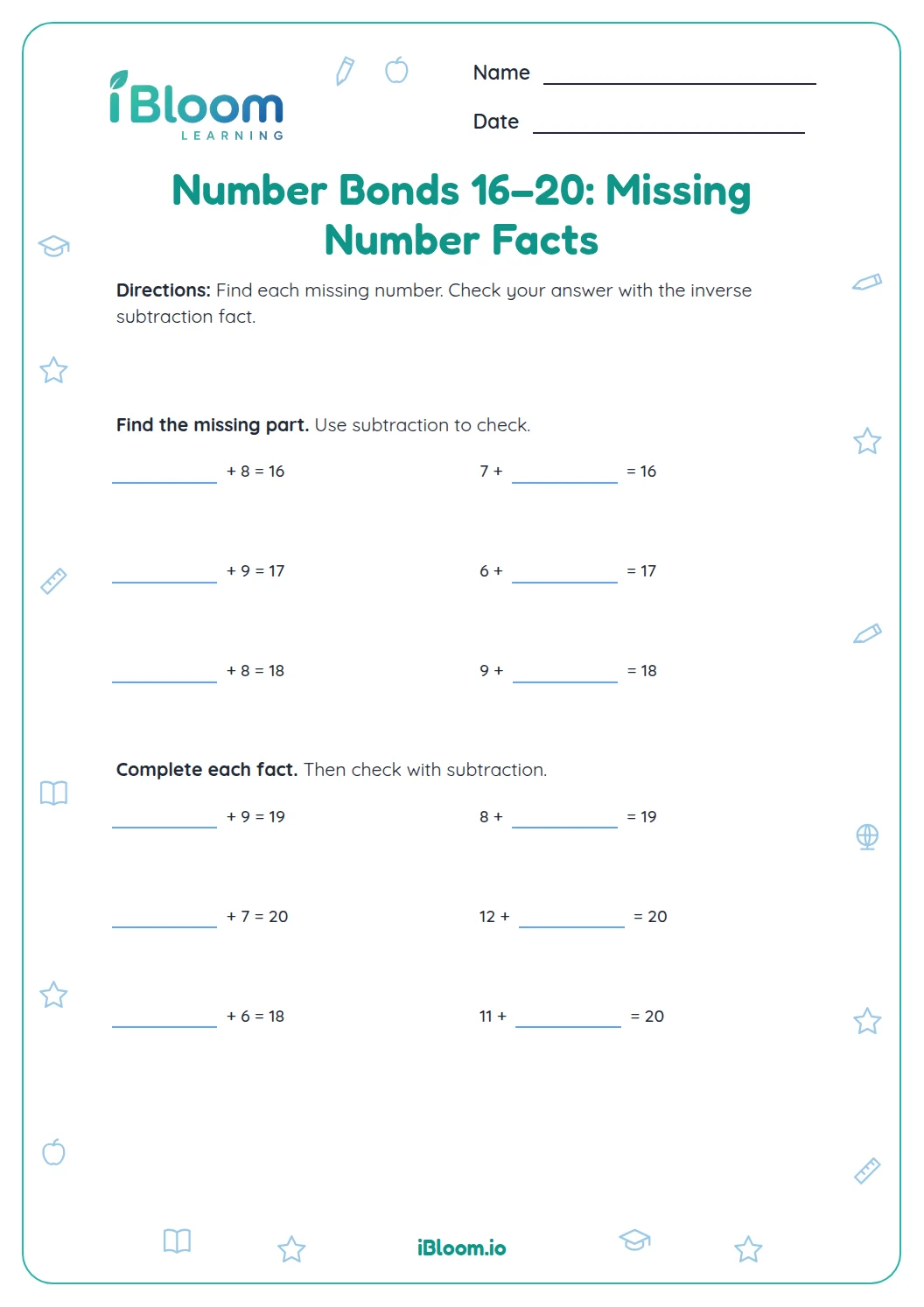
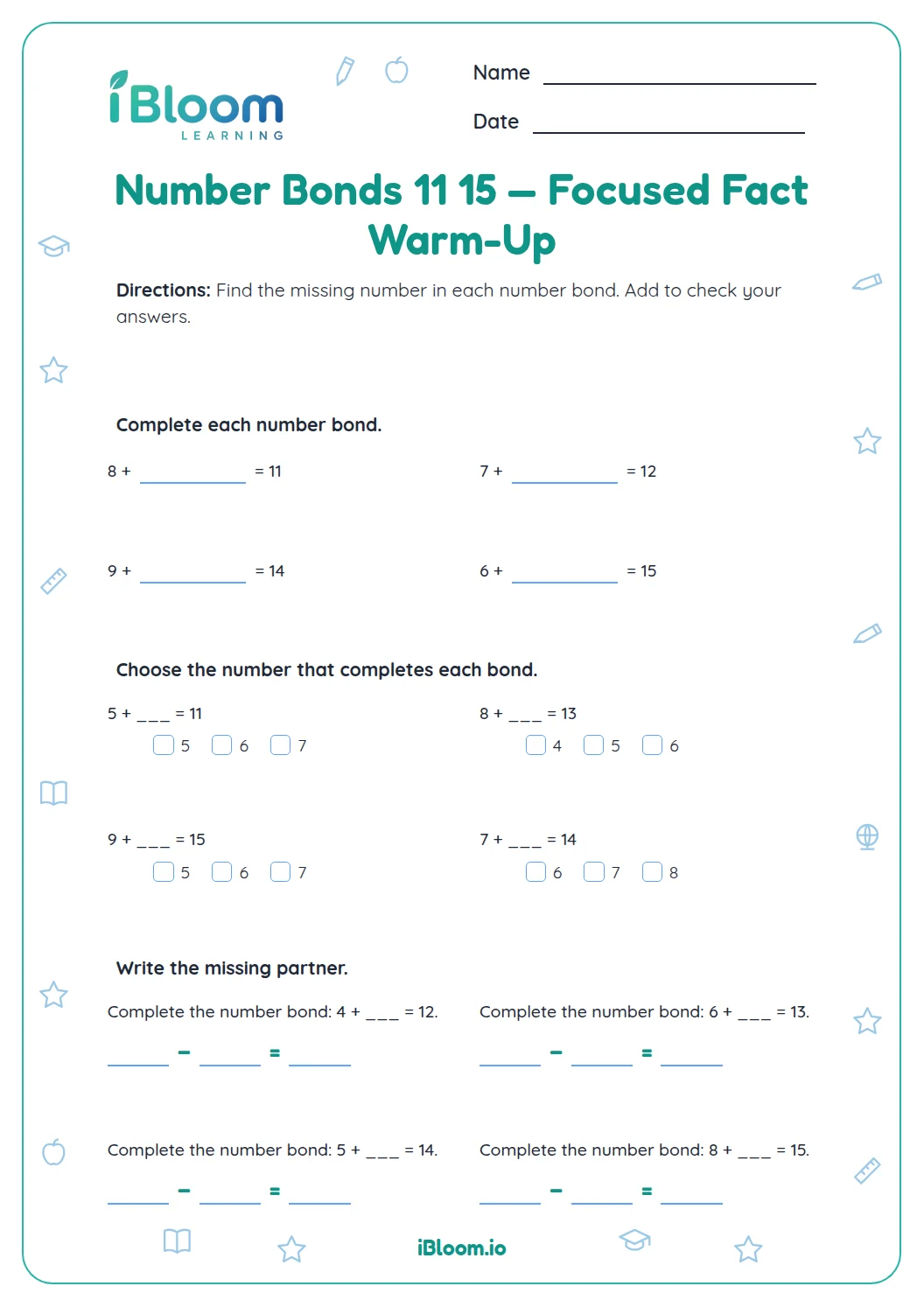
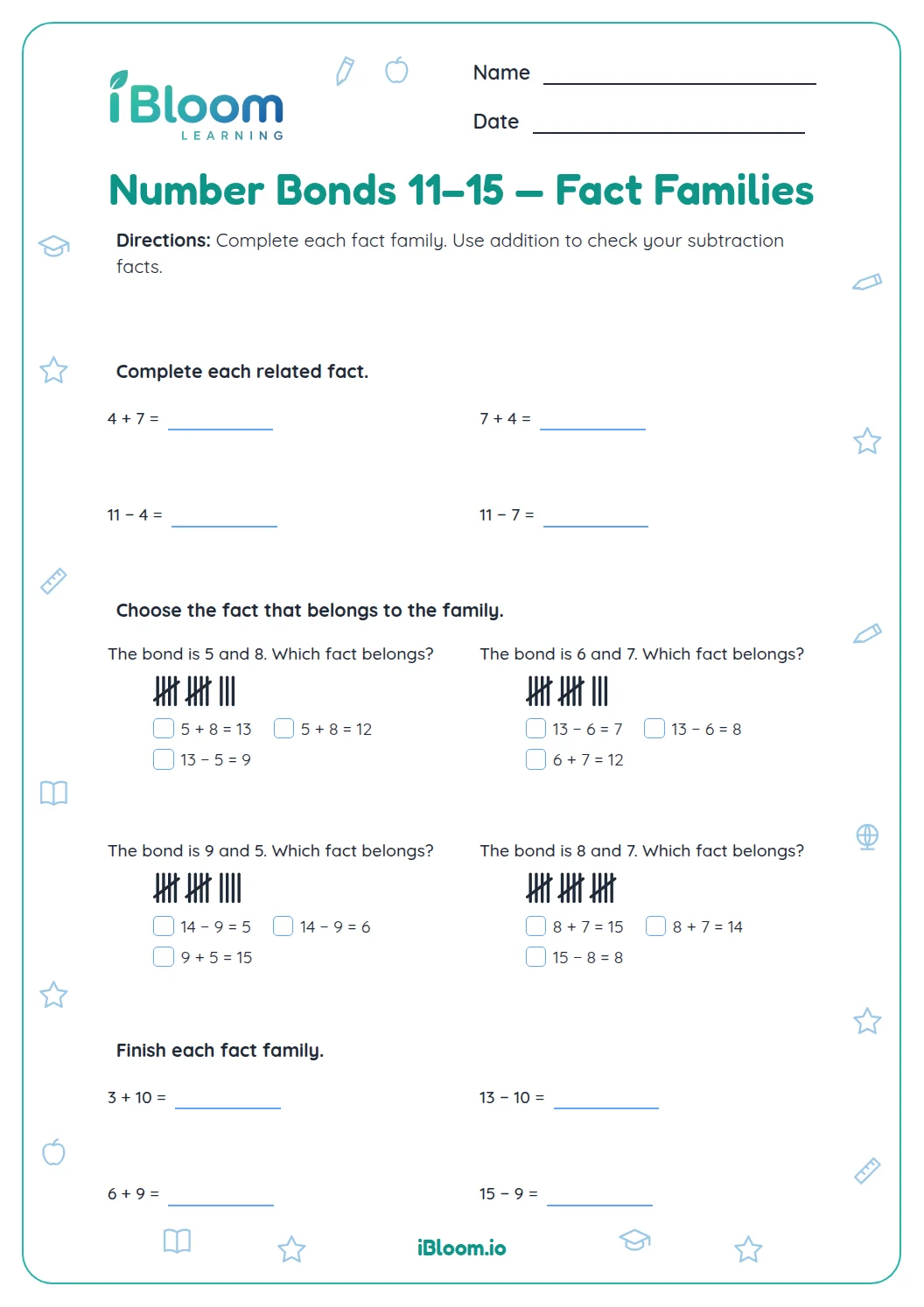
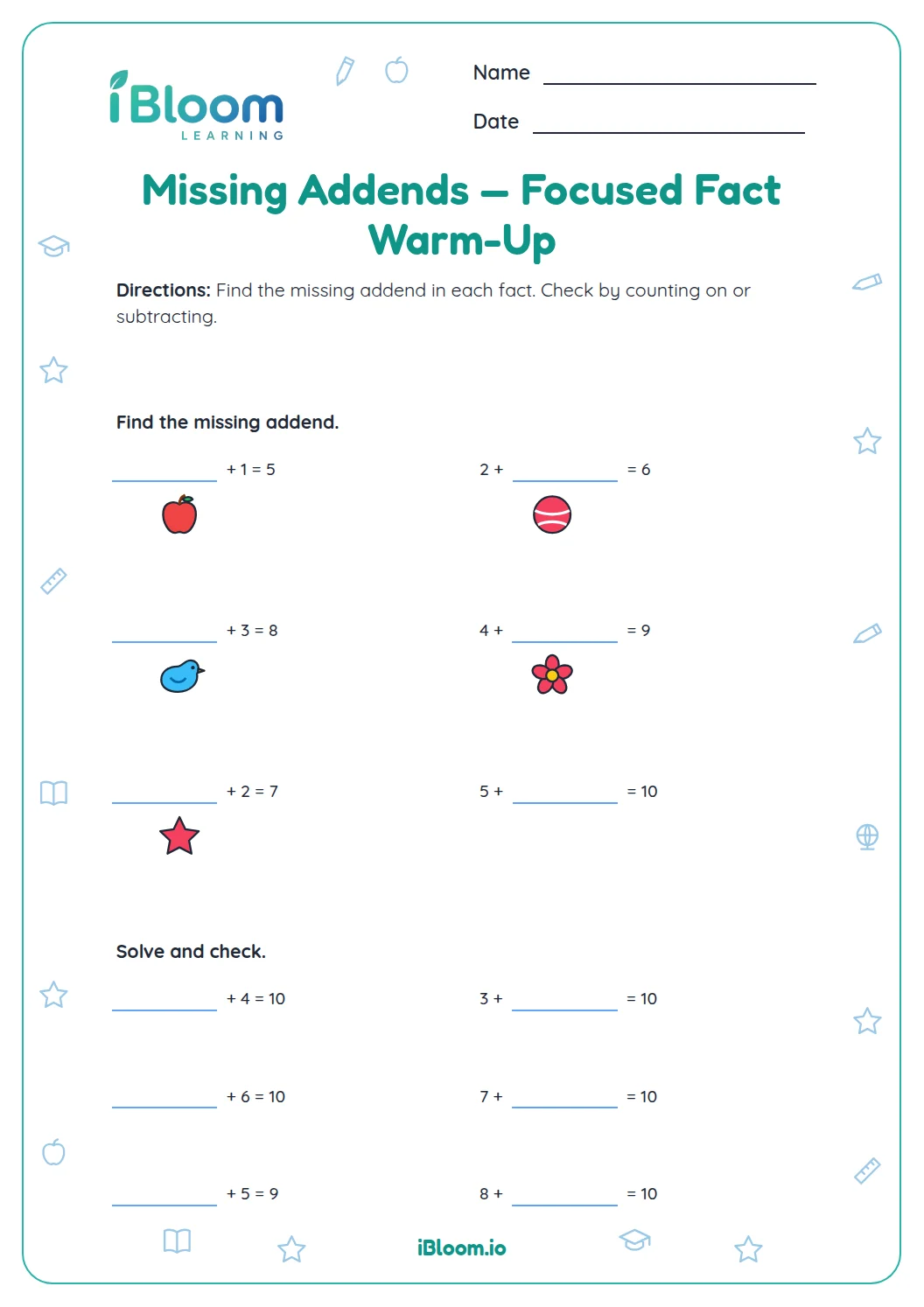
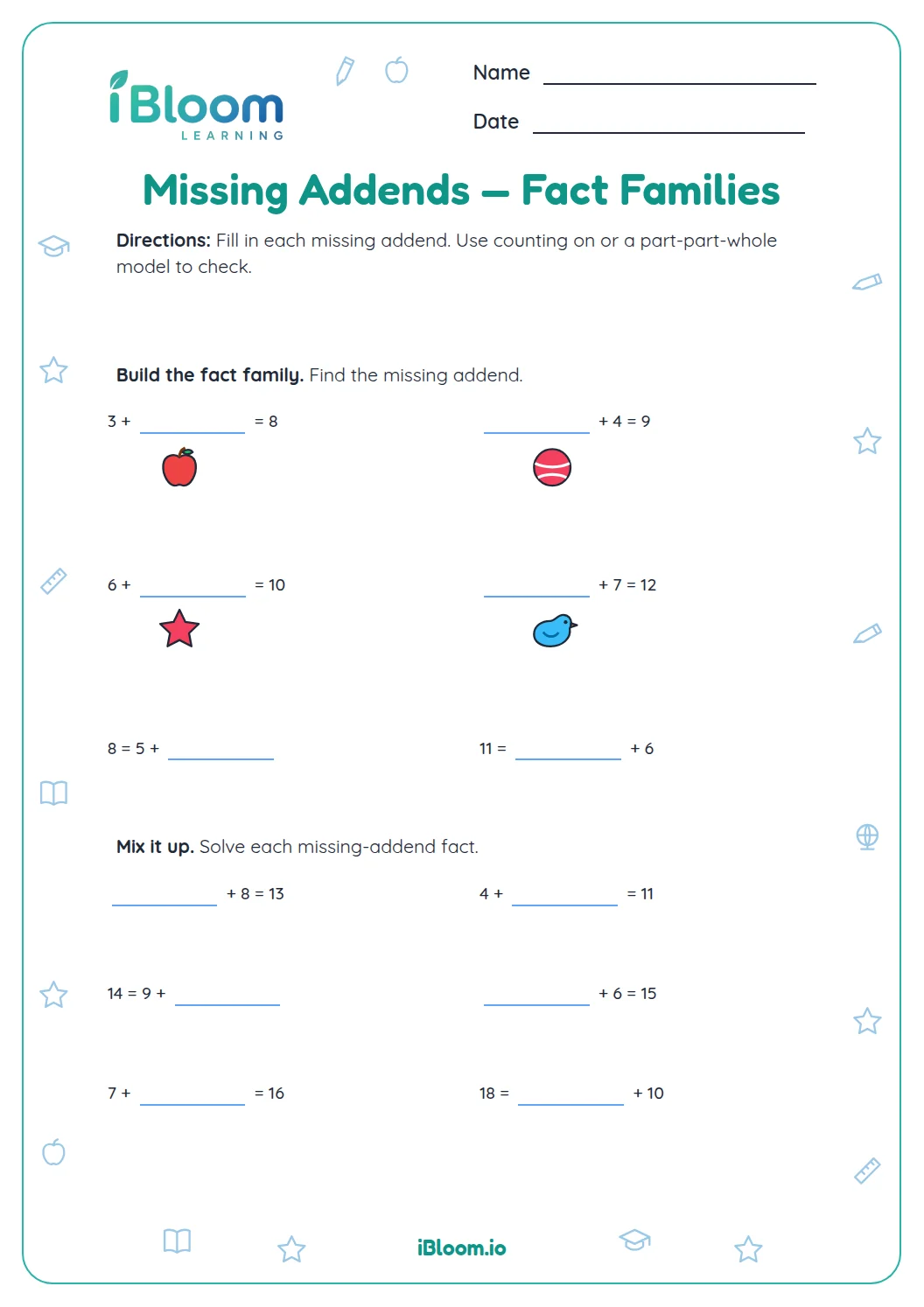
This printable mastery check gives Grade 2 learners practice composing numbers from 16 through 20. Part A uses illustrated number bonds for all five whole numbers in the range. Part B finds missing addends in addition equations, and Part C selects a pair of parts that makes each whole. The 15 questions fit two worksheet pages, with a separate two-page key. The addition practice aligns with CCSS 1.OA.C.6.
Aligned to 1.OA.C.6
What number bonds will learners practice?
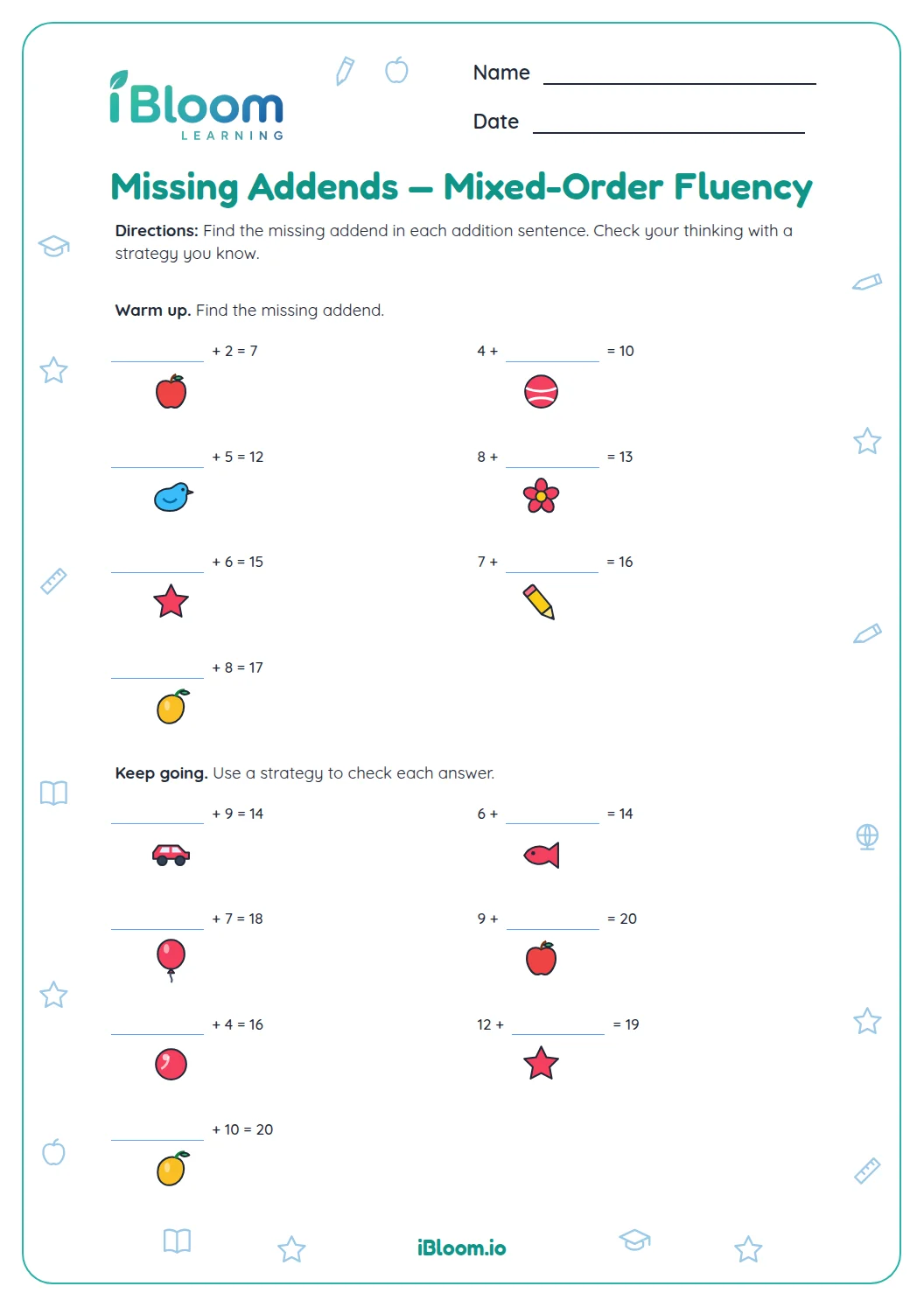
Part A shows a number bond for each whole from 16 through 20 and leaves one part blank. Part B changes the same idea into a missing-addend equation. Part C asks learners to choose a pair that adds to the whole.
The different formats let learners use a bond, an equation, or a known pair while practicing addition within 20. Each whole in the title range appears in every part.
How can a missing part be found?
Think of the whole as the total made by both parts. Subtract the known part from the whole, or count on from the known part until you reach the whole.
- 116 = 7 + ___
- 2The whole is 16 and one part is 7. Since 7 + 9 = 16, the missing part is 9.
How can a pair be checked?
Add the two proposed parts. If their sum equals the whole, the pair works. In the multiple-choice section, check each pair before selecting an answer.
How to use this worksheet
- 1Read the whole number first.
- 2Identify the known part or parts.
- 3Subtract or count on to find a missing part.
- 4Add the parts to check that they make the whole.
Common mistakes and quick fixes
The mistake
Subtracting the whole from the part.
The fix
Use whole minus known part.
The mistake
Choosing a pair with a sum one too large.
The fix
Add both numbers before selecting.
The mistake
Leaving out one number in the range.
The fix
Check that you practiced 16, 17, 18, 19, and 20.
Common Core alignment
Use addition and subtraction strategies to find missing parts within 20.
On this sheet: Find missing addends by reasoning about addition and subtraction within 20.
Show the official wordingHide the official wording
Add and subtract within 20, demonstrating fluency for addition and subtraction within 10. Use strategies such as counting on; making ten (e.g., 8 + 6 = 8 + 2 + 4 = 10 + 4 = 14); decomposing a number leading to a ten (e.g., 13 - 4 = 13 - 3 - 1 = 10 - 1 = 9); using the relationship between addition and subtraction (e.g., knowing that 8 + 4 = 12, one knows 12 - 8 = 4); and creating equivalent but easier or known sums (e.g., adding 6 + 7 by creating the known equivalent 6 + 6 + 1 = 12 + 1 = 13).
What to practice next
Make more practice
Further reading
Questions parents and teachers ask
Which numbers are included in this mastery check?
The page practices every whole number from 16 through 20. Each number appears as a whole in an illustrated bond, a missing-addend equation, and a multiple-choice part pair. This makes it easy to notice whether a learner needs more practice with one particular total.
How does a number bond help find a missing part?
A number bond names the whole and shows how two parts combine to make it. If the whole is 16 and one part is 7, the other part must be 9 because 7 + 9 = 16. Subtraction and counting on are both ways to find that part.
What should learners do after finding an answer?
Check by adding the parts together. For a missing-addend equation, substitute the answer into the blank and see whether the sum matches the total. In the choice section, add each pair before deciding which one makes the stated whole.
How many questions and pages are included?
There are 15 questions on two worksheet pages and a separate two-page answer key. Five are illustrated number bonds, five are missing-addend equations, and five ask learners to choose a pair. The page practices addition facts within 20 under CCSS 1.OA.C.6.
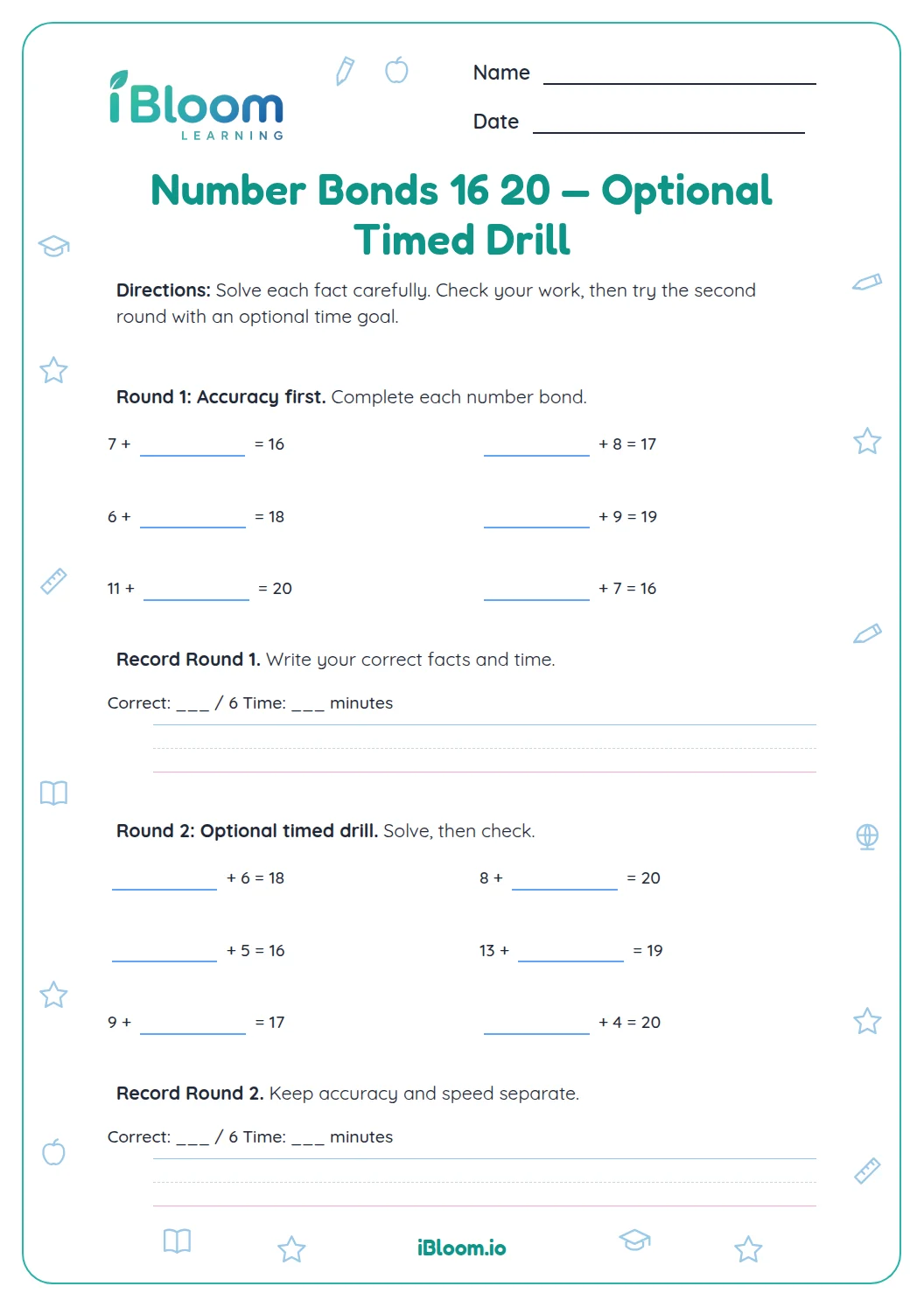
Is this worksheet timed?
No timing is required by the questions. About 15 minutes is a practical estimate for working through the 15 items and checking answers. Encourage the learner to explain one missing part with an addition sentence, such as 7 + 9 = 16.