
About this worksheet
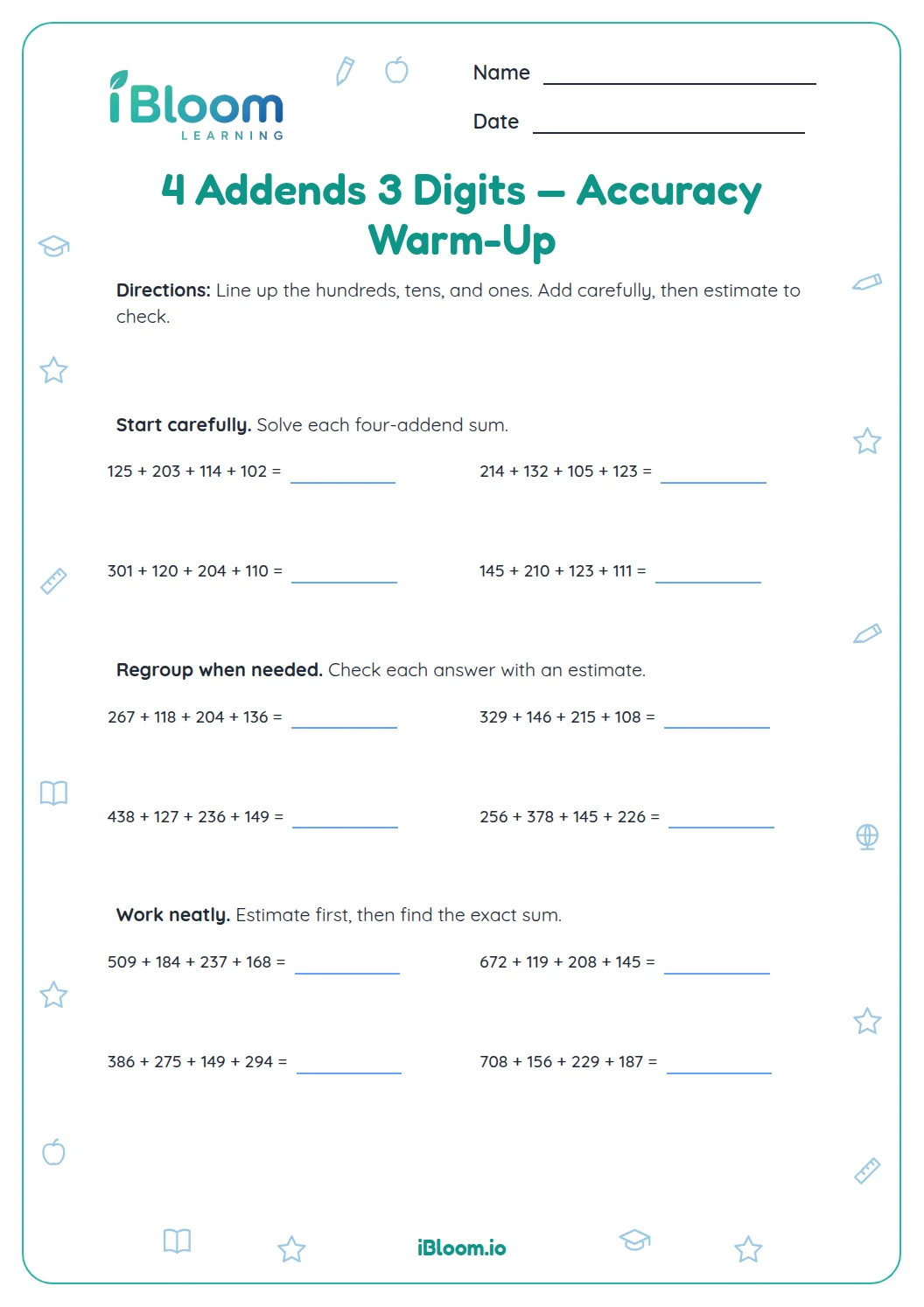
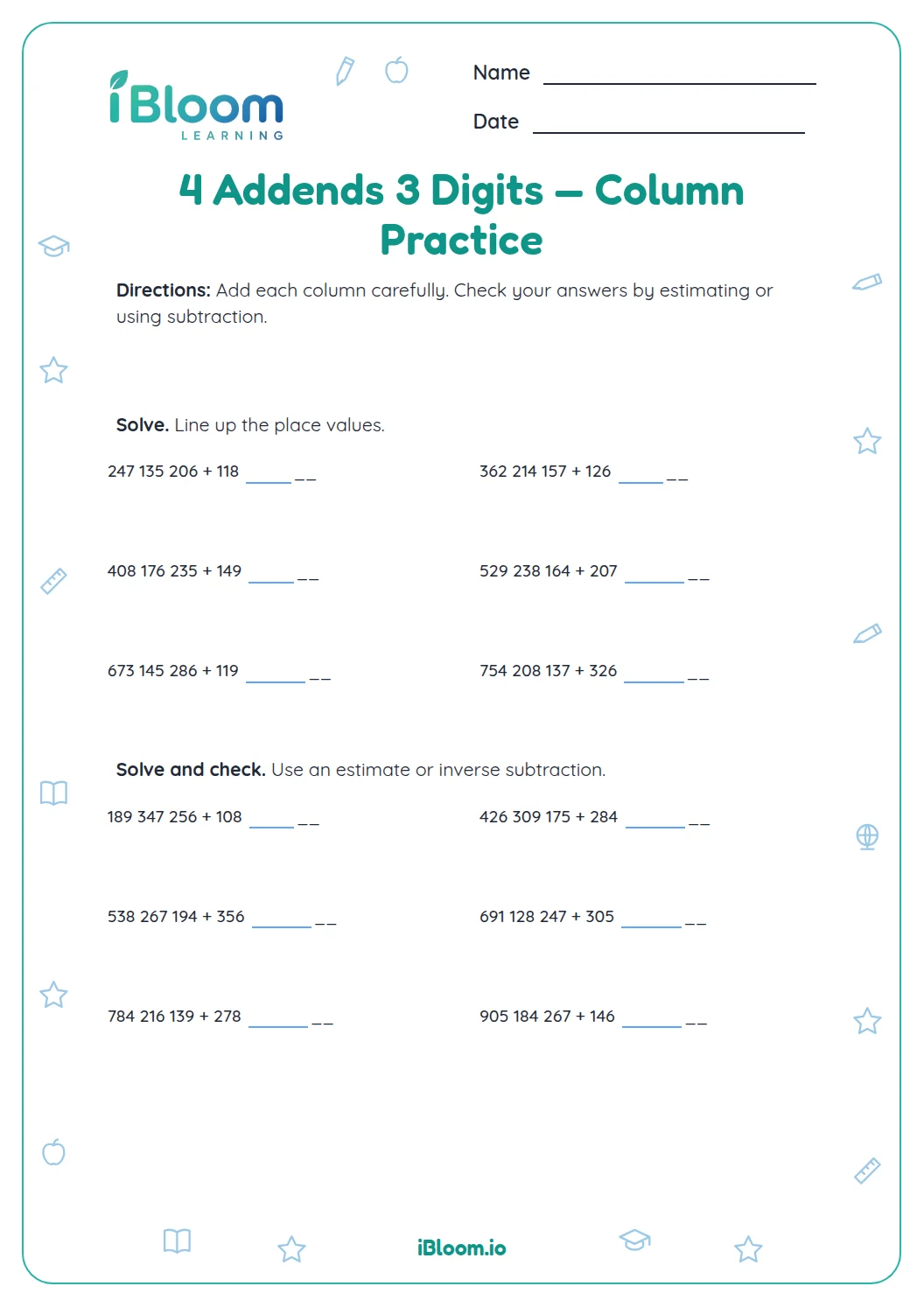
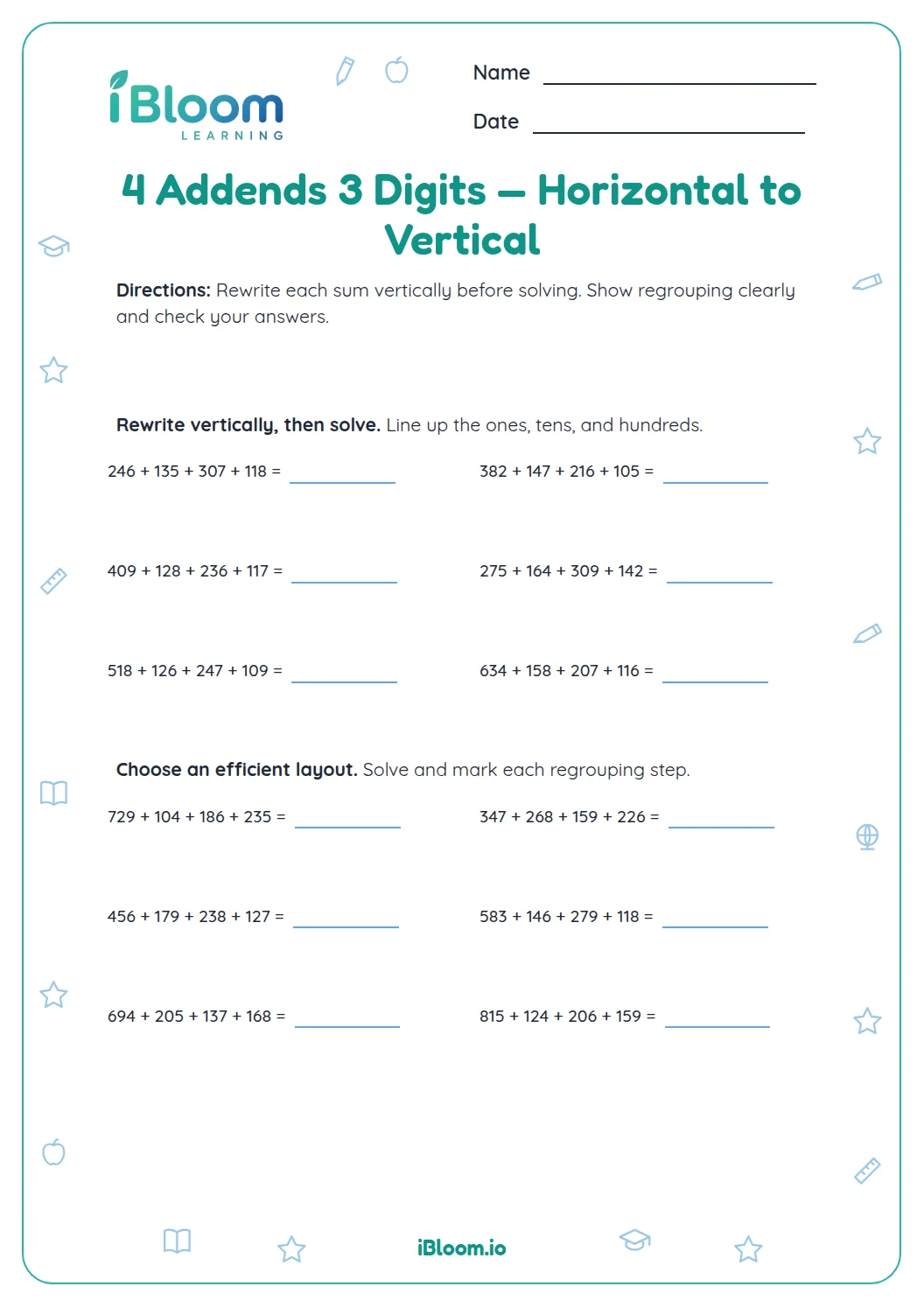
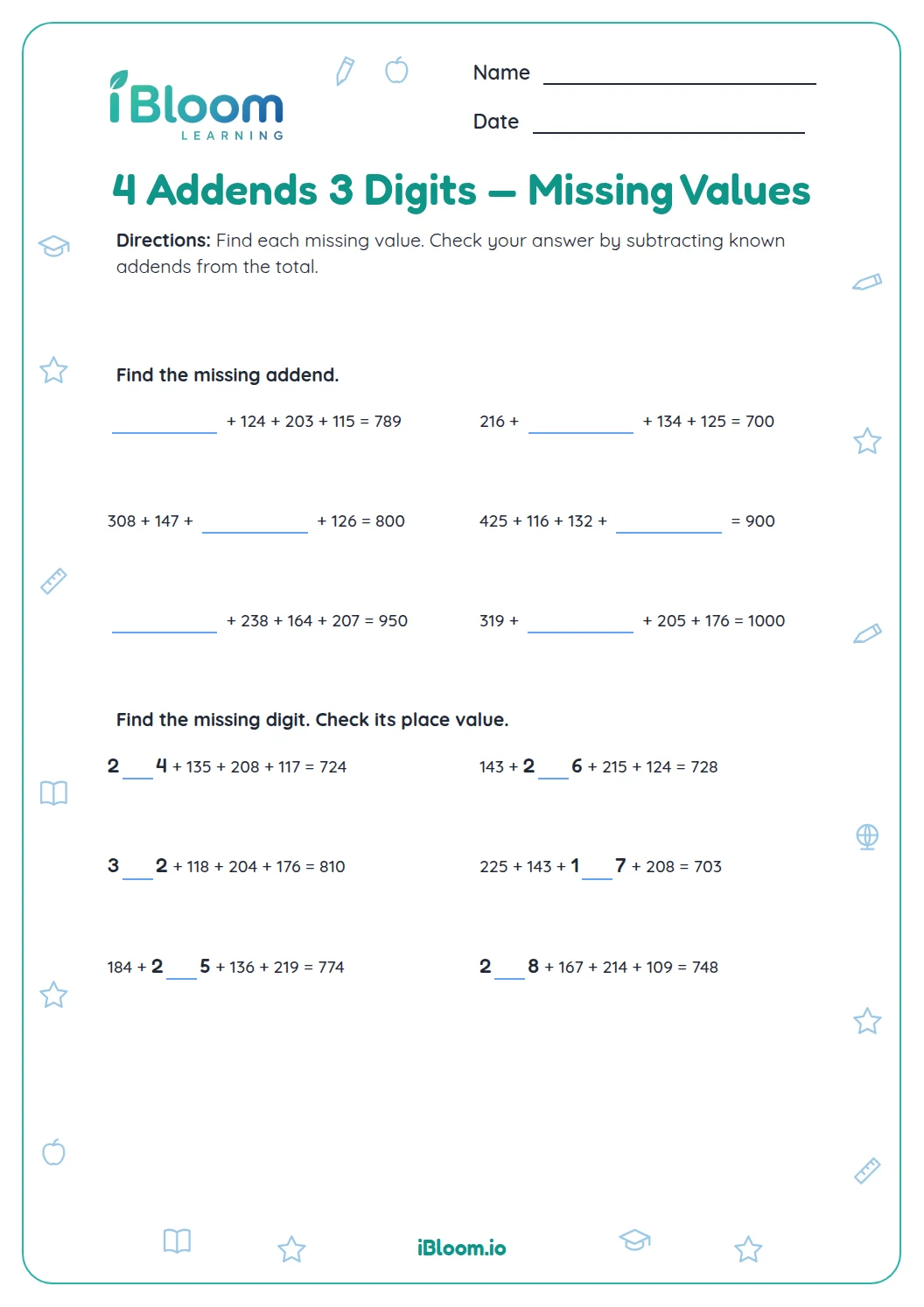
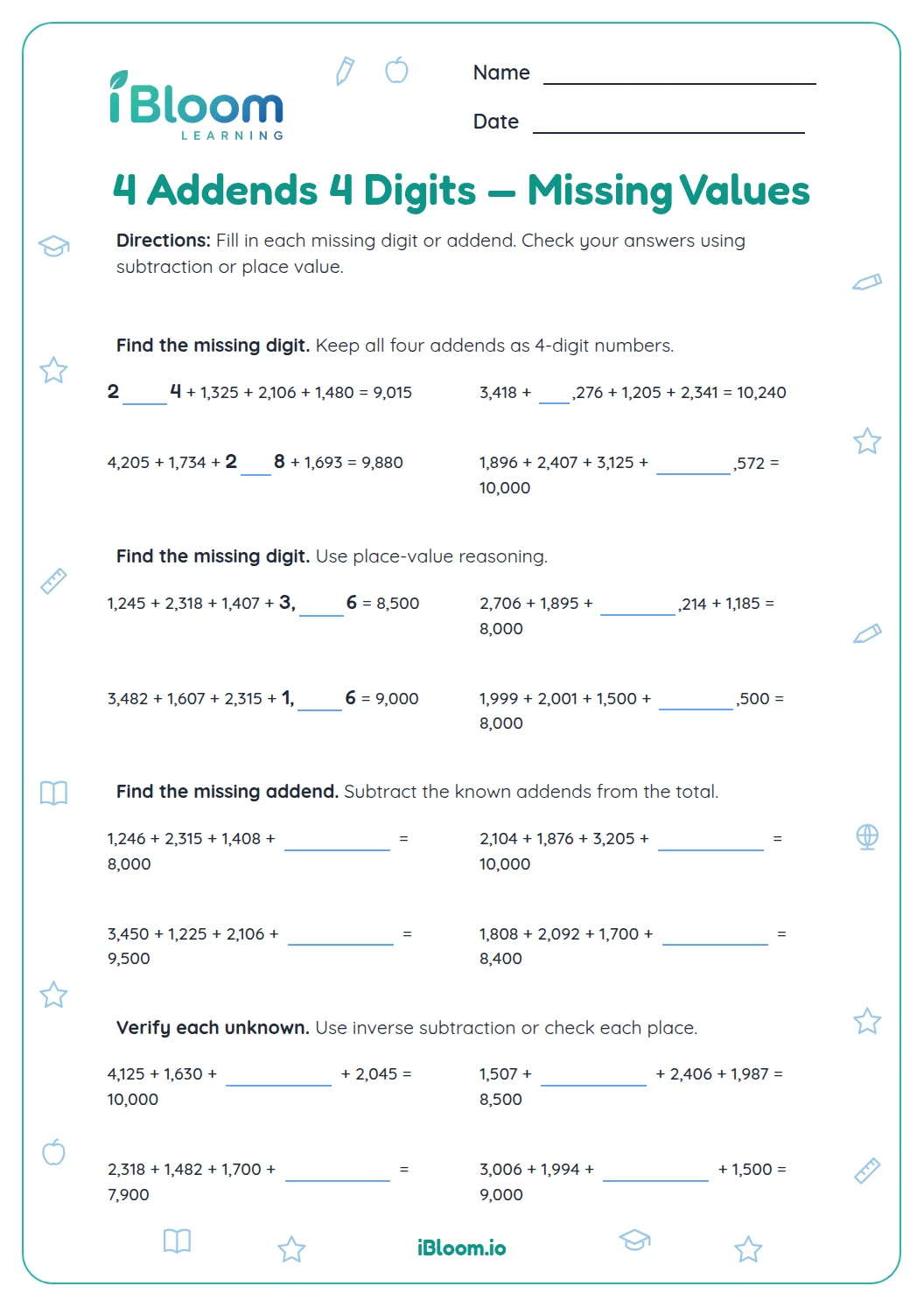
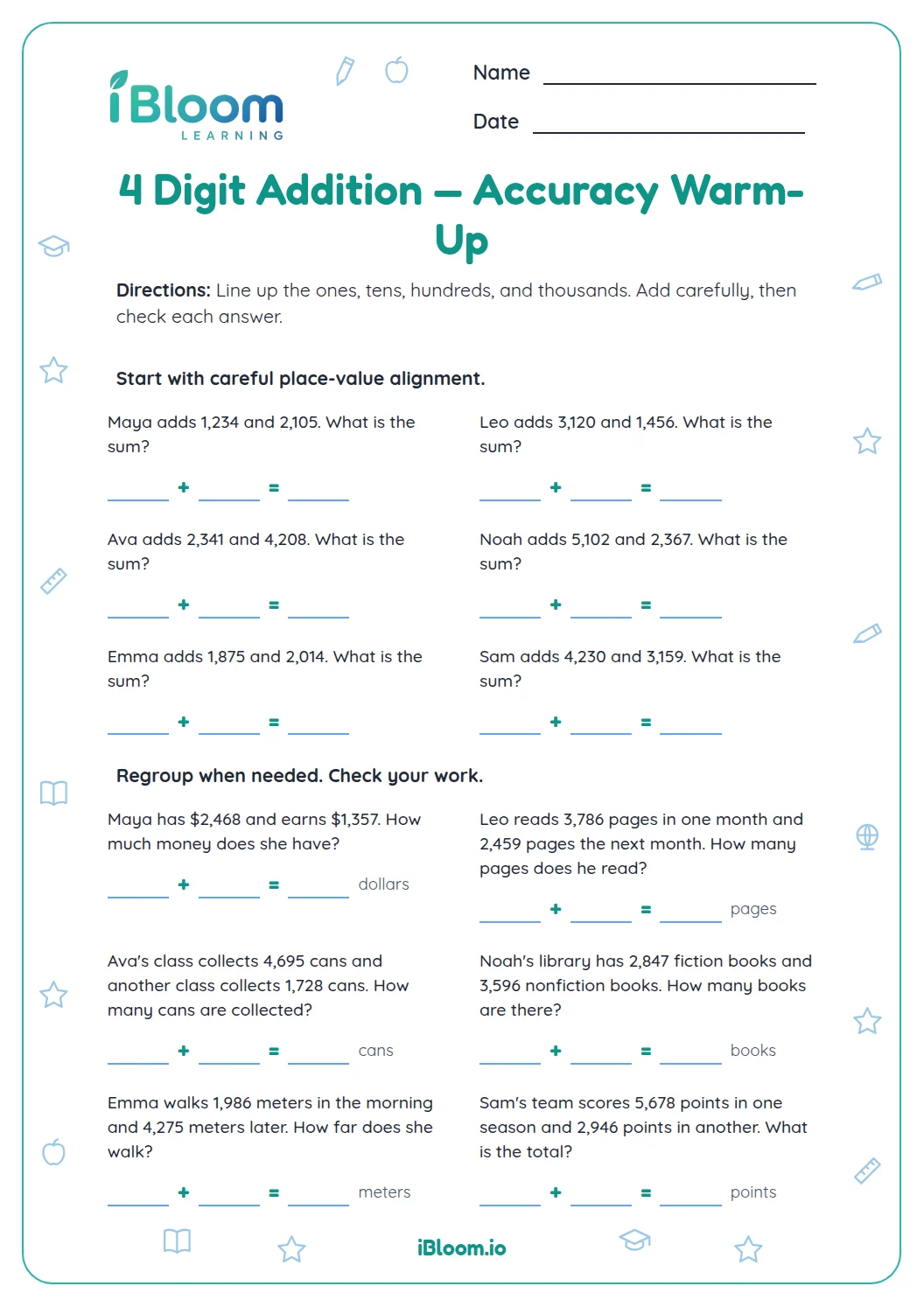
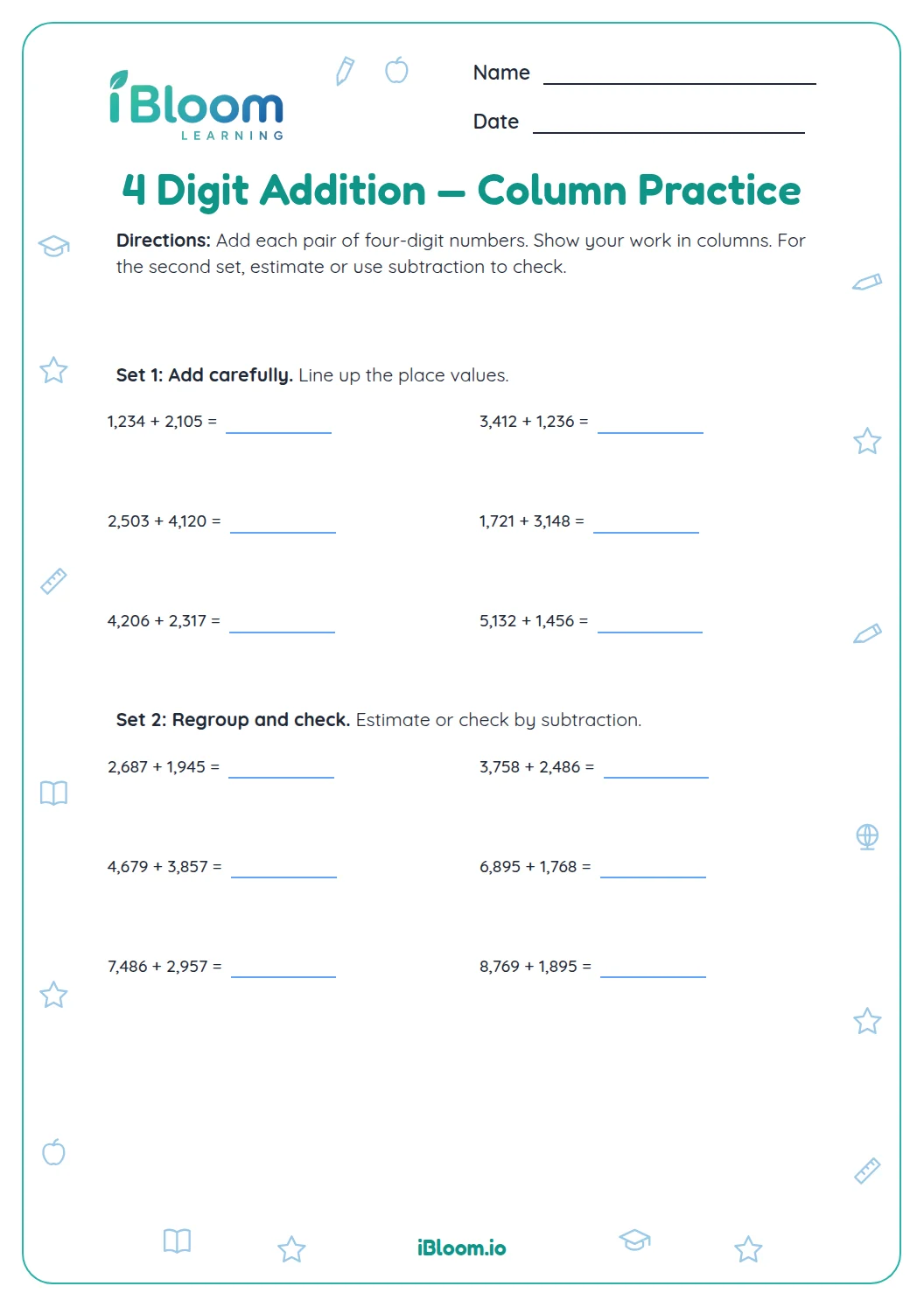
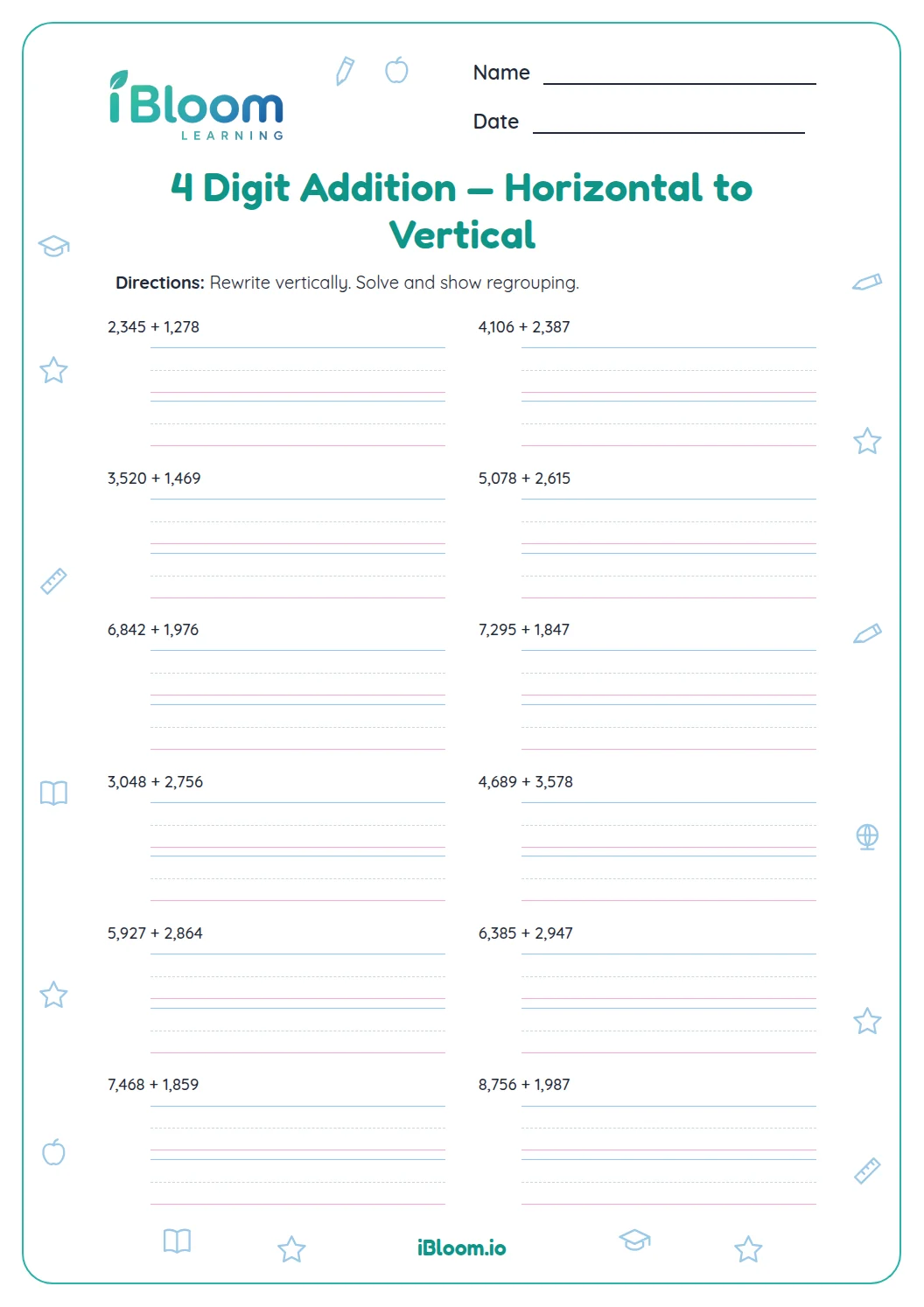
This printable addition worksheet gives Grades 3–4 practice adding four three-digit numbers. The 16 number sentences include regrouping across place values and varied totals. Students add all four terms and record each sum; the separate answer key supports checking. This work practices CCSS 4.NBT.B.4 by building accurate multi-digit addition with place-value regrouping.
Aligned to 4.NBT.B.4
How do you add four three-digit numbers?
Keep hundreds under hundreds, tens under tens, and ones under ones. Add each place across all four addends, carrying any full tens or hundreds into the next place.
- 1128 + 241 + 306 + 115
- 2Ones: 8 + 1 + 6 + 5 = 20; regroup 2 tens. Continue with tens and hundreds to get 790.
When do you regroup?
Part B has sums that require regrouping in the ones or tens place. Add within each column and carry the new ten or hundred to the next column before finding the total.
How do you check a four-addend total?
Add each of the four terms and check the place-value regrouping. The answers in this set vary, so recompute each equation instead of expecting one repeated total.
- 1245 + 330 + 174 + 250
- 2245 + 330 = 575; 174 + 250 = 424
- 3575 + 424 = 999
How can students check a larger total?
Part D includes totals around or above 1,000. Recheck each column or add the numbers in a different order. The key lists the exact total for all 16 equations.
A place-value routine for each sum
- 1Write the four addends so hundreds, tens, and ones line up.
- 2Add the ones and regroup any full tens.
- 3Add the tens, including regrouped tens, and regroup hundreds if needed.
- 4Add the hundreds and record the complete total.
- 5Estimate by rounding each addend to the nearest hundred, then compare with the exact total.
- 6Compare the answer with the key after finishing a group.
Addition errors to watch for
The mistake
Adding digits across a row without keeping their place values aligned.
The fix
Line up the ones, tens, and hundreds before adding.
The mistake
Forgetting a regrouped ten or hundred in the next column.
The fix
Mark the carried value clearly and include it in the next total.
The mistake
Leaving one of the four addends out of the total.
The fix
Track each term as you add the ones, tens, and hundreds columns.
Common Core alignment
This worksheet practices multi-digit addition using place-value strategies.
Fluently add multi-digit whole numbers using place-value regrouping.
On this sheet: Students add four three-digit whole numbers and regroup across place values.
Show the official wordingHide the official wording
Fluently add and subtract multi-digit whole numbers using the standard algorithm.
What to practice next
Make more practice
Further reading
Questions parents and teachers ask
How many addends are in each problem?
Every one of the 16 questions has four addends, and each addend is a three-digit whole number. Students find one total per number sentence. The separate answer key lists the result for each equation so families can check the work after a section is complete.
What does regrouping mean in these problems?
Regrouping means exchanging ten ones for one ten, or ten tens for one hundred, when a place-value total reaches ten. Line up the columns, add from the ones place, and carry the regrouped amount into the next column. Several sums need this step.
How can students check an addition answer?
Estimate by rounding each addend to the nearest hundred, then compare that estimate with the exact total. Students can also add the columns again or use the answer key after solving. A result far from the estimate may signal a missed regrouping step.
What grade is this addition worksheet for?
The worksheet is labeled Grades 3–4 and practices four three-digit addends. The curriculum alignment is CCSS 4.NBT.B.4, which includes multi-digit addition using the standard algorithm. Students can use the key to check their totals after completing the equations. It also asks students to regroup carefully.
Does the answer key show the working steps?
The answer key provides the correct total for each of the 16 sums. Students can show their regrouping on the worksheet while solving. If a total differs from the key, re-add one place-value column at a time and make sure all four addends are included.