
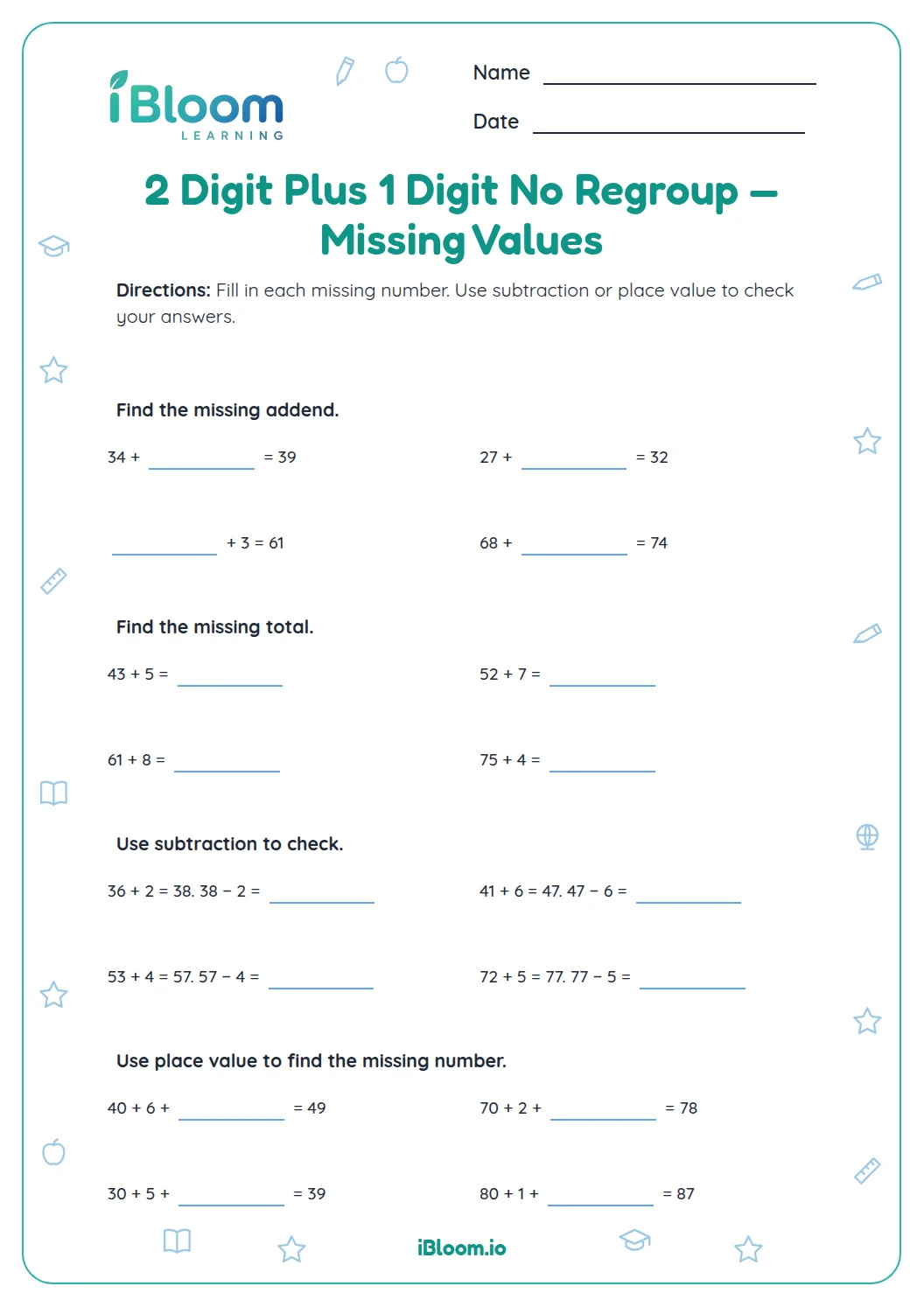
About this worksheet
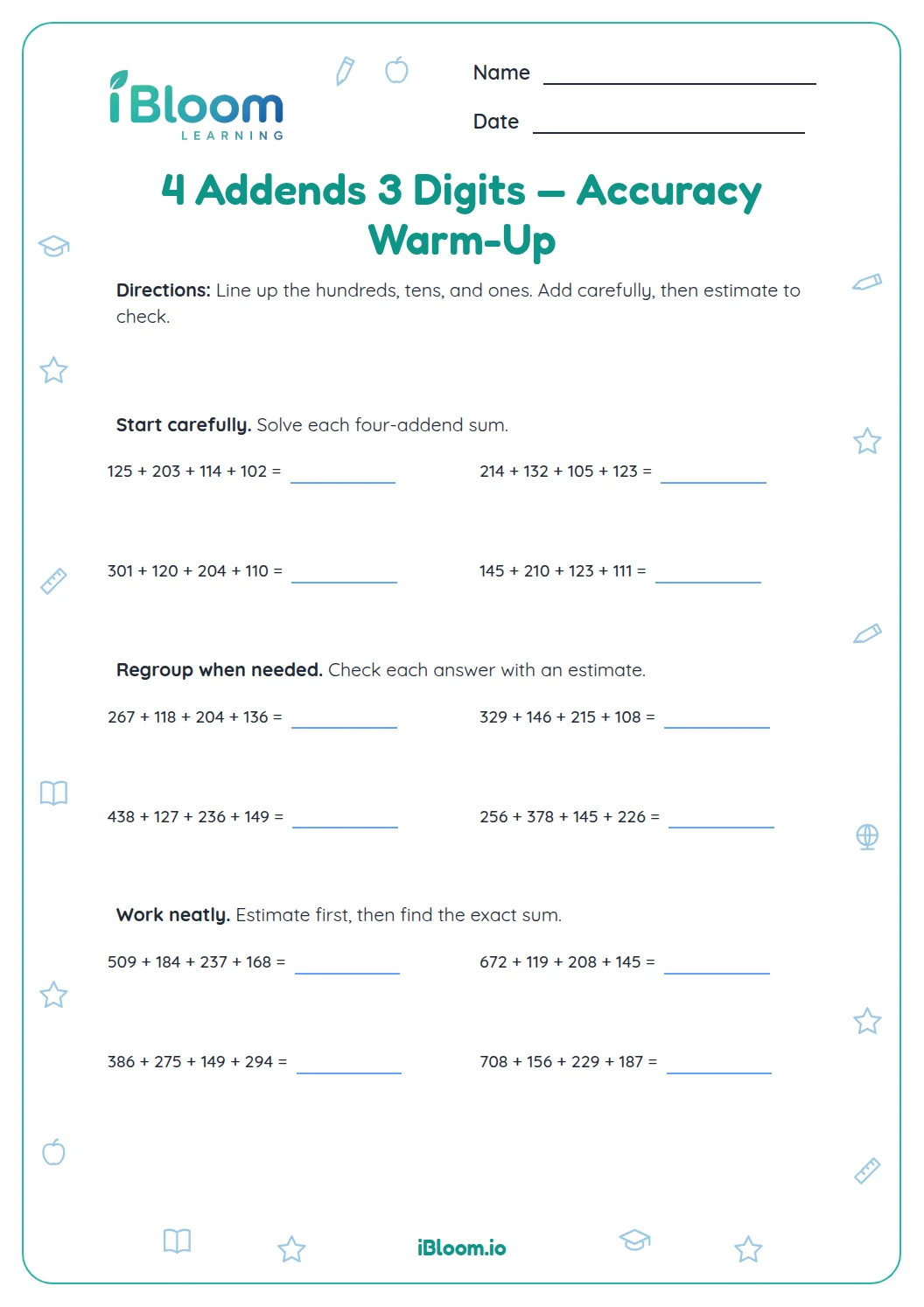
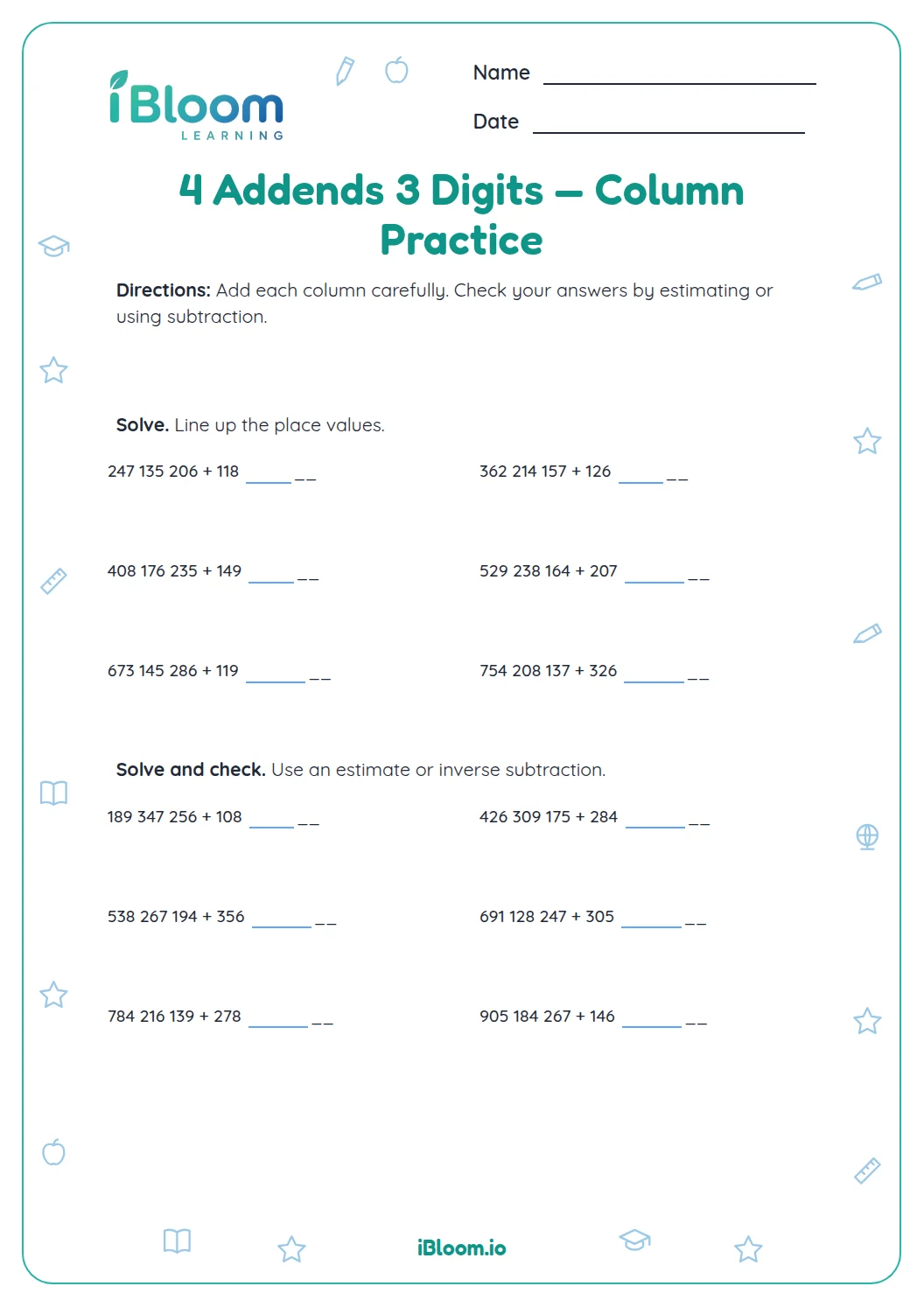
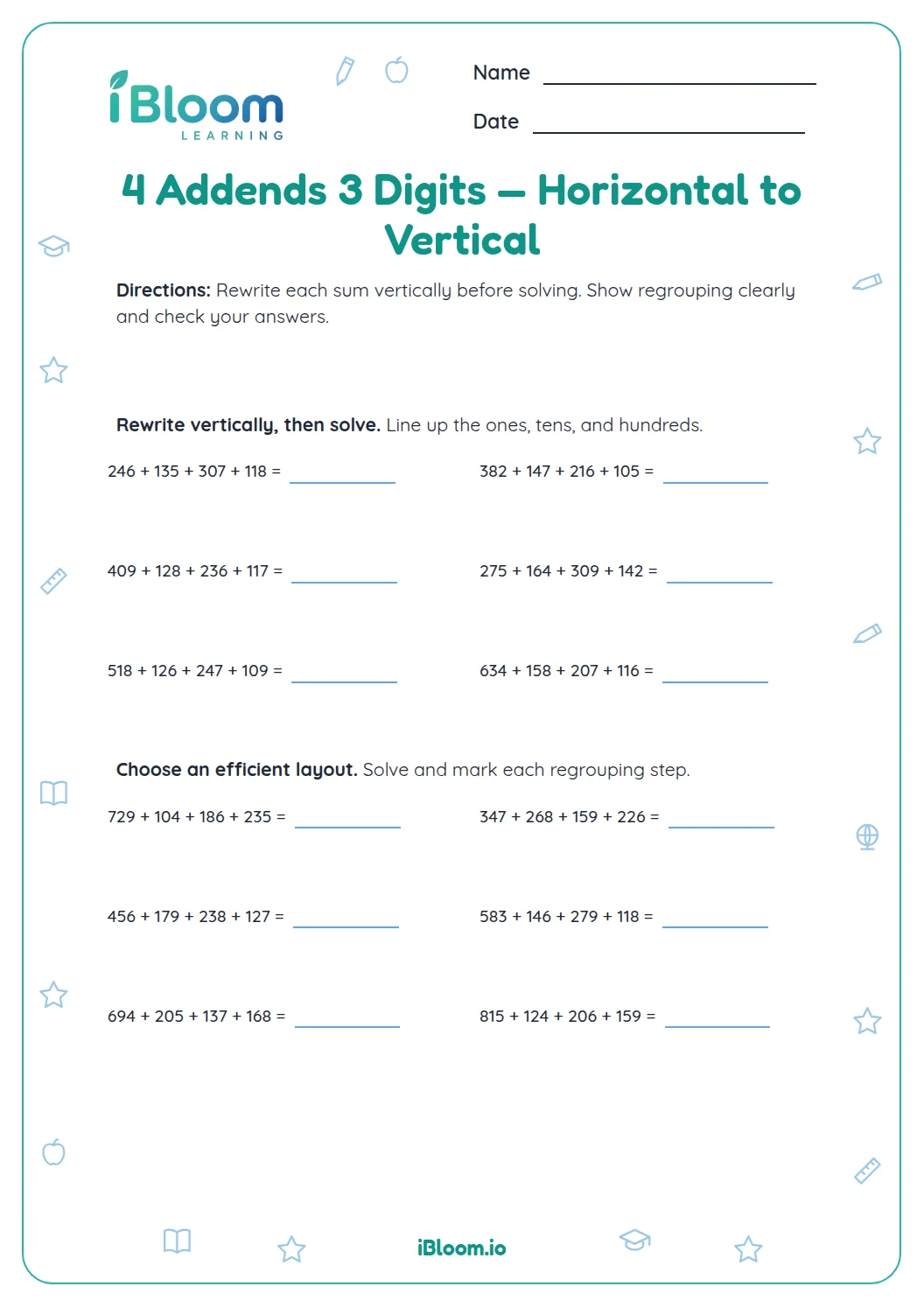
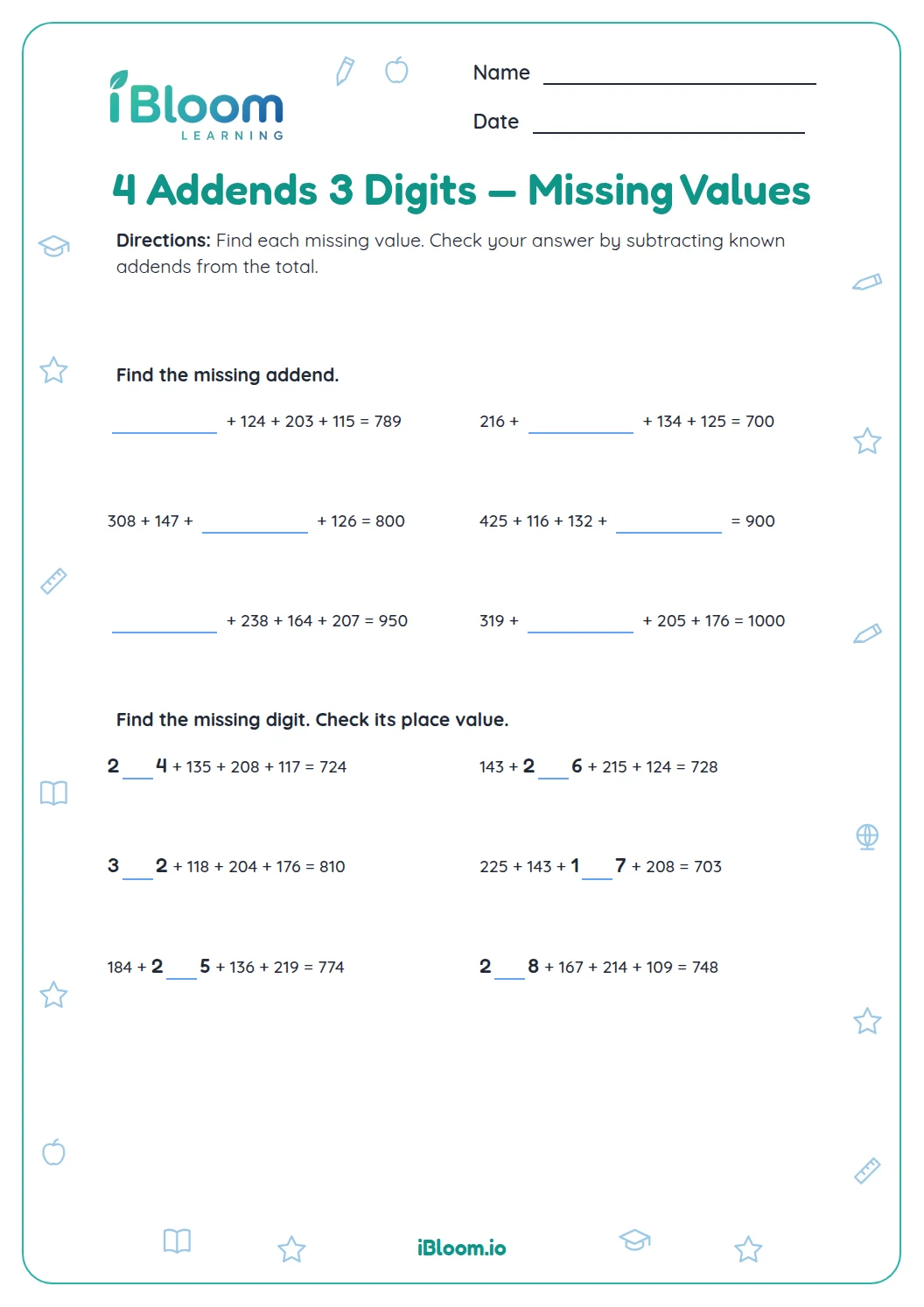
This Grade 4 addition worksheet practices adding four three-digit addends and checking totals with place value. Students inspect a few proposed sums, calculate four-addend totals, and explain a way to verify an answer. The 14 questions use regrouping and grouping, with a separate answer key for checking.
Aligned to 3.NBT.A.2
How does the worksheet build addition checks?
The first part asks students to evaluate proposed totals and calculate corrected sums. Next they add four three-digit numbers, then describe how grouping or place value can confirm a result.
How can a sum be checked by grouping?
Pair addends that make friendly totals, then add the pair sums. This keeps all four addends in view.
- 1(345 + 155) + (208 + 192)
- 2500 + 400 = 900
What does each part ask students to do?
Part A checks proposed work, Part B finds four-addend sums, and Part C asks for a correction or a check. The answer key includes the numerical totals and sample explanations.
How can a student catch a regrouping slip?
Add the ones, tens, and hundreds separately, carrying each full group of ten to the next place. Then add the four original numbers in a different grouping and compare totals.
How to check a four-addend sum
- 1Line up the ones, tens, and hundreds mentally or on scratch paper.
- 2Add the ones and regroup each ten.
- 3Add the tens, including any regrouped tens.
- 4Add the hundreds and all carried hundreds.
- 5Check by pairing the addends a different way.
Addition slips to watch for
The mistake
Forgetting a regrouped ten.
The fix
Mark the carried ten before adding the next column.
The mistake
Dropping one of the four addends.
The fix
Point to each addend as it is included in a pair or column total.
The mistake
Treating an incorrect proposed total as correct because it is close.
The fix
Recalculate the place values or use a second grouping.
Common Core alignment
This worksheet practices the following Common Core skill.
Add three-digit numbers using place value strategies and properties.
On this sheet: The sheet uses place-value addition and checking to analyze four three-digit addends.
Show the official wordingHide the official wording
Fluently add and subtract within 1000 using strategies and algorithms based on place value, properties of operations, and/or the relationship between addition and subtraction.
What to practice next
Make more practice
Further reading
Questions parents and teachers ask
How many questions are on this worksheet?
There are 14 questions across 3 parts. The questions use the skill named on this page, moving from direct practice to a check or application. A separate answer key is included. Students can complete one part at a time, then check each response against the key and return to any item that needs another look.
Is an answer key included?
Yes. A separate answer key gives answers for every question. Written responses include sample answers; another clear response is acceptable when it matches the information in the passage or problem. Check the work against the key after completing the page.
How should students use the work space?
Students can record calculations or text evidence that supports an answer. Writing a short check makes it easier to see whether the chosen operation or story detail matches what the question asks. Use the space to show enough thinking to review the result.
Can students complete the worksheet independently?
The page is designed for independent practice after students have met the skill. An adult can read the directions with the student first, then use the key to review any answer that needs another look. Students can also explain how they checked a result.
How long will the worksheet take?
Plan for about 20 minutes, with extra time for careful working and checking. The pace depends on how much reasoning a student writes and whether they revisit questions using the answer key. A student can pause between parts and finish later.