




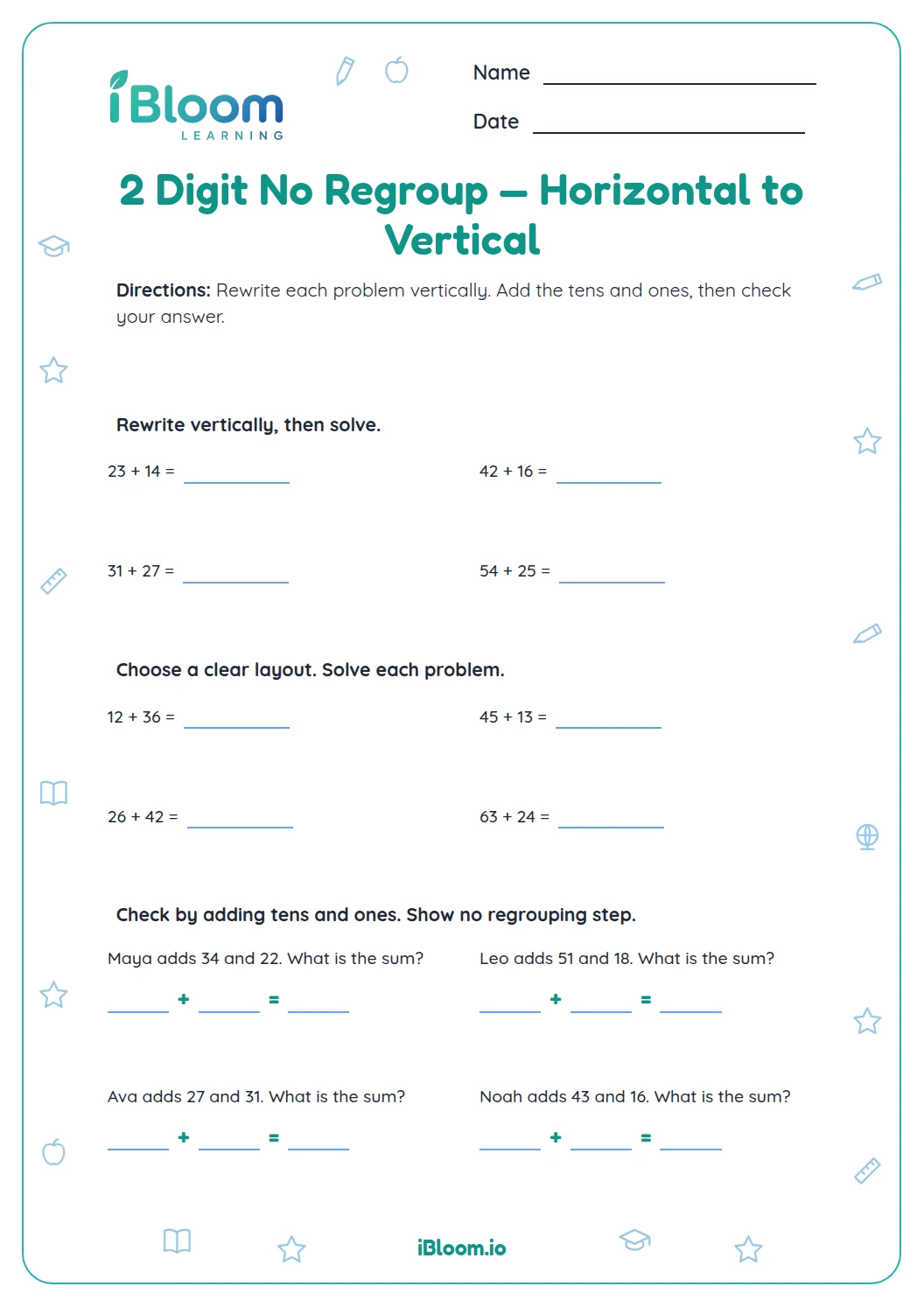
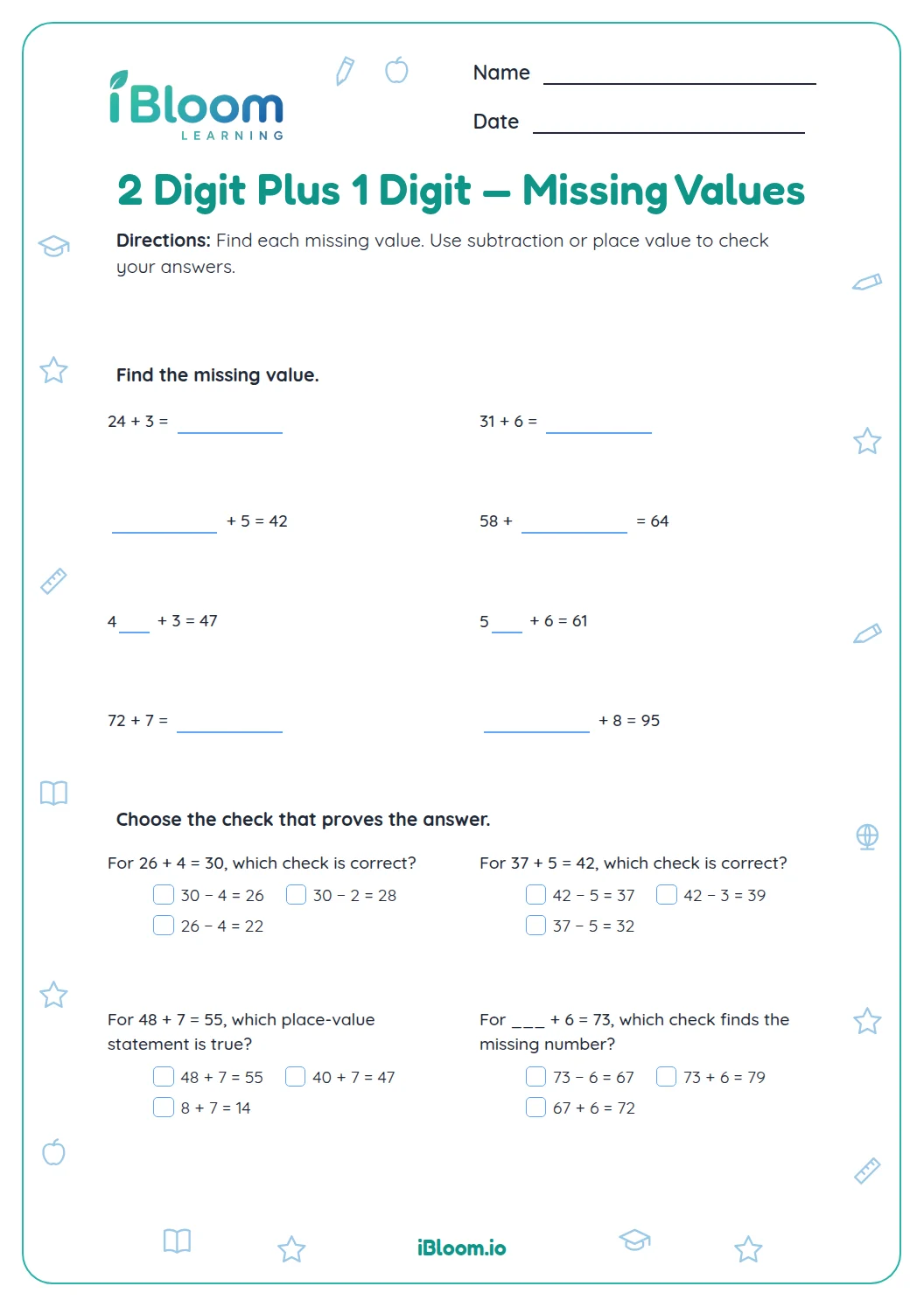
About this worksheet
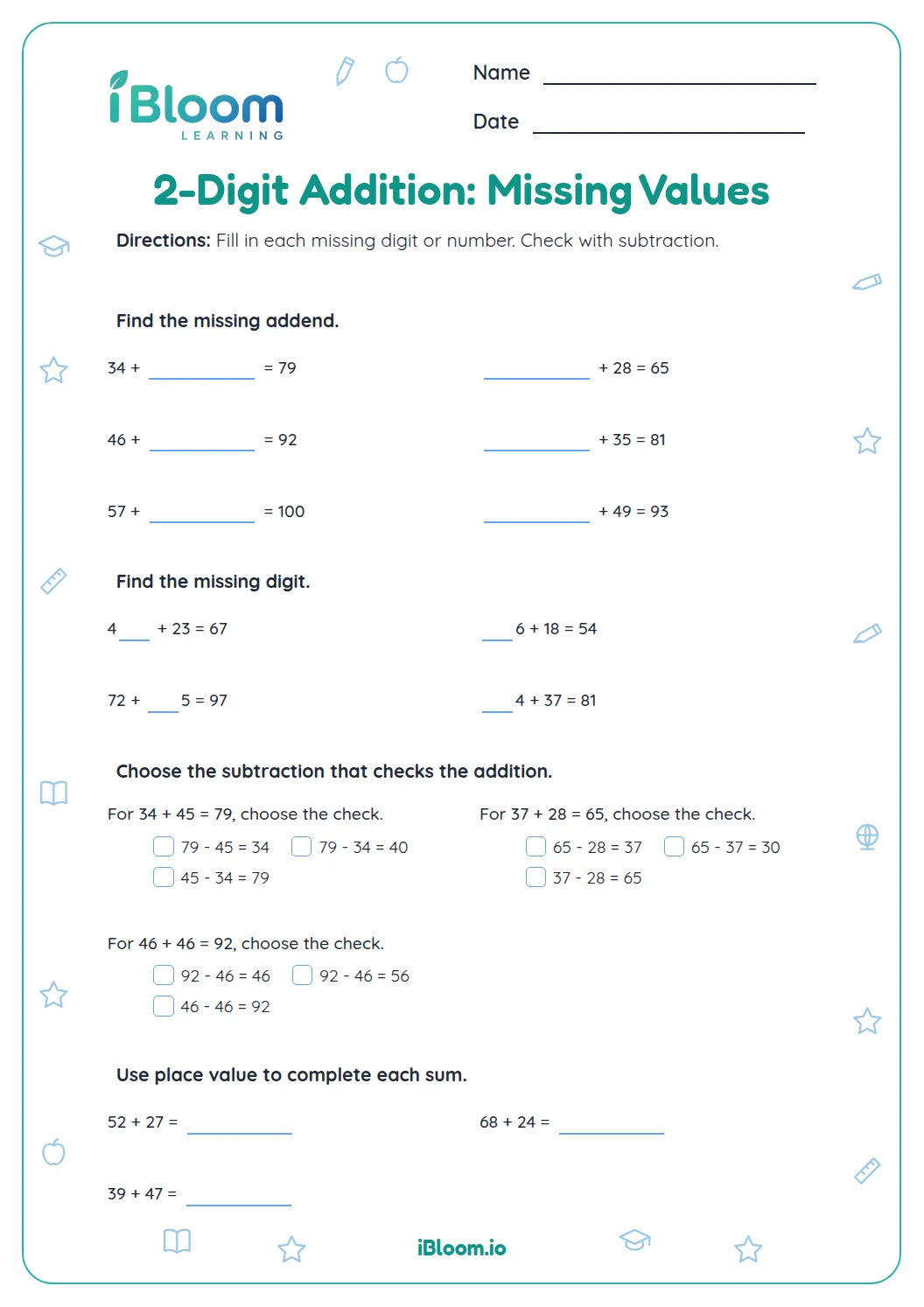
The equations keep the focus on place value: sometimes the missing number is an addend, and sometimes it is the total. Students must decide whether to add or subtract to find the blank.
Find the missing addend
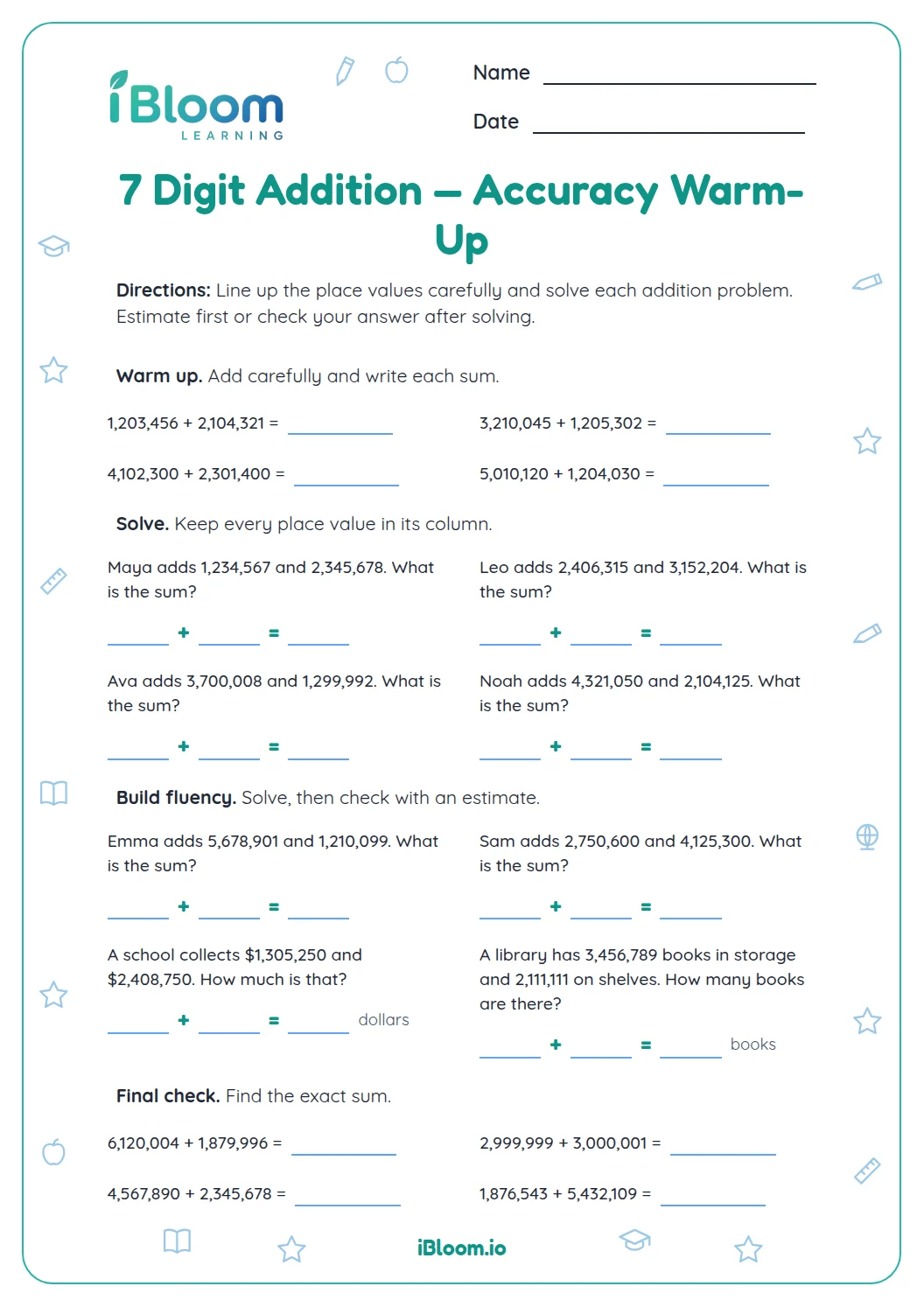
When a total is given and one addend is missing, subtract the known addend from the total. For example, in 3,482,615 + ___ = 7,906,240, compute 7,906,240 − 3,482,615.
Regroup from the next place when the top digit is too small. Keep each digit aligned with its place value so borrowing across thousands or millions does not shift the answer.
- Part A asks for missing addends.
- Check each result by adding it to the known addend.
Find the missing total
When both addends are present, add them to find the missing total. For example, 2,845,309 + 4,120,608 = ___. Start with the ones column and regroup as needed.
A quick check uses the inverse operation: subtract one addend from the total. The result should be the other addend. Commas help you see groups of three digits but do not change place value.
- Part B asks for missing totals and includes regrouping.
- Read the location of the blank before choosing addition or subtraction.
How to work through this page
- 1Mark the blank: is it an addend or the total?
- 2Subtract a known addend from the total, or add both addends.
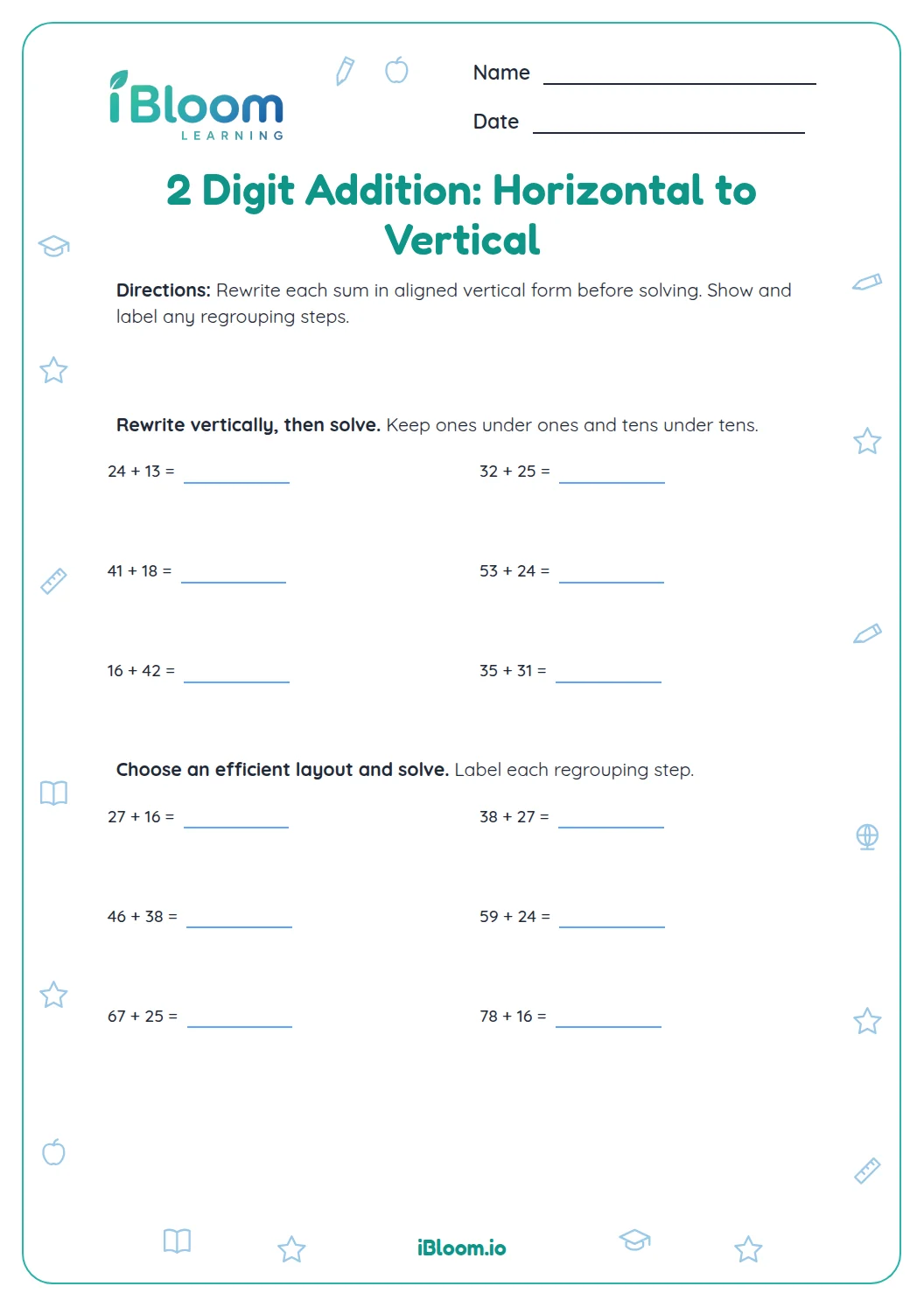
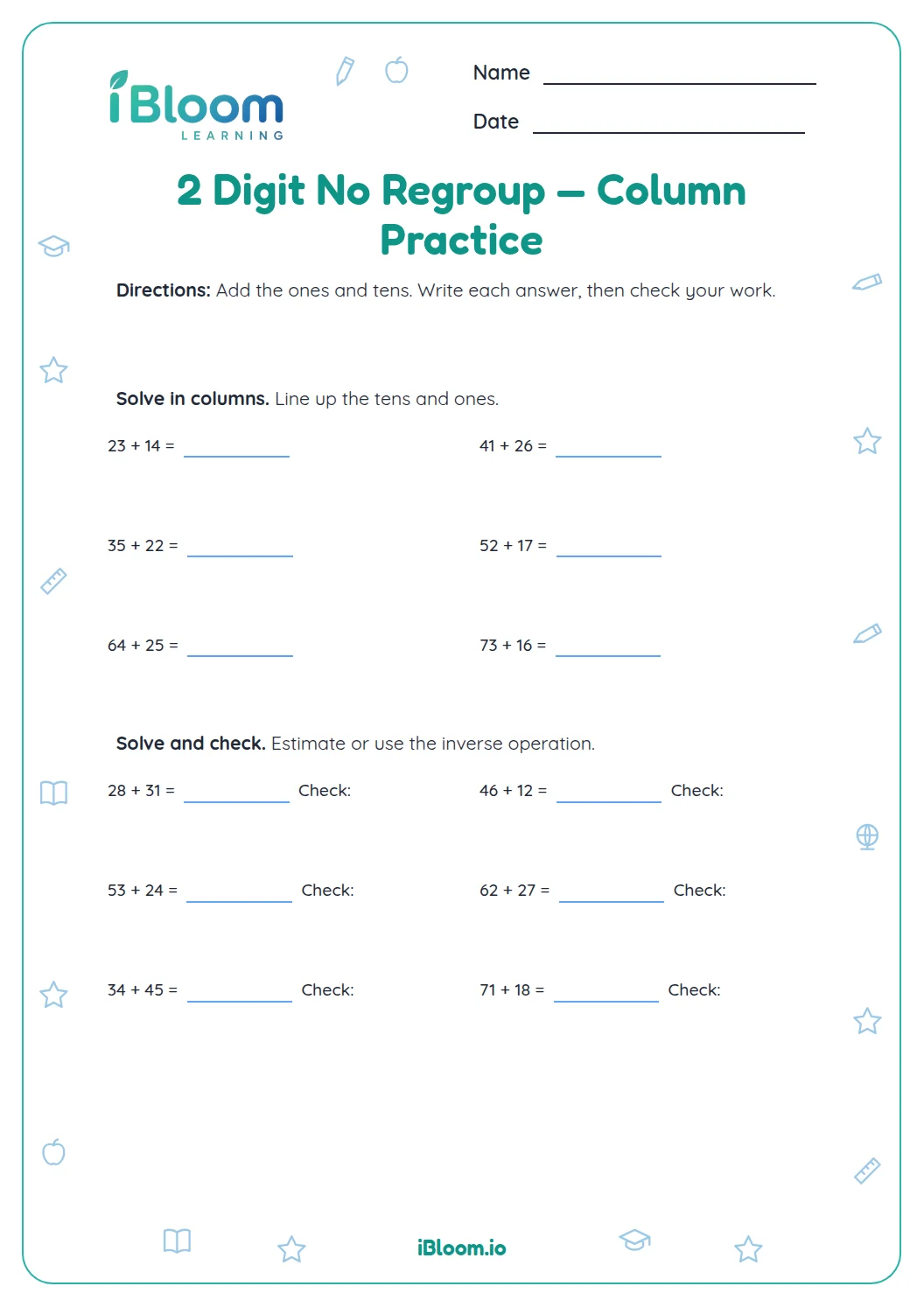
- 3Line up place values and regroup carefully.
- 4Check with the inverse operation.
Common mistakes and how to check
The mistake
Adding when the addend is missing
The fix
The missing addend is the part needed to reach the total. Subtract the known part from the total, then add to check.
The mistake
Misaligning digits around commas
The fix
Line up ones with ones, tens with tens, and so on. A shifted digit changes its value by a factor of ten.
What to practice next
Make more practice
Questions parents and teachers ask
How do I solve a missing-addend equation?
Subtract the known addend from the total to find the missing addend. For example, in ___ + 2,222,222 = 9,999,999, subtract 2,222,222 from 9,999,999. Line up every place value first, then add your result back to check the total.
How do I find a missing total?
When the blank comes after the equal sign, add the two known addends. Regroup whenever a column totals ten or more, carrying to the next place value. Then subtract either addend from your sum; the result should match the other addend.
Why does place-value alignment matter?
Each digit’s value depends on its place, so align ones with ones, tens with tens, and each larger place with its match. Commas help you read groups of three digits, but they do not replace careful alignment. This matters in every seven-digit equation on the page.
What is a quick way to check my work?
For a missing addend, add the value you found to the known addend and compare it with the total. For a missing total, subtract one addend from your sum; you should get the other addend. The answer key lists each result for checking.