

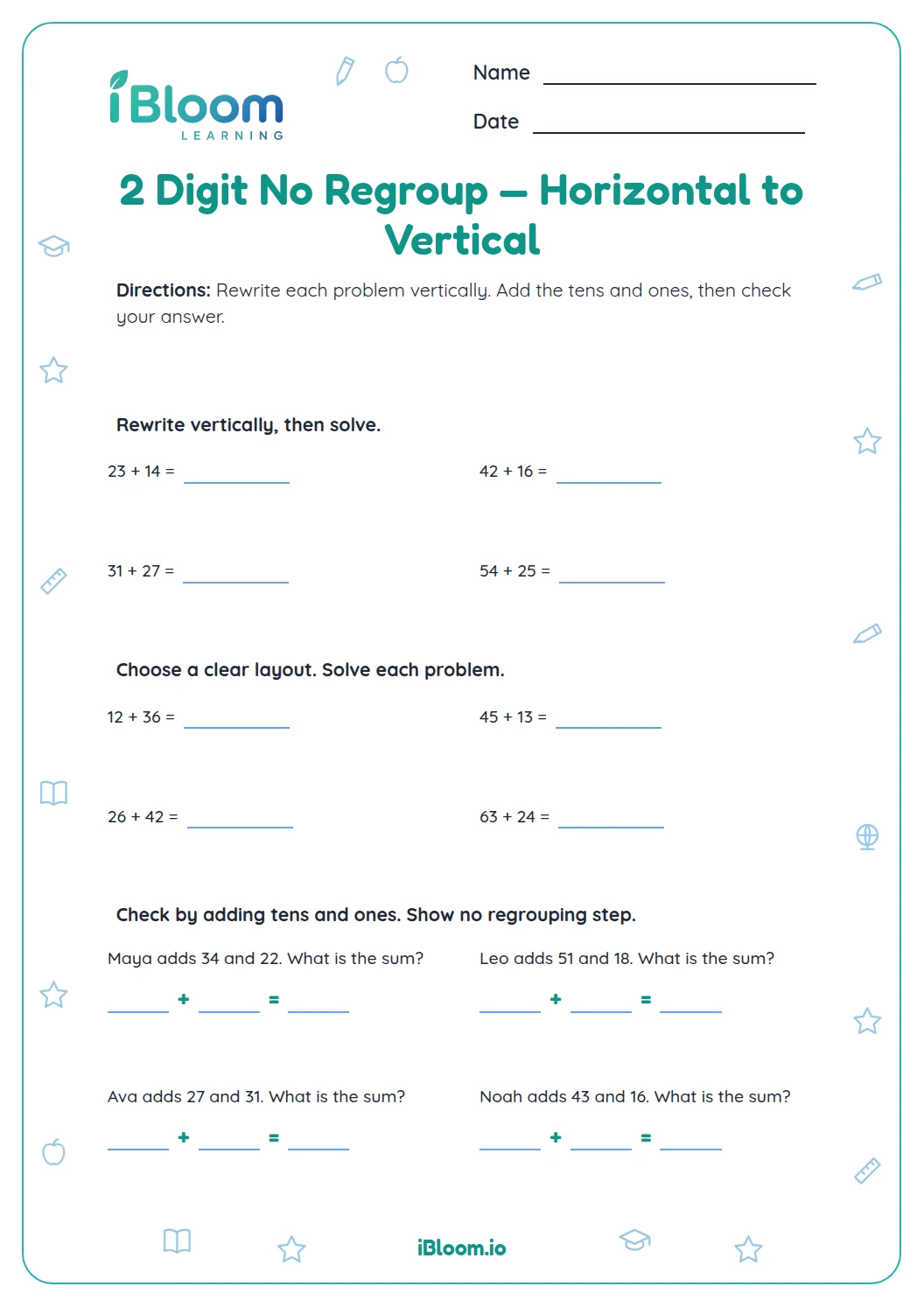
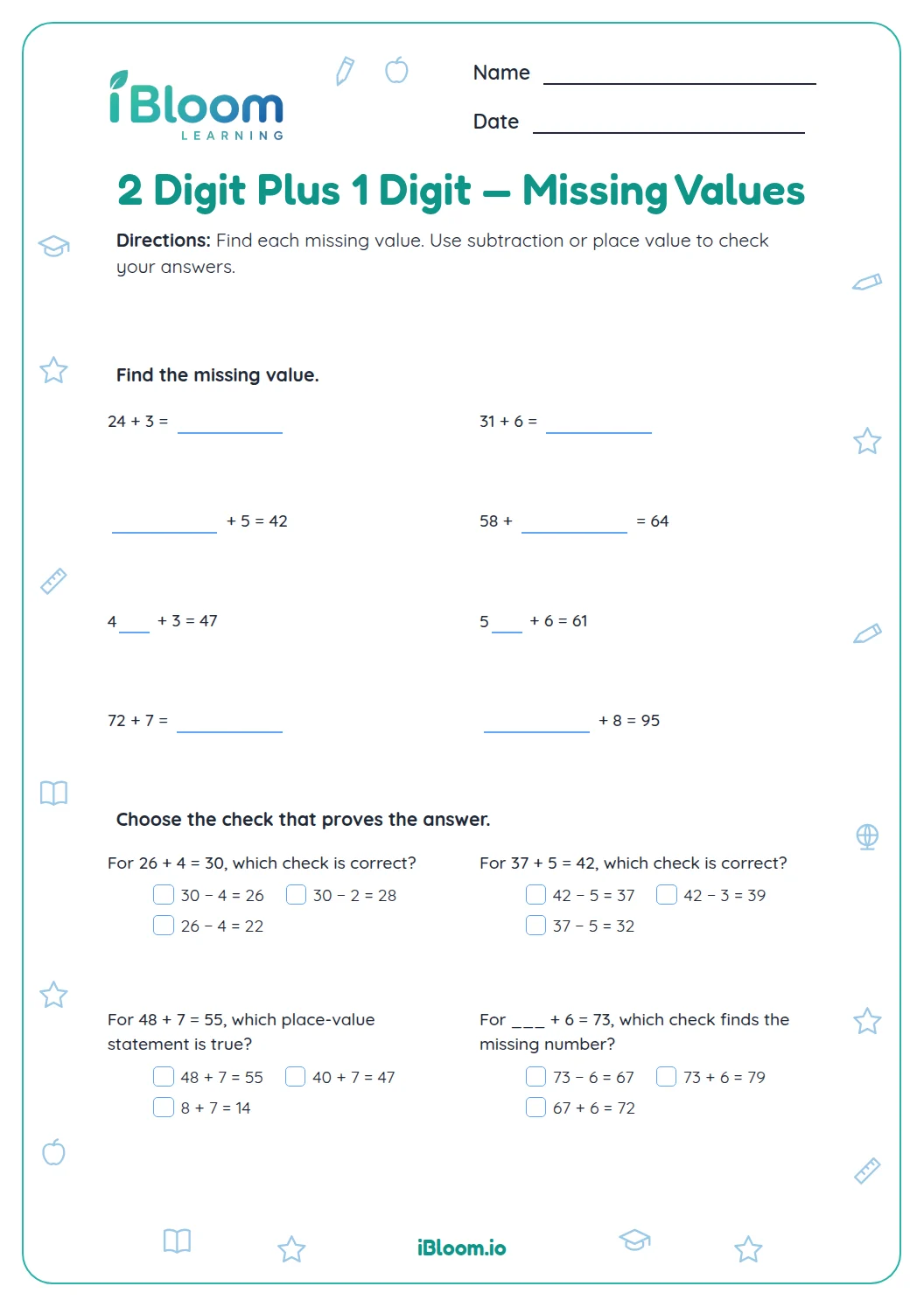
About this worksheet
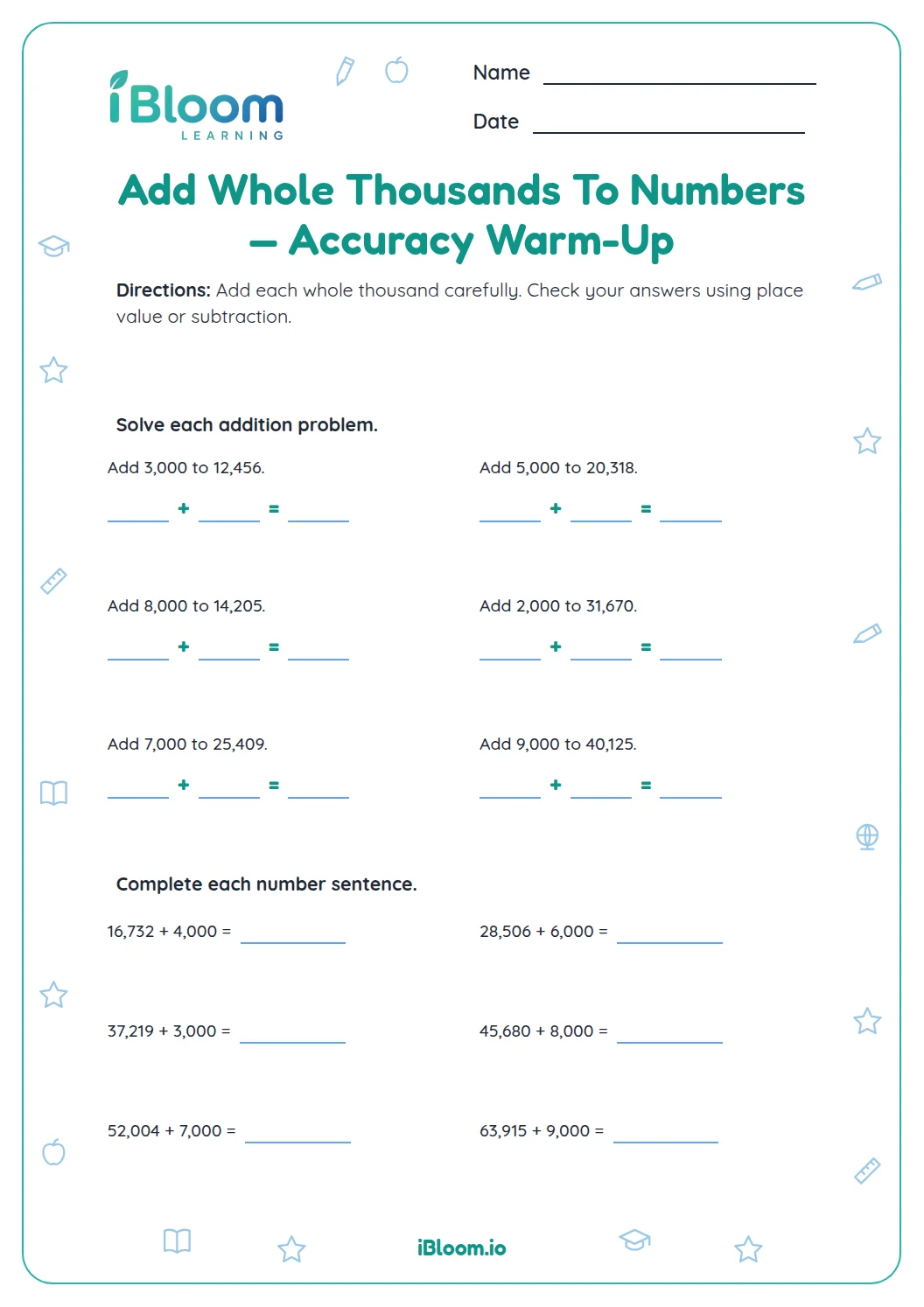
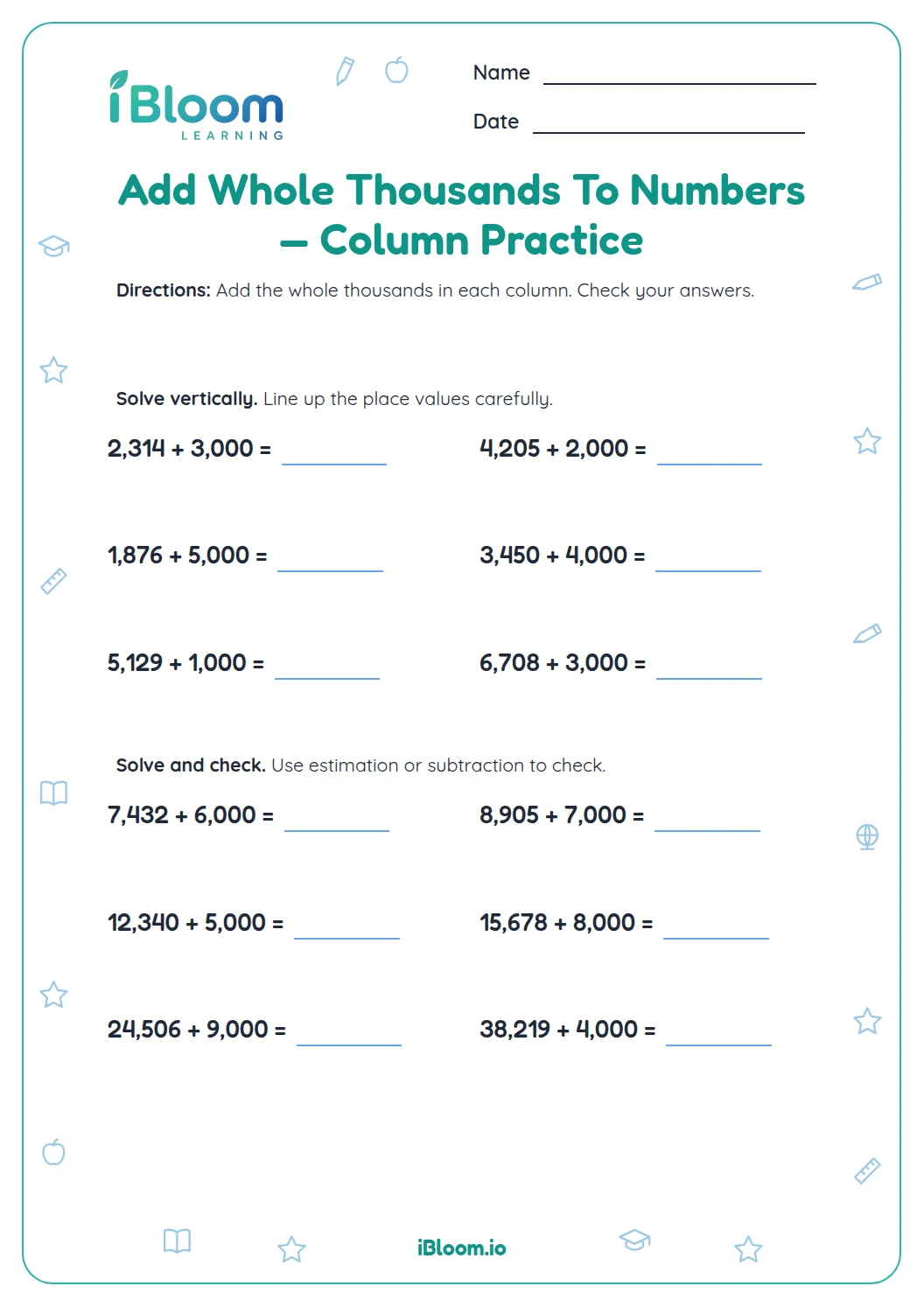
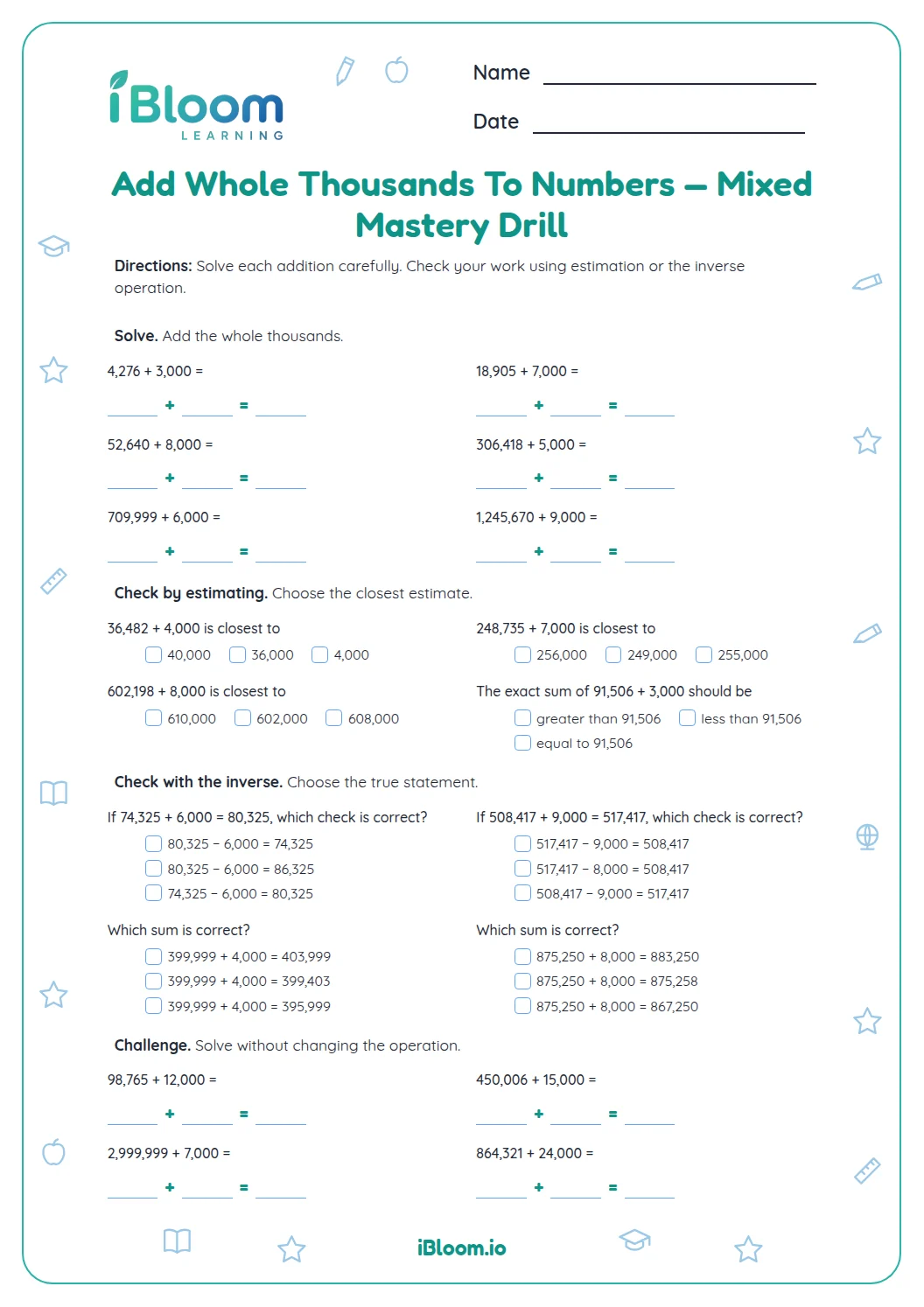
This printable worksheet is for Grade 5 students practicing adding whole thousands and locating place-value errors. It has 15 questions across 3 parts and a separate answer key. The first section models the core decision; later items ask students to use it in fresh examples and explain their thinking.
Aligned to 4.NBT.B.4
How does this worksheet practice adding whole thousands and locating place-value errors?
The questions move from a direct look at adding a whole thousand changes the thousands place and may require regrouping to items that ask students to apply the idea in a new sentence or situation. Each part has its own direction, and the key supports a check after the student has tried the page.
- 12,345 + 3,000 = 5,345
- 2The thousands increase by 3; the other place values stay in place.
What should a student check before answering?
Read the complete prompt, identify the detail that matters, and then choose or write a response. For an error or a tricky example, compare each step with the original question instead of guessing from the final answer.
How can an adult make the practice useful?
Ask the student to point to the number, word, or feature that supports the answer. When a response needs revision, let the student name the change and explain why it makes the answer fit.
How to use this worksheet
- 1Read the first part direction and look at one item together.
- 2Let the student complete the items before opening the answer key.
- 3Check answers in order and mark any item to revisit.
- 4For a missed item, return to its clue or calculation and correct the reasoning.
- 5Ask the student to explain one answer in their own words.
Common mistakes and quick fixes
The mistake
Answering after noticing only one detail.
The fix
Reread the full prompt and check every clue.
The mistake
Choosing a response before checking how it fits.
The fix
Test the choice against the whole question or sentence.
The mistake
Changing an answer without finding the reason.
The fix
Point to the step or word that supports the correction.
Common Core alignment
Add multi-digit whole numbers and check place value in each sum.
On this sheet: Students add multi-digit whole numbers and analyze place-value errors.
Show the official wordingHide the official wording
Fluently add and subtract multi-digit whole numbers using the standard algorithm.
What to practice next
Make more practice
Further reading
Questions parents and teachers ask
What skill does this worksheet practice?
This worksheet practices adding whole thousands and locating place-value errors. Students work through 15 items in 3 parts, moving from direct practice to applying the skill in different examples. The separate answer key supports a careful check after students have tried the questions.
Should students look at the answer key while working?
Have students complete a section before checking the key. If an answer differs, return to the exact prompt and identify the clue or calculation that led to the correct response. This keeps the key useful for learning, not just copying.
Can students use this page independently?
Students who know the basic skill can work through the directions on their own. An adult can first model one question, then review any uncertain responses with the student using the answer key and the clues in the prompt.
How long should practice take?
Plan for about 20 minutes, with extra time if students explain their reasoning or review answers together. The pace depends on reading speed, confidence with place value, and whether an adult discusses the corrections. A brief second pass can reinforce how the clue connects to the response.
What is a helpful way to review adding a whole thousand changes the thousands place and may require regrouping?
Ask the student to explain the clue or step that made an answer fit. Then try a different item from the worksheet and look for the same idea in a new context. The goal is to connect the response to the reasoning.