




About this worksheet
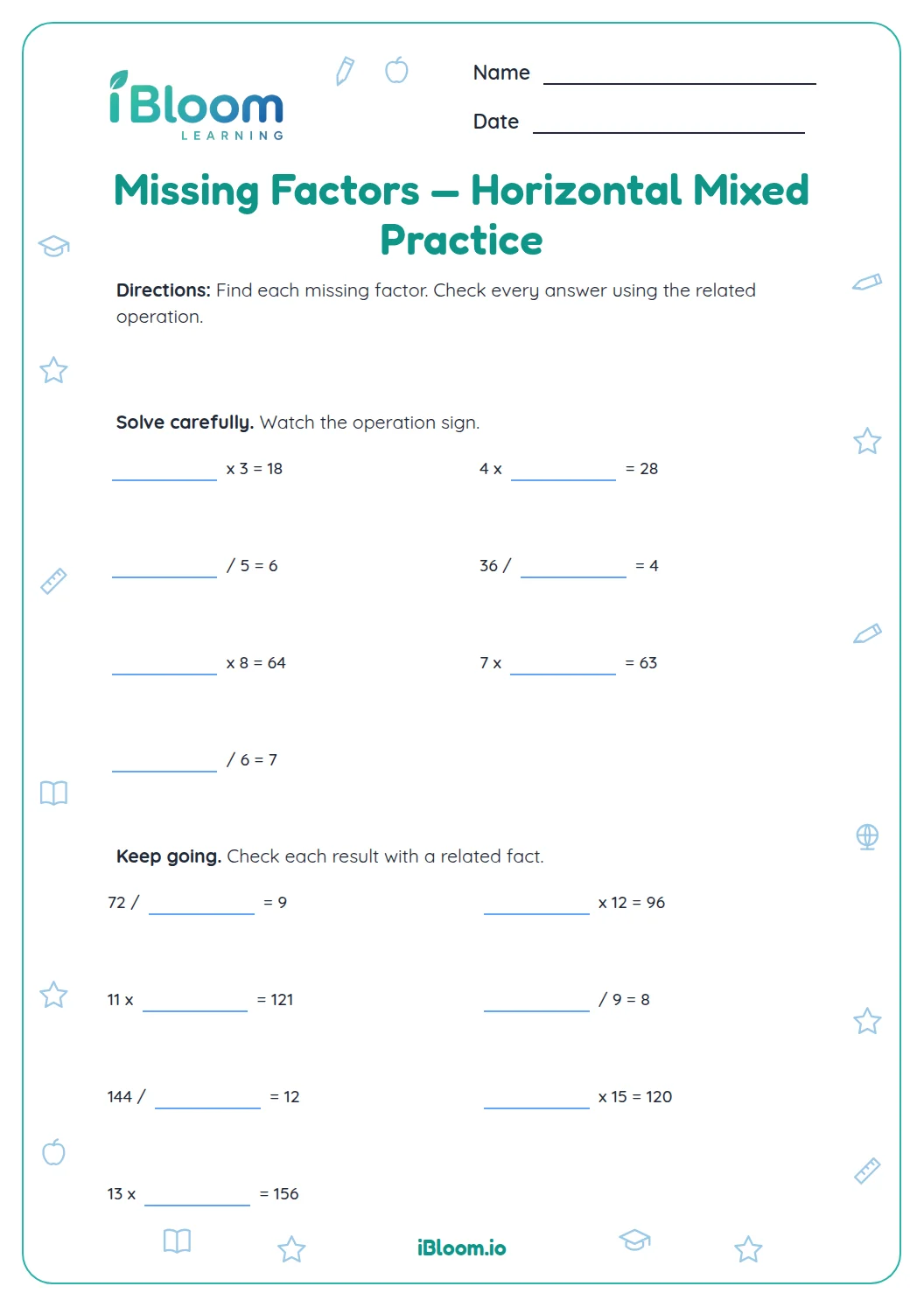
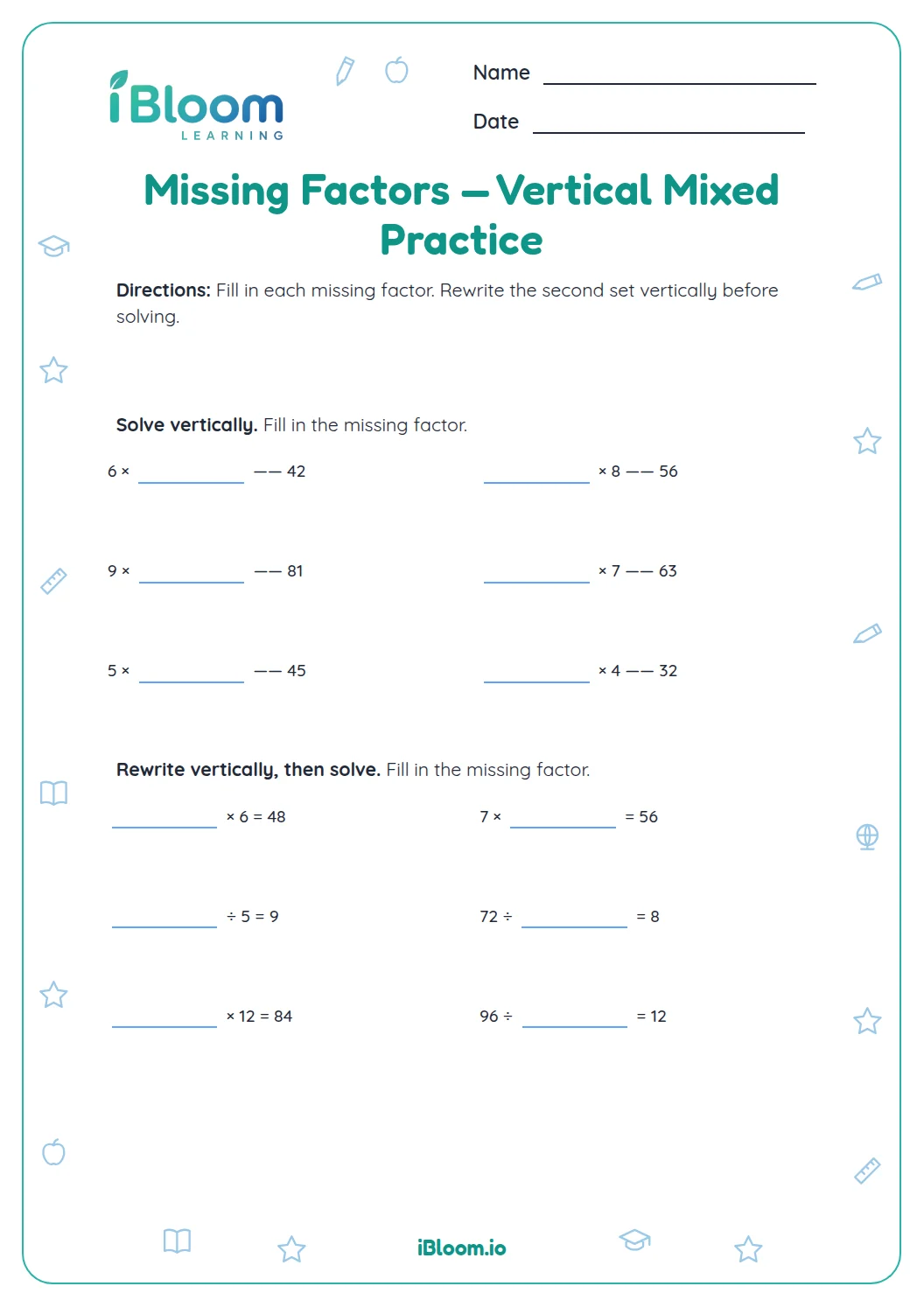
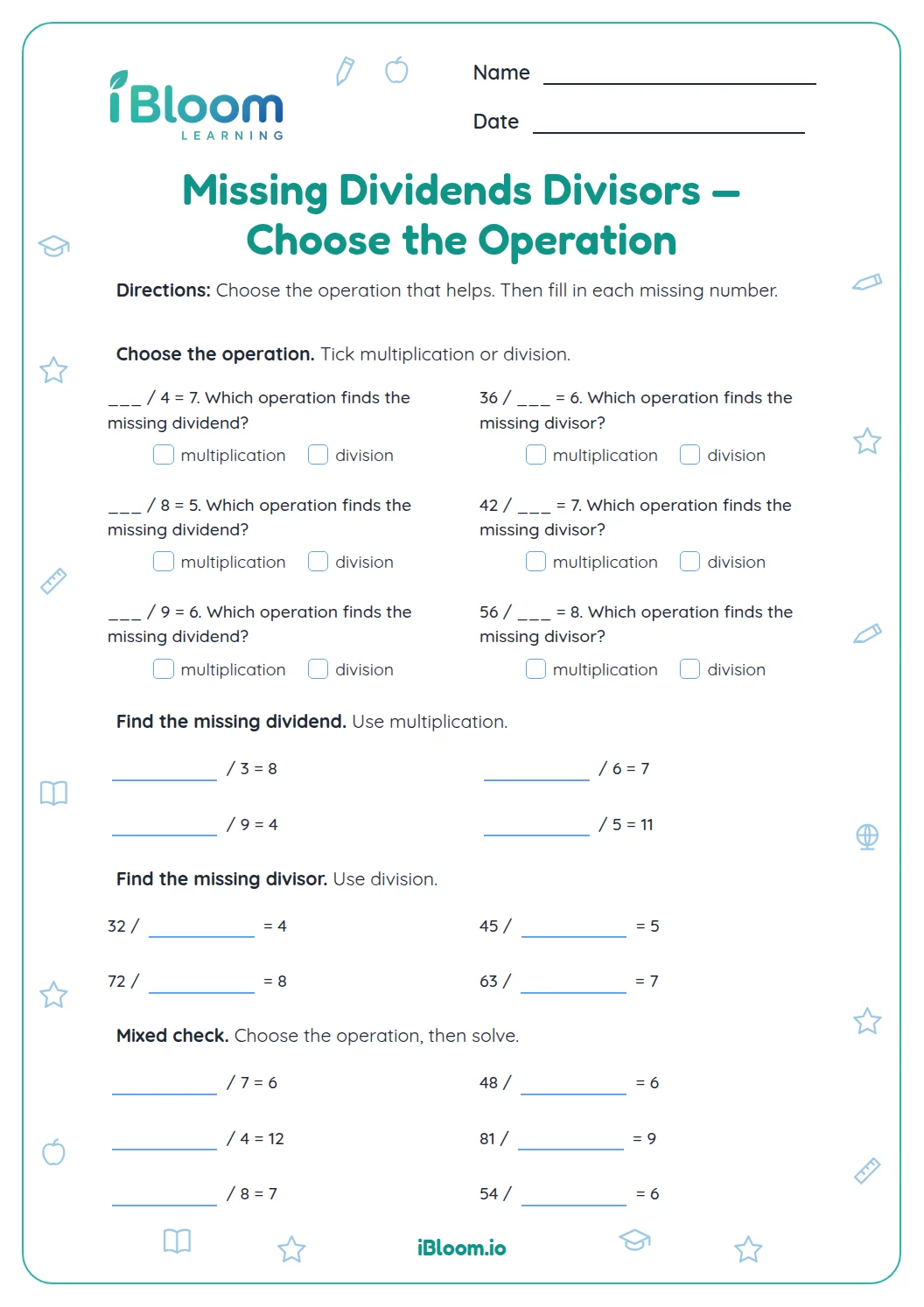
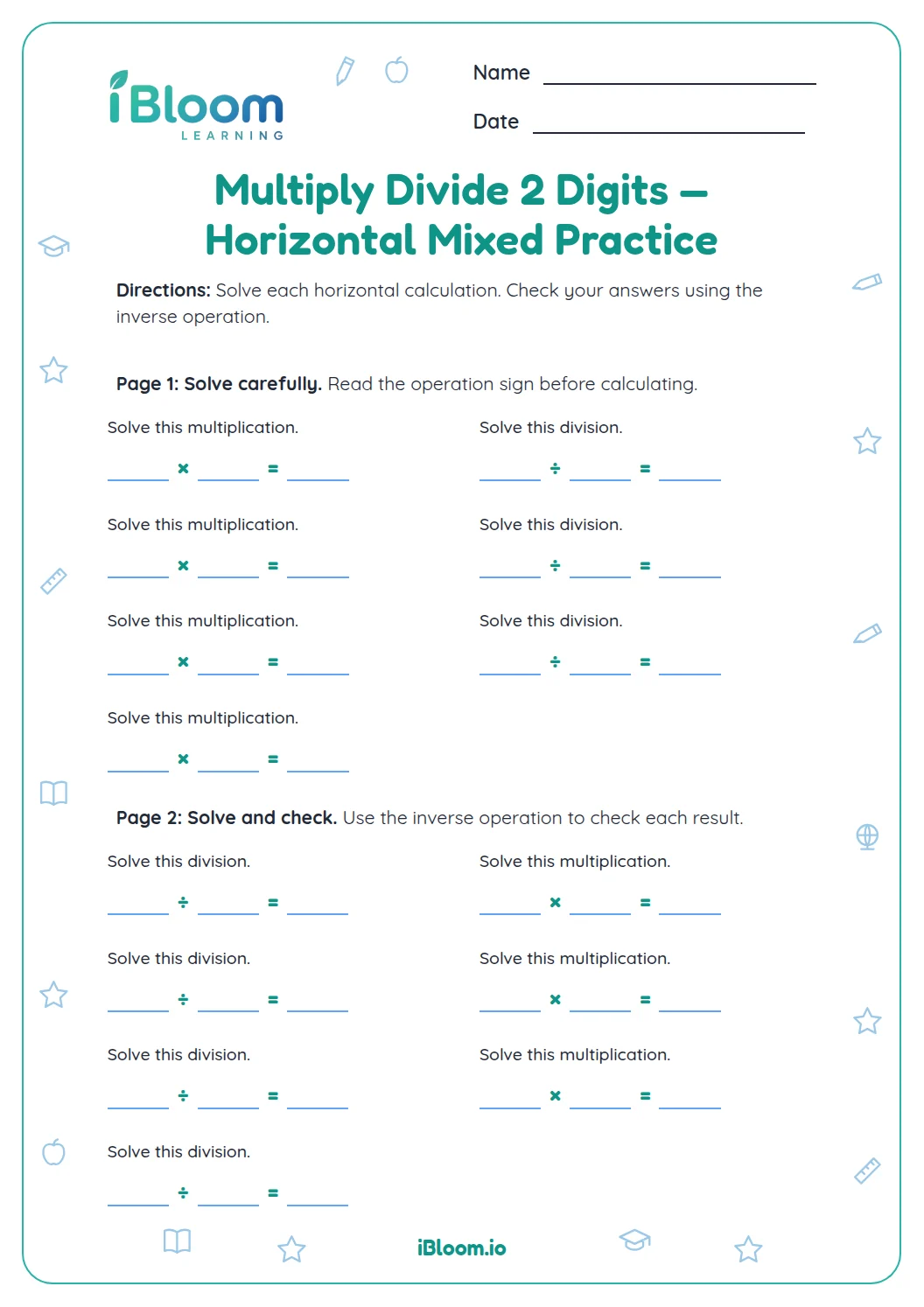
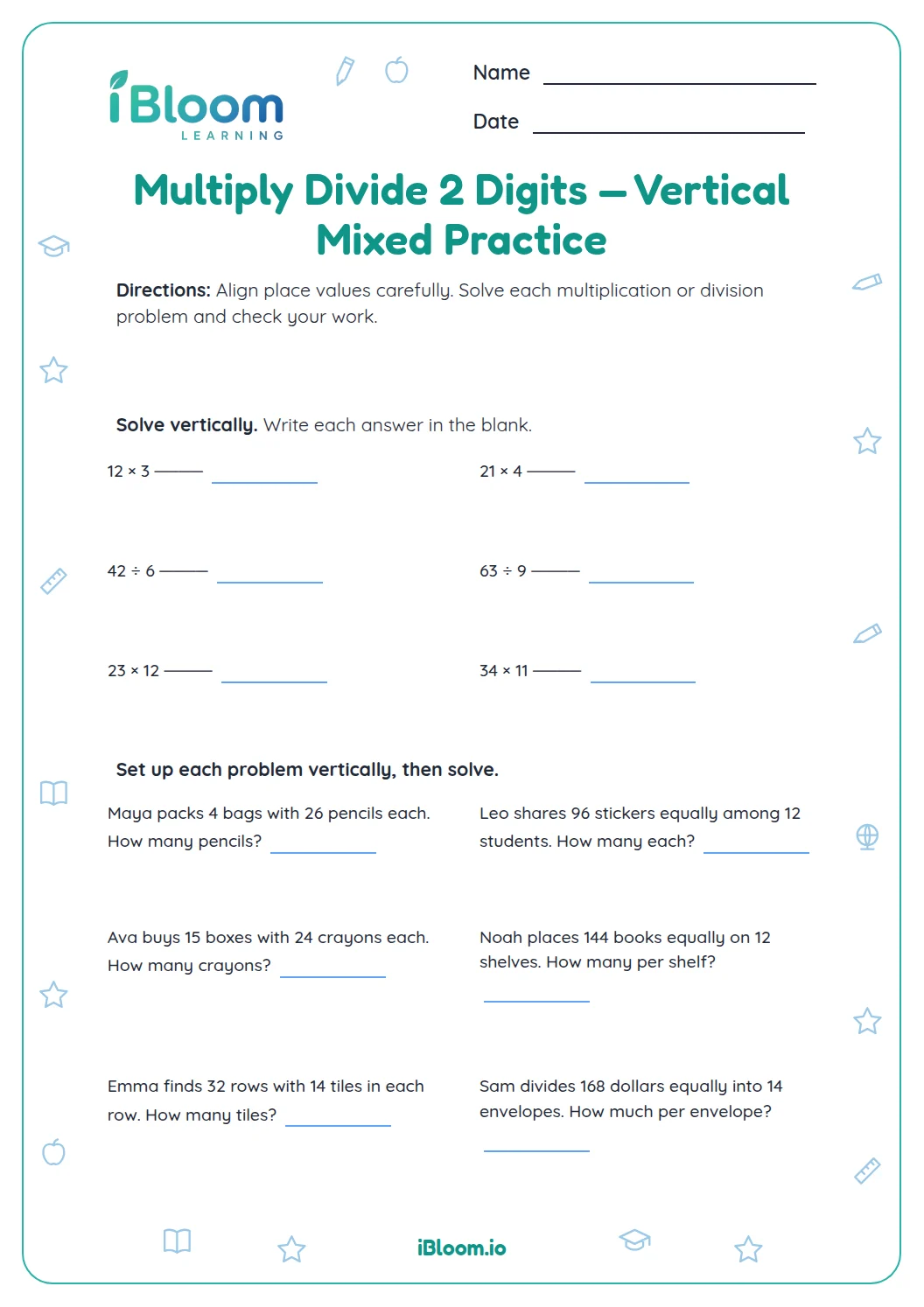
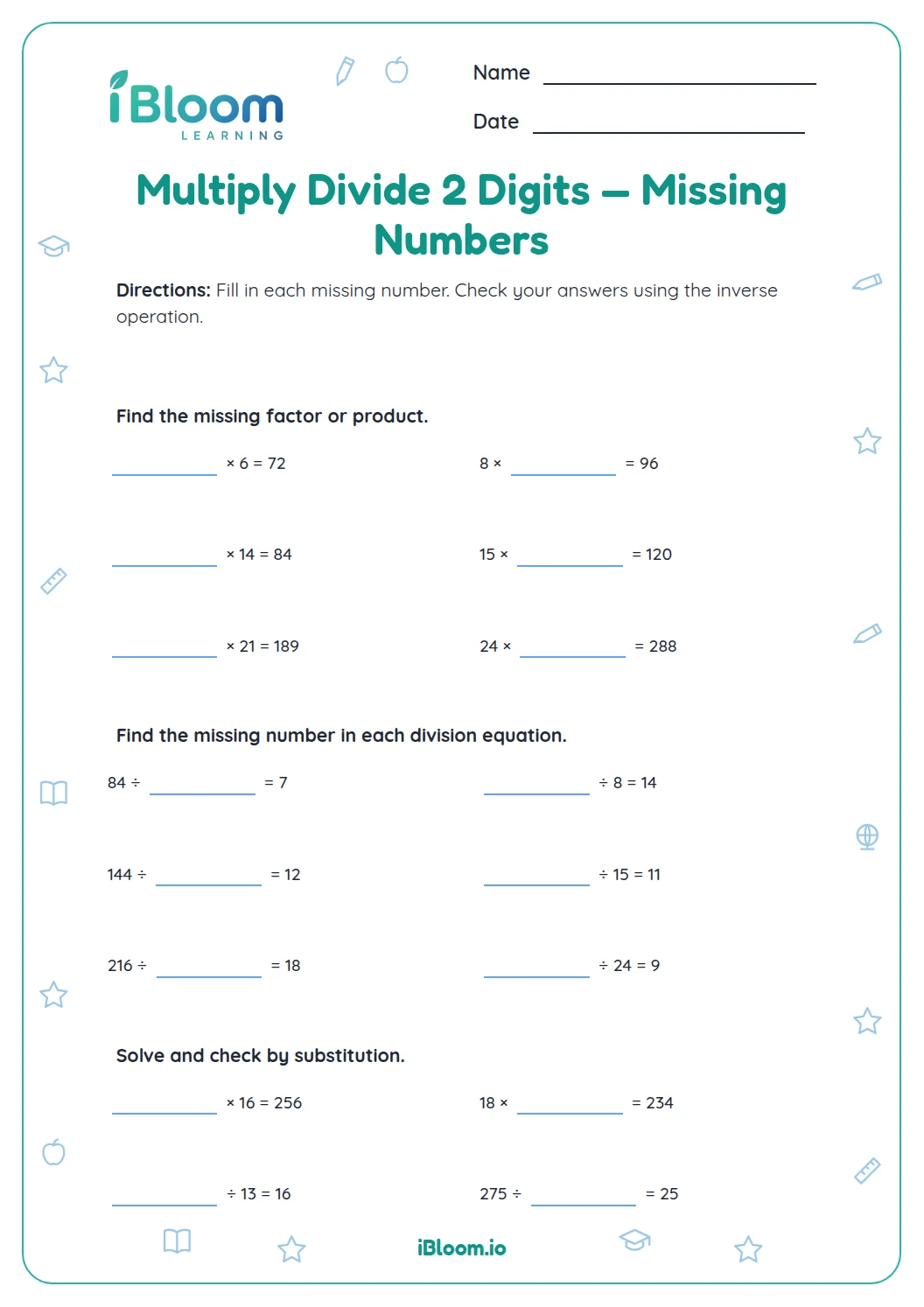
This Grade 3 worksheet has 16 multiplication and division items. Students first choose multiplication or division to make each number sentence true, then use related facts to find missing numbers in multiplication and division equations. The answer key lists every answer. The practice aligns with Common Core 3.OA.A.4, determining an unknown in a multiplication or division equation.
Aligned to 3.OA.A.4
How can you choose the operation?
Use the three numbers and the relationship in the equation. Multiplication makes equal groups into a product; division separates a total into equal groups. Part A asks students to choose the sign that makes each equation true.
- 15 ___ 4 = 20
- 2Five groups of four make 20, so choose ×.
How do related facts reveal a missing number?
For a missing factor, divide the product by the known factor. For a missing divisor or quotient, use multiplication or division to check which number makes the sentence true. Part B practices these forms.
- 16 × ___ = 42
- 242 ÷ 6 = 7, so the missing factor is 7.
How can students check each answer?
Substitute the answer into the number sentence and calculate both sides. For a division equation, multiply divisor and quotient to see whether they make the dividend.
How to use this worksheet
- 1Read the equation and locate the blank.
- 2Decide whether the equation shows multiplication or division.
- 3Use the inverse operation to find the unknown.
- 4Put the number in the blank and check the equation.
Common mistakes and quick fixes
The mistake
Treating a missing factor like an addend
The fix
Use division: divide the product by the known factor.
The mistake
Reading 56 ÷ ___ = 8 as 56 ÷ 8
The fix
The blank is the divisor; ask what number makes the quotient 8.
The mistake
Stopping before checking
The fix
Substitute the answer and make sure both sides match.
Common Core alignment
This page gives students practice with the stated skill and the standard below.
Find the unknown whole number in a multiplication or division equation.
On this sheet: Students identify multiplication or division relationships and find the missing factor or quotient.
Show the official wordingHide the official wording
Determine the unknown whole number in a multiplication or division equation relating three whole numbers.
What to practice next
Make more practice
Further reading
Questions parents and teachers ask
What kinds of missing numbers are on the page?
The 16 items begin with eight equations where students choose multiplication or division. The next eight ask for a missing factor, divisor, or quotient. Related facts help solve each blank, and substituting the answer checks that the equation is true.
How can I tell whether to multiply or divide?
Use the relationship the equation represents. Multiplication combines equal groups into a total; division shares or groups a total equally. The first eight items ask students to choose between × and ÷. In the second set, the sign is given and the blank is the unknown.
Does the page include an answer key?
Yes. The separate key gives one answer for each equation. Students can check by placing the number in the blank and verifying that the equation is true. Students can check multiplication by multiplying the factors and checking the product. For division, multiply the quotient and divisor to recover the dividend.
Why are multiplication and division practiced together?
They are inverse operations. A multiplication fact can help solve a related division equation, and division can reveal a missing factor when the product and one factor are known. The opening examples ask students to choose multiply or divide, and the remaining equations give focused practice with both inverse operations.
What should students do after solving an equation?
Substitute the answer for the blank and evaluate the equation. For example, 6 × 7 equals 42, so 7 is a valid missing factor in the first item. The answer key gives the missing number rather than a worked explanation. Ask the student to show a related fact when reviewing a tricky item.