




About this worksheet
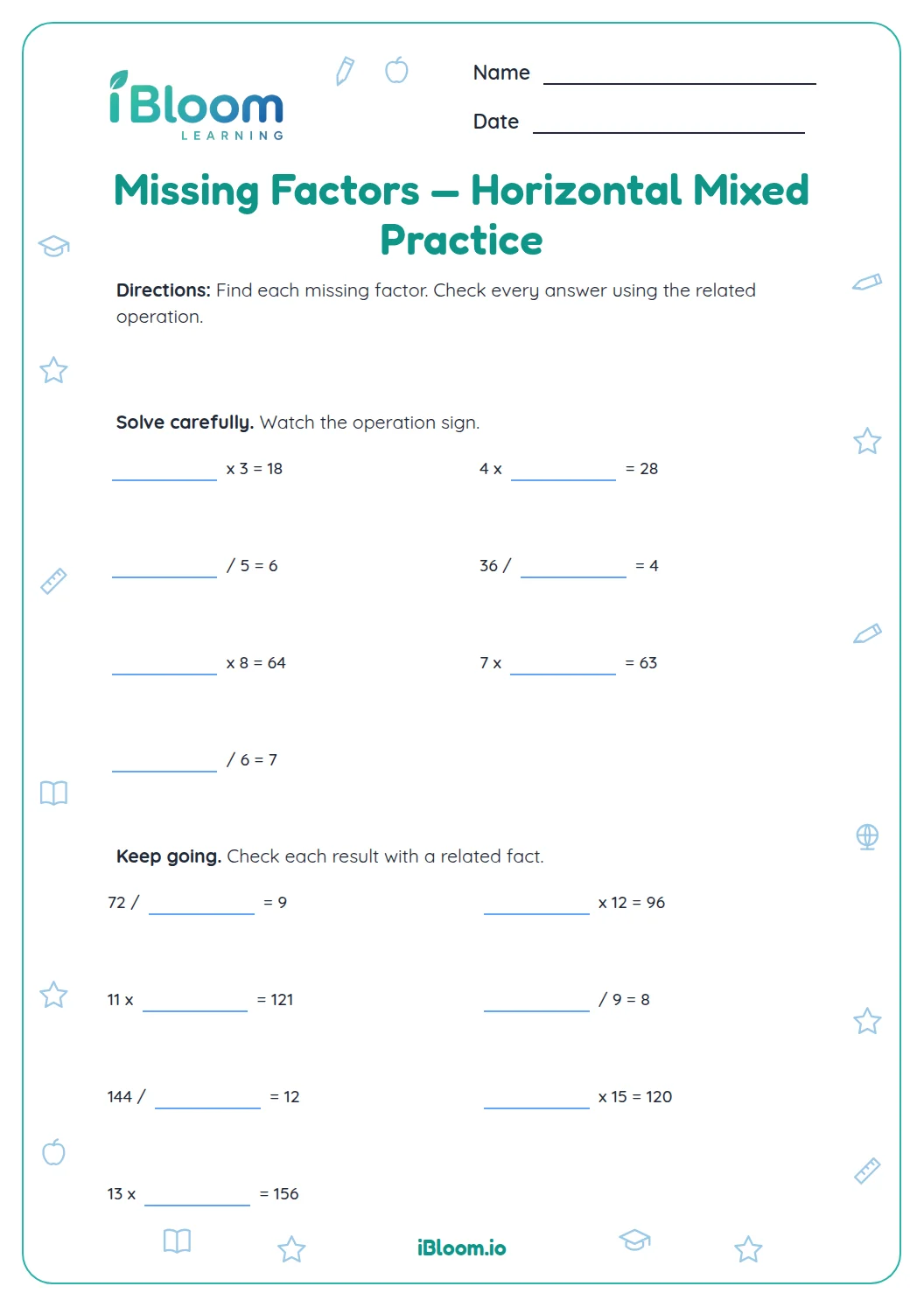
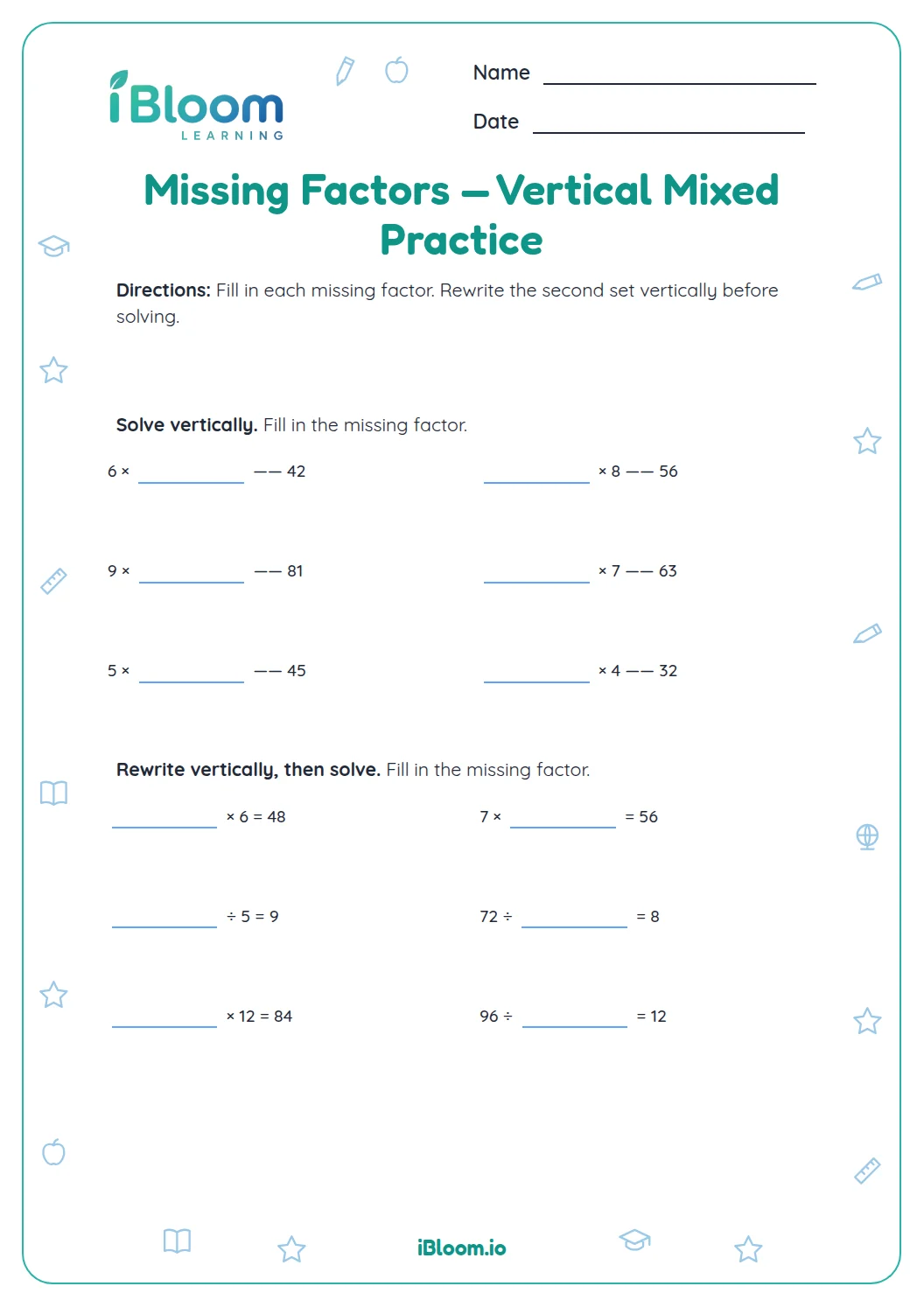
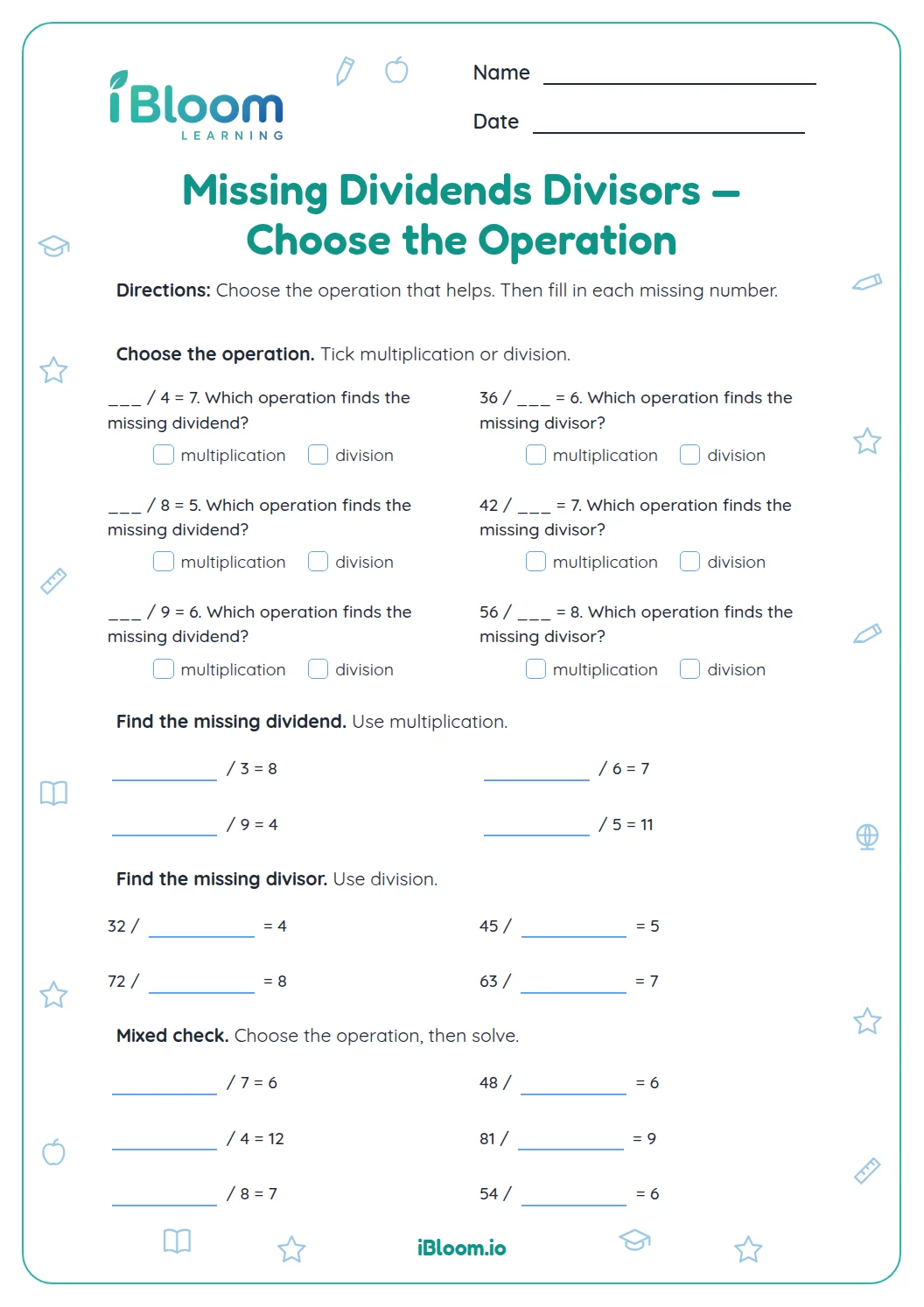
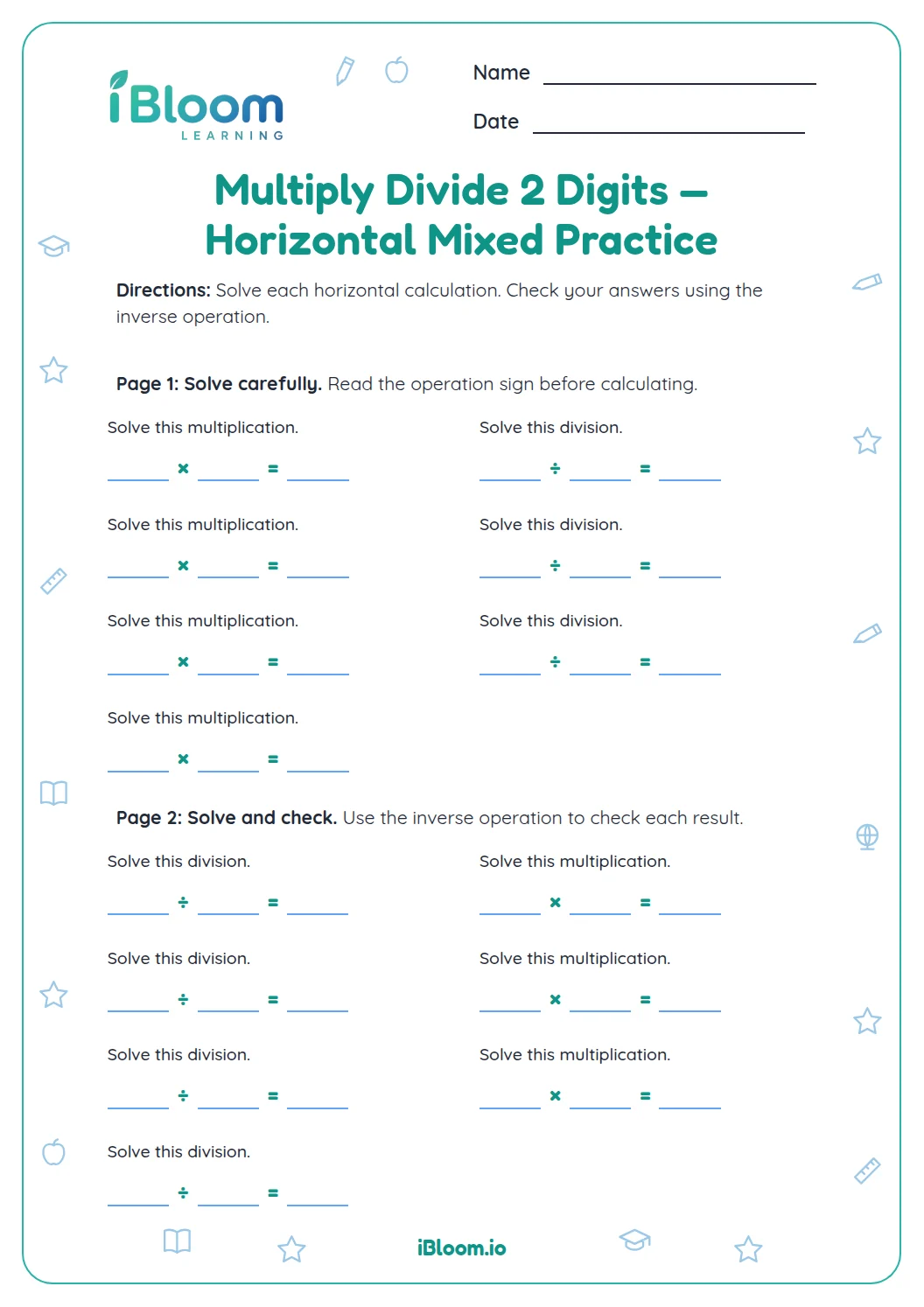
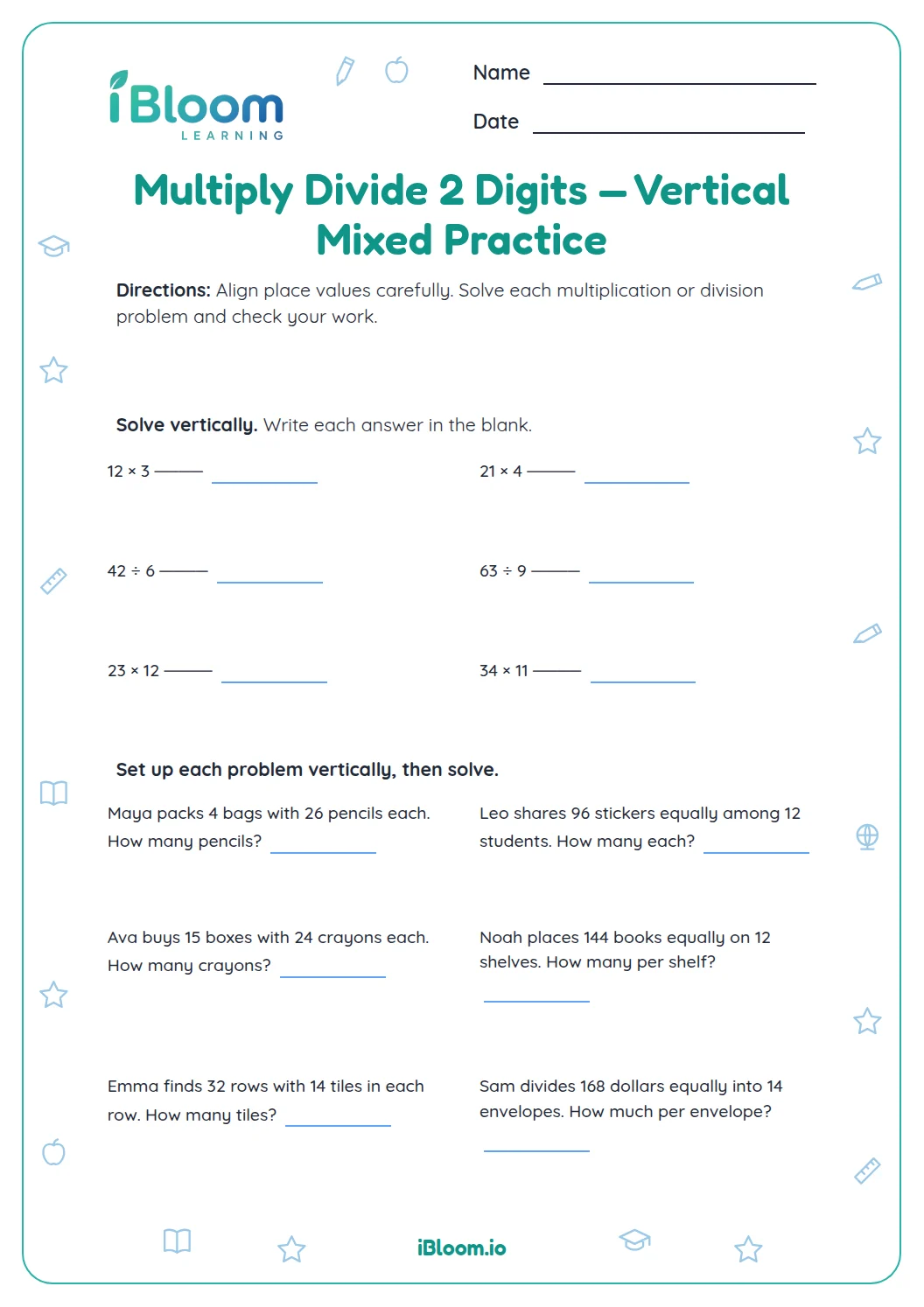
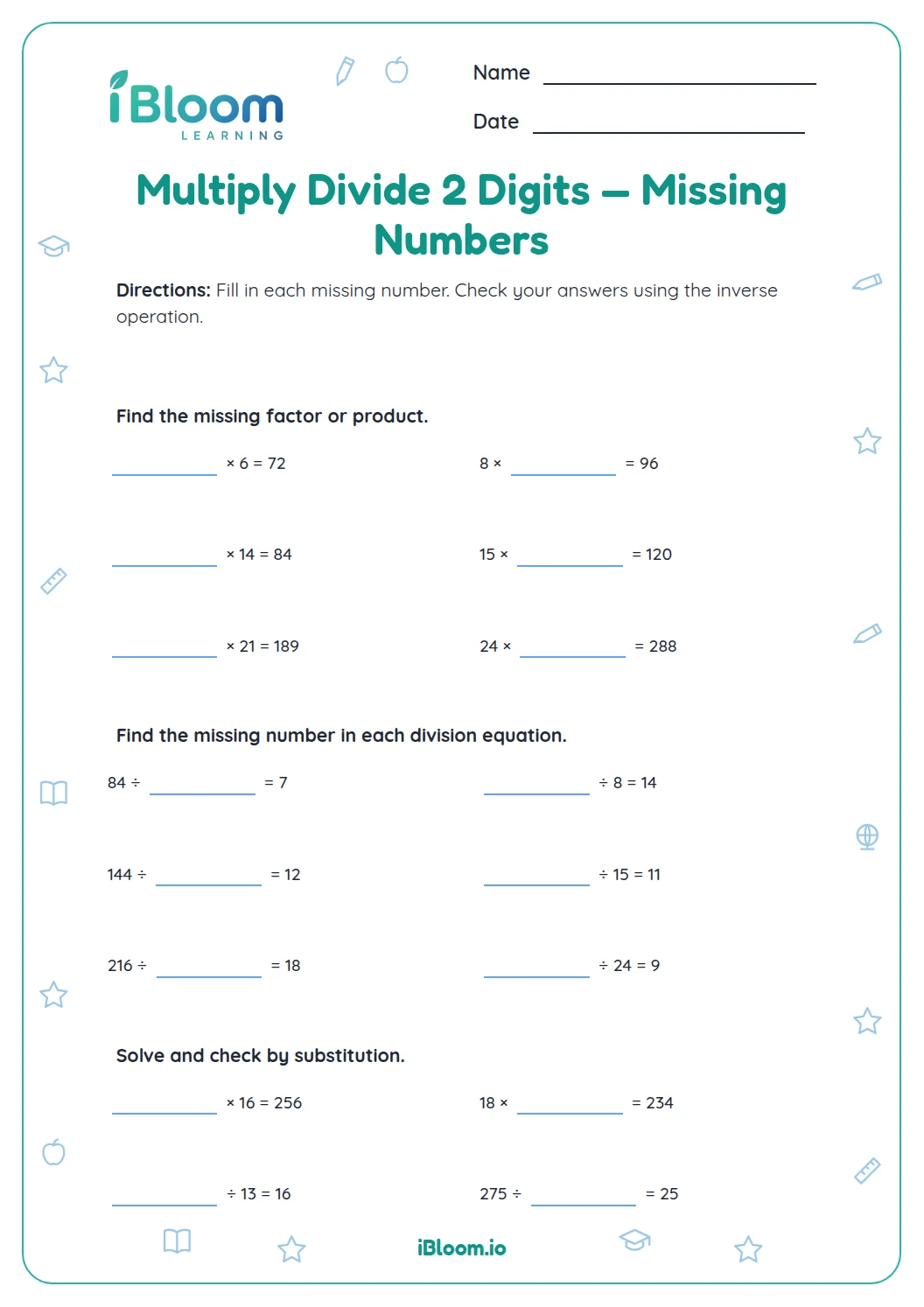
This free Grade 4 worksheet has 16 missing-factor questions arranged around the same method as the original sheet: choose division to find an unknown factor, solve, and check the multiplication fact with division. Children also complete missing-factor equations and explain how a division fact verifies a product. The answer key lists the operation choices and results, with sample wording for the final written answers. The equations practice finding an unknown whole number in a multiplication or division equation (CCSS 3.OA.A.4).
Aligned to 3.OA.A.4
Which operation finds a missing factor?
When a product and one factor are known, divide the product by the known factor. In question 1, 35 ÷ 7 finds the missing factor in ___ × 7 = 35.
How can children solve the multiplication equations?
Use a related multiplication fact or divide the product by the known factor. For ___ × 4 = 28, calculate 28 ÷ 4 to find 7.
- 1___ × 4 = 28
- 228 ÷ 4 = 7
- 3The missing factor is 7.
How does division check a factor?
A multiplication fact and its division facts use the same three numbers. Since 6 × 8 = 48, both 48 ÷ 8 = 6 and 48 ÷ 6 = 8 are true. Use the known factor in the divisor to recover the missing factor.
How to use the worksheet
- 1For the first part, identify the product and the known factor.
- 2Choose division instead of adding or subtracting.
- 3Solve each equation and place the missing factor in the blank.
- 4Check by multiplying the factors to recover the product.
- 5For check questions, divide the product by the known factor.
- 6Compare written explanations with the sample answers in the key.
Missing-factor mistakes and quick fixes
The mistake
Subtracting the known factor from the product.
The fix
Ask which number multiplied by the known factor gives the product; use division to find it.
The mistake
Dividing by the unknown number instead of the known factor.
The fix
Put the known factor in the divisor, then check by multiplying.
The mistake
Accepting a quotient without checking the original fact.
The fix
Multiply the two factors and confirm the product matches.
Common Core alignment
The equations ask children to determine an unknown whole number in multiplication and division.
Find an unknown whole number in a multiplication or division equation.
On this sheet: The worksheet repeatedly asks students to find an unknown factor and use a related division equation to check it.
Show the official wordingHide the official wording
Determine the unknown whole number in a multiplication or division equation relating three whole numbers. For example, determine the unknown number that makes the equation true in each of the equations 8 × ? = 48, 5 = _ ÷ 3, 6 × 6 = ?
What to practice next
Make more practice
Further reading
Questions parents and teachers ask
Why does division help find a missing factor?
Division reverses multiplication. In ___ × 7 = 35, divide 35 by the known factor 7 to find 5. The first part asks children to identify division as the operation that reveals the missing factor. Have the child multiply the factors once more to confirm the product.
How does a division equation check a multiplication fact?
The same three numbers make a fact family. If 6 × 8 = 48, then 48 ÷ 8 = 6 and 48 ÷ 6 = 8. A correct division equation returns the other factor and confirms the product. Have the child multiply the factors once more to confirm the product.
How many questions are included?
There are 16 questions across two worksheet pages, followed by an answer key that spans two pages. The parts include operation choices, missing-factor equations, division checks, and two written responses. Have the child multiply the factors once more to confirm the product.
What should children do when they are unsure of a factor?
Use a known multiplication fact or divide the product by the factor that is already given. Then multiply the proposed factors to see whether they produce the product in the original equation. Have the child multiply the factors once more to confirm the product.
What is a fact family?
A fact family uses the same three numbers in related multiplication and division equations. For example, 4 × 7 = 28 connects to 28 ÷ 7 = 4. The final worksheet question asks children to make a pair like this. Have the child multiply the factors once more to confirm the product.