





About this worksheet
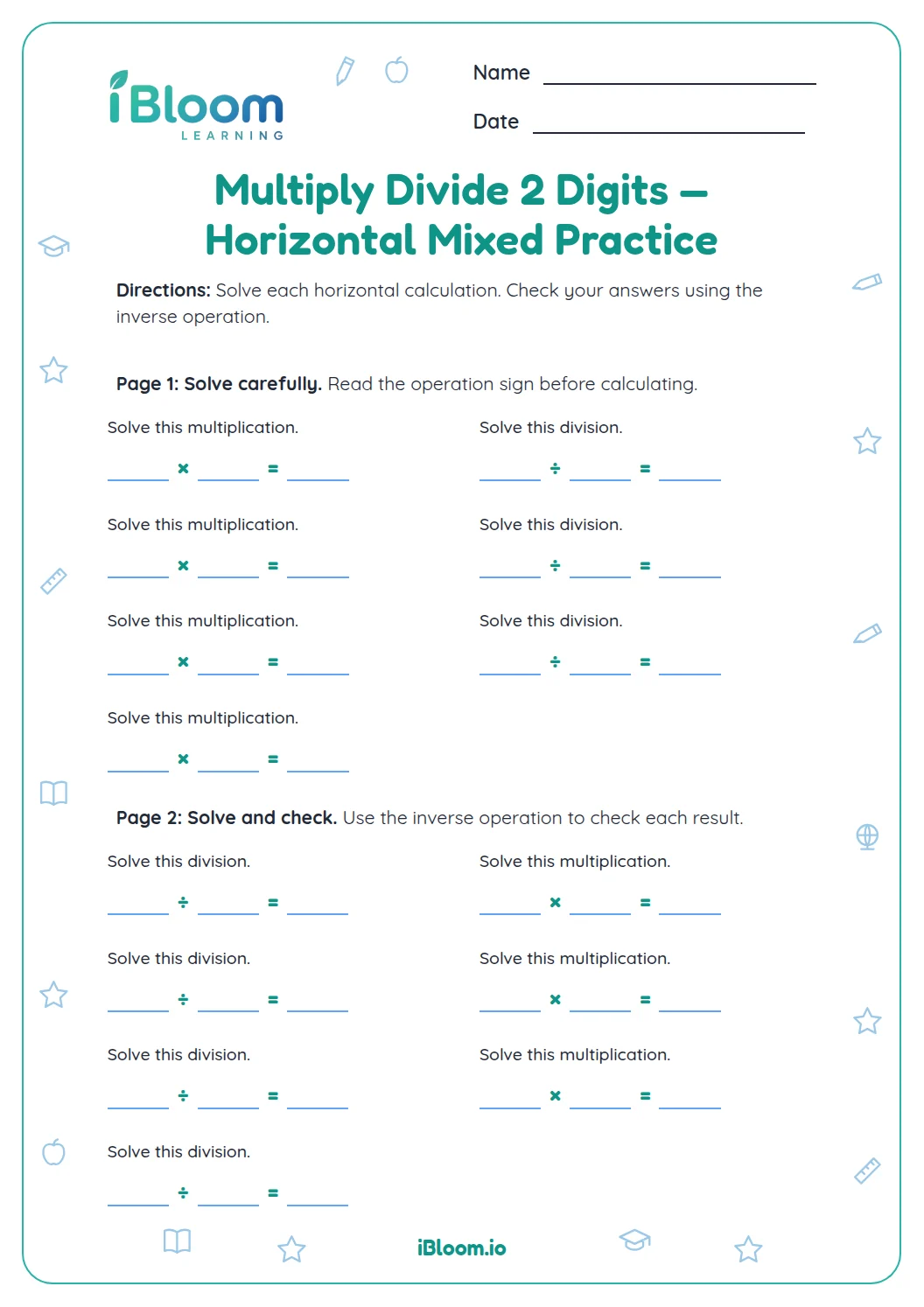
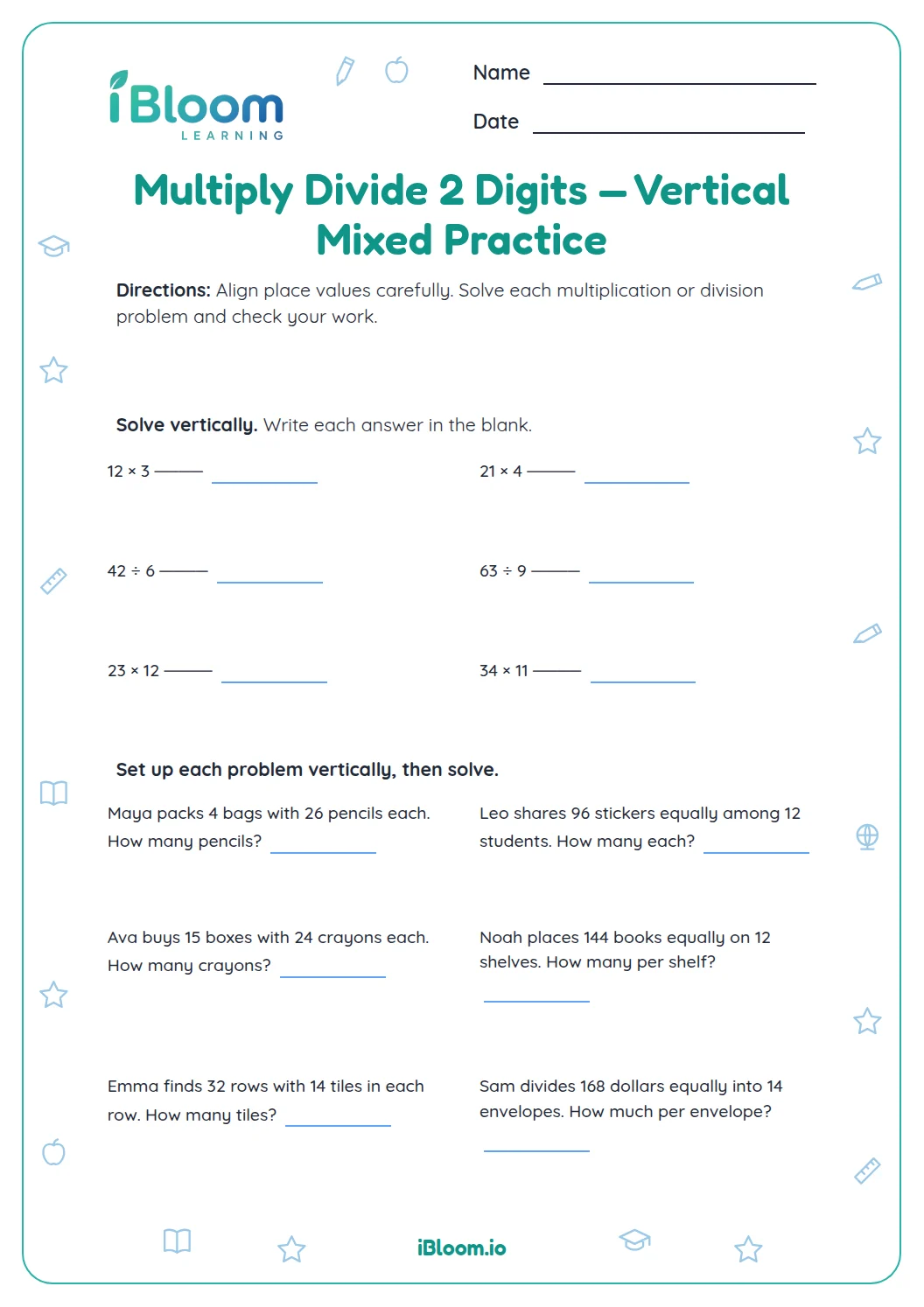
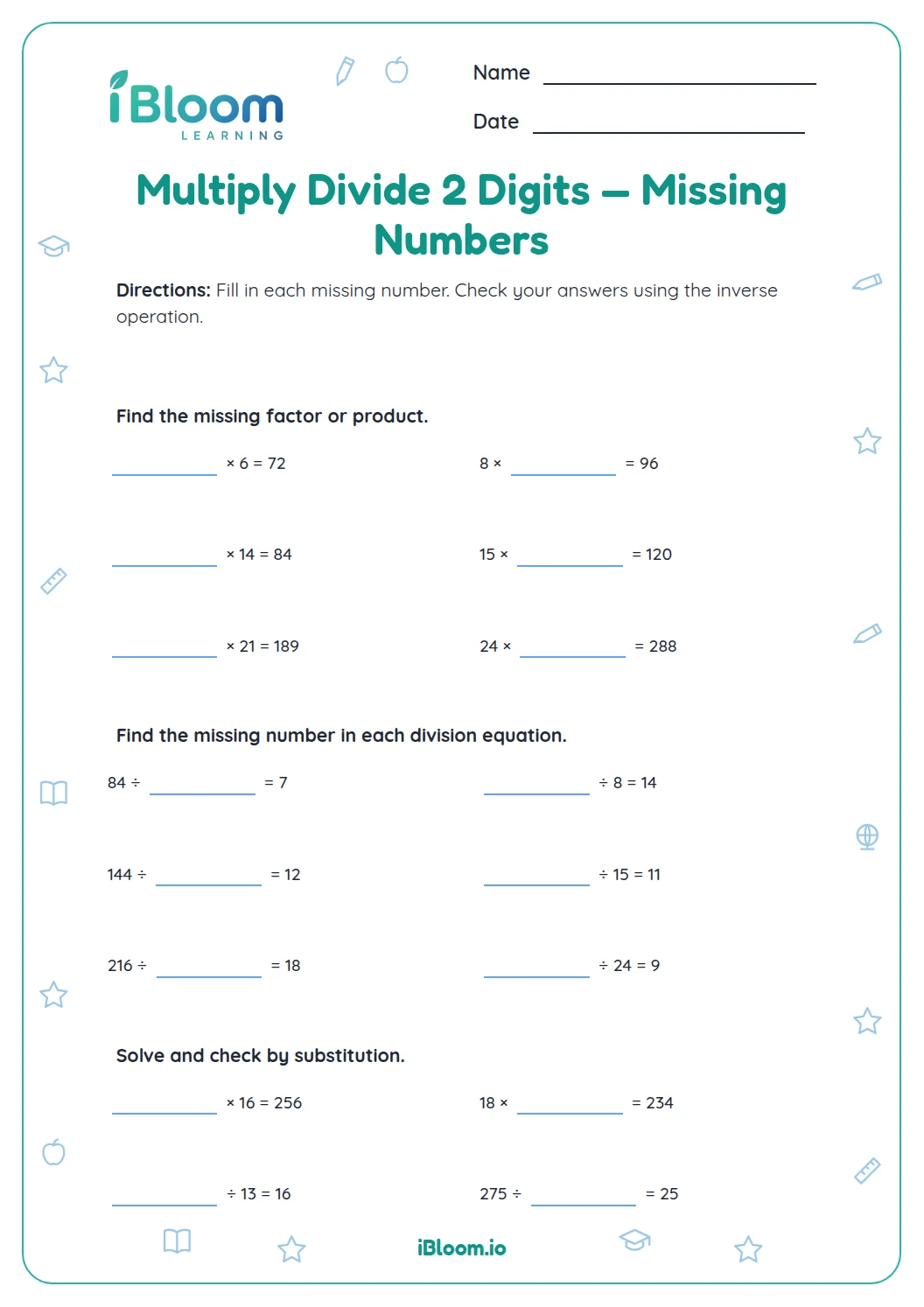
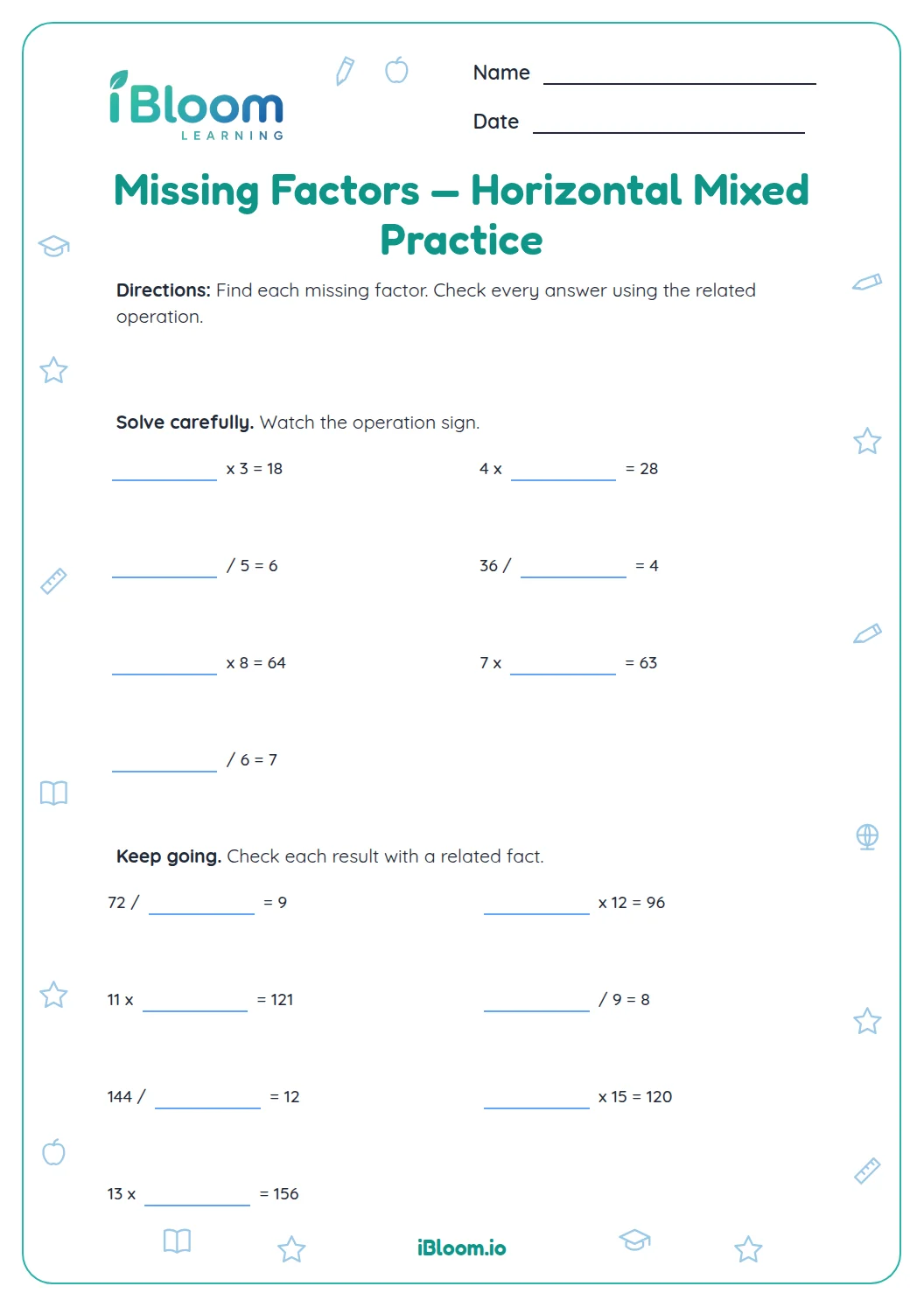
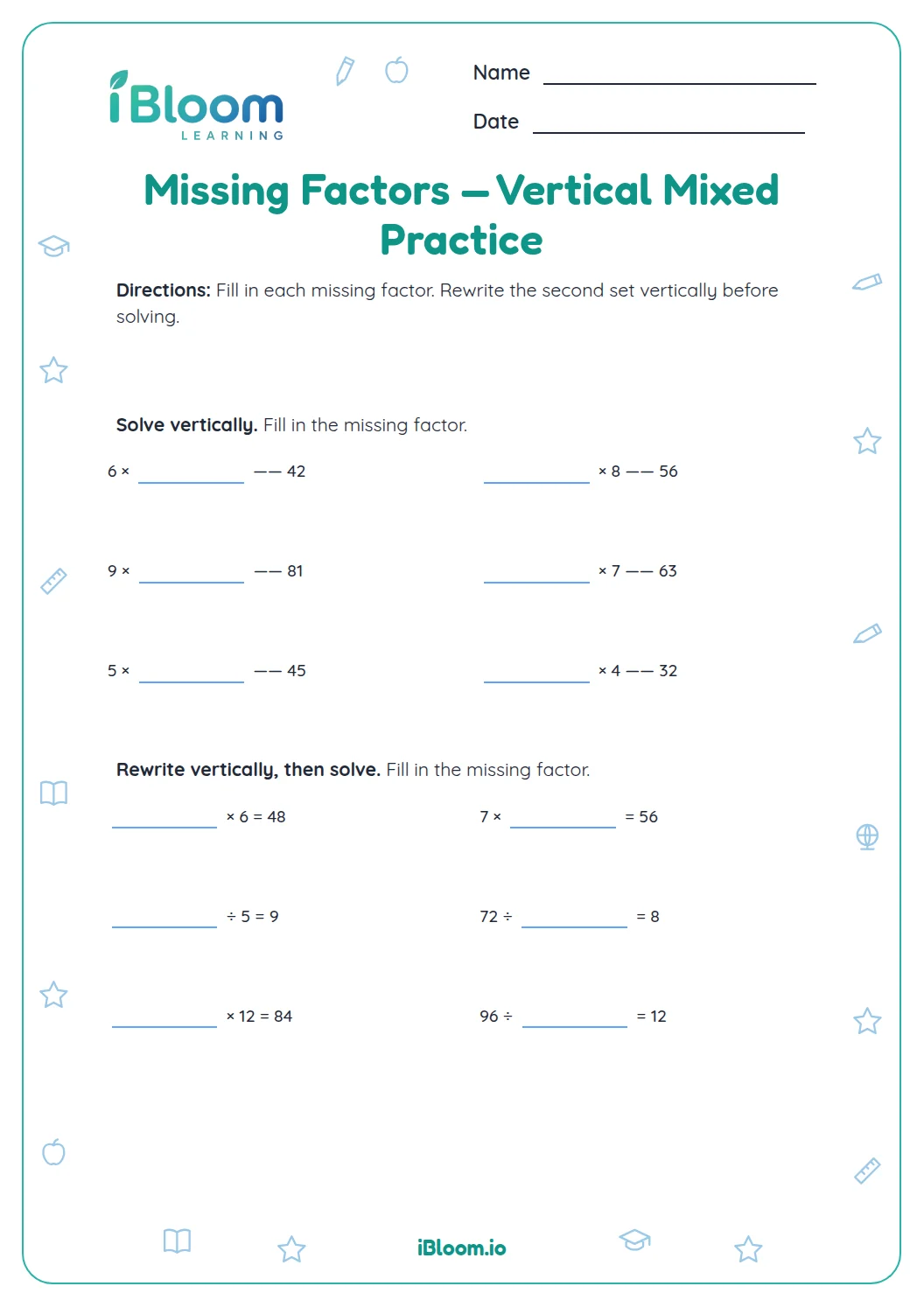
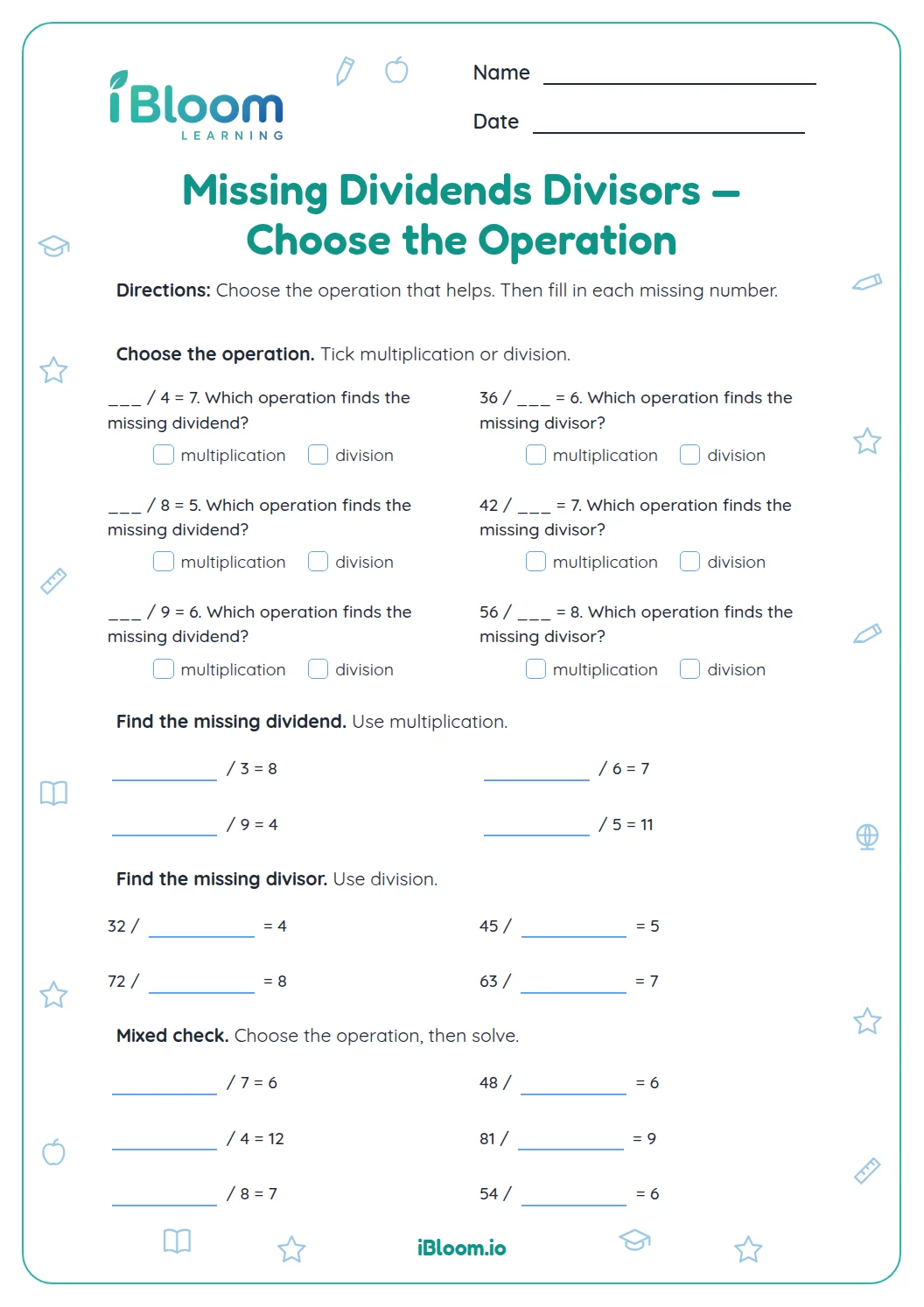
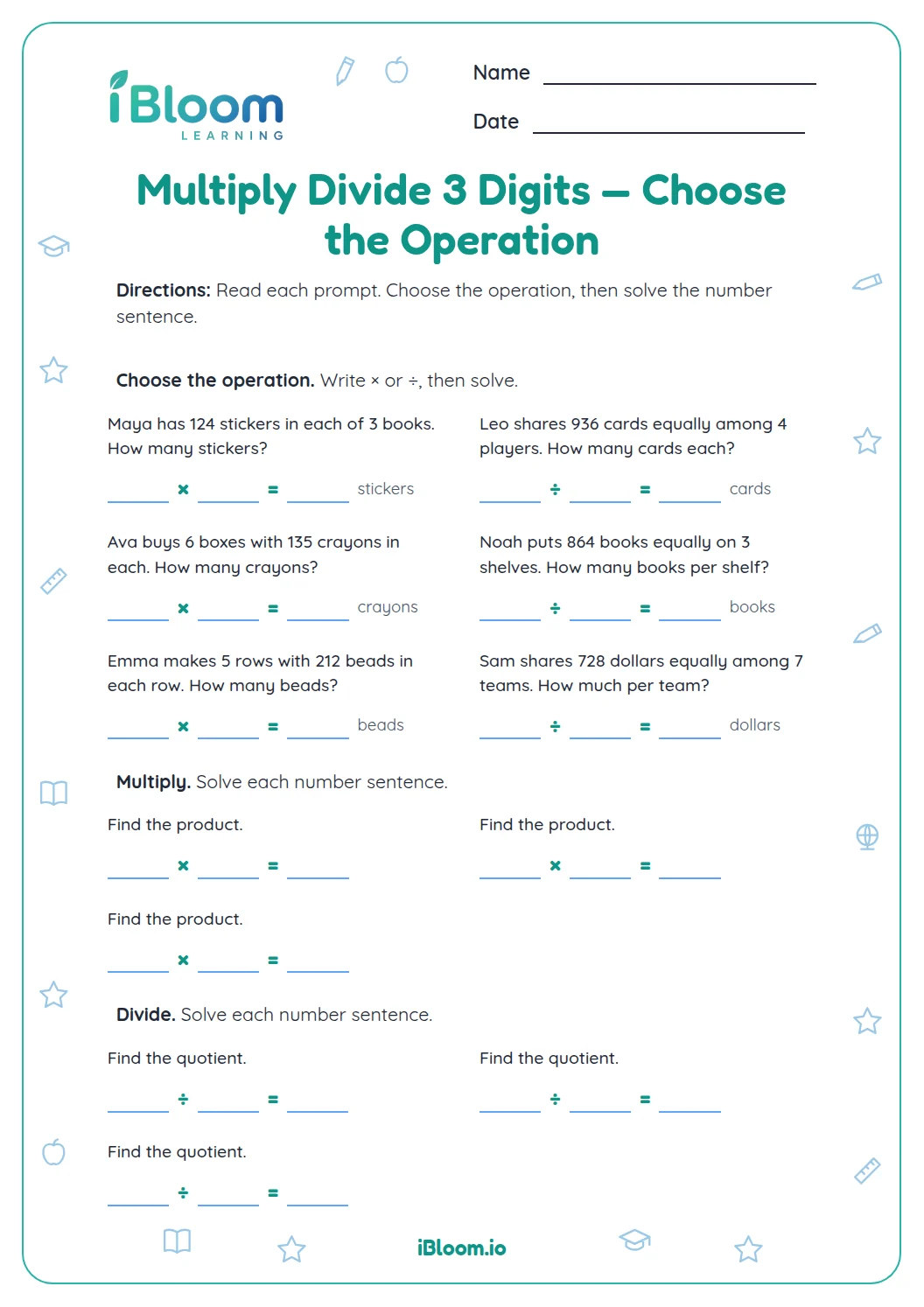
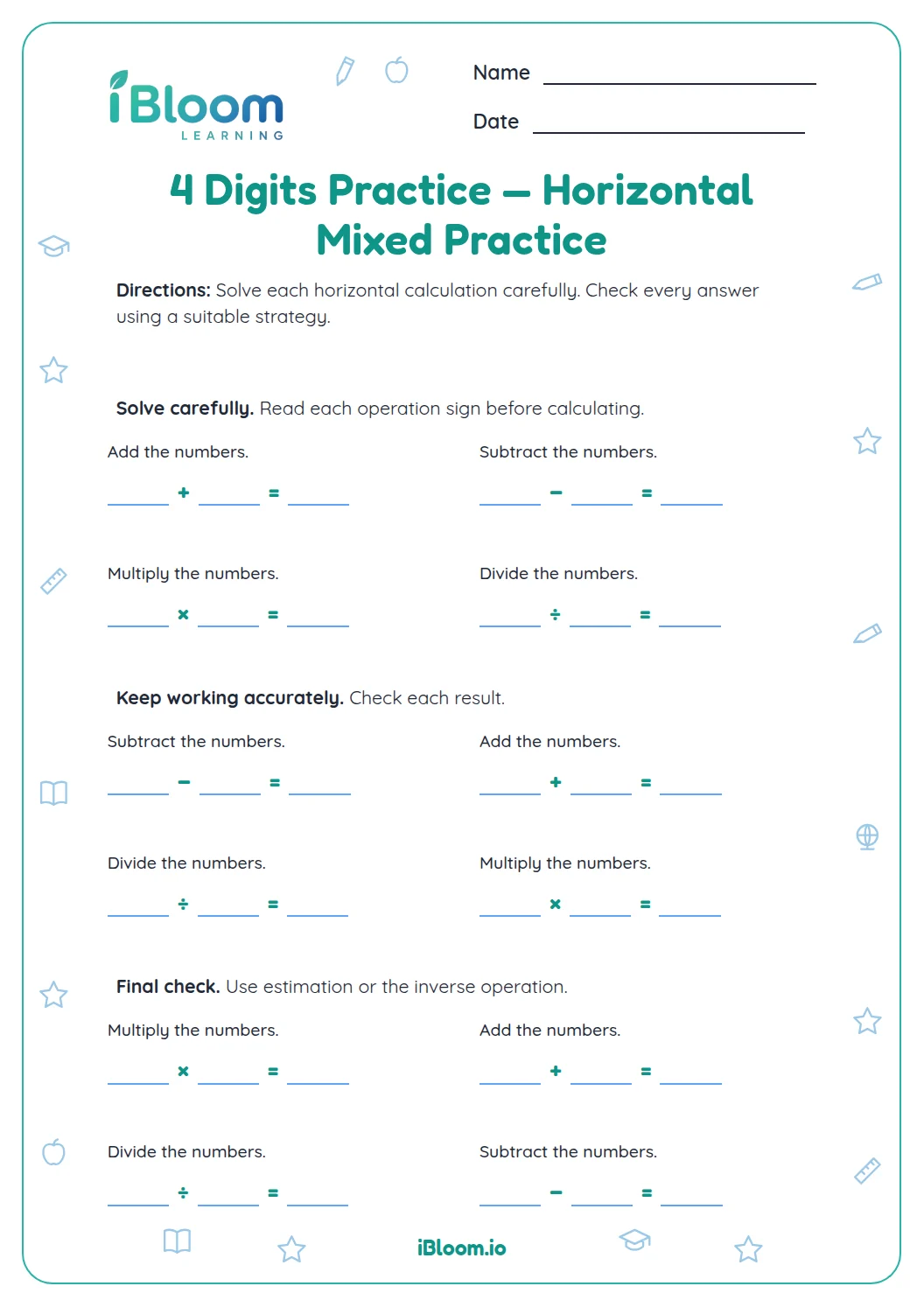
This Grade 4 printable gives students practice choosing multiplication or division from the quantities in a story. It includes equal groups, equal sharing, and two-step situations using two-digit factors and divisors. Students solve 14 problems and can check their equations and answers in the key. The work practices Common Core 4.OA.A.3.
Aligned to 4.OA.A.3
When should I multiply or divide?
Multiply when the number of equal groups and the amount in each group are known, but the total is missing. Divide when a total is shared or grouped equally.
For example, 6 boxes with 24 cards each means 6 × 24 = 144 cards.
- 16 boxes × 24 cards each
- 26 × 24 = 144 cards
How do I handle a two-step story?
Represent each action in order. For 7 trays with 16 muffins, first find 7 × 16 = 112. After 38 are sold, subtract 38 to find 74.
How can I check my operation?
Estimate a multiplication product and use the inverse operation to check division. A final answer should describe what remains, arrives, or is shared in the story.
How to use this worksheet
- 1Underline the question being asked.
- 2Mark the equal groups or the total being shared.
- 3Choose multiplication for a total or division for equal shares.
- 4For a two-step item, write the first result before the next operation.
- 5Add a label and estimate to check.
Common mistakes and quick fixes
The mistake
Multiplying when the total is shared
The fix
When the total is given and equal groups are needed, divide.
The mistake
Stopping after the first step
The fix
Read the whole story again and include every action.
The mistake
Using a fact that does not fit the group size
The fix
Check by multiplying the quotient by the number of groups.
Common Core alignment
This worksheet practices a named Common Core math skill through its problems and worked example.
Solve multistep whole-number problems with the four operations and check reasonableness.
On this sheet: Represent and solve two-step word problems with equations and the four operations.
Show the official wordingHide the official wording
Solve multistep word problems posed with whole numbers and having whole-number answers using the four operations, including problems in which remainders must be interpreted. Represent these problems using equations with a letter standing for the unknown quantity. Assess the reasonableness of answers using mental computation and estimation strategies including rounding.
What to practice next
Make more practice
Further reading
Questions parents and teachers ask
What clues suggest multiplication?
Multiplication fits when the number of equal groups and items in each group are known, but the total is missing. For example, six boxes with 24 cards each calls for 6 × 24. The product tells how many cards there are altogether.
What clues suggest division?
Division fits when a total is shared equally or split into groups of a known size. If 84 cones are shared among four teams, calculate 84 ÷ 4 to find the number each team receives. Check by multiplying the result by four.
What is a two-step word problem?
A two-step story has two actions that both affect the requested answer. Solve the first action, use that result in the next calculation, and reread the question. For example, find muffins made before subtracting those sold. The separate answer key gives each result so students can check their own work.
How can multiplication check division?
Multiply the quotient by the divisor to check a division answer. If 84 ÷ 4 = 21, then 21 × 4 should equal 84. This inverse-operation check can catch an arithmetic slip before you label the answer. The separate answer key gives each result so students can check their own work.
Should students show equations?
Writing an equation shows which operation matches the story and gives a place to record each step. Keep the equation short, then label the result with the object or unit named in the question. The separate answer key gives each result so students can check their own work.