


About this worksheet
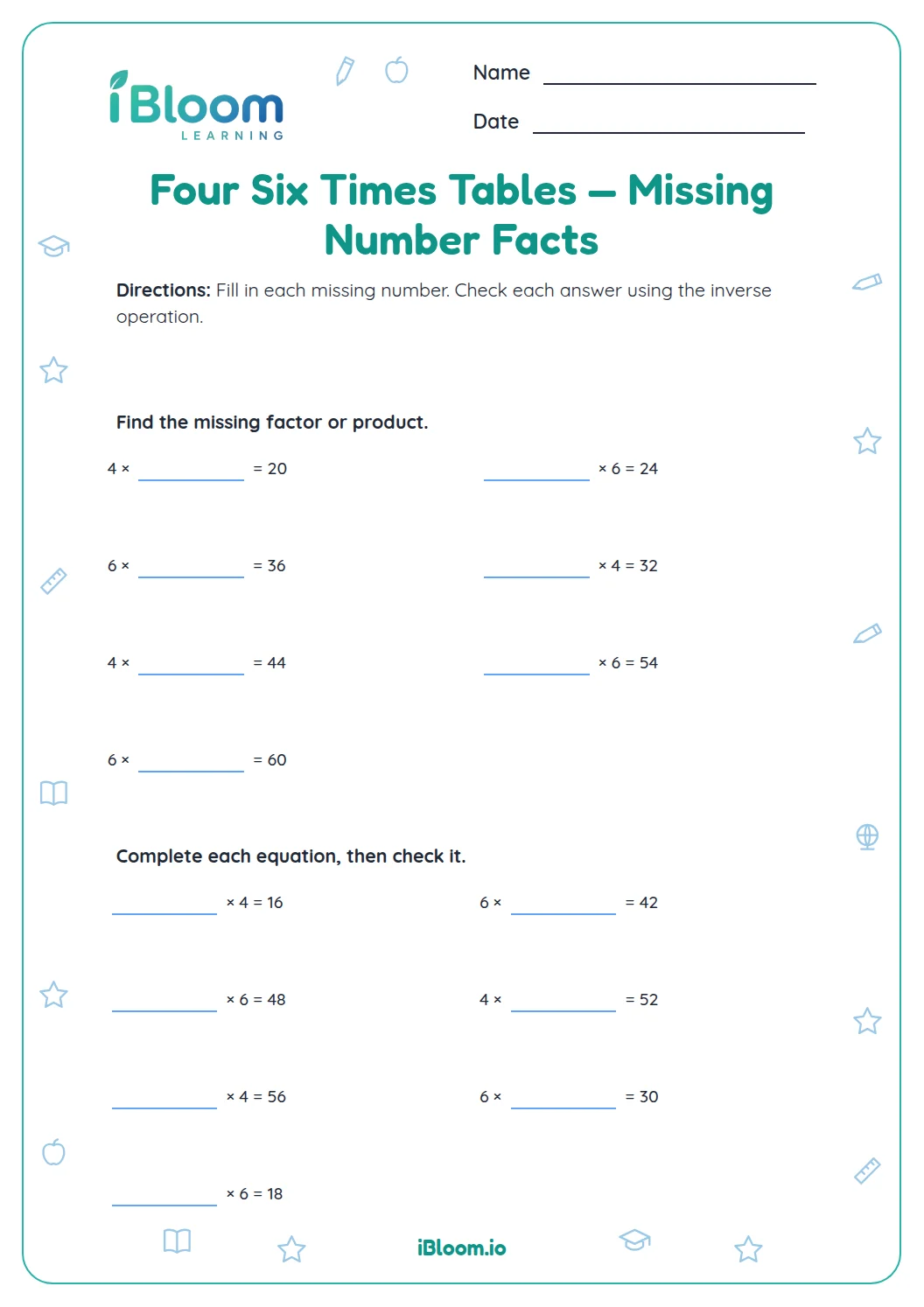
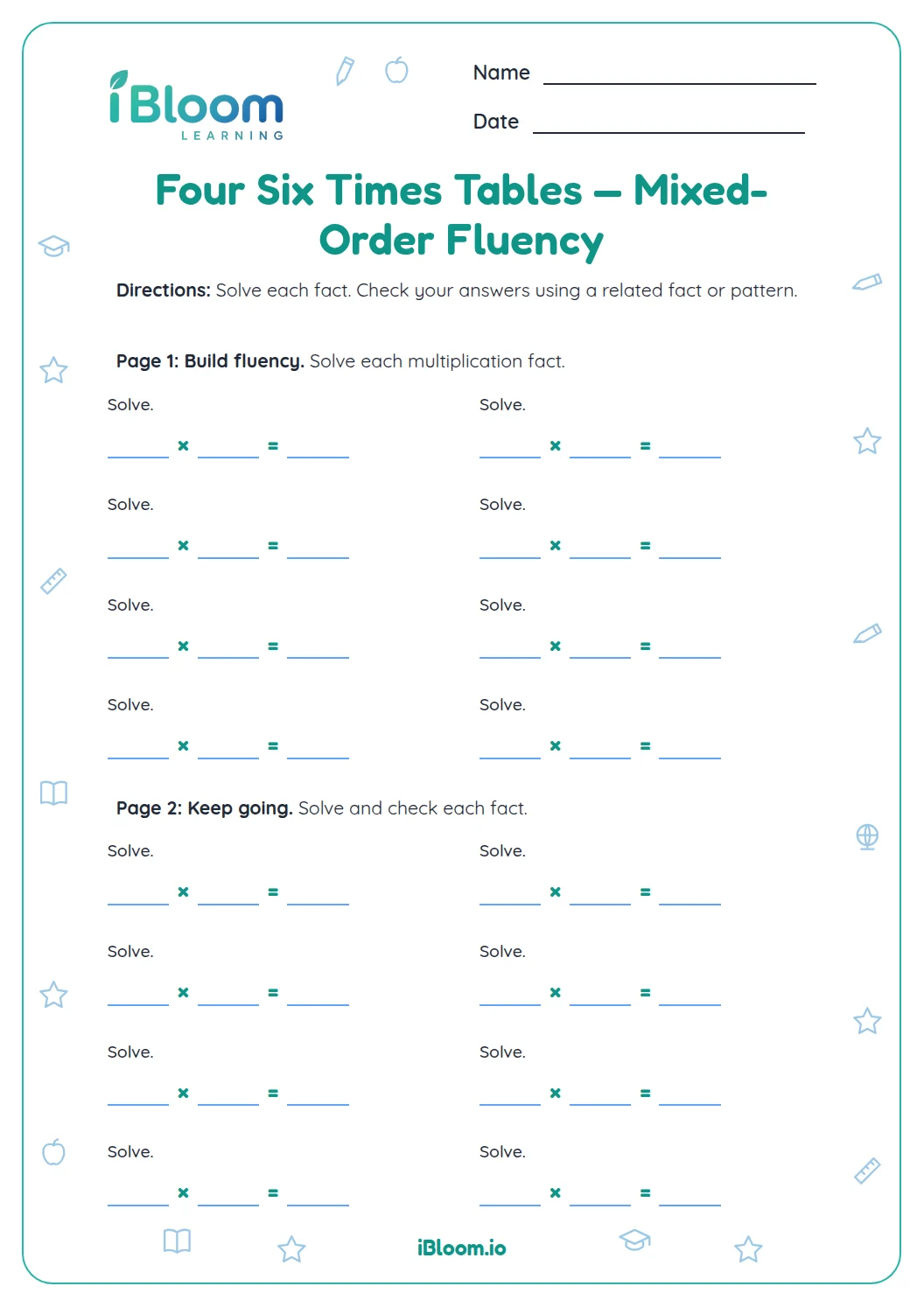
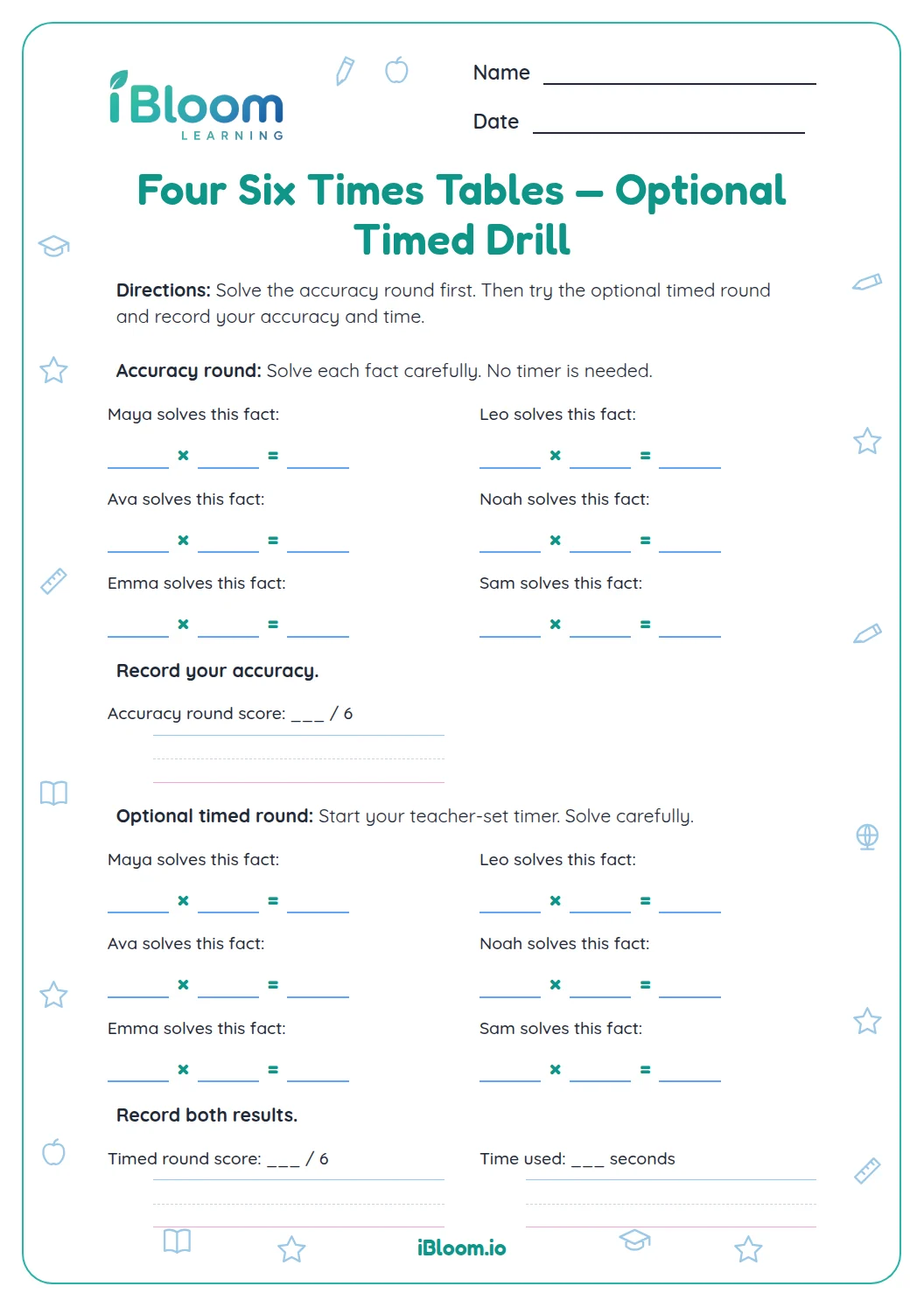
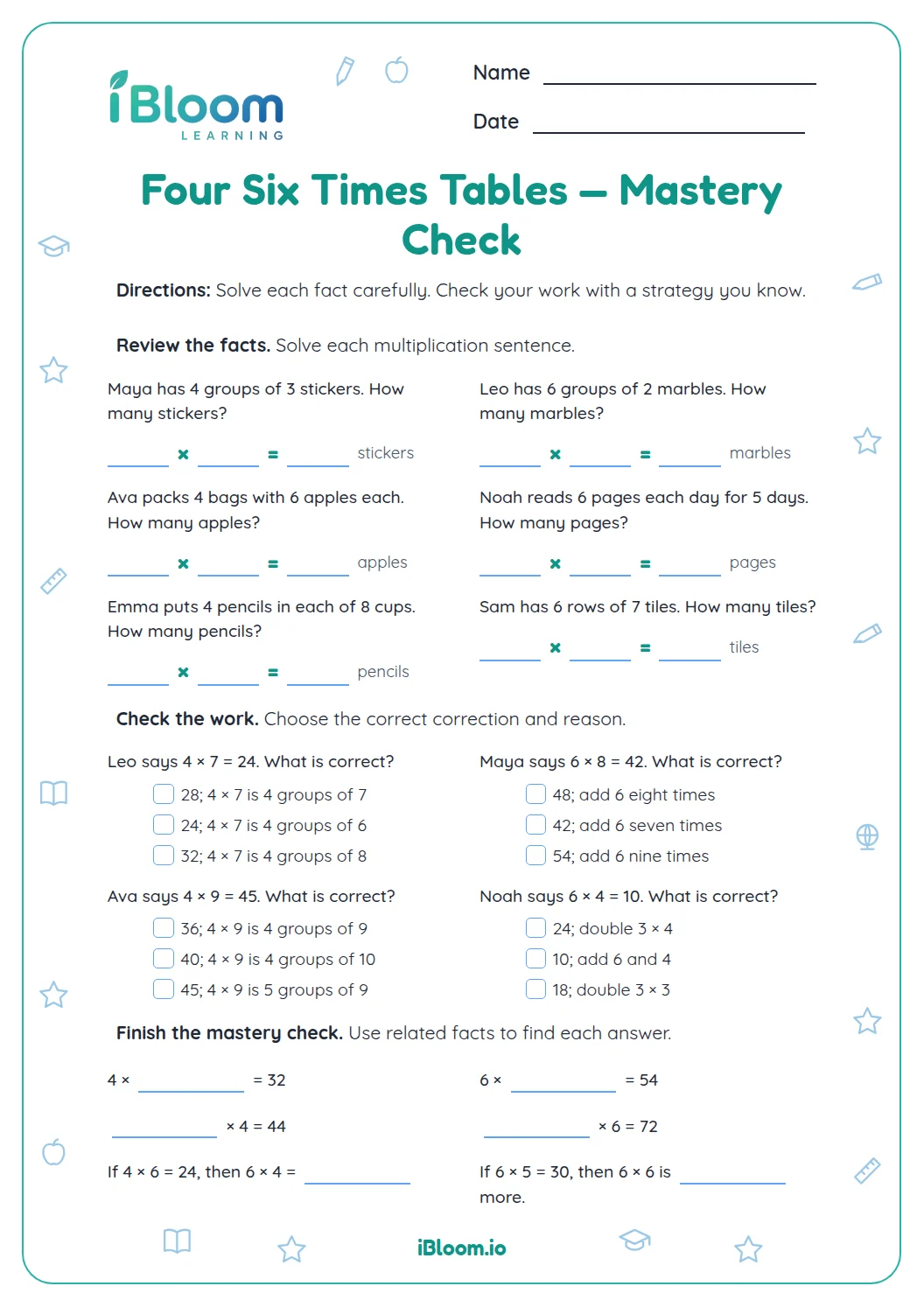
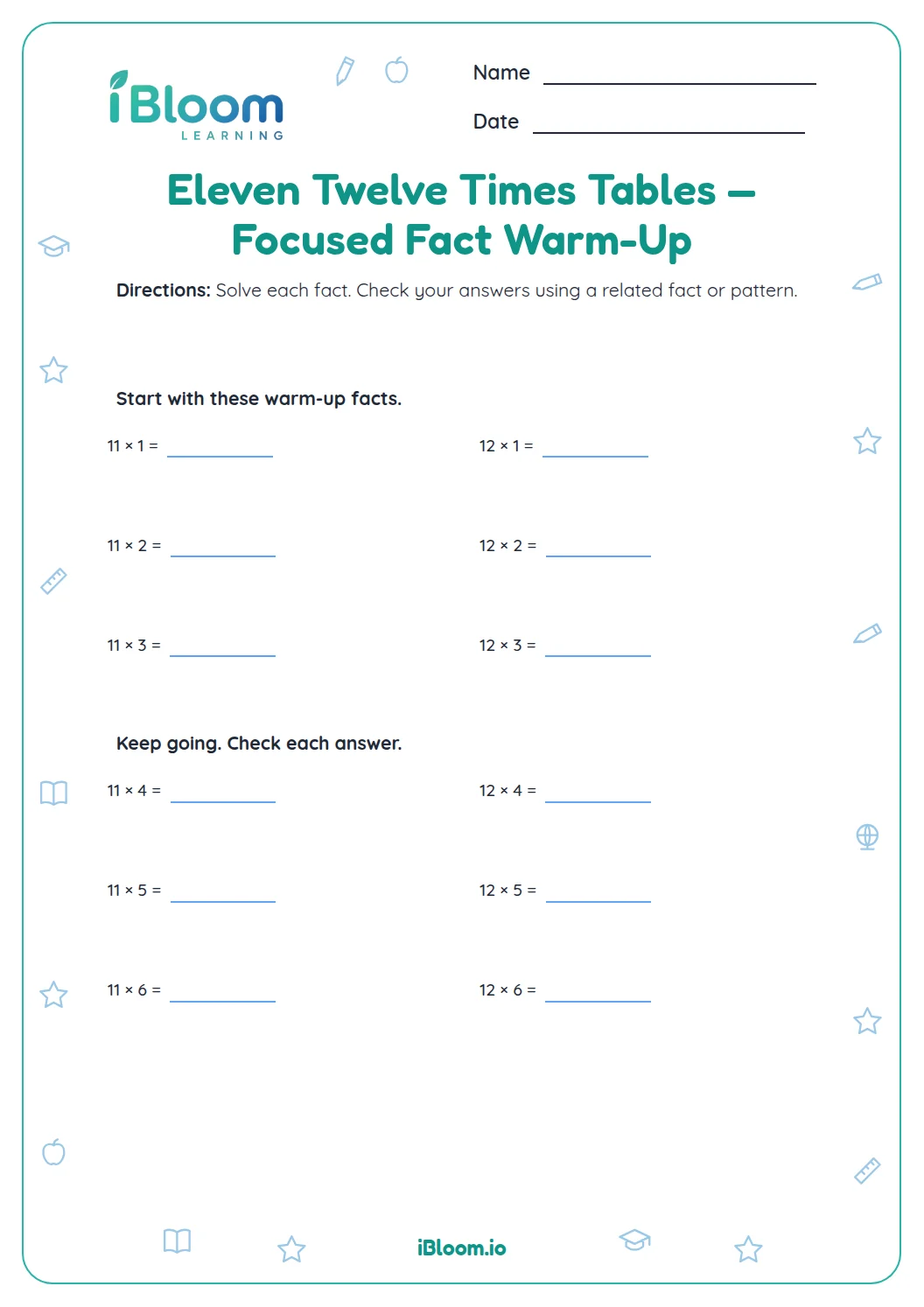
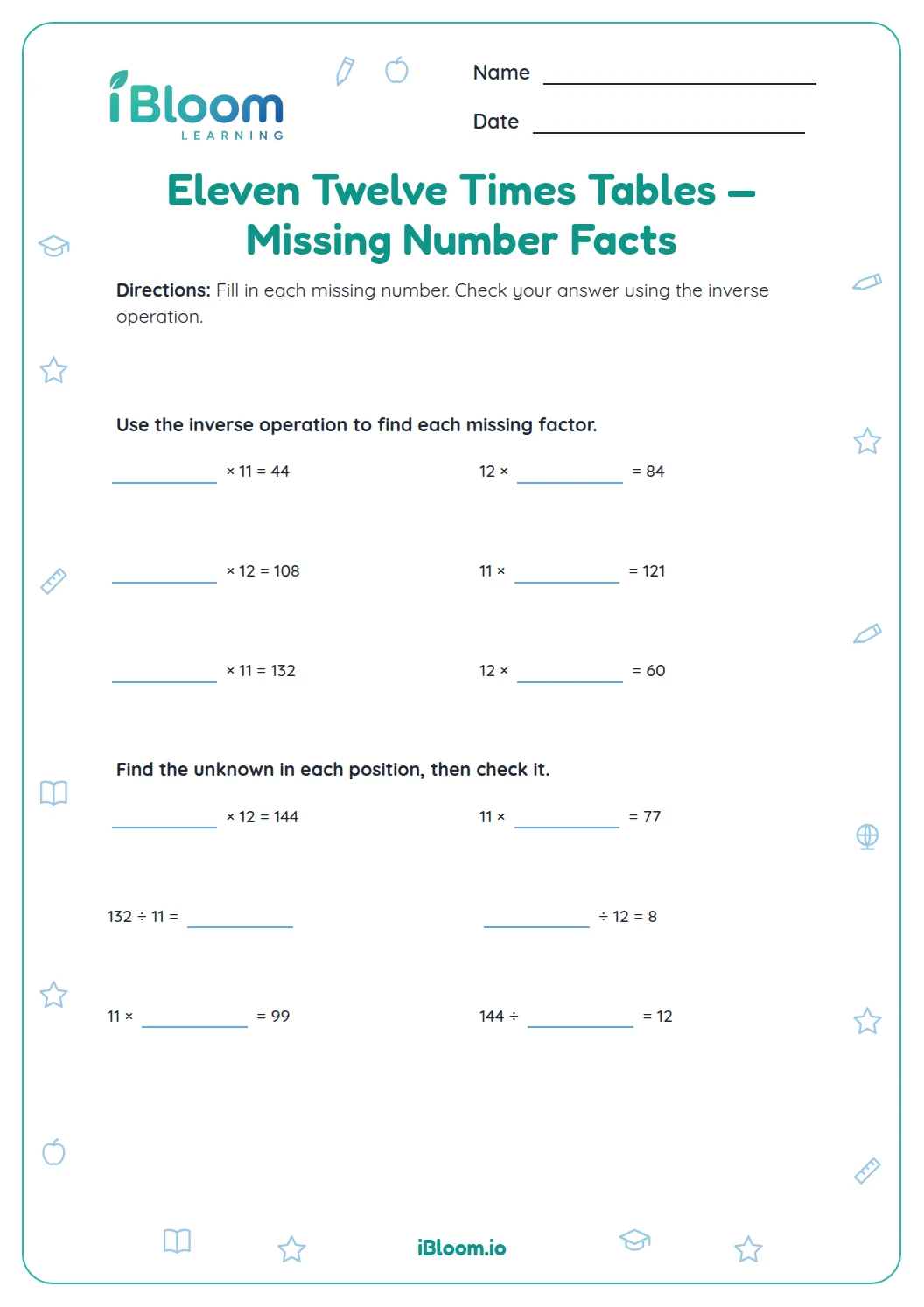
This printable Grades 3–4 worksheet practices multiplication and division facts for 4 and 6. It has 15 questions that move from direct practice to a short reasoning task, plus a separate answer key for checking each response.
How do you work through multiplication and division facts for 4 and 6?
For q10, 28 ÷ 4 asks how many groups of 4 make 28. Since 4 × 7 = 28, the quotient is 7. Check by multiplying 7 × 4.
What does the practice include?
The 15 items are grouped by task so students can settle into one method, then apply it to a new form of the same skill. Each direction names the information to use.
How should students check their work?
After finishing, compare each answer with the key. For a mismatch, reread the exact prompt, redo the step, and explain which clue supports the corrected answer.
A simple way to use this page
- 1Solve the multiplication facts first.
- 2For a division fact, ask which factor makes the dividend.
- 3Use the multiplication fact to check each quotient.
- 4Keep the operation sign in view.
- 5Compare the completed work with the key.
Common mistakes and quick fixes
The mistake
Treating a division fact as multiplication.
The fix
Use the dividend and divisor to find the missing factor.
The mistake
Mixing the 4 and 6 facts.
The fix
Name the divisor before recalling the related multiplication fact.
The mistake
Rushing past the operation sign.
The fix
Read × or ÷ aloud before solving.
What to practice next
Make more practice
Questions parents and teachers ask
Which facts does this worksheet practice?
It includes eight multiplication products using 4 and 6 and seven related division quotients. The numbers range through familiar factors and products such as 4 × 9 and 48 ÷ 6. A separate answer key covers all 15 questions.
How can multiplication help with division?
Think of division as a missing-factor question. For 48 ÷ 6, ask what number multiplied by 6 equals 48. Since 6 × 8 = 48, the quotient is 8. Multiplying the quotient by the divisor checks the answer.
Are both 4 and 6 facts included?
Yes. The multiplication part mixes facts from the 4 and 6 tables, and the division part uses products from both families. Students should read each operation sign carefully because the same numbers can appear in multiplication and division facts.
How should students check the answer key?
Finish a group of questions before checking. If a quotient differs from the key, rewrite it as a multiplication fact and test the related product. For instance, a proposed answer to 36 ÷ 4 is correct only if multiplying it by 4 gives 36.
What does fact family mean here?
A fact family links multiplication and division facts made from the same three numbers. From 4, 7, and 28, you can write 4 × 7 = 28, 7 × 4 = 28, 28 ÷ 4 = 7, and 28 ÷ 7 = 4. This page practices some of those connected facts.