






About this worksheet
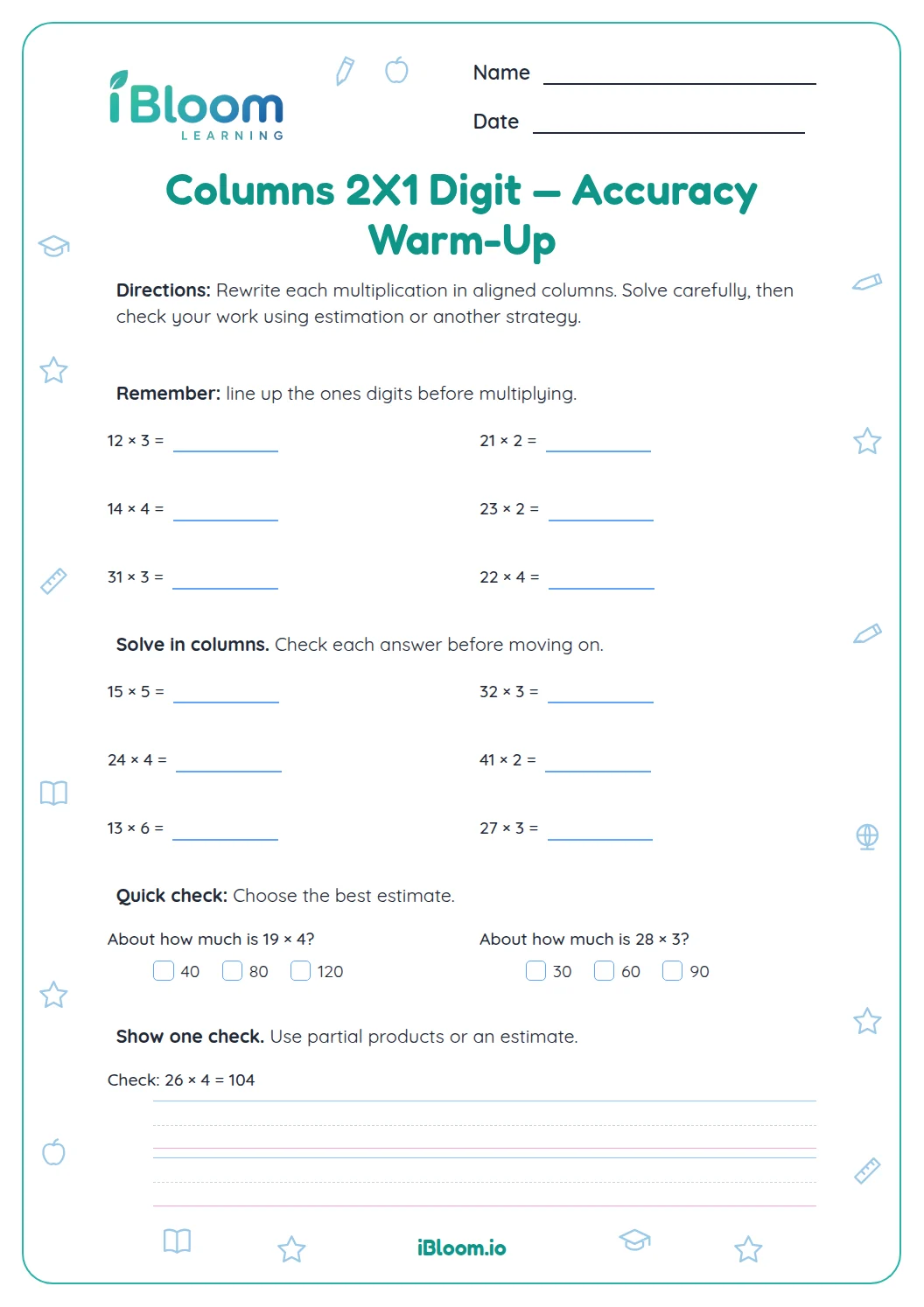
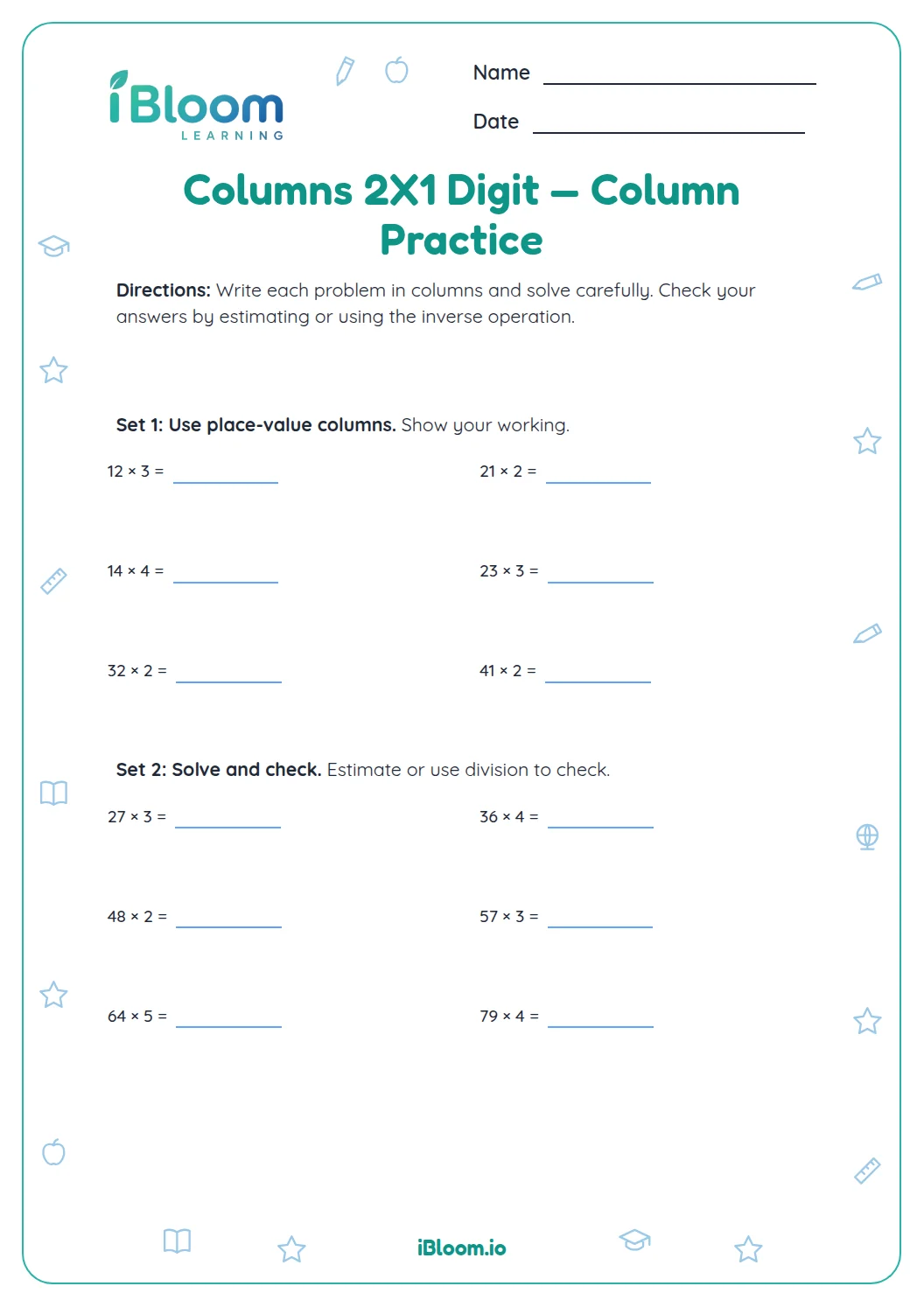
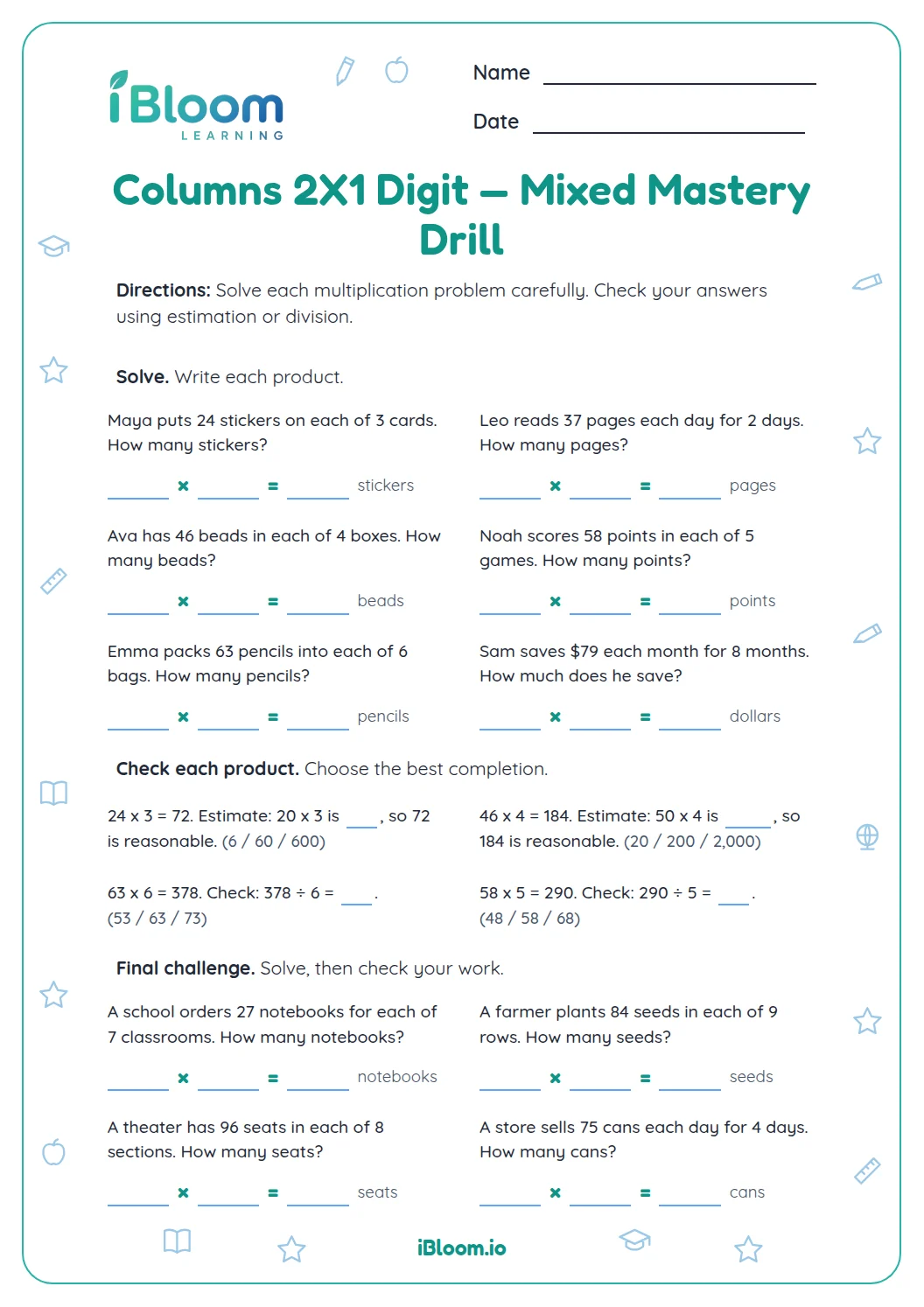
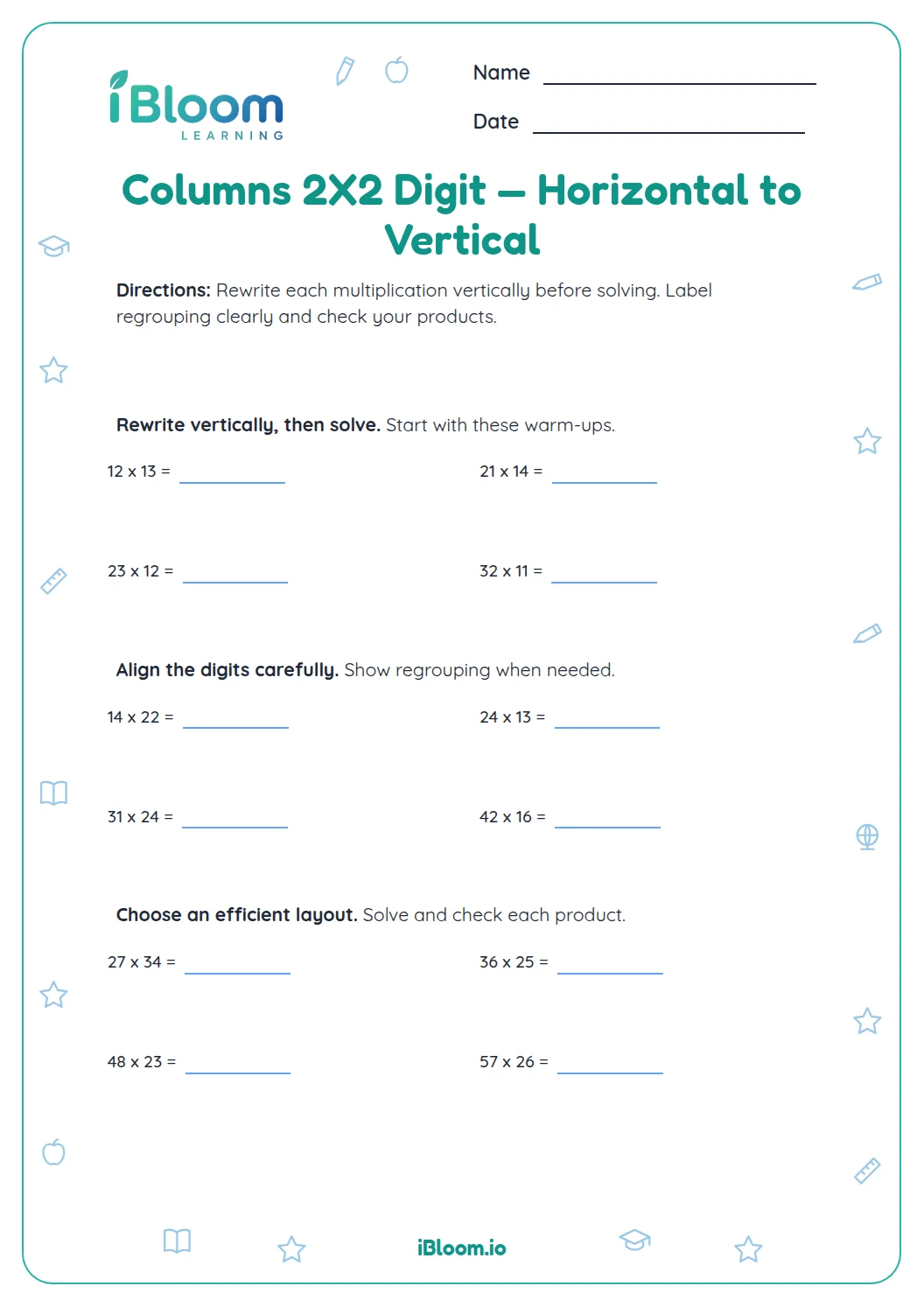
This worksheet keeps the old sheet’s error analysis and column multiplication. Students check six worked products, choosing whether each is correct or selecting its corrected product, then solve 14 two-digit by one-digit problems. The answer key gives the corrections and products. It practices place-value multiplication strategies described in Common Core 4.NBT.B.5.
Aligned to 4.NBT.B.5
How do you check a multiplication step?
Check the ones product first, including any regrouped tens. Then multiply the tens digit and combine the partial products. A result that skips a regrouped ten will be too small.
How can you solve a two-digit product?
Multiply the ones, record the ones digit, and regroup any tens. Multiply the tens digit and add the regrouped amount.
- 124 × 3
- 23 × 4 ones = 12 ones; regroup 1 ten.
- 33 × 2 tens + 1 ten = 7 tens.
- 4Product: 72
What is on the worksheet?
Part A has six checks, with both correct work and errors. Part B has 14 independent products.
How to use this worksheet
- 1Align digits by place value.
- 2Work the ones place first.
- 3Regroup only when the digits require it.
- 4Finish the tens and write the result clearly.
- 5Check the answer with a related operation or estimate.
Common mistakes and quick fixes
The mistake
Writing the tens digit under the ones digit.
The fix
Line up the ones and tens columns before starting.
The mistake
Forgetting to add regrouped value to the next step.
The fix
Mark the regrouped ten or ones above the correct place.
The mistake
Copying a number incorrectly while checking.
The fix
Reread the original expression before recomputing it.
Math alignment
Multiply whole numbers using place-value strategies and explain the calculation.
On this sheet: Students check place-value multiplication work and calculate two-digit by one-digit products.
Show the official wordingHide the official wording
Multiply a whole number of up to four digits by a one-digit whole number, and multiply two two-digit numbers, using strategies based on place value and the properties of operations. Illustrate and explain the calculation by using equations, rectangular arrays, and/or area models.
What to practice next
Make more practice
Further reading
Questions parents and teachers ask
How many questions are included?
There are 20 questions across two worksheet pages: six checks of completed multiplication and 14 two-digit by one-digit products. The separate answer key identifies the correct choices and gives each product for review. Review one item at a time and discuss the place-value step.
What mistake should students look for in the worked examples?
Check whether the ones multiplication creates a regrouped ten and whether that ten is added to the tens product. For example, 36 × 2 is 72; writing 612 treats the digits as separate strings instead of multiplying by place value. Review one item at a time and discuss the place-value step.
How do students multiply 24 by 3?
Multiply 3 by 4 ones to get 12 ones. Write 2 ones and regroup 1 ten. Then multiply 3 by 2 tens and add the regrouped ten, giving 7 tens. The product is 72. Review one item at a time and discuss the place-value step.
Does every worked product contain an error?
No. The six checks include correct and incorrect products. Students should verify each statement before choosing “Correct” or the corrected product; the answer key confirms which examples need a change. Review one item at a time and discuss the place-value step.
What does the answer key show?
The key marks each of the six checks and gives the corrected product when needed. It also lists all 14 independent products, so students can review the multiplication and identify a regrouping step to revisit. Review one item at a time and discuss the place-value step.