
About this worksheet
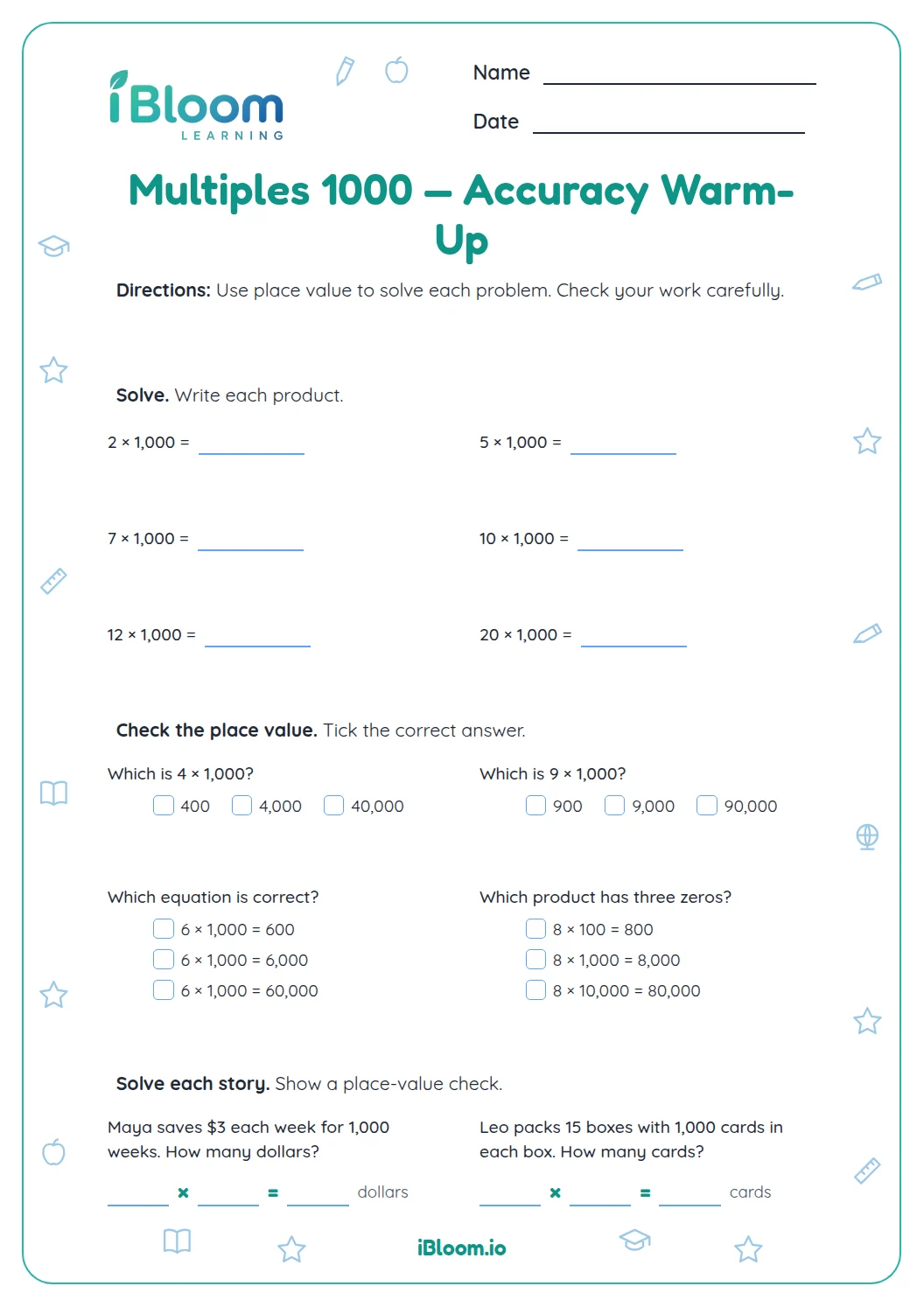
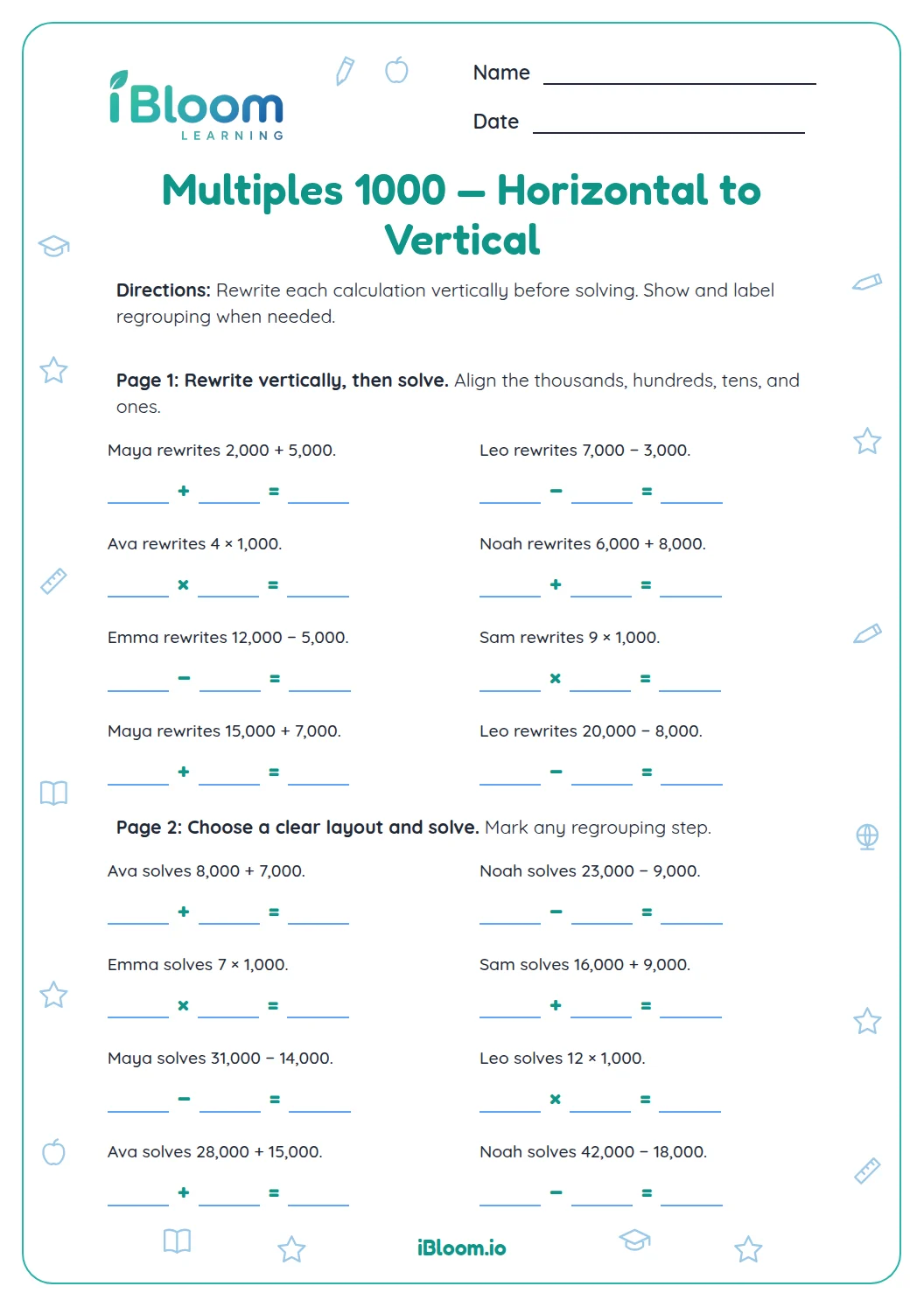
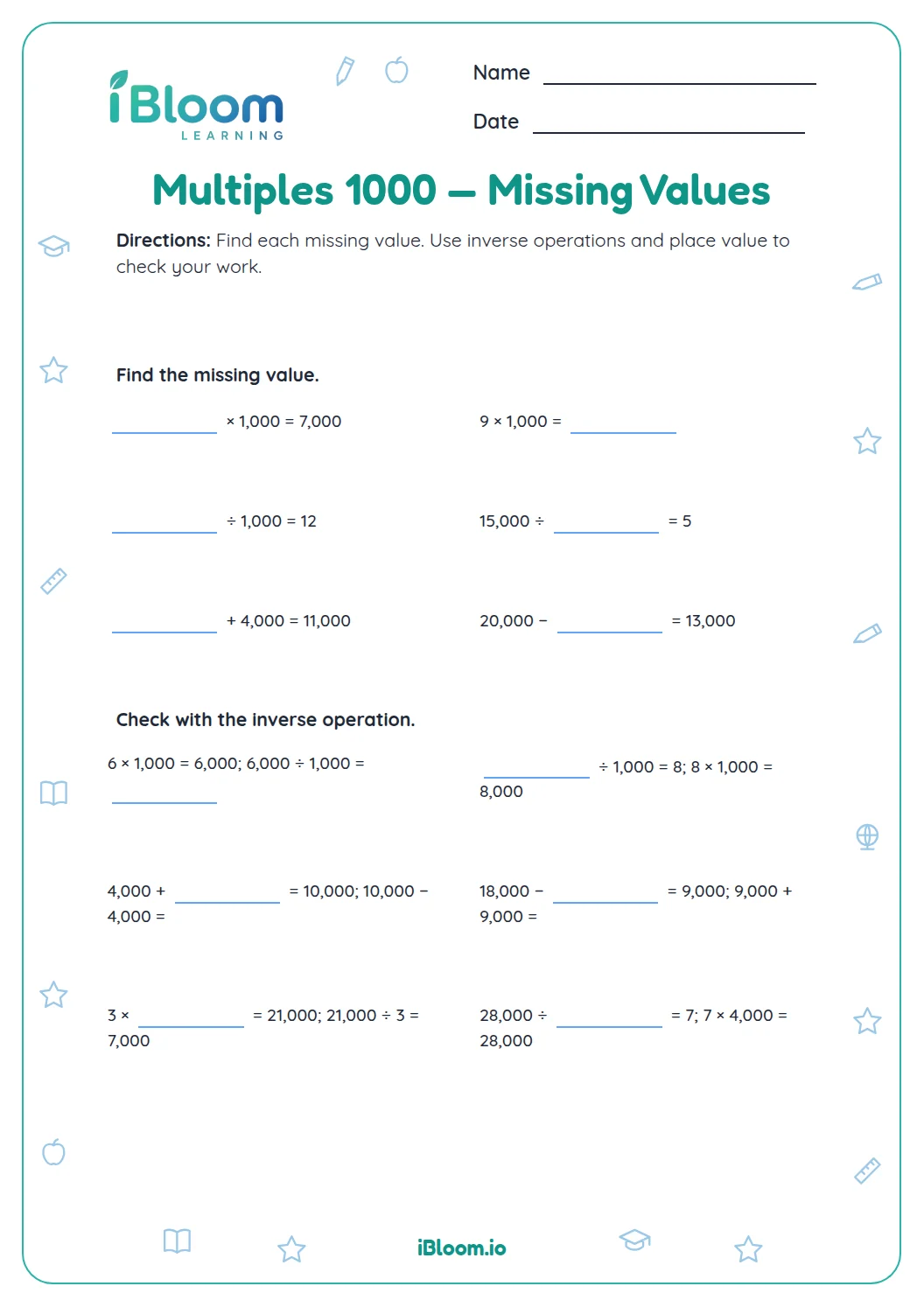
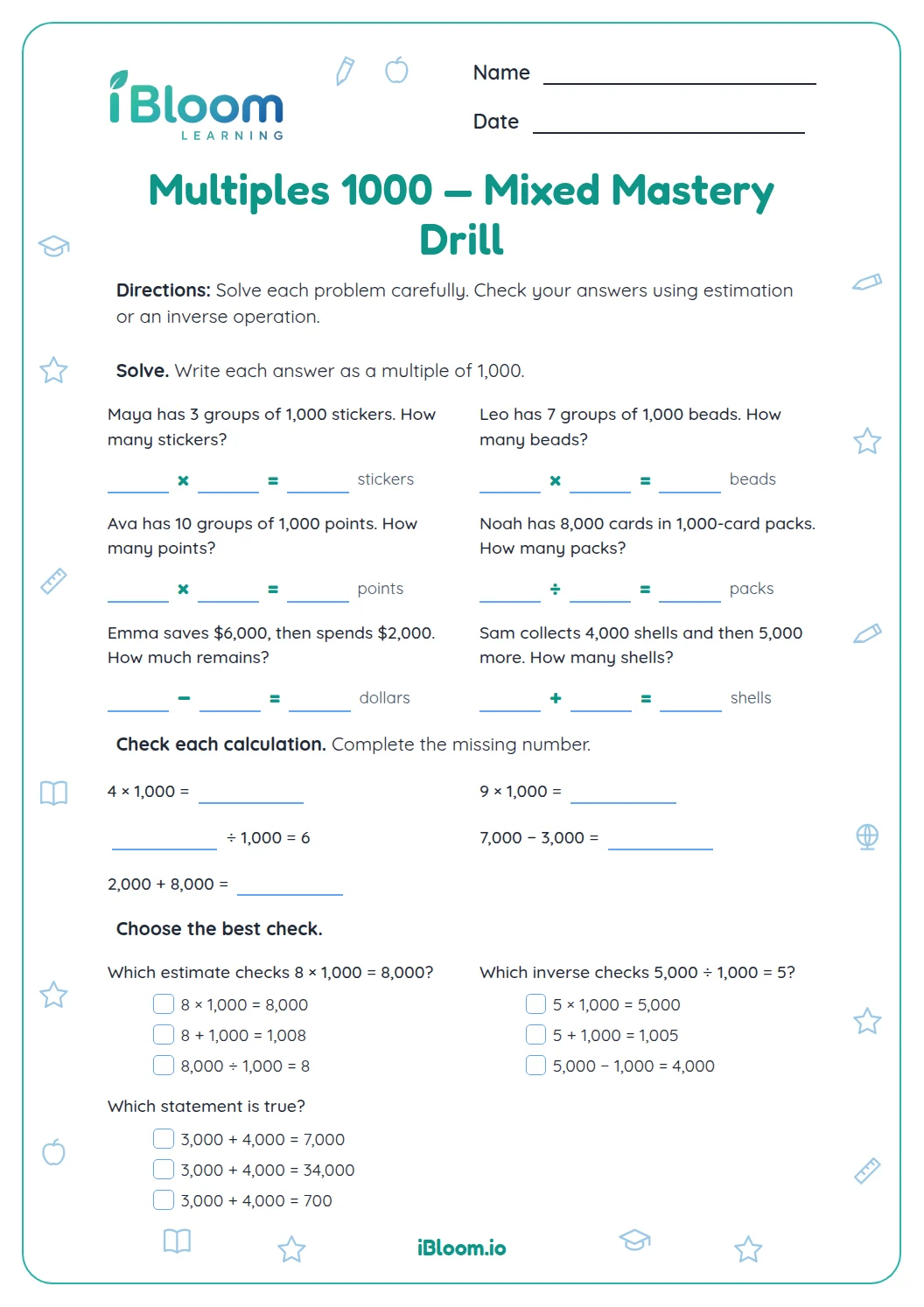
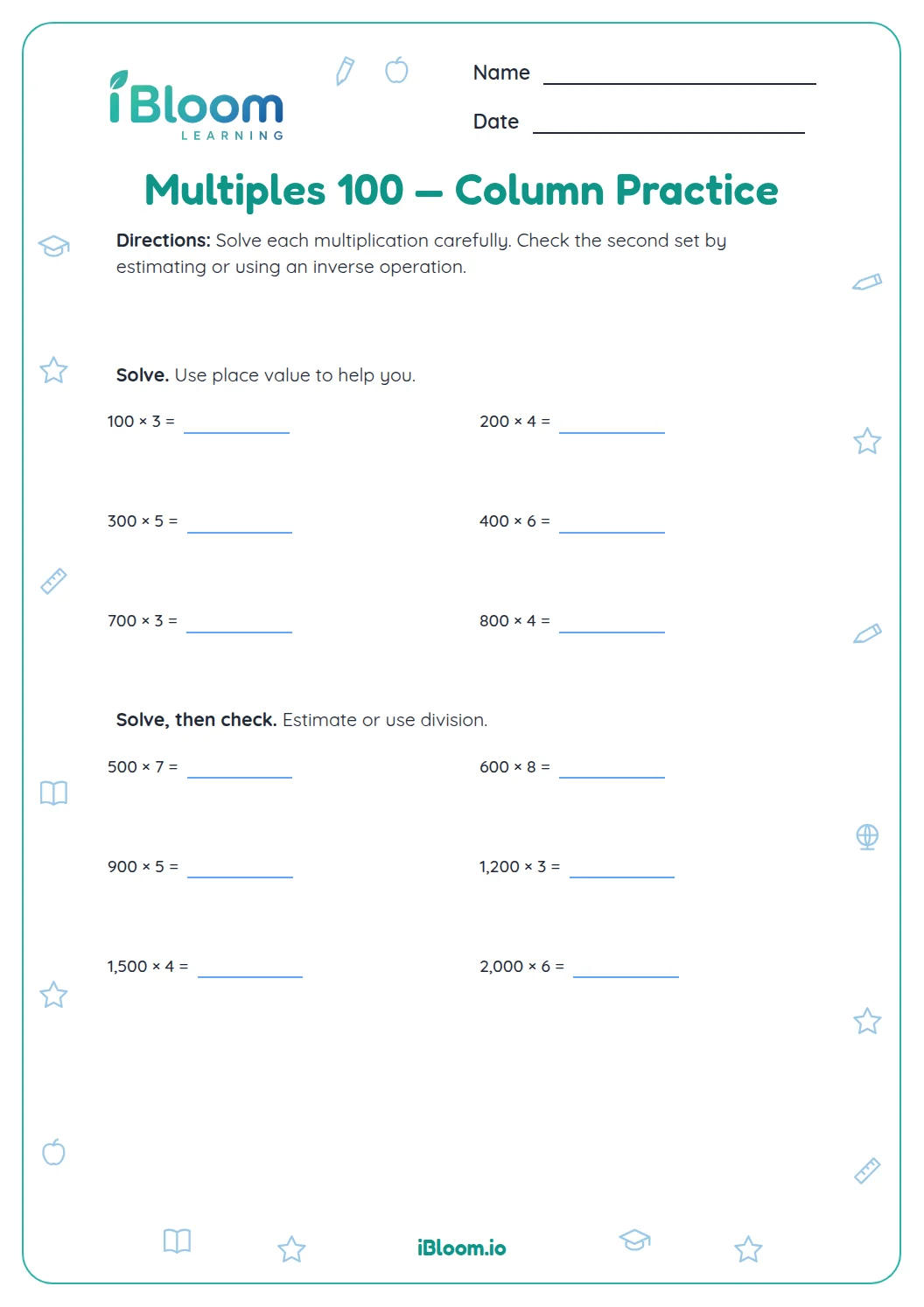
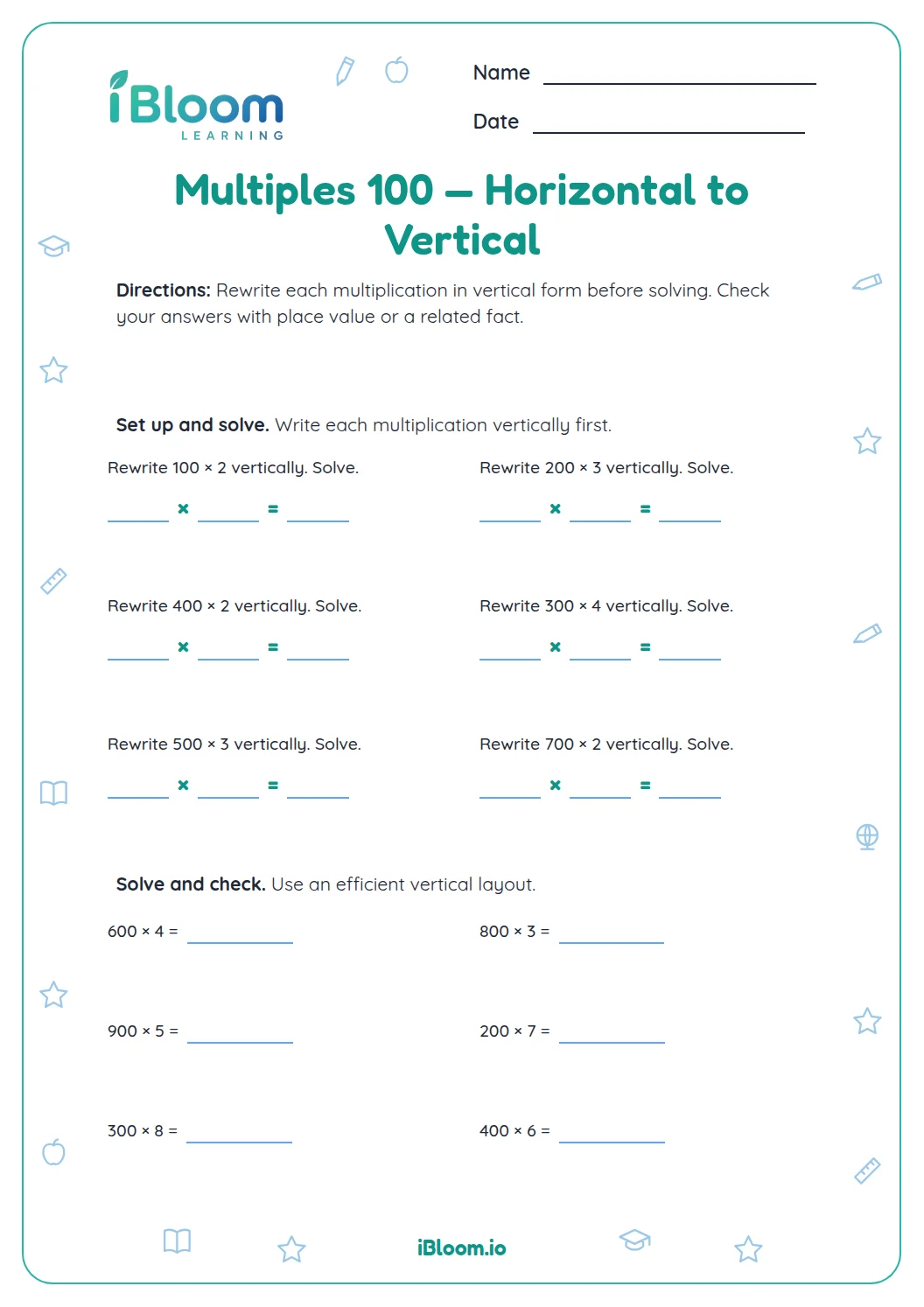
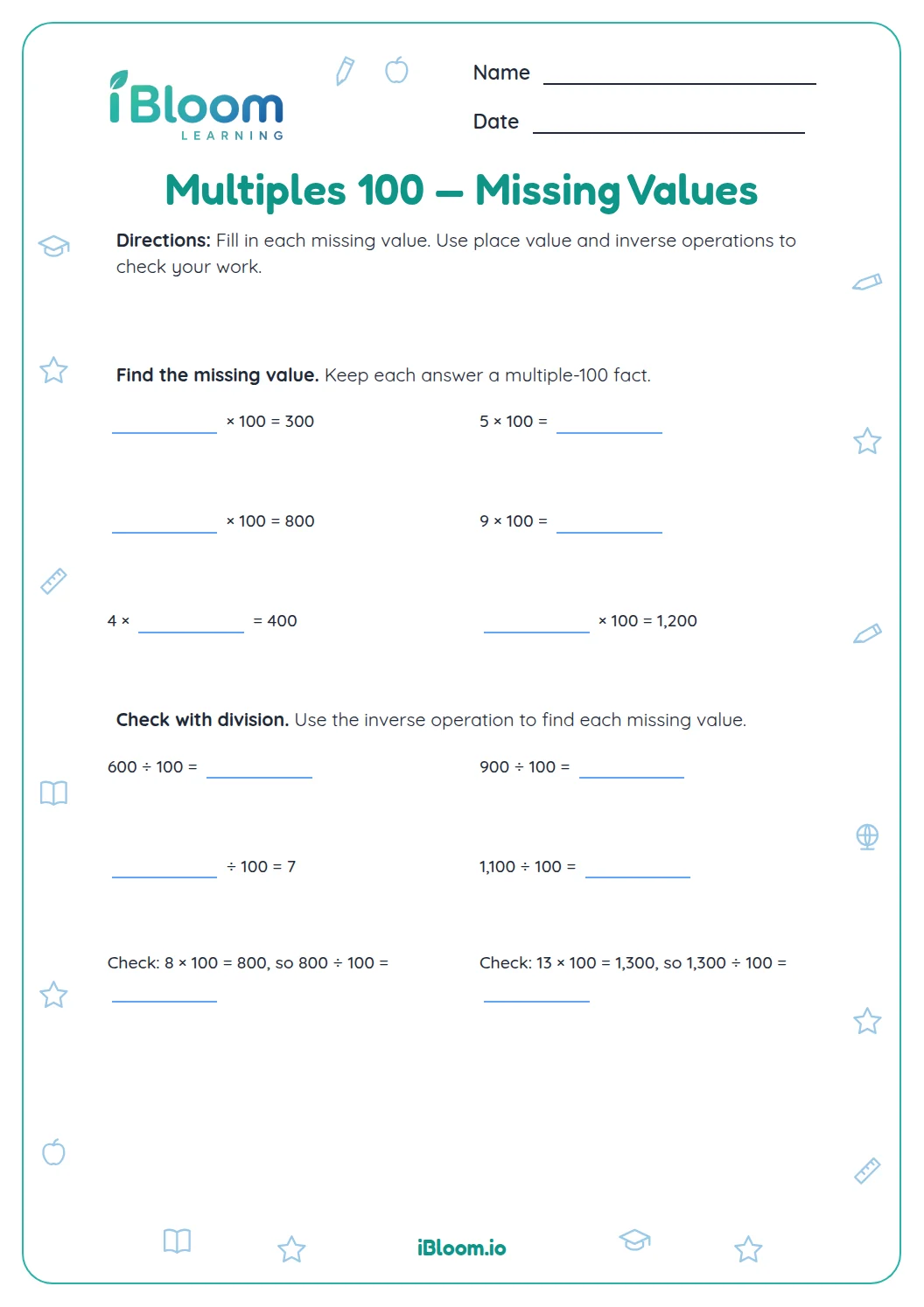
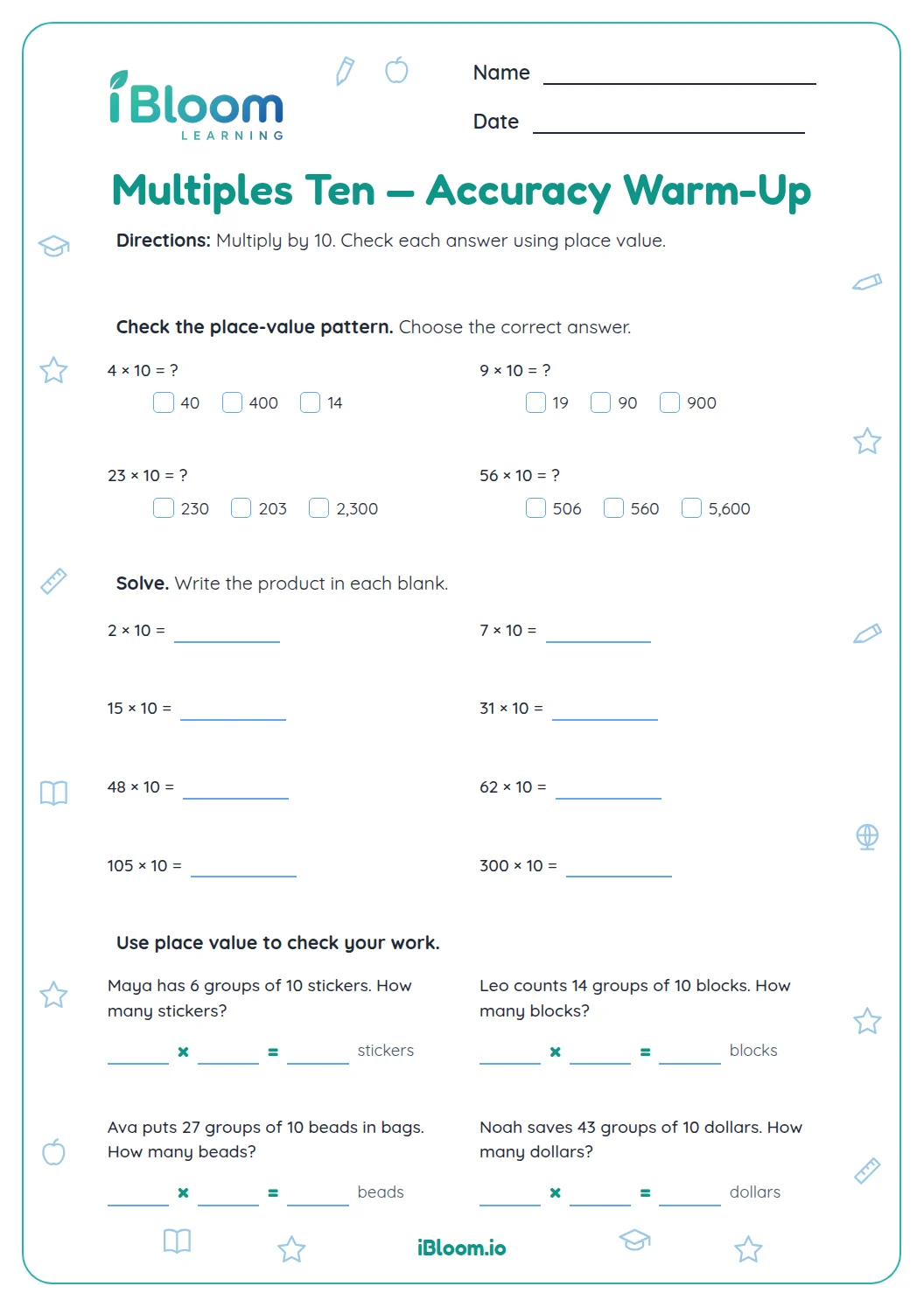
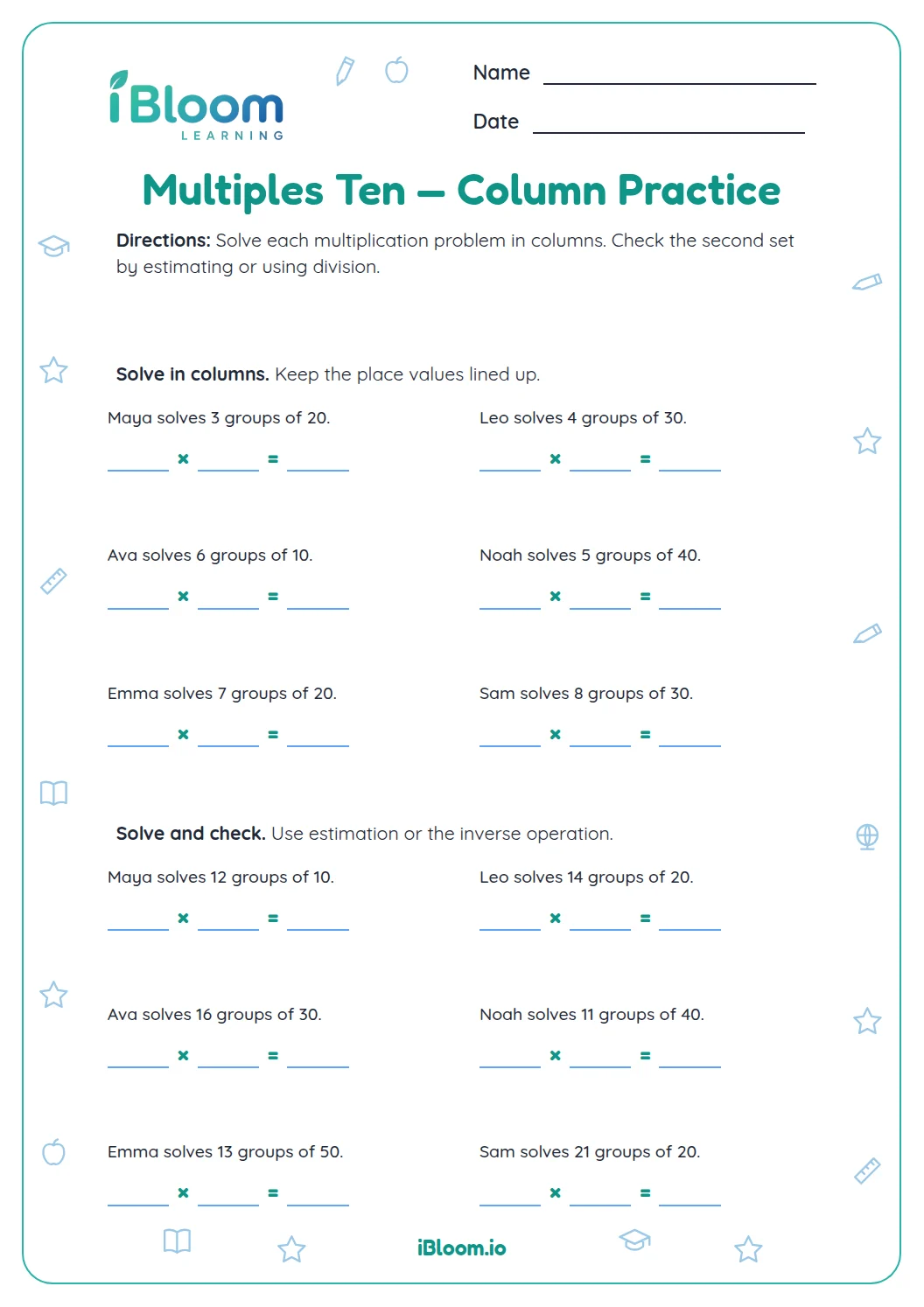
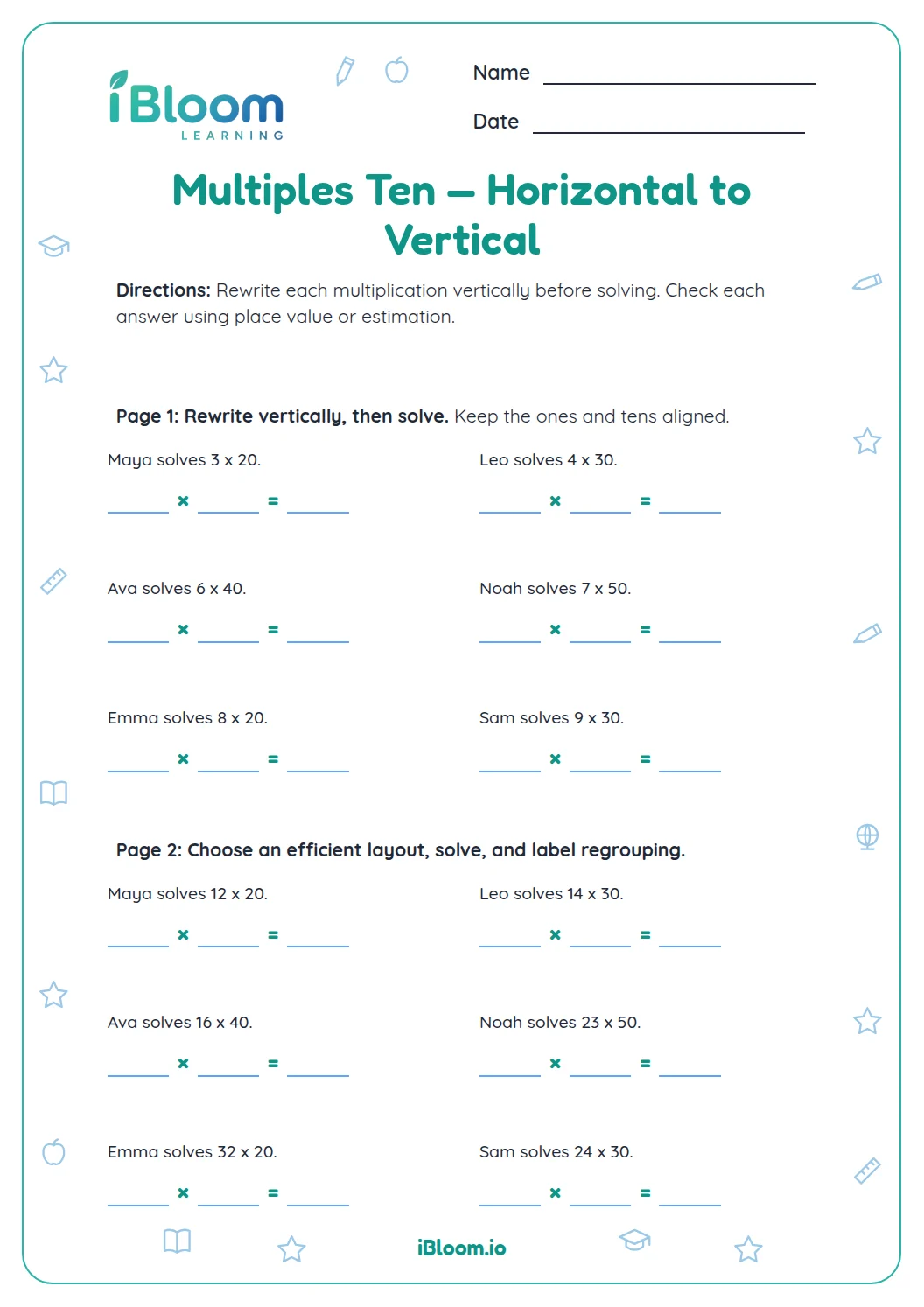
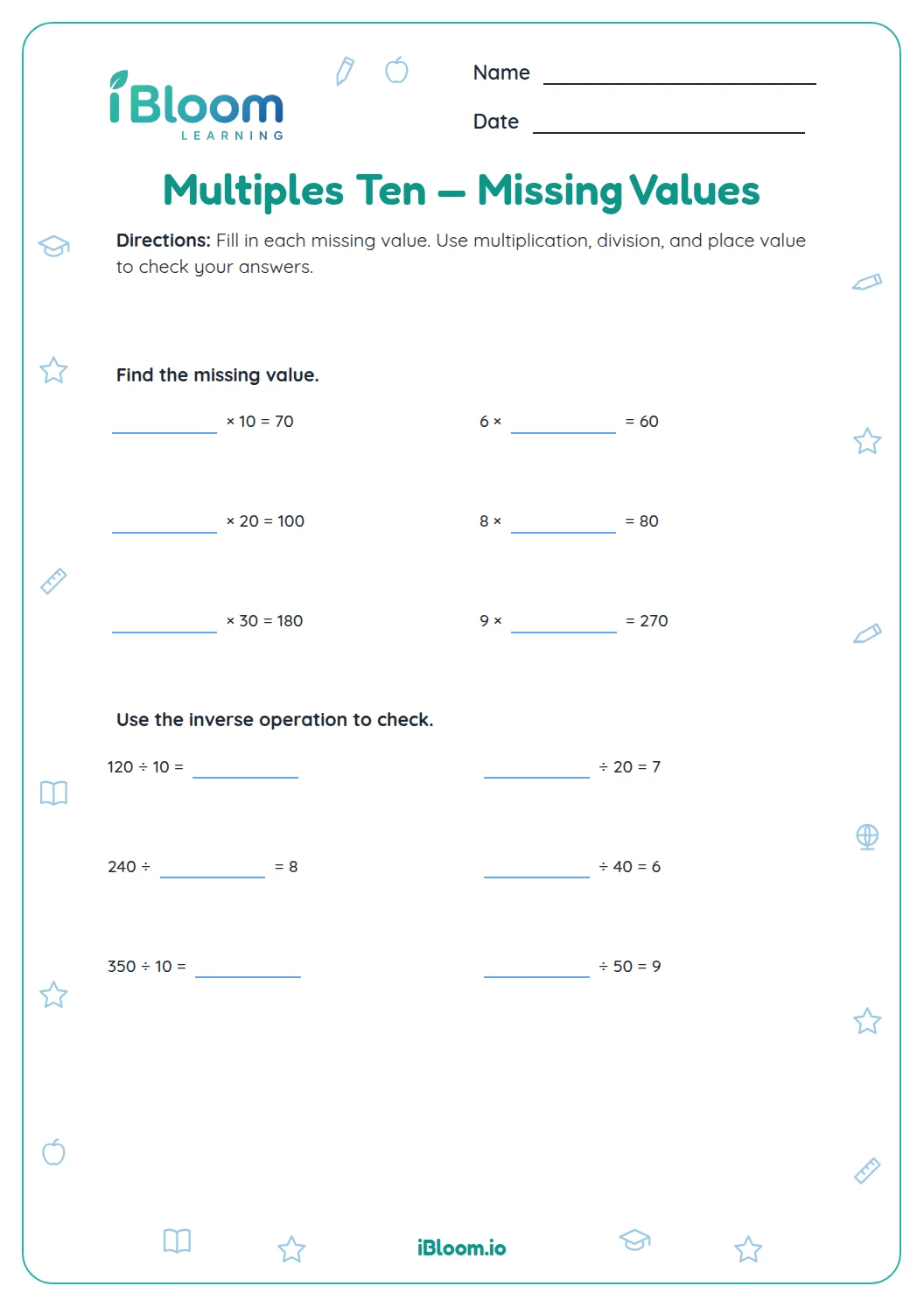
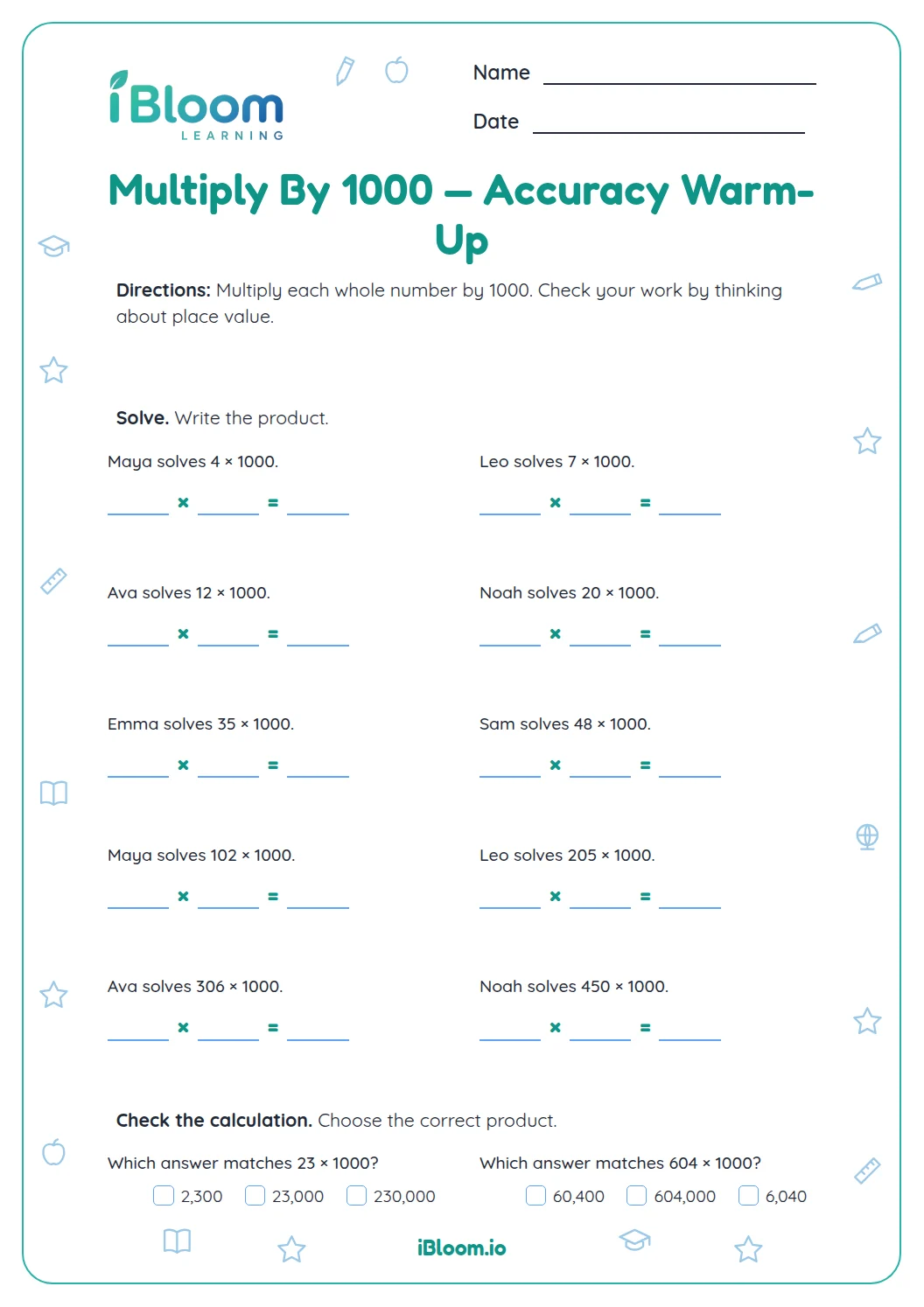
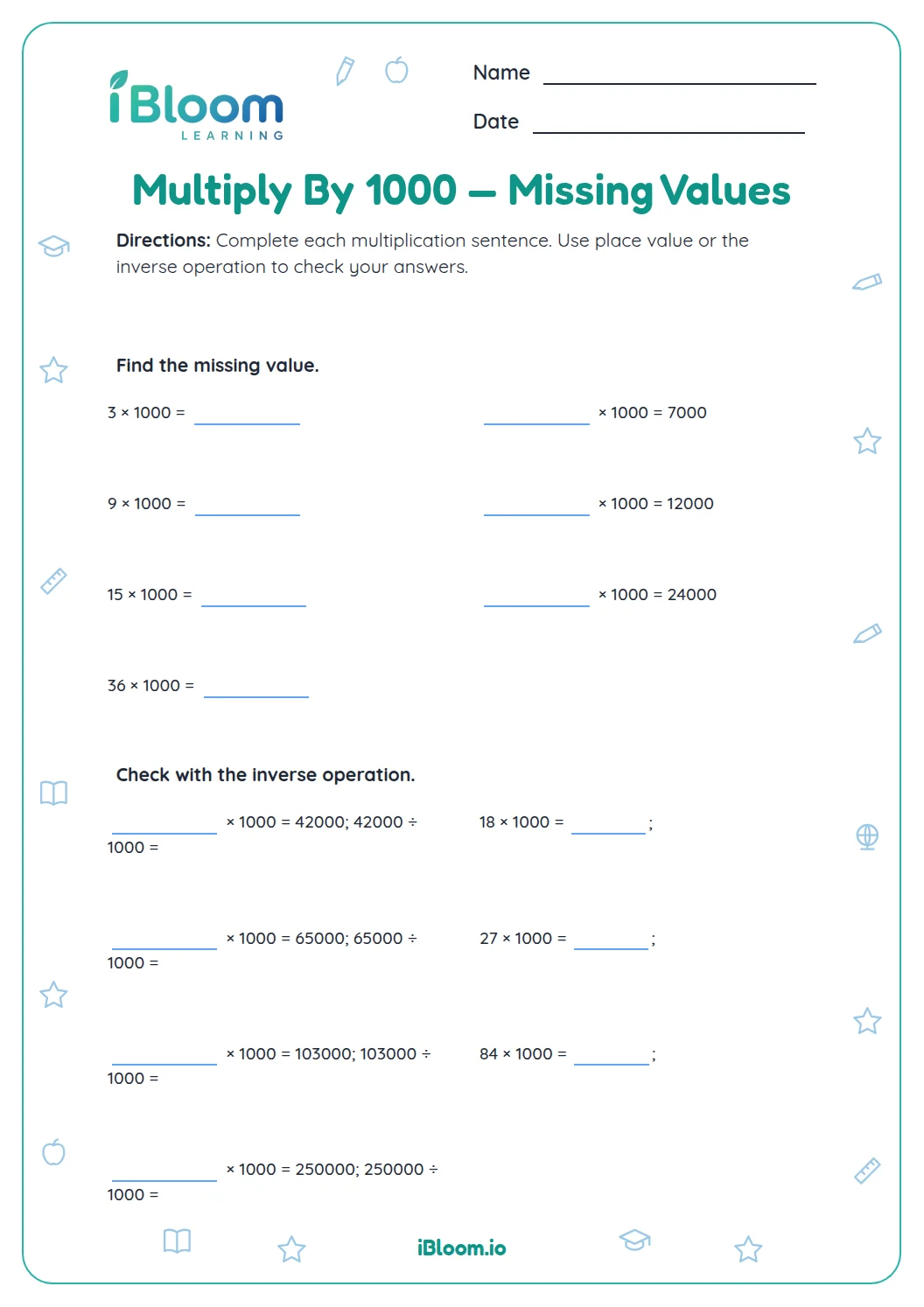
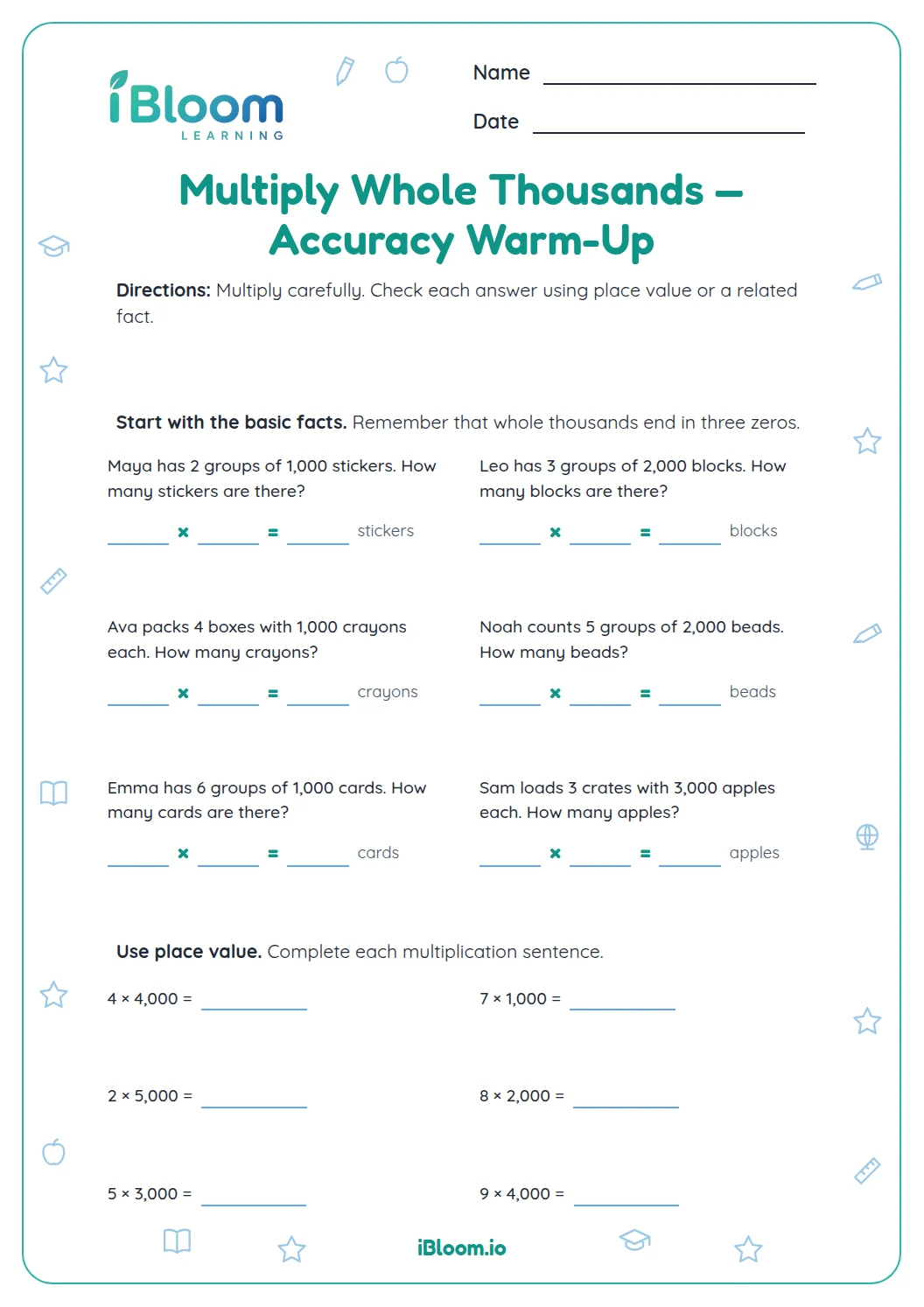
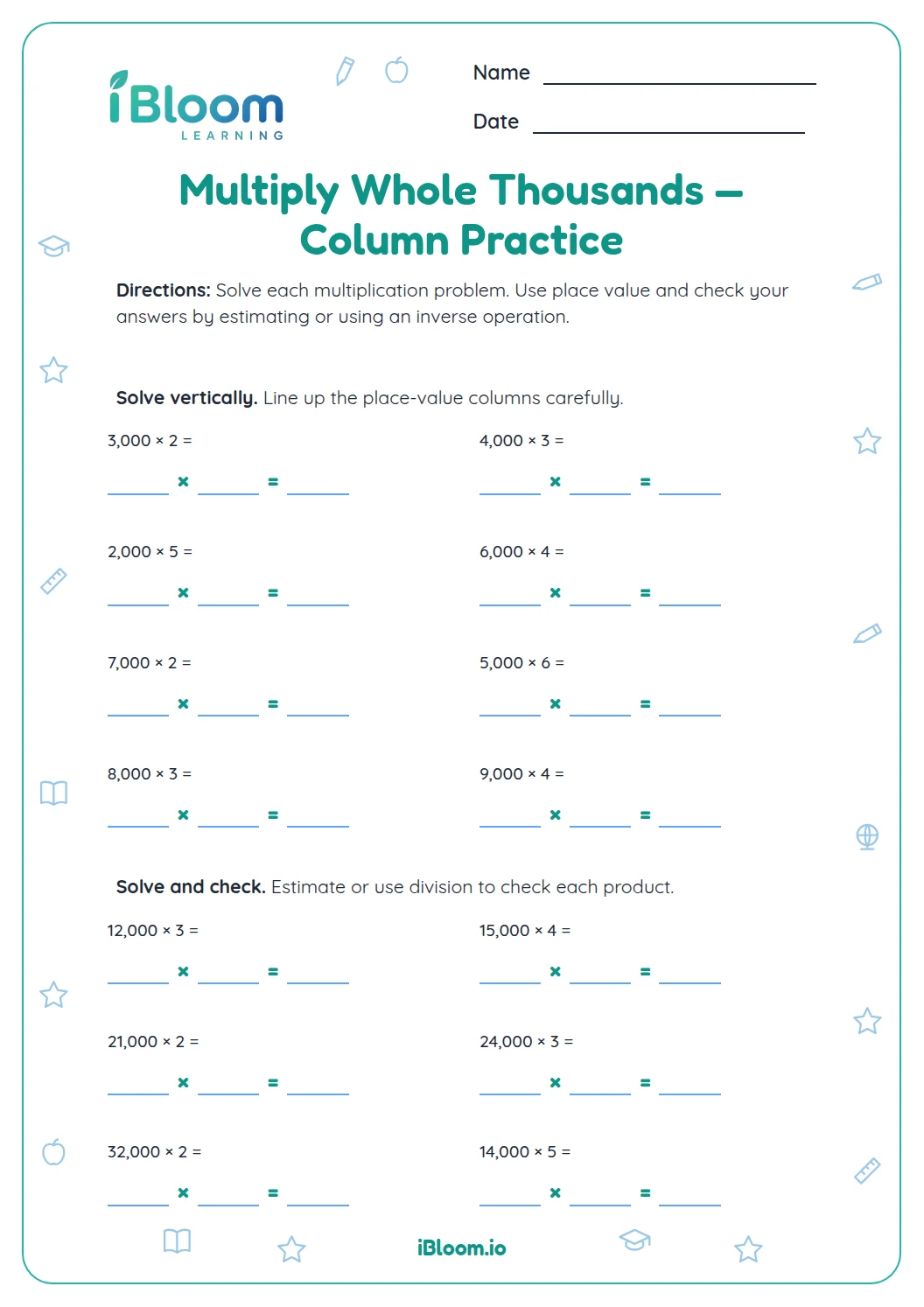
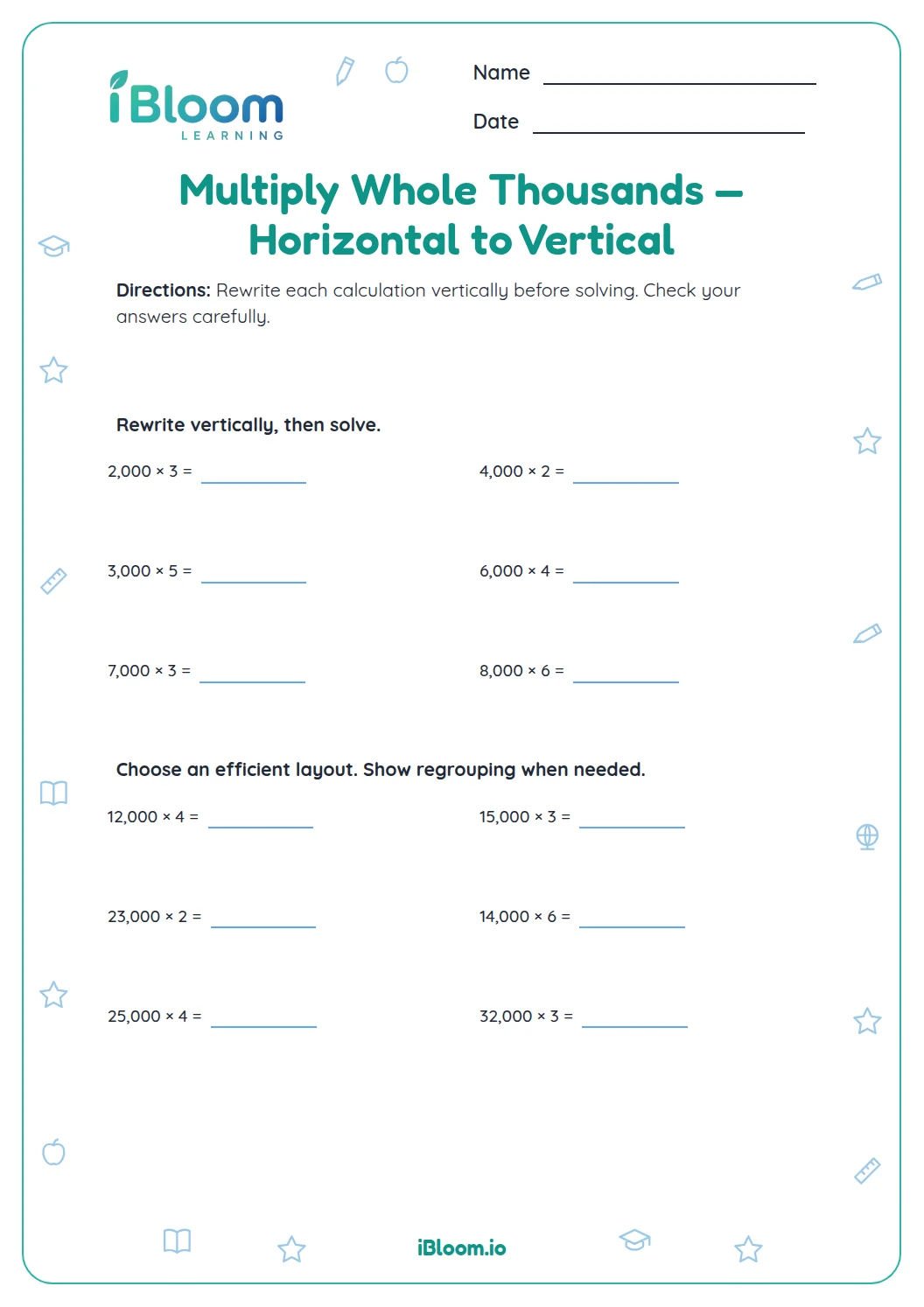
This printable focuses on checking multiplication by 1,000 for place-value errors. Students correct a claimed product and use the answer key to check the thousands place. The 16 items keep the multiplier visible so learners can reason about how each digit’s value changes. This practice connects place-value reasoning to CCSS 4.NBT.A.1.
Aligned to 4.NBT.B.5
What does the error analysis ask students to do?
Each item gives a claimed product for a one-digit number multiplied by a multiple of 1,000. Students replace the incorrect product with the correct one and check how many thousands the result represents.
How can you check a claimed product?
Work with the nonzero digits first, then use place value to name the size of the product. Compare that result with the student’s claim before writing a correction.
- 1A student says 2 × 3,000 = 600.
- 22 × 3 = 6, so 2 × 3,000 = 6,000.
How can an adult support place-value reasoning?
Ask the learner to say what each factor represents. Have them check the product by estimating whether it should be hundreds or thousands before looking at the key.
How to use this worksheet
- 1Read the full multiplication fact and the student’s claim.
- 2Multiply the nonzero digits first.
- 3Use the thousand factor to name the product’s value.
- 4Write the corrected product.
- 5Check the product with the answer key.
Common place-value slips
The mistake
Writing the basic fact product without the thousand value.
The fix
Read the second factor as groups of one thousand.
The mistake
Adding too few zeros to a product.
The fix
Use the nonzero digits first, then name the product in thousands.
The mistake
Accepting a product that is much smaller than the factors suggest.
The fix
Estimate the size before checking the exact product.
Common Core alignment
Multiply a one-digit number by a whole number of up to four digits using place-value strategies.
On this sheet: Students correct products that multiply a one-digit factor by a four-digit multiple of 1,000.
Show the official wordingHide the official wording
Multiply a whole number of up to four digits by a one-digit whole number, and multiply two two-digit numbers, using strategies based on place value and the properties of operations. Illustrate and explain the calculation by using equations, rectangular arrays, and/or area models.
What to practice next
Make more practice
Further reading
Questions parents and teachers ask
What skill does this sheet practice?
The 16 questions ask students to correct products involving a one-digit factor and a multiple of 1,000. The focus is on using place value to notice when a claimed product is too small or has the wrong value.
How does multiplying by 1,000 affect a product?
It makes each group worth one thousand. For example, 6 × 4,000 is six groups of four thousand, or 24,000. The answer key lists the corrected product for each student claim. The products should be in the thousands because one factor is a multiple of 1,000.
What should a student do first?
Multiply the nonzero digits first, then think about the value of the thousand factor. For 2 × 3,000, the basic fact is 2 × 3 = 6, so the full product is 6,000. Students can use the size of the product as an extra check.
Why are the wrong answers included?
A claimed error gives students something to inspect and correct. Ask them to explain whether the number is the right size before checking the answer key; this brings attention to place value as well as the multiplication fact.
How long will it take?
Plan for about 20 minutes for the 16 correction questions. Students can complete one part at a time and use the separate answer key after they have finished their own calculations. The answer key provides the corrected product for each multiplication fact.
What can students practice next?
After checking products with multiples of 1,000, continue with multiplication by 100 or larger whole-number multiplication. The linked pages provide related multiplication practice. These pages continue practice with multiplying whole numbers and place value. Students can verify each result in the key.