




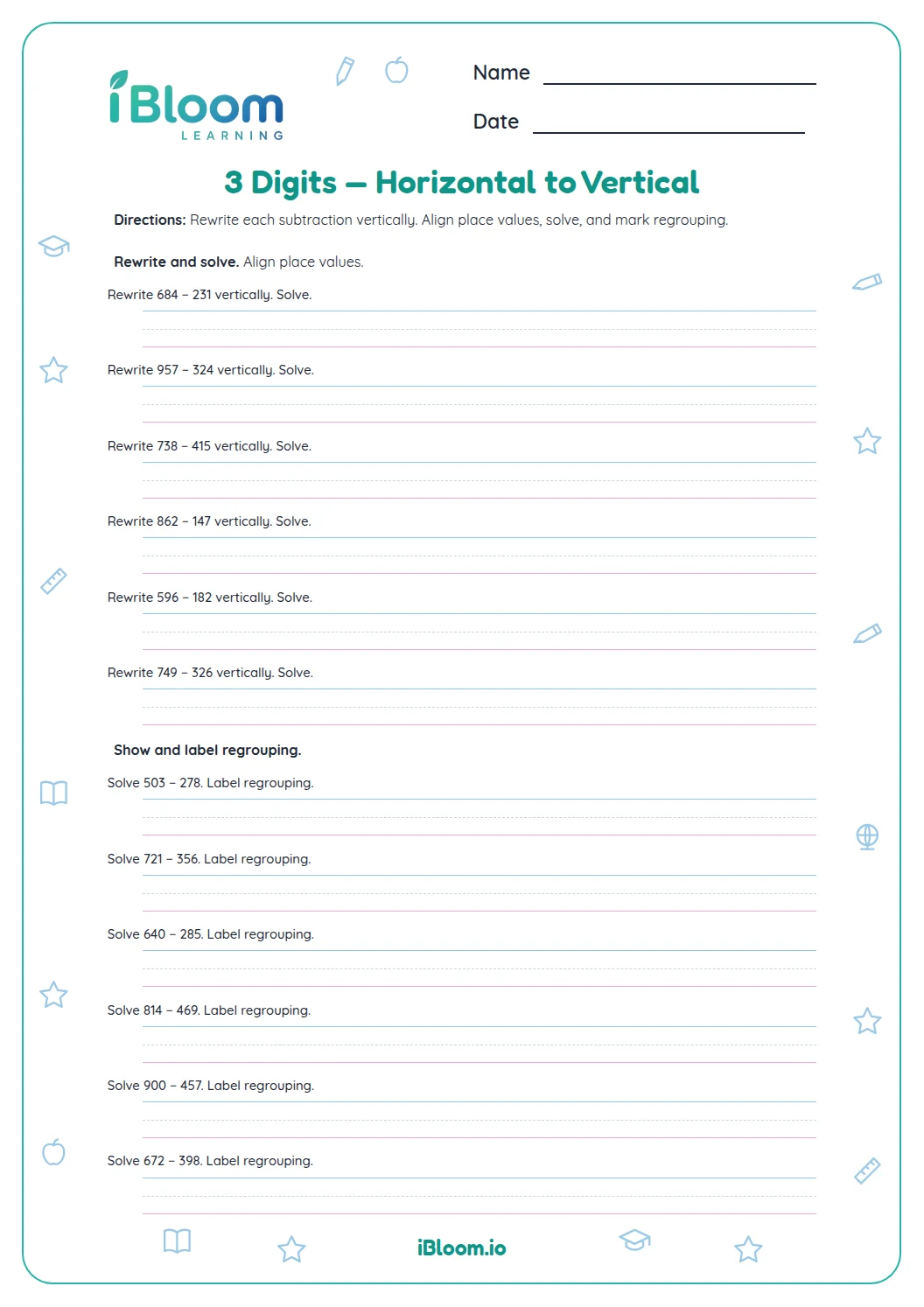
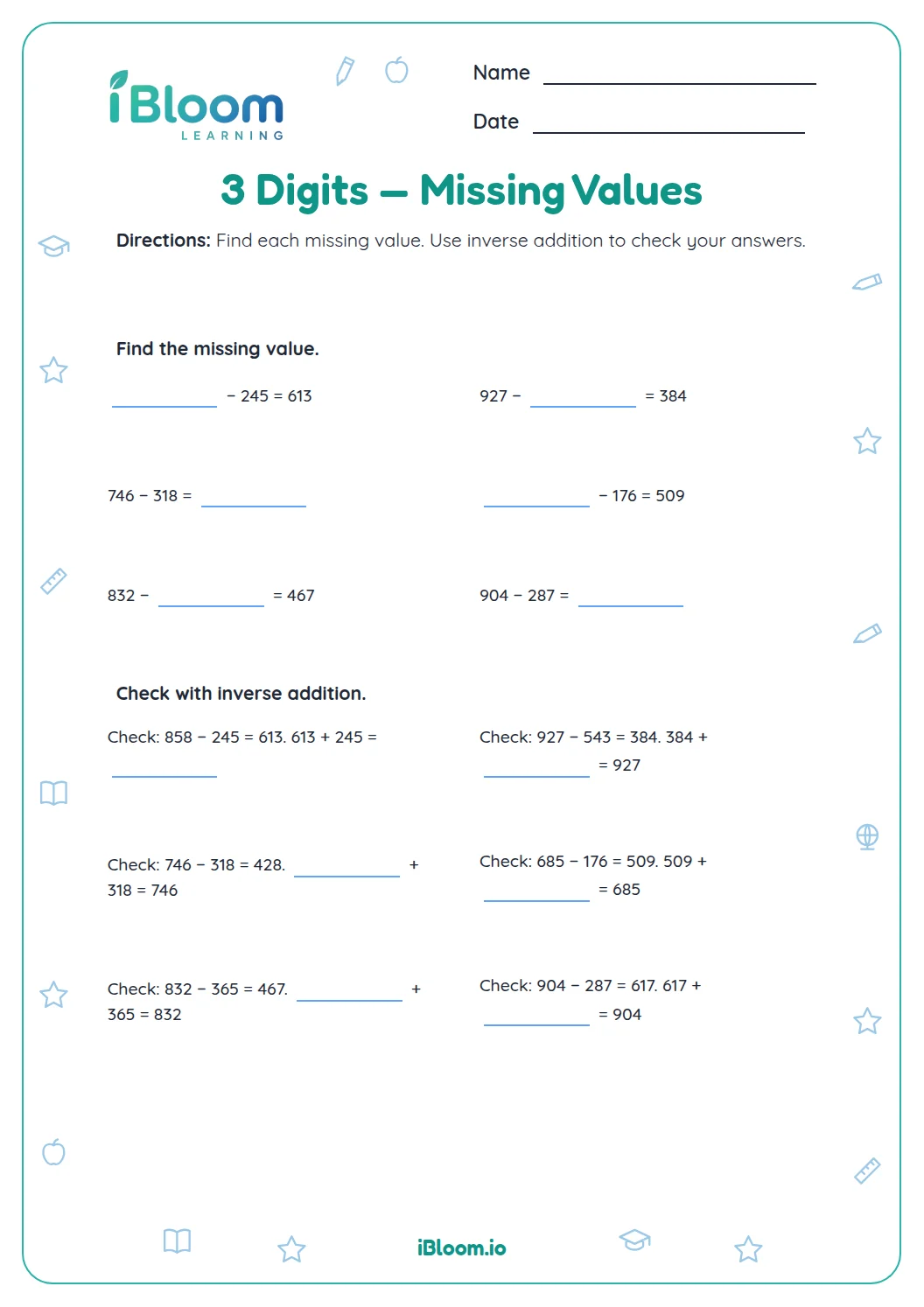
About this worksheet
This printable returns to the old sheet’s two tasks: locating a first place-value error in six worked subtractions and judging six pairs of methods. Students explain where work first goes wrong, compute the corrected difference, and check each comparison. The page practices multi-digit subtraction using the standard algorithm in CCSS 4.NBT.B.4.
Aligned to 4.NBT.B.4
What will students analyze?
Part A presents six worked subtraction problems with a claimed answer. Students locate the first place-value error and give the corrected difference. Part B compares two methods for six other subtractions.
Students verify which shown method reaches the correct result.
- Part A: diagnose and correct six subtraction errors
- Part B: verify six pairs of methods
How can you check a difference?
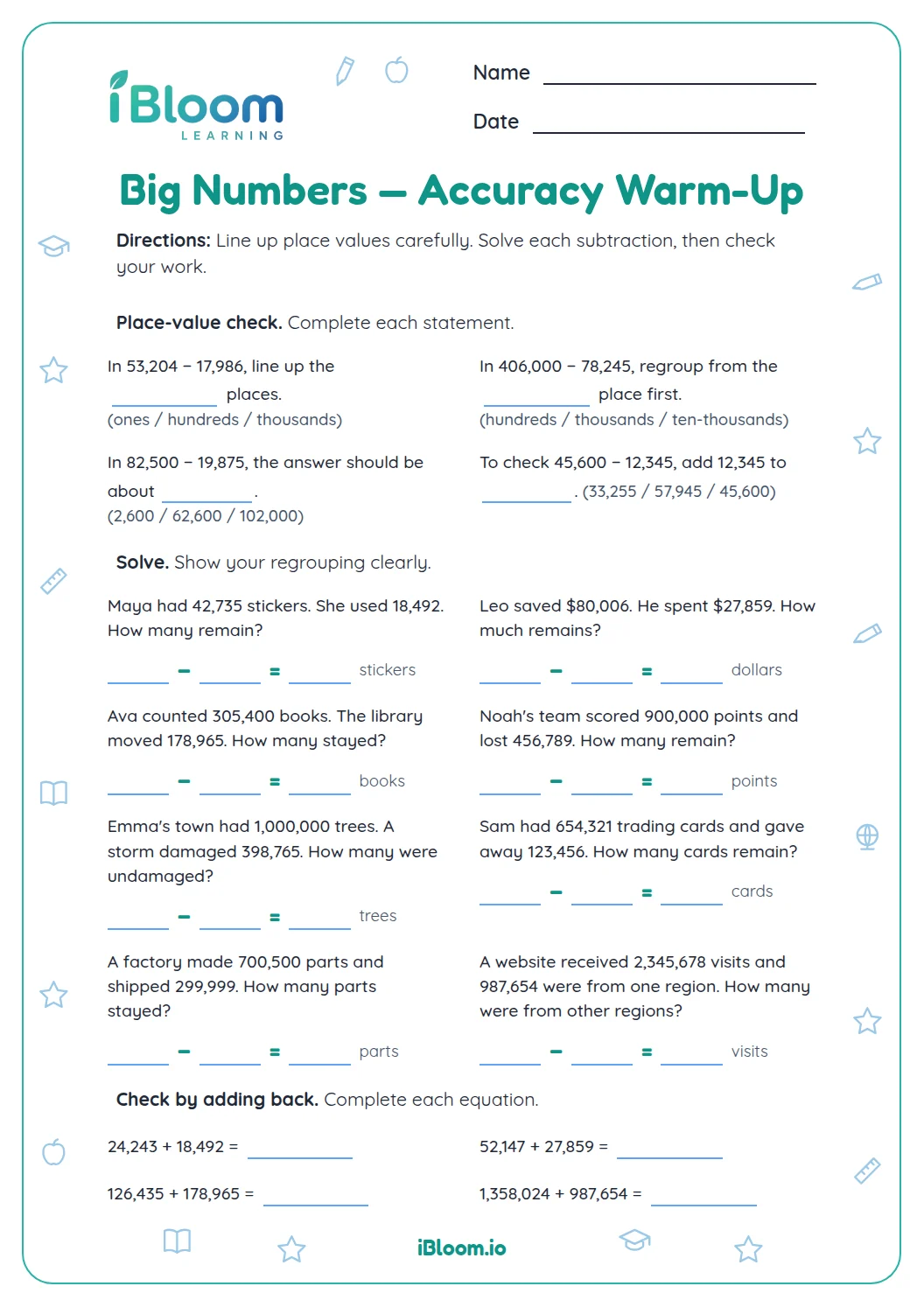
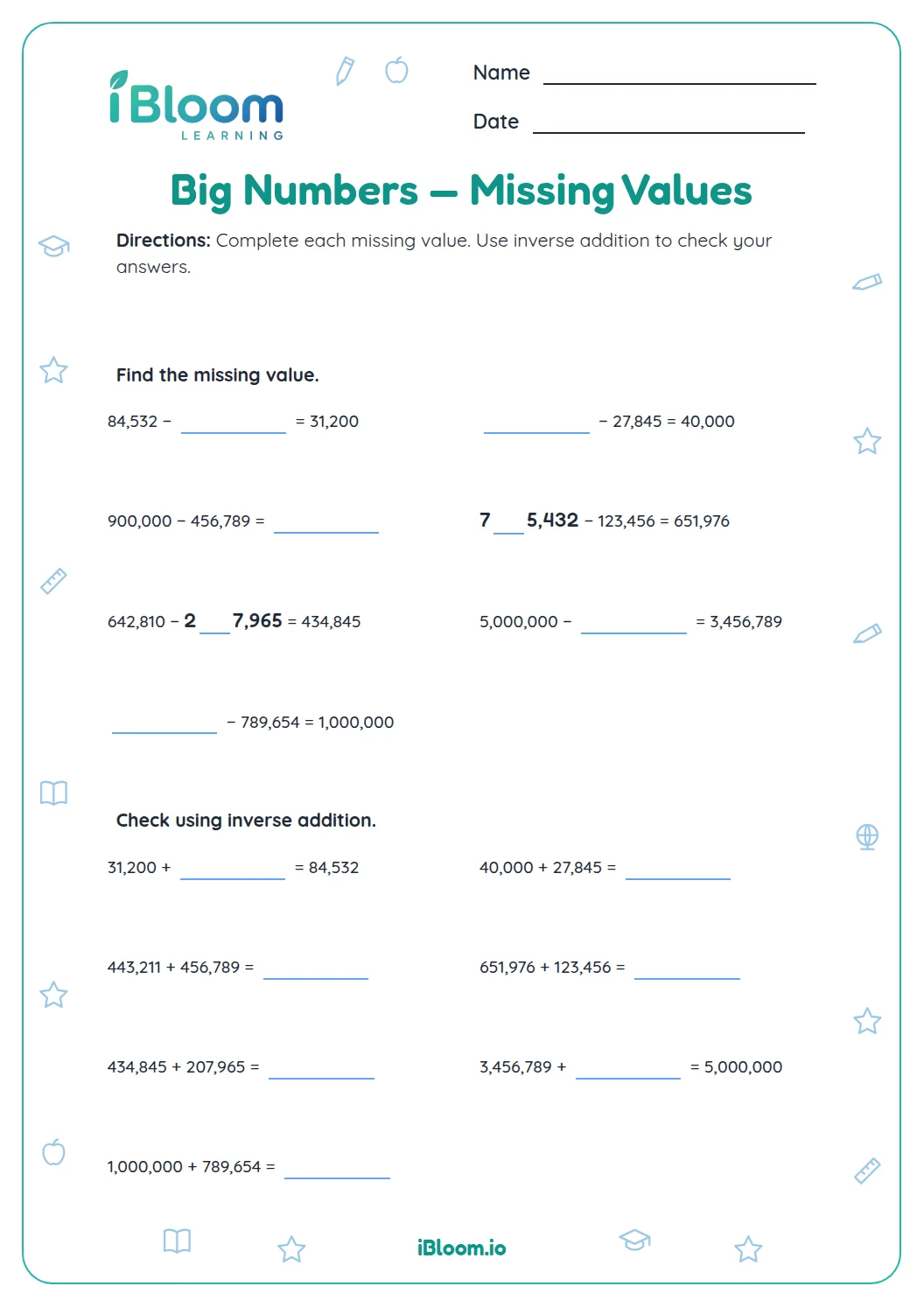
Subtract by place value, recording each regrouping. Then add the subtrahend to the difference; the sum should equal the minuend.
- 1804,203 − 176,589 = 627,614
- 2Check: 627,614 + 176,589 = 804,203
What does “first error” mean?
Trace the written subtraction from the ones place toward the left. Name the earliest column where the regrouping or subtraction is incorrect, then recompute the whole difference.
How to use the worksheet
- 1Read each worked subtraction from right to left.
- 2Track any regrouping across zero places.
- 3Name the first incorrect place and calculate the correct difference.
- 4For each of the six comparisons, check both methods against the subtraction.
- 5Check by adding the subtrahend to the difference.
Regrouping slips and fixes
The mistake
Subtracting the smaller digit from the larger digit in every column.
The fix
Regroup when the top digit is smaller, then subtract in order.
The mistake
Skipping a place when regrouping across zeros.
The fix
Update each place passed before subtracting the next column.
The mistake
Stopping after a plausible difference.
The fix
Add the subtrahend to the difference and compare the sum to the minuend.
Common Core alignment
The practice uses multi-digit whole-number subtraction and an addition check.
Subtract multi-digit whole numbers with the standard algorithm and check the result.
On this sheet: Students subtract multi-digit whole numbers and verify differences with addition.
Show the official wordingHide the official wording
Fluently add and subtract multi-digit whole numbers using the standard algorithm.
What to practice next
Make more practice
Further reading
Questions parents and teachers ask
What does Part A ask students to find?
Part A has six worked subtraction problems. Students identify the first place-value error and give the corrected difference. A useful explanation names the column where regrouping or subtraction first went wrong, such as the tens or hundreds place. This check helps identify the step to repair.
Why does the worksheet ask for the first error?
Finding the earliest incorrect step helps students see how a regrouping slip changes later columns. Trace the work from the ones place toward the left and name the first place where the written value no longer matches the subtraction. It makes the effect of regrouping easier to see.
How can students check a corrected difference?
Add the subtrahend to the corrected difference. The sum should equal the starting number, or minuend. For example, 627,614 + 176,589 = 804,203, so 627,614 is the correct difference and passes the addition check. This is a useful verification step.
What happens in Part B?
Part B shows two methods for each of six subtraction problems. Students compare the displayed results and decide which method is accurate. Some problems show two correct methods; others contain one incorrect result that a place-value check can catch. Students should look at the stated values rather than assume either method is correct.
Should students show their reasoning?
Yes. Part A provides writing space to name the first error and record the corrected difference. In Part B, students can verify each result with subtraction or by adding the subtrahend back to see whether it returns to the starting number.