




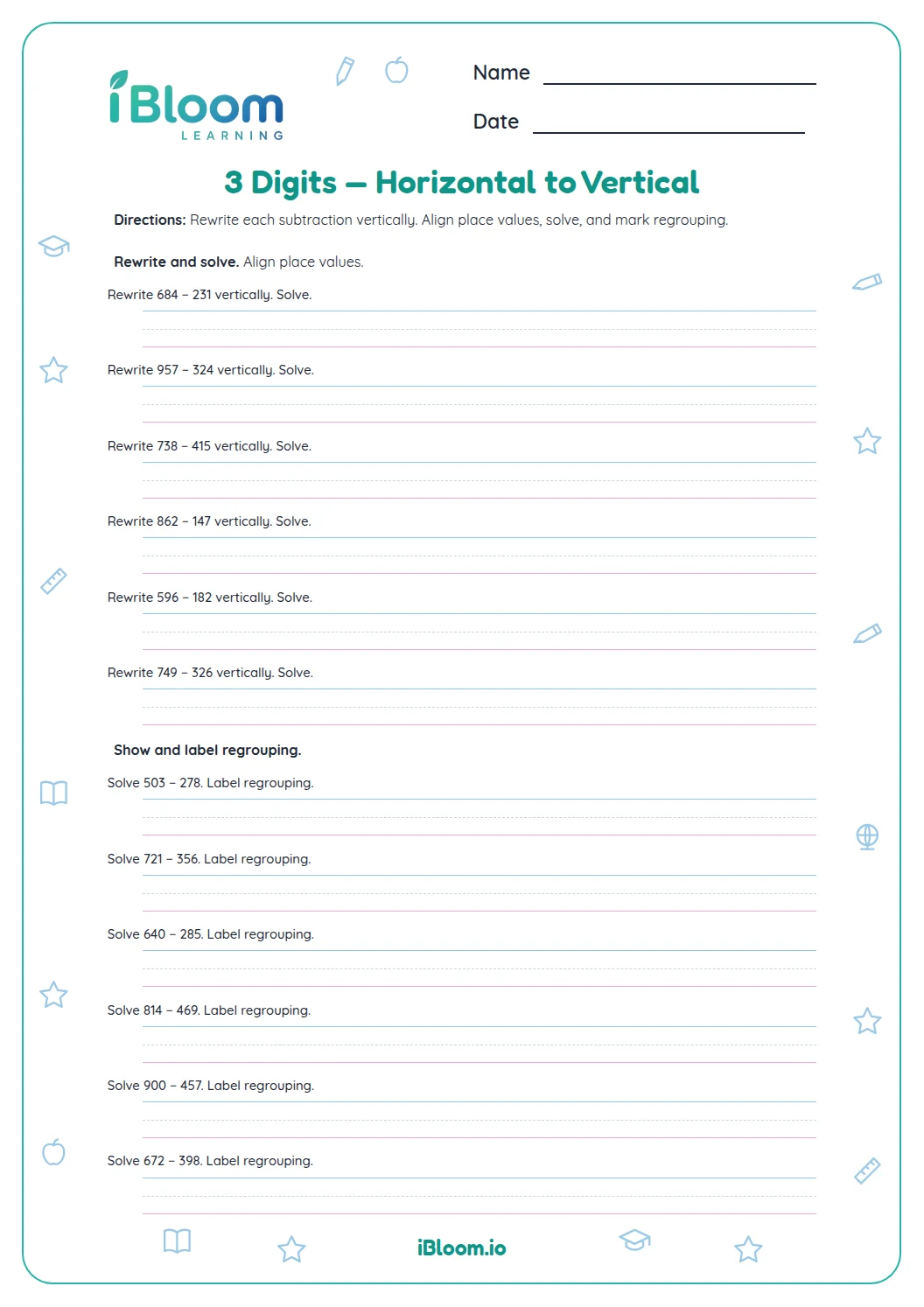
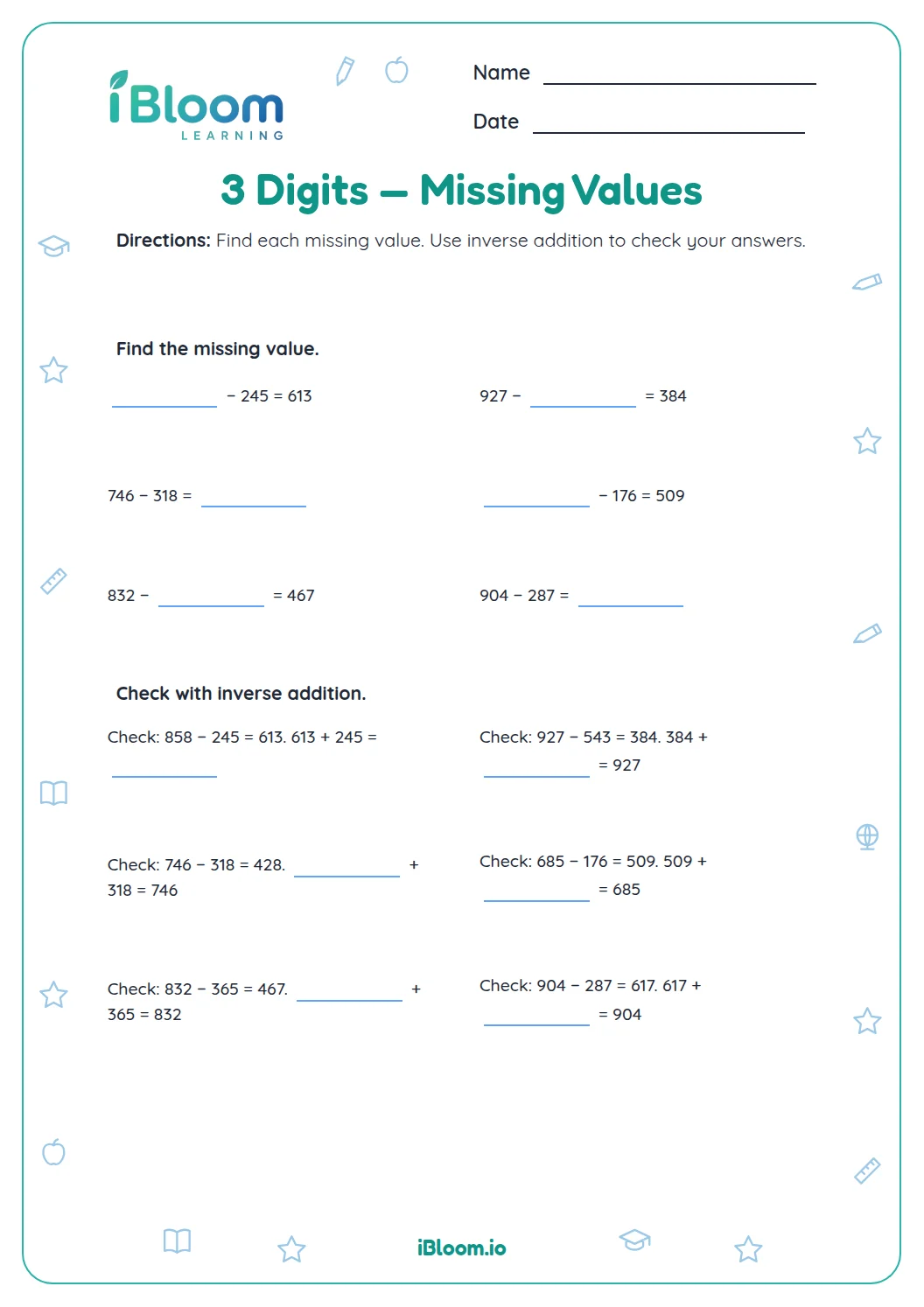
About this worksheet
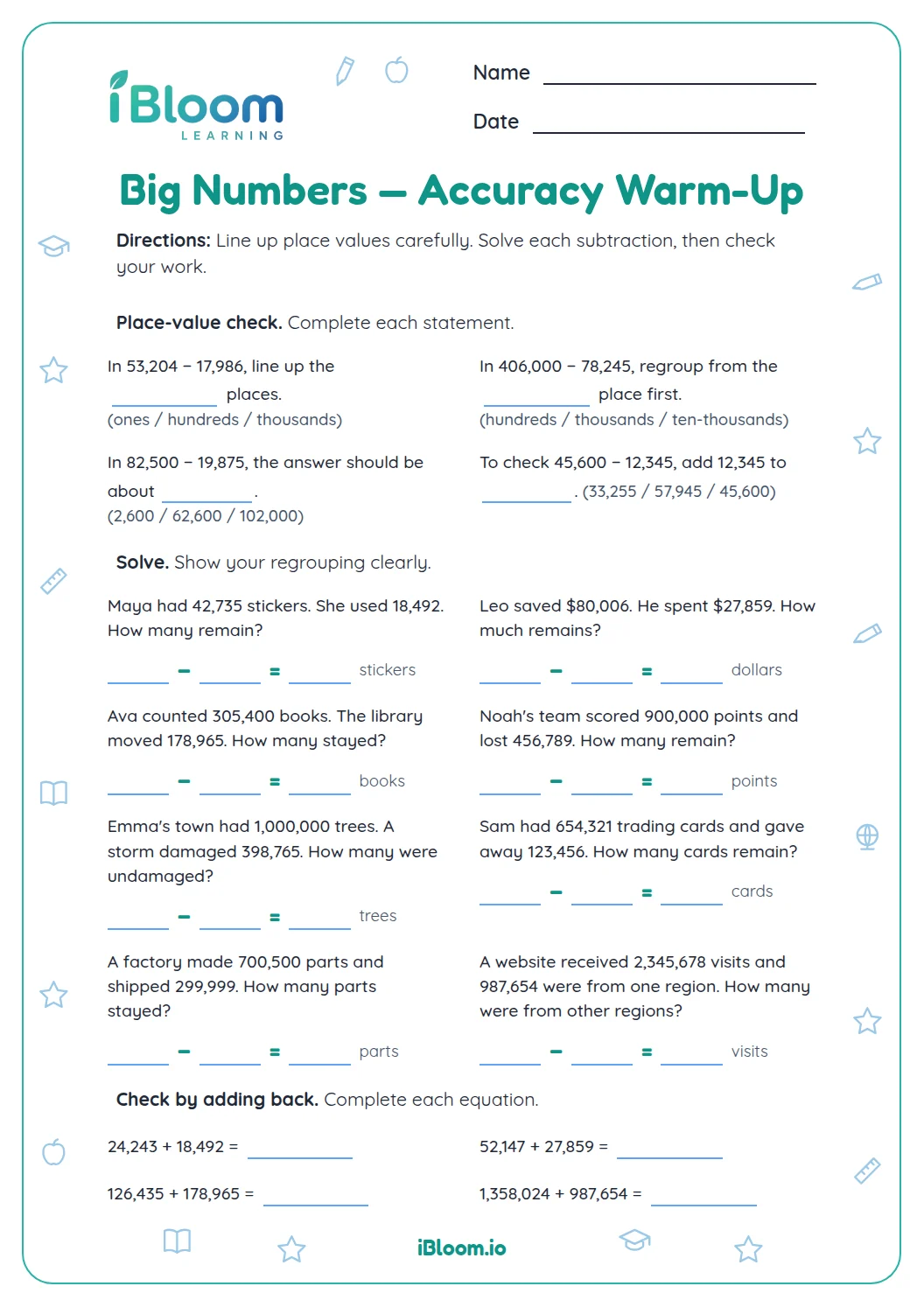
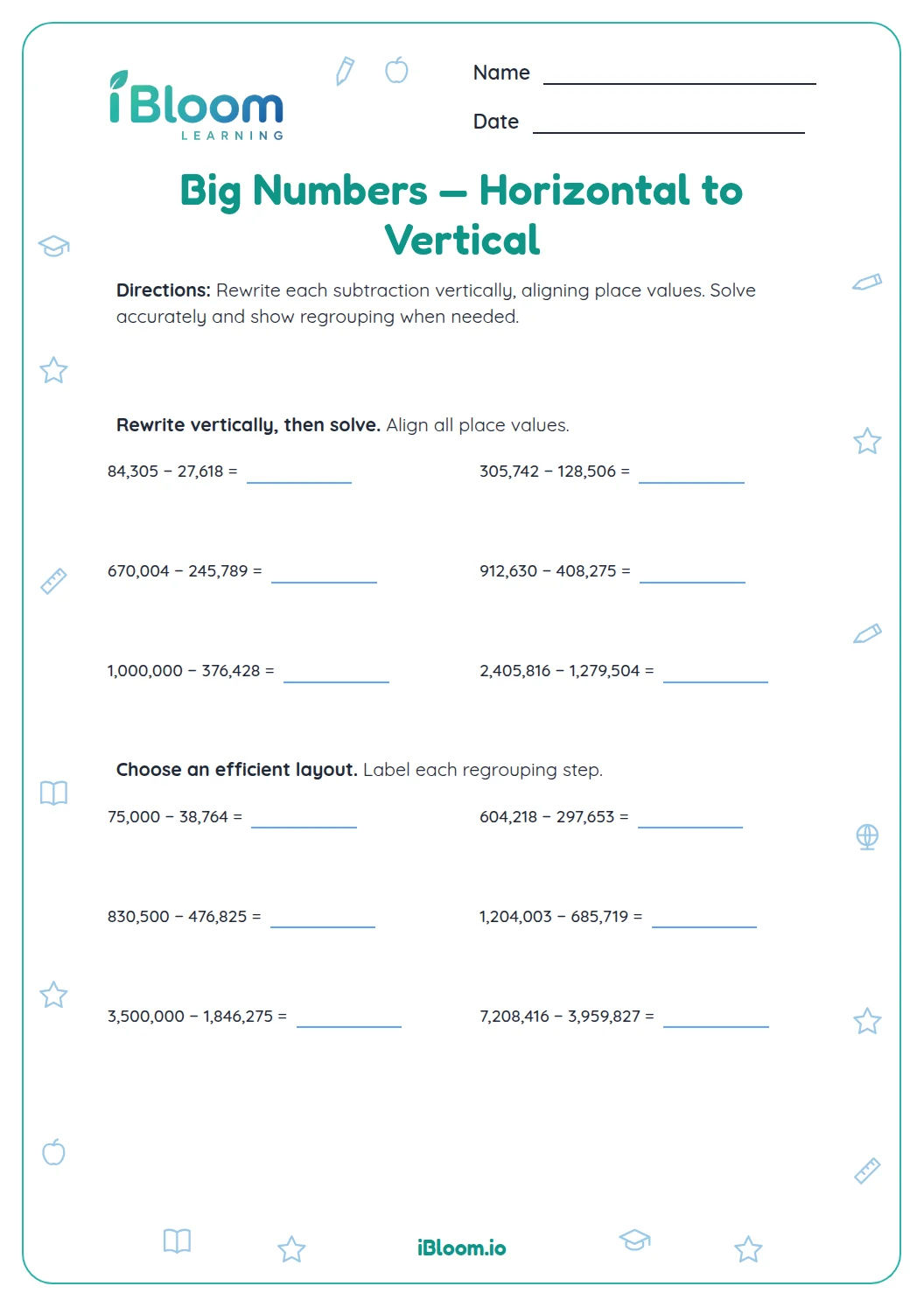
This printable Grade 5–6 drill builds accuracy with subtraction across large whole numbers. It mixes exact differences, rounded estimates, regrouping decisions, an addition check, missing values, and an application. Fourteen questions are followed by a separate answer key. The subtraction practice aligns with CCSS 4.NBT.B.4.
Aligned to 4.NBT.B.4
How do you line up large numbers?
Line up digits by place value, starting with the ones place. Regroup from the next place when a top digit is too small. For question 1, subtract 37,859 from 84,206 and check by adding the difference to 37,859.
How does estimation help check a difference?
Round both numbers to the place named in the question, then subtract the rounded values. For question 7, 700,000 stays 700,000 and 284,675 rounds to 300,000, so the estimate is 400,000. The estimate helps show whether an exact answer is reasonable.
How can you find a missing number?
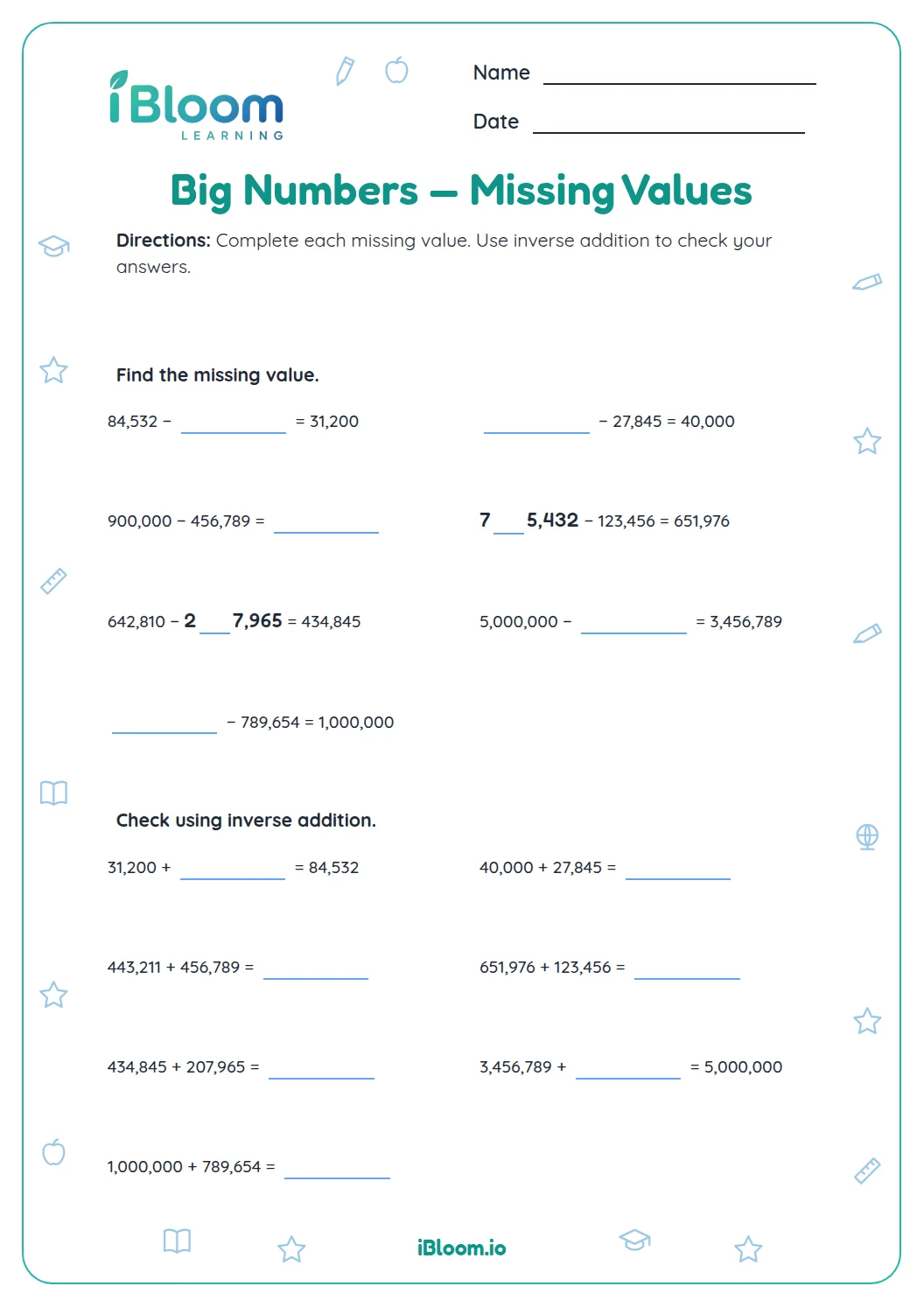
Use the relationship between subtraction and addition. In question 12, add 245,678 and 318,945 to find the missing starting number: 564,623. The final item uses the same subtraction idea in a warehouse story.
How to use this worksheet
- 1Align the place values before subtracting.
- 2Start at the ones place and regroup when a digit is too small.
- 3For an estimate, round both numbers to the place named.
- 4Use addition to check a difference.
- 5For a missing starting number, add the subtrahend and difference.
Common mistakes and quick fixes
The mistake
Misaligning digits by their right edge.
The fix
Line up place-value columns before subtracting.
The mistake
Treating a zero as if it can lend one.
The fix
Regroup from the nearest nonzero place, passing through zeros.
The mistake
Forgetting to reduce a place after regrouping.
The fix
Mark the changed digit above the column before continuing.
Common Core alignment
This worksheet practices the skills listed below.
Fluently add and subtract multi-digit whole numbers using the standard algorithm.
On this sheet: Fluently add and subtract multi-digit whole numbers using the standard algorithm.
Show the official wordingHide the official wording
Fluently add and subtract multi-digit whole numbers using the standard algorithm.
What to practice next
Make more practice
Further reading
Questions parents and teachers ask
What kinds of practice are on this drill?
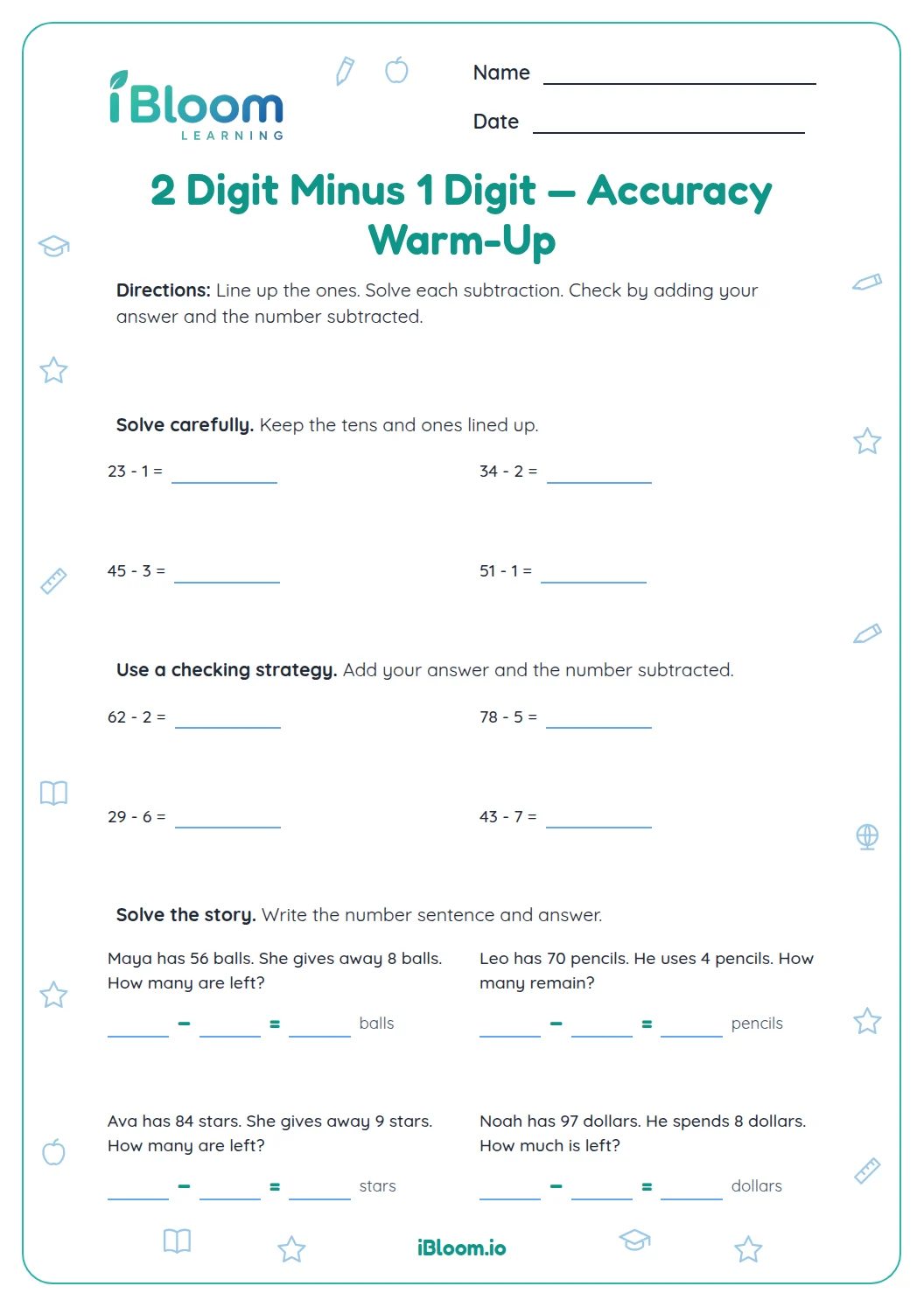
The 14 questions include exact subtraction, rounded estimates, regrouping decisions, an addition check, missing values, and an application. The worksheet spans two pages, followed by a separate answer key for checking each response and reviewing the work. Students can show each estimate beside the exact work.
How should a student check a subtraction answer?
Add the difference to the number that was subtracted. For question 1, the difference is 46,347; adding it to 37,859 returns the starting number, 84,206. This check can catch a regrouping or place-value error in a long problem before moving on.
How do the estimate questions work?
Each estimate names a rounding place. Round both numbers to that place, then subtract the rounded values. Question 7 rounds 700,000 and 284,675 to 700,000 and 300,000, giving an estimate of 400,000. Compare this with the exact difference using the named place.
How can I solve a missing starting number?
When the starting number is blank, add the amount subtracted to the difference. In question 12, 245,678 + 318,945 = 564,623, so 564,623 fills the blank. Check by subtracting 245,678 from that sum to confirm the relationship in the original equation.
What should I look for when regrouping across zero?
Track each place as you regroup from a place to its left. Question 9 asks how many listed subtractions cross a zero; in 50,204 − 17,936, regrouping passes through the hundreds place before the ones can be subtracted. Only one choice does this.