




About this worksheet
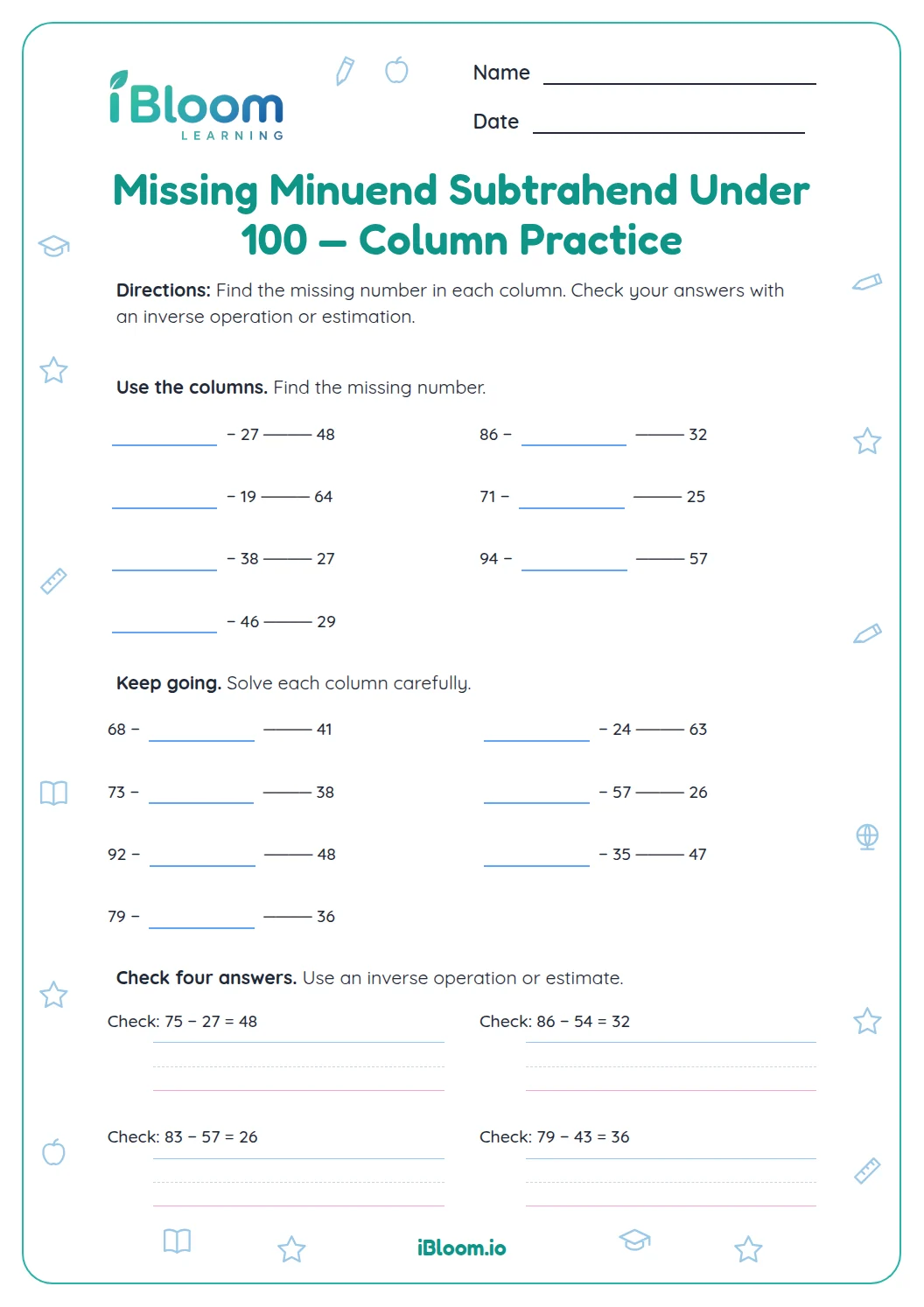
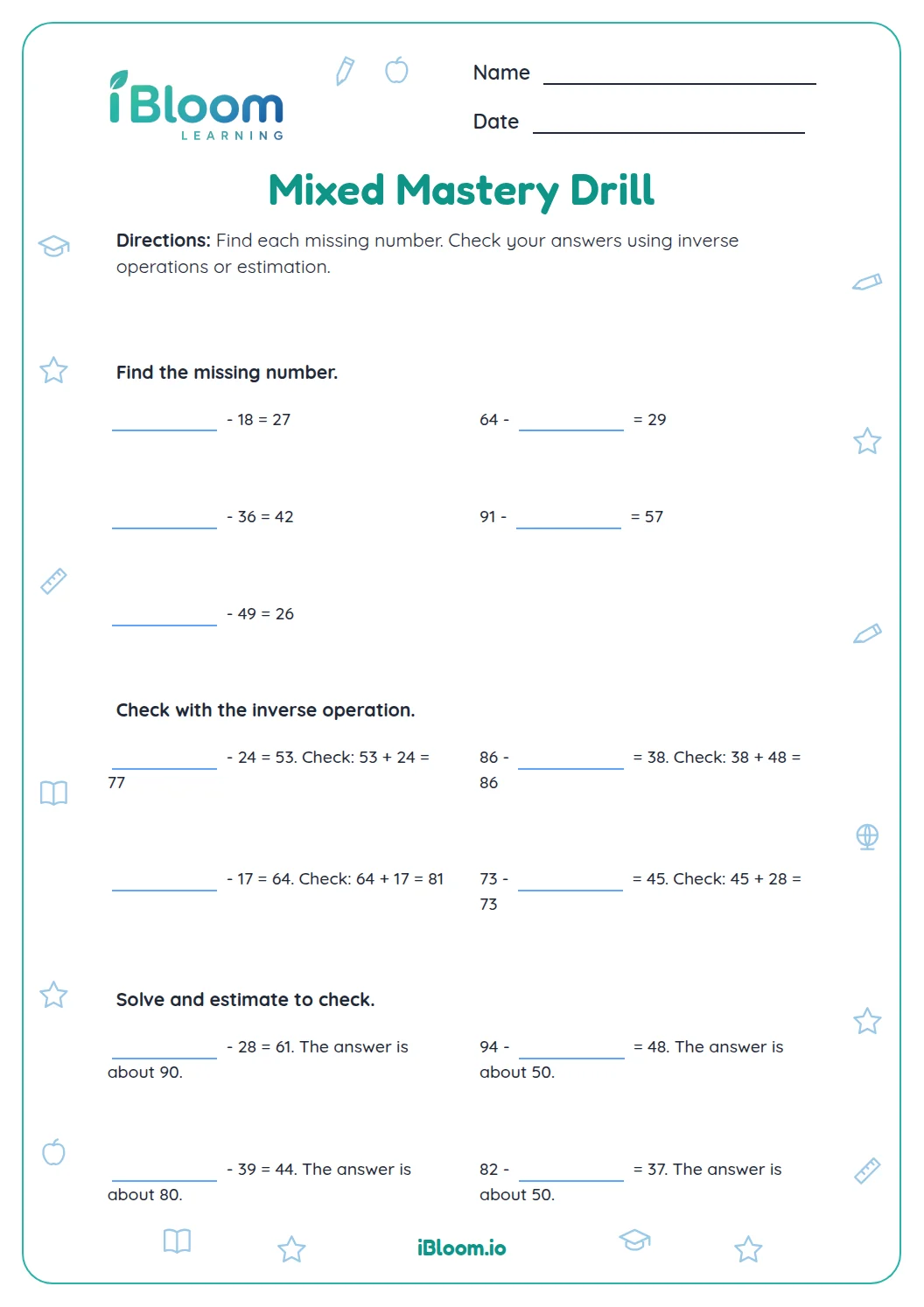
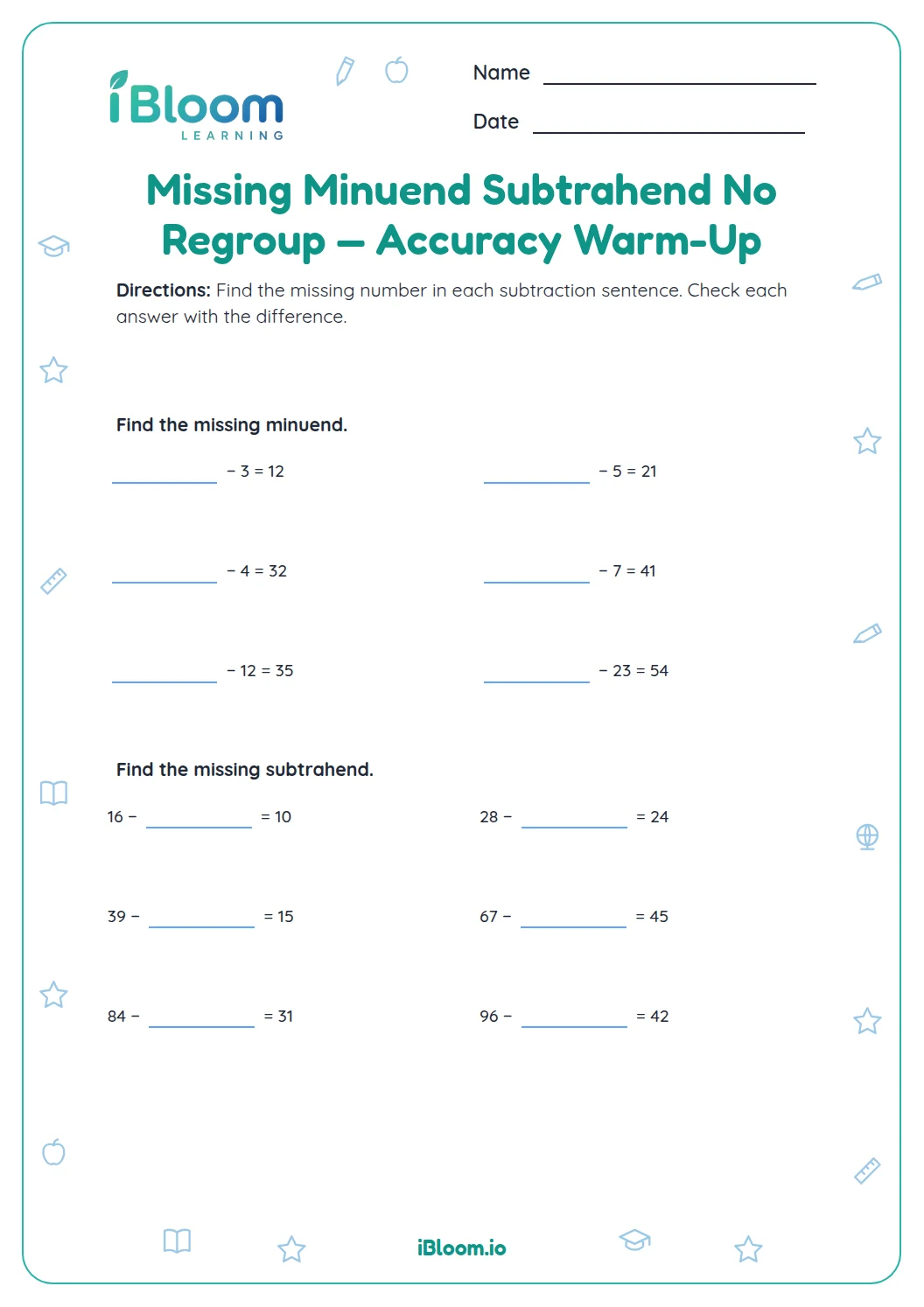
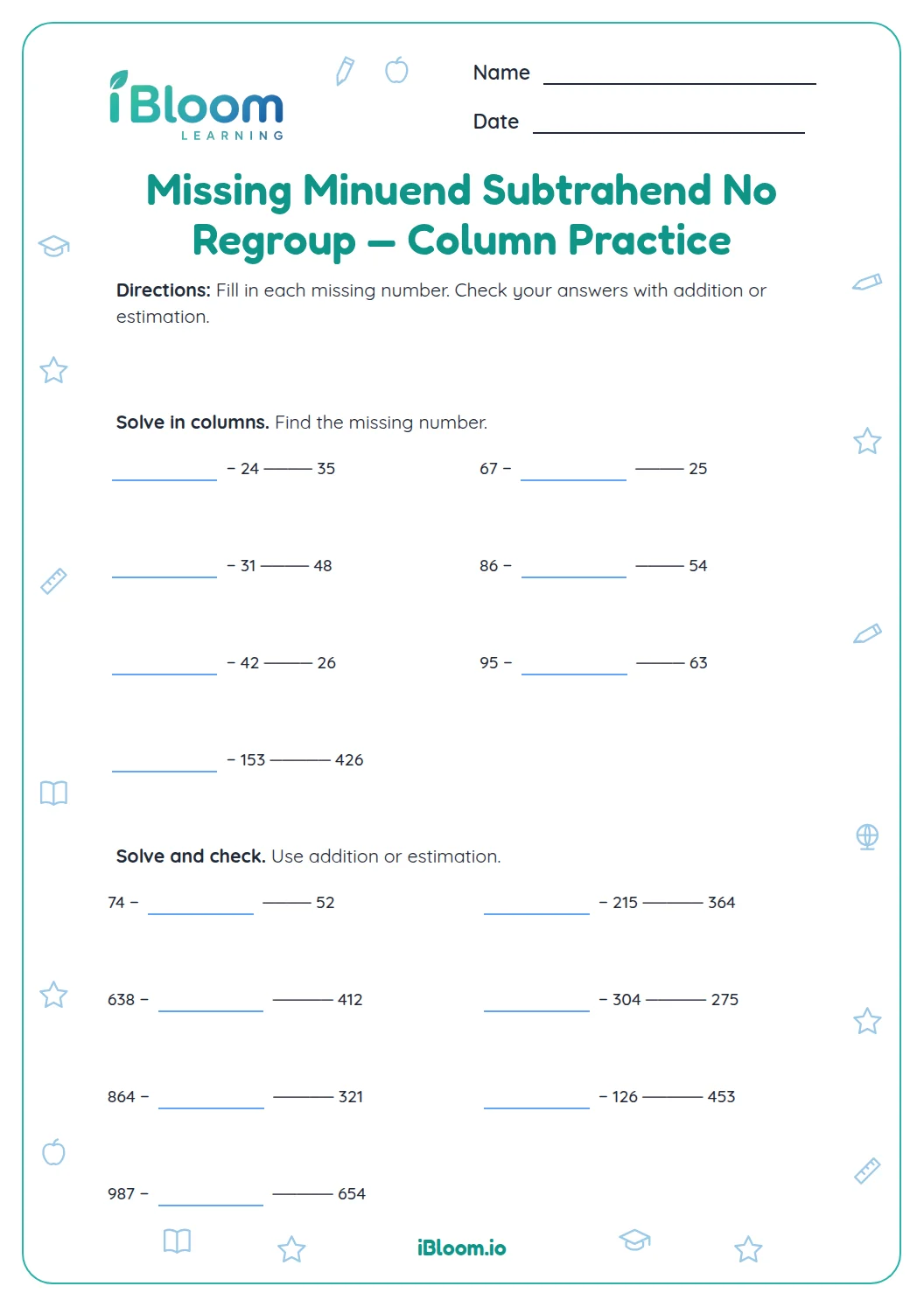
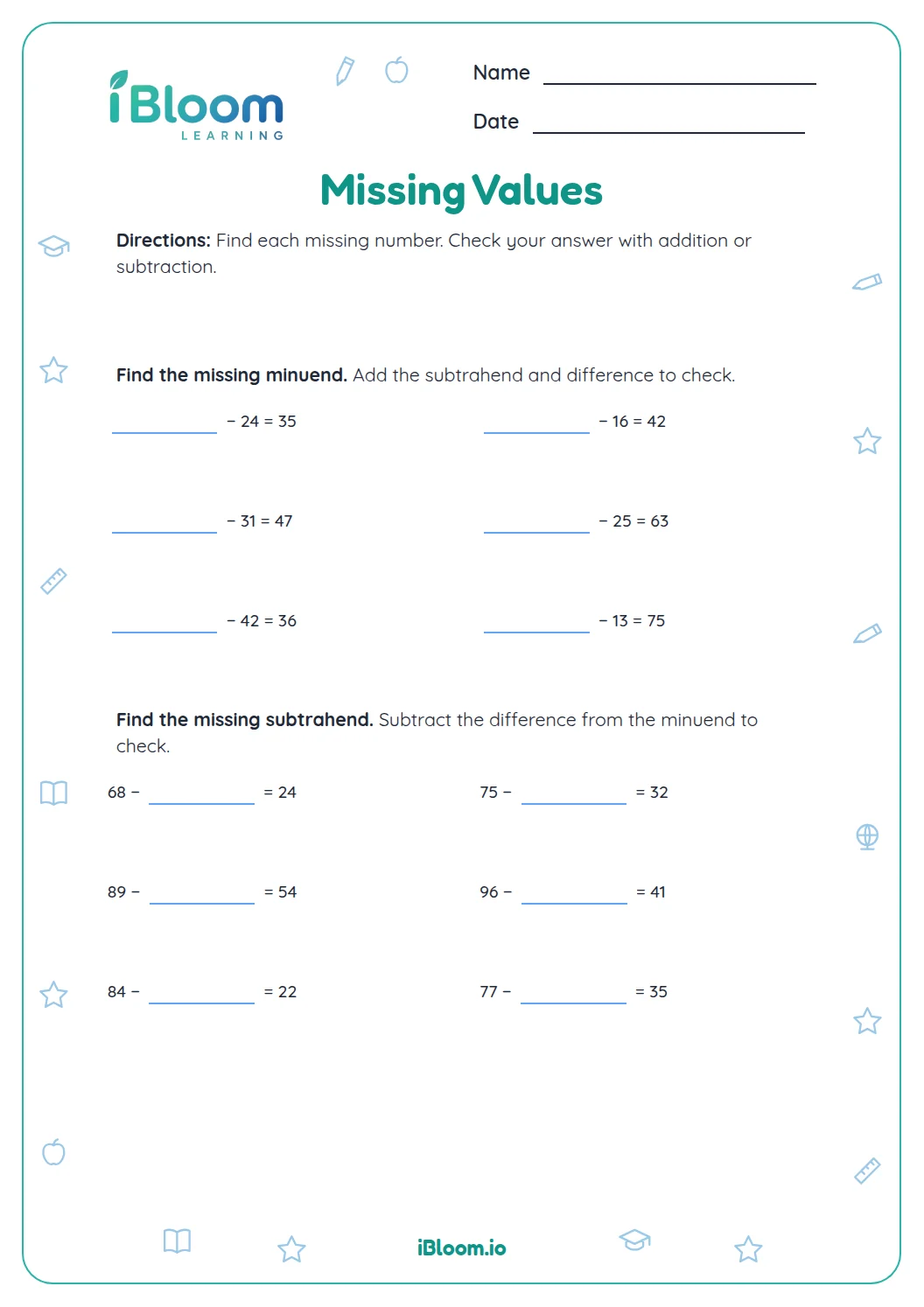
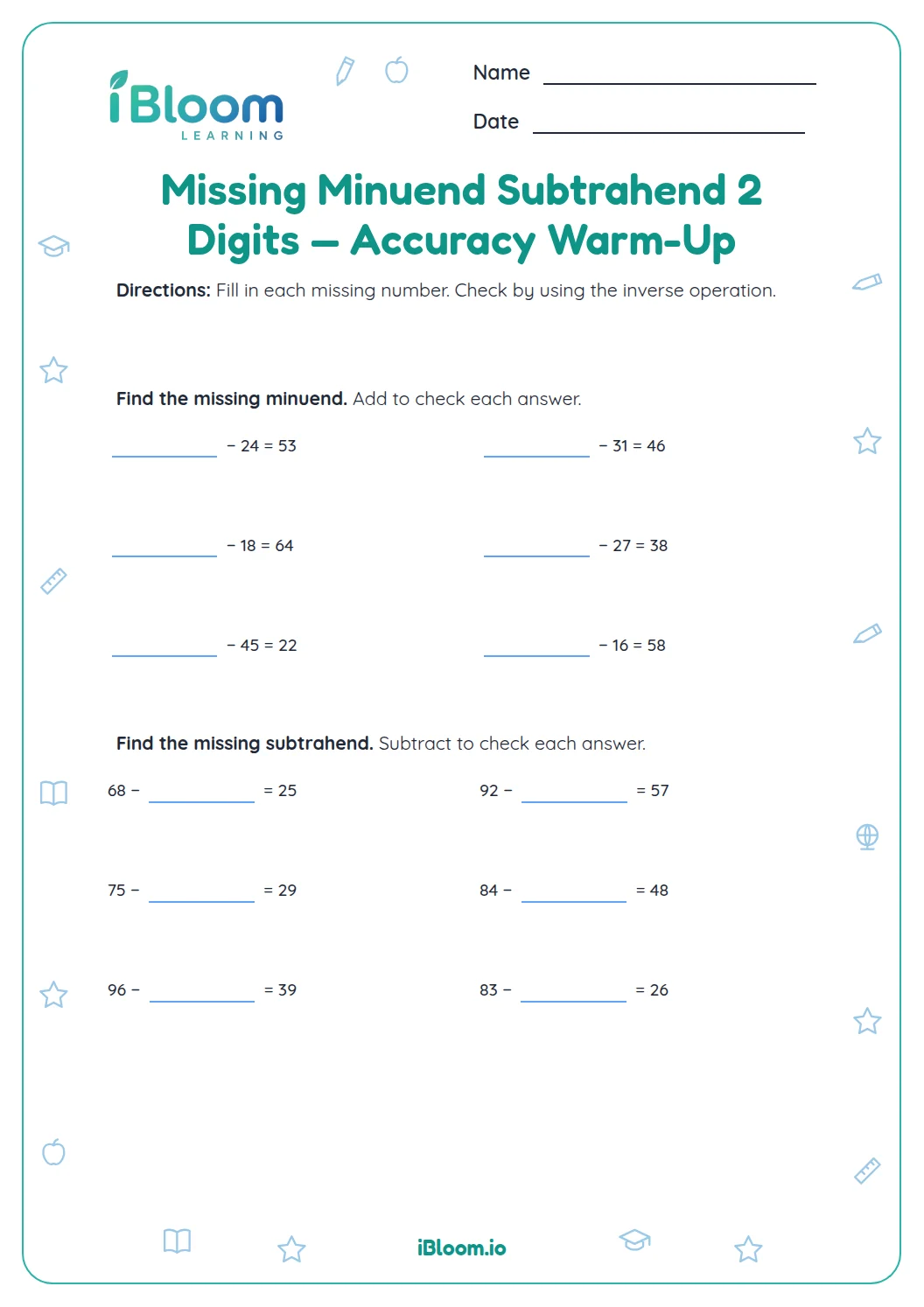
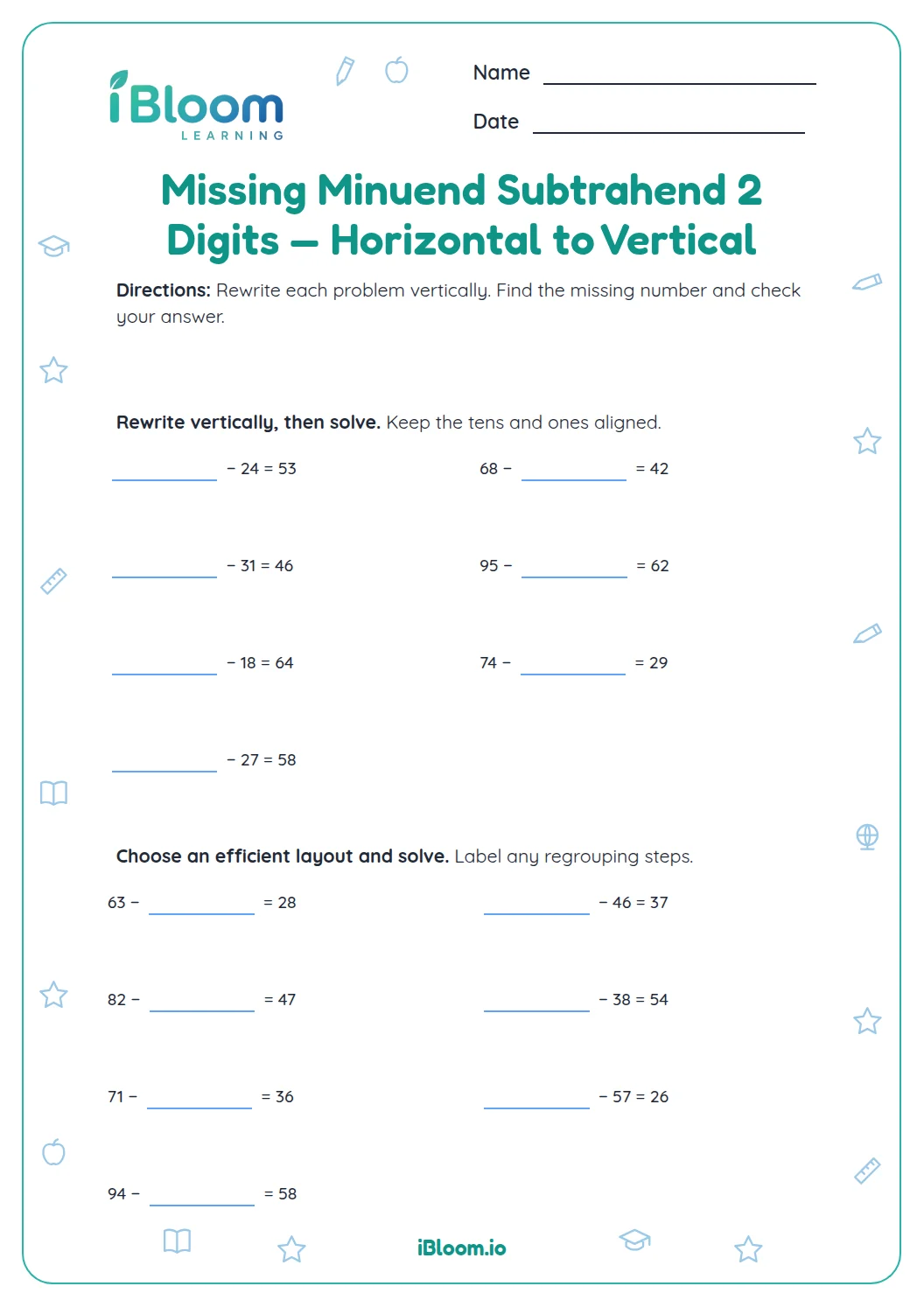
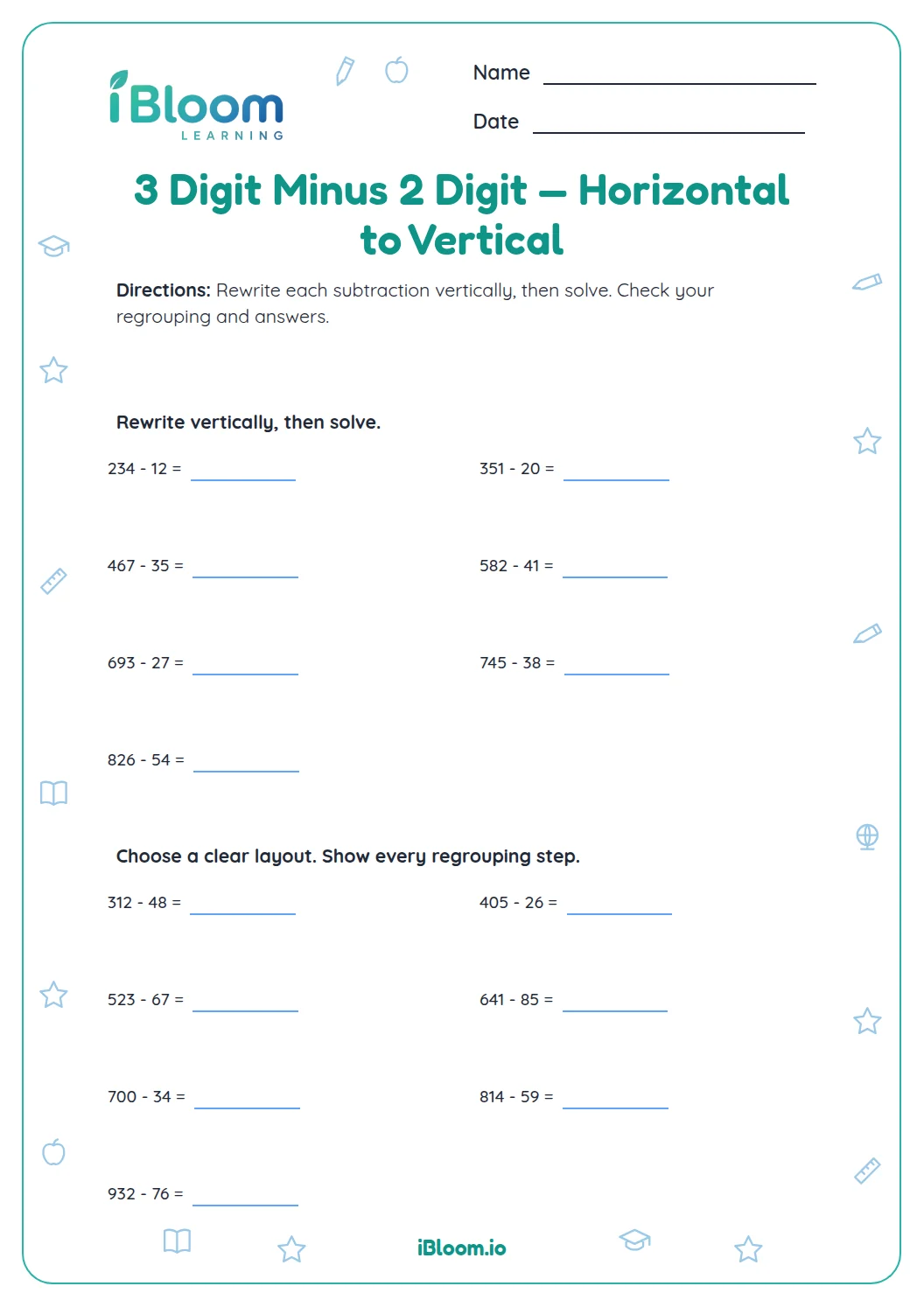
This printable gives students 20 equations with a missing minuend, subtrahend, or difference. The set moves from familiar facts to regrouping across tens, then mixes the blank positions so students must identify the unknown before calculating. It supports subtraction strategies and checking with addition under CCSS 3.NBT.A.2. The answer key lists each value.
Aligned to 3.NBT.A.2
What does the worksheet practice?
All 20 equations ask for one missing number. Some blanks are before the minus sign, some after it, and some after the equals sign. Later items include regrouping across a ten.
How can addition check a subtraction answer?
For q1, ___ − 8 = 17. Think 17 + 8 = 25, so the missing minuend is 25. Check: 25 − 8 = 17. For q2, 42 − ___ = 19, so the missing subtrahend is 42 − 19 = 23.
What is a good solving routine?
First identify the blank’s role. If it is the starting number, add the subtrahend and difference. If it is the number being subtracted, subtract the difference from the minuend. If the difference is blank, subtract as usual.
How to use this worksheet
- 1Read the equation and point to the blank.
- 2Name the unknown: starting number, amount subtracted, or difference.
- 3Use subtraction or its addition fact to solve.
- 4Put the answer back in the original equation.
- 5Use the key to review any equation that does not balance.
Mistakes to watch for
The mistake
Treat every blank as the answer to a regular subtraction problem.
The fix
Check whether the blank is the starting number, subtracted number, or result before choosing an operation.
The mistake
Subtract the smaller digit from the larger digit in each column.
The fix
Regroup a ten when the top ones digit is too small.
The mistake
Skip the check after solving.
The fix
Add the difference and subtrahend to see whether they make the minuend.
Curriculum alignment
Subtract within 1,000 using place value and addition relationships.
On this sheet: The equations practice subtraction within 100 and use addition to check missing minuends and subtrahends.
Show the official wordingHide the official wording
Fluently add and subtract within 1000 using strategies and algorithms based on place value, properties of operations, and/or the relationship between addition and subtraction.
What to practice next
Make more practice
Further reading
Questions parents and teachers ask
What is a minuend?
The minuend is the number you start with in a subtraction equation. In 25 − 8 = 17, 25 is the minuend. If it is missing, add the subtrahend and difference: 8 + 17 = 25. This sheet includes missing minuends alongside missing subtrahends and differences.
How do I find a missing subtrahend?
Subtract the known difference from the minuend. In 42 − ___ = 19, the missing amount is 42 − 19 = 23. Check by subtracting 23 from 42; the result should be 19. The sheet includes several equations with the subtrahend as the unknown.
What grades can use this page?
The page is labeled Grades 2–4 and practices subtraction with numbers under 100. It begins with direct missing-value equations, then includes regrouping and a mixed set. An adult can select a few questions at a time or have a student complete all 20.
How many problems are included?
There are 20 equations. The first set finds missing numbers, the next group works across a ten, and later questions mix the blank position. The last four use working space. A separate two-page key lists each value. Students may write each result beside the equation.
Is an answer key included?
Yes. The separate answer key gives the missing number for each of the 20 equations. Students can check by substituting the value into the original equation. For example, 25 − 8 equals 17, so q1 balances. The check works for every blank position.