





About this worksheet
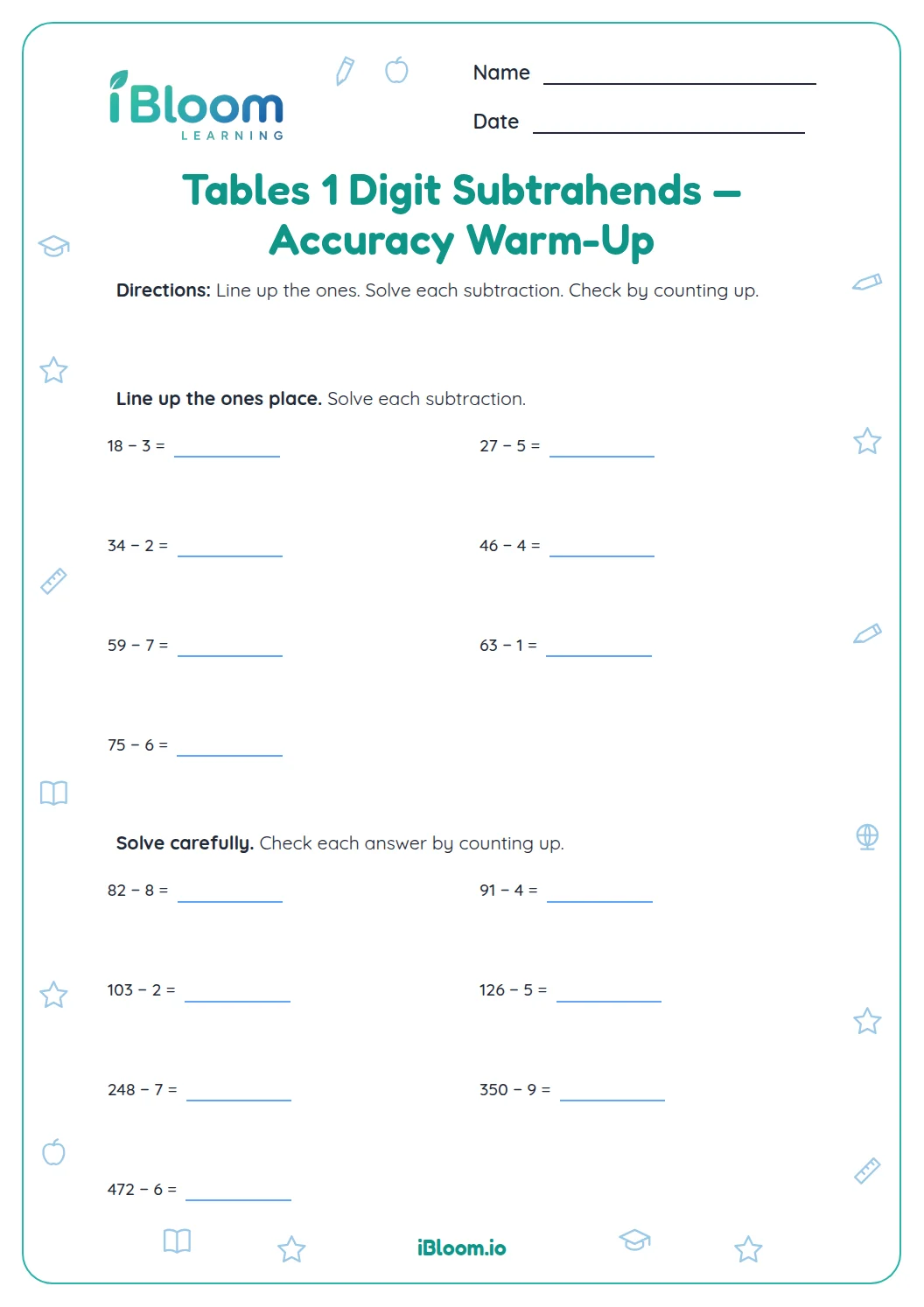
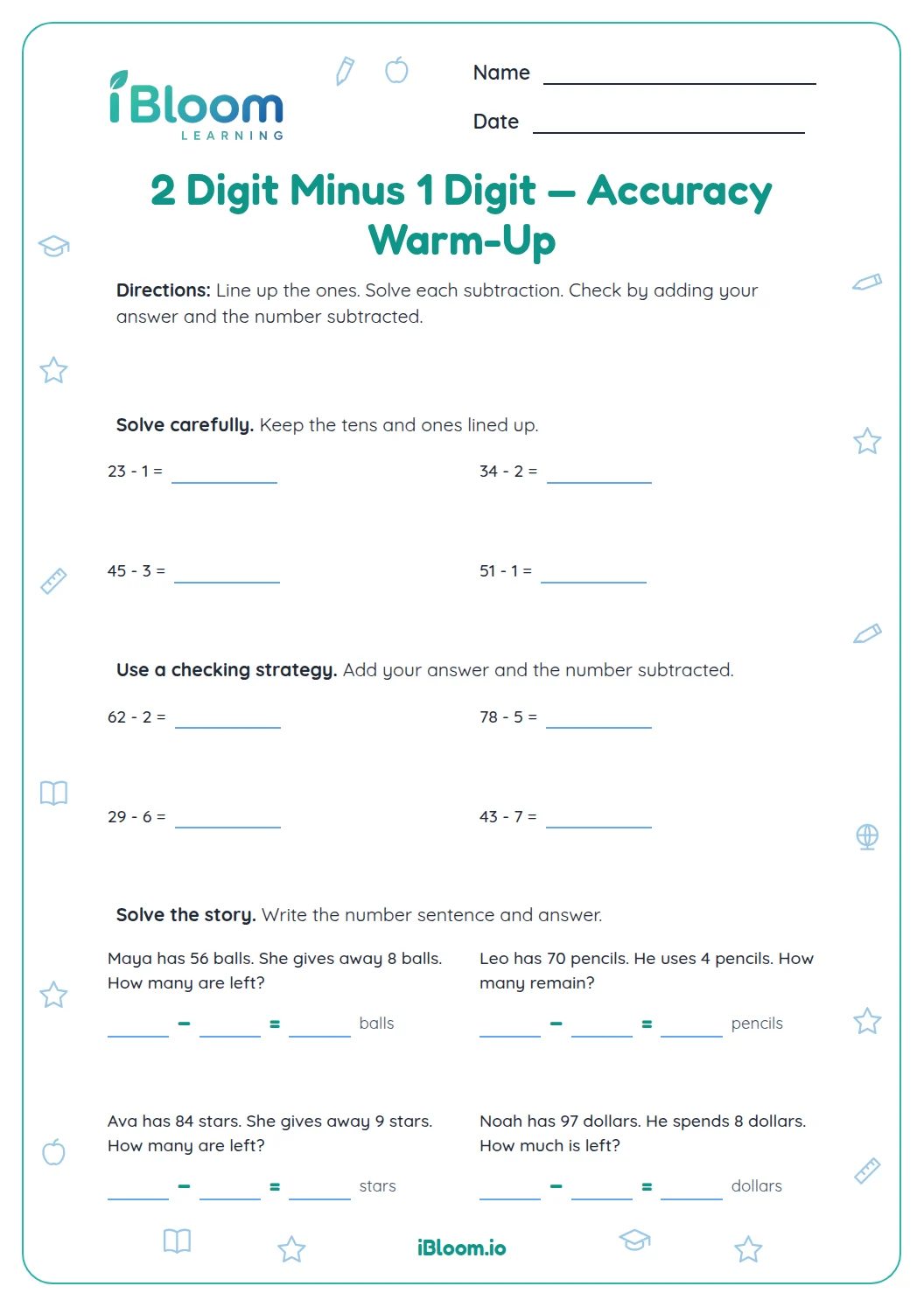
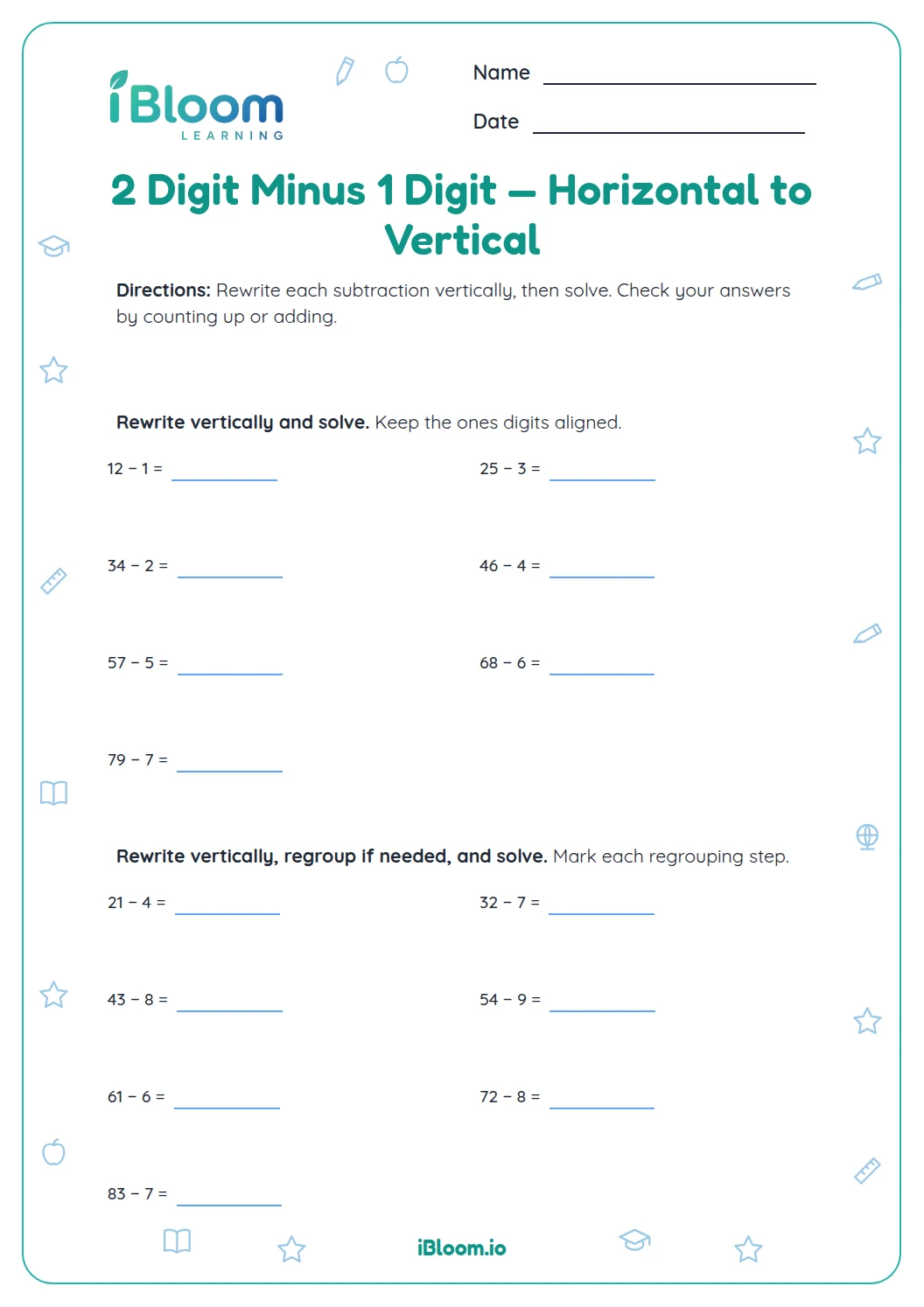
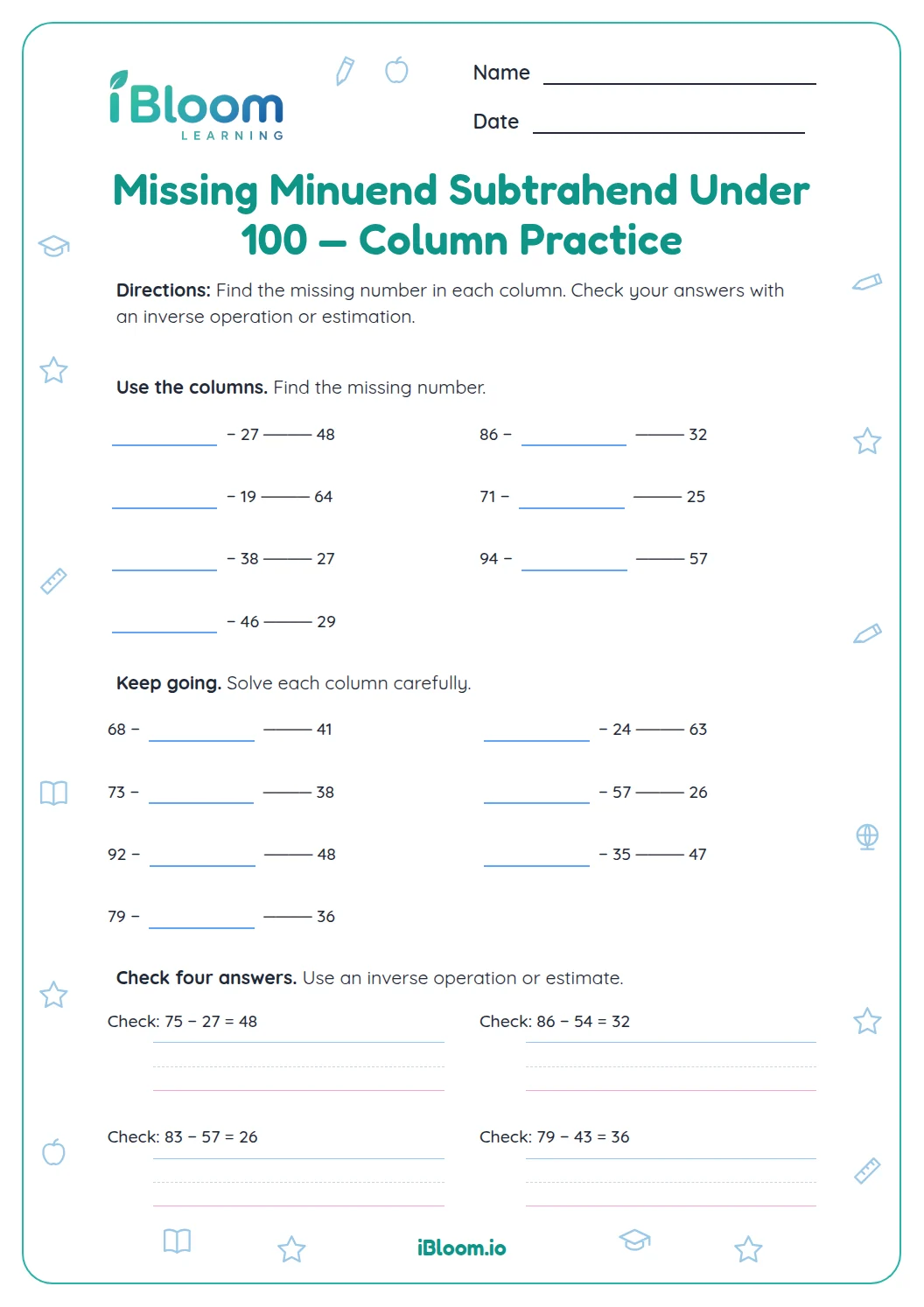
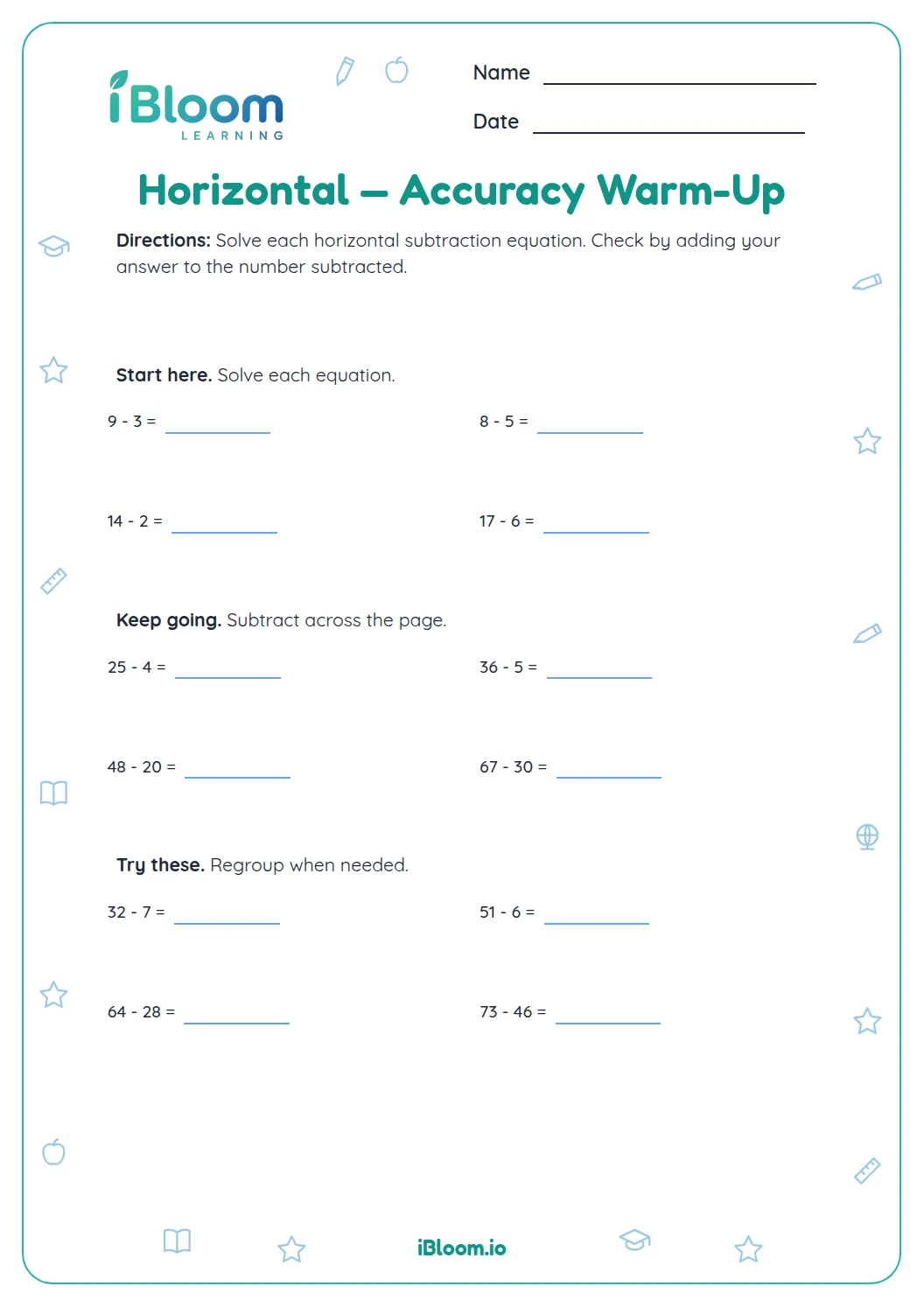
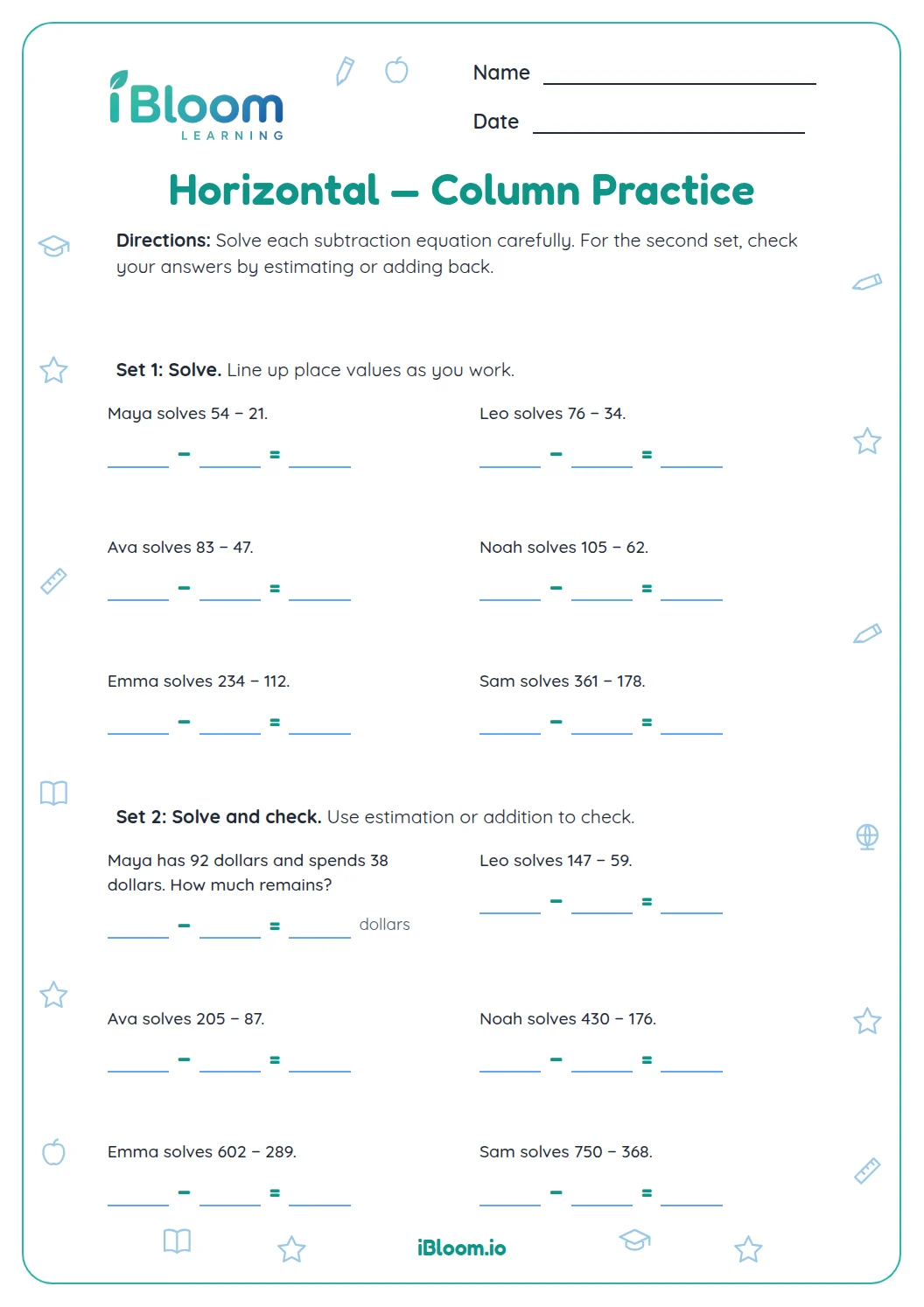
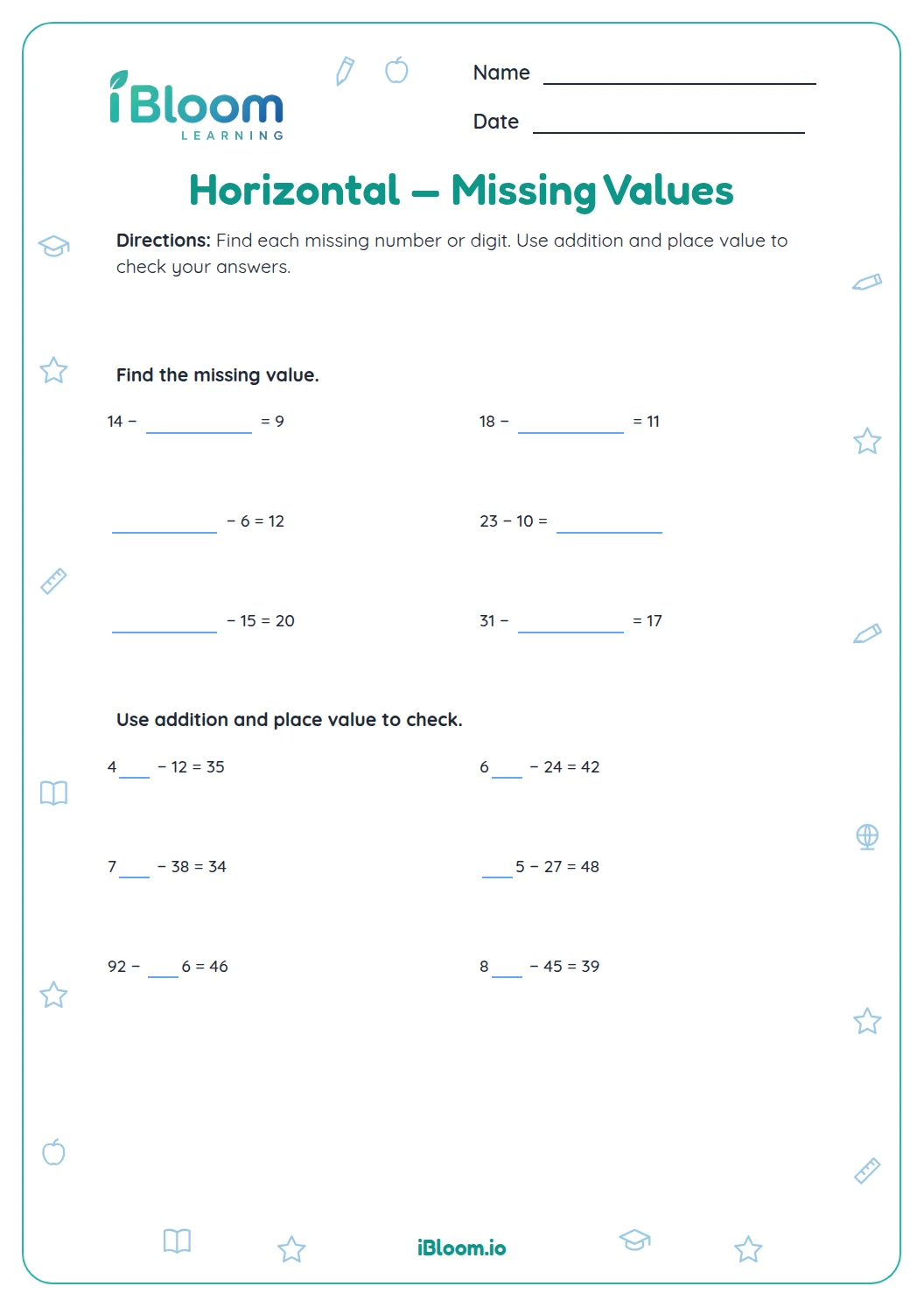
Use the relationship between subtraction and addition. In 14 − 6 = ___, subtract 6 from 14 to get 8; check with 8 + 6 = 14. When the first number is missing, add the subtrahend and difference. The worksheet is for Grades 2–4 students and has 16 questions: 6 differences, 6 missing minuends or subtrahends, and 4 mixed checks. It prints on two worksheet pages and includes a separate two-page answer key. It practices CCSS 2.NBT.B.5 through these equations and checks.
Aligned to 2.NBT.B.5
How do you find a missing number in a subtraction sentence?
Use the relationship between subtraction and addition. In 14 − 6 = ___, subtract 6 from 14 to get 8; check with 8 + 6 = 14. When the first number is missing, add the subtrahend and difference.
The worksheet has three parts. Part A: Find each difference: 6 questions, Part B: Find the missing number: 6 questions, and Part C: Solve and check: 4 questions. The examples progress from direct calculations to using the same idea in a less familiar equation.
- 114 − 6 = ___
- 214 − 6 = 8
- 3Check: 8 + 6 = 14
What practice is on each part?
16 questions: 6 differences, 6 missing minuends or subtrahends, and 4 mixed checks. Students can finish one part at a time and use the separate key to check their work.
- Part A: Find each difference: 6 questions
- Part B: Find the missing number: 6 questions
- Part C: Solve and check: 4 questions
How can an adult make the practice useful?
Ask the student to explain one step or check aloud. When an answer is off, return to the equation and locate the first step where the relationship changed. This keeps the correction tied to the skill on the page.
How to work through this worksheet
- 1Read the subtraction sentence and locate the blank.
- 2If the difference is missing, subtract the subtrahend from the minuend.
- 3If the minuend is missing, add the subtrahend and difference.
- 4If the subtrahend is missing, subtract the difference from the minuend.
- 5Check by adding the difference and subtrahend.
Common mistakes and quick fixes
The mistake
Subtracting the smaller number from the larger one when the blank is first.
The fix
For a missing minuend, add the subtrahend and the difference.
The mistake
Using the difference as the subtrahend.
The fix
Keep track of the roles: minuend − subtrahend = difference.
The mistake
Skipping the inverse check.
The fix
Add the difference and subtrahend; the sum should equal the minuend.
Common Core alignment
This worksheet practices the stated Common Core math skill through its equations and worked checks.
Use the relationship between subtraction and addition. In 14 − 6 = ___, subtract 6 from 14 to get 8; chec
On this sheet: Use the relationship between subtraction and addition. In 14 − 6 = ___, subtract 6 from 14 to get 8; chec
Show the official wordingHide the official wording
Fluently add and subtract within 100 using strategies based on place value, properties of operations, and/or the relationship between addition and subtraction.
What to practice next
Make more practice
Further reading
Questions parents and teachers ask
How can addition help solve subtraction?
Addition reverses subtraction. If the missing equation is ___ − 6 = 18, add 18 + 6 to find the missing minuend, 24. Check by subtracting: 24 − 6 = 18. The worksheet practices this relationship throughout its missing-value items.
What is a one-digit subtrahend?
The subtrahend is the number being taken away, and it has one digit in every item on this page. For example, in 23 − 7 = 16, the subtrahend is 7. Students find differences and missing values in sentences like this.
How many questions and pages are there?
There are 16 problems across three parts: six differences, six equations with a missing number, and four additional solve-and-check items. The worksheet fills two pages, with a separate two-page key for checking each answer. Students can finish one part at a time and use the separate answer key to check each answer after completing a page.
How do you find a missing subtrahend?
Subtract the known difference from the minuend. In 34 − ___ = 27, calculate 34 − 27 = 7, so the missing subtrahend is 7. Then verify that 34 − 7 equals 27. Then verify by subtracting 7 from 34; the result is 27, which matches the equation.
What should students do after solving?
Use addition to check each subtraction sentence. Add the difference to the subtrahend; the sum should equal the minuend. This inverse check works for a missing answer and for a missing first or middle number. This inverse check works for a missing answer and for a missing first or middle number in each subtraction sentence.