








About this worksheet
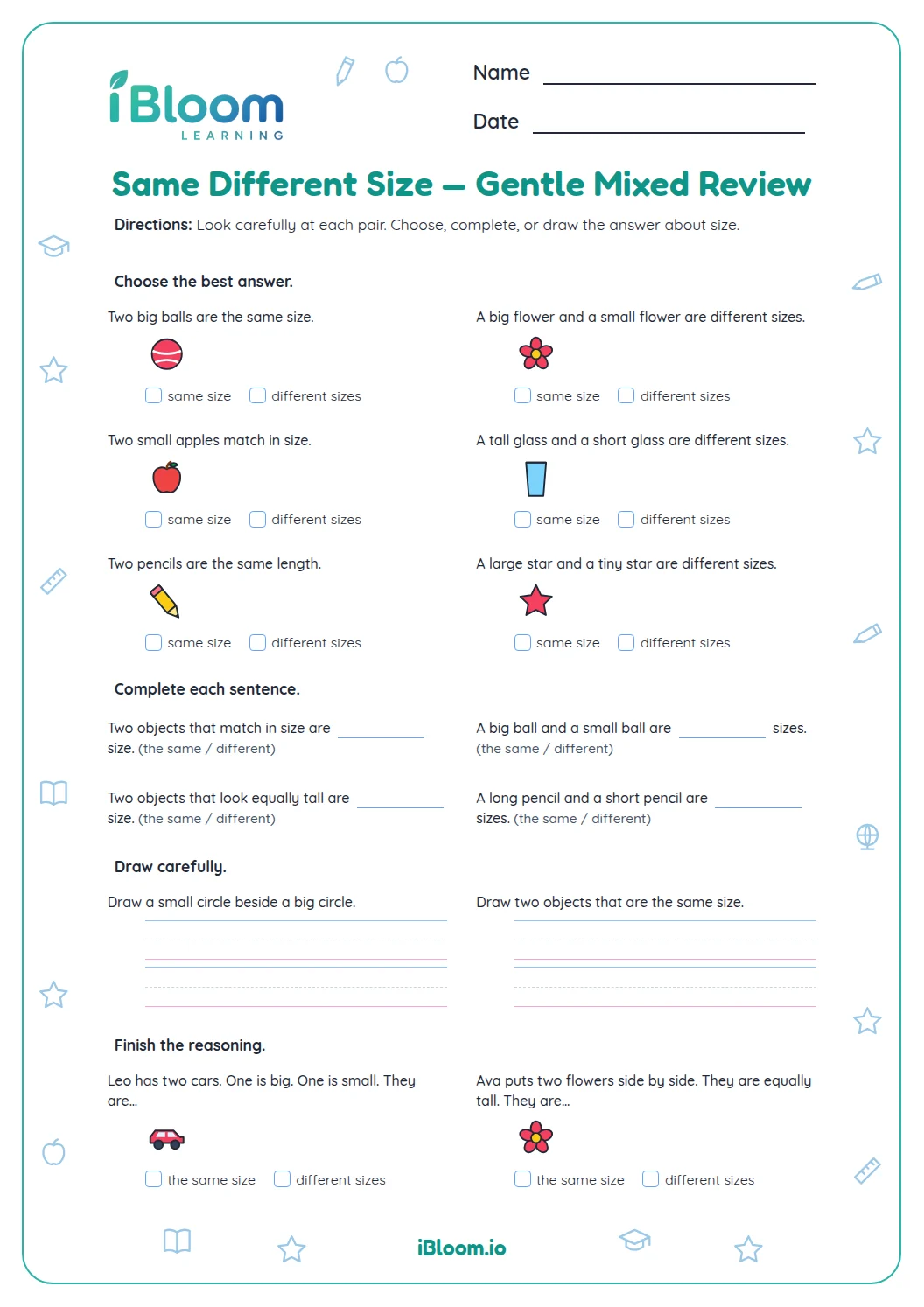
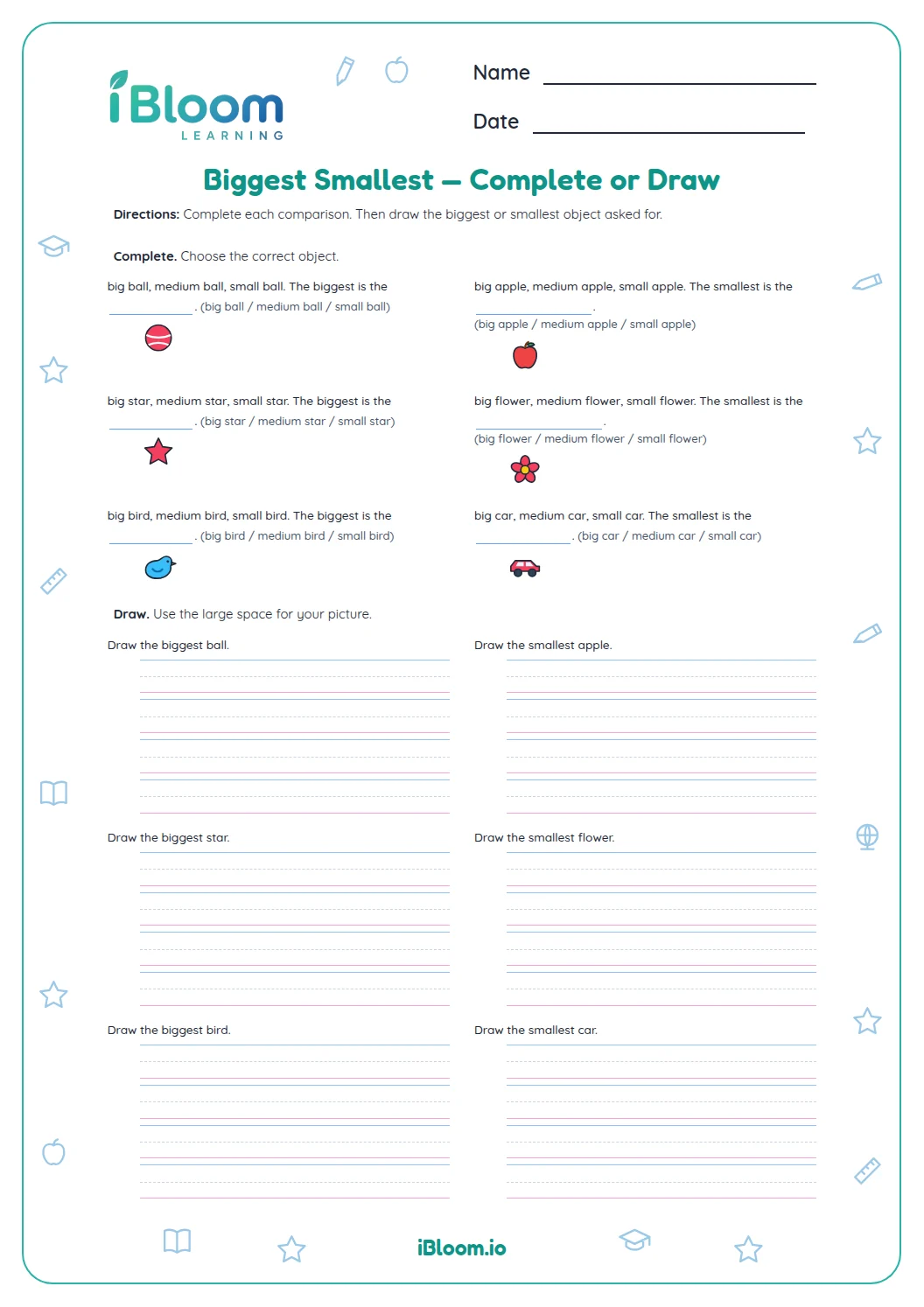
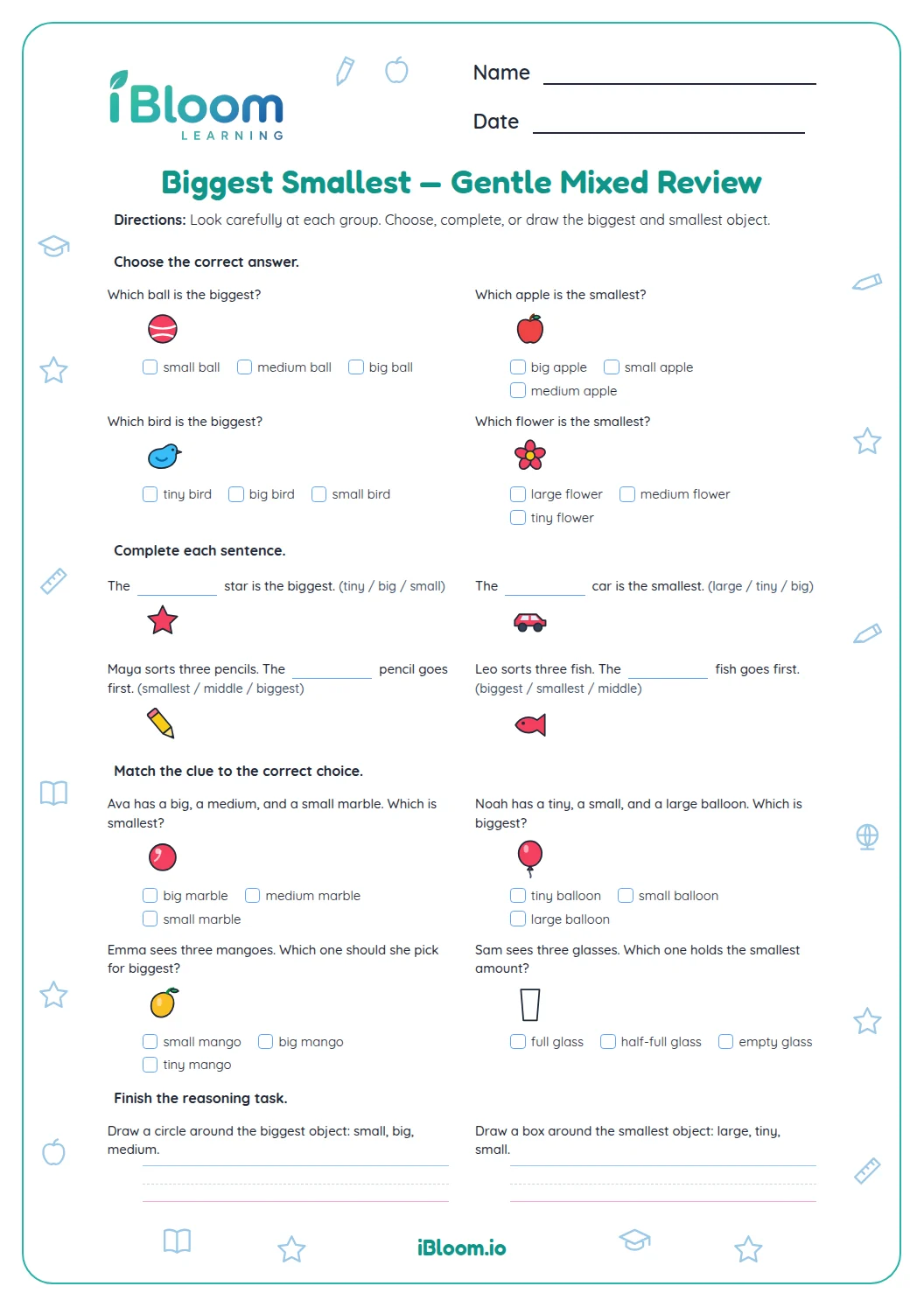
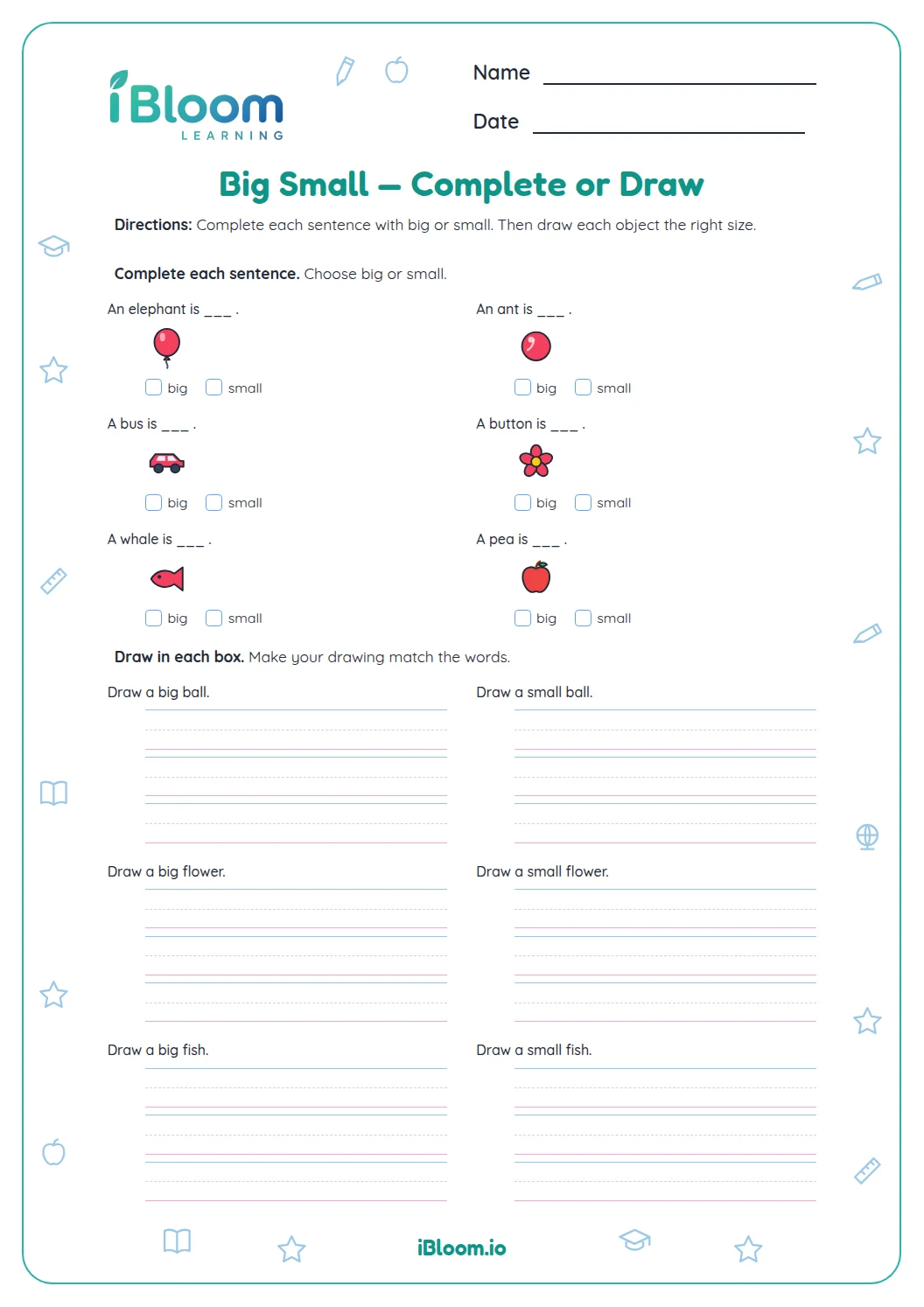
This printable for preschool and kindergarten practices comparing same and different sizes. Picture-supported clues and short comparison sentences ask children to use words such as equally big, small, and tall. The 14 questions include a separate answer key and align with Kindergarten CCSS K.MD.A.2.
Aligned to K.MD.A.2
What do same size and different sizes mean?
A sentence clue tells whether two named objects match in size. Picture pairs make the objects familiar; the clue gives the comparison to choose.
- 1A small seedling and a big pumpkin are ___ sizes.
- 2The words small and big tell us to choose “different sizes.”
How can a child show a size comparison?
Draw two balls that match in size. Make the comparison easy to see.
What does the worksheet ask children to do?
The page has six picture clues, seven short comparison sentences, and one drawing activity.
How can an adult guide the practice?
- 1Name the objects in each picture pair.
- 2Listen for clues such as equally big, small, or tall.
- 3Choose same size or different sizes.
- 4Draw the two pairs in the final activity.
- 5Check choices and drawing goals with the key.
Common slips and helpful fixes
The mistake
Calling two objects the same because both are toys.
The fix
Compare the named feature in the prompt, such as kind or size.
The mistake
Making a size difference too small to see.
The fix
Draw one object clearly larger or smaller than the other.
The mistake
Confusing a shape name with its size.
The fix
Count corners or sides to name the shape, then compare size separately.
Common Core alignment
Children compare pairs by size and describe whether their sizes match or differ.
Compare two objects by size and describe whether their sizes match or differ.
On this sheet: Compare picture and sentence pairs by size, then name whether their sizes match or differ.
Show the official wordingHide the official wording
Directly compare two objects with a measurable attribute in common, to see which object has "more of"/"less of" the attribute, and describe the difference.
What to practice next
Make more practice
Further reading
Questions parents and teachers ask
What ages is this worksheet for?
This printable is designed for preschool and kindergarten children who are learning to compare size words. An adult can read the short clues aloud, invite the child to choose a phrase, and help with the drawing prompts. The separate key describes the expected choices and drawings.
What does same size mean?
Same size means two objects match in how large or long they are. In the worksheet, a clue such as “Two balls are equally big” tells the child to choose matching. The picture symbols name the objects while the words describe their sizes.
How does the worksheet show different sizes?
A sentence clue says one object is big, small, tall, or short. Children choose the word that completes the comparison sentence, then use a drawing prompt to make their own different-size pair. This lets the child practice saying and showing the comparison.
What are the drawing prompts?
The drawing activity asks children to draw two same-size balls and two apples that are different sizes. The answer key describes both relationships while allowing the child to make original drawings. An adult can ask which pair matches and which pair differs.
How many items and pages are included?
There are 14 questions: six picture-supported clues, seven short size sentences, and one final comparison. A separate answer key lists the choices. An adult can read each clue aloud and invite the child to explain the size words.
Can an adult read the worksheet aloud?
Yes. The prompts use short, familiar words and can be read aloud. Ask the child to repeat the size clue, choose the word that completes the sentence, or point out which object in a drawing is bigger. This gives the child a chance to say the comparison aloud.