







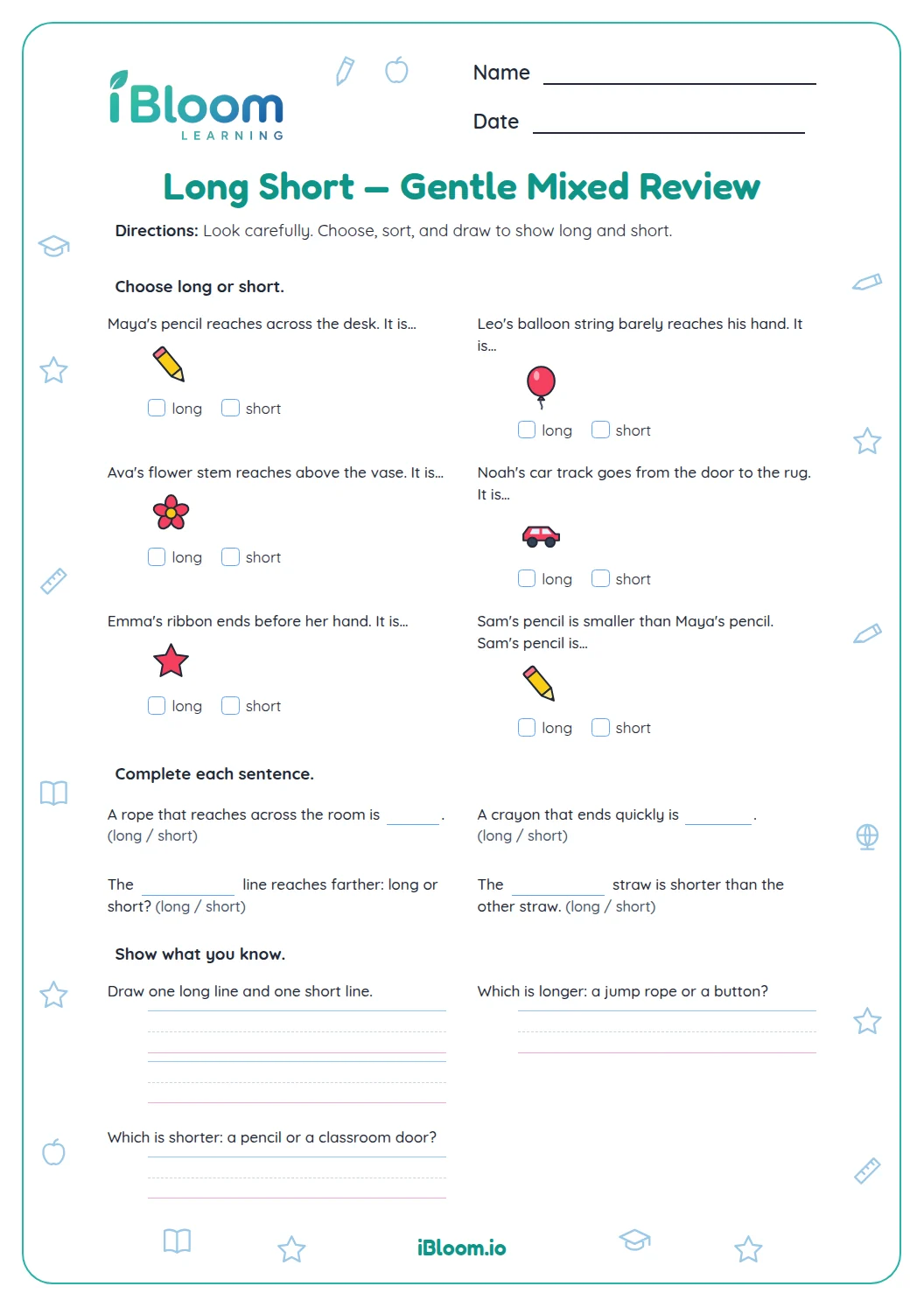

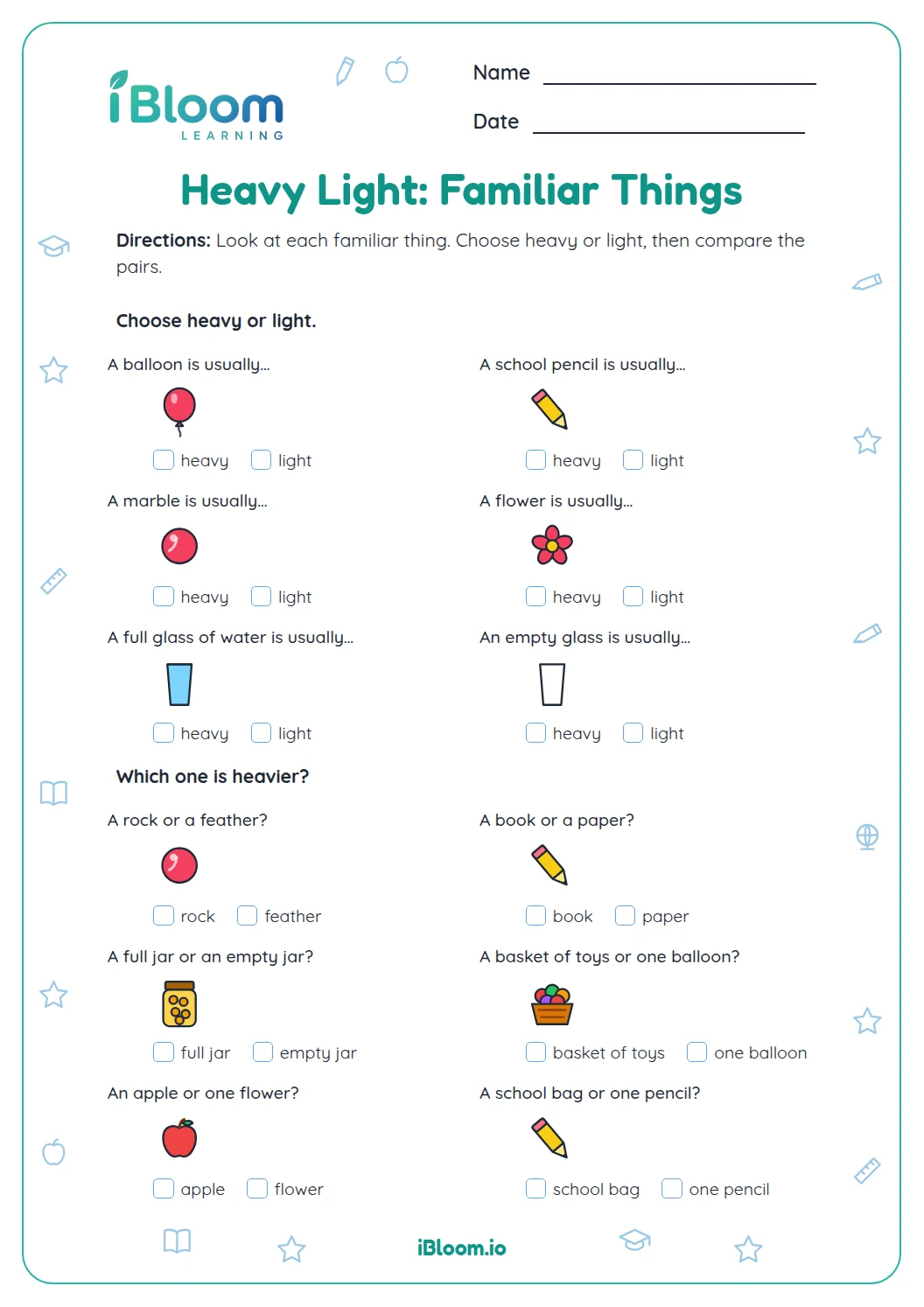

About this worksheet
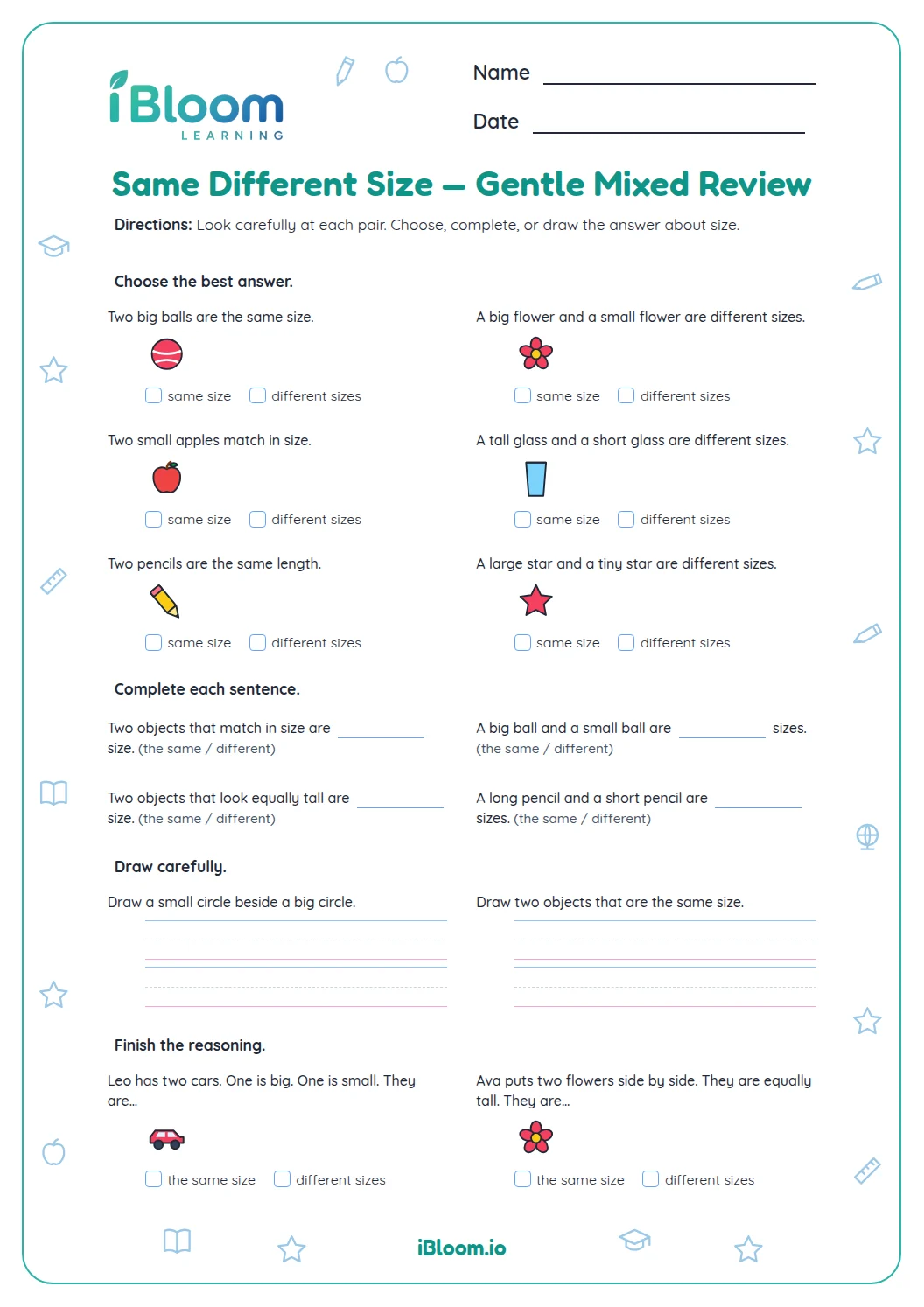
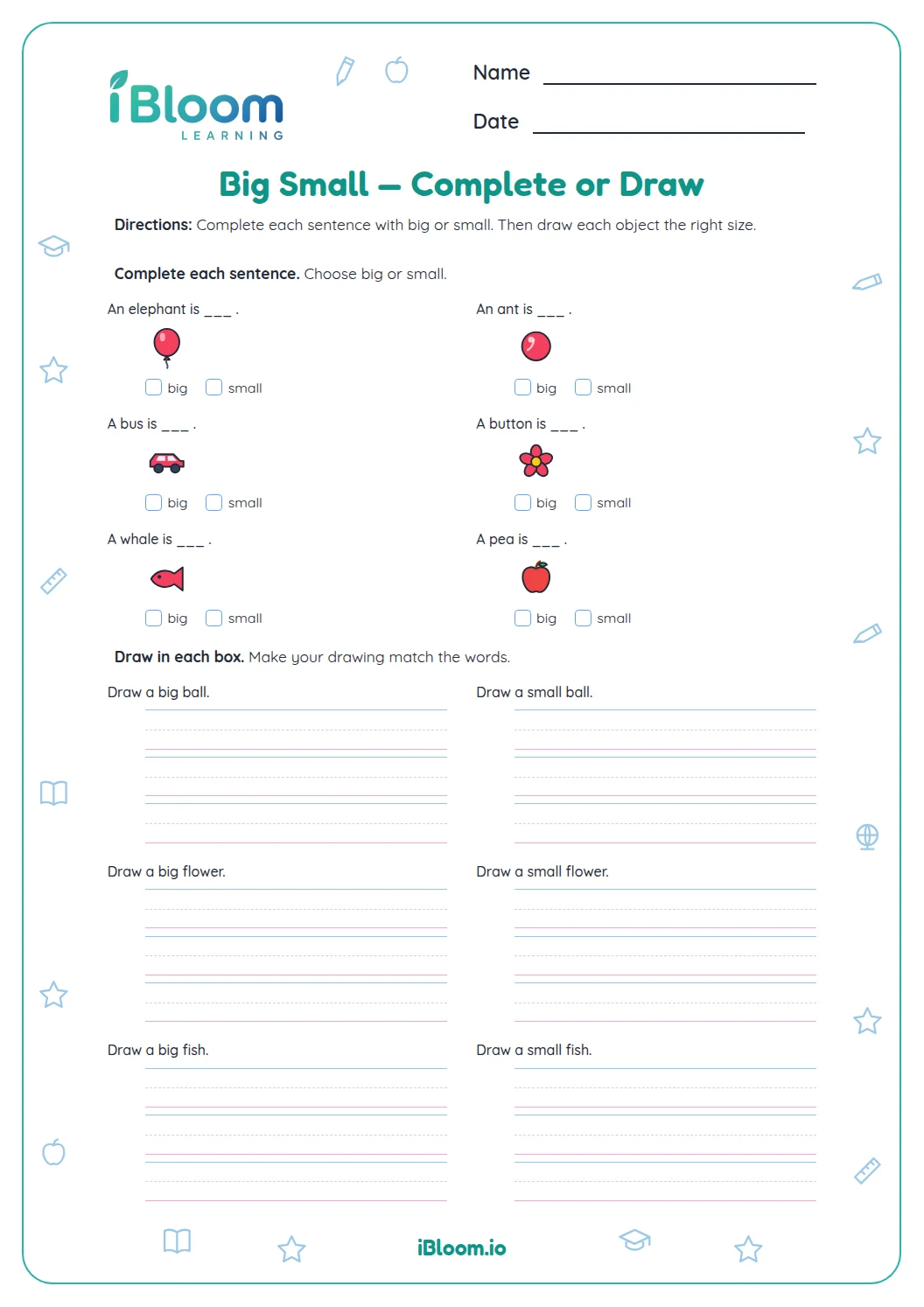
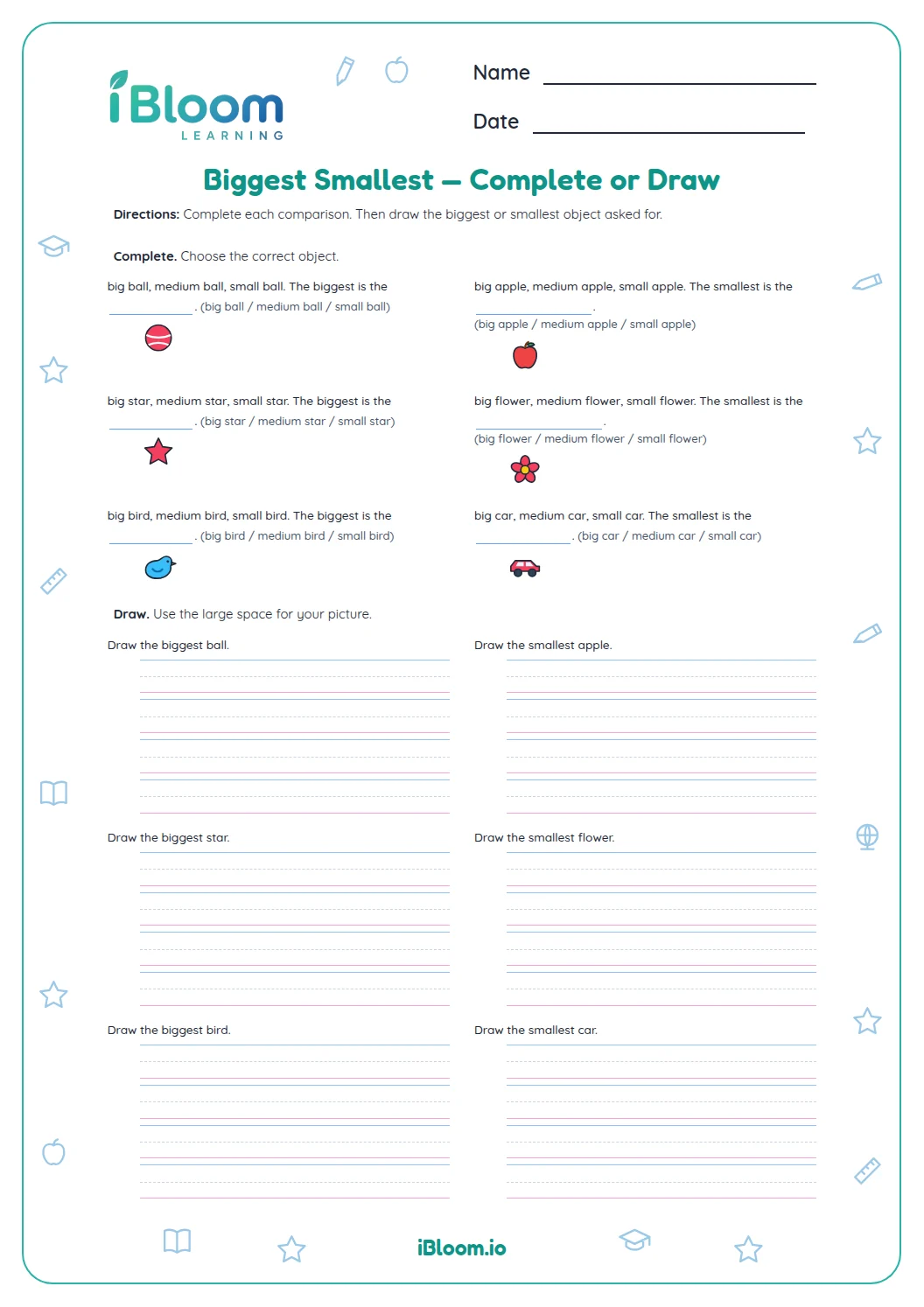
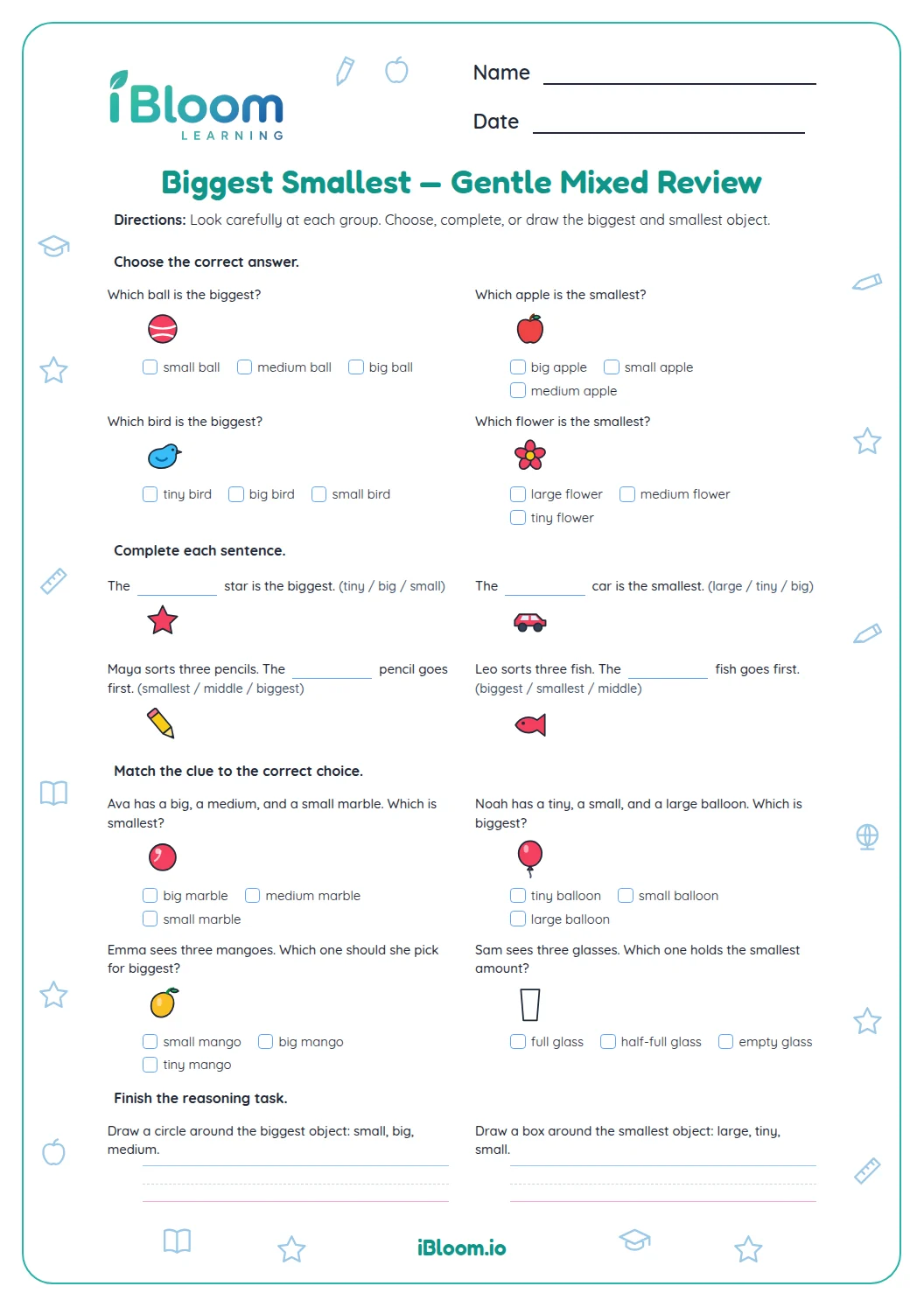
This free preschool and kindergarten worksheet gives children 16 familiar size comparisons. Each question pairs pictures of an object with a short setting and size clues, such as one large ball and one small ball. Children decide whether the objects are the same size or different sizes, using the same familiar comparison method as the original page. A separate answer key supports checking.
How do familiar settings help children compare size?
Part A uses home and school objects such as balls, cups, apples, and pencils. Children compare the size words in each short situation.
- 1Ava has a large ball; Ben has a small ball.
- 2The balls are different sizes.
How can children compare objects outdoors?
Part B uses familiar nature and play settings. Read both clues, then choose whether the two objects are the same size or different sizes.
What size clues help with a final check?
Part C returns to familiar objects. Matching clues such as small and small indicate the same size in these examples; large and small indicate different sizes.
How to use this worksheet
- 1Look at the pair of object pictures.
- 2Read or listen to the setting and size clues.
- 3Compare the size words for the two objects.
- 4Choose “same size” or “different sizes.”
- 5Check each response with the answer key.
Common mistakes and quick fixes
The mistake
Choosing from the object names instead of the size clues.
The fix
Compare the words that describe each object’s size.
The mistake
Thinking two different objects must be different sizes.
The fix
Use the size clues in the sentence, even when the objects differ.
The mistake
Mixing up “same size” and “same kind.”
The fix
Ask whether the objects are described as equally large, not whether they are the same object.
What to practice next
Make more practice
Questions parents and teachers ask
What does same or different size mean here?
Children compare the size clues for two objects in a familiar situation. Matching clues, such as small and small, indicate the same size in these examples; large and small indicate different sizes. Each question asks children to choose one of those two responses.
What age is this worksheet for?
It is designed for preschool and kindergarten children who are learning familiar size words. An adult can read the short context aloud while the child looks at the paired object pictures and chooses a response. The settings include home, school, outdoors, and play.
Are pictures included for every question?
Yes. All 16 questions show a pair of familiar object pictures. Each short prompt names the object and gives two size clues, such as large and small. Children compare those clues and choose “same size” or “different sizes.”
How can I help a child compare the clues?
Read both size clues slowly and ask which word describes each object. Then compare the words: large and small are different, while matching size words indicate the same size in these examples. The child can point to each pictured object while listening.
Does the worksheet include an answer key?
Yes. A separate answer key gives the intended same-size or different-size response for each of the 16 questions. Review the two size clues with the child while checking so the comparison word connects to the familiar situation and its pictures.