


About this worksheet
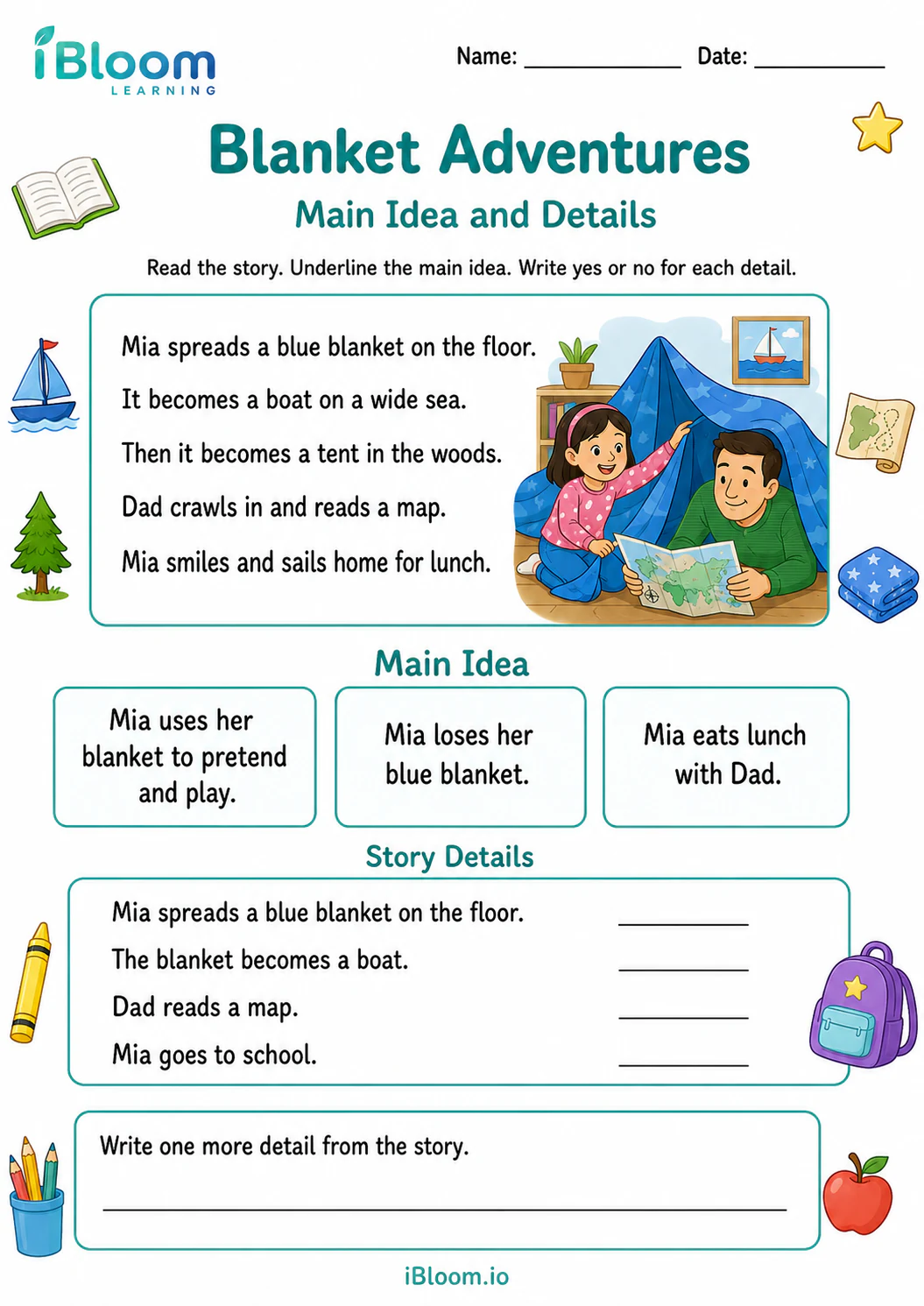
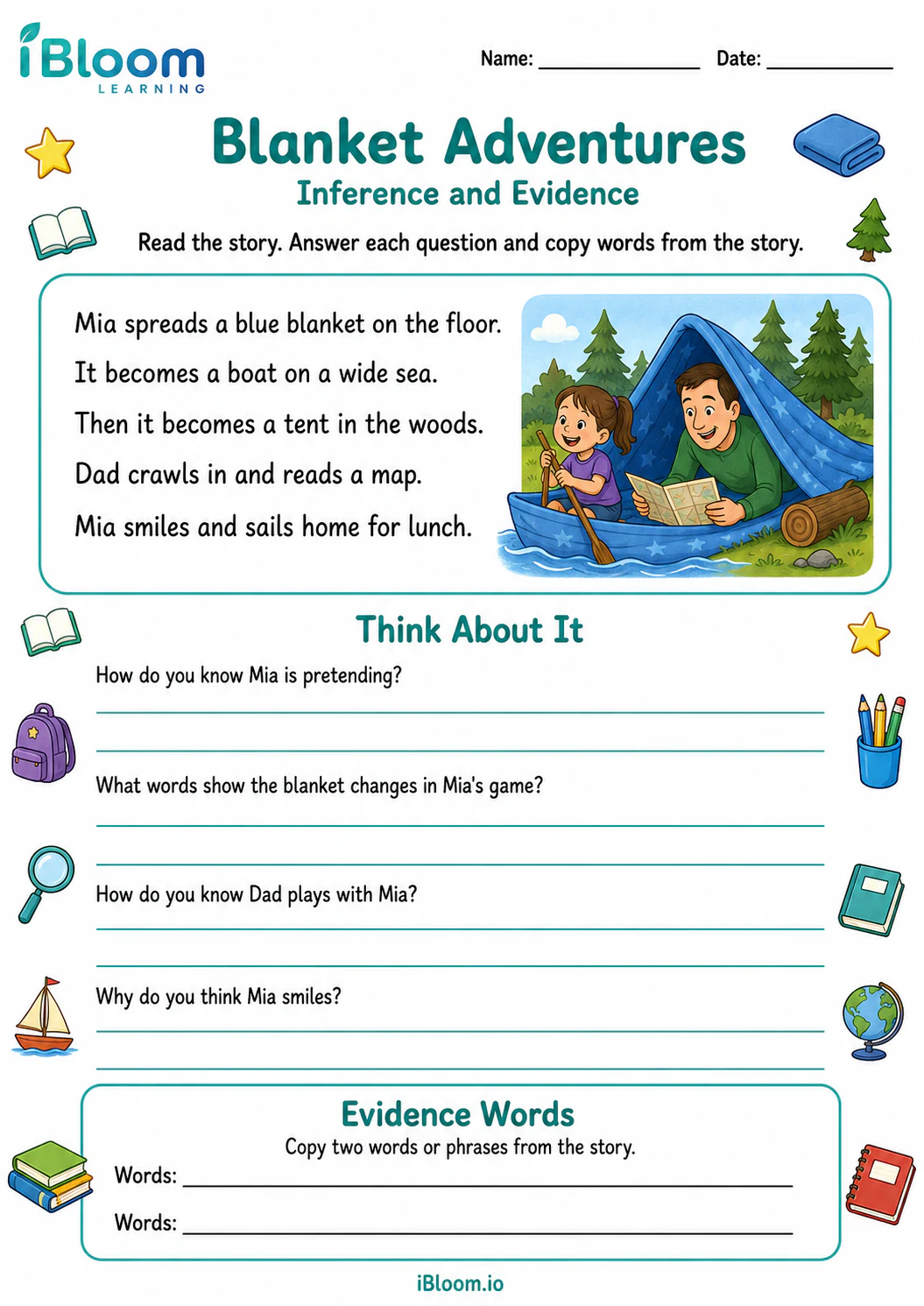
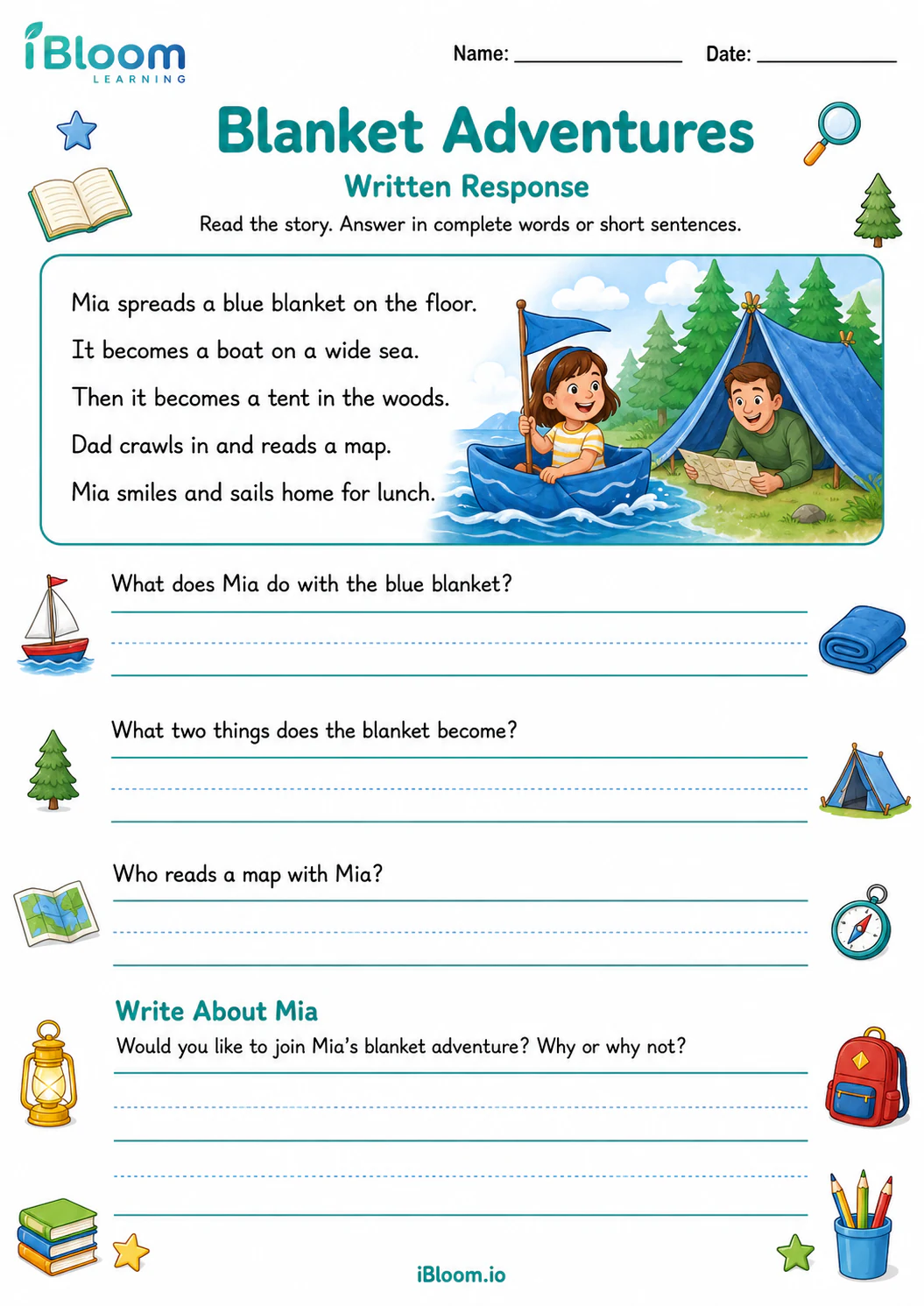
Mia turns a blue blanket into a boat on the sea and a tent in the woods, where Dad reads a map. Students answer detail and sequence questions, then explain what the story tells them.
Aligned to RL.1.1 and RL.1.3
Read the story for details
The story moves from Mia’s blanket boat on the sea to a tent in the woods. Dad reads a map, and Mia imagines sailing home for lunch. First grade readers can reread one paragraph at a time and point to the sentence that supports an answer.
How to answer the questions
Parts B and C ask students to remember details and order events. Part D asks for a short explanation supported by the story. For example, the blanket changes from a boat to a tent because Mia is using her imagination.
How to use this worksheet
- 1Read each prompt carefully.
- 2Show a step when the question asks you to explain or solve.
- 3Use the answer key to check your work.
Common mistakes and quick fixes
The mistake
Rushing past a prompt detail or symbol can lead to a mismatched response.
The fix
Reread the complete question and check that the response answers exactly what it asks.
The mistake
A computation or sentence may look finished before it has been checked.
The fix
Use the answer key to verify each result and revise any response that needs it.
Common Core alignment
This worksheet practices the standards listed below through focused grade-level work.
Questions target details and evidence in the story.
On this sheet: Questions target details and evidence in the story.
Show the official wordingHide the official wording
Ask and answer questions about key details in a text.
Questions ask readers to order and explain story events.
On this sheet: Questions ask readers to order and explain story events.
Show the official wordingHide the official wording
Describe characters, settings, and major events in a story, using key details.
What to practice next
Make more practice
Further reading
Questions parents and teachers ask
What happens in the story?
Mia turns a blue blanket into a boat on a wide sea, then into a tent in the woods. Dad crawls inside and reads a map. Mia imagines sailing home for lunch. Students can reread the short passage to find each detail and its order.
What reading skills do the questions practice?
The questions ask readers to recall details, put events in order, explain what happens in the pretend trip, and support an idea with a story clue. These tasks connect to Grade 1 work with key details and major events in a story.
How can an adult support a Grade 1 reader?
Invite the child to read or listen to the passage, then point to the sentence that supports an answer. Rereading a short part is a useful strategy. For the final questions, accept a different response when it is accurate and supported by the story.
Are sample answers the only acceptable responses?
No. The answer key offers concise models for open responses. A child may use different words or mention another valid detail, as long as the response answers the prompt and matches Mia’s pretend trip. Rereading the passage can help confirm an alternate answer.
What does Mia do after her pretend trip?
Mia folds the blanket and helps Dad put the map away. The story then says they go to the kitchen together. These ending details support questions about sequence and help a reader retell what happens after the boat and tent play.