


About this worksheet
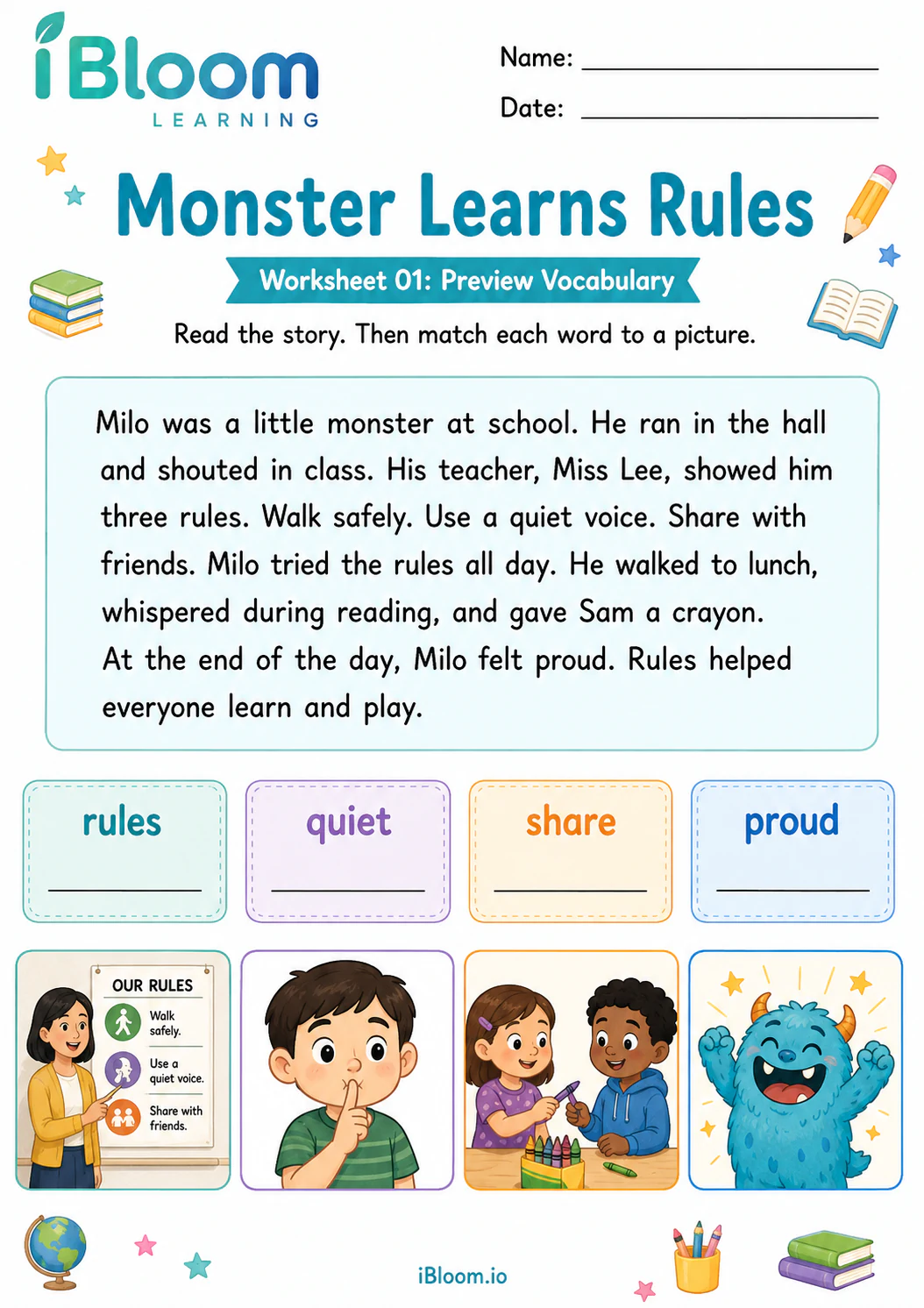
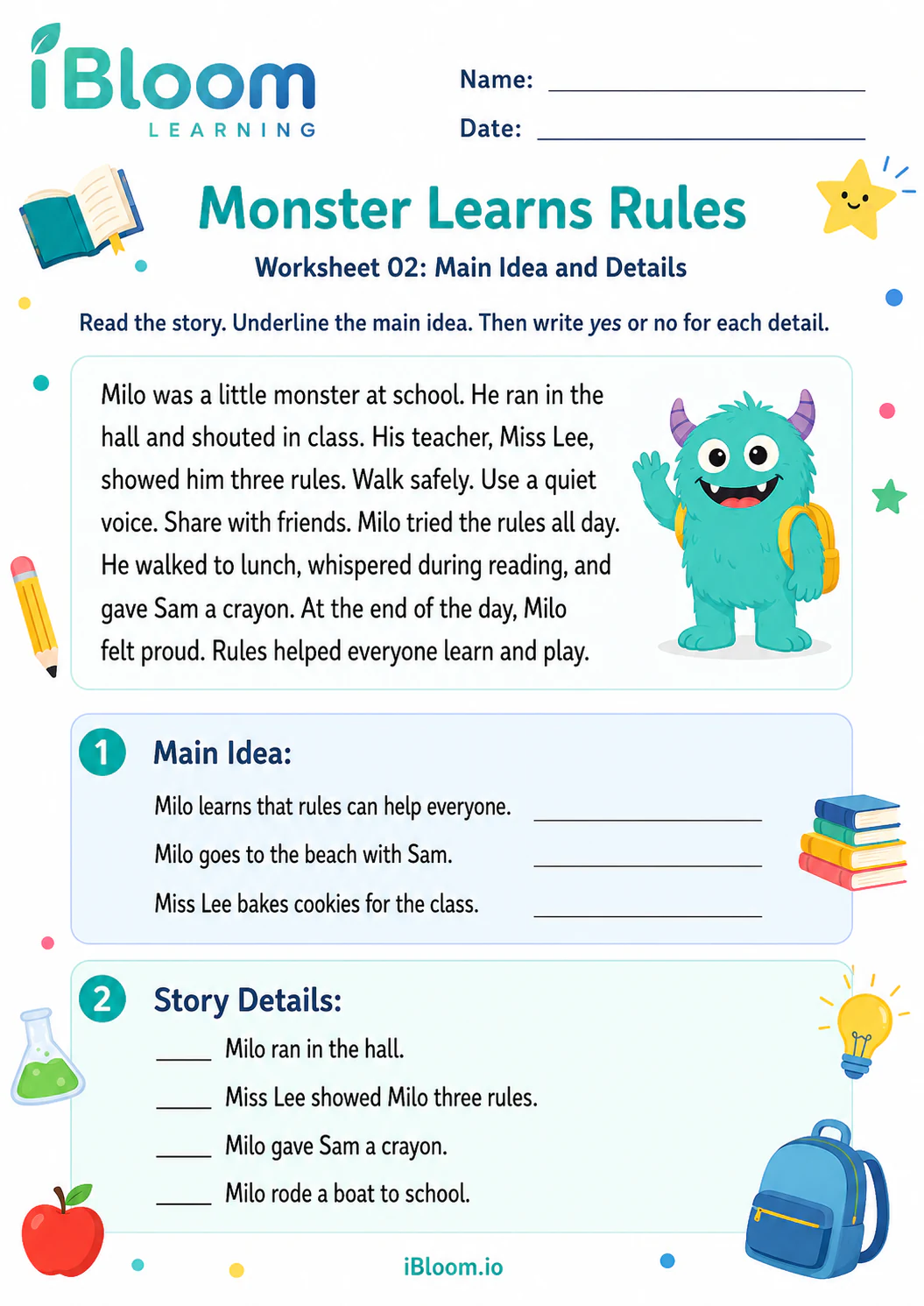
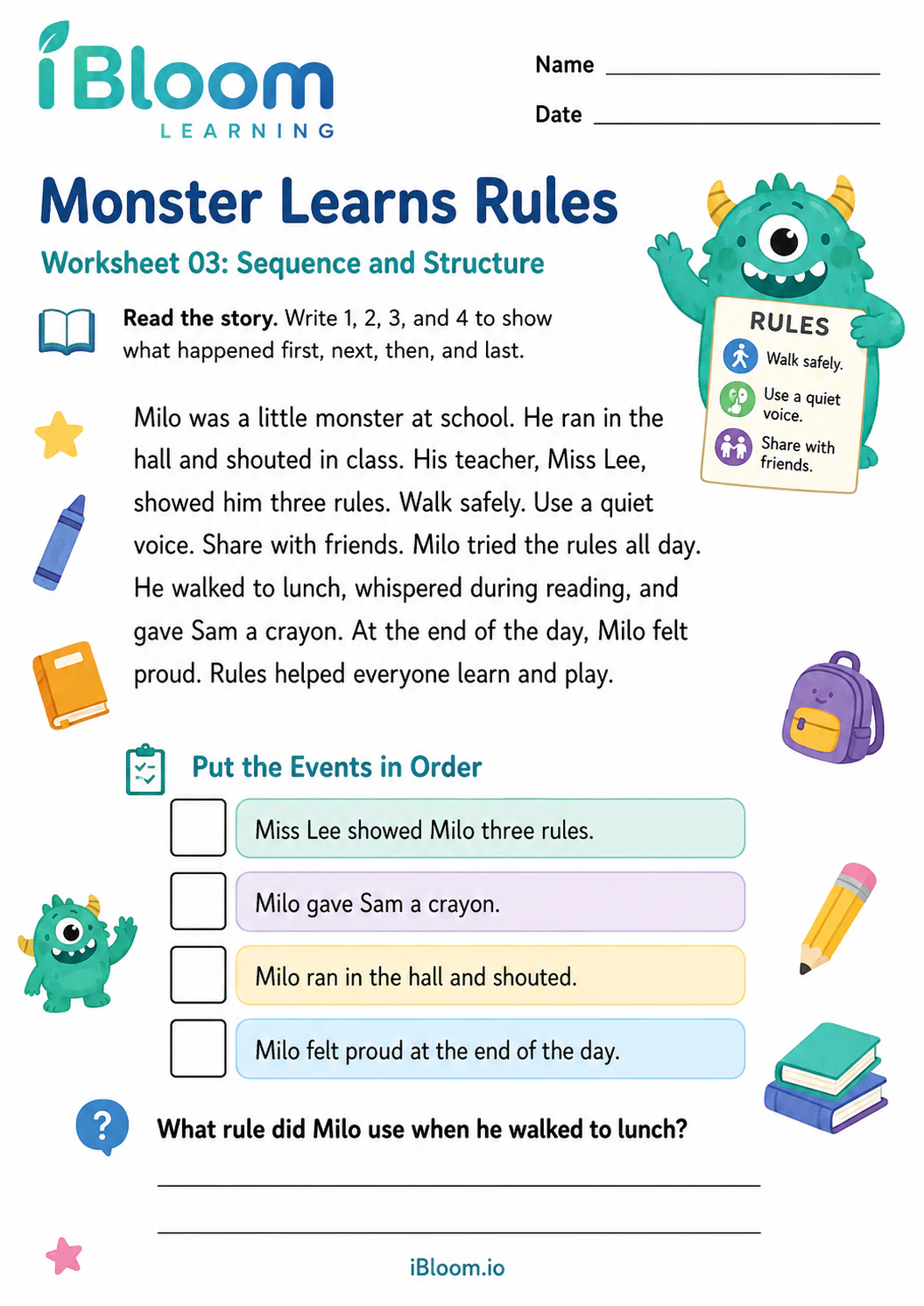
This free Grade 1 reading worksheet features an original 66-word story about Milo, a small monster learning school rules. Children answer 15 questions about the character, setting, actions, and lesson, then write four short responses using story details. The activities practice CCSS RL.1.1 and RL.1.3. A separate answer key provides concise answers and sample sentences for questions where children may use their own words.
Aligned to RL.1.1 and RL.1.3
What details should I look for in the story?
Look for who is in the story, where Milo goes, and what he does. The first questions ask about details stated directly, such as the rules Milo learns and what Miss Lee tells him.
- 1Miss Lee teaches three rules.
- 2One rule is “Use a quiet voice.”
- 3Answer: Use a quiet voice.
How do Milo’s actions change?
At first Milo runs in the hall and shouts in class. After Miss Lee teaches three rules, Milo tries them all day. He walks to lunch, whispers during reading, and gives Sam a crayon. These events show Milo following the rules and sharing.
How can a first grader write an answer?
Use a short complete sentence for questions asking how or why. Name an action from the story to support an idea about Milo’s feelings. The answer key includes sample wording, so children can express the same idea in their own words.
What is on the worksheet?
The 15 questions begin with story details, then ask children to explain Milo’s lesson and write about his actions. The original passage is 72 words and can be read aloud before children try it independently.
How can I use this worksheet?
- 1Read the story together, then reread it independently.
- 2Point to a sentence that answers each detail question.
- 3Retell Milo’s actions in the order they happen.
- 4Use a complete sentence for the final response questions.
- 5Check answers with the key and accept clear wording supported by the story.
What mistakes should children check?
The mistake
Answering from what seems likely instead of what the story says.
The fix
Look back for Milo’s action or Miss Lee’s words.
The mistake
Mixing up what Milo does before and after Miss Lee teaches the rules.
The fix
Retell the events in order: Milo hears the rules, then follows them during the day.
The mistake
Writing only “good” for a question about Milo’s feelings.
The fix
Add a story detail, such as Milo sharing a crayon with Sam.
Common Core alignment
The questions focus on a character, events, and details from an original story.
Answer questions about story details, using Milo’s words and actions.
On this sheet: Questions ask children to recall, explain, and write about story details.
Show the official wordingHide the official wording
Ask and answer questions about key details in a text.
Describe Milo and explain key events through details in the story.
On this sheet: Children name the character, setting, actions, and lesson.
Show the official wordingHide the official wording
Describe characters, settings, and major events in a story, using key details.
What to practice next
Make more practice
Further reading
Questions parents and teachers ask
What is the story about?
Milo is a small monster who gets excited at school and forgets to follow rules. Miss Lee teaches him three rules. Milo walks to lunch, whispers during reading, and shares with Sam. Children answer questions about his actions and what he learns.
What does Milo learn?
Milo learns to follow the school rules. The story shows him listening after Miss Lee teaches three rules: he walks to lunch, whispers during reading, and shares a crayon with Sam. The final questions ask children to describe that lesson with a story detail.
How much writing is expected?
Most questions need only a word or a short phrase. Four later questions invite a complete sentence about Milo’s lesson, feelings, or actions. The answer key gives sample answers, while other clear sentences supported by the story can also be correct.
Can an adult read the passage aloud?
Yes. An adult can read the story aloud and pause to let the child find or recall a detail. Children can then answer with words or short sentences. The questions refer directly to Milo’s story, so the passage can remain beside the worksheet while they work.
What reading skills does the page practice?
Children recall key details, describe a character and setting, follow major events, and explain what Milo learns. The sequence moves from short fact questions to written responses. Each response can be checked against Milo’s actions in the original passage.
How many questions are included?
The worksheet has 15 questions in three parts after the story: eight detail questions, three event and lesson questions, and four written responses. It prints across worksheet pages, with a separate answer key page containing short answers and sample sentences.