
About this worksheet
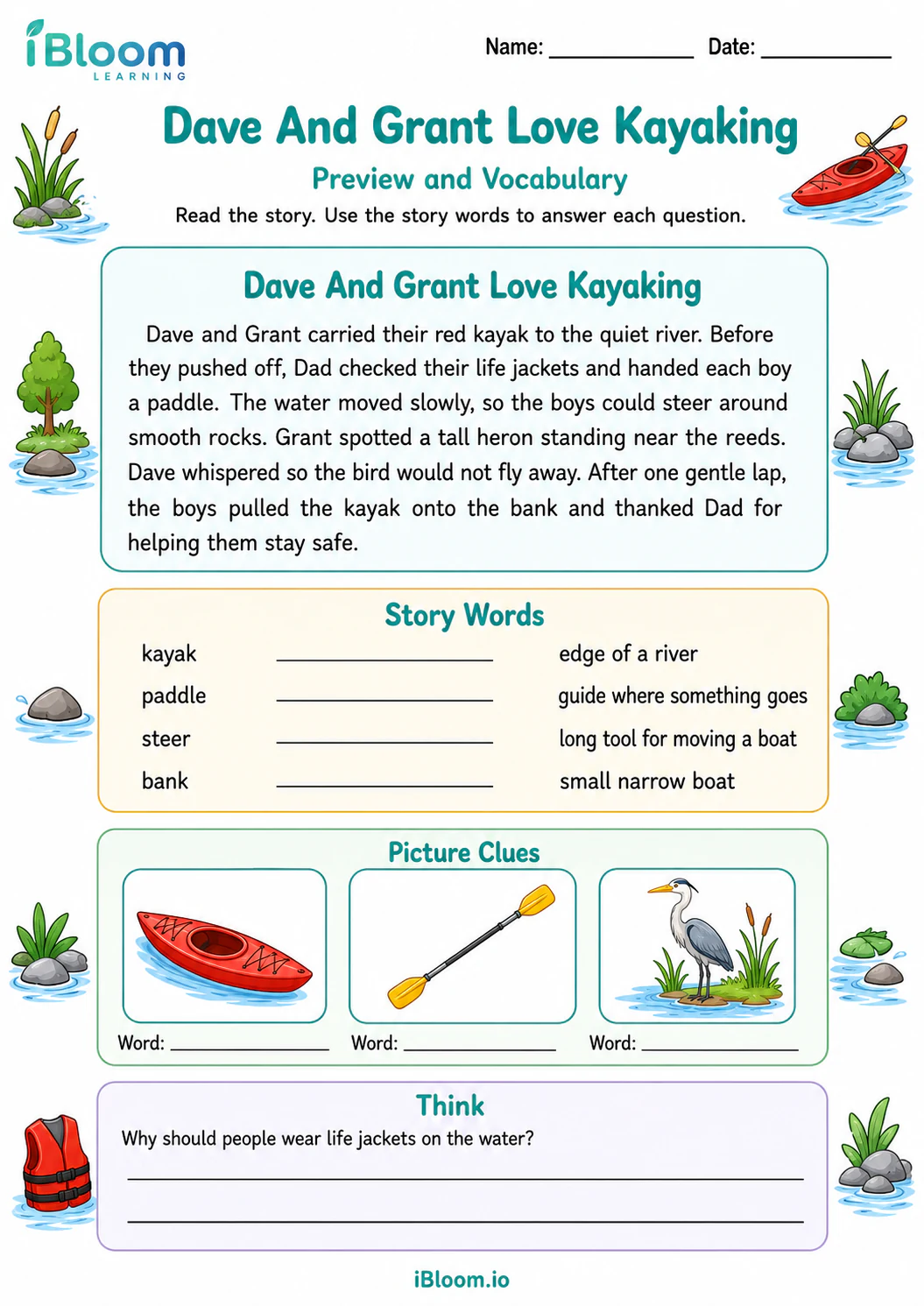
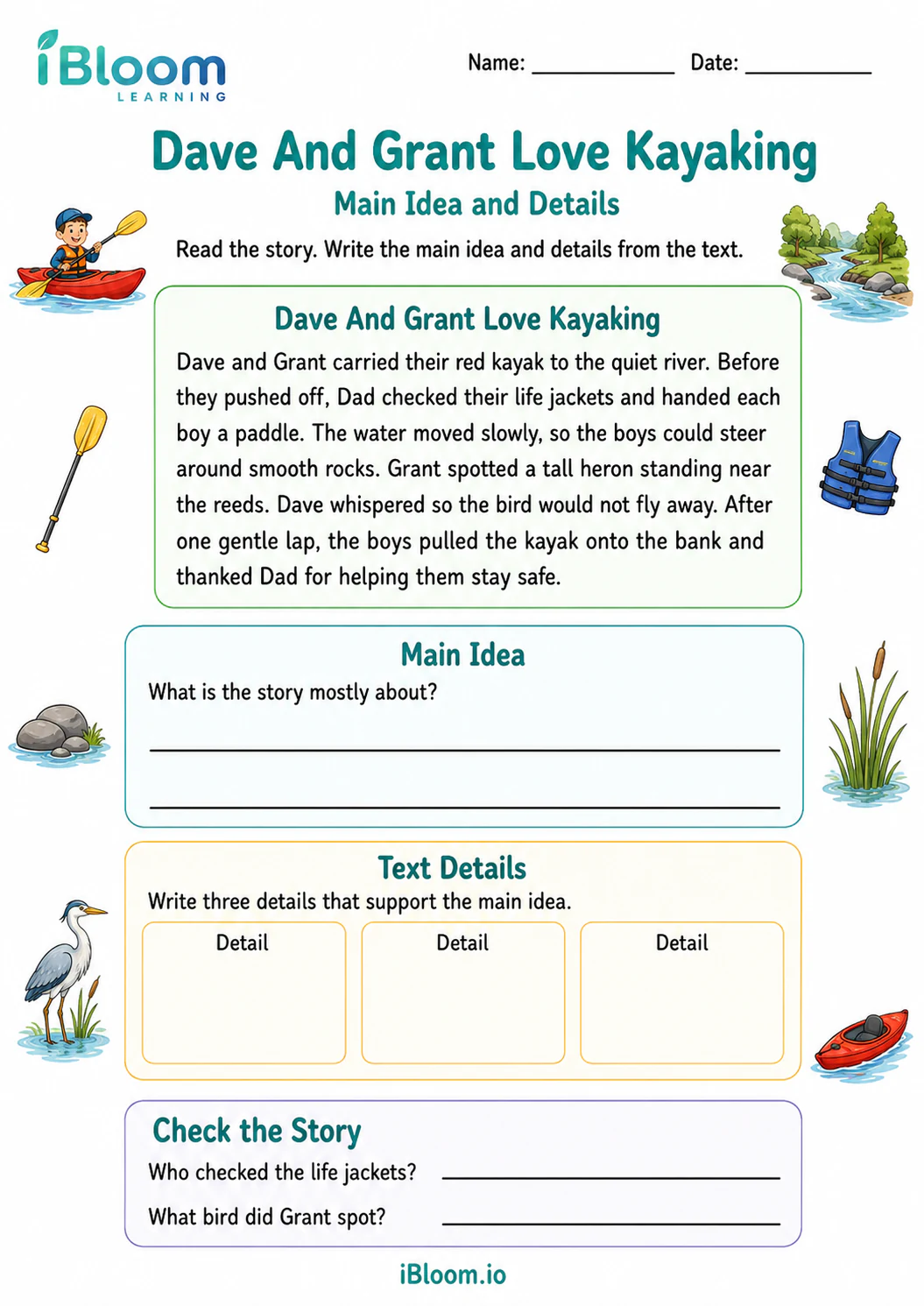
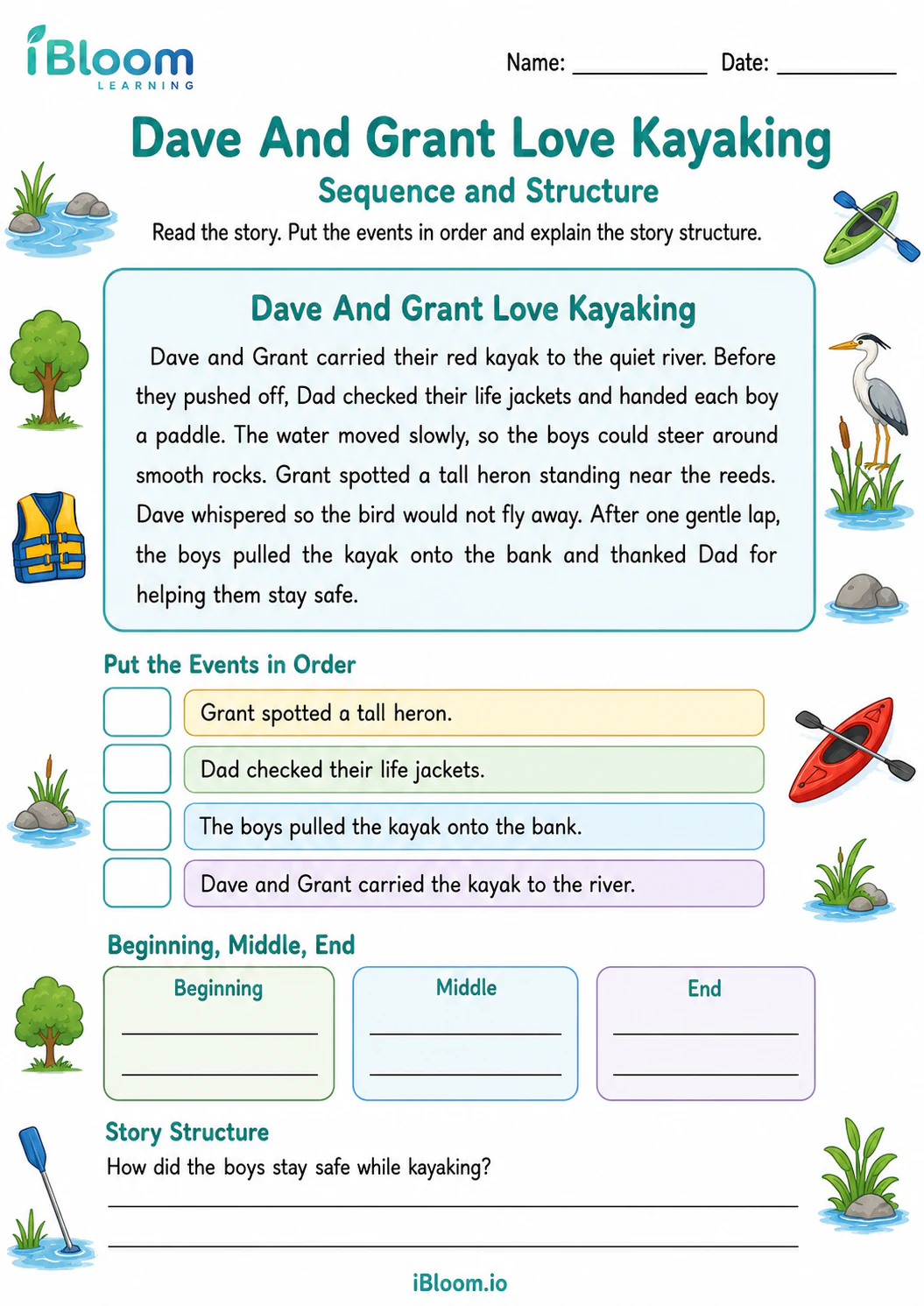
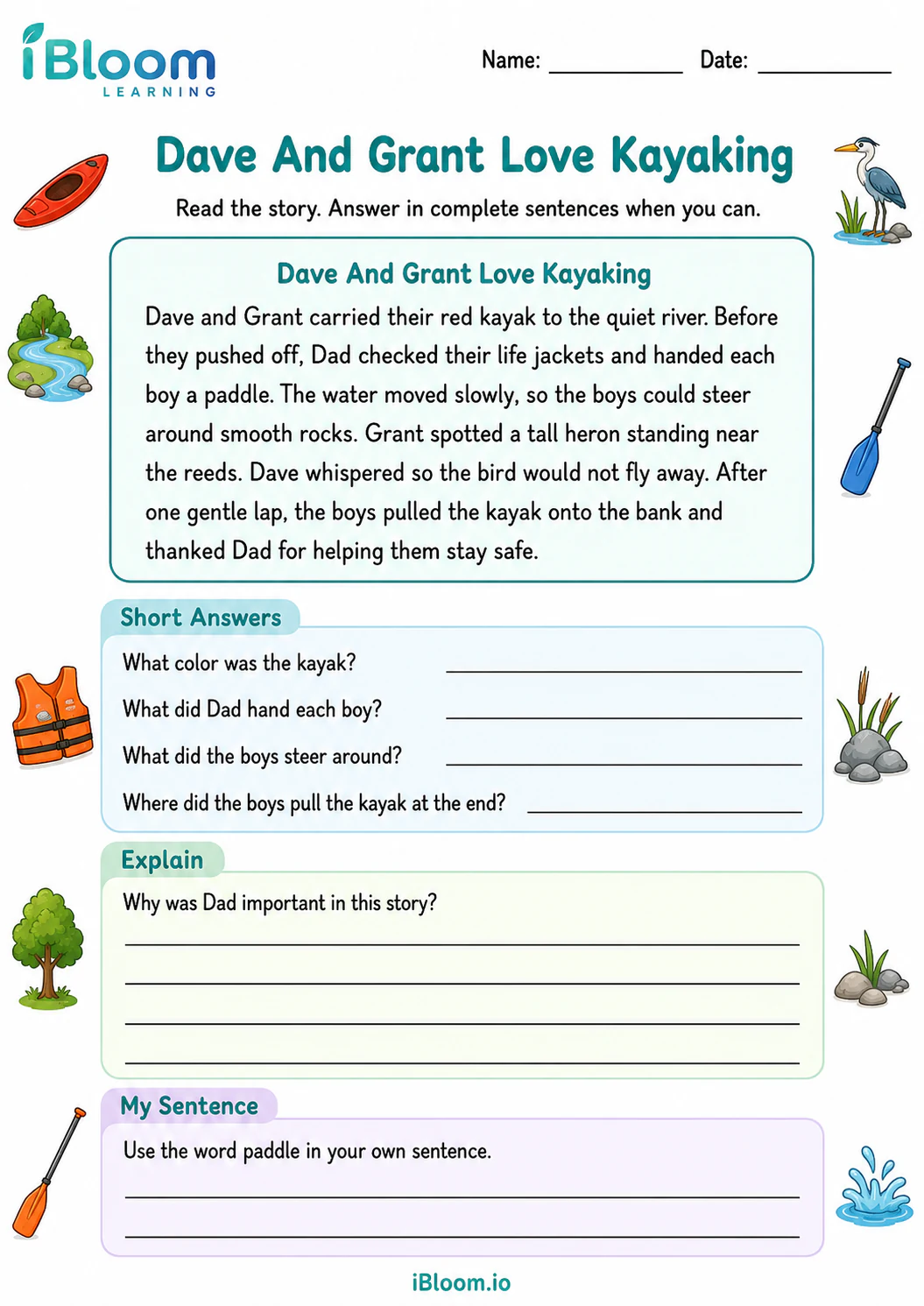
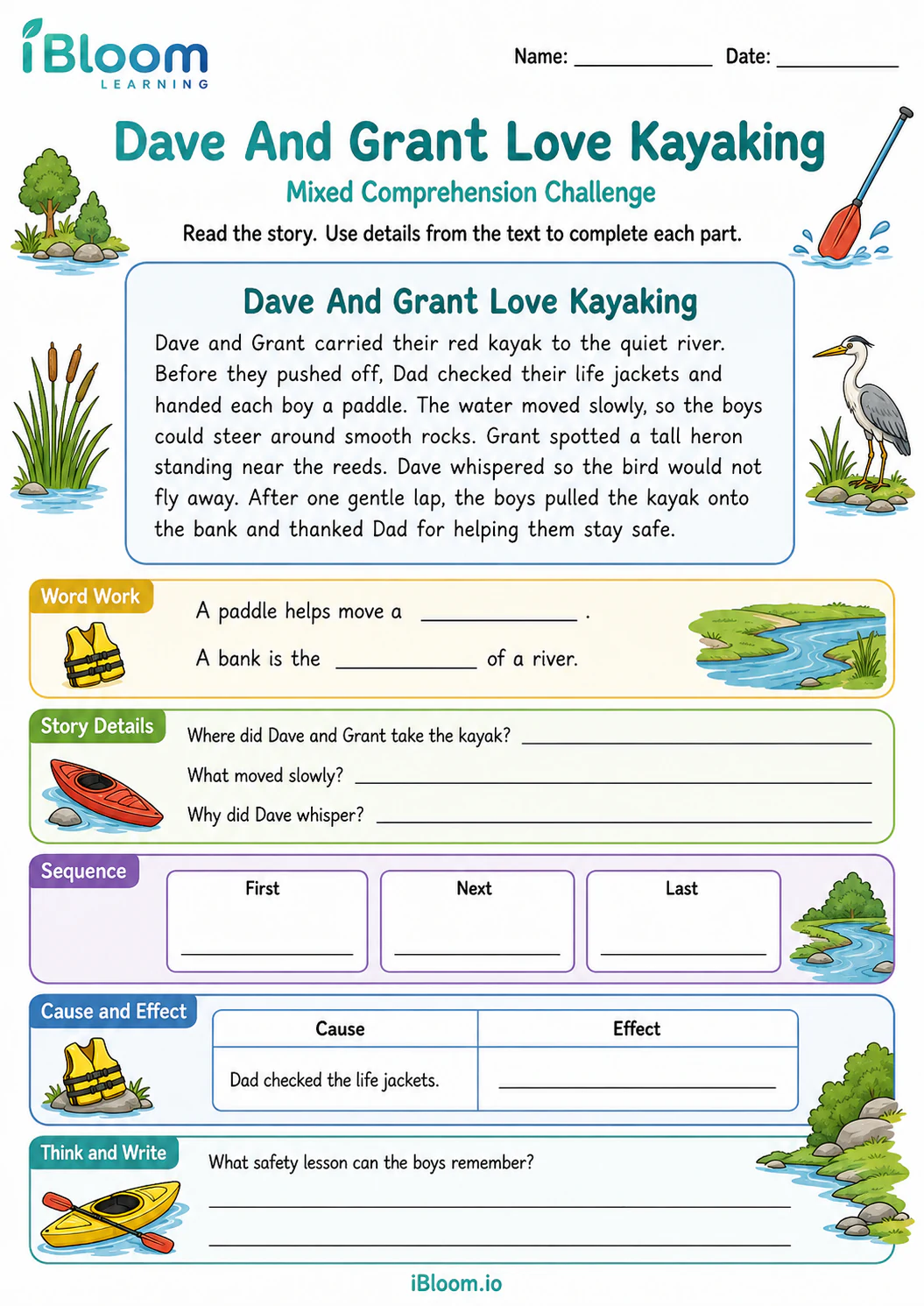
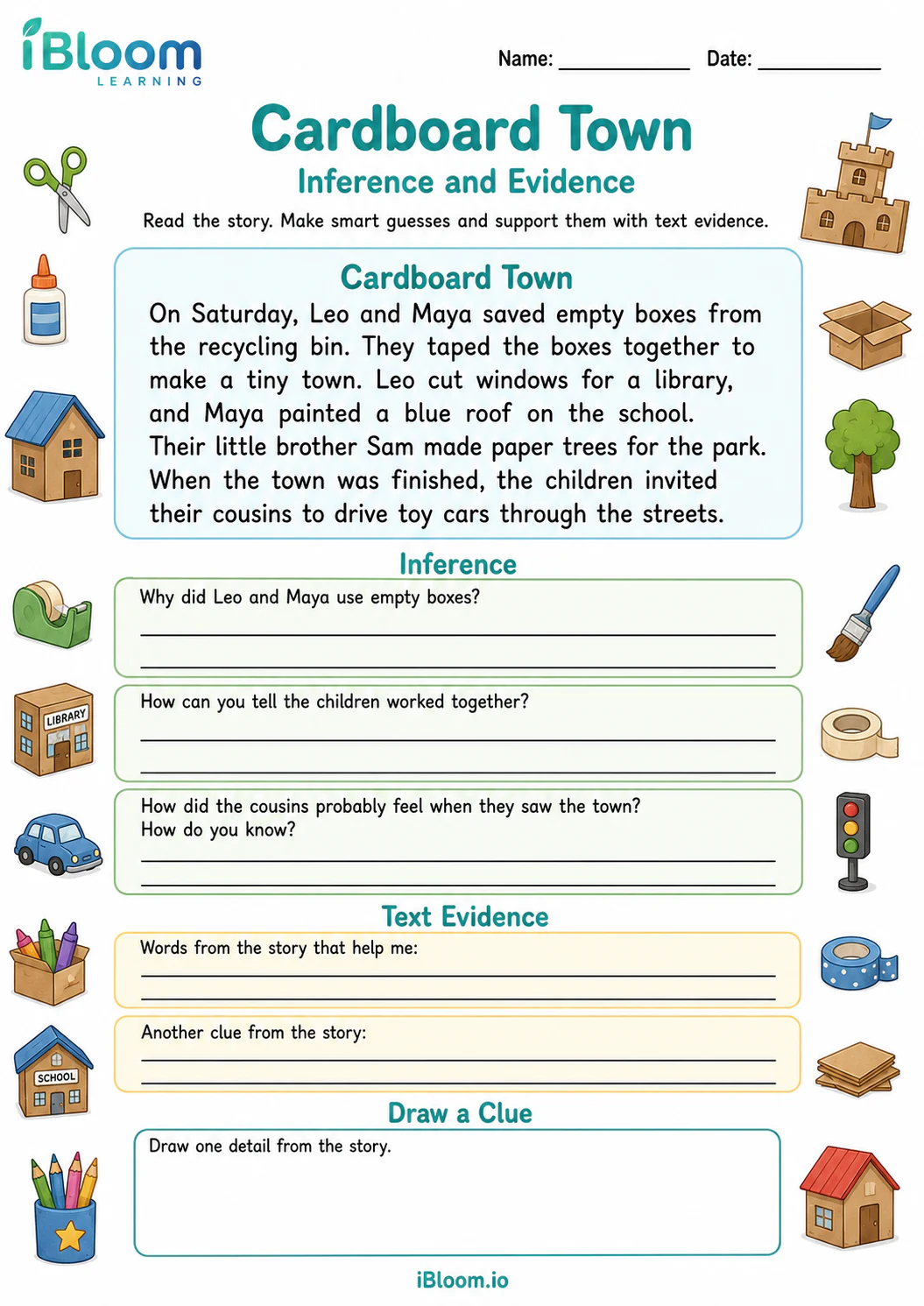
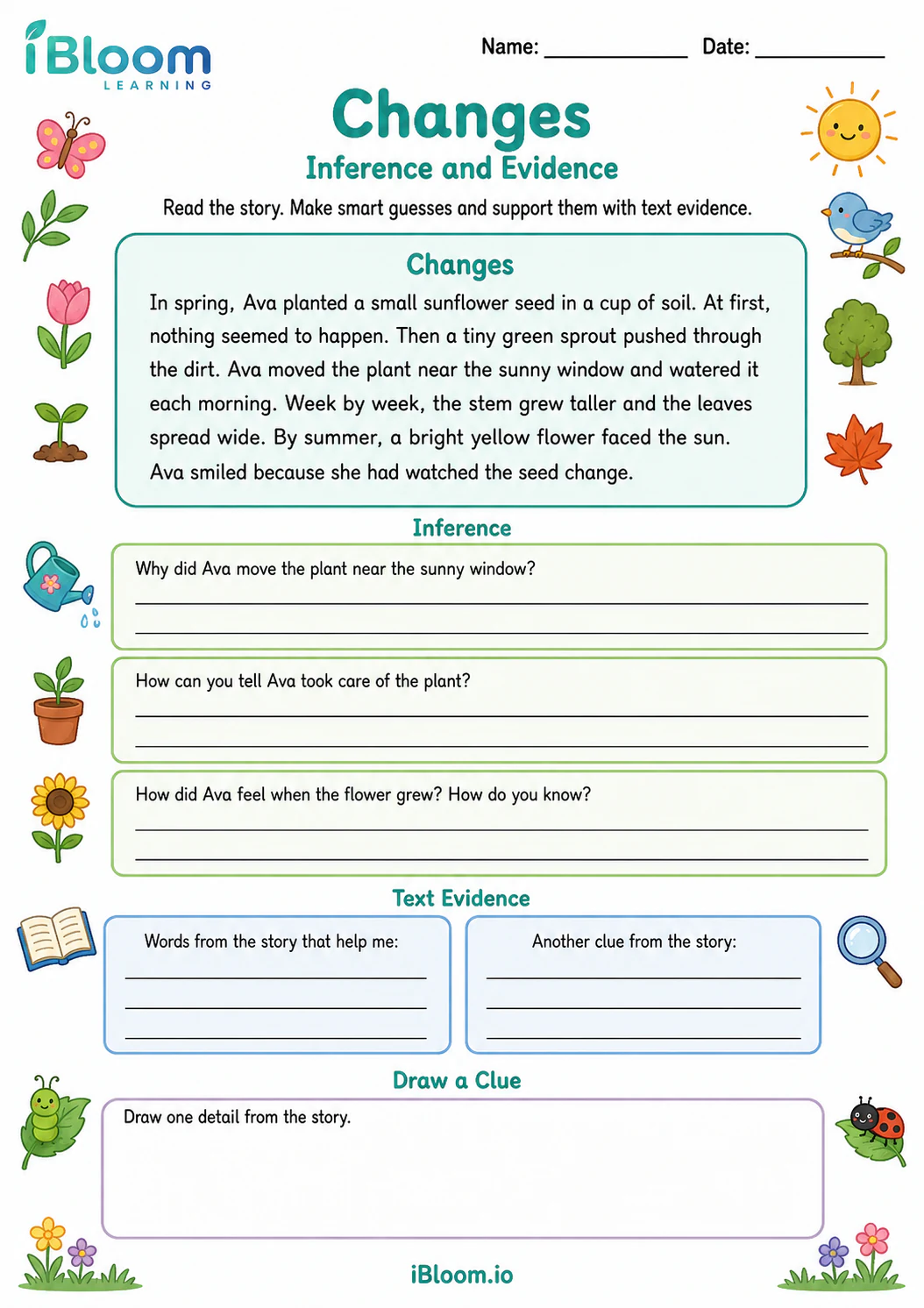
This Grade 2 reading worksheet pairs an original kayaking story with 14 questions about key details, inference, and evidence. The story follows Dave and Grant as their dad checks their life jackets, they notice a heron, and they return to the bank after a gentle lap. Learners choose supported answers and write short explanations using story clues. The answer key includes sample responses and the page practices CCSS RL.2.1.
Aligned to RL.2.1
What clues help explain the boys’ choices?
The story says Dad checks the life jackets before the kayak leaves the bank and Dave whispers near the heron. Those details support inferences about safety and why Dave speaks softly.
- 1Clue: Dave whispered near the heron.
- 2Inference: He hoped the bird would not fly away.
- 3The answer connects his action with a story detail.
How can learners support an inference?
First answer the question, then point to a detail that supports it. For example, “The water moved slowly” explains how the boys could steer around rocks.
What is in the answer key?
The key gives the correct choices and sample responses for the six written questions. Other wording is fine when it matches a story detail and makes a reasonable inference.
How to use this worksheet
- 1Read the story once to follow the kayaking trip.
- 2Reread nearby sentences to find a useful clue.
- 3Connect the clue to what it suggests.
- 4Use a story detail in each written response.
- 5Compare answers with the separate key.
Common mistakes and quick fixes
The mistake
Guessing without pointing to a clue
The fix
Find a sentence that supports the inference.
The mistake
Repeating a detail without answering why
The fix
Connect the clue to what it suggests about the character.
The mistake
Using a detail from another story
The fix
Reread the kayaking passage and choose its exact evidence.
Curriculum alignment
Ask and answer questions using details from a story.
On this sheet: Questions ask learners to infer and cite details from the story.
Show the official wordingHide the official wording
Ask and answer such questions as who, what, where, when, why, and how to demonstrate understanding of key details in a text.
What to practice next
Make more practice
Further reading
Questions parents and teachers ask
What is an inference?
An inference is an idea supported by story clues. Dave whispers near the heron, and the passage says he does not want the bird to fly away. Readers use both details to infer why he speaks quietly. The passage gives a specific detail to support that conclusion.
What happens in Dave and Grant’s kayaking story?
Dad checks the boys’ life jackets and gives them paddles before they set off on a quiet river. They steer around smooth rocks, spot a heron, and finish a gentle lap. At the bank, they thank Dad for helping them stay safe.
How should a learner answer the evidence questions?
Choose or write an answer that fits a detail in the passage. For example, the boys steer around rocks because the water moves slowly. Point to the sentence with that clue before explaining what it shows. The answer key accepts other clear responses supported by the story.
What does the word “whispered” help readers understand?
It shows Dave is speaking softly. The next words explain that he hopes the heron will not fly away, so the reader can connect his quiet voice with his wish to let the bird stay nearby. The questions return to details that appear in the passage.
Are sample answers provided for written responses?
Yes. The answer key gives a sample for each written question. A learner’s wording can differ if it uses an accurate detail from the story, such as Dad checking safety gear or Grant noticing the heron. This connects a reader’s idea to evidence the author included.