
About this worksheet
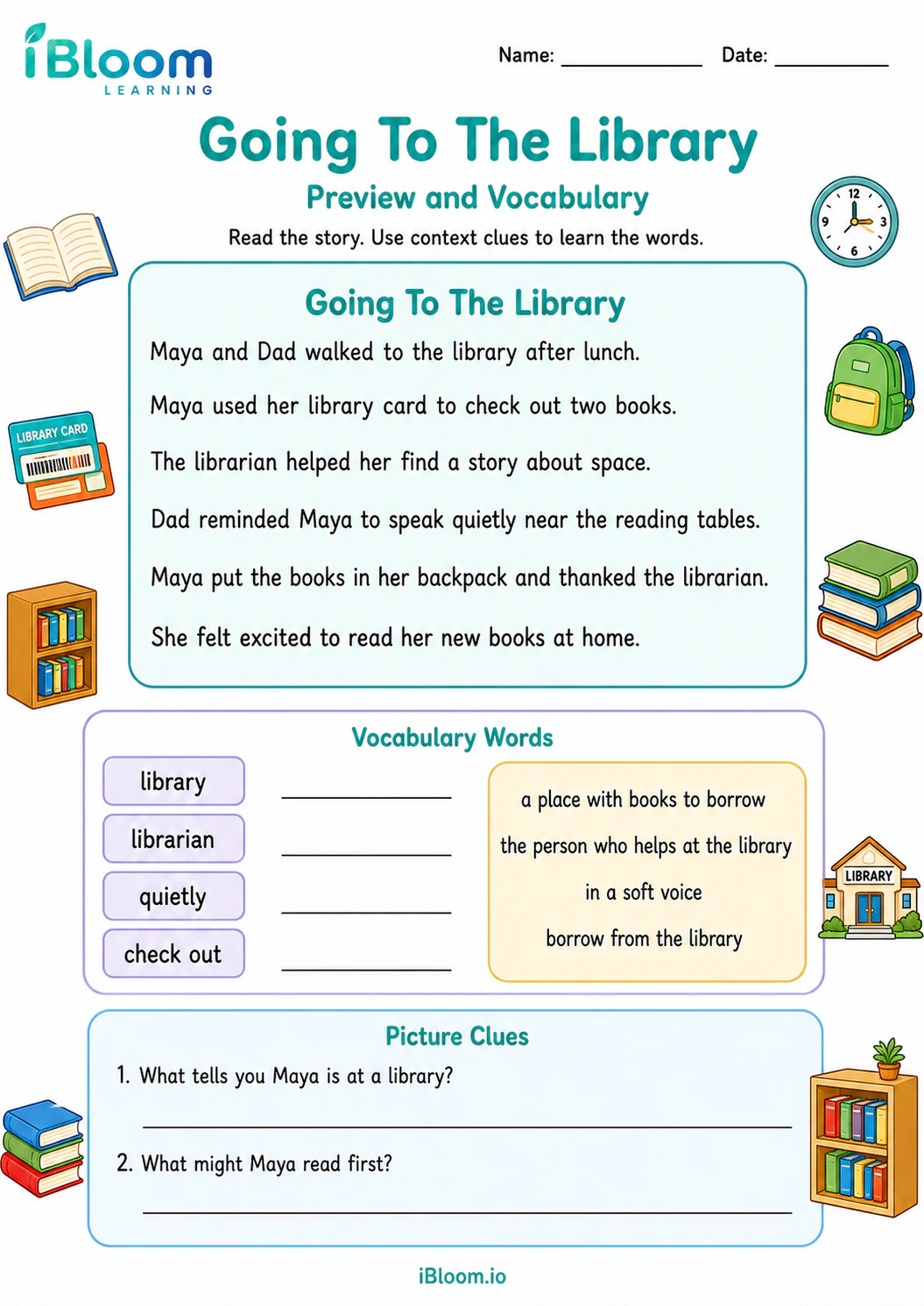
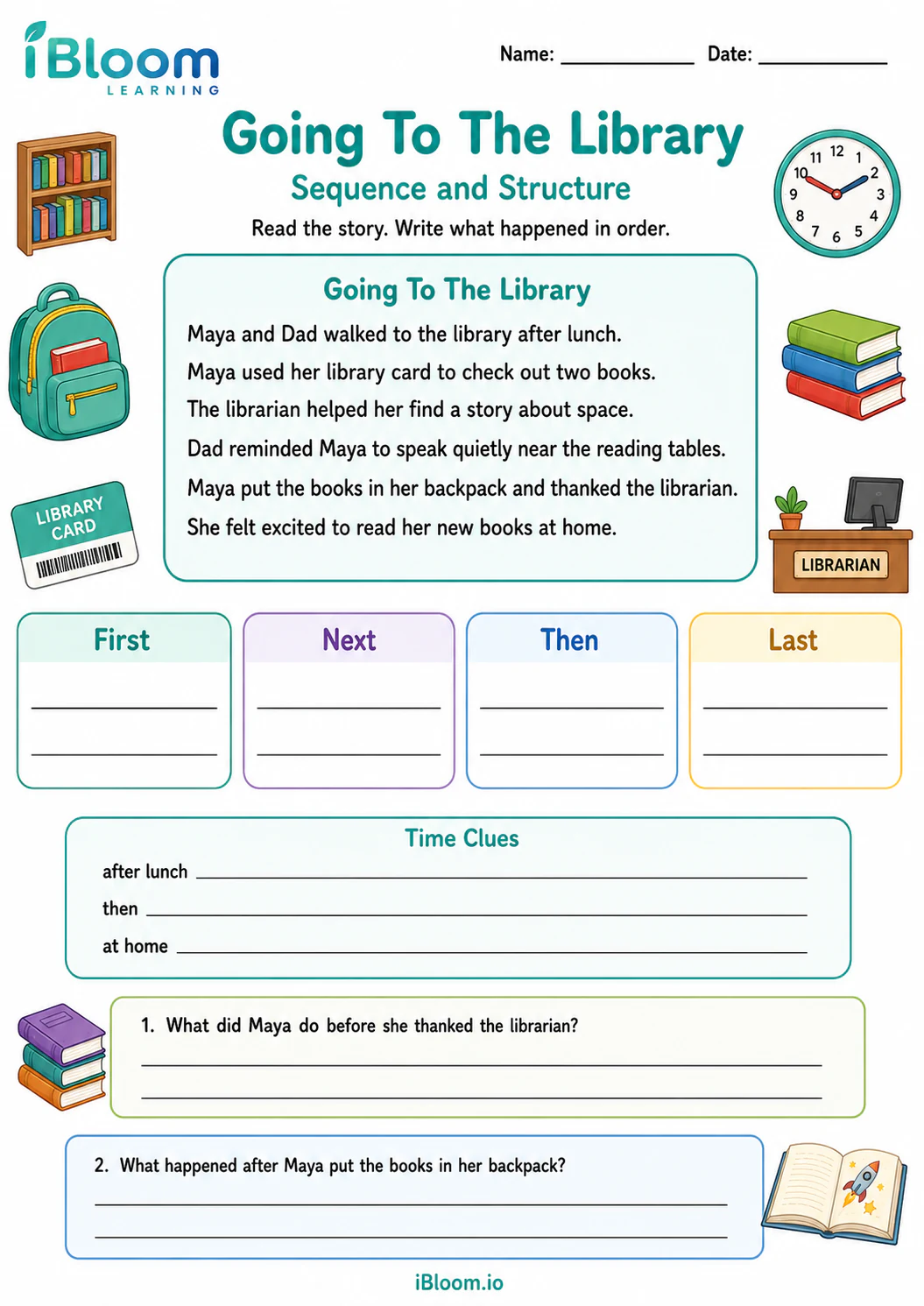
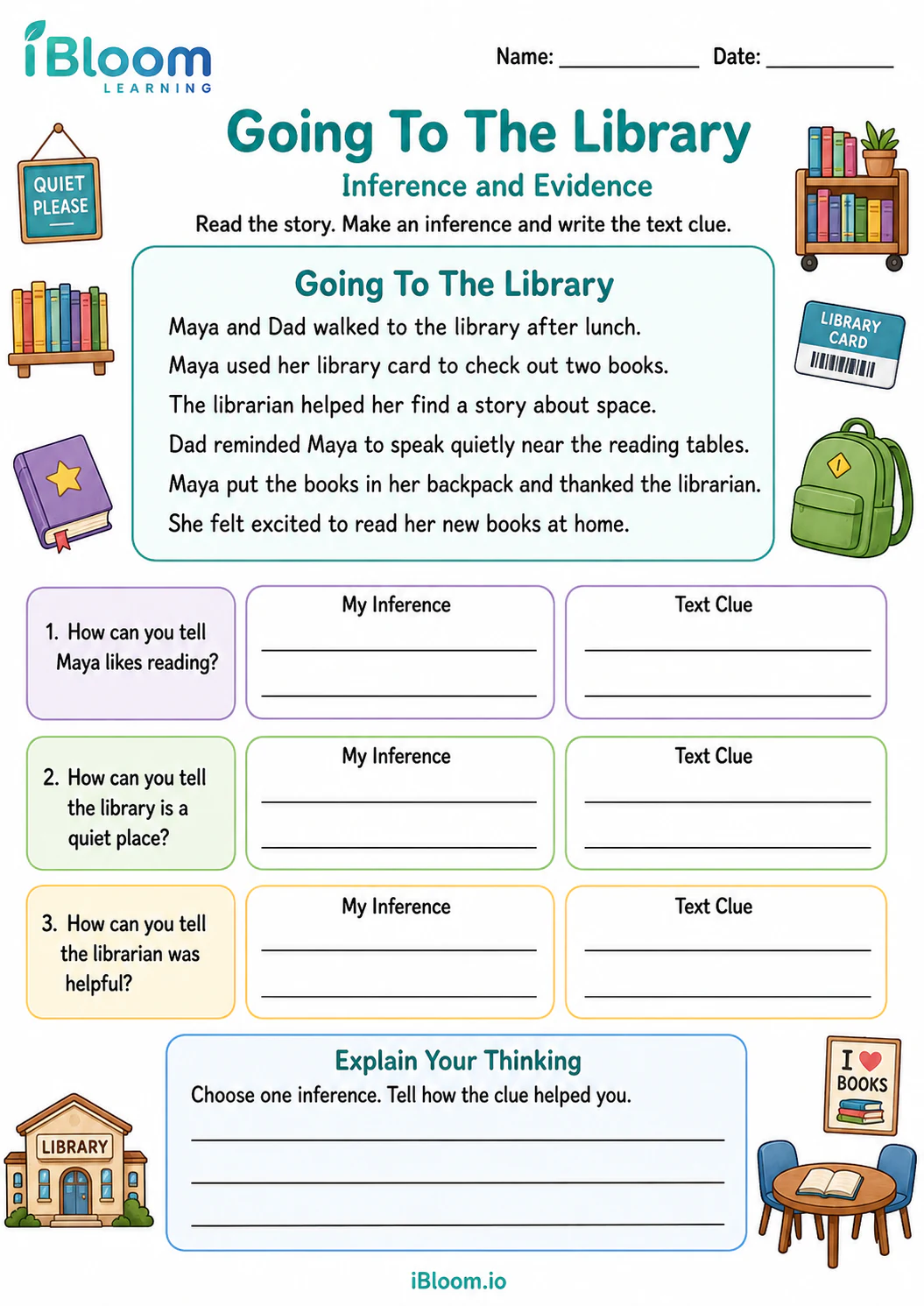
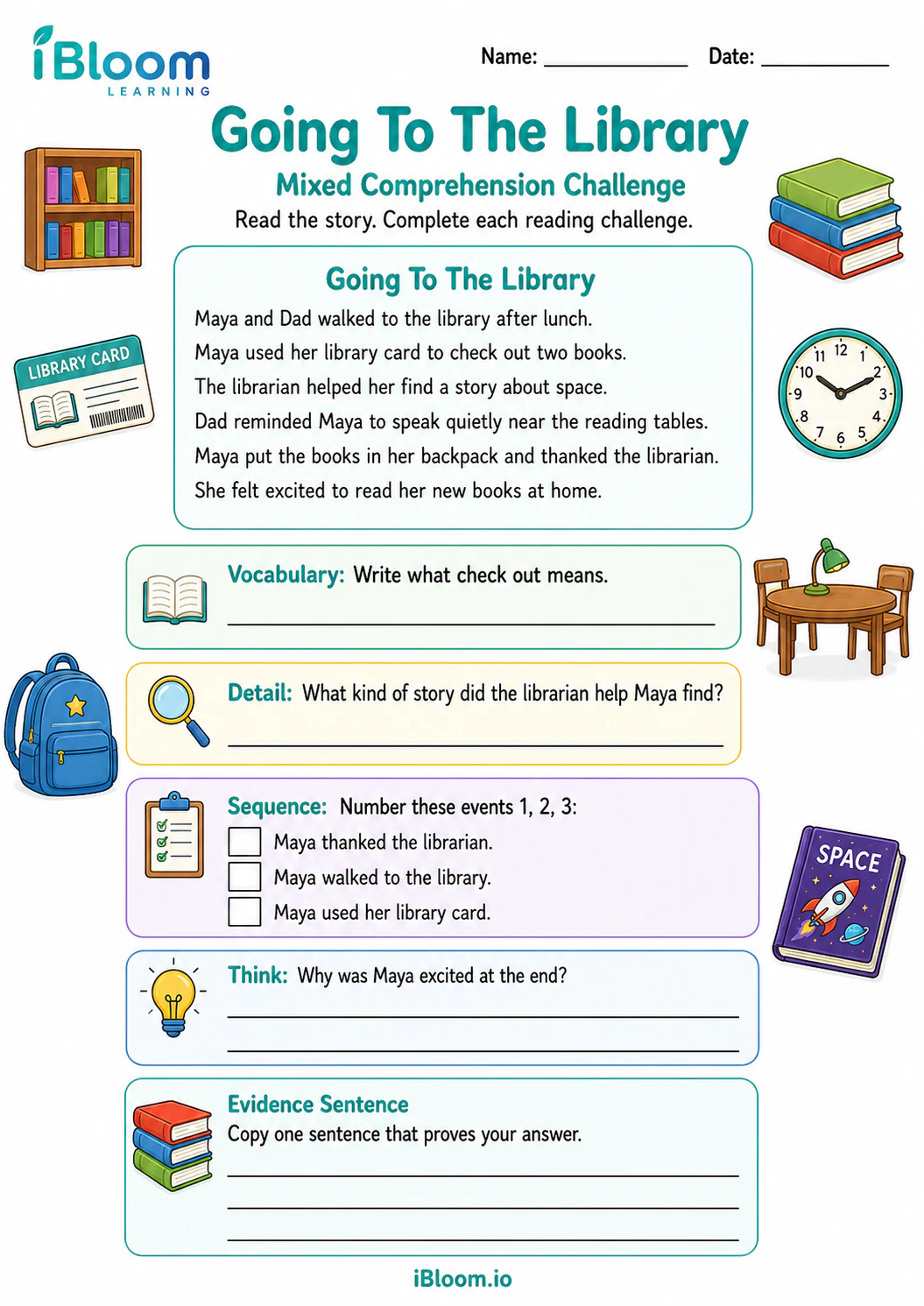
This Grade 2 reading worksheet pairs an original story about Maya’s trip to the library with 14 comprehension and written-response questions. Children recall details, follow the order of events, and support a response with information from the passage. These tasks practice CCSS RL.2.1. The answer key includes direct answers and sample responses for questions that allow more than one wording.
Aligned to RL.2.1
What happens in Maya’s library story?
Maya and Dad visit the library, borrow two books, and bring them home. Details about her library card, the librarian, and the books give readers evidence for the questions.
- 1What did Maya use to check out the books? → She used her library card.
How do children use details as evidence?
Part C asks for a detail that supports each response. A useful answer names something the story says, such as Maya pointing to Saturn when she opens the space book.
How can an adult discuss the passage?
Ask the learner to point to the sentence that helped. For a sample response, check that the idea fits the story even if the child uses different words.
How to use this worksheet
- 1Read the story once from beginning to end.
- 2Return to the passage when a question asks for a detail.
- 3Keep the events in the same order as the story.
- 4Write complete thoughts for the response questions.
- 5Check each answer against the key and the passage.
Reading response slips to watch for
The mistake
Answering from memory when a detail is easy to find in the passage.
The fix
Reread the sentence that mentions the library card, books, or librarian.
The mistake
Mixing up which book Maya reads first.
The fix
Follow the transition “At home” and the next sentence in order.
The mistake
Giving an opinion without a story detail.
The fix
Add one fact from the passage that supports the response.
Common Core alignment
The questions focus on understanding and explaining key details in a short story.
Questions ask readers to find and explain key details in Maya’s library story.
On this sheet:
Show the official wordingHide the official wording
Ask and answer such questions as who, what, where, when, why, and how to demonstrate understanding of key details in a text.
What to practice next
Make more practice
Further reading
Questions parents and teachers ask
Is the library story included on the printable?
Yes. The story about Maya and Dad is printed before the questions. Children can read it first, then look back at the passage to find details about the library card, the two books, and what Maya did at home.
What kinds of questions are included?
The 14 questions ask for story details, event order, and written explanations. Part B uses short answers, and Part C asks children to write complete responses supported by details in the passage. A separate key includes sample wording for responses that can vary. Children can revisit the story.
What counts as evidence in a written answer?
A story detail is a fact the passage gives. For example, a response about the space book can mention that Maya pointed to Saturn. The answer key offers sample wording, but a child’s answer can use different words if it fits the story.
Does the worksheet have an answer key?
Yes. The separate key gives direct answers for the detail and choice questions, plus sample responses for open-ended items. Use the passage to check that each written answer matches what Maya and Dad did. A child’s wording may differ while still using accurate story evidence.
How long will this reading activity take?
Plan for about 20 minutes to read the story, answer the questions, and check written responses. A learner who benefits from rereading can take a little longer and complete one part at a time. The passage stays available for checking details.