


About this worksheet
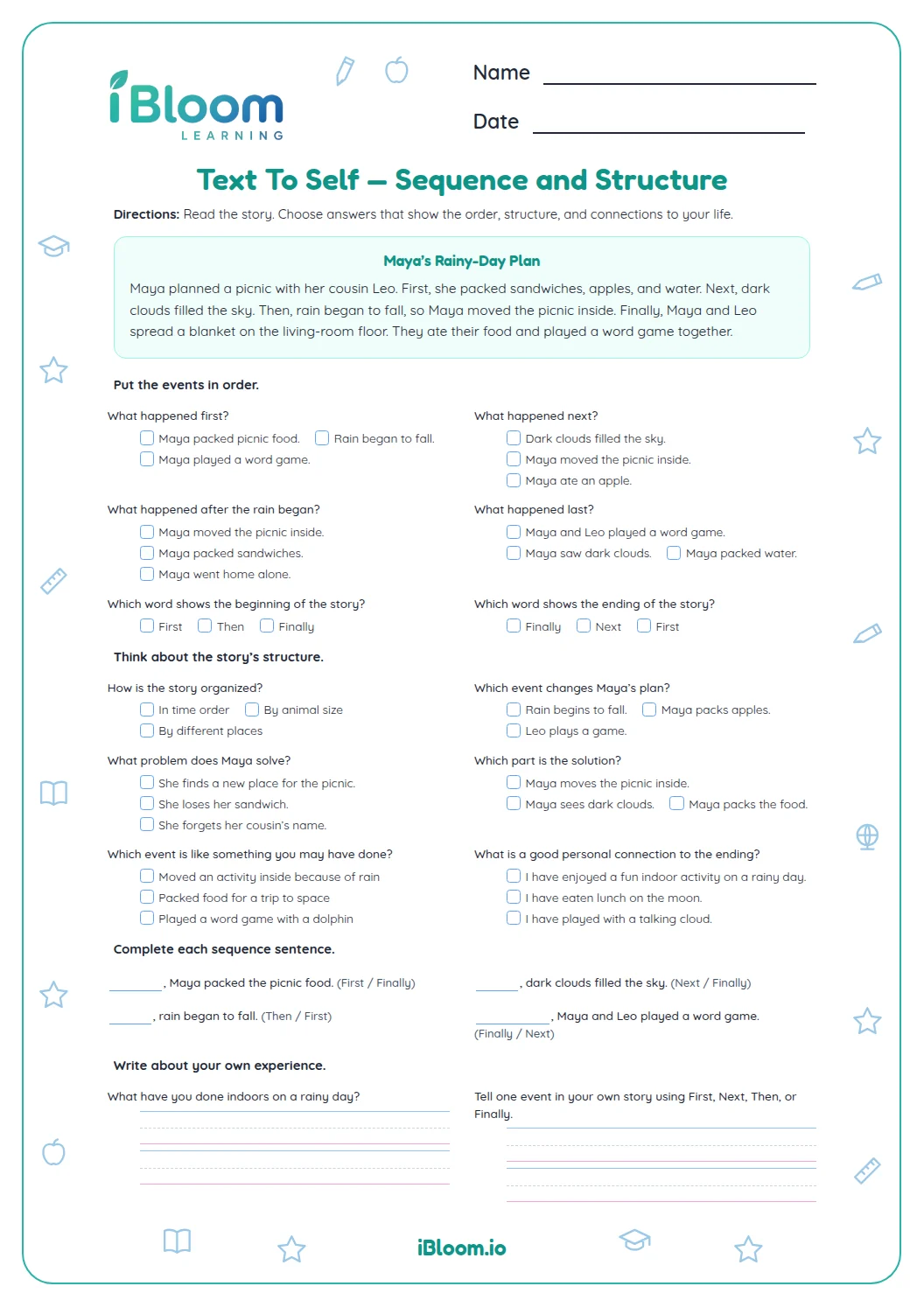
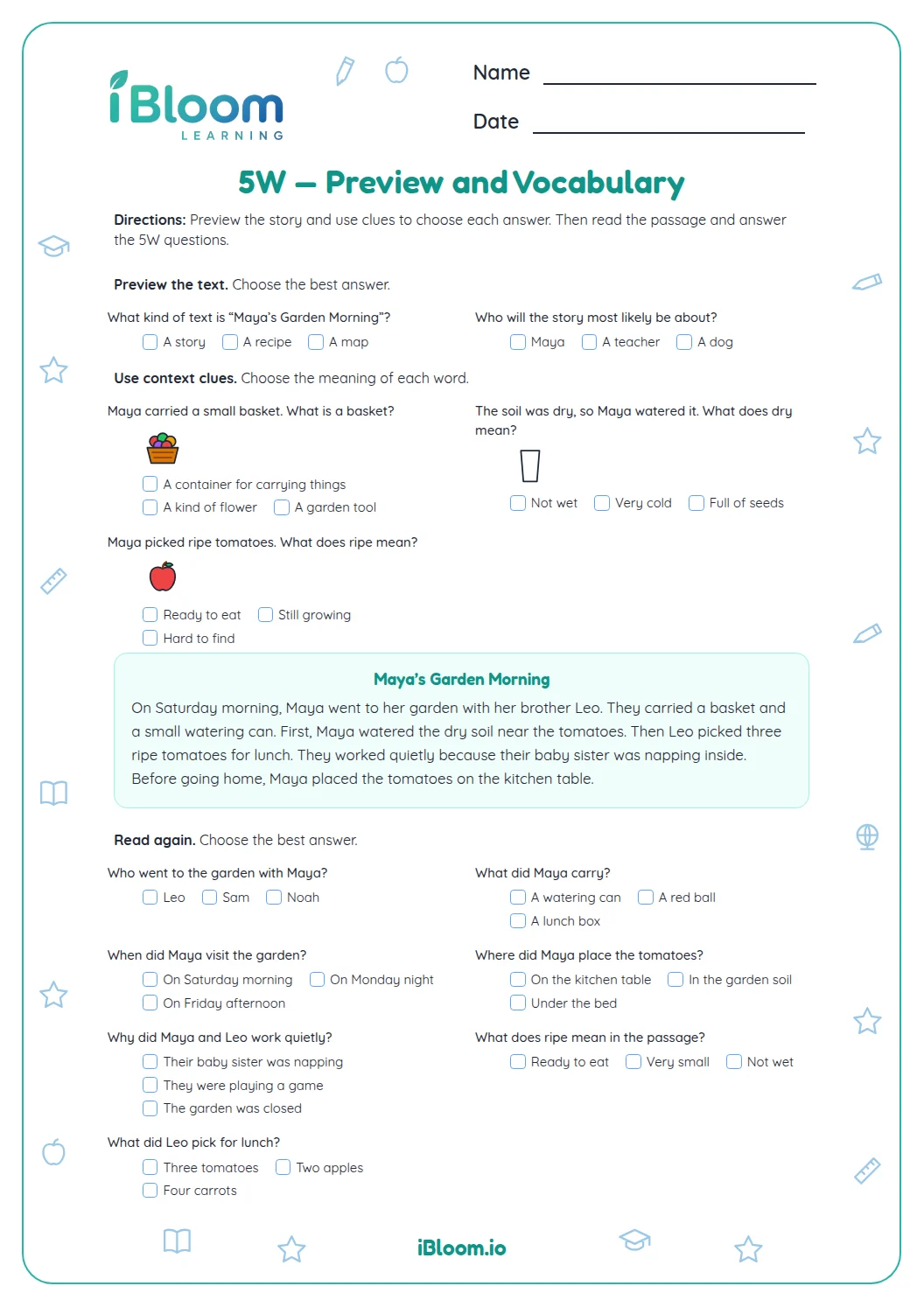
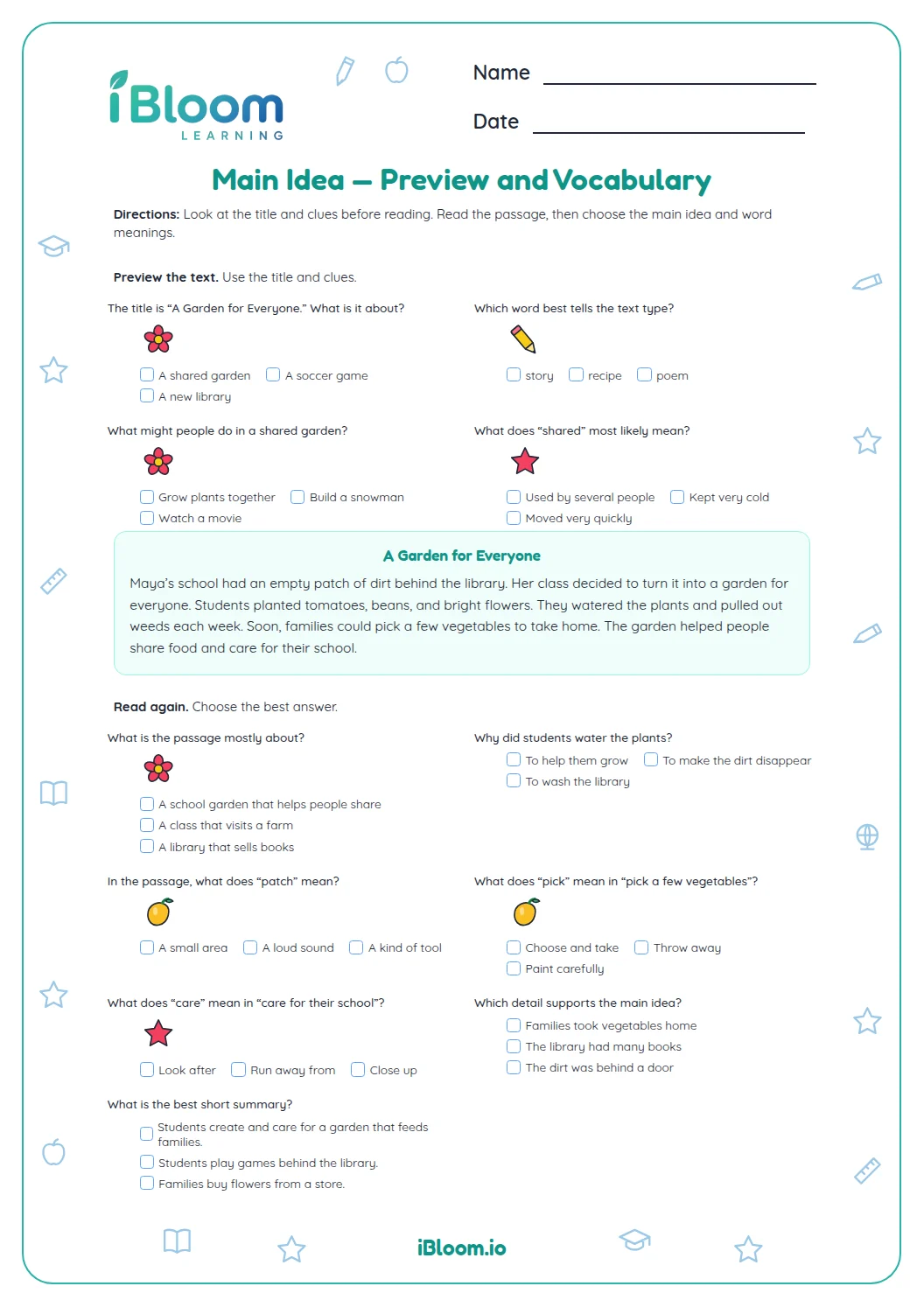
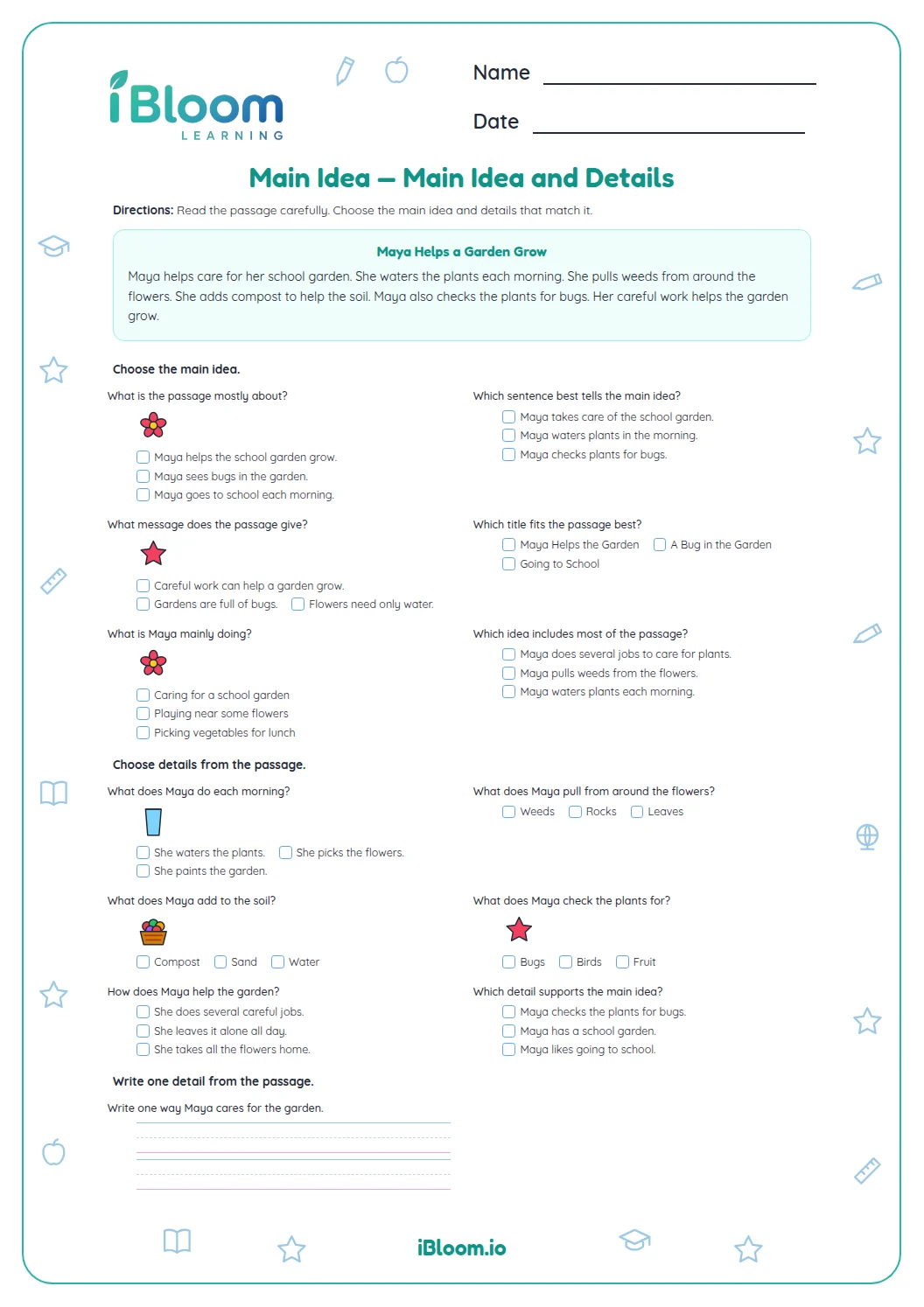
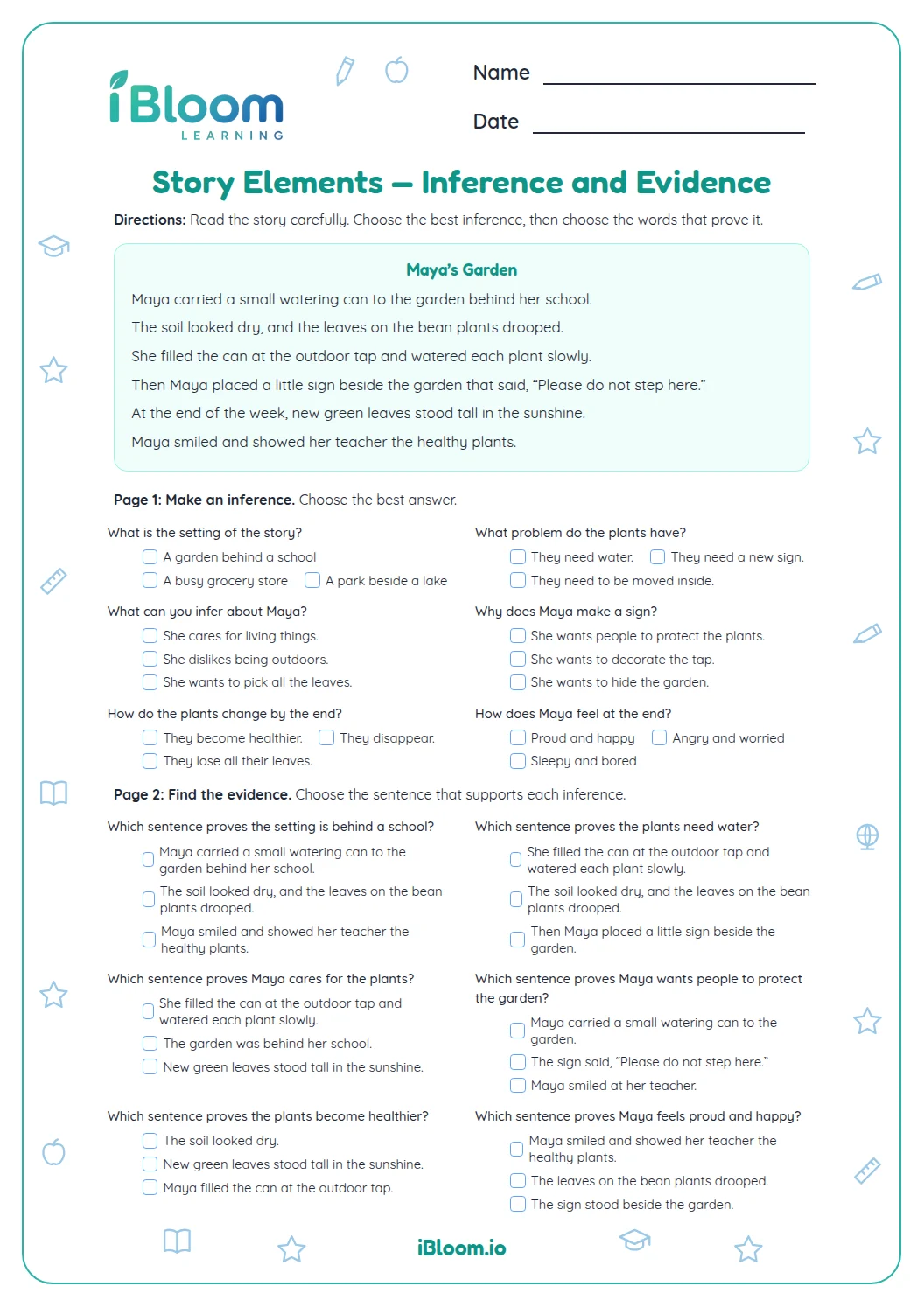
This free Grade 2 printable uses an original story about Lena and her grandmother planting a community garden. Students find details, identify the main idea, and connect a story moment to their own experience. The questions build from direct recall to a supported personal response. It aligns with CCSS RL.2.2: recount stories and determine a central message, lesson, or moral.
Aligned to RL.2.1 and RL.2.2
What does this page help students practice?
The 14 prompts focus on story details, central message, and text-to-self connections, using the examples and response formats printed on the worksheet.
The separate key gives a model response for open-ended items and a direct check for fixed-answer items.
How can students work through one item?
Read the whole prompt, identify the target skill, and use the information provided before checking the key.
- 1q1–q5 ask for story details, q6–q12 move to the central idea and message, and q13–q14 invite personal connections.
How can students check their answers?
Reread the sentence about Lena helping her class water beans; it explains how an earlier experience helped her water the seedlings.
What is a useful next step?
Ask students to explain one response using the words, numbers, or details that support it. Then try a related skill from the links below.
How to use this worksheet
- 1Read the directions and note what each part asks you to do.
- 2Complete each prompt before checking the separate answer key.
- 3For a written response, include a detail or reason from the prompt.
- 4Review any missed answer and correct it using the page evidence or place-value rule.
Common mistakes and quick fixes
The mistake
Using memory instead of the story.
The fix
Reread the sentence that names the person, place, or action.
The mistake
Choosing one detail as the whole message.
The fix
Think about what the events show across the full story.
The mistake
Giving a personal connection without explaining it.
The fix
Name the story detail and tell how it matches your experience.
Common Core alignment
The story questions ask students to use key details and identify a central message.
Students answer questions about the story and point to details that support answers.
On this sheet: Students answer who, what, where, and why questions using story details.
Show the official wordingHide the official wording
Ask and answer such questions as who, what, where, when, why, and how to demonstrate understanding of key details in a text.
Students identify the story’s central message and connect it with story events.
On this sheet: Students identify what the story is mostly about and select a message supported by its events.
Show the official wordingHide the official wording
Recount stories, including fables and folktales from diverse cultures, and determine their central message, lesson, or moral.
What to practice next
Further reading
Questions parents and teachers ask
How many questions are on this Grade 2 worksheet?
The printable has 14 questions across its worksheet pages. The prompts practice story details, central message, and text-to-self connections. A separate answer key includes the fixed answers and sample responses, so students can check their work after completing the page.
What does the answer key include?
It lists the correct response for each item and gives sample wording where answers may vary. Students can finish first, then use the key to locate a missed detail or correct a calculation. For a personal response, compare the idea rather than copying the sample.
How can an adult support the practice?
Ask the student to point to the story detail, pattern rule, writing reason, or measurement that supports an answer. Keep the explanation tied to the item. If a response differs from the key, check whether it still fits the question and evidence.
How long does this Grade 2 worksheet take?
Plan for about 25 minutes, with more time for discussion or written responses. Students can complete one part at a time and pause before checking the key. The time will vary with reading pace and how much explanation each response receives.
What should students do after checking their work?
Choose one item to explain aloud, then make a new example using story details, central message, and text-to-self connections. For reading, refer to a story detail; for math, show the number rule or calculation; for writing, name the opinion and supporting reason. This keeps review connected to the skill on the page.